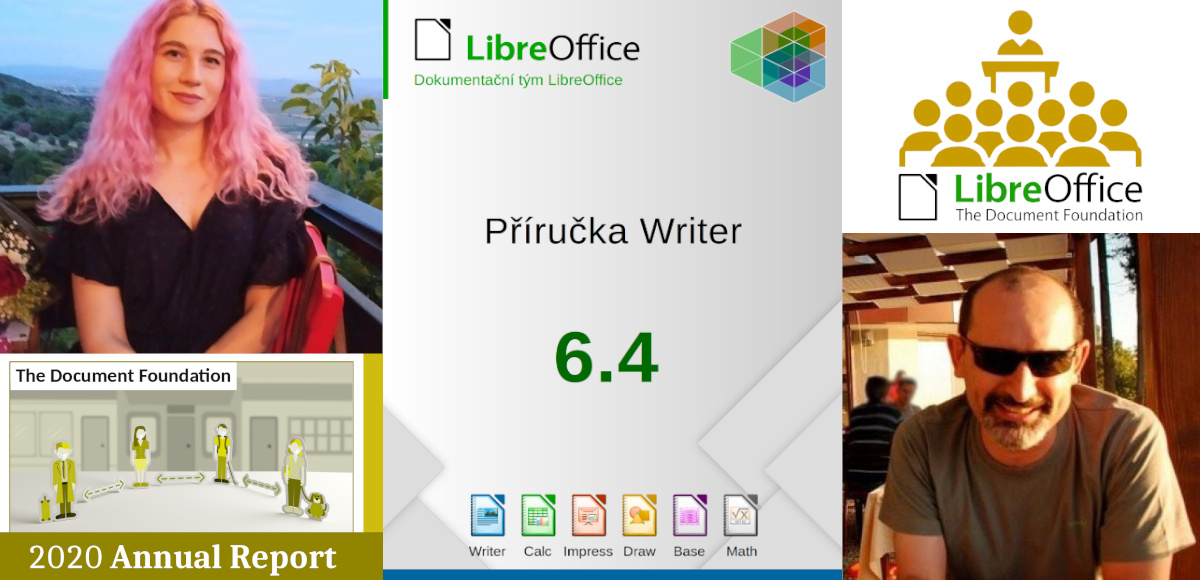
Community Member Monday: Steve Fanning

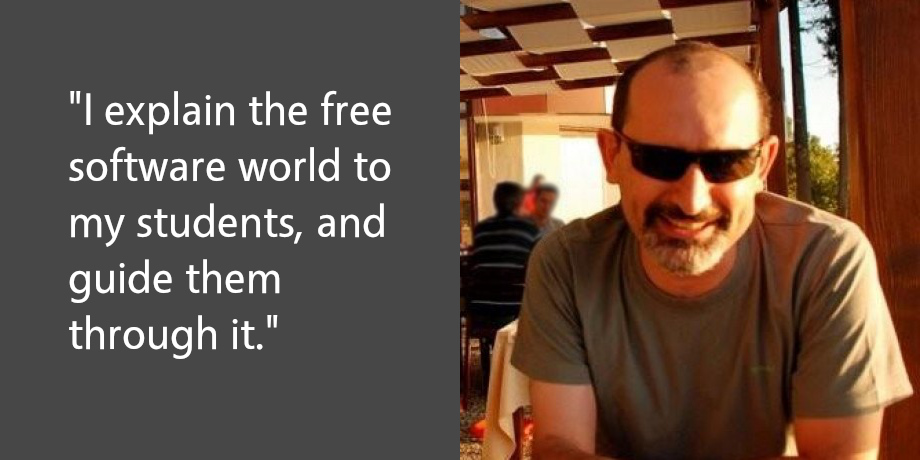
LibreOffice has extensive documentation in many languages, thanks to the great work of our worldwide docs community. Today we’re talking to Steve Fanning, who has been working on the updated LibreOffice Calc Guide

Hi Steve! Tell us a bit about yourself…

I live near Bolton in the North West of England with my wife and, sometimes, our adult son (he has recently been working in Australia for a year). I studied applied mathematics and theoretical physics at university and subsequently enjoyed a career mostly spent implementing and designing complex real-time software systems.

Passionate about improving the documentation for the company’s systems, I moved into specialist technical writer roles during the last few years of my employment. I retired around two years ago and now enjoy indulging in my main hobbies, which are bridge, computing, reading and coarse fishing. I guess that some readers might wonder about coarse fishing – it is angling for freshwater fish for pleasure and relaxation rather than food (all fish caught are returned to the water alive).

What are you doing in the LibreOffice project?

On retirement, I wanted to maintain and develop my technical writing skills and after some research, decided to join the LibreOffice Documentation Team. I immediately dived into the deep end, updating some of the more challenging chapters of the Calc Guide in preparation for the 6.2 issue. Since then I seem to have been digging deeper into Calc, coordinating the publication of the 6.4 Calc Guide, and updating many of the chapters for the 7.0 Calc Guide. I have also enjoyed creating an area on The Document Foundation’s wiki to describe Calc’s 500+ functions in more detail.

Why did you decide to become a member of The Document Foundation, the non-profit entity behind LibreOffice?

When the opportunity arose, I was delighted to become a member of TDF. I am hoping that it will make me more aware of the strategies of the organisation and, if appropriate, provide greater opportunity to influence those strategies. And who could resist the offer of a free @libreoffice.org email address?

What else are you working on, and is there any other area that interests you?

Currently most of my LibreOffice time is taken up supporting and mentoring Ronnie Gandhi, who is a technical writer helping us under the Google Season of Docs 2020 programme. His task is to populate many of the pages within the Calc Functions wiki area and I am reviewing his work and providing comments and other feedback as appropriate. Many of these functions are quite complex and require some research before raising comments but I am finding the whole experience very educational.

As for the future, it is hard to look too far ahead as we are all enduring the COVID-19 pandemic and the resulting restrictions and lockdowns. With lots of free time on my hands, I have been grateful to have interesting LibreOffice work to occupy myself and keep my brain ticking over. In the future I hope to continue to help keep our guides up to date, continue developing the Calc Functions wiki area, and would also like to get more involved in maintaining the help system.

Many thanks to Steve for all his work, and mentoring other contributors – this all helps millions of LibreOffice users around the world! Indeed, joining the documentation project is a great way to contribute back to LibreOffice, build up skills and meet new people in the community. Join in and give us a hand!

Please confirm that you want to play a YouTube video. By accepting, you will be accessing content from YouTube, a service provided by an external third party.

YouTube privacy policy

If you accept this notice, your choice will be saved and the page will refresh.

Free Software – It’s about much more than zero cost

Today we’re celebrating I love Free Software Day, where we say a big thank you to the developers and maintainers of free software projects around the world. You are awesome!

One such project is LibreOffice, of course – but what does “free software” actually mean?

Well, from a purely practical perspective, it means that you can get it without paying for it. That’s nice, but free software doesn’t come out of nowhere: certified developers in the LibreOffice ecosystem need funding to keep adding new features, and The Document Foundation (the non-profit that oversees LibreOffice) appreciates donations to manage the project, organise events and share knowledge.

But “free” means a lot more

When we talk about free software like LibreOffice, we’re talking about fundamental freedoms:

  • The freedom to run the software as you wish, for any purpose
  • The freedom to study how the program works, and change its source code
  • The freedom to redistribute copies so you can help your friends and colleagues
  • The freedom to distribute copies of your modified versions to others, so that they can benefit

Fundamental to this is the license under which the software is made available. LibreOffice is released under the Mozilla Public License Version 2.0, a free and open source license that lets everyone share the program – and gives everyone the right to study how it works and modify it.

Help to spread the message

LibreOffice users help to spread the word about LibreOffice to friends, family and colleagues, and we’re incredibly grateful for that. When you introduce someone to LibreOffice and highlight the low cost, you can also mention these freedoms too – the freedom to use your computer how you want, and not be controlled by any software company.

To learn more, check out the Free Software Foundation Europe’s page about free software. It’s a great overview of the social benefits that it beings.

And finally, a bit of fun

Here’s a great image from Elektrollart, made up of logos from many free and open source software projects. How many of them can you recognise? And can you find LibreOffice in here?

Make better presentations with the Impress Guide 7.0

Do you use LibreOffice Impress? Want to do more with your presentations? Check out the brand new Impress Guide 7.0 update, created by our awesome documentation community:

This 330-page book explores the basics of Impress, before moving on to master slides, styles, templates, graphic objects, effects, exporting in various formats, and much more. Download the PDF version here!

Who made this happen?

Answer: our community! Many thanks to Peter Schofield, Felipe Viggiano, Claire Wood, Regina Henschel, Dave Barton, Jean Hollis Weber, Samantha Hamilton and Olivier Hallot for their work on it.

We asked Peter to summarise his experiences as he updated the text:

I am experienced with LibreOffice in creating documents. Also, I have had over 30 years of experience as a Technical Writer in many fields of engineering, construction, electronics and software. However, I am not experienced in creating presentations, so writing the user guide was an experience and I now know more about creating presentations.

Did I enjoy it? Yes, because I enjoy having a challenge when writing instructions. Also, it gave me the opportunity to write the guide from the perspective of a novice in using presentation software. I do find that in some of the other LibreOffice guides, taking the novice view has been forgotten.

And what about newcomers to the documentation project – how can they get started? Peter adds:

The main tip for all contributors to LibreOffice is to write a software user guide assuming that a novice will be using the guide to help them become more experienced in using the software. Make it easier for users to understand, which will in turn make LibreOffice more popular as it gets recommended.

Write a user guide in a Simplified English, so that it becomes easier to translate and easier for non-English speakers to use an English-language user guide. Simplified English is used in the aviation industry and is a good standard to adopt for the LibreOffice team, but needs very tight control to be successful.

Thanks again to Peter and everyone else in the documentation team for the update. And everyone is welcome to give them a hand – it’s a great way to contribute back to LibreOffice, understand the software better, and build up skills for potential career options in technical writing!

LibreOffice monthly recap: January 2021

Two days ago we announced the release of LibreOffice 7.1, but a lot happened in the project in January too! Let’s check it out…

  • And that wasn’t the only big update in the docs project. The Brazilian Portuguese community announced the translation of the Calc Guide 7.0. This is a detailed handbook covering all aspects of the spreadsheet component of LibreOffice.

  • On the lookout for a career change? The Document Foundation, the non-profit entity behind LibreOffice, is looking for a Development Mentor. This is a remote position, 20 – 40 hours per week, focused on bringing new contributors into LibreOffice project. The deadline for applications is February 18, so if you’re interested, apply ASAP!

  • Ever reported a bug in LibreOffice? Wondered who handles it, and how it gets resolved? Well, check out this story of a round-the-world trip to fix a bug. A glitch was spotted in the LibreOffice Help content, and community members in Brazil, Russia and Mexico came together to fix it – a truly international effort 😊

  • Later in the month, Jean-Pierre Ledure wrote about his ScriptForge project, an extensible and robust collection of macro scripting resources for LibreOffice to be invoked from user Basic macros. If you regularly use macros in LibreOffice, check it out!

  • Finally, we wrapped up January by announcing the LibreOffice New Generation project. This aims to tbring new – and especially younger – people into the LibreOffice community, so that they can build up their skills and contribute in many areas (coding, design, marketing, localisation, QA and more). Join us and let us know your ideas…

Keep in touch – follow us on Twitter, Facebook and Mastodon. Like what we do? Support our community with a donation – or join us and help to make LibreOffice even better for everyone!

Announcing LibreOffice New Generation

Today we’re announcing a new project: LibreOffice New Generation. This isn’t about the software, but about the people behind it. As you probably know, LibreOffice is made by a worldwide community of certified developers and volunteers, working on the source code, translations, documentation, design, QA, marketing, infrastructure and other areas.

Well, we want to reach out to even more people, so read on to find out more…

What is this?

LibreOffice New Generation is our project to bring new – and especially younger – people into the LibreOffice community. While we’re proud that our community is diverse and has people from all ages, younger people help to bring fresh ideas and approaches to the project. So we want to make it easier for everyone to join, get involved and have fun – regardless of age.

Who can join?

Anyone! If you’re a school or university student and use LibreOffice, we’d love to hear from you. What do you use LibreOffice for? How can it be improved? Can we help you to spread the word? Join us and let’s work together to make LibreOffice even better!

But everyone else is welcome to join too. The Document Foundation is a small non-profit, so we’d appreciate all help with bringing younger contributors into the project and helping them to get involved with our teams.

What will you do?

Many students who contribute to free and open source software projects like to have something which confirms their work. At TDF we’ve been issuing Open Badges for community contributions – these are special badges with metadata inside, showing what someone did. So we’d like to start issuing these to younger and newer community members too.

We have other ideas and projects, but we’d like to hear from you about your experiences! What else can we offer? How can we credit and reward contributors for their work? Let us know what you think…

How can I join?

If you’d like to discuss ways to get more younger people involved in the LibreOffice community, join our Telegram group where we can discuss Open Badges and other ideas for LibreOffice New Generation. (For all other discussions and suggestions for LibreOffice, please see the general group.) If you’d like to suggest something directly, email me (Mike) and we’ll have a chat.

We look forward to meeting you, and hearing your ideas and experiences!

Community Member Monday: Felipe Viggiano and Zhenghua Fong

Today we’re talking to two people who’ve recently decided to become members of The Document Foundation, the non-profit behind LibreOffice. First up, Felipe Viggiano…

Hey Felipe, tell us a bit about yourself!

Hello there! I’m writing from the state of São Paulo, in Brazil. I’m an electrical engineer and have been working with LibreOffice for several years. Despite all this time, I started to contribute only a few months ago.

What are you working on right now?

Right now I’m working with the Documentation Team, mainly on the update of the Calc Guide with the new features in LibreOffice 7.0. Working with the team has been a huge learning opportunity, and the other team members are always there for a little help when needed.

Why did you decide to become a member of TDF?

The reason I applied for membership is to try to contribute a little more to the project in other areas.

Anything else you plan to do in the future?

In the future, I would like to start contributing more with others teams, and with TDF in order to help increase LibreOffice’s success. In my opinion, LibreOffice needs to be better known – we have a great free office solution that attends the majority of the requirements of the general public, but, at least in Brazil, many people are not aware of this!


Next us is Zhenghua Fong, who works on improving LibreOffice’s compatibility with other office suites…

Tell us a bit about yourself!

I’m part of a team of three people from Fuzhou, a coastal city known for its hot springs, in the Fujian province in China. When we are not coding, we like jogging in the nearby park. Every year we have company-wide Half Marathon Run around the main campus. Around 7,000 employees compete in the run and other sporting events.

Why did you decide to become a member of The Document Foundation?

As we’re an education tech company, documents are at the core of our business. LibreOffice works great for us. Recently, we have add a whiteboard feature to our product with the help of LibreOffice Online.

What are you working on in the LibreOffice project right now?

Compatibility is the area we are working on. Because large parts of the population still use Microsoft Office-based document formats, it’s important to our users that they are able to open documents and get them right the first time.

Anything else you plan to do in the future? What does LibreOffice
really need?

Performance. We find the performance of our product has room for improvement, especially when compared against Microsoft Office and WPS from Kingsoft.

Thanks to Felipe and Fong for all their contributions! Our worldwide community is what makes LibreOffice strong – everyone is welcome to join and find out what they can do for LibreOffice!