LibreOffice project and community recap: May 2026

Monthly recap banner

Here’s our summary of updates, events and activities in the LibreOffice project in the last four weeks – click the links to learn more…

  • We started May by announcing the new LibreOffice website. Our previous website was looking rather old and becoming difficult to maintain, so the team at TDF – with help of the wider LibreOffice community – has been working on a redesign, based on newer technology.

Announcing the new LibreOffice website

LibreOffice stand at the Augsburger Linux Info-Tag

ODF vs OOXML, an issue that should never have existed

GSoC logo

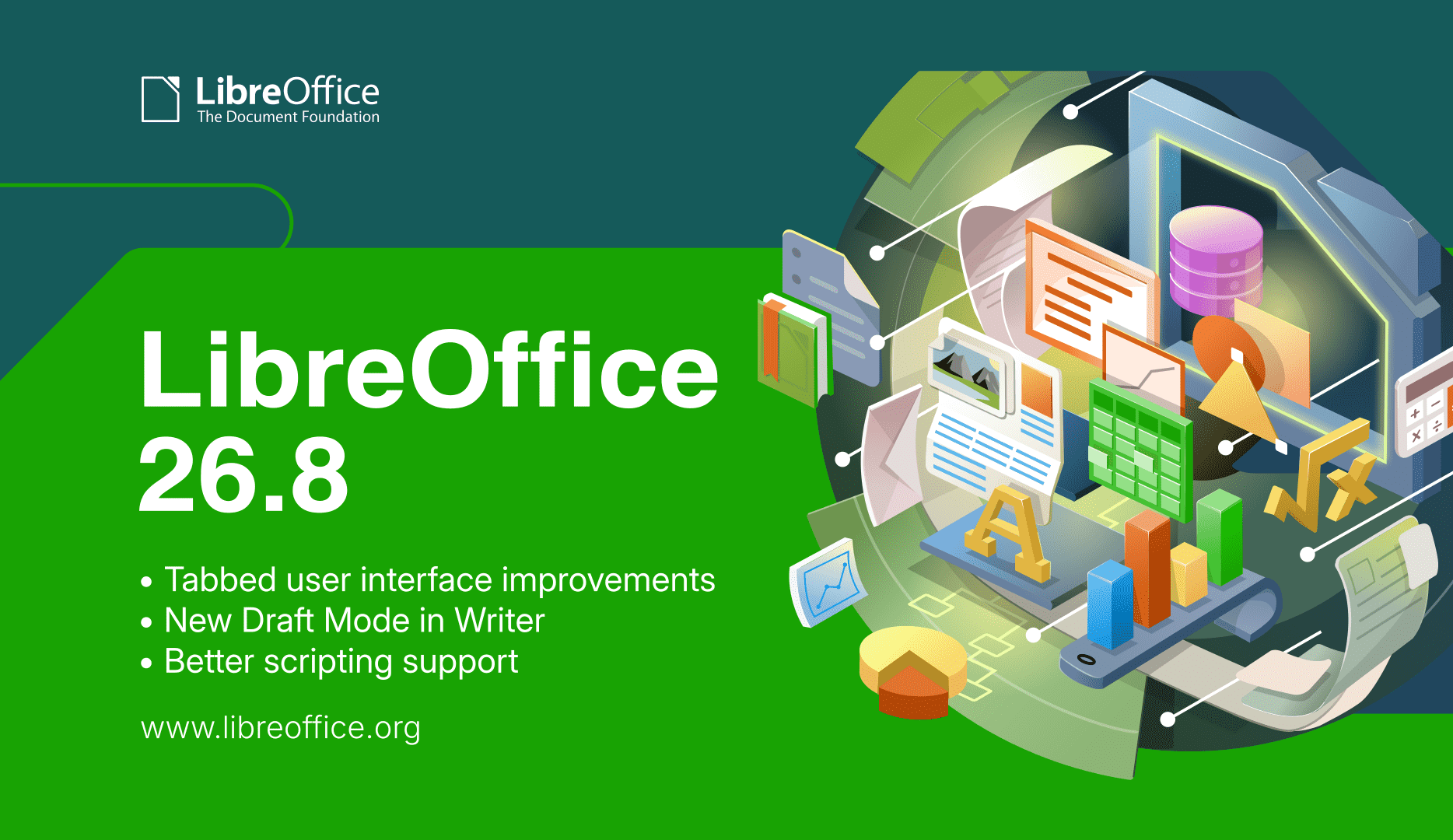
  • In the middle of the month, we announced LibreOffice 25.8.7, the final maintenance release of the LibreOffice 25.8 family. From here we will focus on maintaining the 26.2 branch, and are preparing for 26.8, our next major release (due in August).

LibreOffice 25.8 banner

  • The vast majority of income to The Document Foundation, the non-profit behind the LibreOffice project and community, is from donations from end users. We made a new video explaining how donations are used to support the community that makes the software.

Please confirm that you want to play a YouTube video. By accepting, you will be accessing content from YouTube, a service provided by an external third party.

YouTube privacy policy

If you accept this notice, your choice will be saved and the page will refresh.

  • Next, we started posting sections from TDF’s Annual Report 2025, starting with Native Language Projects. A huge thanks to the hundreds of people who make LibreOffice available is so many languages around the world! 😊

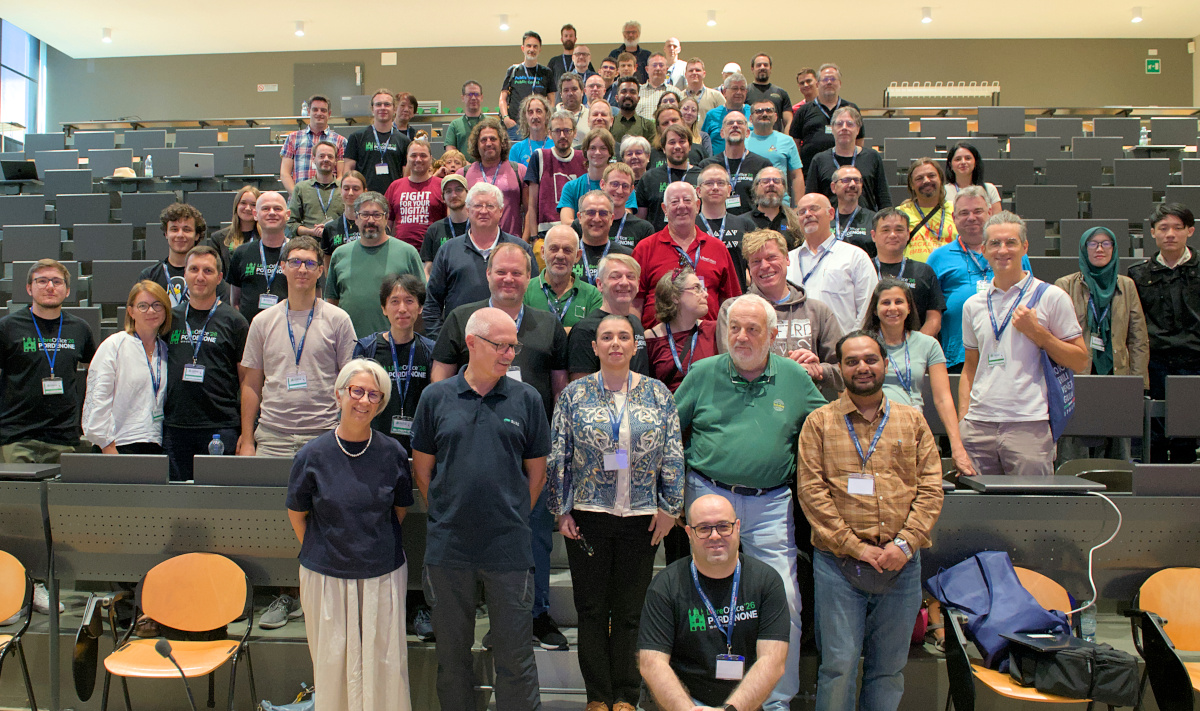
Annual Report banner with group photo from LibreOffice Conference

New Web and Mobile Strategy for LibreOffice

Like what we do? Support LibreOffice with a donation – or join our community and help to make LibreOffice even better! Also keep in touch – follow us on Mastodon, Bluesky, Reddit and Facebook.

Join the LibreOffice team as a paid system administrator, working on TDF’s infrastructure (full-time, remote, m/f/d)

Love LibreOffice? Got experience with infrastructure and system administration? We are The Document Foundation (TDF), the non-profit entity behind LibreOffice. We’re passionate about free software, the open source culture and about bringing new people with fresh ideas into our project.

To assist the LibreOffice community with its work, we are looking for a full-time (remote) Infrastructure and System Administrator, to start as soon as possible.

Here’s what you’ll do

  • System orchestration and OS management: Orchestrate, deploy, and maintain all internal and external systems, specifically standard and customised Linux operating systems, with the majority of machines running Debian GNU/Linux. We currently run SaltStack, but proposals for different ways to handle config management and deployment are welcome.
  • Virtualisation and storage infrastructure: Manage virtualisation platforms and hypervisors (KVM/QEMU). Experience with GlusterFS (for the backup system) is a plus, but not mandatory.
  • Database, cloud, and App Administration: Administer database servers such as MariaDB and PostgreSQL, cloud storage repositories (such as Nextcloud), web applications, email services, and developer tooling.
  • Network and hardware maintenance: Maintain core physical and cloud network infrastructure, including routers, switches, and NAS storage, amongst them devices from MikroTik.
  • Security and network access: Oversee firewalls, intrusion detection, antivirus, IP reputation, global mirror systems, and secure VPNs for users and machines.
  • Identity and access management: Deploy and manage single sign-on (SSO) solutions, directory services, domain names, DNS zones, and SSL certificates (PKI).
  • Ensure stable operations and monitoring: Together with teammates and volunteers, ensure stable infrastructure availability, manage log analysis, handle emergencies, and coordinate with external providers during outages.
  • Patch management: Execute timely deployments of security and software updates within scheduled maintenance windows.
  • Team coordination and documentation: Lead and coordinate the infrastructure team, volunteer contributors, and third-party vendors, while keeping technical documentation up to date.
  • Data protection and disaster recovery: Implement backup and point-in-time disaster recovery solutions, and manage infrastructure-related GDPR compliance in cooperation with privacy officers.

What we want from you

  • Very good sysadmin and infra maintenance skills on Linux
  • Good team-playing abilities
  • Speaking and writing English

As always, TDF will give some preference to individuals who have previously shown a commitment to TDF, including but not limited to members of TDF. Not being a member does not exclude any applicants from consideration.

Join us!

All jobs at The Document Foundation are remote jobs, where you can work from your home office or a co-working space. The work time during the day is flexible, apart from a few fixed meetings. The role is offered as full-time (ideally 40 hours per week). While we prefer full-time for the role, part-time applications, or proposals to grow the hours over time, will be considered. Candidates that are resident in Germany will be employed directly by TDF. Otherwise, external payroll services will be used if available in the candidate’s country of residence.

Are you interested? Get in touch!

TDF welcomes applications from all suitably qualified persons regardless of their race, sex, gender, disability, religion/belief, sexual orientation or age. Don’t be afraid to be different, and stay true to yourself. We like you that way! 😊

We’re looking forward to receiving your application, including information about you (your resume), when you are available for the job, and of course your financial expectations. Please provide details about your experience and send us an e-mail to sysadmin@documentfoundation.org no later than July 6, 2026 (end of day, Berlin time). If you haven’t received feedback by August 3, 2026, your application could not be considered.

Also note: we only accept applications from the applicant, and not from any intermediary. We do not accept agency resumes. Please do not forward resumes to any recruiting alias or employee.

Meet the team at The Document Foundation

LibreOffice is made by hundreds of people around the world, working on code, documentation, QA, translations, marketing, infrastructure and much more. Coordinating the project’s activities is the team at The Document Foundation, the non-profit behind LibreOffice. Let’s see what the team members do:

1. Christian Lohmaier, Release Engineer

Christian’s typical tasks include taking care of the continuous integration system (both the automation server and the build machines), managing the LibreOffice release process, handling app store updates with all the paperwork that entails, managing the technical side of language translations not only for LibreOffice, but for any translatable system we have and making sure our integration with payment platforms works smoothly. He has also been involved in creating and maintaining websites and web services.

Christian’s work is influencing the developer experience as well. In the past, LibreOffice’s Windows development setup was somewhat messy. After Christian introduced automation into the setup process with the help of WinGet scripts, there has been much less need for troubleshooting.

2. Dan Williams, Developer

Dan was involved in the Mac port back in the 2000s when LibreOffice was still called OpenOffice.org. For some months now he has been working for TDF on user interface and macOS tasks. He has done corrections to the handling of system UI themes, implemented support for special macOS keyboard shortcuts and macOS-specific menu items, fixed database links going missing from .ods files, and fixed an issue with printing notes from Impress presentations on macOS. His ongoing work includes experimenting with Qt UI on macOS and reworking the code for Notebookbar.

3. Florian Effenberger, Executive Director

Florian is one of the founders of TDF, and its Executive Director since 2014. He manages our worldwide team of 18 people, and deals with a variety of tasks in accounting, financials, taxes, budget, payroll, annual audit, banking, legal topics, employment and HR. He supports the board and the membership committee and onboards those new in office. He regularly gives presentations at events, is active in the German community and has written extensively about the tasks he is involved on our forum.

4. Guilhem Moulin, Infrastructure & Services

Guilhem is managing our servers and the approximately twenty web services needed every day by LibreOffice users and contributors. Major updates to the operating systems and the web applications require careful studying of what needs to be taken into account to ensure everything keeps operating smoothly. Often this goes into the level of studying individual code changes. Compatibility breakage has to be mitigated or at least communicated.

5. Heiko Tietze, UX Architect

Heiko is collaborating with user experience design volunteers in planning improvements to LibreOffice. Not being content with planning, he then goes and implements the proposals, either by himself or with help from others. Heiko always denies being a C++ developer yet inexplicably has over 700 LibreOffice code changes in his name. He has mentored in over a dozen Google Summer of Code (GSoC) and Outreachy projects, for example in the reworking of Table Styles and UI theming. Being an active mentor means that he is doing code reviews for new developers all year round as well as inventing new easy tasks.

A recent large-scale project of his is implementing vertical tabs in dialogs.

6. Hossein Nourikhah, Developer Community Architect

Over a hundred developers get their start in LibreOffice code every year. Facing seven million lines of code can be intimidating, so we have a tradition of providing a selection of tasks we call “easy hacks“. Hossein is tending to this catalogue of beginner tasks and reviewing the submitted code changes. Whenever a new developer has issues with setting up a development environment, he jumps in to help. He is also writing developer documentation on the TDF wiki and publishing blog posts about development.

He has mentored GSoC projects such as cross platform bindings for .NET and Python code auto-completion. His recent contributions include initial support for Qt 6 UI on Windows together with Michael Weghorn, based on earlier work by Jan-Marek Glogowski.

7. Ilmari Lauhakangas, Development Marketing

Ilmari is bringing in new contributors to quality assurance, design, C++ development and documentation. In a typical year he teaches nearly 200 people about getting involved in LibreOffice. He is also triaging (and sometimes fixing) bugs, doing web development, maintaining the wiki, doing code reviews and managing internship programs.

8. Italo Vignoli, Marketing & PR

Italo Vignoli is a founding member of The Document Foundation and the LibreOffice project, the Chairman Emeritus of Associazione LibreItalia, an Ambassador of Software Heritage, and a proud member of Free Software Foundation Europe (FSFE). He is a past board member of Open Source Initiative (OSI). Italo co-leads LibreOffice marketing, PR and media relations, co-chairs the LibreOffice Certification Program, and is a spokesman for the project. He also handles advocacy and marketing activities for the Open Document Format ISO standard.

9. Jonathan Clark, Developer

For the past two years Jonathan has been working on LibreOffice features in the categories of right-to-left scripts, complex text layout and Chinese-Japanese-Korean. In addition to numerous quality of life improvements, he has implemented support for Start/End paragraph alignment while making it the default instead of Left/Right, and made the CJK text grid compatible with Microsoft Word. On the mentoring side he is constantly reviewing code submissions from newcomers and was involved in the BASIC IDE object browser GSoC project.

Jonathan is currently looking into fundamental improvements in the LibreOffice user interface.

10. Juan José González, Web Technology Engineer

As mentioned earlier, TDF hosts a rather large number of web applications, some of them created from scratch. These custom web services include the Extensions and Templates site and the Crash Report site. Juan José has been heavily involved in redesigning and maintaining these two sites. He has also worked on sites for various LibreOffice conferences, improved our localisation tooling and created tools to combat spam in our forums.

11. Michael Weghorn, Developer

TDF wants LibreOffice to be easy to use for visually impaired people, and three years ago Michael was hired to make sure we always deliver accessible software. LibreOffice has lots of variety in its content types and user interface widgets. This means that we are sometimes testing the limits of accessibility APIs, which are also different per operating system. To ensure optimal results in LibreOffice accessibility, Michael is working with developers of toolkits such as GTK and Qt, and with developers of screen-reader applications such as Orca and NVDA.

At the moment Michael is working to bring LibreOffice’s Qt user interface support to the next level and seeing how it works on Windows.

12. Mike Saunders, Marketing and Community Coordinator

Mike is a long-time Linux and free software journalist, and joined the team in 2016 to work in the areas of marketing and community outreach. He helps to maintain the LibreOffice social media channels, interacting with users to encourage them to join the project and contribute. He also interviews community members, writes blog posts, works on videos and podcasts, and organises events.

13. Neil Roberts, Developer

Neil joined the team a couple of months ago to improve the scripting and API side of LibreOffice. He has implemented a new approach for Lua UNO API bindings, added QuickJS-based JavaScript bindings together with Stephan Bergmann and made it possible to create and edit Python macros via the Macro Organizer dialog.

Neil will also be collaborating with Michael Weghorn on user interface renovation projects.

14. Olivier Hallot, Documentation Coordinator

Olivier started contributing back in the OpenOffice.org days in 2001 as part of the Brazilian community and is one of the founding members of TDF. For ten years he has been leading the documentation effort for LibreOffice. The documentation team maintains several guide books, a huge collection of help articles, wiki pages and even tooltip texts seen within LibreOffice itself. Olivier has opinions on writing good release notes and is not shy to share them!

Olivier is also fixing UI issues and making sure everything works with regards to localisation.

15. Sophie Gautier, Foundation Coordinator

Sophie has been in the LibreOffice project since the beginning (and in OpenOffice.org before that), and helps with TDF administration tasks, such as organising meetings and managing the travel refund tool. In addition, she helps to organise the yearly LibreOffice Conference, and works with the localisation communities to make LibreOffice available in as many languages as possible.

16. Stephan, Administrative Assistant

Stephan helps with administrative tasks for the foundation, such as meeting minutes, accounting reports, donation queries, travel bookings, travel expense reimbursements, ordering equipment, issuing donation receipts, payment processing, and translations.

17. Vissarion Fysikopoulos, Developer

Having started about a month ago, Vissarion will focus on taking Base to the next level. The current development plan includes finishing the new Report Builder, polishing Firebird support and adding support for SQLite.

18. Xisco Faulí, QA Engineer

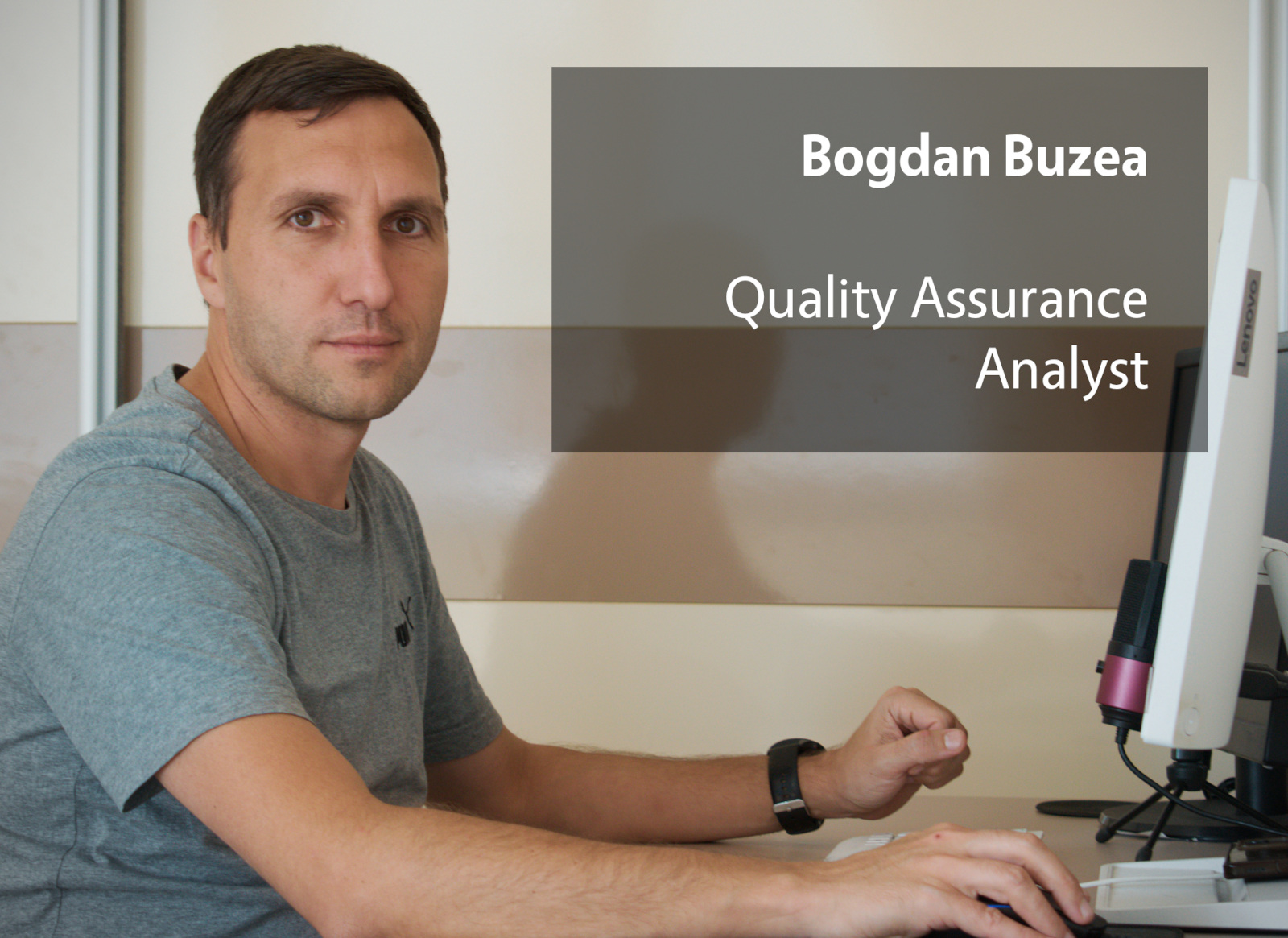
Xisco did a Google Summer of Code project for LibreOffice in 2011 and joined the TDF team in 2016 to work on QA (quality assurance). At first he was triaging bugs, but gradually moved to writing automated tests. By now he has added thousands of tests. He keeps LibreOffice’s hundred external dependencies up to date, fixes critical bugs, improves graphics support, helps with the release process, is involved in reviewing security reports and handles the crash report system alongside other automated systems related to guarding the quality of the software. He also mentors GSoC projects.

As mentioned, the team is just a small part of the overall LibreOffice community. Everyone is welcome to find out what you can do for LibreOffice – to learn new skills, meet new people, and be part of a project making software used by millions of people around the world!

New Web and Mobile Strategy for LibreOffice

New Web and Mobile Strategy for LibreOffice

LibreOffice is a desktop application, and we will continue making it. But we have constant requests for web and mobile versions, so here is our updated plan. These are minutes from the TDF Team and Board of Directors meetings on web and mobile strategy for LibreOffice:

Who was present

Team: Michael Weghorn, Jonathan Clark, Sophie Gautier, Neil Roberts, Mike Saunders, Guilhem Moulin, Heiko Tietze, Ilmari Lauhakangas, Dan Williams, Xisco Fauli, Christian Lohmaier, Vissarion Fysikopoulos, Juan José Gonzalez, Olivier Hallot, Florian Effenberger, Hossein Nourikah

Board: Eliane Domingos, Mike Saunders, Paolo Vecchi, Simon Phipps, Sophie Gautier

Summary

The meetings, which took place April 20, April 22 and May 19, focused on discussing LibreOffice and TDF strategies for the evolving development landscape and the future of LibreOffice across all platforms – desktop, mobile, and cloud. Team roles were reviewed, and new assignments were proposed.

Status of the current foundation team activities

Since 2020, the development of LibreOffice within the foundation focused almost uniquely on the desktop version of LibreOffice (and to a lesser extent, the Android viewer app) and that part will continue unchanged. Therefore the foundation will continue to deliver two major LibreOffice releases per year.

Engineering Steering Committee (ESC)

The current ESC members and activities remain unchanged, and weekly meetings continue with reports on activities, releases, topics and project management. The meeting, as always, is open to the development community.

Community support

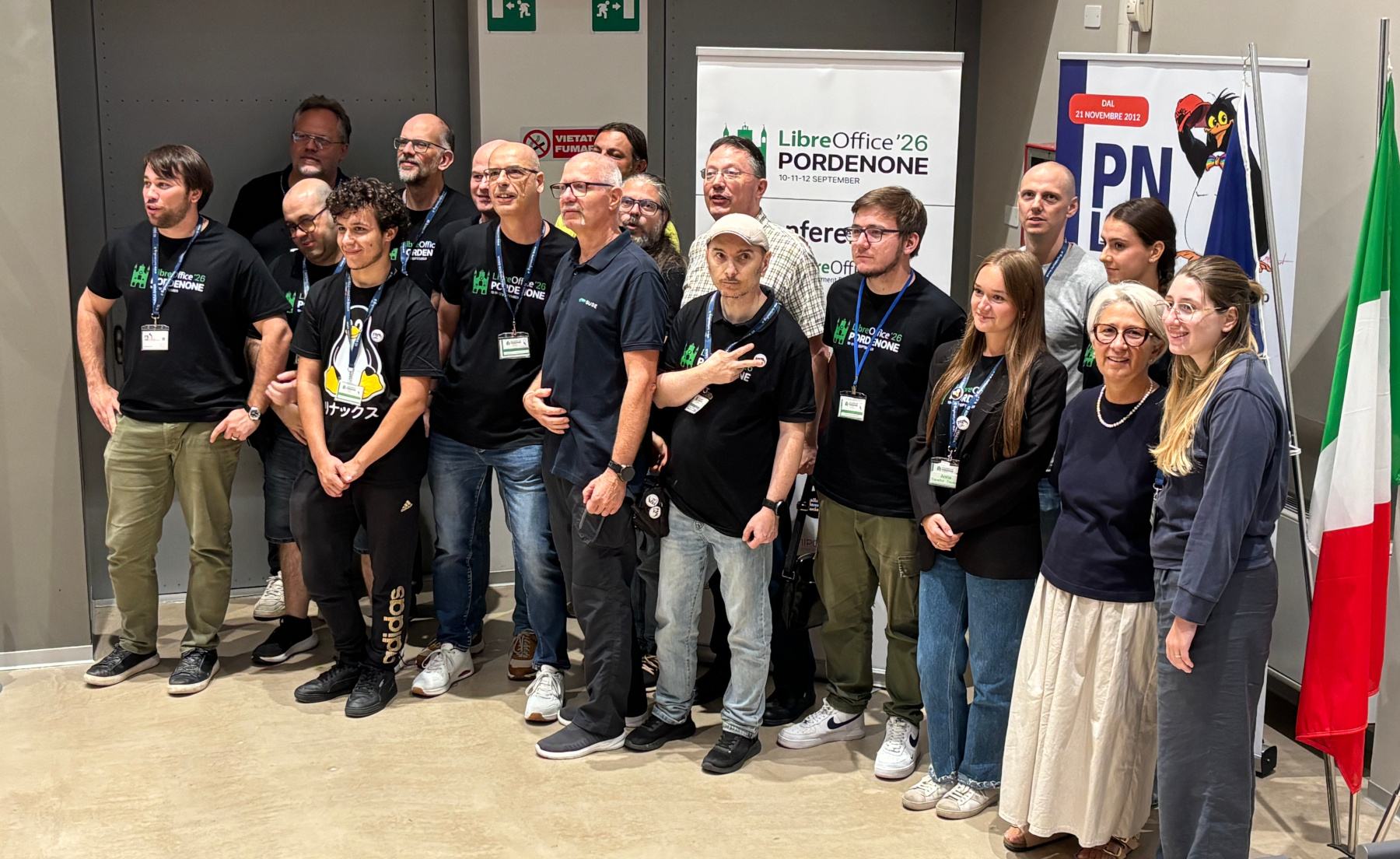
No changes in vision for community support. Regional events and special projects remains as they are, and require proper and timely project submission and available budget. Google Summer of Code and Outreachy will continue as before. The LibreOffice Conference 2026 is planned and will take place in Pordenone, northern Italy.

Marketing and communications

Marketing and communications will adapt to the current situation of the foundation and LibreOffice . More communication of team activities and product development is needed, as well as improving the use of social networks for mass communication. Unification of the several different blogs is under consideration.

Challenges ahead

The foundation is challenged to address the following areas:

  • Develop an online and mobile version of the suite. The challenge is to select the technology that fulfill both end-user and server side management
  • Innovate in collaboration such as peer-to-peer document editing
  • Continue to produce two releases per year of the desktop and Android viewer versions
  • Improve the user interface and usability of LibreOffice
  • Keep the quality and security of the office suite
  • Develop new features and improve current features
  • Cherry-pick relevant features and improvements from other software producers
  • Full support of the Open Document Format (ODF)
  • Produce adequate documentation for development processes and the current and new products
  • Be an active participant of the major open source communities and government initiatives for FOSS and nations’ sovereignty
  • Preserve donation inflow and pursue corporate or government donations through development projects

New assignments of the team

It was suggested that the team be distributed in two parts, with proper interaction between the groups. Additional headcounts, as well as external contracts are considered to fulfil the mission. New community developers will be assigned to tasks upon demand.

Of critical importance, the suite security and CVE’s management were assigned to Christian Lohmaier (Release engineer) and Xisco Fauli (Quality Control). Coverity and OSS-Fuzz services are assigned to Xisco Fauli. These new missions require additional manpower, and provisions for hiring an additional QA specialist is needed.

The team will select valuable technology and code under FOSS licenses, and from companies using LibreOffice Technology.

Mobile, cloud and peer-to-peer development

Mobile and cloud development management is assigned to Jonathan Clark (leader), with support from Dan Williams, Michael Weghorn and Neil Roberts. The planning and priority goals established are based on Jonathan Clark’s “Web and Mobile Development Strategy Proposal” for the remainder of 2026, and include:

  • WebAssembly (WASM) Optimization: Enhancing and polishing our functional prototype based on Qt 6 and WebAssembly. This technological route will run the application robustly and natively directly inside the user’s browser, without overloading hosting servers.
  • Accelerating the mobile project: The goal for 2026 involves technical advancement in the graphical user interface (GUI) code and testing builds on Android and iOS emulators, with advisory support from Dan Williams for iOS-specific topics.
  • Smart collaborative editing: We will initiate practical collaborative editing tests using a stable client-server architecture (via direct TCP/IP connections), paving the way before advancing to peer-to-peer (P2P) network research.

Conclusion

The Document Foundation is challenged to evolve and expand LibreOffice to other computing platforms, and include collaboration editing. This requires changes in the current team activities, mission and organization. The Board and the team are fully committed to addressing these challenges and reporting to the public the development and achievements obtained. Freedom has never been so valuable for the LibreOffice community.

Discuss our plan and strategy on our forum here

LibreOffice Native Language Projects – TDF Annual Report 2025

TDF Annual Report 2025 banner

LibreOffice is available in over 120 languages, thanks to the work of localisation communities around the world. We asked them to summarise their work in 2025 – here’s what they had to say…

Czech

The Czech community maintained an active presence both online and in-person. Their localisation efforts remained strong, keeping the UI fully translated and the Help files at 95% completion. The team also stayed connected with their user base through the Czech Ask LibreOffice site along, with social media presence across X, Facebook, Instagram and Mastodon.

There was also outreach at events. The team hosted dedicated LibreOffice booths at InstallFest in April and LinuxDays in October, both held in Prague. Documentation also saw significant updates, with the publication of the Getting Started Guide (24.8), the Calc Guide (25.2), and the Draw Guide (25.8).

LibreOffice booth at LinuxDays 2025 in Prague

Danish

The Danish community focused on multimedia education and consistent localisation in 2025. There was the launch of the @libreofficeskolen (“LibreOffice School”) YouTube channel. This initiative provides the Danish-speaking public with a series of instructional videos designed to lower the barrier to entry for new users. Alongside this output, the community kept the UI and Help files fully translated at 100%, and ensured that LibreOffice promotional videos were accessible via localised subtitles.

Dutch

Beyond maintaining the local website and providing assistance via the Ask LibreOffice website and mailing lists, the Dutch-speaking community worked on many documentation updates.

Beginning in January with the Calc Guide for 24.8, the community then published a steady stream of translated manuals for version 25.2, including the Writer, Impress, Math, and Getting Started Guides. This effort then lead to the release of the updated 25.2 Calc Guide in July. On the localisation front, the Dutch team continued their work on Weblate, successfully maintaining 100% translation coverage for both the User Interface (UI) and the Help system, following upstream changes.

Finnish

The Finnish community focused on steady and ongoing translation efforts. The team prioritised localisation of the UI, with secondary work continuing on the Help system. To ensure the long-term sustainability of these efforts, the community has been proactive in outreach, utilising the vapaaehtoistyo.fi online platform to recruit new volunteers.

French

On the technical front, the French-speaking team maintained 100% translation coverage for both the UI and Help systems across all versions of LibreOffice. Their localisation work extended to the new Hugo-based website, release notes, and the Extensions wiki page. Significant progress was also made on the translation of Calc functions on the wiki and the subtitling of promotional videos.

Outreach was a major topic in 2025, with the community representing LibreOffice at events like Capitole du Libre in Toulouse, and Open Source Experience in Paris. The team also worked on academic ties, coordinating with UBO University to involve translation students in user guide writing. Beyond documentation and QA, the French team supported users through the Ask LibreOffice site and published various articles on LinuxFR. In addition, there were REGEX tutorials for civil servants and introductory presentations at public media libraries.

German

Throughout the year, the German-speaking community wrote blog posts (and translated others from the English-language blog), maintained its social media activity on Mastodon, and worked on user interface translations. Community members also attended local events on behalf of the LibreOffice project, such as the Augsburger Linux-Infotag 2025 and Digitaltag 2025 in Duisburg.

LibreOffice booth at the Augsburger Linux-Infotag 2025

Irish

The Irish-speaking community made significant steps in 2025 to bring the suite to native speakers. Currently, the UI and website translations are nearing 100%, with the LibreOffice 26.2 user interface already reaching a 96% completion rate. The team’s primary focus is now on finalising these remaining strings and resolving technical checks.

Italian

The Italian-speaking community maintained 100% translation status for the UI and Help files across all active versions of the suite. The team helped with localising the project’s new Hugo-based website and kept the Italian-speaking public informed by translating all release notes and press releases. Current efforts are focused on the ongoing translation of Calc functions on the wiki and a comprehensive revision of various wiki pages.

In 2025, the Associazione LibreItalia organised a full-day LibreItalia conference in Gradisca d’Isonzo, following the adoption of a regional law mandating the use of free open source software in Friuli Venezia Giulia, an eastern Italian region bordering Slovenia. The politician who signed the law provided an overview of the approval process.

The event was organised by Marco Marega, a long-standing member of LibreItalia who is active in the localisation team and other areas of the project. Several members of the Pordenone LUG attended the conference and initiated a discussion about organising the 2026 LibreOffice Conference in their city. This discussion then evolved into an official proposal.

Japanese

The Japanese community had a busy year in terms of events. There was the LibreOffice Asia Conference 2025 in Tokyo, a two-day event that brought together 70 attendees. Outreach extended internationally as Japanese members traveled to COSCUP 2025 in Taiwan to deliver three talks and strengthen ties with the Taiwanese community.

The community also organised:

  • Online Hackfests: Held 46 times via Jitsi and YouTube Live
  • Online Study Parties: Three sessions dedicated to user knowledge sharing
  • LibreOffice Days: Monthly offline meetups in Osaka, co-hosted with the Open Data Mokumoku-kai
  • Open Source Conferences (OSC): Booths and hackfests at seven locations across Japan, from Hokkaido to Fukuoka

On the documentation front, the team published the Writer Guide for LibreOffice 25.2 in Japanese. Localisation efforts currently stand at 91% for the UI and 46% for Help. The team also remained responsive to end users, answering nearly 50 new questions on Ask LibreOffice, publishing 20 blog articles, and maintaining a steady presence on X, Facebook and Bluesky.

LibreOffice Asia Conference 2025 logo

Kazakh

Starting in late 2025, the community launched a refresh of its translation efforts, achieving 100% UI completeness in time for the LibreOffice 26.2 release. This work extended to the localisation of the official website and the activation of the Help master branch, preparing for future documentation projects.

To improve consistency across other open source projects, the team is currently developing a unified Kazakh glossary derived from various localisation projects. Furthermore, the community has begun testing the use of AI-assisted translations, reporting high-quality results to improve their workflows in 2026.

Tagalog

The Tagalog community made steps forward in localisation, maintaining the user interface and Help files at a high completion rate of 98–99% across all versions. The team continued to integrate Deep Language Modeling to automate accuracy verification. While the community experiences a natural ebb and flow of contributors, there is growing interest in expanding support to regional dialects, such as Ilocano.

The team also wishes to extend a special note of gratitude to the dedicated group of US-based translation helpers whose contributions were vital to success in 2025.

TDF says: many thanks to all native-language projects for their work in 2025! Of course, this is just a selection of their activities, based on communities that reported their activities, but there are many more too.

Like what we do? Support the LibreOffice project and The Document Foundation – get involved and help our volunteers, or make a donation. Thank you!

How your donations help the LibreOffice project and community

LibreOffice is free thanks to your donations. Here’s how your support helps us to improve the software and grow the community that makes it 😊 (Note: this video is also available on PeerTube.)

Please confirm that you want to play a YouTube video. By accepting, you will be accessing content from YouTube, a service provided by an external third party.

YouTube privacy policy

If you accept this notice, your choice will be saved and the page will refresh.