Community Member Monday: Sarper Akdemir

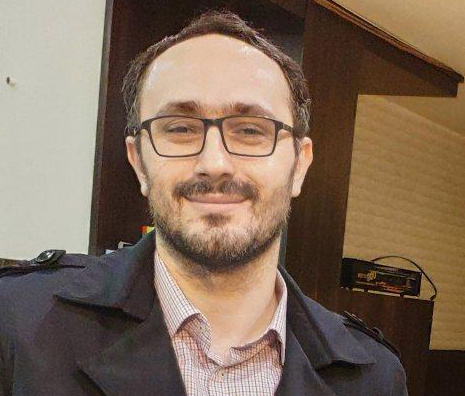
Today we’re talking to Sarper Akdemir, who is a passionate supporter of free software and is helping to add new features to LibreOffice…

Tell us a bit about yourself!

I live in Istanbul, where I am pursuing a bachelor’s degree in Electronics and Communication Engineering at Istanbul Technical University. I like to hack code, cook, play bass, and rice some desktops in my free time. My primary computer is a Thinkpad X220 – such a cutie – and I use Emacs to hack on it.

On April 28 2018, Istanbul Technical University Software Freedom Club (ITUGnu) organized an event called “Free Software Summit”, which introduced me to free software. After that event, I decided to join and be an active member of the club, in the hope of learning more about free software and the hacker culture.

People in ITUGnu informed me about a summer camp called “Mustafa Akgül Free Software Camp”, which is a non-profit organization where people all around Turkey volunteer to teach attendees about free software, with courses ranging from GNU/Linux system administration to IT law.

I took a workshop there that Muhammet Kara gave called “LibreOffice Development Workshop” which got me started hacking on LibreOffice.

After the workshop, I decided to keep contributing to LibreOffice and apply to the Google Summer of Code. And I was lucky enough to get selected as a Google Summer of Code student in the past summer.

Why did you decide to become a member of The Document Foundation?

Throughout the Google Summer of Code period, hacking on LibreOffice daily was a lot of fun and at times challenging. While doing so, I got to interact and learn from the community of developers, especially my mentor Thorsten Behrens (CIB). Since being in the LibreOffice community is so rewarding, I wanted it to be official with a TDF membership – and having a say in what the future holds for LibreOffice is, of course, a plus.

What are you working on in the LibreOffice project right now?

I finished my Google Summer of Code project that introduced physics-based animation effects to LibreOffice Impress. And right now, I’m looking forward to fixing some bugs, starting from the ones related to animation effects.

Anything else you plan to do in the future? What does LibreOffice really need?

Since LibreOffice is one of the core utility pieces that the end user looks for in a computer, I think it is also an important piece for end users to achieve freedom. Therefore, I think LibreOffice can always use more robustness, so I will be fixing as many bugs as I can in the future.

Other than that, in the near future I’m trying to organize an event under ITUGnu to help some fellow students to contributing to LibreOffice and other free software projects.

Huge thanks to Sarper for his work on the new Impress animations, and Thorsten, his mentor, for supporting him. We hope to be in the next Google Summer of Code, but in the meantime, everyone with some C++ knowledge is welcome to explore the LibreOffice source code and try some EasyHacks. We’ll be there if you need help!

Open Badges for top LibreOffice QA contributors

Earlier this year we announced Open Badges for contributors to LibreOffice and its various sub-projects. These are custom PNG images sent out to each recipient, containing metadata about achievements, which can be verified using an external service. Recipients can then proudly show them off, or use them as proof of activity when applying for jobs or joining other free software projects!

Today, we’re announcing Open Badges for the top QA (Quality Assurance) project contributors. These are the most active people on Bugzilla, our bug tracking tool. The winners are:

Telesto – NISZ LibreOffice Team – Mike Kaganski – Andreas Kainz – Roman Kuznetsov – Regina Henschel – Aron Budea – Seth Chaiklin – Robert Großkopf – Rizal Muttaqin – Timur – R. Green – TorrAB – Gerald Pfeifer – Kevin Suo – Jim Raykowski – Samuel Mehrbrodt – Sergio Callegari – Michael Weghorn – Ming Hua – Julien Nabet – sawakaze – Eyal Rozenberg – Thorsten Wagner – Zdeněk Crhonek – Jim Avera – Thomas Lendo – Ricky Tigg – Gabor Kelemen – Steve Fanning

Congrats to all of you! We’ve personally emailed you with the custom badge, so enjoy showing it off 🙂

LibreOffice Template Contest – Win awesome prizes!

LibreOffice comes with various templates, and extras are available on our dedicated extensions and templates website. But even more are always welcome! Today, Swiss company Adfinis, a contributor to LibreOffice and member of The Document Foundation’s Advisory Board, is starting a contest to get shiny new templates for LibreOffice.

So, what does this entail? Well, until January 31, you can create templates for Impress, Writer and Calc, and submit them in the contest. There are some rules and requirements, but if you abide by them, your template(s) will be rated by a jury and the winners will be announced at FOSDEM.

Adfinis will award the six winning template creators with CHF 500 (EUR approx. 460, USD approx. 556), and there are also LibreOffice hoodies, T-shirts and other goodies from The Document Foundation on offer.

So, take part! See the Adfinis site for all the details, and good luck to all participants…

Community Member Monday: Shivam Kumar Singh

Today we’re talking to Shivam Kumar Singh, who has been working on new LibreOffice features as part of the Google Summer of Code

To start with, tell us a bit about yourself!

I am a undergraduate Engineering student at the Indian Institute of Engineering Science and Technology in Shibpur, India. Currently I am in my pre-final year, and for the last two years have been involved in development and all things tech-related. I run a programming club in my university, in which, along with my team, I educate our peers on how to start programming.

As for hobbies: I am a coin collector. I love collecting coins of various countries and anything vintage is of great interest to me. Apart from that, I am a huge anime and manga fan! You can find me on GitHub and Facebook.

Why did you decide to become a member of The Document Foundation?

I became a part of the Libreoffice community through the Google Summer of Code (GSoC) 2020, in which I developed the much needed Styles Inspector for Libreoffice writer (mentors: Mike Kagansky and Tomaz Vajngerl (Collabora), and Heiko Tietze (TDF)). Even before GSoC, I was a regular contributor to the core repo and had fixed plenty of Easy and Interesting hacks.

After completing GSoC, I got an invitation from Muhammet Kara to join TDF. I was completely thrilled by the invitation. Being a part of the TDF membership is more like a responsibility, and it gives a complete sense of belonging to the community, to which I was making voluntary contributions beforehand.

I feel that being a TDF member gives me a more vivid idea on where the software is actually going in the future, and how I (along with the other members) can do my part to bring the best out of the software.

What are you working on right now?

I contribute in the code base of Libreoffice. I was working on the Styles Inspector for the whole summer. The project is at a very good and very usable state now. Most of the time I monitor the bugs associated with it, sharing my views or sending patches to fix them. I strongly believe that we should not abandon our projects just when the timeline ends, or it becomes usable. Instead one should keep on polishing it until there is no mega improvement possible 🙂

Other than this, I am always around the #libreoffice-dev IRC channel, helping the other newcomers with their queries, and showing how to start contributing to the codebase.

Anything else you plan to do in the future? What does LibreOffice really need?

I think the LibreOffice community is one the best communities someone can be a part of. People here are very welcoming to new contributors, and that’s really a big boost when trying to understand or work on a new codebase. I really want LibreOffice to expand its network and be a part of other programs like Google Code-in (which later got closed this year though) and CommunityBridge, as in that way, more people – particularly students – will be able to know about the community and the software.

I have always prioritized Open Source over commercial software. But it’s very unfortunate that in countries like India, where student and youth contribution is very high, not many people are unaware of Open Source technologies in general – and Libreoffice in particular. Everyone is paying huge sums for Microsoft Word or other suites, even though there are suites like LibreOffice available completely for free, with a lot of new and cool features.

A lot has been done and a lot still needs to be achieved. The Document Foundation’s growth has been spectacular in these past 10 years. I cannot wait to see what the team will achieve in this decade 🙂

Many thanks to Shivam for sharing his experiences! And indeed, in the LibreOffice community we try to be welcoming and accessible for all new contributors. Find out what you can do for LibreOffice, and let us know how you get on!