Our LibreOffice New Generation project aims to bring new – and especially younger – contributors into the LibreOffice community. Earlier in the year, we created a flyer for schools and universities, and we’ve sent out printed versions to many people around the world.
Now, here’s an alternative design, thanks to Rizal Muttaqin and the Indonesian community! Click the image to get the original SVG file, if you want to make updates and translations (Vegur font required). And if you’d like some printed flyers to hand out in a school or university, drop us a line and let us know…
On June 10, LibreOffice 7.1.4 Community was made available for download, with 80 bugfixes and compatibility improvements. Thanks as always to our volunteers and certified developers for their work on it!
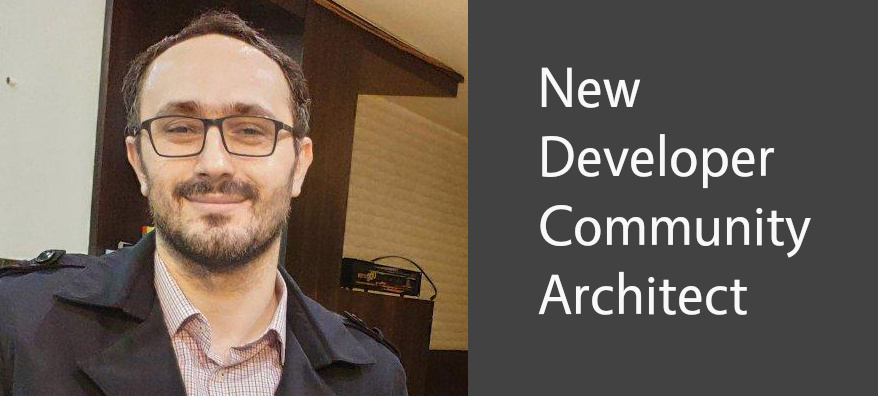
Hossein Nourikhah joined the TDF team as Developer Community Architect. He’ll help to onboard new developers in the project, give them code pointers, and assist them as they add new features. Welcome, Hossein!
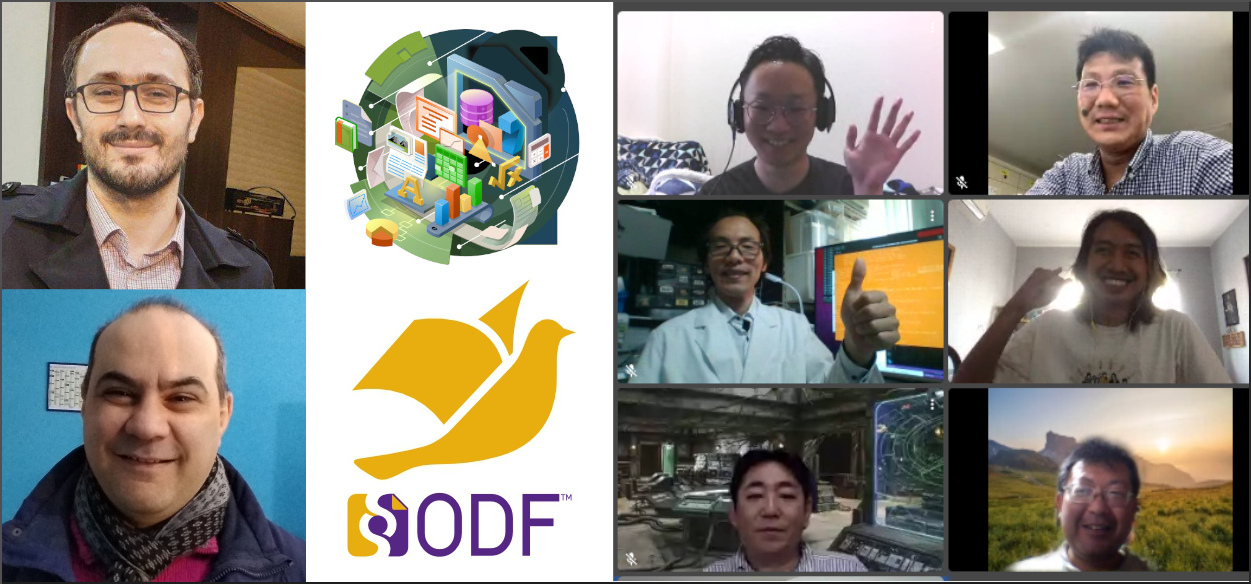
Meanwhile, ODF 1.3 was announced as an OASIS standard. ODF (OpenDocument Format) is the native format of LibreOffice, and is a fully open standard that other productivity tools can implement.
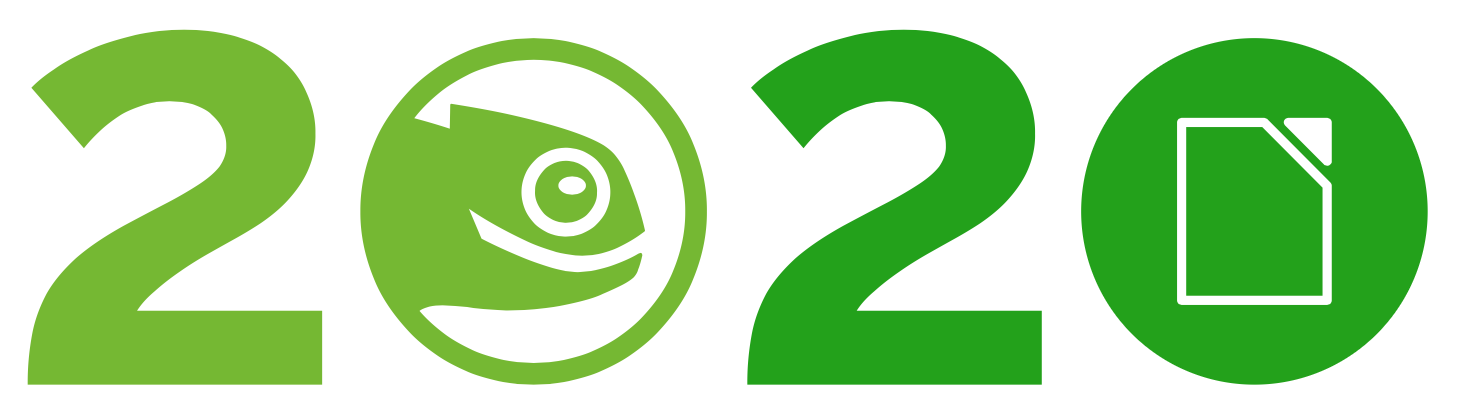
The LibreOffice Conference 2021 is coming up in September – and you can design the logo for it! Here’s the one from 2020 (the joint conference organised with the openSUSE project) for inspiration…
LibreOffice’s Japanese community reported from their Kaigi 2021 Online event. Speakers from around Japan (and Asia) talked about their work and projects. Hopefully in-person events will be possible soon!
Companies in the LibreOffice ecosystem contribute valuable things to the project: new features, bugfixes, and long-term support options for enterprise users. At the end of the month, German company allotropia announced that it has joined TDF’s Advisory Board – it provides services, consulting and products around LibreOffice and related open source projects.
Daniel A. Rodriguez from the Hispanic LibreOffice community (and TDF’s Board of Directors) writes:
On Saturday June 26, we held the first virtual meeting of the Hispanic community this year. The activity was attended by several members, who are recognized for their participation and collaboration in the project.
We have opted for a new name for the event, although the same spirit as last year has been maintained. We understand that this modification is in line with what we do every day in the different areas we set up for this purpose: talk about LibreOffice.
In addition, we launched the Spanish channel on Fediverse.tv and the #libreoffice-es room on Libera.Chat. The interaction with the speakers was available through the integrated chat on Fediverse.tv, IRC (either with a client or through the web interface), or from the Hispanic group on Telegram.
As always, it was an open activity, free of charge and aimed at anyone interested in the office suite par excellence of free software. The event could be attended live from 16:00 UTC through the Spanish channel on Fediverse.tv.
Almost immediately after each presentation, the video was made available through the chosen platform. Fediverse.tv is based on PeerTube, which is an open source, decentralized, federated web application that uses peer-to-peer technology to reduce the load on individual servers when viewing videos.
I am a son and grandson of American missionaries who moved to Brazil in 1952. Since my mother was born here (my father was a seven month old baby), I was born automatically a Brazilian citizen – even though I was born in the USA. Being brought up in Brazil, I learned both American English in the home, and learned Brazilian Portuguese in parallel. I am fluent in both languages. Computers came into my life as my dad saw the importance and value of them in the eighties. Watching him hack an Apple IIe and a daisy wheel printer to get the tilde accent over the letter “y” was an adventure in and of itself.
I have been on a learning journey for most of my life. Everything I have learned is self-taught, including LibreOffice. My main activity in life is teaching in general. Teaching software to newbies such as the elderly, the underprivileged and young people is a passion I have. LibreOffice is an excellent starting point as it has virtually all the basic areas: text, images, markup languages, programming logic on a very simple scale with macros, databases etc., and much, much, more.
What are you working on in the LibreOffice project right now?
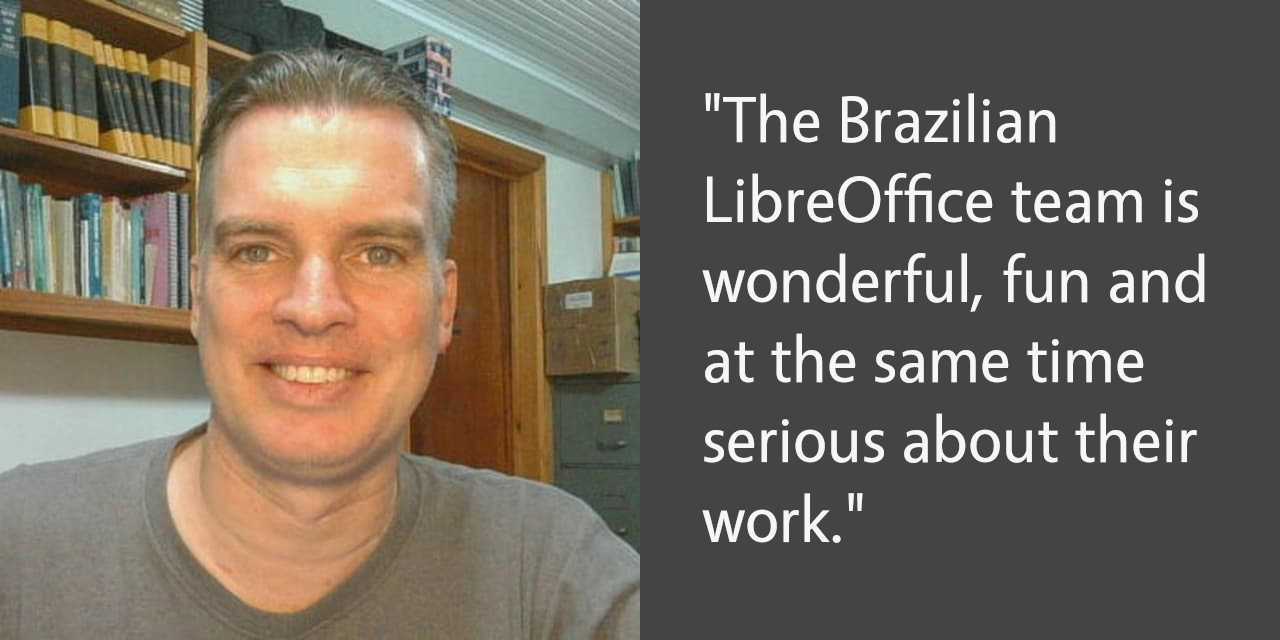
Right now, I am on the Brazilian translation and editing team. I am new, and am still learning how to organize myself better. The Brazilian team lead by Olivier Hallot is wonderful, fun, and at the same time, very serious about their work. Our Wednesday night meetings are in a fun and enjoyable environment – without losing the fine touch necessary for an editing team. I learn a lot from them just by listening to them.
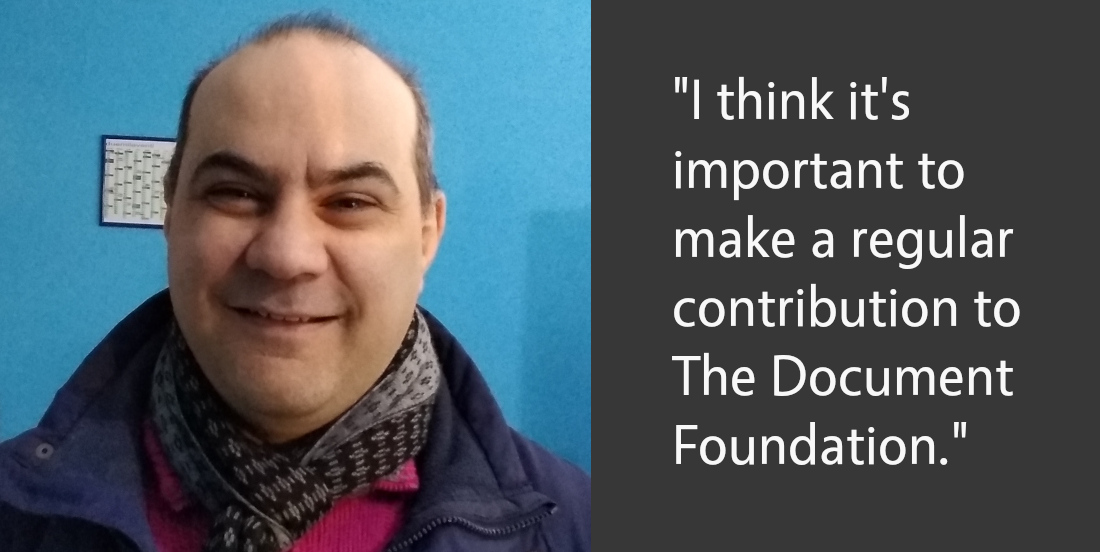
Why did you decide to become a member of The Document Foundation?
Firstly, becoming a member of TDF is a way to begin to know other people, and, secondly, I believe becoming a member adds prestige to a curriculum vitae.
Both contact with people around the globe, and being part of something free, open and serious as TDF will open new doors for me to help “convert” people to LibreOffice, the ideals of TDF and open source software in general.
Anything else you plan to do in the future? What does LibreOffice really need?
There are two main things I would like to do with LibreOffice:
Create a teaching standard for IT.
Convince businesses to adopt more open standards via LibreOffice.
Participating in many different LibreOffice groups, I have noticed a major request for a change in LibreOffice’s appearance. It may seem trivial, but, many non-technical people make a decision of acceptance or rejection based on the look of something. I believe it would be wise to do an overhaul of the visuals.
Personally, I don’t pay too much attention to that since I focus on usability, but I am surrounded by people who reject many things simply because the look isn’t “modern”, “contemporary”, or “cool” enough.
I am 47 years old, so, my age may be a factor that adds into the way I interpret the visual aspects (meaning I don’t care too much about them). On the other hand, as the years go by, I notice that my way of thinking and doing things has somewhat solidified. An older generation can run the risk of not paying attention to the new generation and this generation (my children’s or younger) are a highly visual generation.
Many thanks to Tim for all his contributions! Everyone helping out in the LibreOffice project is welcome to apply for membership of TDF, and help us to steer our projects into the future 👍
Please confirm that you want to play a YouTube video. By accepting, you will be accessing content from YouTube, a service provided by an external third party.
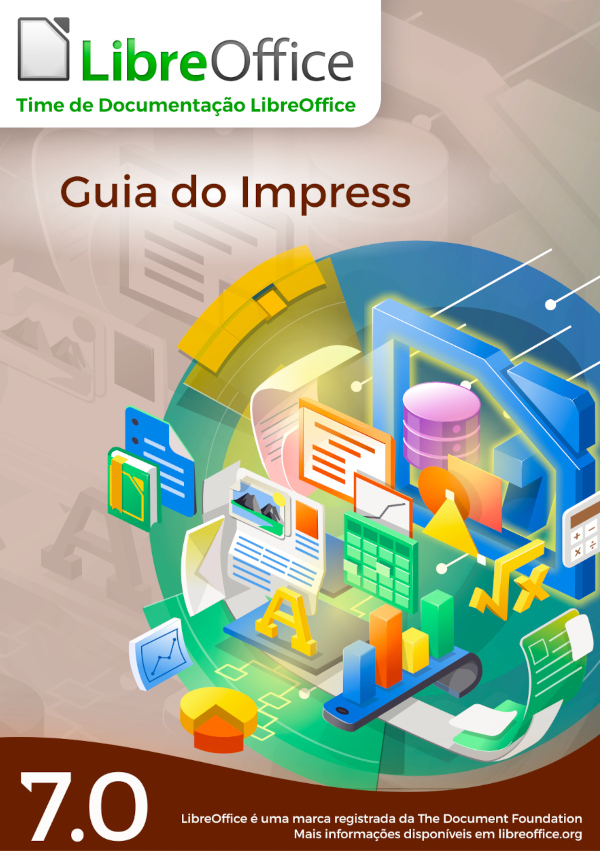
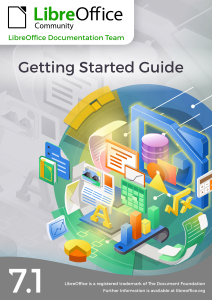
Jean Weber, Kees Kriek, Felipe Viggiano and Peter Schofield from the LibreOffice Documentation Team are happy to announce the immediate availability of the Getting Started Guide 7.1, the introductory guide for all readers that need to start using the LibreOffice suite and quickly get to the proficiency level.
Covering all LibreOffice modules, from the Calc spreadsheet to the Base database and including chapters on the suite settings as well as macro coding, the Getting Started Guide 7.1 is a valuable companion for organizations that must deploy documentation on LibreOffice together with the software suite on their offices and also at user’s home.
The Guide is available in PDF format and is part of the LibreOffice Library, a set of advanced guides for the LibreOffice productivity suite.
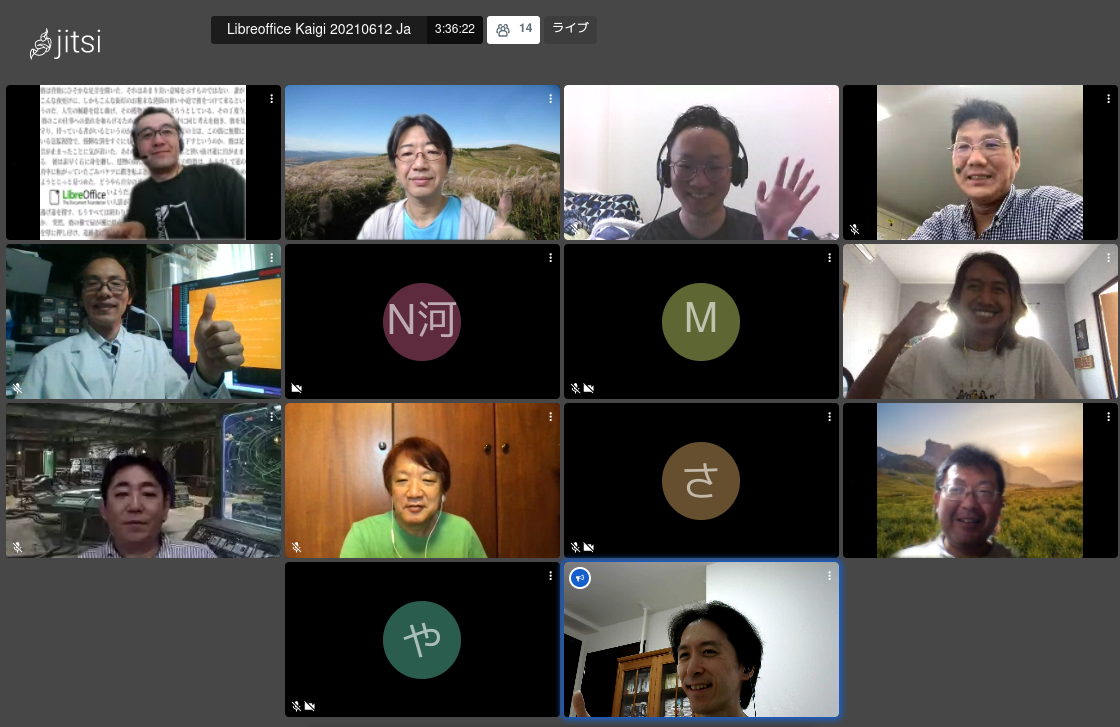
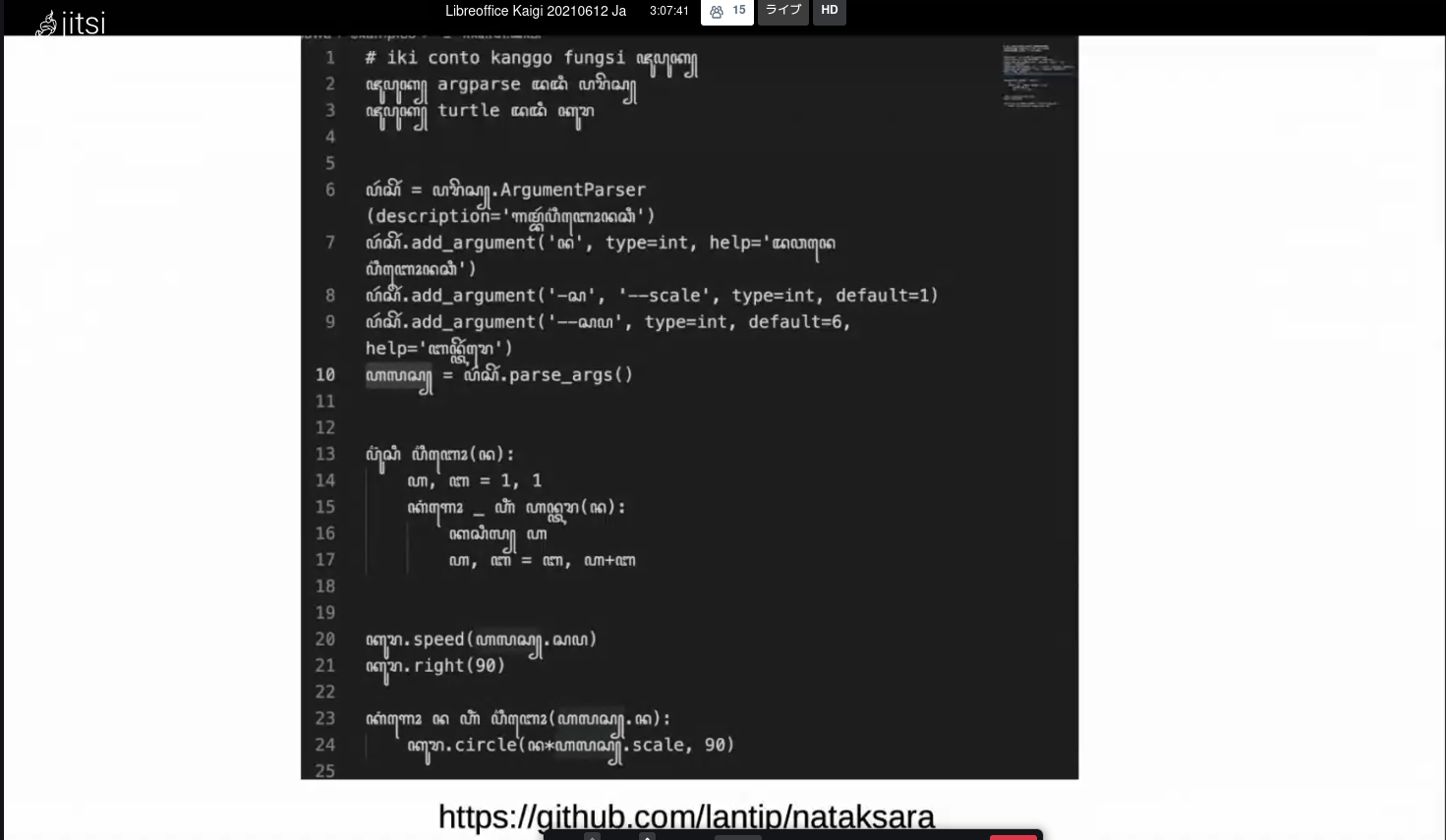
LibreOffice Kaigi 2021 Online was held on Saturday, June 12, 2021. This is normally an annual gathering in Japan, originally scheduled for March 2020 in Osaka – but due to COVID-19 we were unable to hold it. This year, for the first time, the meeting was held online, with speakers and participants joining the Jitsi meet, which was also broadcast live on YouTube. The maximum number of connections was around 27 people for both. We are grateful to The Document Foundation and iCraft for sponsoring the event. Thank you very much!
The keynote speaker, Ahmad Haris, who leads the Indonesian community for LibreOffice, gave an introduction to our work in Indonesia. Indonesia is made up of many islands scattered over a wide area, and is the equivalent in distance of London to Baghdad.
The local LibreOffice Conference in Indonesia in 2018 was a success and the community is very active. Currently there are 795 participants in the LibreOffice Indonesia Telegram group. Translation is focused on UI, then Help, while QA events have been held with the help of Ilmari, and workshops have been held at universities. The Indonesian community has also contributed to the splash screen. Recently, they have contributed many templates, some of which are included in LibreOffice.
The well-received LibreOffice 7.0 introduction video was also made by the Indonesian community with music composed by Haris. The screenshot of the slide was retweeted more than 2,600 times, with the story that Indonesia has an island called Java and that Java and JavaScript are not just programming languages, but Javanese words.
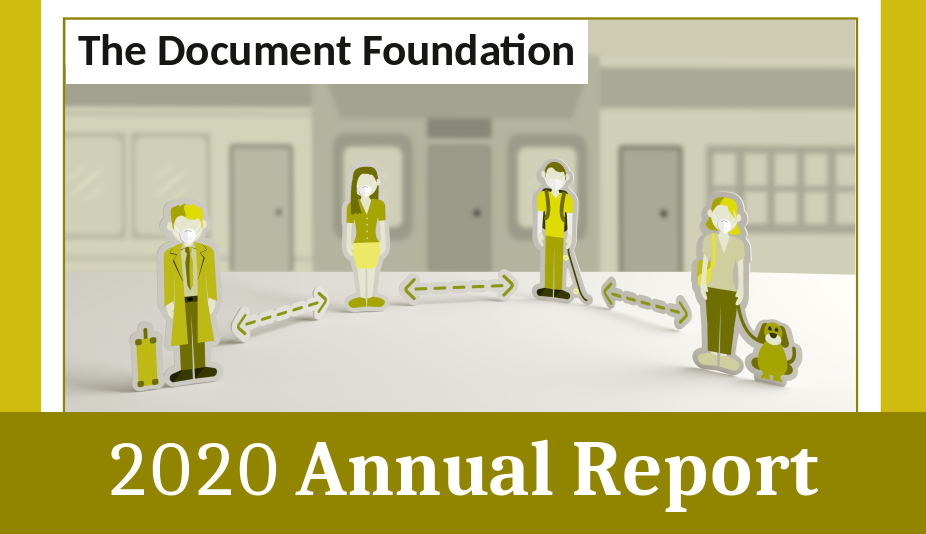
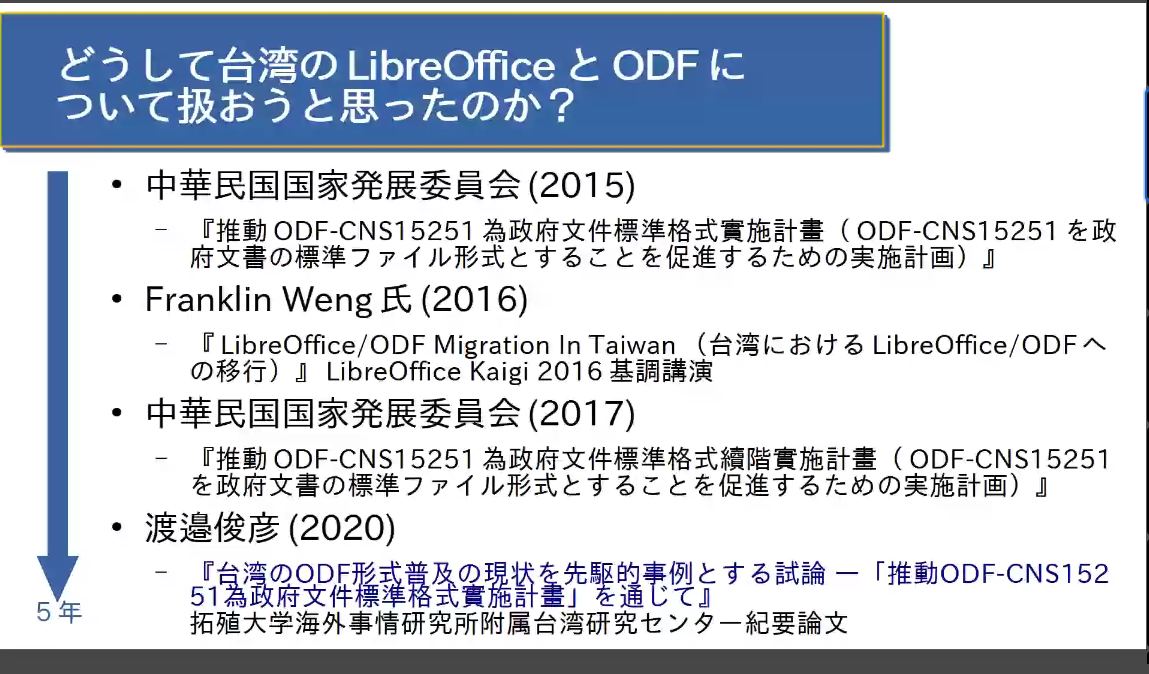
Shinj Enoki reviewed the last year’s LibreOffice community with the Annual Report. In the public presentations, Kawano-san talked about “User-customizable web form issuing system using LibreOffice”, Annoura-san talked about “Making Neo4j native driver for LibreOffice”, Watanabe-san talked about “Taiwan’s LibreOffice from light user perspective and Around ODF”, and “Fast translation of LibreOffice Guide” from Meguro-san.
The status of LibreOffice/ODF adoption in Taiwan had been introduced by Franklin Weng, from the Taiwanese community, at LibreOffice Kaigi 2016.12. Mr. Watanabe has researched and written a paper from a different perspective. It was interesting to see how the Taiwanese government is really working on it, and how it actually works in universities, from a different perspective than the Taiwanese community.
There were three lightning talks including jumping in and out, and the general Q&A afterwards was filled with discussions about why and what opportunities are available in Japan to promote open source software and LibreOffice.
The Japanese community holds “LibreOffice Hackfest Online” sessions every Wednesday night, to work on LibreOffice and exchange information, and “Online Study Sessions” (the next one will be on September 4) to exchange know-how among users every three to four months. Check out Connpass and join the events that interest you.
Many thanks to everyone in the Japanese community for all their great work! And to everyone reading this who wants to spread the word about LibreOffice in other areas/languages, drop us a line and let’s work together 👍