On June 10, LibreOffice 7.1.4 Community was made available for download, with 80 bugfixes and compatibility improvements. Thanks as always to our volunteers and certified developers for their work on it!
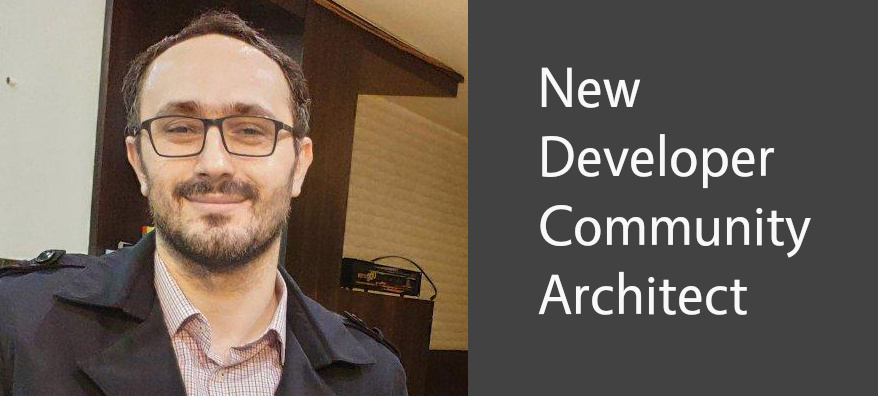
Hossein Nourikhah joined the TDF team as Developer Community Architect. He’ll help to onboard new developers in the project, give them code pointers, and assist them as they add new features. Welcome, Hossein!
Meanwhile, ODF 1.3 was announced as an OASIS standard. ODF (OpenDocument Format) is the native format of LibreOffice, and is a fully open standard that other productivity tools can implement.
The LibreOffice Conference 2021 is coming up in September – and you can design the logo for it! Here’s the one from 2020 (the joint conference organised with the openSUSE project) for inspiration…
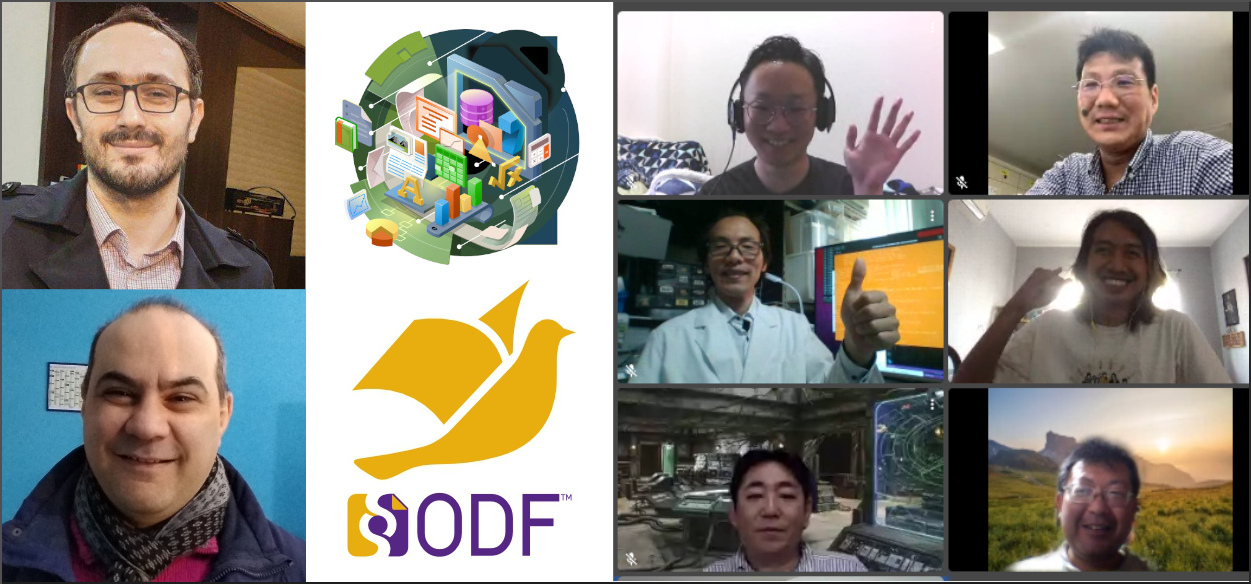
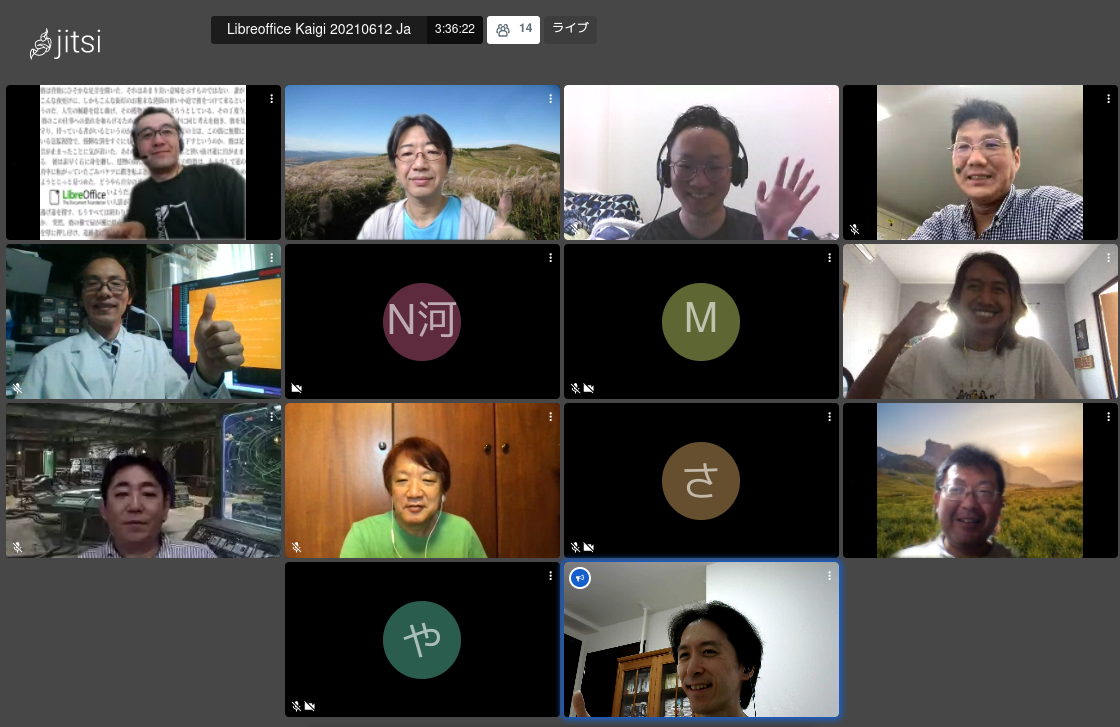
LibreOffice’s Japanese community reported from their Kaigi 2021 Online event. Speakers from around Japan (and Asia) talked about their work and projects. Hopefully in-person events will be possible soon!
Companies in the LibreOffice ecosystem contribute valuable things to the project: new features, bugfixes, and long-term support options for enterprise users. At the end of the month, German company allotropia announced that it has joined TDF’s Advisory Board – it provides services, consulting and products around LibreOffice and related open source projects.
Daniel A. Rodriguez from the Hispanic LibreOffice community (and TDF’s Board of Directors) writes:
On Saturday June 26, we held the first virtual meeting of the Hispanic community this year. The activity was attended by several members, who are recognized for their participation and collaboration in the project.
We have opted for a new name for the event, although the same spirit as last year has been maintained. We understand that this modification is in line with what we do every day in the different areas we set up for this purpose: talk about LibreOffice.
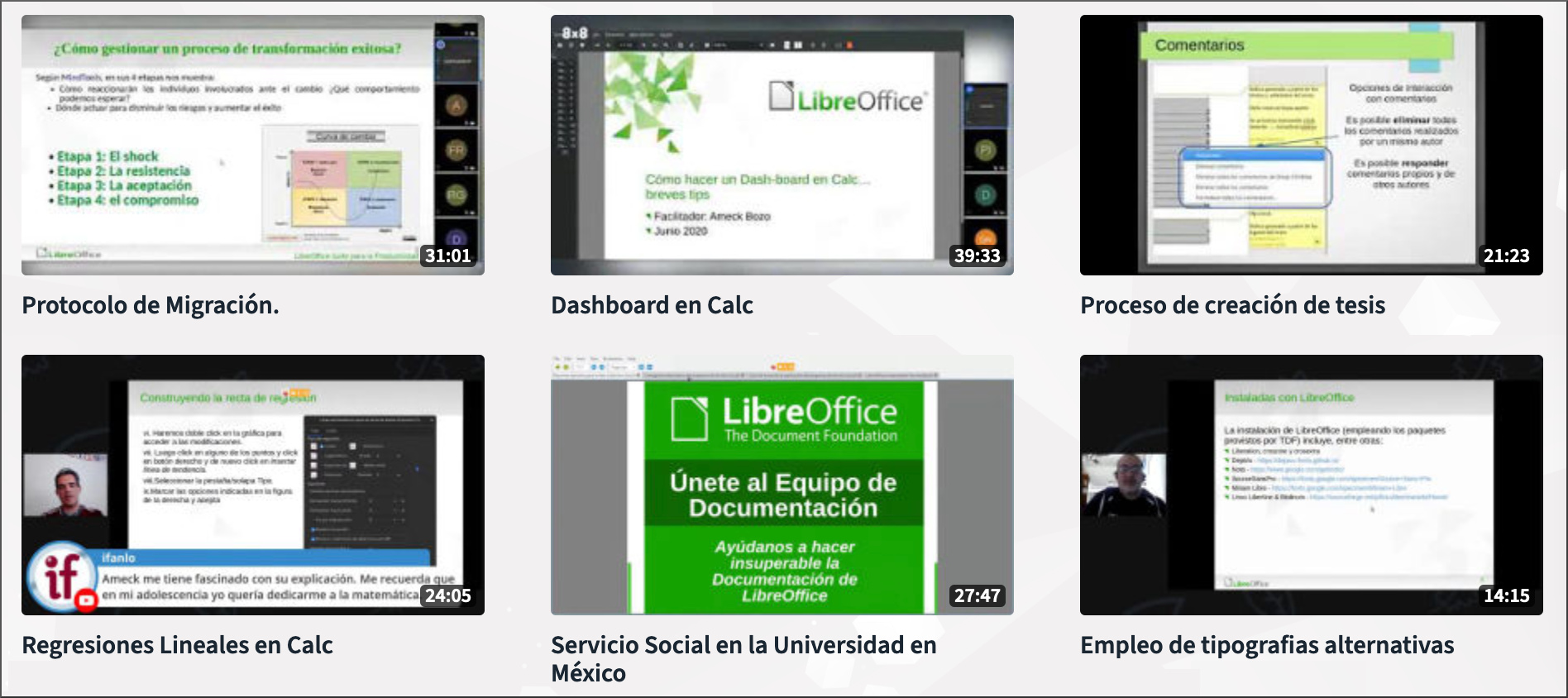
In addition, we launched the Spanish channel on Fediverse.tv and the #libreoffice-es room on Libera.Chat. The interaction with the speakers was available through the integrated chat on Fediverse.tv, IRC (either with a client or through the web interface), or from the Hispanic group on Telegram.
As always, it was an open activity, free of charge and aimed at anyone interested in the office suite par excellence of free software. The event could be attended live from 16:00 UTC through the Spanish channel on Fediverse.tv.
Almost immediately after each presentation, the video was made available through the chosen platform. Fediverse.tv is based on PeerTube, which is an open source, decentralized, federated web application that uses peer-to-peer technology to reduce the load on individual servers when viewing videos.
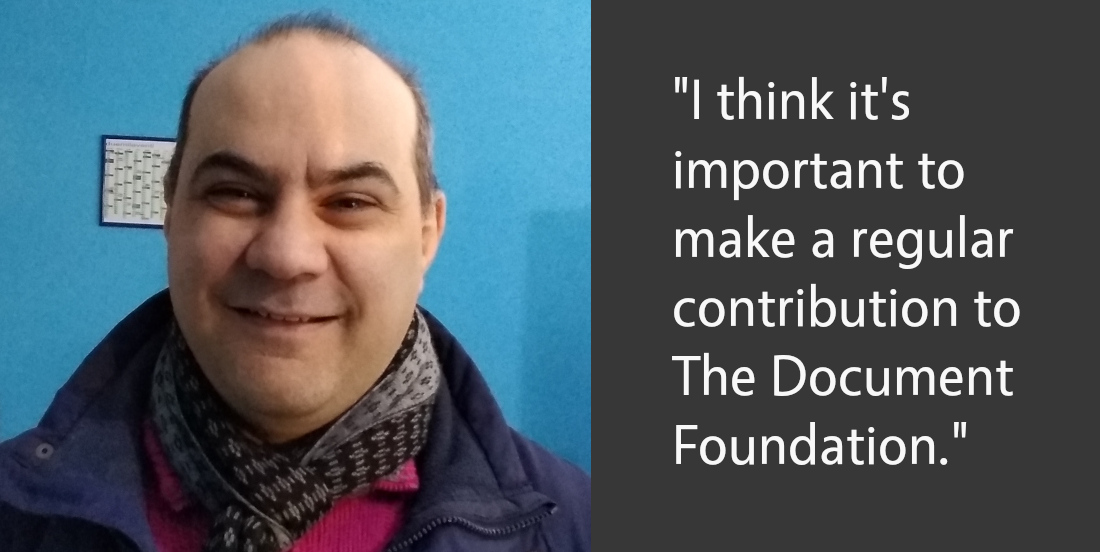
I am a son and grandson of American missionaries who moved to Brazil in 1952. Since my mother was born here (my father was a seven month old baby), I was born automatically a Brazilian citizen – even though I was born in the USA. Being brought up in Brazil, I learned both American English in the home, and learned Brazilian Portuguese in parallel. I am fluent in both languages. Computers came into my life as my dad saw the importance and value of them in the eighties. Watching him hack an Apple IIe and a daisy wheel printer to get the tilde accent over the letter “y” was an adventure in and of itself.
I have been on a learning journey for most of my life. Everything I have learned is self-taught, including LibreOffice. My main activity in life is teaching in general. Teaching software to newbies such as the elderly, the underprivileged and young people is a passion I have. LibreOffice is an excellent starting point as it has virtually all the basic areas: text, images, markup languages, programming logic on a very simple scale with macros, databases etc., and much, much, more.
What are you working on in the LibreOffice project right now?
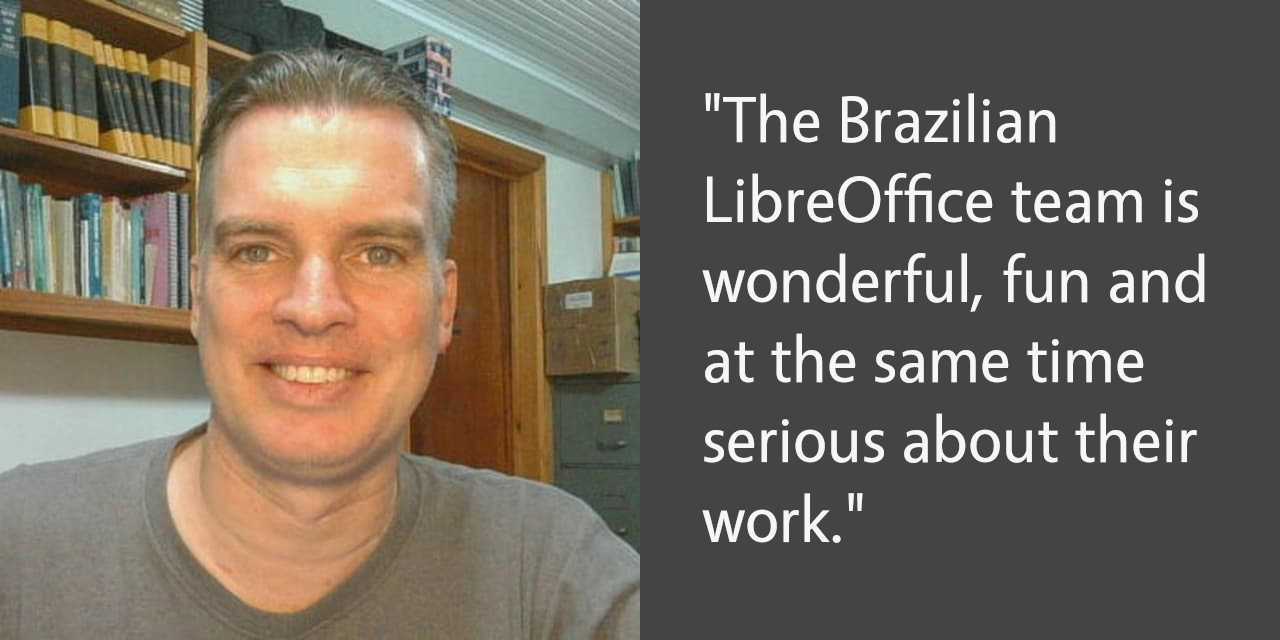
Right now, I am on the Brazilian translation and editing team. I am new, and am still learning how to organize myself better. The Brazilian team lead by Olivier Hallot is wonderful, fun, and at the same time, very serious about their work. Our Wednesday night meetings are in a fun and enjoyable environment – without losing the fine touch necessary for an editing team. I learn a lot from them just by listening to them.
Why did you decide to become a member of The Document Foundation?
Firstly, becoming a member of TDF is a way to begin to know other people, and, secondly, I believe becoming a member adds prestige to a curriculum vitae.
Both contact with people around the globe, and being part of something free, open and serious as TDF will open new doors for me to help “convert” people to LibreOffice, the ideals of TDF and open source software in general.
Anything else you plan to do in the future? What does LibreOffice really need?
There are two main things I would like to do with LibreOffice:
Create a teaching standard for IT.
Convince businesses to adopt more open standards via LibreOffice.
Participating in many different LibreOffice groups, I have noticed a major request for a change in LibreOffice’s appearance. It may seem trivial, but, many non-technical people make a decision of acceptance or rejection based on the look of something. I believe it would be wise to do an overhaul of the visuals.
Personally, I don’t pay too much attention to that since I focus on usability, but I am surrounded by people who reject many things simply because the look isn’t “modern”, “contemporary”, or “cool” enough.
I am 47 years old, so, my age may be a factor that adds into the way I interpret the visual aspects (meaning I don’t care too much about them). On the other hand, as the years go by, I notice that my way of thinking and doing things has somewhat solidified. An older generation can run the risk of not paying attention to the new generation and this generation (my children’s or younger) are a highly visual generation.
Many thanks to Tim for all his contributions! Everyone helping out in the LibreOffice project is welcome to apply for membership of TDF, and help us to steer our projects into the future 👍
Please confirm that you want to play a YouTube video. By accepting, you will be accessing content from YouTube, a service provided by an external third party.
Berlin, July 1, 2021 – The Document Foundation (TDF) announced today that allotropia – a German company that provides services, consulting and products around LibreOffice and related open source projects – has joined TDF’s Advisory Board.
Founded in late 2020 with five long-time LibreOffice developers, allotropia’s stated mission is to bring LibreOffice to shine – in as many different shapes and forms as necessary, to serve the modern needs of office productivity software. allotropia was spun off from CIB, another long-time provider of LibreOffice-based products and services (and also a member of the Advisory Board).
allotropia joining the Advisory Board, as a new and valuable ecosystem partner for LibreOffice, is a great achievement and help for TDF. The mix of “innovation style” of a start up, as well as the staff and management – who are well known in our community for years – will bring synergy effects for both sides. We warmly welcome allotropia as a new ecosystem partner, and wish them all the best and good luck in their business activities.
Thorsten Behrens, CEO and owner of allotropia software GmbH, adds:
We are super excited to be working with the LibreOffice community in this new setup. There are many areas where innovation is needed and we are investing, for example in running LibreOffice client-side in a browser. On the other hand, with the experienced team we have here, it is a privilege to serve our existing customers and help them to run LibreOffice securely and conveniently.
About the Advisory Board
TDF’s Advisory Board’s primary function is to represent supporters of the project, and to provide the Board of Directors (BoD) with advice, guidance and proposals. In addition, the AB is at the kernel of the LibreOffice ecosystem, and as such is key to the further development of the project.
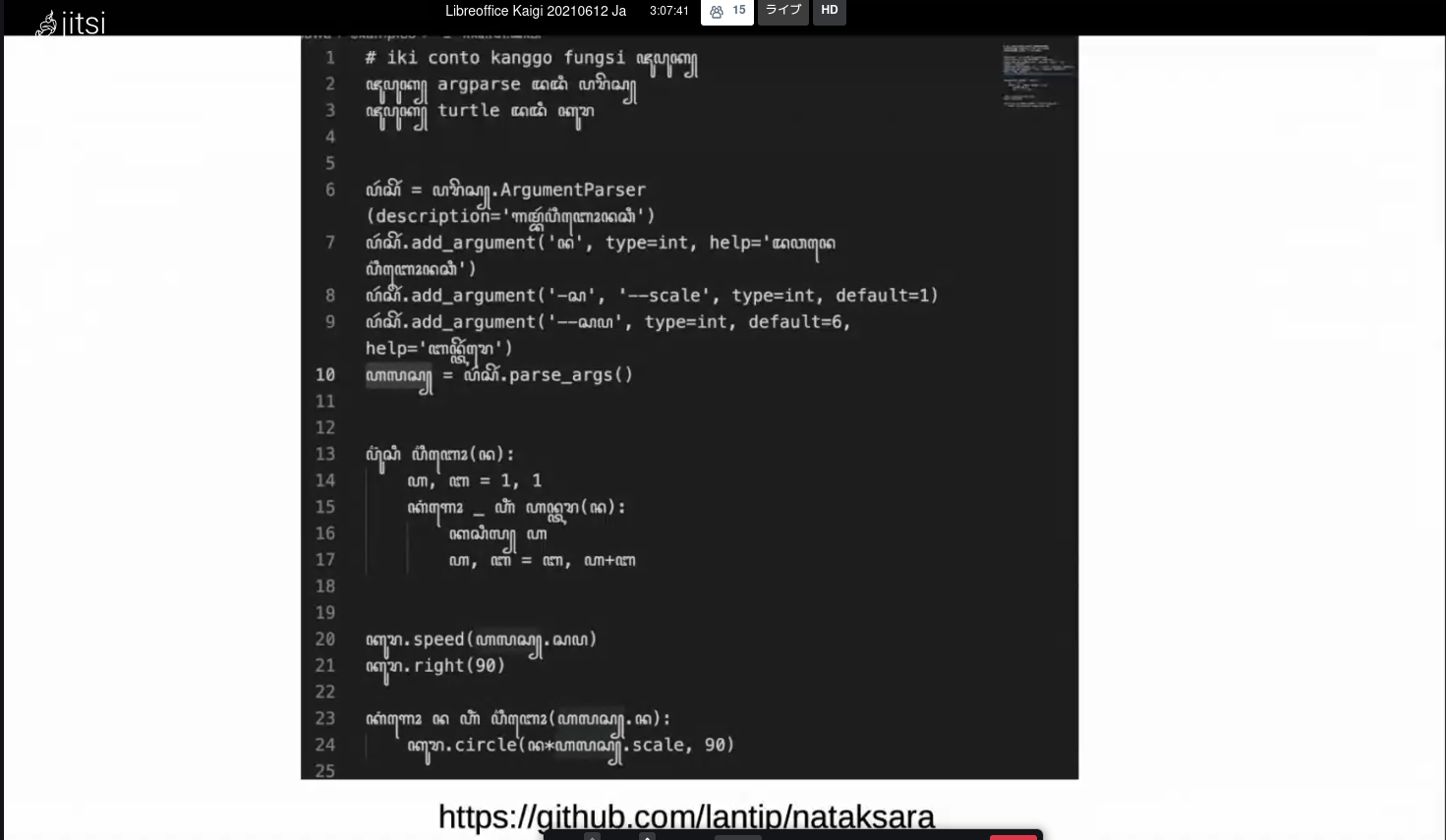
LibreOffice Kaigi 2021 Online was held on Saturday, June 12, 2021. This is normally an annual gathering in Japan, originally scheduled for March 2020 in Osaka – but due to COVID-19 we were unable to hold it. This year, for the first time, the meeting was held online, with speakers and participants joining the Jitsi meet, which was also broadcast live on YouTube. The maximum number of connections was around 27 people for both. We are grateful to The Document Foundation and iCraft for sponsoring the event. Thank you very much!
The keynote speaker, Ahmad Haris, who leads the Indonesian community for LibreOffice, gave an introduction to our work in Indonesia. Indonesia is made up of many islands scattered over a wide area, and is the equivalent in distance of London to Baghdad.
The local LibreOffice Conference in Indonesia in 2018 was a success and the community is very active. Currently there are 795 participants in the LibreOffice Indonesia Telegram group. Translation is focused on UI, then Help, while QA events have been held with the help of Ilmari, and workshops have been held at universities. The Indonesian community has also contributed to the splash screen. Recently, they have contributed many templates, some of which are included in LibreOffice.
The well-received LibreOffice 7.0 introduction video was also made by the Indonesian community with music composed by Haris. The screenshot of the slide was retweeted more than 2,600 times, with the story that Indonesia has an island called Java and that Java and JavaScript are not just programming languages, but Javanese words.
Shinj Enoki reviewed the last year’s LibreOffice community with the Annual Report. In the public presentations, Kawano-san talked about “User-customizable web form issuing system using LibreOffice”, Annoura-san talked about “Making Neo4j native driver for LibreOffice”, Watanabe-san talked about “Taiwan’s LibreOffice from light user perspective and Around ODF”, and “Fast translation of LibreOffice Guide” from Meguro-san.
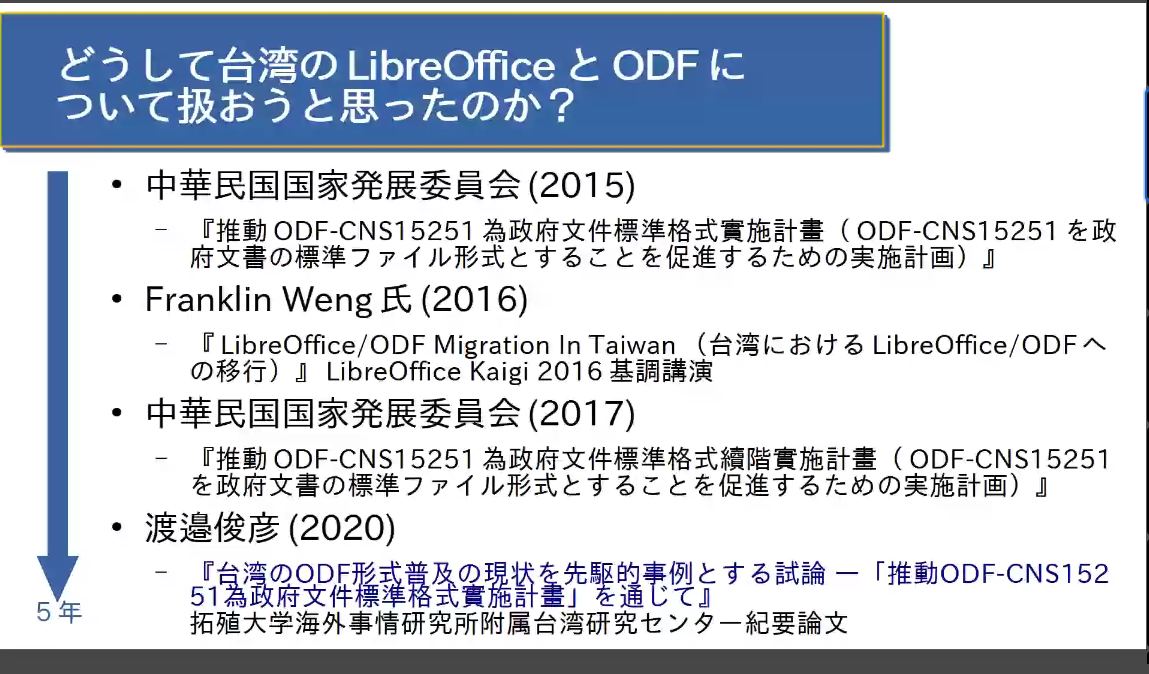
The status of LibreOffice/ODF adoption in Taiwan had been introduced by Franklin Weng, from the Taiwanese community, at LibreOffice Kaigi 2016.12. Mr. Watanabe has researched and written a paper from a different perspective. It was interesting to see how the Taiwanese government is really working on it, and how it actually works in universities, from a different perspective than the Taiwanese community.
There were three lightning talks including jumping in and out, and the general Q&A afterwards was filled with discussions about why and what opportunities are available in Japan to promote open source software and LibreOffice.
The Japanese community holds “LibreOffice Hackfest Online” sessions every Wednesday night, to work on LibreOffice and exchange information, and “Online Study Sessions” (the next one will be on September 4) to exchange know-how among users every three to four months. Check out Connpass and join the events that interest you.
Many thanks to everyone in the Japanese community for all their great work! And to everyone reading this who wants to spread the word about LibreOffice in other areas/languages, drop us a line and let’s work together 👍
Joining a large and established project like LibreOffice can be daunting for many. The software has a large codebase, and its sub-projects use a wide array of tools. In recent years, we’ve made efforts to simplify the onboarding process by linking more services together with SSO (single sign-on), thereby reducing some of the complexity. In addition, we’ve created Easy Hacks and similar “bite size” projects in other areas, so that newcomers can get involved quickly and achieve something – without months of work.
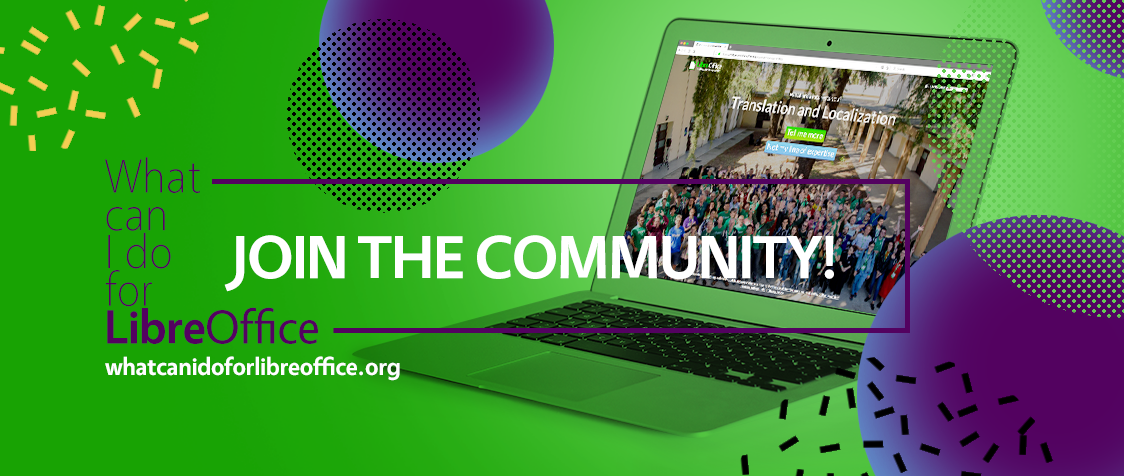
Currently, we have two websites that function as starting points for new contributors: What Can I Do For LibreOffice and Get Involved. The former was set up by LibreOffice’s Albanian community, and lets users click through topics of interest, until they find something they want to do. The latter is a regular page, with a list of sub-projects inside LibreOffice, and quick steps to make initial contact.
Throughout 2020, we posted regular “Community Member Monday” interviews on this blog. In many cases, we emphasised how these contributors started off as regular LibreOffice users, but wanted to “scratch an itch” and start to make changes to the software. We highlighted the ways in which other community members helped newcomers to start working on projects, and used these as “success stories” on our social media accounts, encouraging others to make the step-up from being a user to an active contributor.
Volunteer platforms
Also in 2020, we used a number of online volunteering platforms to “recruit” new community members. These are websites which link people who are keen to volunteer with projects that may interest them. Users can browse organisations and projects in their country/region, see the list of open tasks, and then get in contact. We found that many people were volunteering because they wanted to do something for the public good, outside of their work – while others were looking to bridge gaps between jobs.
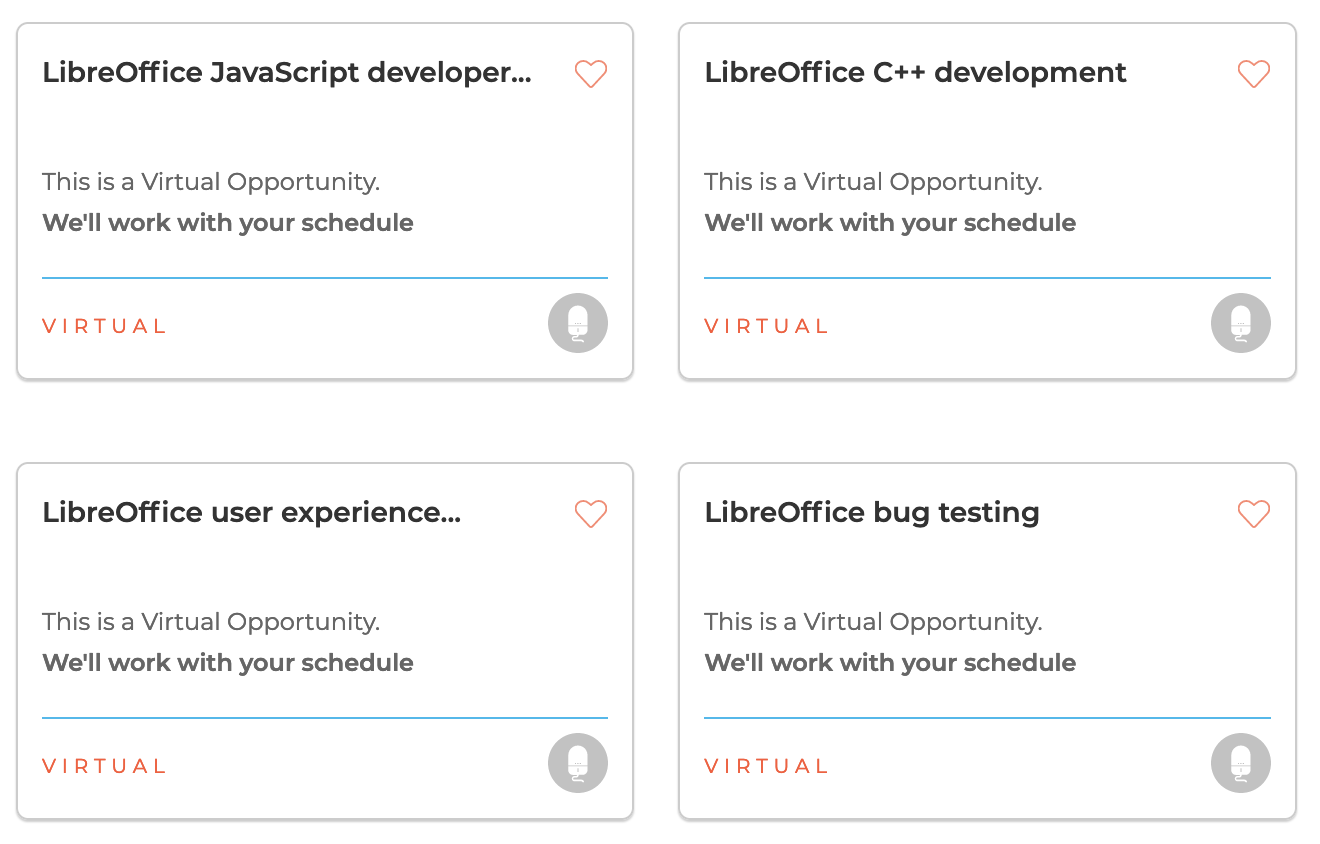
We set up accounts and listed projects on various volunteering platforms, including VolunteerMatch and Idealist (English), Vostel (German), Vapaaehtoistyo (Finnish), TuDu (Polish) and HeroClan, Um sem um tam and Zapojim se (Czech). Here’s what our projects look like on VolunteerMatch:
In terms of results, we received messages from various volunteers throughout 2020. For instance, one person reached us via Idealist and expressed interest in helping out with the LibreOffice website redesign. Although he didn’t have time to contribute in the long run, he introduced us to Christine Louie who took the redesign efforts further, and started to work (with other volunteers) on design concepts, user profiling and other tasks. So this was an example of a volunteering platform creating a network of helpers.
In the German community, we were contacted by Sabine Achilles who offered to help out with translations of the software and website content. She worked on translating various blog posts from English to German, which we posted on our German blog.
In 2021, we continue to explore other volunteering platforms. Ilmari Lauhakangas, responsible for Development Marketing at TDF, also schedules interviews with new contributors to give them personal contact from the start, and explain our tools and processes.