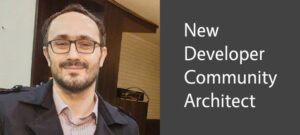
Join the LibreOffice Team as a Developer Community Architect (m/f/d), 20-40h per week, remote (#202101-01)

The Document Foundation (TDF) is the non-profit entity behind the world’s leading open source office suite, LibreOffice. We are truly passionate about free software, the open source culture and about bringing new companies and people with fresh ideas into our community, especially as we are about to enter the second decade of our project.

To grow the LibreOffice community and to enlarge the associated ecosystem, together working on office productivity for over 200 million users around the globe 🌎, we’re searching for a Developer Community Architect (m/f/d) to start work as soon as possible.

As our future Developer Community Architect, you work with a great team of currently eleven to:

  • Attract new contributors by promoting the LibreOffice project

  • Identify and onboard them, by building relationships between new coders and the community

  • Introduce them to our communication channels where they meet fellow co-hackers

  • Affirm and encourage everyone’s contribution and show community members ways to grow

  • Bring skilled contributors in contact with existing experts in the various fields for even deeper learning

To succeed in this new role, you ideally already have some of the following skills:

  • Previous experience in remote work

  • Self-driven and an excellent team player, who is interested in working as part of our team

  • Patience and kindness to work with potential contributors of various skill levels

  • Been a long-time contributor to one or more FLOSS communities, with coding experience in at least one FLOSS code base – ideally LibreOffice, of course! 🙂

  • Demonstrable C++ coding experience of at least five years, or a comparable language like C#, plus active knowledge of at least one more language used in LibreOffice, like Python or Java

  • Excellent communication abilities, that help you transport your enthusiasm for LibreOffice and our community

  • A quick learner with good self-starting capabilities (demonstrable quick learning is a good compensation for immediate lack of LibreOffice knowledge!)

  • Experience in web development and/or mobile technologies is a plus

  • When possible again, willingness to regularly travel to Hackfests and conferences in Europe and globally. In the meantime, you are excited to create virtual events on a regular basis, with the excellent infrastructure offered by TDF.

  • Fluent written English for e-mail and chat, with good speaking and comprehension is a mandatory requirement. Fluency in another widely-used language like e.g. Spanish or Mandarin would be considered an advantage.

Here’s how a typical day in your new role might look like:

You start your day by looking in Gerrit for unreviewed patches. There, you help to onboard new contributors, by positively reviewing their code contributions, which also involves syncing the coding style of their patches with LibreOffice’s. Your goal is to work with them and help them grow their skills where needed, like C++ programming, design and coding, and encourage them to bring up their own ideas how to implement a new feature or fix a bug in the codebase – in short, you are their guide to make their ideas become a reality. Especially for new contributors, you will introduce them not only to our community culture, but also to our variety of tools, which you regularly review and make proposals to improve or unify them.

One way to attract new contributors is to lower the entry barriers. You design and define easy tasks (“Easy Hacks”) for coders, that help them to learn about the code, our toolchain, the LibreOffice build system and leads them step by step into growing mature in the repository, so that they can ideally work on more advanced tasks.

Apart from the individual mentoring, an important part of your role is about knowledge sharing with the general public by writing and updating our technical documentation, like the developer guide, our wiki articles and also code comments. You master that thanks to your ability to write comprehensive texts for technical people.

The role you will fill gives you a lot of freedom and flexibility to shape our mentoring program. That requires you to work goals-oriented and with a laser-sharp focus to grow excellent LibreOffice core contributors. As our successful Developer Community Architect, you will come up with creative ways of finding and attracting volunteers who will stay in the community!

All jobs at The Document Foundation are remote jobs 🌟, where you can work from your home office or a coworking space. The work time during the day is flexible, apart from very few fixed meetings. The role is offered both as part- or fulltime, with the option to grow the hours later, just as you grow into your role.

Are you interested? Get in touch! We aim to schedule the first interview within two weeks of your application. You can also approach us anytime for an informal chat to learn about the role or in case of questions – and you can directly join our virtual FOSDEM DevRoom on February 7 to see what’s going on in the community!

TDF welcomes applications from all suitably qualified persons regardless of their race, gender, disability, religion/belief, sexual orientation or age. Don’t be afraid to be different, and stay true to yourself. We like you that way!

We are looking forward to receiving your application, including information about you, when you are available for the job, and of course your salary expectations. Please send us an e-mail to mentor.application@documentfoundation.org by February 18, 2021. A final decision for the role will be made by March 18, 2021.

Note: We do not accept agency resumes. Please do not forward resumes to any recruiting alias or employee.

Get involved – Meet the TDF team

Joining a free and open source software project, such as LibreOffice, is a great way to build your skills, gain experience for future career options, meet new people – and have fun!

But sometimes, joining a large and well-established project can be a bit daunting at the start. So here we’ll introduce you to the small team at The Document Foundation, the non-profit entity behind LibreOffice. Most team members oversee certain sub-projects in the LibreOffice community – click on their names to learn more in interviews…

Note that this is just the team at The Document Foundation; the LibreOffice community is made up of hundreds of people! Most of the new features are implemented by developers in our ecosystem and volunteers.

Now that you know who we are, click here to get involved and join our projects!

Documentation Team Status

By Dave Barton

In recent times, the very small LibreOffice Documentation Team has been making real progress in revising and updating the user guides:

Release 6.4

Release 7.0

Calc Guide Published Work in progress
Base Guide Published Work in progress
Draw Guide Published Work in progress
Impress Guide Skipped Work in progress
Math Guide Published Awaiting volunteer contributors
Writer Guide Published Awaiting volunteer contributors
Getting Started Guide Published Awaiting volunteer contributors

While this progress in shortened documentation development time is fairly good, it can be substantially improved by having more contributors on the team.

It would be terrific if all contributors were a skilled technical writers, but in reality anyone with a reasonable command of the English language and an eye for detail can make a valuable contribution. No contributor is expected to rewrite entire guide books, although some of our most experienced, long term contributors do exactly that. In fact nothing is expected or demanded of any contributor, other than to let other members of the team know what they what they have chosen to work on.

In some cases, that might be to update a chapter of an existing guide, or reviewing the work of another team member. Reviewing can take the form of proof reading, or researching the accuracy of the guide information in relation to the software’s actual operation. By identifying yourself as a Docs Team contributor does not mean you are making any permanent or long term commitment – many contributors come and go over long periods according to the demands of their “real” life.

It can be seen in the documentation status above there are at least three guides where the input of new contributors would be very welcome. If you are interested in contributing these guides you can see the team guidelines here:

https://wiki.documentfoundation.org/Documentation/DocumentationTeamInfo/JoinDocTeam

Or to get a wider view of the Documentation Team activities visit this page:

https://documentation.libreoffice.org/en/join-the-documentation-team/ where you will also find information about maintaining the LibreOffice Help pages and the documentation wiki.

If you have any questions you are welcome to post them to: documentation@global.libreoffice.org  or you can also join our Telegram group for documentation at https://t.me/joinchat/ALeRuUFCxyZY0wzoddldWQ

The team also gather together in our open to all bi-weekly on-line meeting: https://jitsi.documentfoundation.org/tdfdocteam see: https://wiki.documentfoundation.org/Documentation/Meetings for dates and times.

Join us! Happy documenting!

Join our team! Job Search for a Development Mentor (m/f/d) – #202007-01

The Document Foundation (TDF) is the non-profit entity behind the world’s leading open source office suite, LibreOffice. It’s comprised of a team of highly skilled and motivated people, working on infrastructure, design, documentation, QA, marketing and other tasks. We’re passionate about free software and bringing people into our community.

To grow our volunteer community, in particular for code contributions, we’re searching for

a Development Mentor (m/f/d)

to start work as soon as possible. If you’re interested in the role, which is offered on a part- or full-time basis, you ideally have:

  • previous experience in remote work
  • been a long-time contributor to one or more FLOSS communities
  • excellent communication skills, with enthusiasm for mentoring – a fluent command of the English language (written and spoken) is expected
  • coding experience in several FLOSS code bases and programming languages, including LibreOffice
  • demonstrable C++ coding experience of at least five years, plus active knowledge of at least one more language used in LibreOffice (e.g. Python or Java)
  • willingness to regularly travel to Hackfests & conferences in Europe and globally
  • self-driven and a good team player; interested in working together with our team

The remote job role involves working from home at your location and includes among other items:

Work with our existing team in the LibreOffice community on topics including:

  • building relationships between the community and new contributors
  • identifying and on-boarding new contributors
  • affirming and encouraging their contribution
  • encouraging them to join IRC and other communication channels to meet the community
  • building relationships with domain experts for deeper learning
  • attracting new contributors by promoting the project
  • interaction with UX volunteers

Shape and create development mentoring including:

  • helping to onboard new contributors by
    • positively reviewing their code contributions
    • improving their C++ programming skills & design, and coding style
    • introducing them to our tooling and culture
  • designing, and define easy tasks for new contributors
  • maintaining our technical documentation, e.g.
    • developer guide
    • wiki articles
    • code comments
  • helping to review the results of development tenders produced by TDF
  • goals-oriented and with a laser-sharp focus to grow excellent LibreOffice core contributors, our perfect candidate will come up with creative ways to find and attract volunteers

Previous experience with such tasks is highly welcome, so is using free software. Speaking and writing English fluently is a mandatory requirement.

The work time during the day is flexible, apart from some fixed times when availability is required (e.g. during meetings).

TDF welcomes applications from all suitably qualified persons regardless of their race, gender, disability, religion/belief, sexual orientation or age.

As always, TDF will give some preference to individuals who have previously shown a commitment to TDF, including but not limited to members of TDF. Not being a member, or never having contributed before, does not exclude any applicants from consideration.

TDF is looking forward to receiving your applications, including curriculum vitae, your financial expectations, and the earliest date of your availability, via e-mail to tender20200701@documentfoundation.org no later than September 15, 2020.

If you haven’t received feedback by October 30, 2020, your application could not be considered.

Interview with Ilmari Lauhakangas, Development Marketing

Ilmari Lauhakangas, based in Helsinki (Finland), is in charge of Development Marketing.

We have asked him a few questions, about his relationship with free software and his role in the community.

How did you become involved with free software and LibreOffice? Are you contributing to other FOSS projects?

I did localisation for FOSS projects in the early 2010s. Around 2012, I started contributing more to Retroshare, a secure communication platform, doing recruiting, translation coordination and web design.

In 2014 I began doing quality assurance for LibreOffice. People like Yousuf Philips, Joel Madero and Robinson Tryon were instrumental in making me understand the relevance of QA work. The attitude towards recruiting more contributors was spontaneous and immediate in the QA team.

I have focused on LibreOffice for the past few years.

You have been involved in the LibreOffice project for quite a long time, in QA and other areas. Can you summarize your activities?

I have: 1. somehow touched over twelve thousand reports in TDF Bugzilla, 2. improved and written technical documentation in TDF wiki, 3. improved help content, 4. done development for the web help, 5. edited content for the main website, 6. piloted the use of the translate extension for TDF wiki and guided people in its use, 7. helped new contributors get started in development, QA, documentation, design and infra, 8. recruited contributors through various channels such as VolunteerMatch.

You have explored several tools to attract new contributors. What do you think we should do as a project to keep the high level of contributions necessary for a large FOSS project such as LibreOffice?

We should make sure our technical documentation is high quality. When developers run into good documentation, they are very happy.

We should invest in improving the user experience of our web-based tools.

You are responsible for Development Marketing since September 1. How can you describe your responsibilities? Who should get in touch with you?

Basically everyone who wants to improve LibreOffice should get in touch. If you have no idea of how you could even be useful, I will help you find out, because everyone can be a part of the community and contribute! I hope to encourage strong cross-team collaboration. I want people to be credited for their work. I want us to have a safe and supporting environment for everyone to challenge themselves, try new things and learn new skills.

Technology focused high schools and universities, what should we do to grow the interest and the willingness to contribute among students?

This is more of a political question. If money and resources are lacking in education, teachers will not have time to offer structured introductions to free software projects. Likewise, if higher education is not free, students will have to work alongside their studies and will not have the energy contribute to FOSS.

On our part, we need to provide students with software they can rely on. In Finland, thirty thousand students in advanced secondary education use LibreOffice every year. If they find the software enjoyable, surely they are more inclined to contribute.

Sophie Gautier talks about the project

You are one of the people who have been around from the beginning of The Document Foundation, and one of the oldest members of the community (including the years of OpenOffice.Org). How were you involved in the project?

I was using StarOffice 5.2 and was contributing support on the French speaking users list. When Sun Microsystems was about to open source the code and create the OpenOffice.org project, they invited me to join and support the community. From there, I’ve been involved in various tasks like localization, quality assurance or documentation.

We are getting close to the 10th anniversary of the LibreOffice project, and the 20th anniversary of the FLOSS office suite. Which are the milestones of this long history?

I may not remember all of them, but I guess the creation of the Native Language projects with the French speaking one as a Proof of Concept in 2001. Then the many community supported projects such as marketing, documentation, etc.

And then of course, the birth of the LibreOffice project. Since then I’ve the impression that each year is a milestone 😉

There have been so many exciting things to do in each corner of the project. The community is pushing a lot of good ideas and energy. Considering the work done on QA, UX/Design and marketing for the product or the community, the new help system and the size of our infra, we have achieved more than we could even imagine ten years ago!

You have been involved in the localization of the software since the very first version, and now you are coordinating the activity of native language projects. Can you talk about the localization activity?

Localization is a complicated task, and sometime tedious. LibreOffice is a big software with thousands of different strings. Localization happens at the end of the software making process, so the workload depends on development, UX/Design and marketing projects.

Recently, there have been changes on the strings format for almost the entire interface of each module, on the help system and more and more marketing activities. Each localization member should be very proud of his/her work.

We want to cover more languages because localization is a way to preserve those languages, preserve the local culture and give all users the opportunity to express themselves in their own language. This is where my activities lie: understand the needs of localizers, voice their concerns, update the workflow and try to make them happy to translate the different projects.

You have been a member of the team for almost six years, with a number of different responsibilities. From your point of view, how well did the project during this time?

Happy to say: fairly well 🙂 The task was not easy but I believe we are doing right. Some people would like to see more things happening, or the project going faster or further. But we are a diverse community with different cultures, different business or occupations and different time zones!

We need to keep people together on the same path, to preserve the soul of the project. It’s not easy to keep an eye on the horizon on a daily basis, but our directors are doing that since the beginning and they are doing it very well if you look at the foundation’s results.

I can see my colleagues of the team working hard on each critical part of the production process, and at the same time taking care of the community, trying to answer end user questions and help independently from what they have on the table. I’m proud and very happy to be part of this team, and happy to see how mature the foundation has became. Every day I’m learning something new, either from them or from the community. I’m thankful for that 🙂

With the growth of the project and the community, you are now moving to the position of Foundation Coordinator. Can you describe this role?

I’m taking care of several foundation activities, like helping to organize LibOCon and Advisory Board meetings, and handling several administrative tasks. I’m also directly involved in L10n/NL, marketing and certification projects.

I follow what is happening in other parts of the project, and try to bring my help and my knowledge where needed. For example, when the work began on the UX, I helped the team with my knowledge of the product and its philosophy.

The change will happen mainly in the administrative parts, where an assistant will be hired by the foundation. That should leave me more time to push some projects we want to put in place, like the travel support program, Open Badges, moving to another translation tool, etc.

Looking at the next decade, which are the top challenges for LibreOffice?

One of the most important challenges for open source projects is to make the community of volunteers and ecosystem participants thrive. Our developers are securing this by constantly enhancing tools and processes, but at the same time users and contributors are evolving, and we need to reinvent ourselves almost every day. This also means to re-evaluate processes and tools, looking at them in perspective.

Last, but not least, the product has to further evolve according to changes in the market, and we have to invest to make the online version more popular amongst users and increase the number of adoptions and contributions to the project.