The LibreOffice Bookshelf had a Facelift.

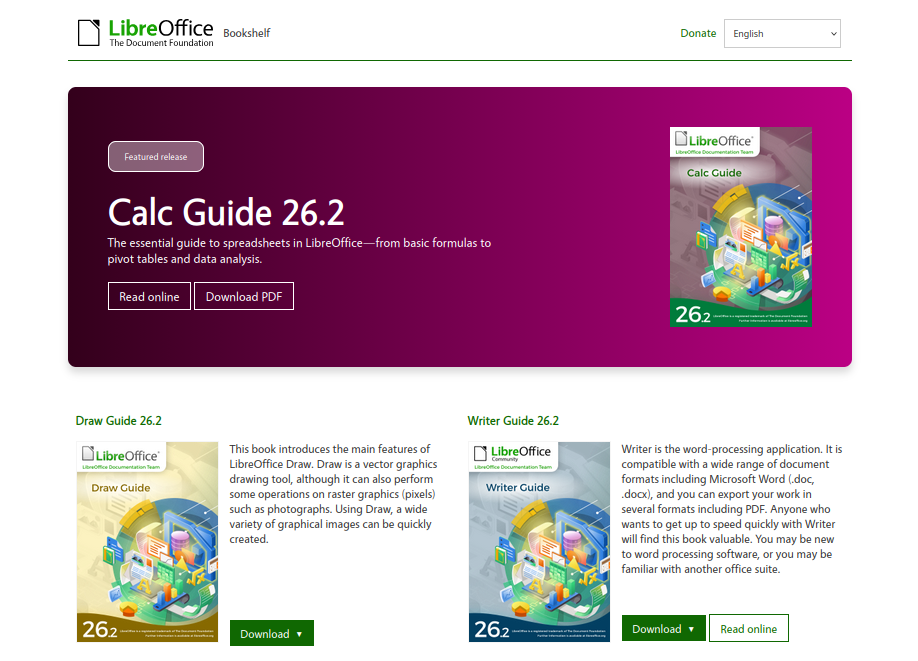
The LibreOffice Community has now a reshaped website to access the LibreOffice official literature.


Thanks to Juan José Gonzalez (TDF Web Technology Engineer), the bookshelf website has been redesigned to carry new aesthetics and user interface. Web visitors have now a summary of each guide and easy way to download or read online the contents of our guides.

“We’ve updated our bookshelf website’s appearance as part of our ongoing effort to build a unified visual identity across all our project sides. But the changes aren’t just a visual refresh: this is our first site powered by our new web components library”, said Juan José.

The website source code is available in TDF Gerrit service at https://git.libreoffice.org/infra/bookshelf/ . End users in general, LibreOffice consultants, instructors and organizations deploying LibreOffice are invited to clone the website and run it in their premises.

To access the Bookshelf, readers can use the following

The New Writer Guide 26.2 Just Arrived

Continuing our mission to provide the best LibreOffice documentation for our end users, the Documentation Team is proud to announce the release of the latest Writer Guide for LibreOffice 26.2.

Whether you’re a beginner or an expert, this guide covers all aspects of the LibreOffice Writer module—from creating simple one-page document to full book using the best practice in text editing, text formatting and document compilation.

This guide is the result of teamwork by LibreOffice Community volunteers. We extend special thanks to Dione Maddern, Claire Wood, Miklos Vajna, Ed Olson, B. Antonio Fernandez, Peter Schofield and Olivier Hallot.

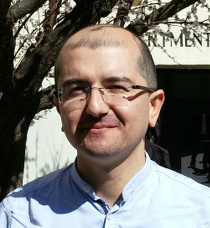
“This is our first edition of the Writer Guide using Nextcloud Deck to manage the production process. It has been a bit of a learning curve for our team, but it has greatly improved task tracking and communication.” Said Dione Maddern, volunteer Writer Guide coordinator.


Dione Maddern

The guide was updated from LibreOffice 25.8 and 26.2 and included several new sections on new features as well as contents on features not yet documented in the previous editions. The Guide is up to date with LibreOffice 26.2 release and included the following updates:

  • Chapter 2 – Working with Text: Basics: Updated to show improvements to the Hyphenation options in the Paragraph Style dialog.
  • Chapter 3 – Working with Text: Advanced: Documents improvements to Writer’s tracking of interdependent changes and documents the new Reject but track new.
  • Chapter 5 – Page Style Basics: Updated instructions for toggling the visibility of Boundaries and Formatting Aids and Page break examples moved from Chapter 8, Introduction to Styles.
  • Chapter 6 – Formatting pages: Advanced: Content on Using Document Themes moved to Chapter 9, Working with Styles.
  • Chapter 7 – Printing and Publishing: Updated information on standards for Reference XObjects.
  • Chapter 8 – Introduction to Styles: Fixed out-of-order sections and figures, and reordered some sections to improve flow and clarity. Improved sections on the Styles sidebar deck and Creating paragraph styles. Page styles examples moved to Chapter 5, Page Styles Basics. Removed obsolete passage about anchoring settings being unavailable for Frame styles.
  • Chapter 9 – Working with Styles: Added sections to document the Asian Typography, Asian Layout, and Text Grid features. Added a section to document the Inline Heading preset frame style. Removed obsolete section about character formatting.
  • Chapter 10 – Working with Templates: Improved introduction. Improved sections on Updating a document by loading styles from a template, Other ways to manage templates, Creating a document from a template, and Creating a template from a document.
  • Chapter 11 – Images and Graphics: Improved grammar and style in multiple sections. Added a section to document the Text within a shape feature.
  • Chapter 13 – Tables: Added contents on table calculations
  • Chapter 15 – Table of contents, Indexes and Bibliography: Updated nomenclature, Updated instructions for adding entries using the Bibliography Database window. Added a section on DOI References.
  • Chapter 16 – Master documents: Chapter was entirely rewritten to improve clarity, completeness, and flow.
  • Chapter 17 – Fields: Improved and clarified instructions on how to set and use variables fields.
  • Chapter 18 – Forms: Added instructions for exporting to PDF forms.
  • Chapter 19 – Spreadsheets, Charts, Other objects: Added instructions on how to create a chart from a writer table. Updated charts with data table addition.
  • Chapter 20 Customizing Writer: Added sections on the Allow text to be dragged and dropped and DeepL Server options. Improved the section on the Load printer settings with the document option.
  • Chapter 21 – User Interface Variants: Added a section documenting the Form tab in the Additional tabs section.
  • Appendix A – Keyboard Shortcuts: This new Appendix was added with most important shortcut for text editing and word processing operation, organized by actions.

The Writer Guide is available in PDF, ODT format and can be read on line as web pages. To access the Guide, readers can use the following

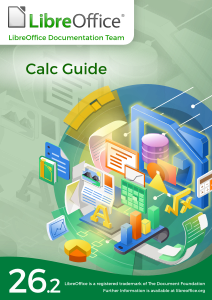
Get the best of LibreOffice Calc with the Calc Guide 26.2

The LibreOffice documentation team is proud to announce the immediate availability of the Calc Guide 26.2.

Whether you’re a beginner or an expert, this guide covers all aspects of the LibreOffice Calc spreadsheet module—from creating simple shopping lists to performing advanced data analysis and complex calculations.

“We examine the Calc guide from the end user’s perspective—covering step-by-step instructions, explanations of the spreadsheet’s internal workings, and illustrating the use cases where each feature applies” said Olivier Hallot, Documentation Coordinator and Guide Lead for Calc.

(more…)

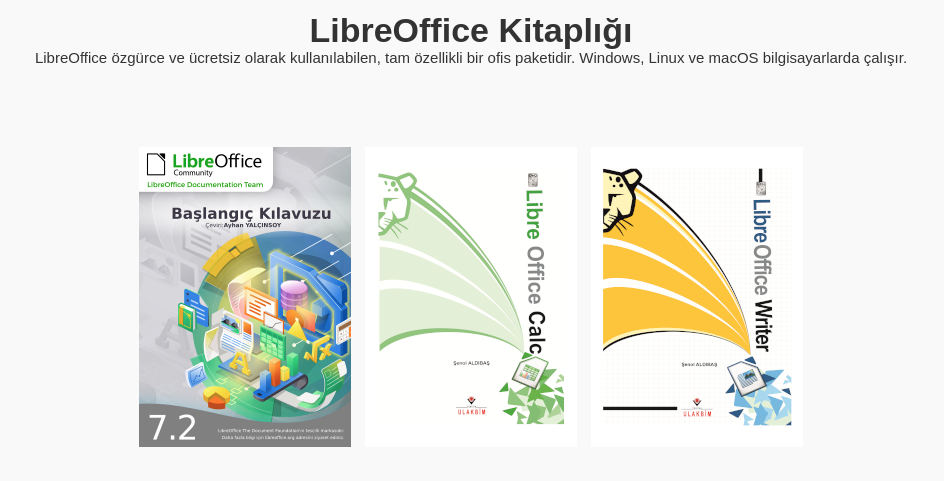
The Turkish Documentation Community joins LibreOffice Bookshelf

The Turkish documentation community is now publishing their LibreOffice documentation in the Turkish language in the LibreOffice Bookshelf.

Muhammet Kara, Turkish community member, says:

The Turkish documentation community is delighted to make LibreOffice resources more accessible to the Turkish people. We believe our ongoing efforts to popularize LibreOffice depend on comprehensive documentation, and we are committed to further expanding these valuable resources for our users.

The LibreOffice Bookshelf is a website for quick access to the several LibreOffice guides and related publications. It is accessible from books.libreoffice.org – or directly from inside LibreOffice by choosing menu Help > User Guides.

Readers interested in the source code of the bookshelf website can visit git.libreoffice.org/infra/bookshelf/.

🇨🇺 LibreOffice in Latin America: heading to Havana for the 2025 Latin American Congress

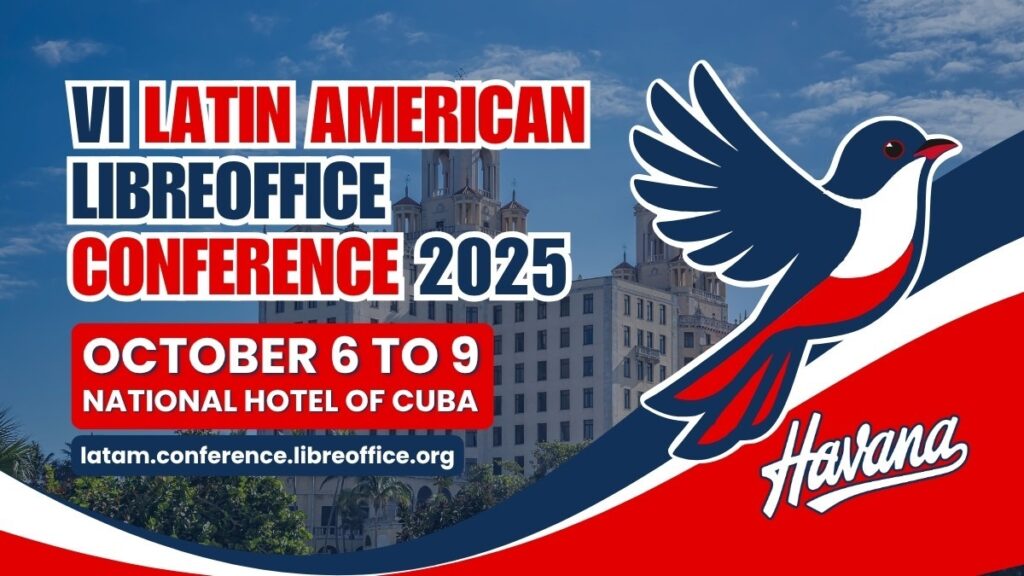
From October 6 to 9, Havana, Cuba, will host the Latin American LibreOffice 2025 Conference, a meeting that will bring together contributors, developers, universities, and governments from the region to celebrate and strengthen free software.

This year, the Latin American conference will be held as part of the IV International Congress on Digital Transformation (Cibersociedad 2025) in Havana, Cuba. This integration reinforces LibreOffice’s crucial role in the digital transformation of Latin American communities, promoting open innovation, technological sovereignty, and collaboration between countries.

The event will take place at the iconic Hotel Nacional de Cuba and will feature an intense program of lectures, panels, and workshops dedicated to LibreOffice, its communities, and institutional adoption initiatives.

🌍 A meeting that connects communities and governments

The opening ceremony will pay tribute to Cuban volunteer Carlos Parra, who passed away in 2022.

It was thanks to his dedication, articulation, and love for the community that the opportunity arose to hold the Latin American LibreOffice Congress in Cuba—a dream he helped make possible.

Carlos was the link between the Cuban community and The Document Foundation, and his contribution will remain as a legacy of collaboration and commitment to digital freedom.

During the event, Adlair Cerecedo-Méndez will present the experience of Office GobMX, the LibreOffice-based suite developed by the Mexican government. Other highlights include the panel “LibreOffice is freedom,” with Olivier Hallot, founding member of The Document Foundation and Documentation Coordinator for the LibreOffice Project, as well as discussions on government migration, extensions, technical quality, and the rebirth of the Cuban community — with participation from Gustavo Pacheco (Brazil), Mauricio Baeza (Mexico), and Xisco Faulí (Spain).

🧑‍🏫 Training and academic innovation

At the University of Information Sciences (UCI), the event will open space for young people and educators with the “LibreOffice and Universities” lab, led by Gustavo Pacheco, and the “Creating my first extension” workshop, conducted by Mauricio Baeza — a practical opportunity for those who want to learn how to expand LibreOffice and contribute technically to the project.

💬 Regional meetings and plans for 2026

The congress will close with meetings between Latin American members of the LibreOffice community, addressing:

  • the 2026 events calendar (including esLibre and the next Latin American Congress);
  • academic projects such as Google Summer of Code and Outreachy;
  • and new partnerships with other free software communities, such as GNOME Latam.

These sessions reflect the collective commitment to strengthening collaboration between countries and consolidating a more active presence for Latin America within The Document Foundation.

💪 An event driven by volunteers

The Congreso Latinoamericano de LibreOffice is an event organized entirely by volunteers, who dedicate their time, energy, and knowledge to make this initiative possible. Our special recognition and thanks go to Daniel Rodriguez (Argentina), Gastón Hannay (Uruguay), Omar Correa (Cuba), Gustavo Pacheco (Brazil), and Juan González (Mexico), who have been working tirelessly to make every detail of this edition possible.

We also express our sincere gratitude to the University of Computer Sciences (UCI) and the Cibersociedad 2025 organization for opening their doors and sharing their infrastructure—including rooms, laboratories, and technical support—making it possible to hold the Latin American LibreOffice Congress within their event.

This partnership reinforces the spirit of academic collaboration and the joint commitment to digital transformation in Latin America.

The Document Foundation (TDF), in its mission to promote LibreOffice and strengthen its global community, supports and sponsors these activities, enabling the participation of volunteers from different countries.

This support allows members of the Latin American community to meet in person, exchange experiences, and strengthen the international collaboration that sustains the project.

🌎 Freedom, collaboration, and the future

The LibreOffice Latin American Congress in Cuba is more than a technical event—it is a reunion of the Latin American community, united by ideals of freedom, solidarity, and technological sovereignty.

LibreOffice is, above all, a project made by people, for people. And this congress is living proof that collaboration can cross borders, languages, and generations.

📅 Date: October 6-9, 2025

📍 Location: Hotel Nacional de Cuba – Havana

🌐 More information: latam.conference.libreoffice.org

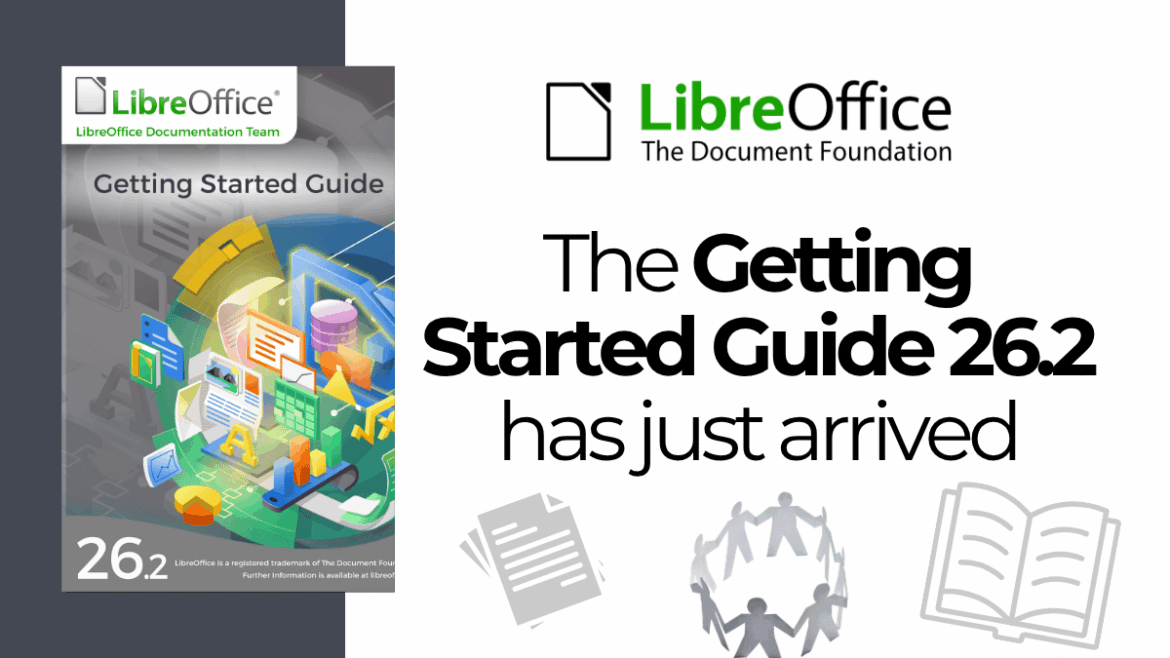
🎉 The Getting Started Guide 25.2 is here! 🚀

The LibreOffice Documentation Team is excited to announce the release of the brand new Getting Started Guide 25.2, updated with all the latest features of LibreOffice 25.2!

Whether you’re brand new to LibreOffice or just want a fast track to mastering its tools, this guide is your perfect starting point. Inside, you’ll find easy-to-follow introductions to:

📝 Writer (word processing)
📊 Calc (spreadsheets)
📽️ Impress (presentations)
🎨 Draw (vector graphics)
🧮 Math (formula editor)
📚 Base (database management)

This guide is part of our growing collection of documentation — lovingly written, edited, and reviewed by a global team of dedicated volunteers who are passionate about open-source software and digital freedom.

👏 The 25.2 update was coordinated by Dione Maddern, with valuable contributions from Peter Schofield, Jean Weber, Ed Olson, Karen Burke, B. Antonio F., and Olivier Hallot. A huge thanks to everyone involved!

📥 Ready to dive in? Download the guide for free from the Documentation website or check it out on the Bookshelf Project.