Companies around the world use LibreOffice to reduce costs, improve their privacy, and free themselves from dependence on single vendors. Today we’re talking to Flotte Karotte, a German company with 50 employees that recently made a generous donation to support the LibreOffice project and community:
What is Flotte Karotte?
Flotte Karotte is an organic delivery service. We have been in business since 1996. Starting out as a marketing channel for regional growers with the aim of bringing organic produce to the masses, we have since become a full-range supplier. This means that in addition to fruit and vegetables, we also deliver bread, meat and sausage, dairy products, pasta, grains/seeds, sauces, spreads, cosmetics, etc. In other words, everything you would find in an organic supermarket. However, we focus on brands that are loyal to the organic trade and are not usually sold in conventional food retail outlets. We also prioritise association products (Bioland, Demeter) over EC organic products wherever possible.
We attach great importance to seasonality and regionality. Of course, the latter cannot be achieved for all products (bananas). Wherever possible, we try to source from regional growers. We have been working with regional farmers and vegetable growers for years. What makes us special is that we can offer smaller farms in particular a secure marketing channel. This enables the farms to grow more different crops and thus promote diversity. They would not be able to sell these smaller quantities in the wholesale market.
We currently have around 50 employees working in the office, and as drivers and in packing. Sustainability is also important to us when it comes to mobility. Since 2017, we have been increasingly focusing on electric mobility and now deliver almost exclusively by electric vehicle. In the Essen Rüttenscheid district, we deliver exclusively by cargo bike with our partner Roman from Frachtradler.
When did you start using free and open source software (FOSS)?
We have relied on open source from the very beginning. Among other reasons, this is of course due to cost considerations. However, it is also because, as in trade and cultivation, we are critical of the concentration of power and the associated dependence on a few providers in the software services sector.
Which apps do you use in the company?
We use Thunderbird as our email programme, Mozilla Firefox as our default browser, and LibreOffice as our office software (especially for word processing and spreadsheets). Our server runs on Linux, and we use Proxmox for virtualisation.
What have been your experiences with LibreOffice so far?
LibreOffice fully meets our requirements for office application software. There is only one compatibility issue with a public sector contractor who works with Microsoft. A formula used in their Excel spreadsheet is not supported by LibreOffice. However, the solution here should be for the public sector to become independent of proprietary software from the US.
Many thanks again to Flotte Karotte for their generous donation! We hope they continue to find LibreOffice useful for many years to come.
One week ago, we announced LibreOffice 25.8, our brand new major release. It’s packed with new features, and has many improvements to compatibility and performance too. So, what has happened in the week since then? Let’s check out some stats…
642,564 downloads
These are just stats for our official downloads page, of course – many Linux users will have acquired the new release via their distribution’s package repositories.
23,399 views, shares and likes on social media
Combining our Mastodon, Bluesky, X/Twitter and Facebook posts about the announcement, and all the likes, shares, views and comments, we get 23,999. Thanks to everyone who spread the word on social media! 😊
Get a quick overview of some of the new features in LibreOffice 25.8, released on Wednesday. (This video is also available on PeerTube).
Please confirm that you want to play a YouTube video. By accepting, you will be accessing content from YouTube, a service provided by an external third party.
Caroline Stage Olsen, the country’s Digitalisation Minister, plans to move half of the employees to LibreOffice over the summer, and if all goes as expected, the entire Ministry will be free from Microsoft Office/365 later in the year.
In a LinkedIn post, Olsen summarised the reasons for switching to LibreOffice:
We must never make ourselves so dependent on so few that we can no longer act freely. Because far too much public digital infrastructure is today tied up with very few foreign suppliers. This makes us vulnerable. Also financially.
That is why we are now testing in parallel at the Ministry of Digitization how it works in practice when we work with open source solutions. Several municipalities are doing the same.
Not because we think it’s easy – but because we know it’s necessary to lead the way if we want to create more competition and innovation – and reduce our dependence on the few.
We in the LibreOffice project welcome this move, and look forward to seeing more governments and organisations getting control of their digital sovereignty and using public money for public code.
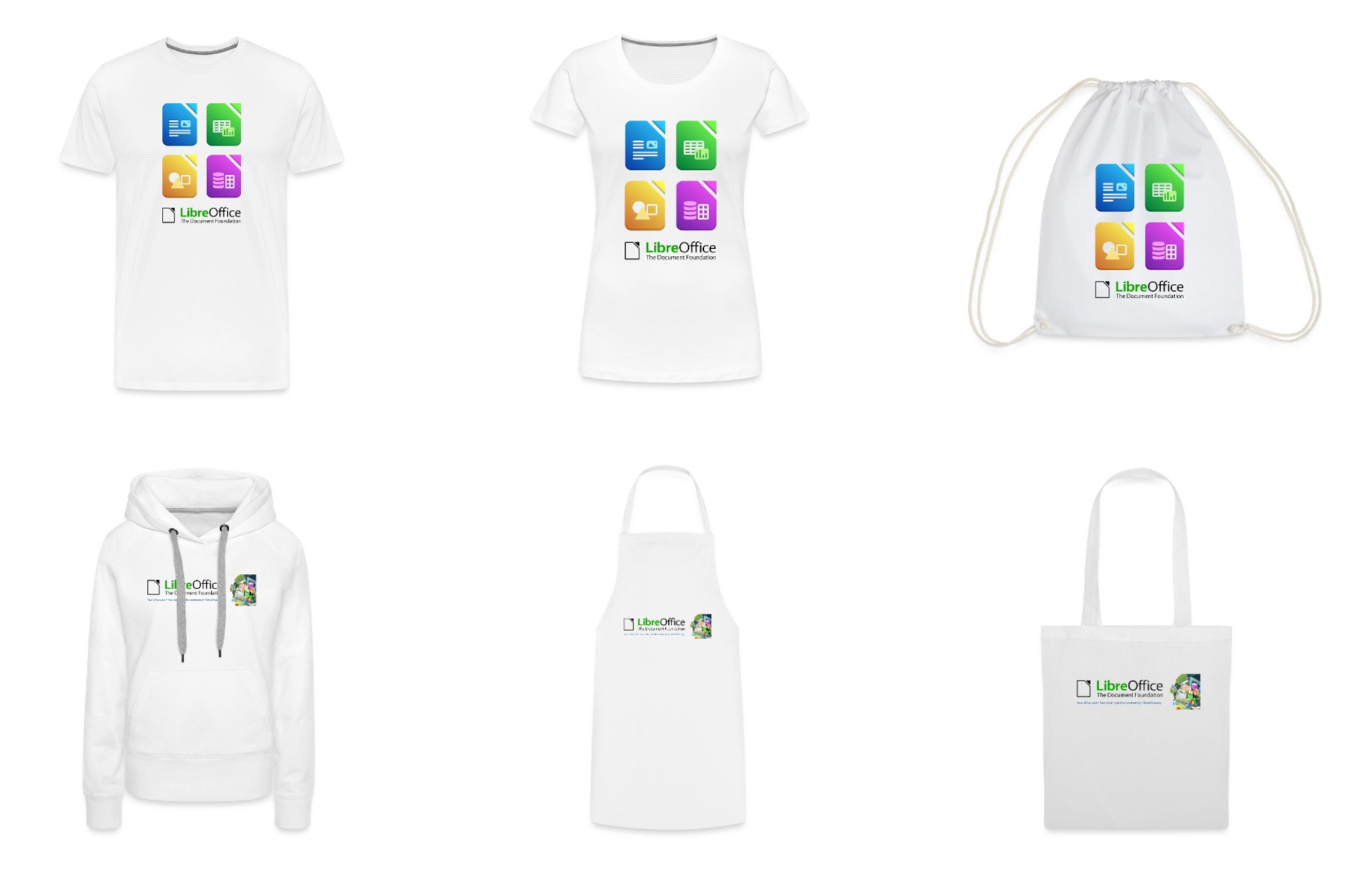
Get cool LibreOffice merchandise – and support our projects and community! We’ve updated our Spreadshirt shop with new designs, and part of the sales go to The Document Foundation, the non-profit organisation behind the suite.
In 2024, The Document Foundation and its global LibreOffice community undertook a variety of marketing initiatives aimed at increasing visibility, fostering community engagement, and driving adoption of LibreOffice
(This is part of The Document Foundation’s Annual Report for 2024 – we’ll post the full version here soon.)
LibreOffice and Open Source Conference 2024 in Luxembourg
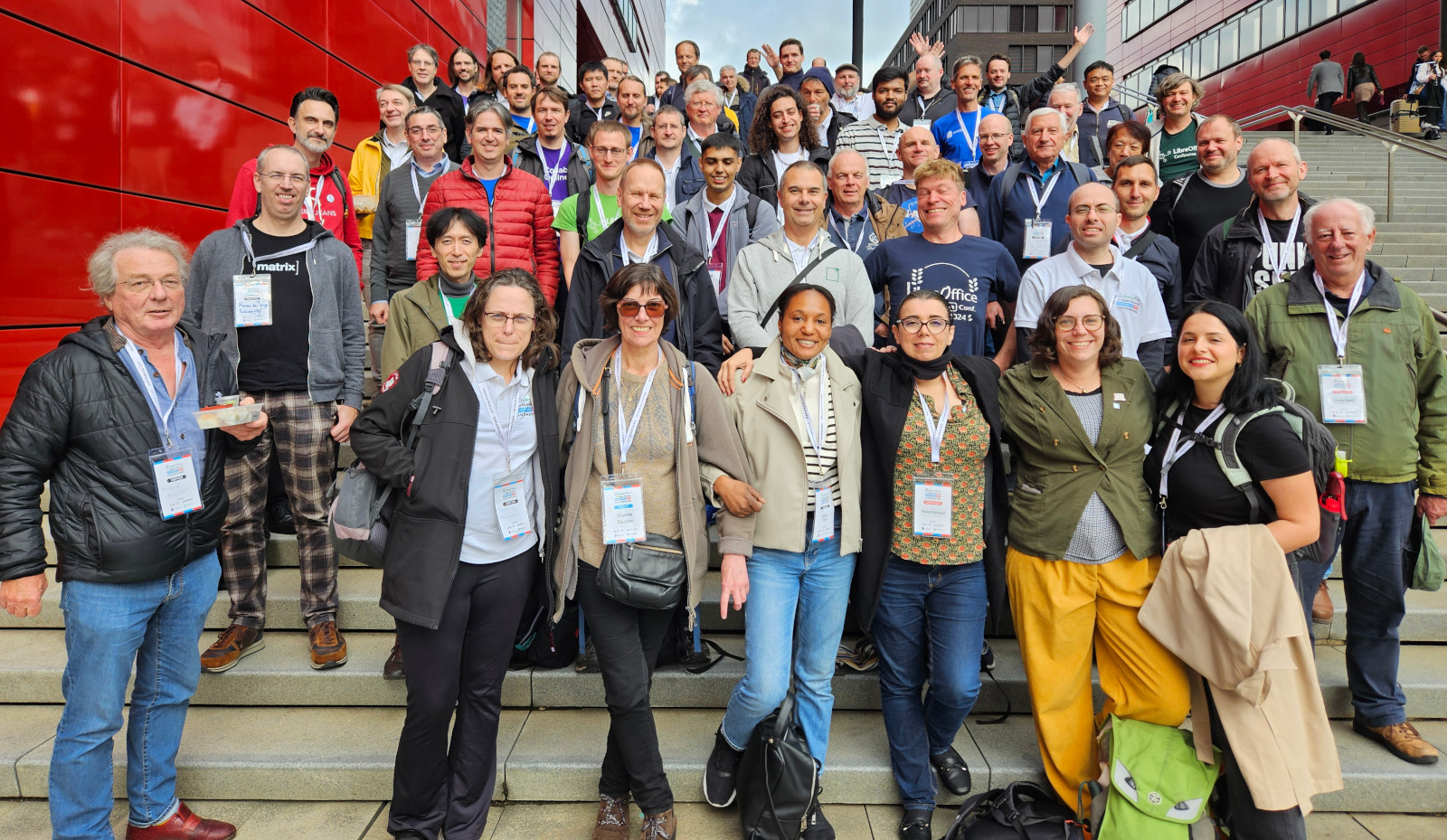
A major highlight of TDF’s 2024 marketing activities was the LibreOffice and Open Source Conference, held from October 10 to 12 in Luxembourg. The annual event brought together contributors from around the world, including developers, designers, documentation writers, translators, and marketers.
Marketing efforts for the conference included:
A targeted social media campaign promoting the event’s location, speakers, and agenda.
Outreach to local technology communities and universities in Luxembourg to boost participation.
The creation of promotional graphics and materials highlighting the conference themes and goals.
Live updates and content shared across LibreOffice’s social channels to engage a remote audience.
The conference acted as a vital showcase of LibreOffice’s progress, community strength, and future plans.
“Month of LibreOffice” Campaigns
Throughout May and November 2024, TDF organized its recurring “Month of LibreOffice” initiative. This campaign aimed to recognize and reward community contributors across various roles, including development, documentation, QA and marketing.
Participants who contributed during the campaign period were acknowledged through:
Special edition badges awarded digitally.
Public recognition via blog posts and social media.
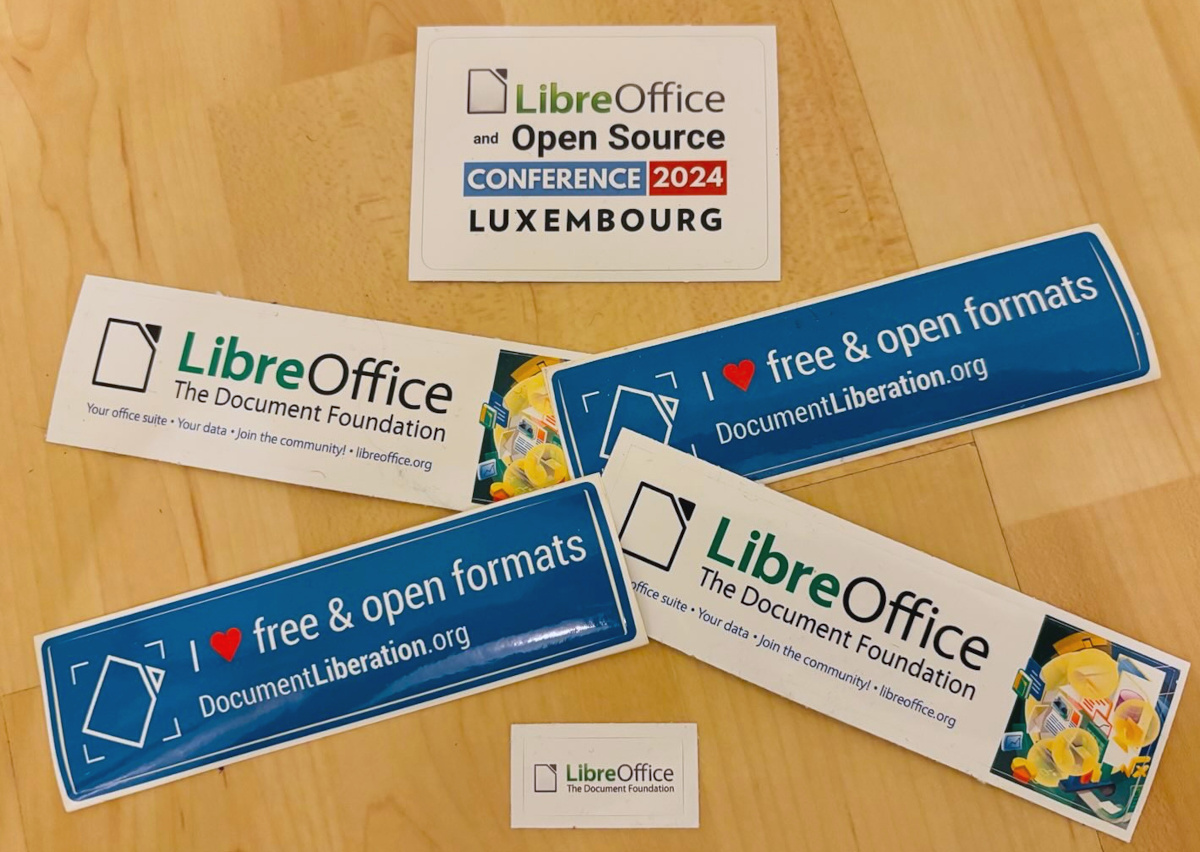
Incentives like stickers and merchandise shipped to selected contributors.
This initiative not only celebrated existing contributors but also attracted new participants interested in supporting open source software.
Launch of the LibreOffice Podcast Series
In November 2024, TDF launched its LibreOffice Podcast, a new platform to discuss topics related to LibreOffice and the wider world of open source software. The podcast aimed to:
Share success stories from migrations to LibreOffice.
Offer insights into FOSS marketing strategies.
Feature interviews with developers and community leaders.
Provide behind-the-scenes looks at the ongoing work within TDF.
The first episode focused on marketing strategies for FOSS, with discussions on how to engage institutions and governments in adopting LibreOffice.
Please confirm that you want to play a YouTube video. By accepting, you will be accessing content from YouTube, a service provided by an external third party.
If you accept this notice, your choice will be saved and the page will refresh.
Enhanced Social Media and Content Strategy
In 2024, TDF expanded and optimized its social media presence. Alongside its traditional platforms like Twitter (X) and Facebook, TDF increased its focus on:
Mastodon: engaging the open-source community on federated social platforms.
LinkedIn: Sharing professional success stories, including case studies on large-scale LibreOffice deployments.
Regular posting of blog content, including release announcements, tutorials, and community spotlights.
Short video clips and graphics to make content more accessible and visually engaging.
These efforts aimed to grow the project’s audience, particularly among decision-makers in public administration and enterprises.
Native Language Community Outreach
TDF placed a strong emphasis on supporting native language communities. The marketing team worked with volunteers worldwide to produce localized materials, including:
Press releases for new LibreOffice versions.
Social media templates and visual assets.
Brochures explaining the benefits of LibreOffice in local contexts.
Several regions ran independent marketing initiatives, including:
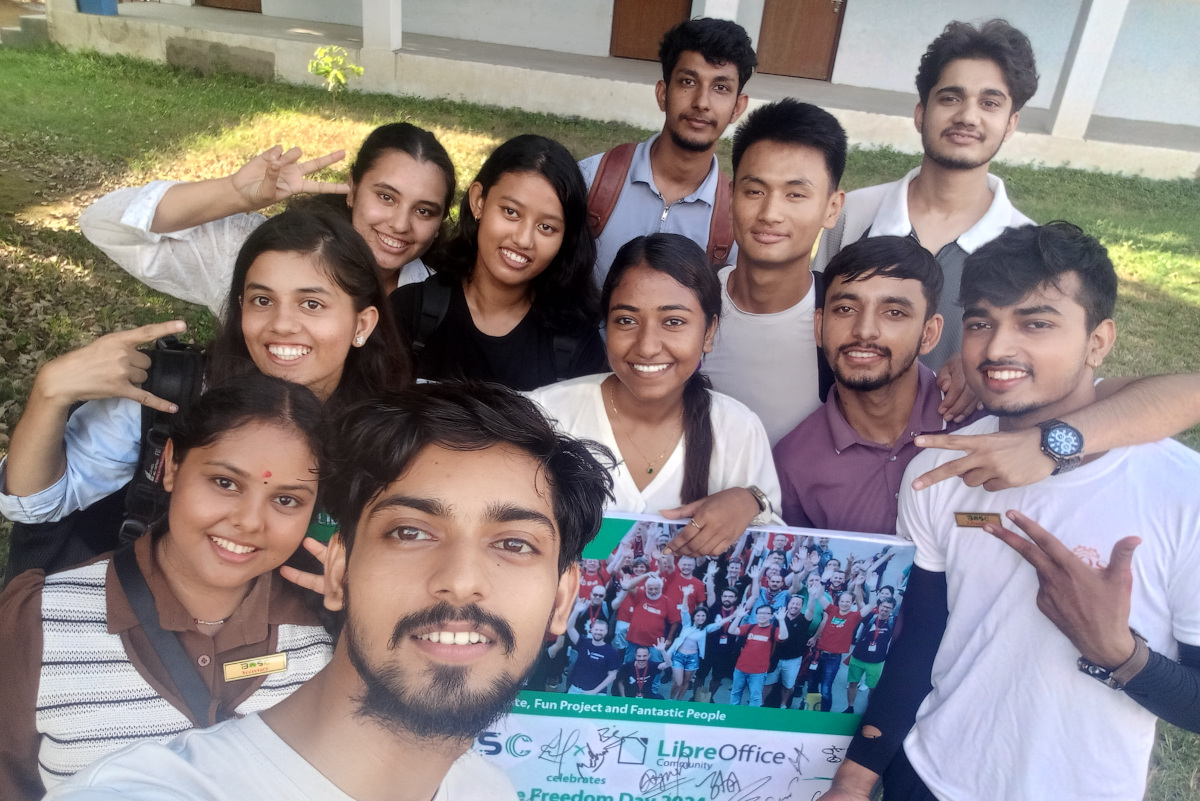
Nepal: workshops for students on using LibreOffice Writer to create professional resumes.
India: local events demonstrating LibreOffice’s potential for government offices and educational institutions.
Workshops, Training and Community Events
Throughout the year, TDF organized workshops and training sessions aimed at onboarding new users and contributors. These included:
Online training for translators and QA testers.
Regional events offering hands-on experience with LibreOffice migrations.
Webinars aimed at IT administrators exploring LibreOffice deployment in enterprise environments.
The Open Source Workshops helped public sector organizations understand the benefits of LibreOffice and how it can replace proprietary office suites.
Outreachy and Template Development
LibreOffice participated in the Outreachy program, with a focus on developing new templates for LibreOffice Writer. These templates included resumes, reports, and business documents aimed at improving the user experience and broadening appeal, particularly for users migrating from proprietary suites.
Marketing activities highlighted:
How templates increase productivity.
The contributions of new developers and designers participating in the Outreachy program.
The availability of these templates through LibreOffice’s website and community channels.
Media and Press Relations
TDF continued its media relations work, distributing regular press releases covering:
New LibreOffice releases and features.
Major migrations by organizations and governments.
Events such as LibreOffice Conference and Month of LibreOffice campaigns.
TDF’s press outreach focused on reinforcing LibreOffice’s position as a cost-effective, secure, and privacy-respecting alternative to proprietary office suites.
Download Statistics and User Adoption
The marketing efforts in 2024 yielded significant results:
Download Milestone: by the end of 2024, LibreOffice surpassed 400 million cumulative downloads since its inception in 2011, with an average of 28.6 million downloads per year.
Weekly Downloads: Weekly downloads approached 1 million, marking the highest figures since 2023.
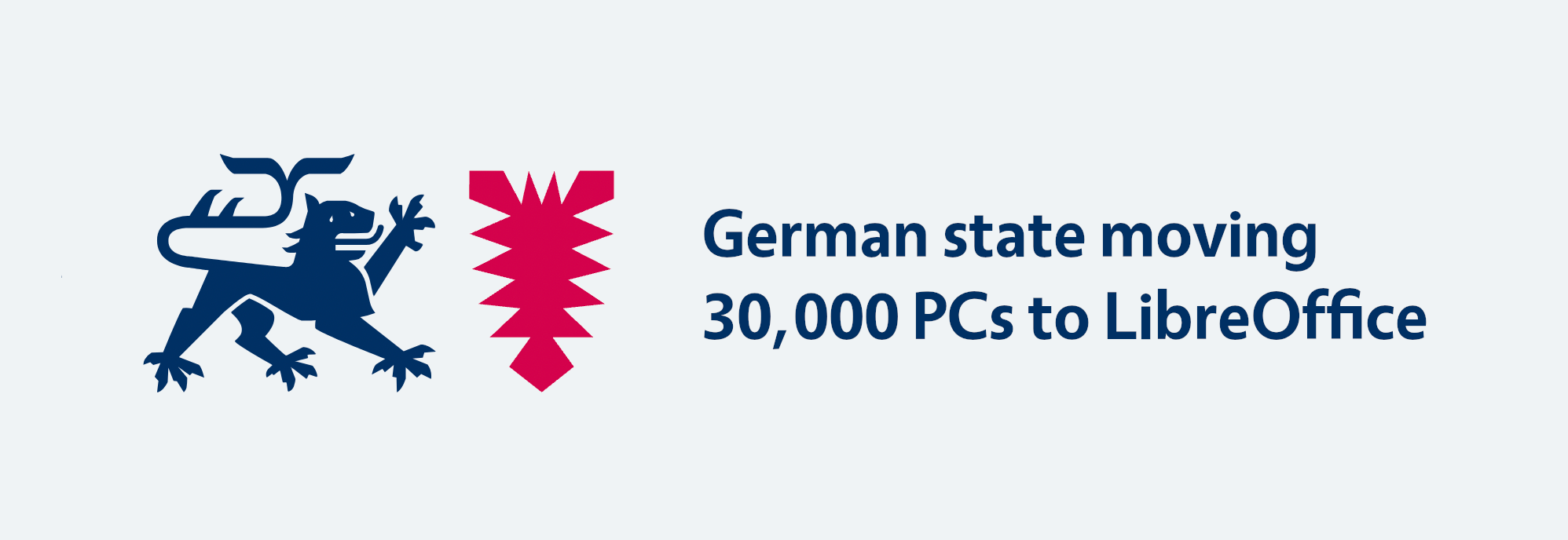
Public Sector Adoption: The German state of Schleswig-Holstein announced plans to migrate 30,000 PCs to LibreOffice, aiming for completion by 2026.
Conclusion
In 2024, through conferences, campaigns, podcasts, and media outreach, TDF advanced its mission of promoting free and open source software while making LibreOffice more accessible and trusted around the world. These marketing efforts not only amplified LibreOffice’s visibility but also demonstrated the value of community-driven open source projects in delivering professional-grade software solutions.