Berlin, July 20, 2023 – LibreOffice 7.5.5 Community, the fifth minor release of the LibreOffice 7.5 line, the volunteer-supported free office suite for desktop productivity, is available from our download page for Windows (Intel/AMD and ARM processors), macOS (Apple Silicon and Intel processors), and Linux [1].
Given the upcoming announcement of LibreOffice 7.6, all users are invited to update to this version, which has been tested and sought after enough to be ready for production environments.
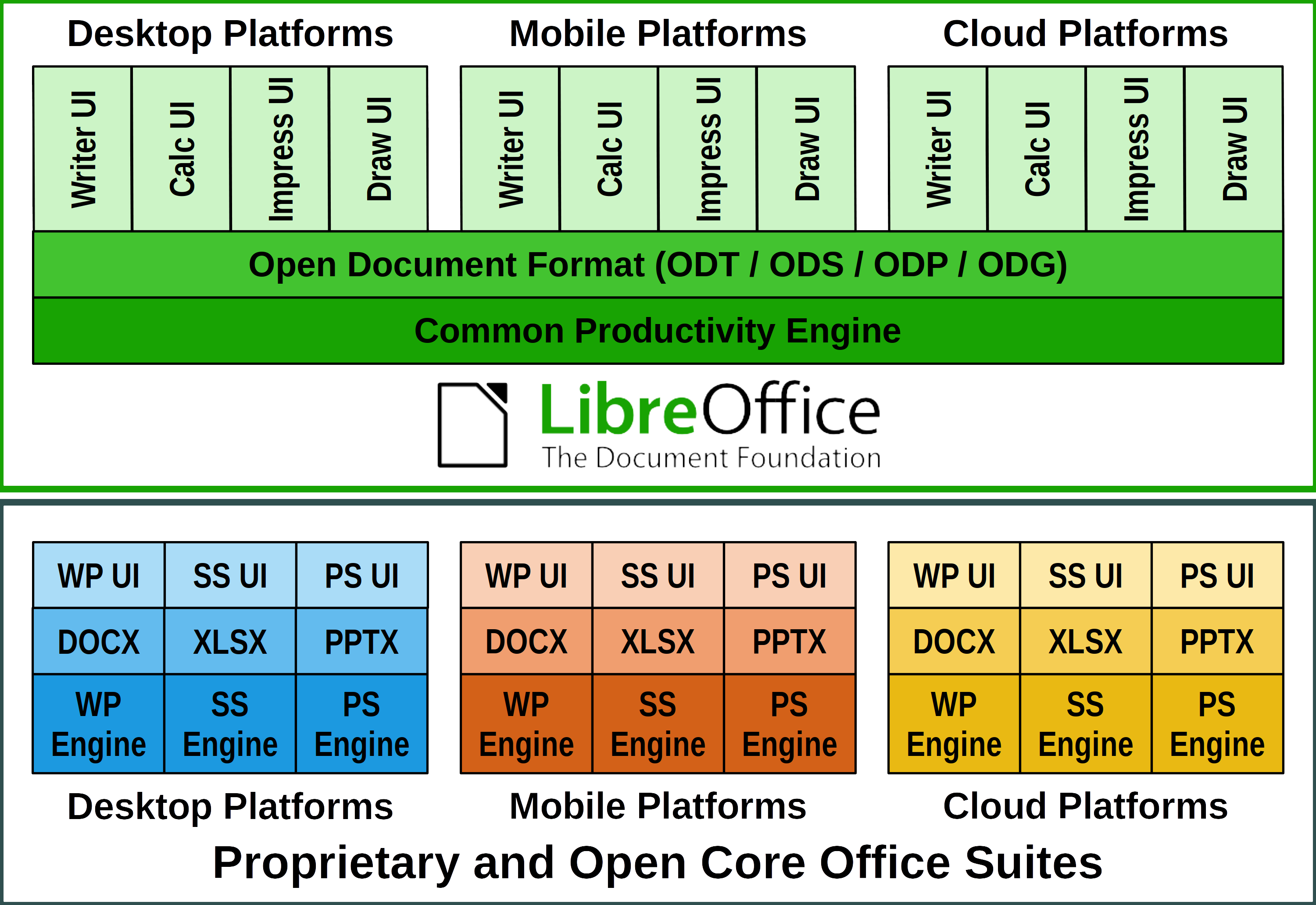
Several other products based on the same LibreOffice Technology of LibreOffice 7.5.5 are available for major desktop operating systems (Windows, macOS, Chrome OS and Linux), for mobile platforms (Android and iOS), and for the cloud. In some cases the name is not LibreOffice, although the underlying technology is the same.
For enterprise-class deployments, TDF strongly recommends the LibreOffice Enterprise family of applications from ecosystem partners – for desktop, mobile and cloud – with a large number of dedicated value-added features and other benefits such as SLA (Service Level Agreements).
Availability of LibreOffice 7.5.5 Community
LibreOffice 7.5.5 Community is available from this page. Minimum requirements for proprietary operating systems are Microsoft Windows 7 SP1 and Apple macOS 10.14. LibreOffice Technology-based products for Android and iOS are listed here.
The Document Foundation does not provide technical support for users, although they can be helped by volunteers on user mailing lists and on the Ask LibreOffice website.
LibreOffice users, free software advocates and community members can support The Document Foundation with a donation on this page.
The LibreOffice Documentation Team is proud to release the latest version of the Getting Started Guide updated to the features available in LibreOffice 7.5.
This book is for anyone who wants to get up to speed quickly with LibreOffice 7.5. It introduces Writer (word processing), Calc (spreadsheets), Impress (presentations), Draw (vector drawings), Math (equation editor), and Base (database). This book was written by volunteers from the LibreOffice community.
The Getting Started Guide 7.5 update was coordinated by Olivier Hallot with valuable contributions by Peter Schofield, Jean Weber, flywire and Nay Catina Dia-Schneebeli.
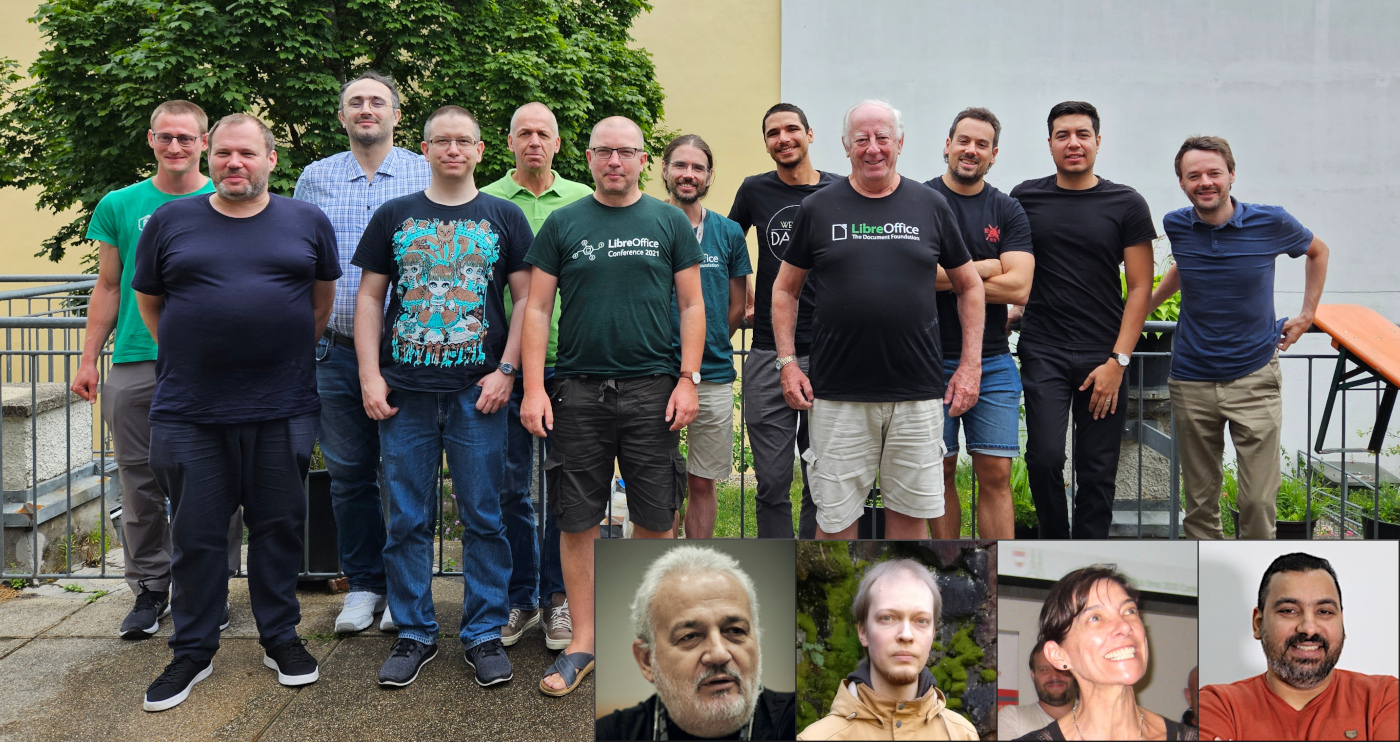
Michael Weghorn – Developer, prioritising accessibility tasks
Mike Saunders – Marketing and Community Coordinator
Olivier Hallot – Documentation Coordinator
Sophie Gautier – Foundation Coordinator
Stephan – Administrative Assistant
Stéphane Guillou – QA Analyst
Xisco Fauli – QA Engineer
Over four days, we discussed many topics, including: how we can grow the LibreOffice community; marketing the software; improving documentation; planning for Quality Assurance activities; localisation and liaisons; and updating the LibreOffice and TDF websites. We shared many ideas, came up with concrete action items, and are now working to get them done.
Of course, we’re just one part of the wider LibreOffice community. We always appreciate getting feedback and suggestions from other members of the project, so let us know what you’d like us to work on! And many thanks to everyone in the community for all your contributions and support 😊
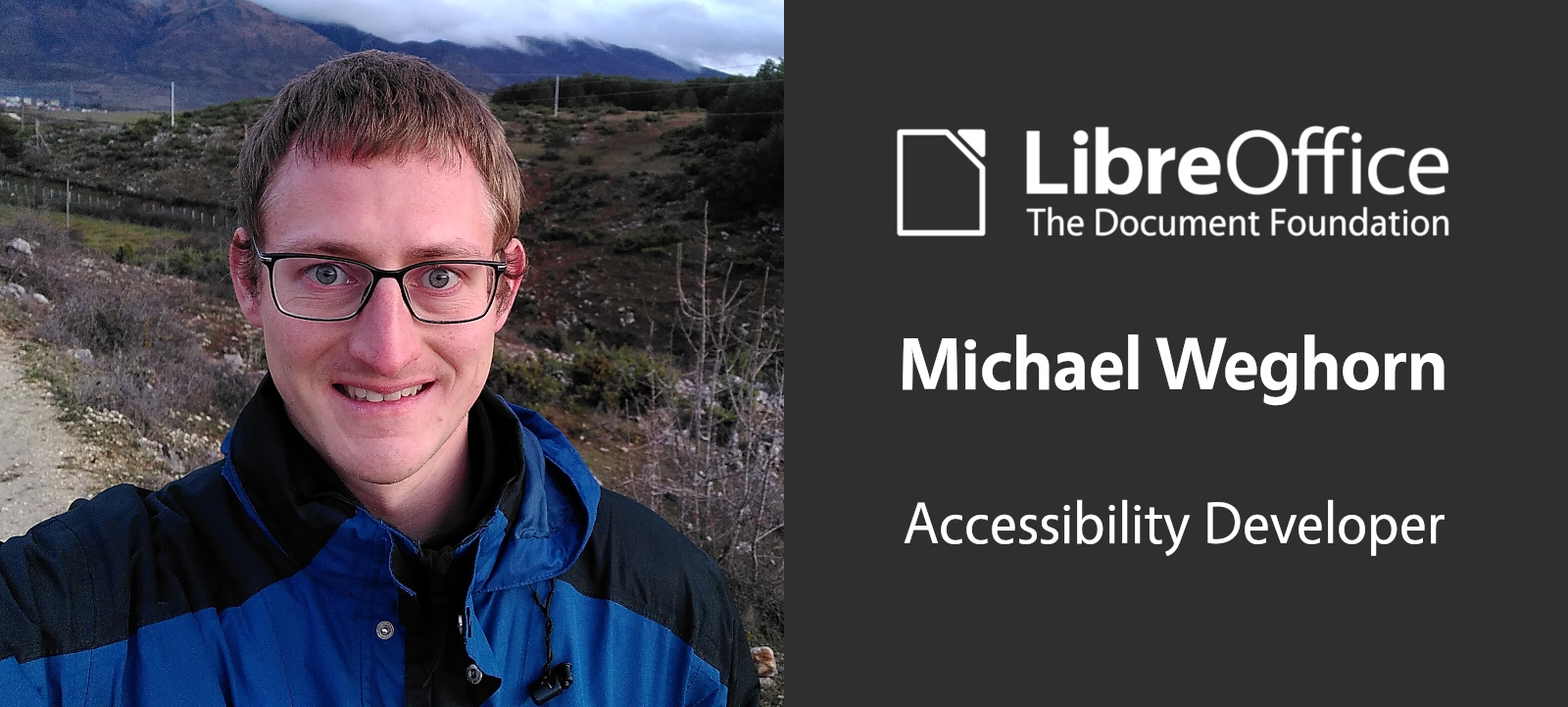
The Document Foundation (TDF) is the non-profit entity behind LibreOffice, providing infrastructure and support for the community that makes the suite. Recently, TDF decided to expand its small team with two new Developers – the first (Khaled Hosny) focusing on “complex” text layout languages. Today, we welcome our second Developer, Michael Weghorn, who will initially focus on accessibility improvements. Let’s hear from him…
Tell us a bit about yourself!
I am from Germany, and have been living in Munich since moving here for my studies in computer science about 12 years ago.
I am a free and open source software enthusiast.
Before coming to TDF, I was working for the City (administration) of Munich, first being part of their Linux client team – and since 2018 with the main focus on LibreOffice development. I am also a member of the LibreOffice Engineering Steering Committee (ESC).
Besides my involvement in LibreOffice, I have also contributed a few changes to other open source projects – mostly fixes for issues that I ran into myself as a user. The possibility to do this is certainly one of the many benefits of open source software.
Besides being an open source software developer, I’m involved in a Christian church and like meeting friends, sports and reading.
You’ve been in the LibreOffice project for a while – what have you been working on so far?
The first code change I was working on had to do with the selection of the Java runtime on LibreOffice startup, and I was also translating German comments in the source code back then.
Since then, I have mostly been working on fixing bugs in different areas of LibreOffice. The main areas that I have been focusing on are Qt/KDE integration, the Android version and accessibility.
What’s your new role at TDF, and what will you be working on?
I’m joining TDF as a LibreOffice Developer, focusing on accessibility.
Accessibility is quite a broad topic, ranging from the accessibility of LibreOffice’s user interface to the accessibility of the documents that the program creates.
From what I have seen so far, LibreOffice has a good basis regarding accessibility. It’s also great to see recent contributions by others to further improve accessibility (eg improvements for document accessibility and PDF/UA export, the accessibility checker and accessibility on macOS), but there are certainly also areas that will benefit from getting some more attention.
My initial focus will probably be fixing problems encountered in the user interface when using LibreOffice with a screen reader.
From my experience so far, this often not only involves making changes to LibreOffice itself, but also to the corresponding screen reader or elsewhere in the accessibility software stack. Therefore, cooperation with other projects is also essential.
How can all users of LibreOffice help out?
There are different ways to get involved – for example:
Report accessibility issues in the Bugzilla issue tracker and set the “accessibility” keyword for accessibility-related bugs, so developers become aware and can fix them
Confirm already existing bug reports and add more helpful information to them
Test development versions of LibreOffice with assistive technology (and report bugs), so issues can be fixed before a new version is released
If you’re a developer: help with fixing reported bugs
There’s also an accessibility page in the wiki, which contains some more information and will be further updated in the future.
Great to have Michael on board! 😊 Follow this blog and our Mastodon and Twitter accounts for updates on his work – plus more news from the LibreOffice community.
Here’s our summary of updates, events and activities in the LibreOffice project in the last four weeks – click the links to learn more…
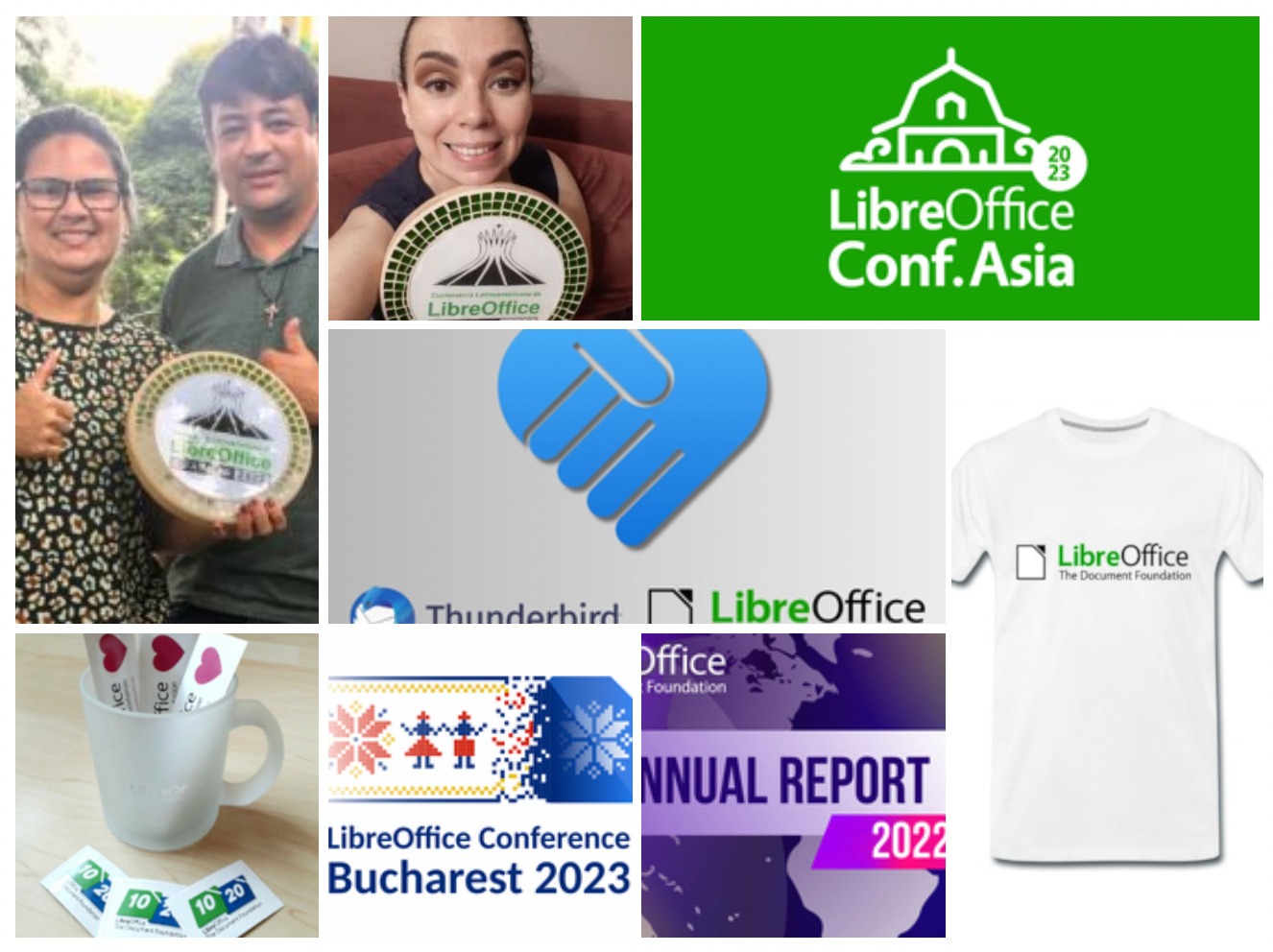
We started June by announcing the LibreOffice Conf Asia x UbuCon Asia 2023, in Indonesia, an event that brings together Linux and Open Source Software (OSS) activists, contributors, users, communities, and businesses in the Asia region. It will take place from 6 – 8 October 2023 – find out more here!
Meanwhile, LibreOffice project volunteers received a cool tribute from the Mexican “Instituto Integración Down”. Nice 👍
How can we make LibreOffice and the Thunderbird email client work better together? That’s a question we asked, and we posted some ideas from our communities. Let’s make them happen!
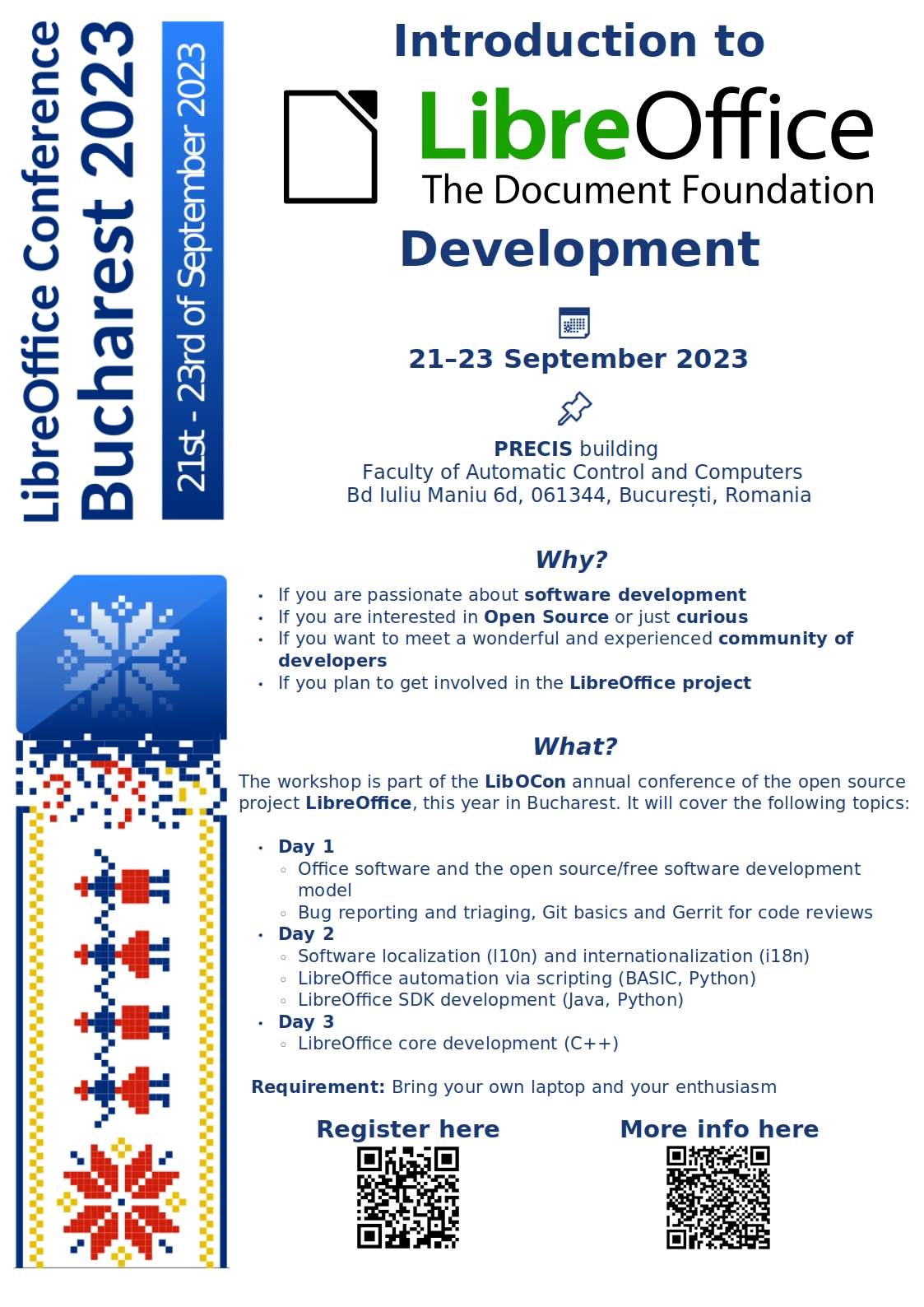
At the upcoming LibreOffice Conference 2023, there’ll be a workshop about getting started with development of the suite. The organisers prepared a nice poster with info (click to expand):
In 2022, the marketing team continued the deployment of the Strategic Marketing Plan, without overlooking ongoing activities to promote LibreOffice and support the efforts of native language communities
(This is part of The Document Foundation’s Annual Report for 2022 – we’ll post the full version here soon.)
LibreOffice Strategic Marketing Plan
We have invested in the deployment of the Strategic Marketing Plan, with additional activities such as the release of generic presentations about The Document Foundation (History, and Digital Sovereignty), LibreOffice (Technology, also with comments, and Sustainability) and Open Document Format (Generic, ODF and Interoperability, and OOXML Issues), to be used by community members. Videos who help to personalize a slide deck according to the audience are also available.
We have also released a White Paper about LibreOffice Technology, to explain the evolution of LibreOffice from a single desktop product to a product based technology for individual or enterprise productivity, which is the foundation for a series of products optimized for different platforms, such as desktop, mobile and the cloud. To underline the importance of the LibreOffice Technology concept, a specific logo has been created, to make visually easier to associate all products based on this technology platform.
A second logo about the LibreOffice Ecosystem was also developed, to make it easier to recognize companies who provide development, support, migration or training services around a product based on the LibreOffice Technology. This logo has not yet been adopted on a large scale, and because of this there will be some specific actions in 2023 to encourage companies which belong to the ecosystem to use it.
The project will also continue to invest in the communication of FOSS sustainability, as enterprises should consider that focusing on the “free as in beer” nature of the software can seriously harm projects that they rely on as strategic assets of their infrastructure. It is a short-sighted decision, as they can save a lot by not paying a single dime, but they may also have to spend quite a lot tomorrow if the original project is not able to self sustain, as they will have to switch back to a proprietary solution.
The Importance of Donations
Donations are vital for current operations and future developments of The Document Foundation, as they allow us to keep the organization alive, to fund specific activities, to support events and other marketing tasks organized by native language projects, and to maintain a small team working on various aspects of LibreOffice.
In addition, funds from donations were used to for several development related tasks.
Ongoing Marketing Activities
Marketing at The Document Foundation and LibreOffice is a large team effort, with contractors paid for their activity – thanks to the money made available by our generous donors – and several volunteers carrying out actions both at global and local levels to increase visibility and brand awareness.
One of the ongoing projects is the Community Member Monday Series, with interviews of one or more community members about their contributions to the project.
The marketing team, supported by many volunteers, created a series of New Features videos for the announcement of LibreOffice 7.4 and LibreOffice 7.5, covering the suite as a whole – and Writer, Calc and Impress in detail. These videos are a great way to demonstrate new features to end users and are often embedded into news websites. They have also been translated into different languages by volunteers of the localization community.
Please confirm that you want to play a YouTube video. By accepting, you will be accessing content from YouTube, a service provided by an external third party.
If you accept this notice, your choice will be saved and the page will refresh.
Activities Month by Month
In early January, we announced LibreOffice 7.2.5 Community, the fifth minor release of the LibreOffice 7.2 family, with 90 bug and regression fixes and many improvements to document compatibility. Also, we announced Klingon and Interslavic support for the upcoming LibreOffice 7.3 release.
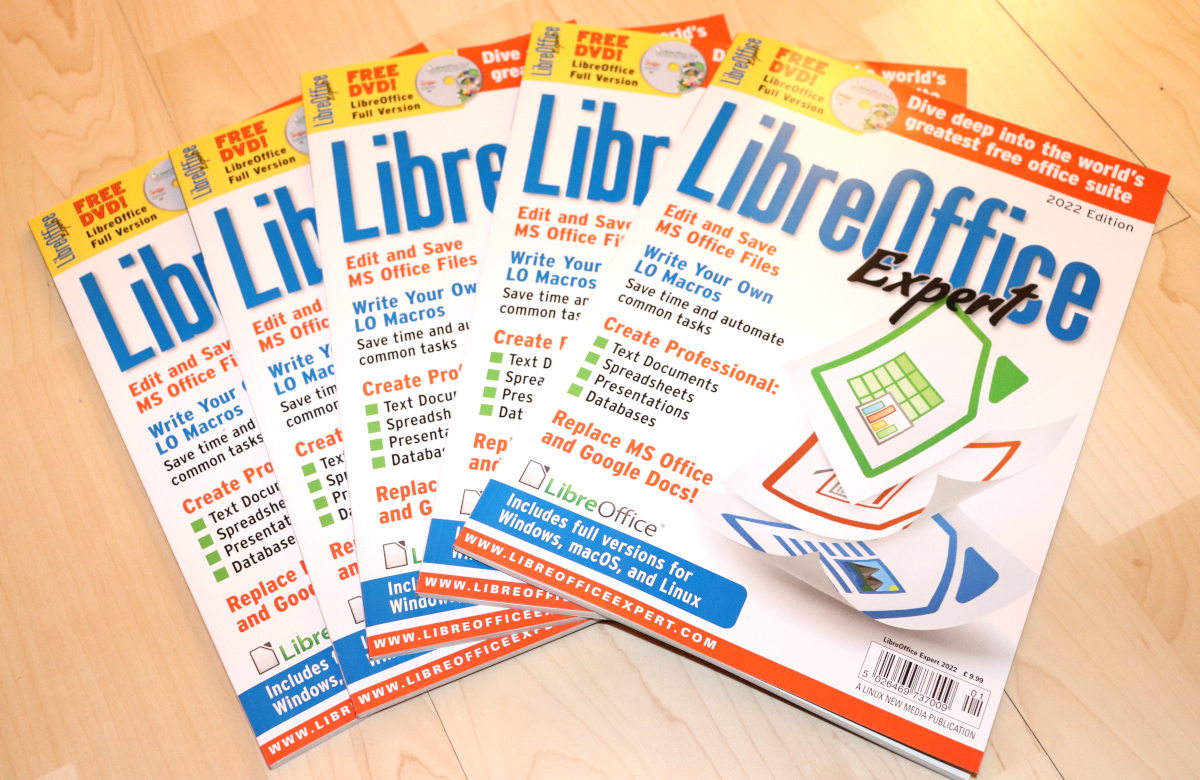
In mid January, Linux New Media released a special edition magazine, full of tutorials, tips and tricks about LibreOffice. Some of the articles were contributed by members of the LibreOffice community. The magazines come with DVDs with LibreOffice for Linux, Windows and macOS, plus extra templates, extensions and guidebooks, and we had some copies to give away to schools and communities.
In late January, the Matrix bridge for the LibreOffice IRC Channels was launched, to allow the use of a modern chat tool to participate more efficiently in LibreOffice-related discussions. At the same time, the European Commission OSPO (Open Source Program Office) announced a bug bounty program to help selected projects – such as LibreOffice – find (and potentially fix) security issues. Rewards were from € 250 up to € 5,000 for security bug disclosures, with 20% added on top if the researcher was also able to provide a fix for the bug.
In early February, the announcement of LibreOffice 7.3 Community represented another giant step in the direction of interoperability with Microsoft Office’s proprietary files, as the release provided a large number of improvements targeted at users migrating from Microsoft Office to LibreOffice, or exchanging documents between the two office suites.
After the announcement, the project was at the virtual FOSDEM with a devroom and a booth. During the two busy days we had the opportunity to meet LibreOffice advocates and answer their questions after presentations or in chat rooms.
On February 17, we celebrated the 10th anniversary of The Document Foundation, and the new Board of Directors started the two year term. Members are: Thorsten Behrens, Paolo Vecchi, Jan ‘Kendy’ Holešovský, Emiliano Vavassori, Caolán McNamara, Cor Nouws and László Németh. Deputies are: Gábor Kelemen, Ayhan Yalçınsoy and Gabriel Masei. After Russia’s aggression in Ukraine, one of the first decision of the newly appointed BoD was to suspend the Russian company RusBITech from the foundation’s Advisory Board.
In late February, we started working on TDF’s Annual Report, creating most of the content and visuals with LibreOffice, and collecting images from community events for the final version. The final booklet is entirely produced with free software (LibreOffice and GIMP for tweaking images, Scribus for creating the layout, and the free Croscore fonts: Carlito and Caladea).
In early March, the project announced LibreOffice 7.3.1 Community, the first minor release of the LibreOffice 7.3 family, providing a solution to LibreOffice 7.3 bugs such as the Auto Calculate regression on Calc, the crashes running Calc when lacking AVX instructions and the crashes related to the Skia graphic engine on macOS. On March 8th, we celebrated the International Women’s Day, which was followed by the release of LibreOffice 7.2.6 Community.
In mid March, we announced the participation of LibreOffice to Google Summer of Code (GSoC) for the 10th straight year. During the month, we also celebrated Document Freedom Day 2022, and announced several communication channels for the LibreOffice community in India: Matrix and Telegram. At the end of the month, the project released LibreOffice 7.3.2 Community.
At the same time, the 2022 edition of the Latin-American LibreOffice Conference was announced. The event, organized by the Brazilian community, was scheduled for August 25 and 26 at the Catholic University of Brasília, in the Taquaritinga area of Federal District.
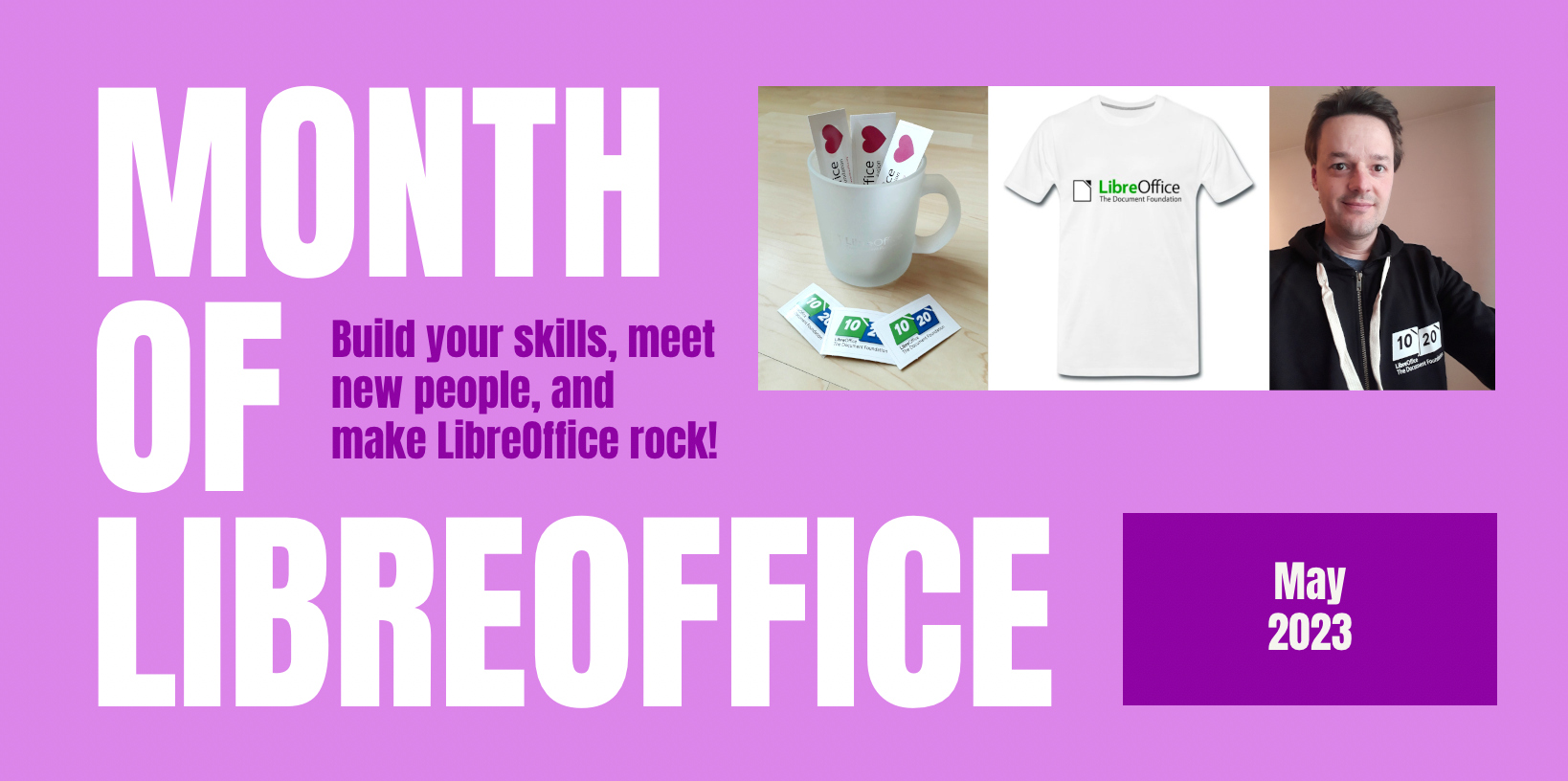
In May, we organized the “Month of LibreOffice” campaign, which gave contributors the opportunity to thank other members of the community for their work by awarding a sticker or a mug, a hoodie, a T-shirt or a rucksack. During the month we also released LibreOffice 7.3.3 Community and LibreOffice 7.2.7 Community.
In mid May we announced the LibreOffice Conference 2023, scheduled for the month of September, from Thursday, September 29th, to Saturday, October 1st, in Milan, Italy. At the same time, we announced the call for papers and the sponsorship packages.
In late May, several representatives from the LibreOffice project and the ecosystem companies allotropia and Collabora attended the Univention Summit 2022 in Bremen, northern Germany. They had a stand with LibreOffice merchandise, talked to visitors and answered questions.
In early June, the marketing team announced the availability of the index of LibreOffice training videos, which is available on this blog in the Media Hub section. The index is for videos in English.
In June, we announced LibreOffice 7.3.4 Community, followed in July by LibreOffice 7.3.5 Community.
In August, we finalized all materials for the announcement of interoperability focused LibreOffice 7.4, with the press release localized in many languages thanks to volunteers from several native language communities. Thanks to this large effort, press releases are reaching journalists in their idiom, and this increases the chances of getting published.
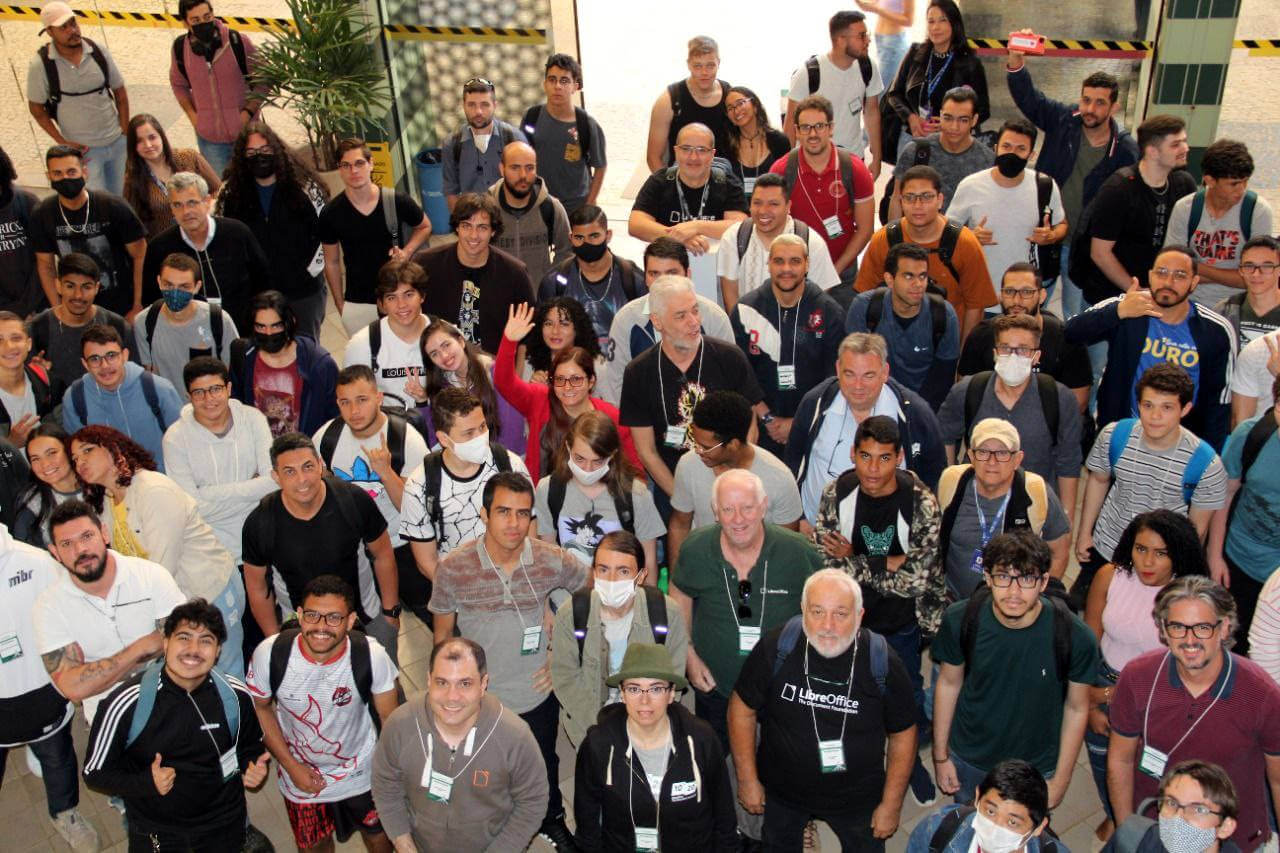
In late August, the LibreOffice LATAM Conference gathered around 400 people, among them students and IT professionals, and was opened to the public on Thursday August 25th in a ceremony chaired by Prof. Wesley Sepulveda, representing UCB, Lothar Becker (formerly on the Board of Directors of The Document Foundation) and Olivier Hallot representing the LibreOffice community.
In September, we announced LibreOffice 7.3.6 Community, and at the same time we celebrated the 10,000th follower on our Mastodon account (Fosstodon server). Later in the month, we announced LibreOffice 7.4.1 Community, and released LibreOffice on Apple’s Mac App Store.
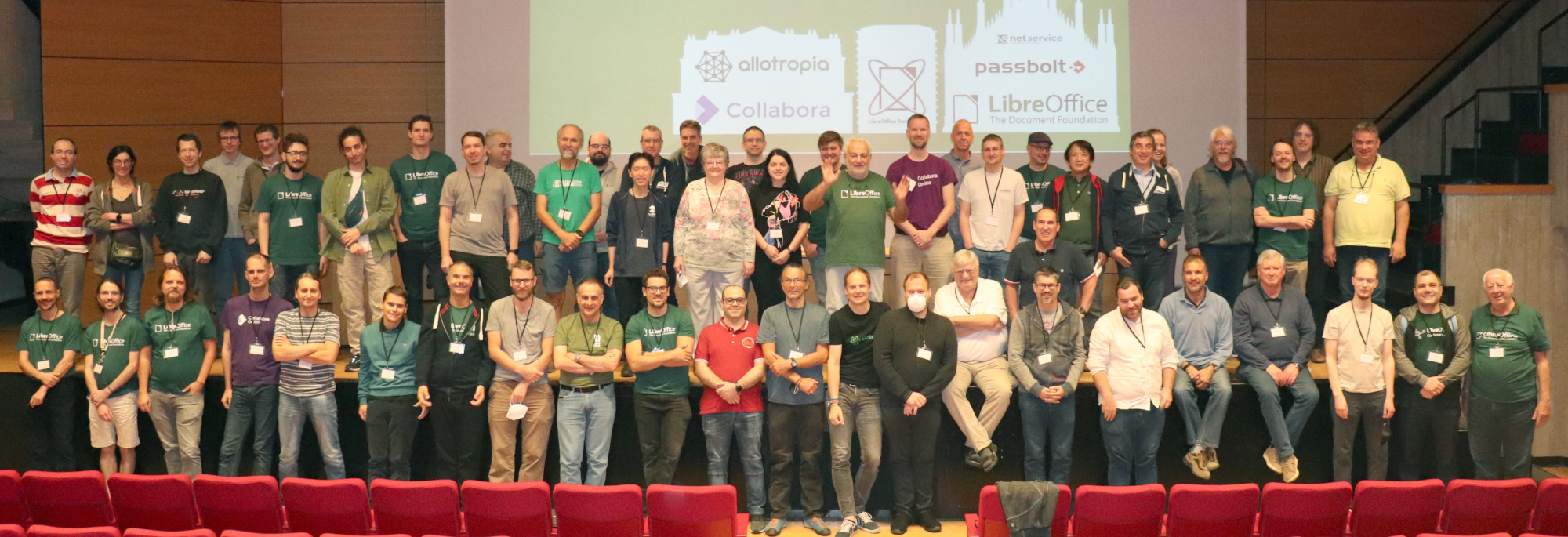
At the end of the month, the LibreOffice community gathered in Milan for the LibreOffice Conference 2022, from September 29 to October 1st. During the event, which started on September 26 with internal meetings of TDF Team, followed by community meetings, we celebrated the project’s 12th anniversary.
In early October, we announced the release of LibreOffice 7.4.2 Community, and the availability of LibreOffice on the Microsoft Store. We also announced the election for the next Board of Directors of The Document Foundation. Following the discussions at the conference, we also announced the Liaison role for Native Language Communities.
In November, which was another “Month of LibreOffice”, with TDF awarding stickers, glass mugs, T-shirts and hoodies, we announced both LibreOffice 7.3.7 Community and LibreOffice 7.4.3 Community. We also launched the Call for Papers for the LibreOffice Technology FOSDEM DevRoom, and welcomed Stéphane Guillou as a member of TDF Team in the role of QA Analyst for LibreOffice.
During the month, LibreOffice’s Indonesian community collaborated with the Organizing Committee of the Indonesia Linux Conference 2022, to hold a short presentation: “Implementation of LibreOffice in the Ecosystem at a University”.
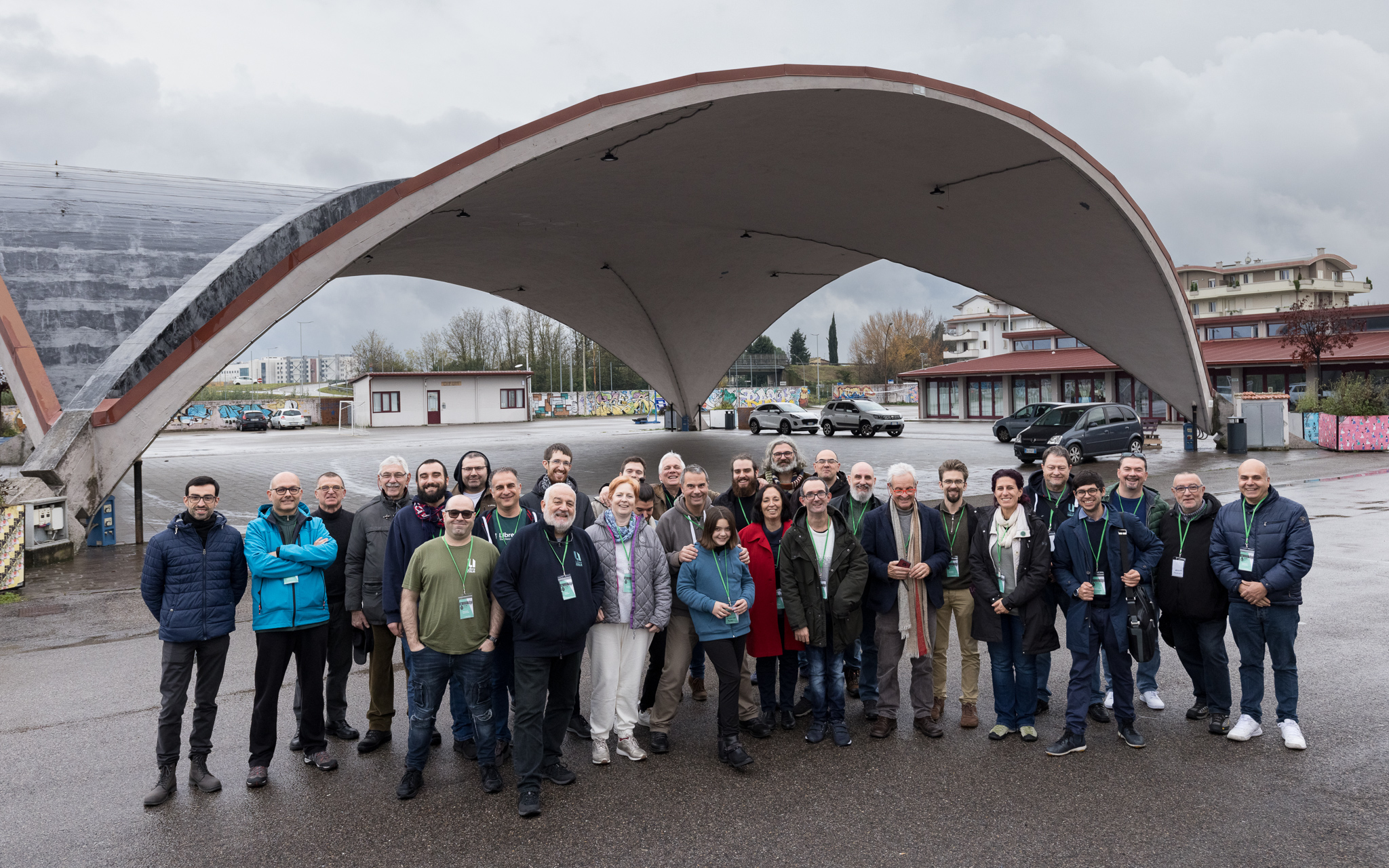
In December, the Italian community gathered in Empoli, Tuscany, for the LibreItalia Conference. The event opened with welcome speeches by President Enio Gemmo and Gruppo Operativo Linux Empoli (GOLEM), followed by those of Flavia Marzano and Professor Andreas Formiconi of the University of Florence on the importance of FOSS for Education.