What is the Open Document Format (ODF), and how is it developed?

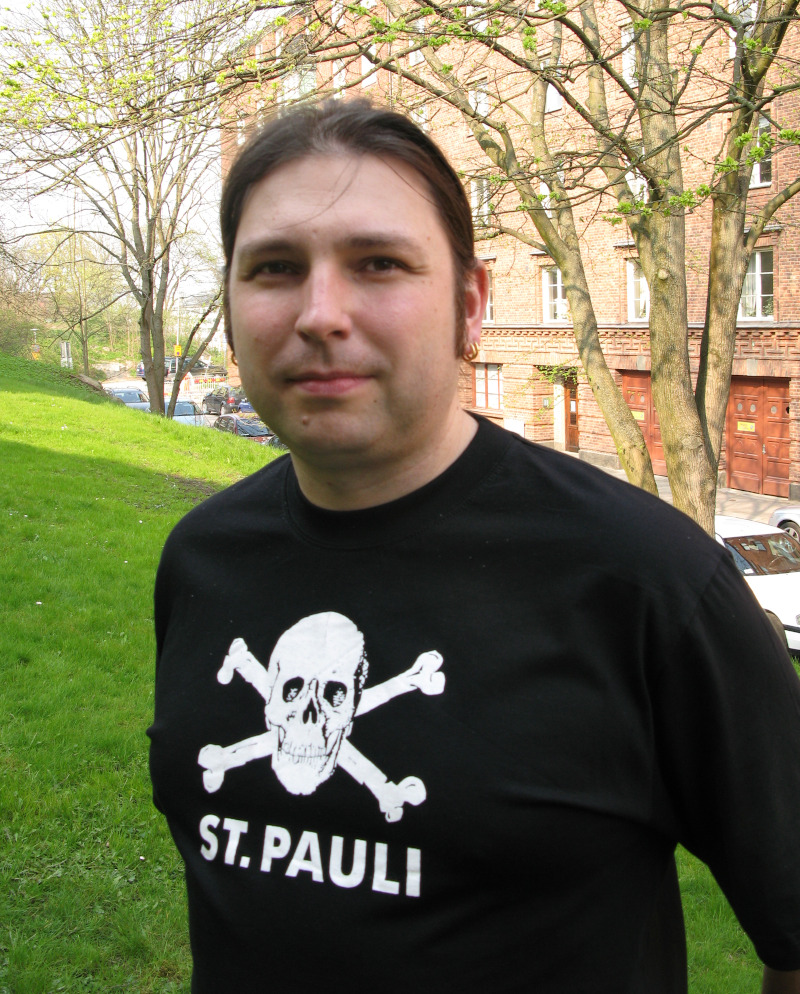
Regina Henschel is a long-time member of the LibreOffice community, and has worked on ODF, the native file format of the suite. At our recent German community meetup, we talked to her about how ODF is developed, and how users can help to improve it…

Tell us a bit about ODF…

Open Document Format is LibreOffice’s native file format. (If you have a file with a .odt, .ods, .odp or .odg extension, then it’s an Open Document Text, Spreadsheet or Presentation file or Graphic respectively.)

ODF is developed by OASIS, then submitted to ISO (the International Organization for Standardization), and then adopted as a standard. There is also a working group at ISO, which by the way also works on OOXML – which can then ask questions about development, and so on.

For ODF we are now working on version 1.3. We had a “feature freeze” last summer. We have come so far that everything we wanted to have in it is available in the “editor version”. Now we’re going to fine-tune it, then we’ll be back in summer – so that was a whole year. Then comes the coordination process at OASIS, so it usually takes two years until a new version of the standard is ready.

How do you decide which new features to add?

The feature has to be well defined, and that depends a little on how good the proposal you get is. There are some suggestions like: “We want to have a feature for Fourier transformations” – but nothing else! And then we say: as long as there is no implementation that actively handles it, we’ll postpone it for later. It’s not worth it, for a standards body to deal with a proposal like this, if there are no applications that are actually interested in it.

ODF exists as a “strict” standard, for features that are fully standardized, and then there is an “extended mode” in which you can try out new features in applications. They then run under their own namespace, and if that works, organizations can make a suggestion for OASIS, eg: “This feature works well for us, so please include this in the strict standard.”

Then others can say: “Yes, we want to do something similar, but it would be better for us if we didn’t call it X, but Y instead”. Or: “We need an additional attribute to make it work for us”, for example. In situations like that, the proposals are discussed.

For example, in LibreOffice, it’s now possible to specify the size of charts, independent of their labels. In the old standard, you could only set the size including the label. This means that when data changed and the label changed, the effect was that the size of the chart changed. So that’s been fixed in ODF 1.3.

There are also bugfixes, where there are things that are simply wrong, or that are not clear enough for implementation. For example, one thing that was really incorrect was to put the units “at” and “atm” on the same level – that was definitely wrong. And one time, a matrix form was wrong as well. So we work on fixes for these.

Can normal end-users help out?

Yes, you can be a “normal person”, so to speak, without being on any committee – you can still send something to the Technical Committee. There is a mailing list, and also a homepage, where you can get informed about the work of the committee. There you can also find a link to the mailing list – but you have to register, because of spam. Messages on this list are then read and answered by the Committee.

The second way to get involved is when the Committee is about to make a new version of ODF. This will then be made available for voting – and then there will be an official time for comments. There the regulations are a bit stricter; this is not voluntary, but the committee has to actually work on these comments. That should then give a qualified answer.

The next step where official participation takes place is at ISO. They have the same disclosure process again, where comments are collected accordingly. Then the Technical Committee gets a long list from ISO: “We have received these comments, please discuss them.”

So this is a process that is very open. That’s one of the reasons why I decided to join the Committee. It’s not that something happens in secret, and then suddenly there’s a standard – but rather, the process is totally comprehensible.

The other thing that interested people can see is the archives of the mailing lists – and there are weekly teleconferences too.

Thanks to Regina for all her help over the years! ODF – and other open standards – are incredibly important, especially for long-term data storage. Indeed, the UK government recommends using ODF, and has guidelines for using the format in organisations and companies. Also check out this presentation from Regina at FOSDEM 2018.

Community Member Monday: Jun Nogata

Today we’re talking to Jun Nogata from our Japanese community!

To start, tell us a bit about yourself!

So, I live in Himeji, Japan where UNESCO World Heritage site Himeji Castle is. I work a part-time lecturer at a local university.

I am a big fan of free and open source software (FOSS). I started to use Linux from Slackware 95, and I’m using Debian Sid at the moment. I am active in the Debian community in Japan and I’m also an OpenStreetMap mapper.

I like listening to indie rock music, playing guitar and DJing sometimes. Also, I’m learning Korean – I want to talk to my friend DaeHyun Sung from the Korean LibreOffice community!

Oh, and I created the LibreOffice Impress templates “Midnight Blue” and “Alizarin” – thank you for using them. On social media, you can find me on Twitter and Facebook.

What are you working on in LibreOffice at the moment?

I am working on the Japanese Ask LibreOffice website as answerer and moderator – and I’m also involved in marketing and public relations for the Japanese team.

Previously, there was no marketing from the Japanese team. December 2018, I started to post information about LibreOffice from the Japanese community Twitter accounts. There were reactions from the users, like: “I was worried that there was no information about LibreOffice, but now it’s getting better.”

I talked to the Japanese team about the necessity of creating a blog, to share and communicate information outside of social networking services. Naruhiko Ogasawara consulted with Italo Vignoli to create the blog for the Japanese team. I am happy to add information about LibreOffice in Japanese to the blog.

Is there anything else you’d like to work on in the future?

I would like to try to improve the Japanese settings. LibreOffice is known as “cost-free, but poor-quality office software” in Japan because LibreOffice’s settings are not appropriate for the language.

In Japanese, for example, you can set characters per line and lines per page to determine the page layout, but the page style text grid is not able to specify characters per line and lines per page due to improper implementation. (If you are interested, please set 37 characters x 30 lines, without changing the font and ruby size.) I will try to fix these settings and change the bad image.

How did you originally get involved with LibreOffice – and what was the experience like?

As a user, I was attending the “Kansai LibreOffice Group” (関西LibreOffice勉強会) hosted by Shinji Enoki. My templates were included in LibreOffice 4.4 – it was a big surprise, and a pleasure for me that I could contribute to LibreOffice without changing the source code. A big thanks to the whole community for LibreOffice!

Finally, what do you see in the future for LibreOffice? What does it need most?

Ideally? users in all languages can use LibreOffice without changing any settings. The paragraph style of Writer is “Align left”, but in Japanese, “Justified” is standard. Japanese users need to change the settings before writing documents. That is very difficult.

However, if set the default setting to “Justified”, Americans and people who speak European languages will be in trouble. So I think that LibreOffice can create a mechanism to resolve conflicting settings in different languages.

Thanks Jun! Japanese LibreOffice users are welcome to join us and get involved in the project – we look forward to meeting you! (Also check out the English page too.)

Community Member Monday: Buzea Bogdan

Today we talk to Buzea Bogdan, who is making useful videos for LibreOffice users – check them out below!

Where do you live, and what do you enjoy in your spare time?

I live in Romania, a country with beautiful landscapes. I like computers and I like to ride my bicycle – or, more recently, my electric scooter.

What are you working on in the project at the moment?

I am reporting bugs, verifying them, and helping with other bug reports. In addition, I created a channel on YouTube with short tutorials about LibreOffice.

With the help of Xisco Fauli (LibreOffice’s QA engineer) and others in the LibreOffice groups on Telegram, I began to bibisect bugs. Also, with the help of others in the same direction, I may learn more about finding bugs and checking for fixes. I feel there are not so many technical videos about this.

How did you get involved with LibreOffice?

I started with LibreOffice almost a year ago, following a post about how everyone can contribute to this project. At that time, I thought it was time to financially support the LibreOffice community with a small donation. But I soon returned to the software’s website, because I had a small problem with displaying menus. Xisco helped me to solve the problem at the time, and then I thought: “If it is so simple to help others like me, could not I use my time to contribute with the little that I know?”

From that point on, I began to contribute by checking bug reports, along with videos and other information to solve some other bugs. I have also been involved in the translation of LibreOffice into Romanian. And recently I started the new YouTube channel that I mentioned, with short and simple explanation about little things that people usually find hard to solve. Here is a playlist – you can switch between videos using the icon in the top-left:

Please confirm that you want to play a YouTube video. By accepting, you will be accessing content from YouTube, a service provided by an external third party.

YouTube privacy policy

If you accept this notice, your choice will be saved and the page will refresh.

Finally, what do you see in the future for LibreOffice?

A few years ago I started using LibreOffice after watching a video on YouTube where OpenOffice and LibreOffice were compared by a well-known blogger. This kind of video could help LibreOffice become more familiar, and help people to discover the features and possibilities they have with open source software.

I feel LibreOffice is more mature now than ever, but the stable version needs to be stable enough – well tested. And this is the way I can help a little bit. I also feel that LibreOffice needs more engineers to work on bugs in order to maintain a smaller numbers of unsolved bugs, relative to all bugs that are reported.

So, huge thanks to Buzea for his help in the QA community, and the videos too! Checking and confirming bug reports is a great way to make LibreOffice even stronger, and doesn’t need a lot of time – if you want to give us a hand, jump into the LibreOffice QA channel and we’ll show you what to do. Cheers!

Community Member Monday: Vera Blagoveschenskaya

Today we’re talking to Vera from the Russian LibreOffice community, who has been especially active in our Quality Assurance (QA) project recently…

First, tell us a bit about yourself!

I live in Obninsk, Russia – it’s one of the major Russian science cities. You know, the first nuclear power plant was built in Obninsk. At the moment I work at BaseALT as a QA engineer. I really love testing! (I’ve noticed a minor bug in LibreOffice Writer while typing these words – I will surely report it later 🙂)

I’m also mother of a teenage girl, so a lot of my spare time is dedicated to supporting her interests. Now she is really into biking and swimming, and we dream of visiting the Tokyo Olympics in 2020.

What are you working on in LibreOffice at the moment? And is there anything you’d like to try in future?

I find and report bugs in Bugzilla and check fixes. In addition, I try to reproduce unconfirmed bugs and categorize them. For the future, well, it’s really hard to choose – there are so many options! But I undoubtedly would like to have more time to contribute to LibreOffice.

How did you get involved with LibreOffice – and what was the
experience like?

When I started to work in BaseALT, one of the tasks was to test LibreOffice for KDE 5.
I took part in the Bug Hunting Session for LibreOffice 6.2 in October 2018 and had success. I was mentioned in the November 2018 QA report; it was unexpected and very pleasant!

A bit later, Aleksei Nikiforov (who works at BaseALT as well) got involved in work and fixed some KDE 5 crashes. Now we work together, thereby continuing the tradition of contributing to LibreOffice. You know, BaseALT was formed from the ALT Linux Team, which helped to localize StarOffice a long time ago.

Finally, what do you see in the future for LibreOffice?

My opinion: LibreOffice needs to be promoted more widely. Most Windows users don’t know that there is a great and free alternative to Microsoft Office.

Thanks to Vera for her time and contributions! And indeed, we in the LibreOffice project would appreciate more help spreading the word – join our marketing community today!

Community Member Monday: Roman Kuznetsov

Today we’re chatting with Roman Kuznetsov, a Russian contributor to LibreOffice who helps out in QA and other areas:

Your nickname in the LibreOffice project is “Kompilainenn” – where did that come from?

Oh, it’s simple: one day I was trying to compile the Linux kernel for my old and slow PC. And I came up with my current nickname: Kompilainenn 😀

So tell us a bit about yourself – where you’re from, where you live, how to find you on social media, and what do you do in your spare time!

I’m a member of The Document Foundation from Russia, and I live in Lipetsk – it’s an industrial metallurgical city. You can find me on Telegram as @Kompilainenn, and on IRC in the channel #libreoffice-ru. I have a blog about LibreOffice in Russian: the blog has strange address with the prefix “anti”, but in reality the blog isn’t against LibreOffice 😉

I work for a large agribusiness company, as the boss of the “build cost calculation and conclusion of contracts” department. In my spare time I read books, play with my children, play computer games or walk outdoors – and of course make LibreOffice better 😉

What are you working on in LibreOffice at the moment?

At the moment I’m doing some quality assurance (QA) work – filing bug reports, retesting and sorting many old bugs. It’s huge area of activity – and also, I’ve fixed a pair of user interface bugs. I have translated my Conditional Formatting Guide into English as well.

Is there anything else you’d like to work on in the future?

First, I would like to learn C++ and I want to try to improve the management of macros in LibreOffice.

Second, there is the LibreOffice Style Guide in Russian. But it has much information about Writer styles, and very little info about styles in all another modules of LibreOffice. I want to add more info about styles for all modules, and then translate the guide to English.

Third, I want increase the number of active members in the Russian community – to involve more Russian developers in LibreOffice development. It will take a lot of work!

How did you get involved with LibreOffice – and what was the experience like?

I used OpenOffice.org from 2008, and then LibreOffice when it came to life. In 2013, I knew about the Russian forum http://forumooo.ru and created an account there.

At the end of 2014, Lera Goncharuk (aka “tagezi”) invited me to help him with translating LibreOffice’s FAQ into Russian on our wiki. And I agreed. Since then, I translate all Release Notes for new versions of LibreOffice into Russian.

Other tasks I worked on were translating the Getting Started Guide and Draw Guide. Then I began to send bug reports and some enhancements. Also, I worked on translations of Math and Impress guides. In the last year I have tried fix simple UI bugs in the source code of LibreOffice – now I have over ten simple bug fixes aready!

I got valuable experience communicating with a worldwide community, along with some practice in English, working in Bugzilla and making good bug reports. Now that I know more about how LibreOffice’s user interface is created, I like to make new dialogues in Glade and create UI mockups in Pencil.

Finally, what do you see in the future for LibreOffice? What does it need most?

First, I fully agree with Khaled Hosny, who was interviewed recently. LibreOffice needs to have a more clear vision and development agenda.

Second, every month I see about 600 new bug report and only 150 bug fixes. Our project need more developers and needs to pay more attention to attracting programmers to the project.

Third, it need to have more marketing materials about LibreOffice in various world languages – things like stickers, posters, etc. People should know about alternative software in the office world.

But to finish: thanks to everyone in the LibreOffice community for their work!

And thanks to Roman for his time and contributions! Our project and community is always open to newcomers, in many areas: marketing, design, programming, documentation, QA and more. Learn new skills, meet new people and get involved today!

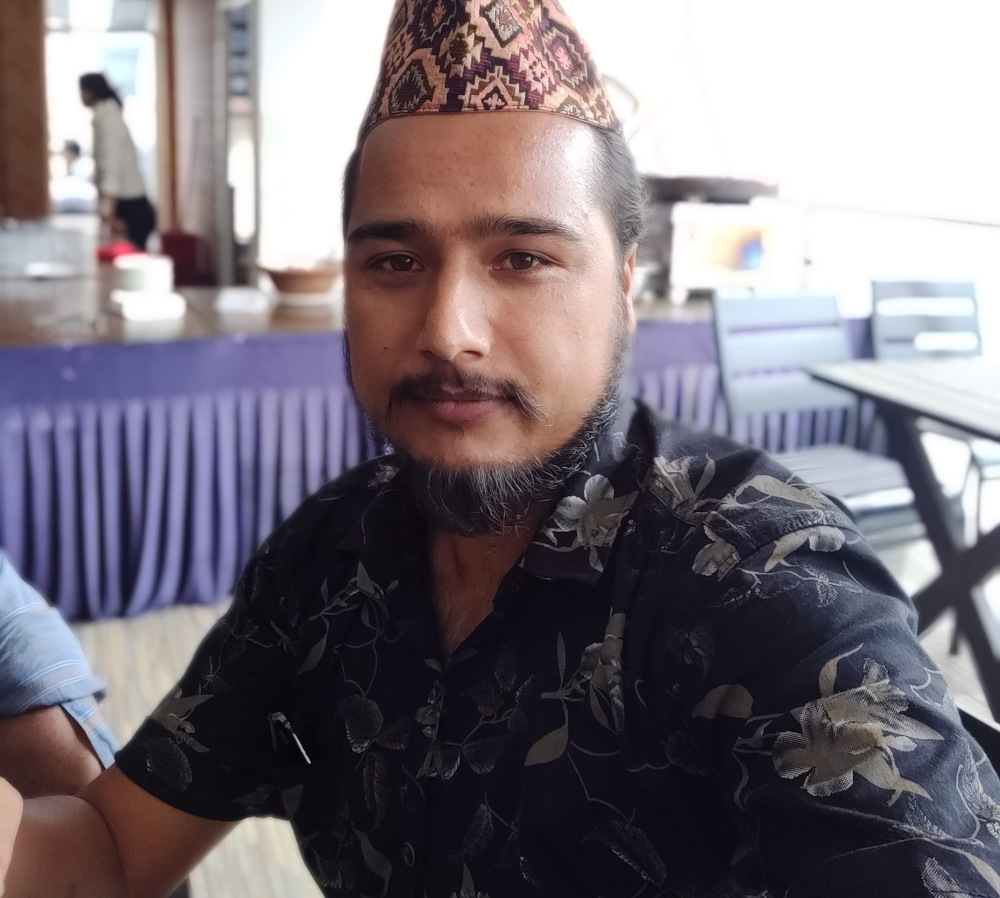
Community Member Monday: Biraj Karmakar

India has 23 official languages according to the country’s constitution, but over 750 other languages are spoken there as well. Today we talk to Biraj Karmakar, who helps to translate LibreOffice into Bengali, and is a passionate supporter of other free and open source software projects:

Where do you live, and can we follow you on social media or IRC?

I’m based in Kolkata, India, and I’m active on Twitter: @birajkarmakar. I always try to help people through social media. Other than that I am available on IRC (biraj) and Telegram (@birajkarmakar).

What do you do when you’re not working on LibreOffice?

Basically I am a professional linguist – I work from my own office. Also, I am a digital marketing consultant, helping small business to grow in online markets. Other than that I run many social entrepreneur activities like Digital Literacy for Kids and Women, and I am a pure hardcore open source supporter. I have been contributing to open source projects like Mozilla, DuckDuckGo, GNOME, SaifishOS, VLC etc from 7 years. There I generally do localisation (l10n) and community events, along with quality assurance (QA) activities.

What do you do in the LibreOffice project? What are you working on?

Basically I am the bn-IN (Bengali) locale leader in the LibreOffice project, trying to complete the pending translation. Also I have done some translation for two marketing videos. I am planning to organize one translation workshop for bn-IN language very soon. Then there’s one QA event in my list.

How did you get involved? Was it a good experience?

Actually, I knew about LibrepOffice when I started using Linux. It looked good to me because we got it free for our office-related work. As I am an open source fan, I thought: why not get involved in this project? Then a few community members introduced me to the LibreOffice community!

What does LibreOffice need most right now?

I think the LibreOffice community is growing – But we don’t have much exposure in India. It would be great if we could arrange meet-ups in India where we recruit new community members, especially in colleges and university campuses, who can help us to promote the software in India.

Thanks to Biraj for his time and contributions! Learn more about localising LibreOffice here – and, of course, there are many other ways to get involved as well!

The Document Foundation 2026
Proudly powered by WordPress | Theme: Refined Magazine Pro by Candid Themes.