Interview with Newly Certified LibreOffice Developer Rafael Lima

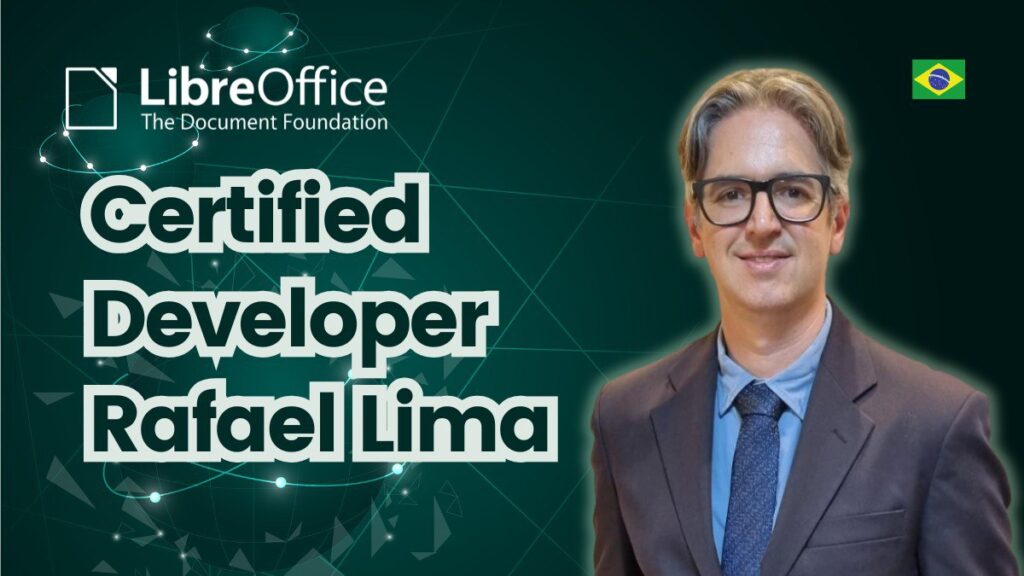
The LibreOffice Engineering Steering Committee (ESC) has appointed Prof. Rafael Henrique Palma Lima, from Federal Technological University of Paraná (UTFPr) as the newest certified LibreOffice developer.

Prof. Lima has been contributing new code to LibreOffice since 2020, and the committee has attested to the quality and value of his contributions to LibreOffice for this certification. We interviewed Prof. Lima, who tells us about the process and what areas of the code he works on.
(more…)

LibreOffice in Sri Lanka

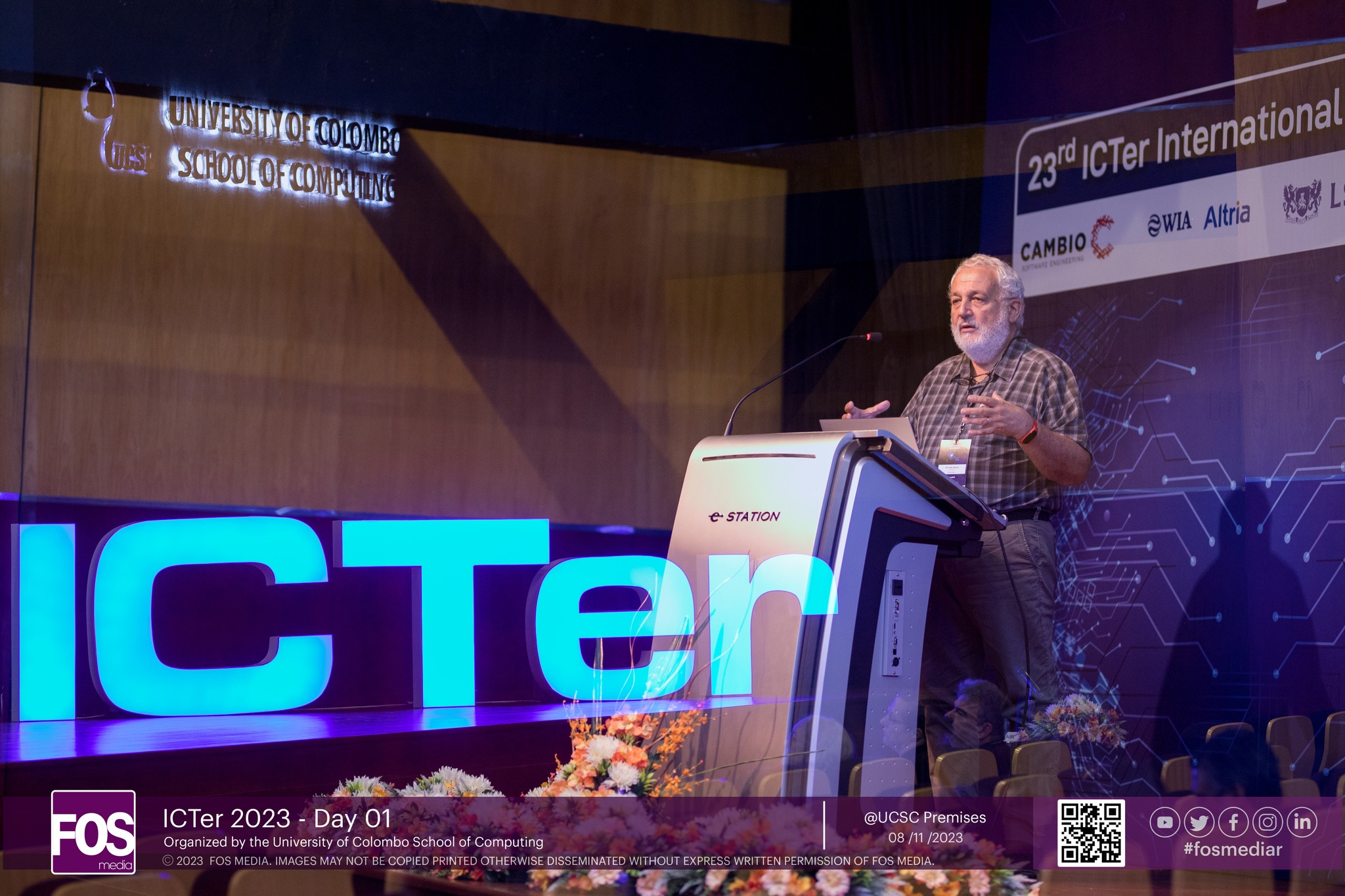
ICTer International Conference is the successor to the seminal International Information Technology Conference (IITC) held in Sri Lanka since 1998. We have been invited by the conference organizers, thanks to the connection established by Daniska Navin, a long time project member, to attend the 2023 event on November 8 and November 9, to present LibreOffice during a keynote speech, and to manage a two day workshop about LibreOffice and the Migration Protocol, on November 7 and November 10.

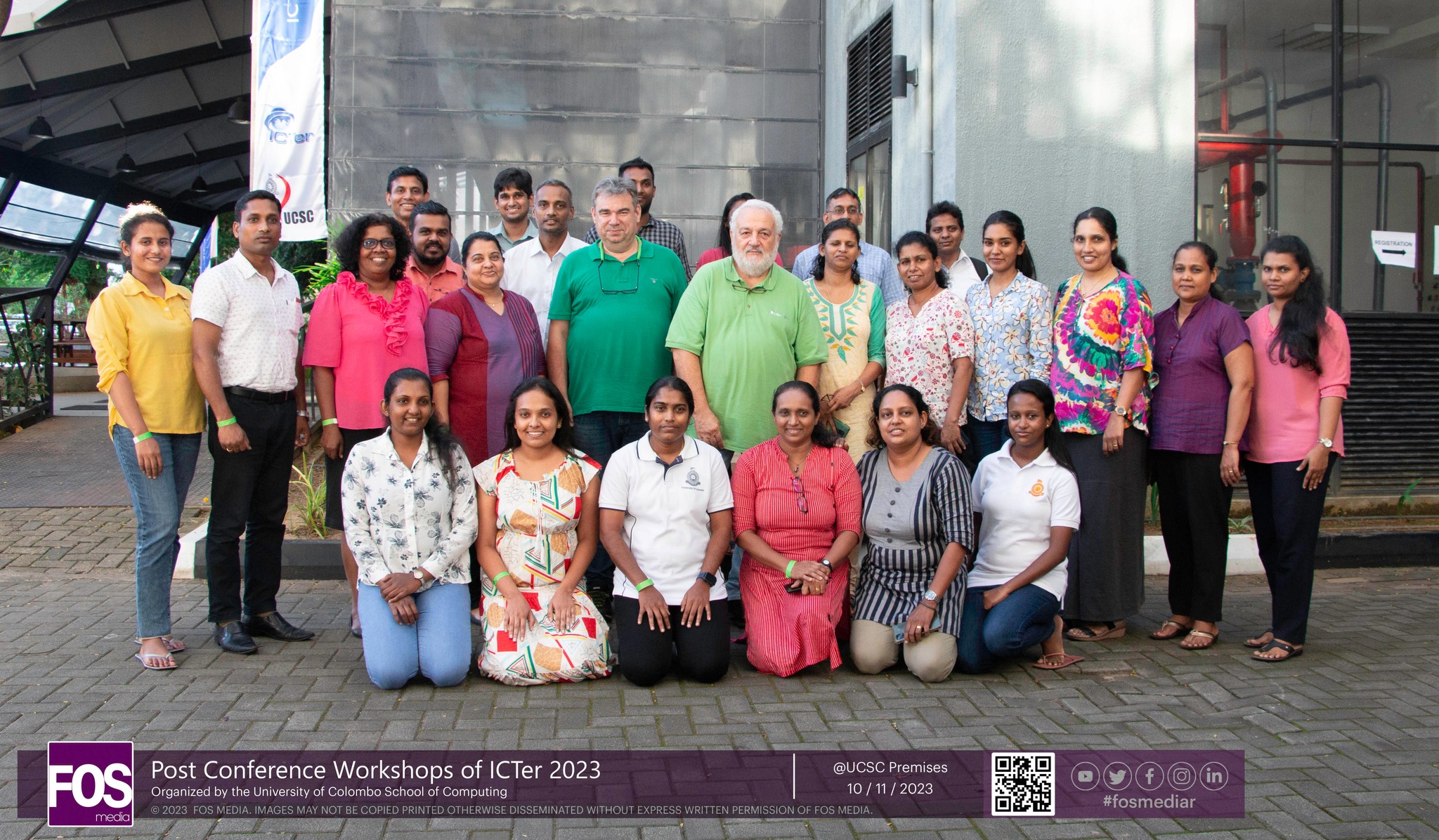
I attended the conference and provided the keynote speech about LibreOffice Technology, and together with Lothar Becker – Certification Co-Chair – managed the two day workshop. The conference was a huge success, as we met many interested people, including some students who asked to organize a similar workshop in 2024 at their universities in other cities of Sri Lanka. We will definitely be back next year to attend ICTer 2024, and to visit the other universities for a workshop.

During the workshop we covered many topics:

  1. Workshop Day 1: LibreOffice project’s history, the technical evolution of the development platform, LibreOffice’s six modules, with an introduction to main features, an introduction to open source software and open standards (for software and for documents), and free open-source licenses and business models.
  2. Workshop Day 2: LibreOffice Migration Protocol, fixing bugs and regressions, interoperability with proprietary document formats, conversion of document templates and macros, compatibility of VBA macros, and integration with third-party applications.

At the end of the workshop, we handed the basic LibreOffice Certified recognition to the following people (in alphabetical order by first name): BWRU Siriwardhana, CS Jayakody, DN Gunawardana, Dilani Sagarika, DMDC Kumari, Gayani Sadagiri, HK Jayarathna, HP Henegama, JKDI Thilakarathne, JRM Muthumalki, KDPM Kannangara, Malsha Katugampala, Mrs LC Karunasagara, Ms AS Gunathilake, Nisantha Ranathunga, NS Gajasinghe, R Prasanna, Rajika Dilrukshi, Renuka Matiwalakumbura, RMJM Rathnayake, Ruwan Jayalath, Sachini de Silva, Selani Ekenayake, Vimukthika Sewwuandi and WMNK Weerasooriya.

A big thank to all our hosts at the School of Computing of the University of Colombo: the Director Dr DAS Atukorale and the Deputy Director Prof Kasun de Zoysa, and all the other academic and administrative staff members who have welcomed us and made the conference memorable. A special thanks to Sanduni Thrimavithana, who made our stay as memorable as the conference. And a final thanks to all the other people we have met during the four days. See you all in 2024.

Linux and LibreOffice Migration at Eyüpsultan Municipality in Turkey

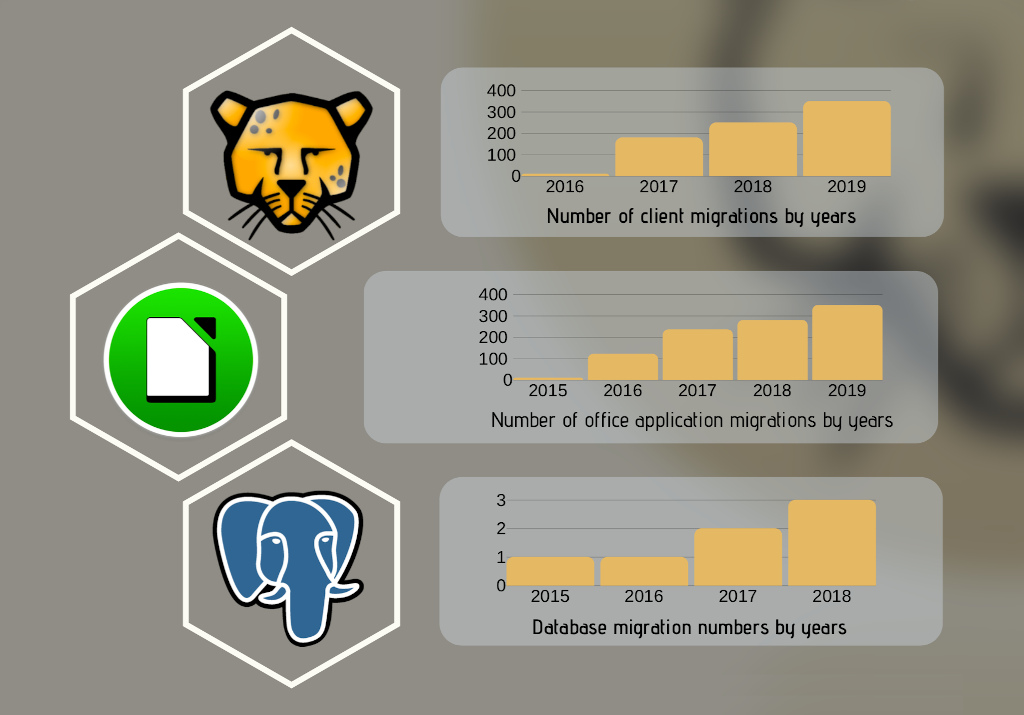
Many companies, non-profits, schools and other organisations around the world have switched to LibreOffice to avoid vendor lock-in and get back full control over their data. The Eyüpsultan Municipality reported from their migration to Linux and LibreOffice in recent years, which started in 2015:

This was a big decision, and it wasn’t made lightly. Open source technologies provide an important opportunity for our country to have an independent and secure information infrastructure. There are uncertainties about future terms and costs of using licensed software that connects users to a particular brand ecosystem. The more connected to these technologies we are, the harder it is to switch to alternative products. The commercial nature of key companies, to say nothing of pricing and licensing policies, poses significant risks.

As Eyüpsultan Municipality, we aimed to reduce service costs as well as external technology dependencies by using open source software, including the Pardus GNU/Linux operating system. Pardus was developed by the Turkish government as a desktop Linux distribution focused on graphical users in office settings. We wanted a solution that gave us an independent developer and increased sustainability, flexibility, and fiscal savings. In this respect, we consider our migration project to be a social responsibility. We are trying to create awareness of this goal by pioneering the use of Pardus in public institutions throughout Turkey.

Initial steps

The migration team knew from the start that it would be a major undertaking. They made sure to communicate with all workers in the municipality about their plans, and began by running training sessions with LibreOffice in the first phase. Then:

After the trainings, administrators installed the open source LibreOffice software to replace the licensed Microsoft Office software on all client computers. This decision to train users before installing the software minimized the problems they experienced when migrating from familiar software (including the operating system).

We didn’t stop there, though. We let people settle in with LibreOffice for a year, and in 2016, we repeated the training on Linux and LibreOffice. Once users passed an exam at the end of the training, we installed Linux on their computers. We provided re-education to those who didn’t pass the exam and then installed Linux upon success. So, the migration of the operating system began!

Even after the training, the migration team didn’t stop communicating with users – they checked in regularly to see what the workers were struggling with, and helped to fix them. In all, the team regards regular training as the most most significant reason for its success.

Introducing open source to your organisation

So, what else did they learn, and what would they say to other organisations or companies considering LibreOffice, Linux and other free and open source software?

Open source software has many advantages, including flexibility, high performance, major savings on licensing fees, independence from any particular company, and compliance with open standards. The benefits of open source software are recognized all over the world, especially in the European Union member countries, and similar action plans and studies are being used all over for transitioning to open source software.

Take what lessons you can from our experience, which is ongoing. Introduce open source as a viable option for your workplace. Take on the responsibility of delivering education on the knowledge required to use open source solutions. With open source, you never know what will become possible.

Thanks to the migration team for their report! Note that The Document Foundation, the non-profit entity behind LibreOffice, offers a comprehensive certification program for migration professionals. Also see the Migration Protocol which provides more information on migrations to LibreOffice.

The First LibreOffice Latin America Conference is a success and achieved important community milestones.

Linguistic challenges, women’s participation in FOSS, interoperability, professional training, migration, scripting and much more were hot topics in the conference held at the Facultad Politecnica of the Universidad Nacional de Asunción, Paraguay.

By Daniel A. Rodriguez.

The event started internally on Thursday 18 with a translation sprint of the LibreOffice Guarani team, with the assistance of Olivier Hallot (Brazil), LibreOffice volunteer translator for Brazilian Portuguese.
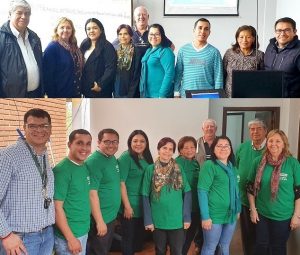
The Conference opened to public on Friday 19 in a ceremony that gathered the Minister of the Secretariat of Linguistic Policies (SPL), Ladislaa Alcaraz de Silvero, Prof. Limpia Ferreira Ortiz, FP-UNA Vice-Dean, members of the Guaraní Culture Atheneum, Prof. Mag. Alcides Torres Gutt, Coordinator of the Translation Team together with Italo Vignoli and Gustavo Pacheco representing The Document Foundation and the LibreOffice Community.

“The LibreOffice Latin American Conference is an event not only of technology, it is also a space for the study of new forms of productive organization. It will deal with technical topics such as development and quality control, but also with successful cases of migration and, with special attention, the translation into Guaraní, native of the American continent and official in Paraguay,” said the Vice-dean in her inaugural speech.

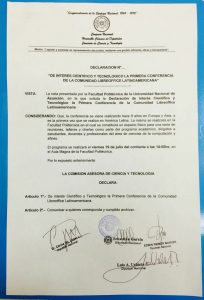
The conference initiative was declared of “Scientific and Technological Interest” by the Honorable Chamber of Deputies of Paraguay.
This regional conferences were carried out for 8 years in Europe and other continents, and for this time Paraguay was chosen as the venue, because it has a vibrant Free Software community, a special interest for the Guaraní language, and was completely organized by volunteers. Talks and workshops were held by speakers, members of the LibreOffice community, from Italy, Spain, Mexico, Costa Rica, Bolivia, Chile, Brazil, Argentina and Paraguay, from Thursday 18 to Saturday 20 of July at the Polytechnic Faculty of the National University of Asuncion in San Lorenzo campus.

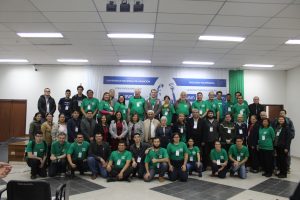
The first presentations covered the Hispanic community, the reality of the companies linked to the FLOSS in Paraguay and the difficulties faced by women workforce in the technological field. An official photo of the participants followed.
Starting the afternoon Henry Castro (Bolivia) talked on the development and technical challenges of LibreOffice Online. He was followed by José Gattica (Chile) talk on “Migration to LibreOffice in a vulnerable school”. Simultaneously, Mauricio Baeza (Mexico) gave the workshop on macros in the computer lab.

Xiomara Céspedes talked about the migration to LibreOffice and open document formats at the University of Costa Rica. She was followed by Renato Barsotti (Argentina) experience of the Faculty of Economics of the National University of Misiones (UnaM).

The next day morning, Olivier Hallot (Brazil) shared with the attendees the details about the importance of documenting the software. Simultaneously, Klaibson Ribeiro (Brazil) conducted the Calc workshop.

Italo Vignoli (Italy) talked about the characteristics of the LibreOffice community on a global scale, presenting graphs and figures to support the features and trends of the people involved in LibreOffice. He was followed after lunch by Xisco Fauli (Spain) on LibreOffice Development and Quality Control. At the same time, the certification team reviewed and approved the application of Rute Solipa (Portugal) for Professional Instructor and Xiomara Céspedes (Costa Rica) as Certified Migration Consultant in a video call session with Lothar Becker (Germany), Italo Vignoli and Gustavo Pacheco.

Italo Vignoli returned to give two presentations, the first one explaining the certification policy of The Document Foundation and the second one addressing the importance of adopting and using open documents formats such as the ODF standard.

The conference ended with the testimony of the participating students and the general public about the personal gains from the themes and knowledge presented at the conference and, in particular, the individual commitment to create a genuinely Paraguayan LibreOffice community and focus on LibreOffice translated into Guarani.

LibreOffice Certification @ FSF LibrePlanet

Berlin, March 14, 2018 – The Document Foundation will present LibreOffice Certification to Free Software Foundation Members and free software advocates attending LibrePlanet in Boston. Lothar Becker, co-chair of the Certification Committee, will talk about migration projects and training activities related to LibreOffice, with the objective of helping enterprises to achieve the freedom associated with free software and open document formats.

Lothar Becker will present LibreOffice Certification on Saturday, March 24, during LibrePlanet, and will host a certification focused workshop on Monday, March 26, from 9:30 AM to 1:30 PM.

LibreOffice Certification has been extended to FSF Members in 2017, based on the same professional pre-requisites of TDF Members. The workshop will offer a thorough overview of the skills requested and a summary of TDF’s migration and training protocols. Participation is free but must be booked in advance by sending an email to certification@libreoffice.org.

In addition, on Sunday, March 25, there will be an international certification review session for applicants for migration and training based in South America and Spain. Reviewers and applicants will join Lothar Becker, chairing the session, using a video conference system based entirely on free software from end to end.

For additional information, please write to certification@libreoffice.org.

Lothar Becker appointed Co-Chair of TDF Certification Committee

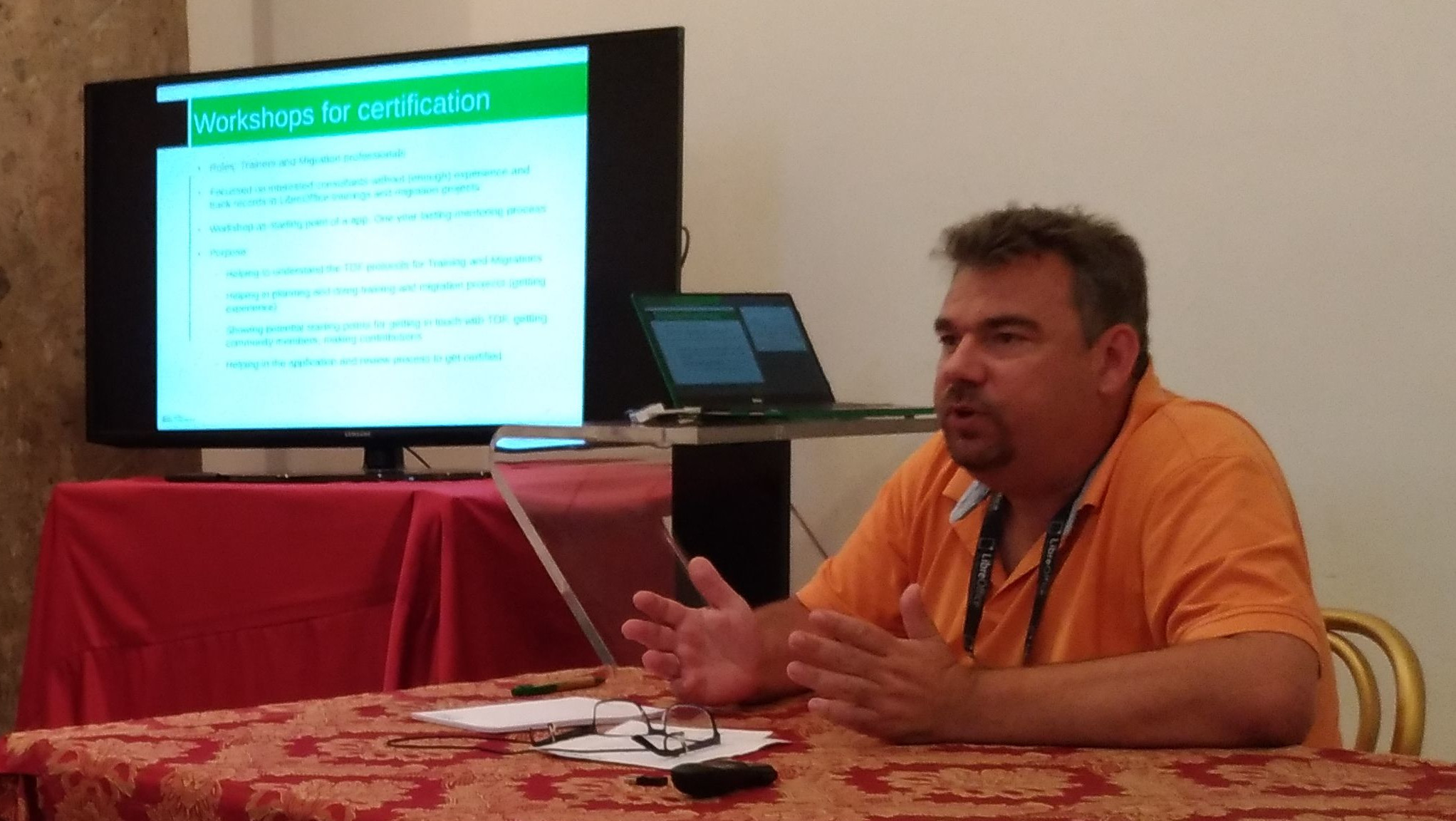
Lothar Becker, a long-time member of the LibreOffice community (and previously of the OOo community), has been appointed Co-Chair of TDF’s Certification Committee, which has been chaired by Italo Vignoli since its inception in 2013, effective immediately. Lothar will manage certification applications and reviews, while Italo will focus on updating existing certification-related documents and developing new ones. Together, Lothar and Italo will develop content for certification workshops, which will be planned starting from 2018.

“Lothar has been instrumental for the growth of the certification project, as he has contributed in a significant way to all certification reviews, and has also pushed forward concepts which are now part of the certification process”, said Italo Vignoli. “After four years, it was time to share the responsibility with one of the people who has always believed in the certification project as a trigger of growth for the entire LibreOffice project, especially in enterprise and public administration environments”.

The next Certification Review is planned for Sunday, February 4, at FOSDEM in Brussels. People interested in becoming either Certified Migrator or Certified Trainers, or both, should apply as soon as possible by filling the form on The Document Foundation website.