LibreOffice monthly recap: May 2021 – Community activities

Check out our summary of what happened in the LibreOffice community last month…

  • Right on the first day of May, we started a new Month of LibreOffice, showing our thanks to everyone involved in the LibreOffice project and community. Everyone who contributes during the month can get a sticker pack – and a chance to win extra merch. We’ll announce the full winners here in the next few days!

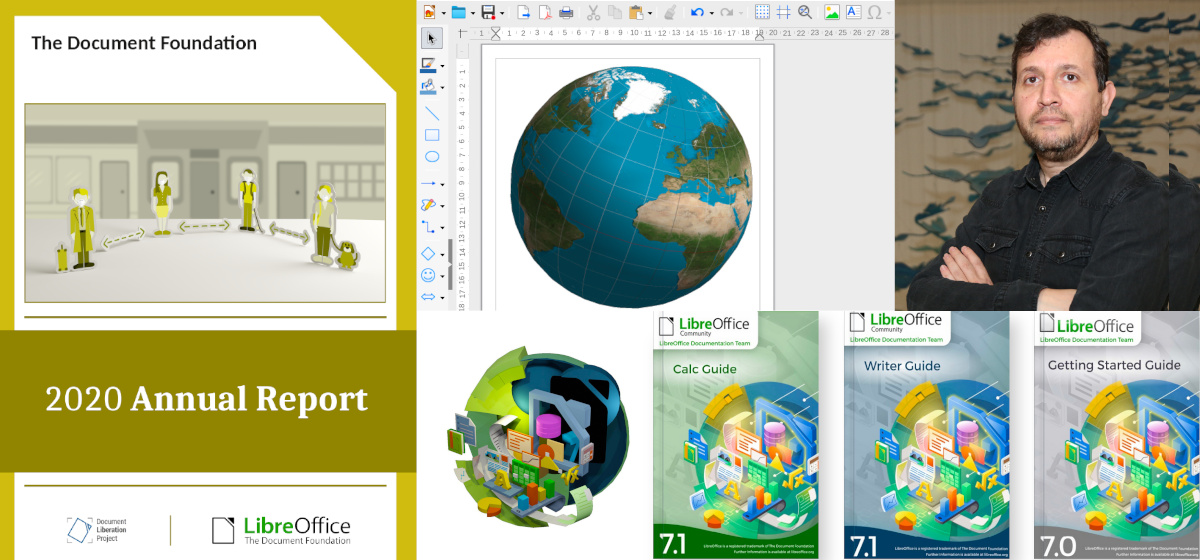
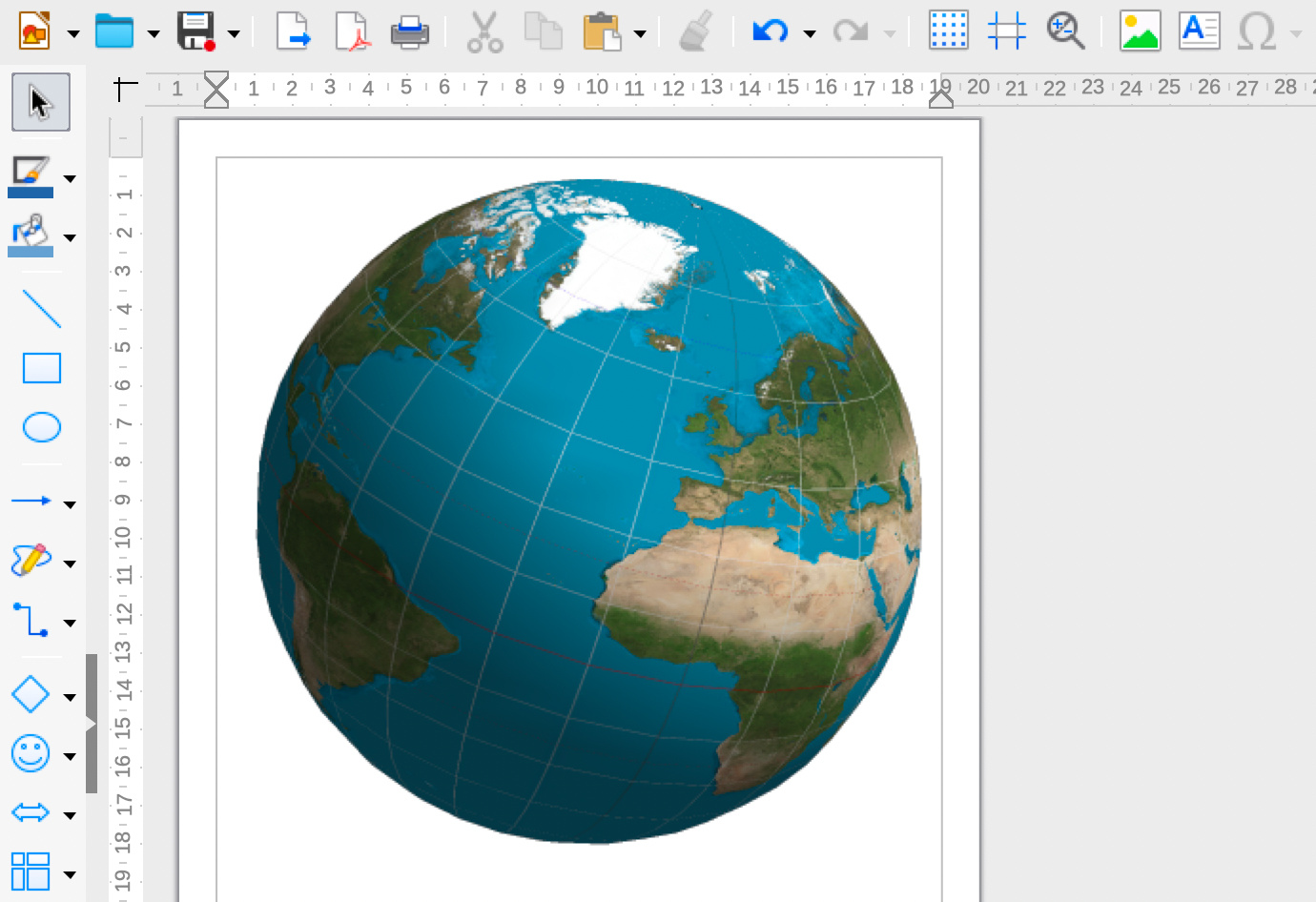
  • Did you know that you can work with 3D objects in LibreOffice? Long-time community member Regina Henschel wrote a tutorial showing how to make a 3D globe, using a map and a sphere. Rather neat…

  • In May, TDF announced two bugfix updates for LibreOffice: 7.0.6 and 7.1.3. This marks the last release of the 7.0 branch – from here on, we will be maintaining the LibreOffice 7.1 series.

  • Meanwhile, the PowerPoint compatibility team reported on its recent work, showing how PPTX presentations are imported more accurately into recent versions of LibreOffice. Of course, when you’re working on a presentation in LibreOffice, its best to use its native format – OpenDocument.

  • LibreOffice is free and open source software, available for anyone to use, modify and share – and that will always be the case. At the same time, we really appreciate the contributions of companies in the wider LibreOffice ecosystem, who sell long-term support (LTS) versions and other benefits, and add many features to the codebase. So spread awareness of them, we’ve set up some LinkedIn pages for the “LibreOffice Enterprise” brands.

  • The Google Summer of Code begins! This is a programme that connects students with free and open source software projects.We announced the list of selected projects – and we’re really looking forward to seeing the results. Good luck to all the students, and thanks to the mentors for helping them!

Keep in touch – follow us on Twitter, Facebook and Mastodon. Like what we do? Support our community with a donation – or join us and help to make LibreOffice even better for everyone!

Albanian Community Meeting – May 2021

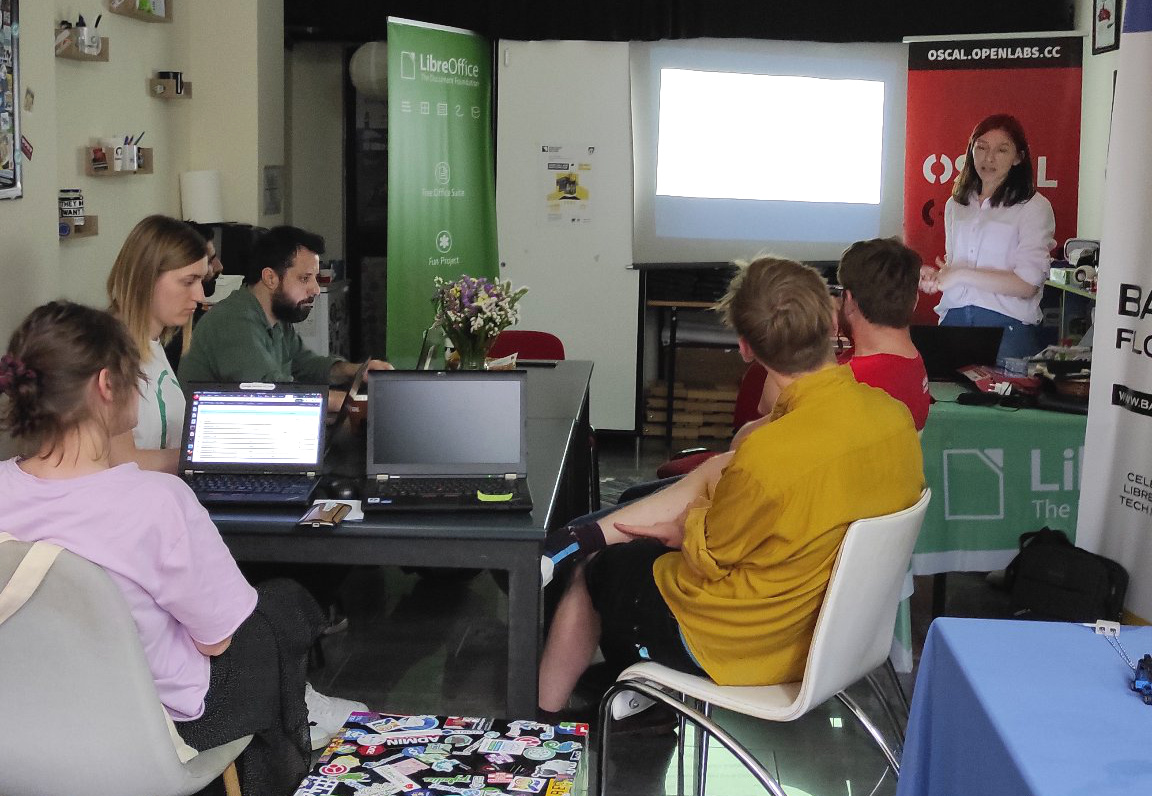
While many pandemic restrictions around the world are still in place, some smaller events are finally becoming possible. Sidorela Uku from the Albanian LibreOffice community reports from a recent event in Tirana, which hosted the LibreOffice Conference 2018:

There were eight people present at this meeting. We had a short presentation about LibreOffice – what it includes, and its features. Also, we introduced the various ways how someone can become part of the community. We are planing to have more events in the future, as there are a few people interested in localization, but as well for people who want to switch and use LibreOffice. Also, we translated a few strings on the whatcanIdoforlibreoffice.org website, and pushed the changes to Gerrit.

Thanks to the community in Tirana for their work and support! It’s great to see some in-person events becoming possible again. LibreOffice users around the world are welcome to join our project, and help to build up local communities. If there’s no LibreOffice community in your area, drop us a line and we’ll help you to establish one!

LibreOffice IRC channels moving to Libera.Chat

Many projects in the LibreOffice community use IRC (Internet Relay Chat) to communicate. This is a real-time text-based communication protocol that’s popular amongst many free and open source software projects.

We are moving our IRC channels to a new host, Libera.Chat, which is run by a Swedish non-profit organisation. Here’s an alphabetical list of the current channels – for more information, see our wiki:

  • #libreoffice
  • #libreoffice-de
  • #libreoffice-design
  • #libreoffice-dev
  • #libreoffice-doc
  • #libreoffice-fi
  • #libreoffice-fr
  • #libreoffice-gsoc
  • #libreoffice-hackfest
  • #libreoffice-NLP
  • #libreoffice-qa
  • #libreoffice-telegram
  • #tdf-infra

Thanks to everyone who participates in our IRC channel discussions, and keeps LibreOffice moving forward!

Annual Report 2020: TDF and LibreOffice infrastructure

In 2020, the infrastructure team added new services, implemented a new Extensions and Templates site, and worked on a replacement for Ask LibreOffice

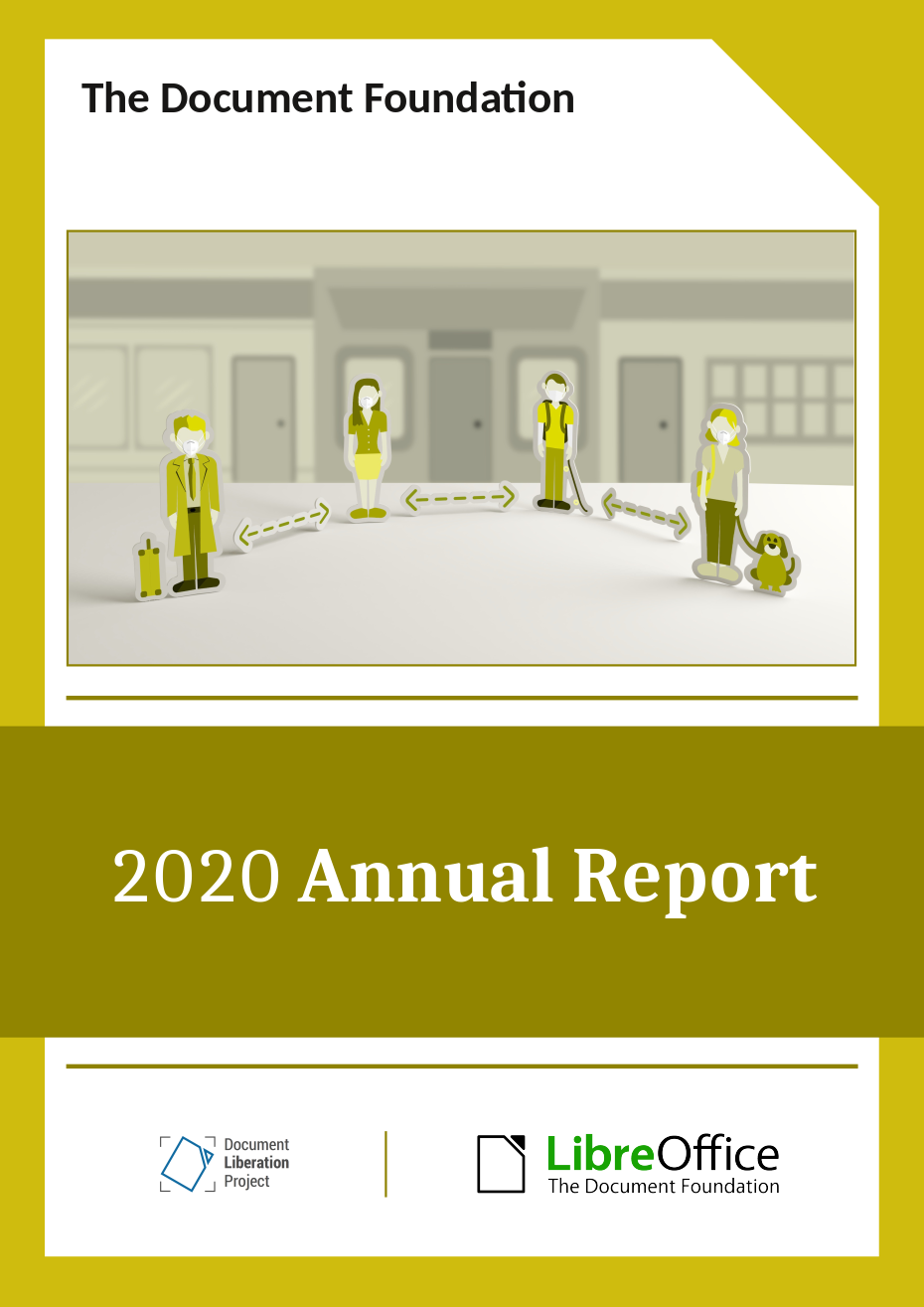
(This is part of The Document Foundation’s Annual Report for 2020 – the full version is here.)

LibreOffice’s infrastructure team is responsible for maintaining the hardware, virtual machines and services that enable the wider community to develop, market, test, localize and improve the software. The public infrastructure is powered by around 50 kernel-based virtual machines (KVMs) spread across four hypervisors, plugged to an internal 10Gbps switch, hosted at Manitu in St. Wendel (Germany), and managed with libvirt and its KVM/QEMU driver. The virtual disk images are typically stored in GlusterFS volumes – distributed across the hypervisors – except for some transient disks (such as cache) where the IOPS requirement is higher and the redundancy less important.

In 2020, the infra team added various new services, such as the new SilverStripe-based Extensions and Templates site. Some background to the technical and design decisions behind the site are here on the blog.

Meanwhile, Discourse was investigated as a likely AskBot replacement, while several VMs for deployment tests outside the scope of infra were handed over (such as decidim). The infra team worked on Moodle (an e-learning platform), build bots, integration of the Weblate translation platform into the TDF development dashboard, and a crashtest box (sponsored by Adfinis).

Along with the new services, there were many notable upgrades too. Some machines are still running Debian GNU/Linux 9 (codename Stretch), but most are now upgraded to Debian 10 (codename Buster). Other updates include: Nextcloud 16 to 20, Gerrit 2.16 to 3.2, LibreOffice Online 6.3 to 7.0, and Mediawiki 1.31 to 1.35. Finally, OpenGrok, Etherpad Lite, Weblate and the Grimoire dashboard received updates too.

Notable refactoring/improvements took place in the online help backend, along with the backends for bibisecting and mailing lists. The team started collecting metrics for download counters and the update checker, and worked on improving IRC bots, the monitoring setup, and a distributed backup solution.

Documentation was improved to make onboarding of new infra team members easier, while the SSO (Single Sign-On authentication) system was expanded with more services: Gerrit, the new extension site, Discourse, Jitsi and Moodle.

Like what we do? Support the LibreOffice project and The Document Foundation – get involved and help our volunteers, or consider making a donation. Thank you!

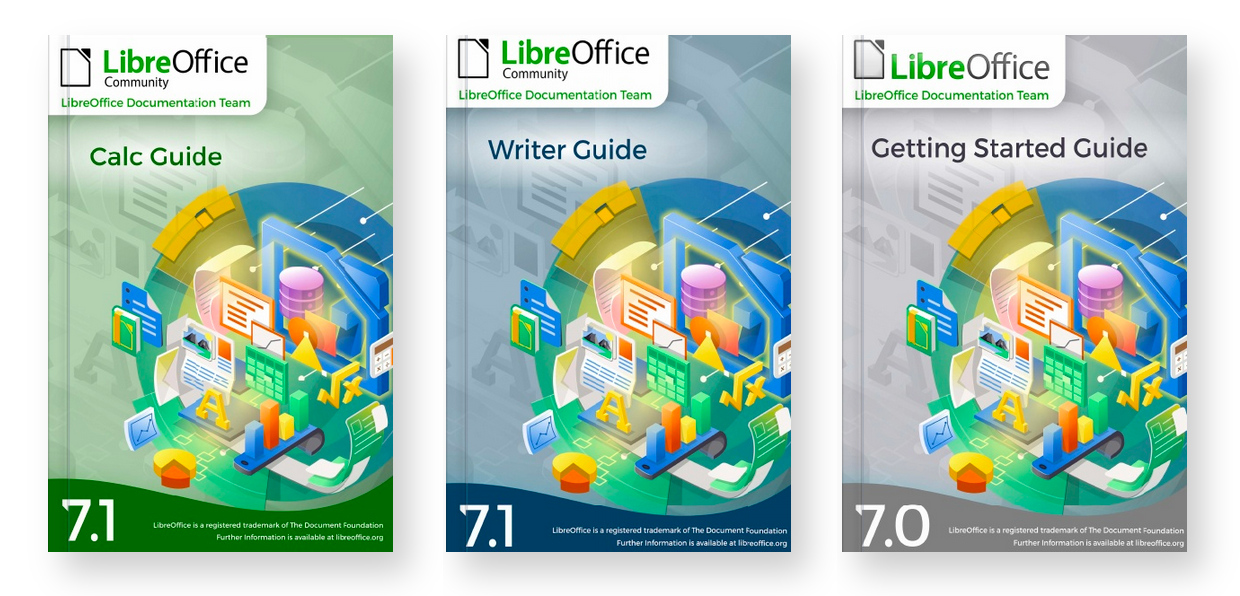
Get printed copies of LibreOffice handbooks!

LibreOffice’s Documentation Team writes, updates and translates many handbooks. These are full of tips, tricks and tutorials covering the whole office suite. You can find PDF and ODT versions on this page – but sometimes it’s nice to have a hard-copy, printed version, right?

Well, you can get those too! Our community has made these available via the online bookshop Lulu (which was started by Red Hat co-founder Bob Young). These are printed on-demand, in various facilities around the world, and have global shipping.

So, if you want to learn more about LibreOffice but fancy a break from your computer screen, check them out!

Tender to implement the new TDF Membership Committee’s web-based tooling (#202105-01)

Introduction

The Document Foundation (TDF) is the charitable entity behind the world’s leading free/libre/open source (FLOSS) office suite LibreOffice.

The main activity of the Foundation’s Membership Committee (MC) is to administer membership applications and renewals following the criteria defined in the Foundation’s statutes.

Tender description

We are looking for an individual or company to implement the new TDF Membership Committee’s web-based tooling.

The tasks consists of developing and implementing this tooling. All of the mentioned features and requirements are explained in detail in the provided document “MC tooling specifications”, which is to be considered a part of this tender. The document lists which items are a part of the deliverables and therefore have to be part of the bid.

Note that this tender also contain some optional items, which are marked respectively. All items that are not explicitly marked as optional are to be considered mandatory.

The solution we seek, and as such the scope of this tender, is to implement the new TDF Membership Committee’s web-based tooling that will support the Membership Committee during the daily business.

Decision criteria

All technology standards of relevance, as well as their targeted versions for this tender should be declared or defined in the offer’s description of implementation.

Amongst the decision criteria for the bids are qualification, references, price, and completeness of fulfillment, as well as documentation. We expect bidders to provide documentation on the code, optionally also on the system administrator part.

Requirements

We prefer the use of a secure programming environment. As such, we strongly prefer Python/Django or Ruby on Rails over PHP. The use of server-side Java has to be discussed with TDF’s infrastructure team before bidding. In order to do so, please get in touch with us using the e-mail address below.

We strongly prefer the use of FOSS software and libraries, i.e. for DBMS, crypto and mailing.

The delivered software, code, documentation and all associated parts shall be published under an OSI approved license (see https://opensource.org/licenses) with TDF as owner of the copyright as well as all transferable rights. TDF intends to make the deliverables available to the general public.

Proposed milestones

Milestone #1 – Defining of the architecture; initial prototype with testing and knowledge sharing (with the Membership Committee) about the new solution; usability improvements. Main process elements like voting are tested and work fine. Implementation of the database and the management back-end user interface to interact with it. Import of member information from the old database.

Access to the current production database can be granted to the successful bidder after signing a privacy and non-disclosure agreement. Otherwise, and less preferred, a database with anonymized sample data will be provided.

Milestone #2 – Handling of a new request to become a member of TDF.

Milestone #3 – Have the membership renewal process working.

Milestone #4 – Move the full daily work of the membership committee to the new platform; all voting can be done directly with the new platform. The implementation of reporting and mail system must be completely functional for:

  • Receipt of application
  • Mail for accepted applicants
  • Mail for denied applicants
  • Mail for pending applicants
  • Quarterly report on accepted members in English
  • Quarterly report on accepted members in German

Milestone #5 – Implement and test:

  • Reminders for MC members
  • All time-triggered jobs
  • Quarterly report as CSV file
  • Database integrity check by checking the signature and re-reading this file
  • Deleting of obsolete records cleanup

Required skills

  • Extensive knowledge of Python/Django or Ruby on Rails
  • Extensive knowledge of front-end and back-end development of web-based applications
  • Extensive knowledge of design and implementation of accessible web-based applications
  • Experience in working on open source projects

Other skills

  • English (conversationally fluent in order to coordinate and plan with members of TDF)

TDF welcomes applications from all suitably qualified persons regardless of their race, sex, disability, religion/belief, sexual orientation or age.

Bidders will get a preference for including a partner or independent developer who has not been involved in a successful tender before.

As always, TDF will give some preference to individuals who have previously shown a commitment to TDF, including but not limited to certified developers and/or members of TDF. Not being a member, or never having contributed before, does not exclude any applicants from consideration.

The task offered is a project-based one-off, with no immediate plans to a mid- or long-term contractual relationship. It is offered on a freelance, project basis. Individuals and companies applying can be located anywhere in the world.

TDF is looking forward to receiving your applications for the aforementioned tasks, your offer in form of a fixed-time, fixed-budget approach, and the duration period for the implementation in calendar weeks of the mentioned milestones after the final awarding of the tender, via e-mail to a committee at tender20210501@documentfoundation.org no later than June 23, 2021.

Applicants who have not received feedback by July 21, 2021 should consider that their application, after careful review, was not accepted.

All bidders are invited to ask their questions on this tender until June 11, 2021. Questions can be sent informally to the above e-mail address, and answers will be made public in a collected and anonymized form.