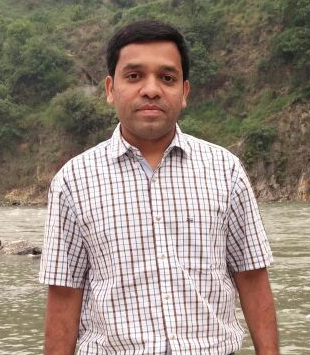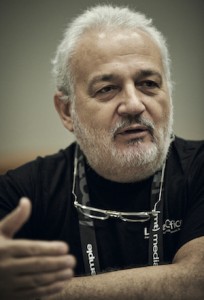
Interview: MK Yadava talks about LibreOffice and FOSS adoption in India

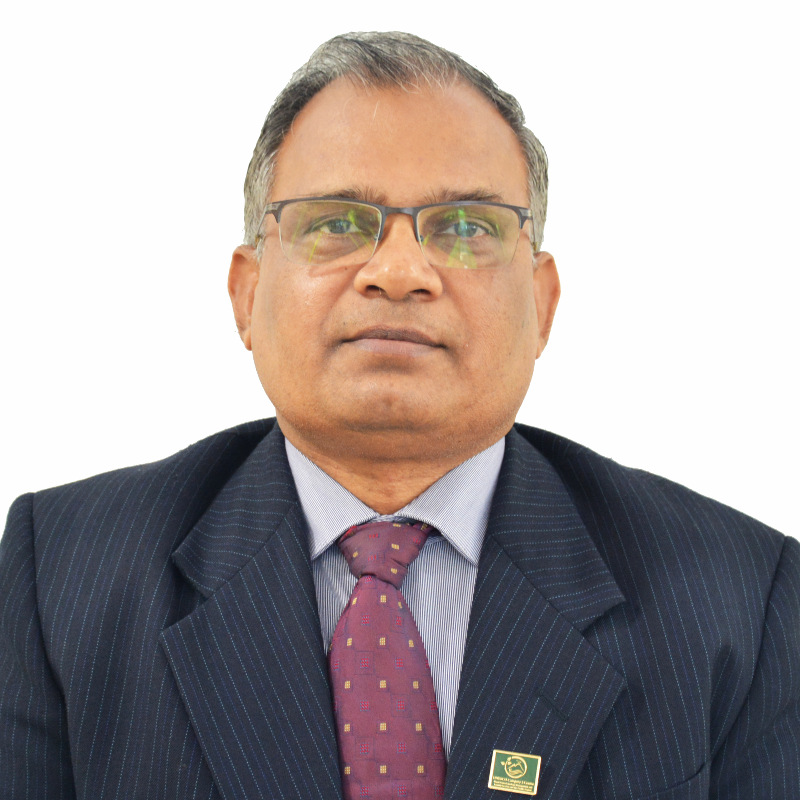
Free and open source software (FOSS), such as LibreOffice, is being adopted by governments and companies around the world. But this doesn’t happen by magic – it takes hard work by local communities to spread the word, advocate the benefits of FOSS, and fight for political change. Today we talk to MK Yadava about his experiences from promoting GNU/Linux and LibreOffice, distributing it on 250,000 computers, and how LibreOffice can improve to become even more widespread…

Tell us a bit about yourself…

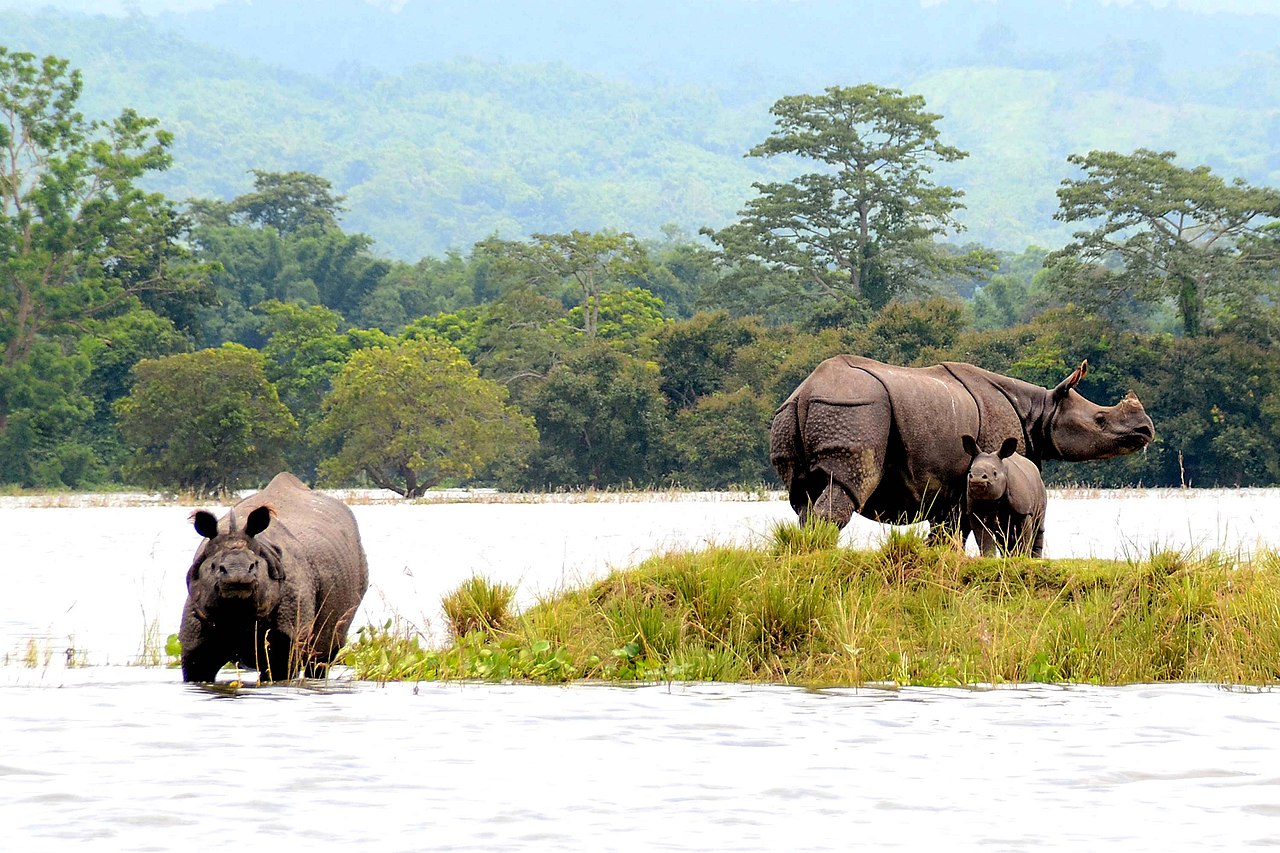
I belong to the Indian Forest Service, and am actually a “forester” by profession, which I love very much. Wildlife conservation, climate change, and working plans are my favourite subjects. I have been posted in various parts of Assam, a province in the north eastern India famous for Kaziranga, the abode of the Greater One Horned Rhinoceros, and Assam Tea. I have also been doing GIS (geographic information systems) and RS (remote sensing) since 1993. Even in those days, GIS/RS software was costly and tough to get; and that’s when I decided to code my own software. I realized at the very early point in my career that knowledge cannot be disseminated without “free” software.

In 2005 the Government of Assam decided to give free desktop computers to all students who passed the 10th standard examination in 1st Division (>=60%). The scheme was named after the late Anundoram Borooah, the great Sanskrit Scholar and an Indian Civil Service (ICS) Officer from Assam. To my knowledge, this was the first program providing free computers to students in such large numbers in India, and possibly by any government in the world.

The challenge was how to give 12,500 computers within the budget limits. When I decided to provide GNU/Linux as the operating system, I was told by my political masters that there would be so much ruckus if the students didn’t get popular proprietary software such as Microsoft Office. I convinced them that I would be giving the students the best operating system available. So I decided to banish proprietary software from my life altogether – for I could not be using such things while my dear students would use something else, and if GNU/Linux was the best OS, I should be using that myself too.

Eventually, I destroyed all my proprietary CDs and other software – numbering almost 100. And only then I announced that GNU/Linux would be loaded in the computers. When the students were given the computers, journalists tried to corner me, but I could convince them that if it was good enough OS for me, as the former Managing Director of AMTRON (Assam Electronics Development Corporation Ltd), it was indeed good for the students.

Kaziranga National Park (photo: Diganta Talukdar, CC-BY-SA)

What was your approach for promoting free software, like LibreOffice?

These were my additional arguments in favour of free software:

  1. Students must be able to examine all code loaded in the computers. Any proprietary code would hamper students’ learning.
  2. Students could be “proud owners” of the computers, as every software was licensed and genuine. That would also eliminate the tendency to load pirated software.
  3. GNU/Linux are great pieces of software – in fact these are masterpieces, and make up the essence of computers and computing. Computers without GNU/Linux is like life without oxygen.
  4. Students would cultivate a good habit of using and respecting free software, and would become, over time, proponents of a clean software ecosystem.
  5. It also enforces a possible policy that the education system in India must adopt, which is “all software must be free in the educational curriculum”, and “professional/paid software must only be taught in professional academies outside the educational system, which is to be seen as having an altruistic objective of universal education”
  6. The top 500 fastest computers mostly run on GNU/Linux, so why not expose the students to the best and most versatile OS which powers tiny embedded systems to super computers, rather than making them learn an operating system which is largely confined to desktops and laptops and is closed source?

That’s how I became a die-hard proponent of free software. The Anundoram Borooah Award program still runs GNU/Linux. So far we have distributed around 250,000 computers and laptops to students, all running free software. In my opinion, to develop a sense of freedom in a student is more important than just bundling software that just seems to be “powerful or the best or attractive”.

However, the decision makers in the country are largely unaware of the rich features in GNU/Linux, and so are the “computer teachers” in schools, whether in the public (private) schools or government schools, and to my mind we are doing injustice to the student community in the country and preventing creation of the knowledge society that India could become. India owns very little of IPR (intellectual property rights) or brands in IT software, and we are definitely not an IT super power in that sense. Free software is the way to go, if we seriously eye capturing this arena in future. Promoting free software would ignite young minds.

How popular is free software and LibreOffice in Assam State?

Well, in India, there are two main states where free software and LibreOffice is popular, and used by many: Assam and Kerala. In Assam, you can stumble upon it in the remotest of the government offices or homes of the brilliant students scattered across the state. Some of the largest deployments on GNU/Linux in the country have happened here. AMTRON has played a pivotal role in spreading free software in the region. It has been able to establish itself as an institution par excellence in matters of free software. All of the software that is developed/deployed by it in the government are based on free software and their enterprise versions. We have deployed almost 300 virtual machines in our datacentre that run GNU/Linux. We politely refuse to host any commercial OS-based servers here, because we don’t invest in such proprietary licenses at all.

Assam is one of the few states in the country – and elsewhere in the world – that has its own operating system called “SuperX”, which is now being branded as “AMTRON SuperX”, a distribution of GNU/Linux. So, we are excited a lot about rolling out a large number of deployments of free software. I am also thinking how to take forward the localization of LibreOffice in Assamese and Bodo languages. While we have developed and made available local scalable truetype fonts in Assamese, and made available for Assamese typing “online”, there is a lot left to be done. I am sure these steps would push the cause of LibreOffice to reach out to a larger target of farmers, artisans and women in the state. Of course, bringing all this to the smartphone would be great, but it needs a whole lot of project funding.

What are the challenges? How does LibreOffice need to improve to be more widely used?

There are several key challenges in the adoption of LibreOffice. To my mind, the primary challenge is the lack of clarity of the phrase “power user”. All blogs and reviews talk of power user, and say that if you are a power user, then you may not get full satisfaction from LibreOffice, and it has miles to go before can be adopted by a power user. Now, the question is who is a power user? I am a CEO, and I on my own churn out documents which are pretty complicated even for Microsoft Word to handle, documents which are auto styled and formatted and run into 300-500 pages on an average. I churn out spreadsheets which have almost 50-70,000 rows and 100s of columns. I use LibreOffice Draw extensively to design new mind-maps and ideas and use them in the presentation and documents. I use a lot of Math in my documents. The only challenge that I have actually found is handling a lot of large-sized photographs and images in the documents.

However, while there could be localization issues for LibreOffice in languages such as Assamese, Bodo and Bengali (and our own associated challenges of Unicode, of setting up a separate slot for Assemese), in making LibreOffice a complete local office suite, and very little has been done so far – by and large there are no great local issues. The issues of overall acceptance and the respect that it needs to gain as an office suite, and what percentage of the “power” people use and make others feel that LibreOffice is great is actually what matters. It’s just a perception issue.

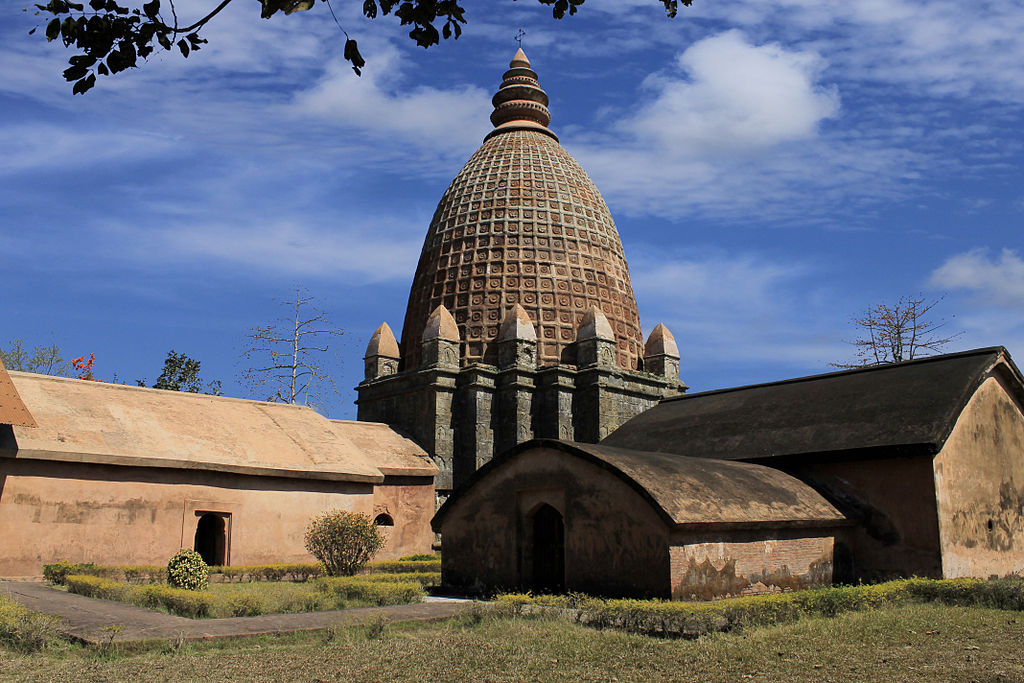
Vishnudol temple in Joysagar, Assam (photo: Rofiuddin Ahme, CC-BY-SA)

In terms of the feature list, I would say that while there are great features in LibreOffice such as tables (where you can do almost everything – formulae and inter-table linking), charts and Draw, these need to be enriched further. I won’t go into detail about these and many other features where LibreOffice actually scores over popular commercial office suites, but still a lot more is desirable.

While many people complain about Impress, I actually never found it lacking in what I do. All my presentations are in Impress. However, it needs to improve regarding media handling, and needs to look at better interactivity in terms of the emerging technologies of Augmented Reality, IoT (internet of things) and AI, where there could be more interactive graphical presentations. For instance, let’s say my graph is linked to the IoT system at the back, and updates every second while the presentation is being made in real time to show how the parameter is actually impacting, say, climate.

One feature that I have been always requesting is how to make “digital signing” a document into a visual image in a document, which is clearly displayed when I signed the document and carries my “insignia” not only digitally, but also visually (such as a QR code or image). This also includes a request to add more such signatures on the document, which would make the document more real-world. While LibreOffice has features of multiple digital signing, it’s – to my best of knowledge – all digital, and does not leave a visual print on the document, nor does it offer a mechanism to the user for a visual means of additional digital signing.

My wish list of features also includes a better PDF conversion feature, having optimisations for file size, and a collaborative feature for editing of documents among a group of users.

Thanks to MK Yadava for his insights and experience. If you’re a FOSS supporter and want to help promote LibreOffice in your region, check out our native language communities – we look forward to meeting you!

LibreOffice contributor interview: Edmund Laugasson

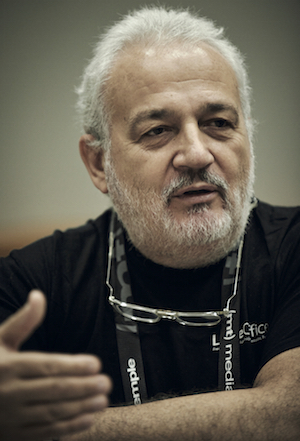
Edmund Laugasson

LibreOffice is being used in governments and companies around the world, and this is largely thanks to support and advocacy from local communities and developers. Today we’re talking to Edmund Laugasson, a member of the Estonian LibreOffice community, who is promoting the software and the Open Document Format (ODF) in his country…

How popular is Free, Libre and Open Source Software (FLOSS) and LibreOffice in Estonia?

To be honest, it has not yet been deeply investigated, but the Estonian Ministry of Economic Affairs and Communications has published a “State Information System Interoperability Framework” (in Estonian) where clearly ODF is the main format suggested to use. The status of OOXML is only “allowed”. OOXML should not be confused with the file formats used by MS Office, which differs from OOXML by several proprietary changes. Even LibreOffice offers two different versions to save, e.g. docx – one is OOXML and the another one is used in MS Word. The same applies also to rest of OOXML, MS Office formats that coexist in LibreOffice. As the status of ODF is “suggested”, it is not mandatory. Despite that, ODF is quite widely used – for instance, educational institutions usually have LibreOffice installed, along with some local authorities.

Research is quite challenging as people usually do not respond to questionnaires, and researchers need to meet people directly in order to get reliable answers to questions.

What is your background and involvement in FLOSS?

I live in a small city called Rapla in Estonia, but I work as a lecturer at IT College, which is part of the Tallinn University of Technology. I am involved in FLOSS in many ways. When teaching, I use FLOSS as much as possible: the operating system in university is Ubuntu Linux, and I use derivates like Linux Mint MATE, all 64-bit and the latest LTS (Long Term Support) versions. The office suite is LibreOffice everywhere under GNU/Linux but under MS Windows next to MS Office. It is very important to have LibreOffice installed on every operating system that is used. Also, at least ODF file formats should be opened by LibreOffice by default. Then it would be much easier to deploy ODF in future when the ground is prepared properly. We have a dual-boot system (Microsoft Windows 10 and Ubuntu Linux 16.04.4), and in one classroom also a triple-boot (with macOS 10.12).

In addition I am involved as a board member of the Estonian Free and Open-Source Software Association, taking care of FLOSS in general in Estonia. Also I am involved in the Network of Estonian Teachers of Informatics and Computer Science (NETICS) as a board member. There I promote FLOSS – LibreOffice in particular – to encourage people to use it.
The next involvement is my doctoral studies at Tallinn University, where the current topic is “Technology approval as a factor of adopting a free software ecosystem”.

Further activities will come when I graduate and can focus more on wider deployments of FLOSS, particularly LibreOffice. I have serious plans to arrange all this, but as people in Estonia are not very cooperative, it takes more time – regardless of the fact that Estonia is small. Lots of people just do not believe in better future full of FLOSS, and those few who still believe, will act towards that goal. So to anyone who feels the FLOSS spark inside: do not hesitate to contact me.

What do you think are the biggest obstacles to wider FLOSS and LibreOffice adoption in Estonia?

My first paper in 2013 (published at the IFIP conference) showed that awareness of FLOSS is still relatively low, but interest in getting more information is quite high. Microsoft is doing relatively strong lobbying work, also in Estonia, and the government has quite weak power regarding FLOSS. There is also sometimes controversial behaviour: five state-arranged procurements in the FLOSS field (four state procurements relating to LibreOffice, one state procurement to create an interoperability framework), but weak activities around FLOSS in general. So I decided to start my doctoral studies to fix this situation in a scientific (weighted) way.

Thanks to Edmund for his time and effort helping the FLOSS cause. Click here to see many more interviews from LibreOffice contributors – and why not become one yourself! Build up skills, join a friendly community, and help to make LibreOffice better for everyone.

Italo Vignoli on LibreOffice marketing and the challenges ahead

The free and open source software world is known for being inclusive and open: anyone can get involved, regardless of age, location or background. In the LibreOffice community, we value the input from experienced community members who bring valuable knowledge and ideas to the table. Today we talk to Italo Vignoli, who has been with LibreOffice since day one and is responsible for marketing and public relations. He describes what led him to open source, along with the challenges and opportunities in marketing LibreOffice.

1. Your background is probably a bit unusual in the free software world. Why did you decide to become an advocate for free software and OpenOffice.org (the predecessor to LibreOffice) at age 50?

In the late nineties, I started to look for Microsoft Office alternatives but I was not happy with “clones” as they were clearly missing a vision. Then, in 2002 I stumbled on OpenOffice.org, and I was fascinated by the potential of the application (although version 1.0 was still very “young”).

I was completely new to open source software, but I decided to learn. During 2003 I started trying to understand the community, and then – in early 2004 – I sent a message to the leaders of the Italian NLP (Native Language Project) and the marketing project, offering my help to raise the awareness of OpenOffice.org within the media.

I met the OpenOffice.org community in September 2004, at the conference in Berlin, and I decided to stay because I loved their ethical values and the passion for innovation. Thirteen years have gone by since that time, and I still have the same enthusiasm and motivation to be part of a community that changes the world of software.

2. What was your background beforehand – and what led you into open source?

I was born in 1954, so I am 63. I have always been extremely curious, and this has helped me in going beyond my background in humanities.

In fact, after my degree in human geography, I started working at the Italian Touring Club as editor-in-chief of the cartographic department. At the same time, I was volunteering as an assistant professor of geography at Milan State University, and a journalist covering metropolitan areas development in Europe.

In late 1981, I moved to Honeywell – at the time a large computer company – to increase the awareness of printers for PCs (the IBM PC had just been launched that year). I soon discovered a passion for information technology which I could not even suspect, given my background and my lack of understanding of mathematics.

Having worked as global marketing director for peripherals and UNIX computers, I realized that communications of high-technologies was my dream job. So, in 1987 I left the company to join a large Italian PR agency, and worked with several agencies throughout my career path. Having founded two own agencies before, these days I work as a freelancer and helped several international companies to set up or grow their operations in Italy.

In 2004, I started to volunteer with OpenOffice.org, to grow the awareness of the free office suite within the Italian media. In 2010, I was one of the people involved in the birth and development of The Document Foundation (TDF) and LibreOffice, and I have been a member of the Steering Committee and then of the first Board of Directors of TDF.

I am a member of TDF’s paid team since late 2013. I first helped to shape the certification project, and then I have focused on marketing and PR since late 2014.

3. How you spend your time when working for TDF?

I spend most of my time behind a desk, studying products and related topics like standard formats, interacting with journalists, monitoring online articles and comments, drafting documents, creating presentations, managing budgets, dealing with local communities, and handling daily tasks.

Like many who are active in the community, I also deal with a large number of emails and messages, as I am subscribed to most project mailing lists and Telegram groups. This is time consuming, but it is also a very good way of interacting with native language communities, which are often faced by different issues based on local language, culture and legislation.

In addition, I often travel to local events, to speak about The Document Foundation, LibreOffice and Open Document Format. One of my objectives for the next few years is to attend more events, to strengthen the links between the core team and the native language communities.

4. How you spend your free time?

I love travelling with my wife to discover geographies I have never visited, but I love free and open source software, so I also spend lots of my free time attending conferences or local community meetings, to speak about open source software, open standards and – of course – LibreOffice.

5. What is your personal perspective about the LibreOffice project?

LibreOffice is the dream of the community turned into reality: an independent self-sustaining foundation able to push forward the free office suite concept, and to educate users about the advantages of open source software and open document formats.

History forced the community to reconsider the situation and it turned out it was the right time for a paradigm shift: after 10 years under an umbrella, we turned the umbrella upside down into a mixing bowl, where the contribution of every volunteer became a key ingredient for the recipe.

In September 2010, we did not realize that we were writing a new chapter of the open source history. Today, we are fully conscious of the fact that The Document Foundation and LibreOffice are key assets of the open source ecosystem, and as such share a huge responsibility.

LibreOffice is one of the open source “icebreakers”, as it is one of the first open source programs installed on Windows and macOS individual desktops, together with the browser and the email client. It is also the first open source program used to replace the proprietary counterpart in enterprises and public administrations.

6. What do you see as the most important challenges for TDF in 2018 and beyond?

With the publication of the first “alternatives to LibreOffice” articles in the media in early 2017, we have reached the status of recognized leader in the area of free office suites.

So, the first challenge is to keep up with the expectations of stakeholders: journalists, who have silently elected LibreOffice as the main alternative to the market leader; decision makers, who have made a bet on LibreOffice when they have decided to replace proprietary suites; and our millions of users, who are relying on LibreOffice for their daily duties.

The second challenge is to keep the ball rolling, major release after major release. LibreOffice is constantly improving, adding new features and improving the existing ones, and getting rid of some rough corners inherited from OpenOffice.org.

Last, but not least, we have the responsibility of educating public administrations and enterprises, and even individual users, about the advantages of open document formats for interoperability. Unfortunately, this is not an easy task, as the majority of people underestimates the importance of the topic (and has not been educated about interoperability).

7. Where do you see TDF and LibreOffice in 2020? And in 2025?

When we launched the project in late September 2010, we told the media that our dream would have been to reach 200 million users in 2020. After seven years, we are on track. So, let’s avoid any speculations and continue to work on a daily basis to improve the software and grow the community.

8. What is your opinion about TDF achievements? Is there anything we could have achieved if…?

Of course, we could have done even more to grow the community since the first day. Especially during our initial setup phase, though, our resources were limited and we had to balance between bootstrapping the foundation, improving the product and communicating to raise the awareness.

From the results we have been getting during the last couple of years in term of community development, I think that it was the right decision, as we managed to establish the brand and raise the awareness to keep the flow of downloads and donations (which has been key, so far, to support the different activities, including the growth of the community).

9. Are you contributing to other open source projects? If yes, which is your role, and which are your expectations?

I am currently a member of the board of directors at Open Source Initiative (OSI), where I try to bring my marketing and communications experience to grow awareness.

10. Last, but not least, what is your personal hardware/software configuration? Do you have any preferred tool?

I have been a Mac user for a long time, based on the fact that Apple is the system of choice for most public relations agencies. I still own a couple of Macs, but I am now a happy GNU/Linux user. I use a Dell XPS laptop with Ubuntu 16.04, but in the future I will switch to a vendor providing GNU/Linux based laptops, as Dell is no longer selling them in Europe. I also have an Android-based ASUS Zenfone 4, and an Android based Samsung Galaxy Tablet 2.

LibreOffice contributor interview: Chandrakant Dhutadmal

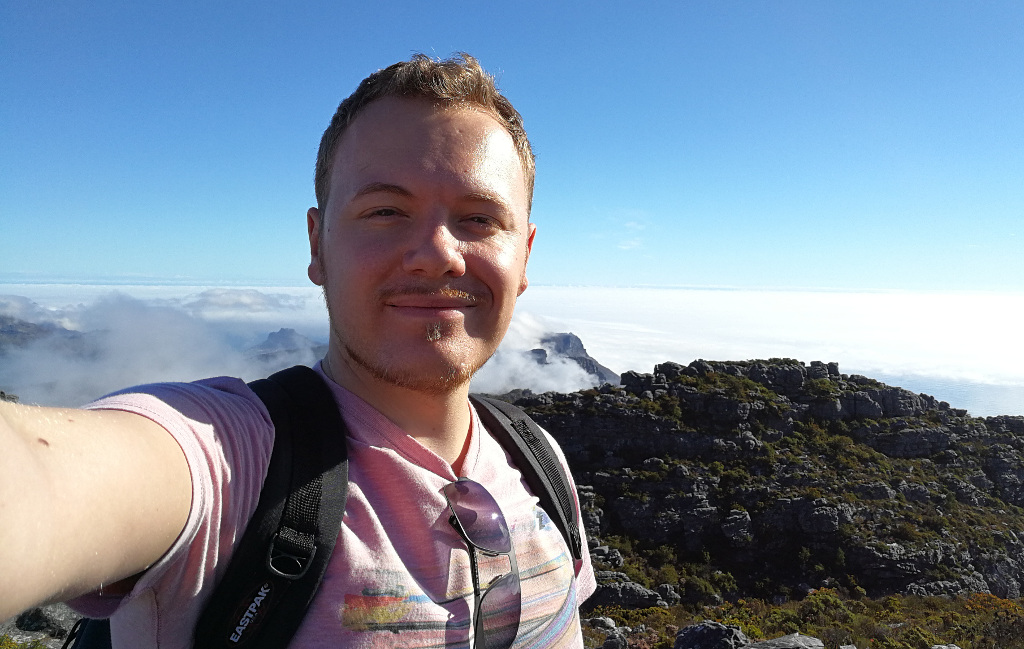
LibreOffice contributors around the world have a big impact on the success of the project – we really appreciate their help. Today we’re talking to Chandrakant Dhutadmal, who is involved in various free and open source projects including Mozilla Firefox and LibreOffice…

Where do you live?

I live in Pune, Maharashtra State, India.

Do you work for a LibreOffice-related company or just contribute in your spare time?

I work for the Centre for Development of Advanced Computing (C-DAC), which is an autonomous scientific organization under the Ministry of Electronics and Information Technology, in the government of India. We worked on a project of national importance where we aimed to provide software tools in Indian languages (free of charge) so that people can easily use the software in their own languages.

One of the applications which we worked on initially (way back in 2006) was OpenOffice.org. Later we shifted to work on LibreOffice. I do contribute to the project in my free time as well.

How did you get involved with LibreOffice?

During the above mentioned project work, we interacted with many organizations and individuals. Mr. Rajesh Ranjan was one of the persons who I interacted with – and told to about how the open source community works, and what kind of impact can it bring to the overall project.

We interacted very frequently and that is where we started working on organized efforts of volunteers for LibreOffice in India. I started doing a bit of contributions for LibreOffice since that time. Mr. Mahesh Kulkarni, who heads the department where I work, and my office in general have been really supportive for such activities.

What areas of the project do you normally work on? Anything else you want to tackle?

I normally work on LibreOffice marketing, community building and localization. These tasks keep me occupied enough.

What was your initial experience of contributing to LibreOffice like?

I was very pleased with the way the global LibreOffice community accepts newcomers and beginners. Initially, I was hardly a serious contributor to LibreOffice. But the fact that even small contributions by new contributors are valued by the community. Members like Sophie Gautier and Italo Vignoli have always been very supportive to me and others in India.

What does LibreOffice need most right now?

One of the most common and frequent issues which people report to me whenever I talk about LibreOffice is compatibility with Microsoft Office. It is quite a difficult task to satisfy them by explaining a few facts. I generally ask people to pinpoint the issues which affect them. Another area is to build a community of developers in India who can contribute to LibreOffice development.

What do you do when you’re not working on LibreOffice?

I read lot of articles on financial literacy. This is one of the topics which interests me a lot. I also like to travel to different places.

Anything else you want to mention?

I hope people get motivated enough by reading interviews like this, and get involved in the project!

Thanks Chandrakant – and indeed, there are many ways to get involved and make LibreOffice better for millions of users around the world. Our community is friendly and fun, and contributing to the QA, documentation, design, marketing or other projects is a great way to build up experience for a future career!

LibreOffice contributor interview: Nguyen Vu Hung

The Document Foundation’s wiki has lots of resources and materials for marketing LibreOffice in English – such as presentations, flyers, stickers and branding guidelines. But we also want to spread the word about free software and open standards in every country, so we really appreciate our international community which promotes LibreOffice in other languages. One such community member is Nguyễn Vũ Hưng who helps with marketing LibreOffice.

Where do you live, and are you active on social media?

I live in Hanoi, Vietnam, and you can find me on social media at:

Do you work for a LibreOffice-related company or just contribute in your spare time?

I work as an CTO for a game and offshore development company based in Hanoi. The company has nothing related to LibreOffice, but our staff uses LibreOffice at work. I’m a volunteer in the LibreOffice community in my spare time, and have been a long-time contributor to open source projects.

How did you get involved with LibreOffice?

​It goes back about ten years ago, when I contributed to Vietnamese localization and ​community support with OpenOffice.org. When LibreOffice started, I join the new project with nearly the same role, translating the user interface, until recently. The English skills of average users around the world are getting better, which is why I’ve changed my focus to open source and LibreOffice marketing.

What areas of the project do you normally work on? Anything else you want to tackle?

For a year or two until now, I’ve found that the role most fitting for me is forum and Facebook fan-page content seeding. It works 🙂 For that kind of marketing and content seeding activity, getting people involved is the most difficult part. I’ve been looking at what Slashdot does, and I’m learning about approaches to improve KPIs (key performance indicators) such as the statistics for “seen”, “comments” and “engagement” in Facebook posts.

What was your initial experience of contributing to LibreOffice like?

This is not my first experience with LibreOffice, but I still remember: I was mentoring a student who was finishing an Easy Hack. It was not really “easy” to read so much code and start hacking away on a small improvement – but luckily, he did it 🙂 (Here’s the Bugzilla ticket showing how it went.)

What does LibreOffice need most right now?

It needs to go mobile (more work on Android) and get into the cloud (more work on LibreOffice Online).

What do you do when you’re not working on LibreOffice?

Playing with my kids takes up most of my time. I balance time spent with my family with other IT/open source activities, including LibreOffice, Agile Vietnam ​and ITEC (IT Experts Clubs in Vietnam). We hold monthly events about Agile/Scrum and an event series named “S* Architecture”. I wish I could do the same with LibreOffice in Vietnam!

Thanks Nguyễn for all your contributions. And for others reading this who’d like to help out with LibreOffice marketing – or indeed translations, design, documentation, QA and other projects – join us and get involved!

LibreOffice contributor interview: Daniel A. Rodriguez

Having concluded our video interviews from FOSDEM, we now return to our regular LibreOffice contributor interviews on the blog. Today we talk to Daniel A. Rodriguez, an Argentinian LibreOffice and Free Software supporter, who helps with marketing, translations and design.

Where do you live, and are you active on social media?

I live in Posadas, the capital of Misiones in the north-east of Argentina. Here’s my Google+ profile.

Do you work for a LibreOffice-related company or just contribute in your spare time?

I use my spare time to contribute.

How did you get involved with LibreOffice?

When the LibreOffice project started (as a continuation of OpenOffice.org) I was still quite a new GNU/Linux user, but wanted to return something to the global community which had helped me many times before. So, I subscribed to mailing lists and – I don’t remember exactly how – in January 2011 I started to translate the LibreOffice website into Spanish.

What areas of the project do you normally work on? Anything else you want to tackle?

I try to stay tuned to marketing, translating press releases, design blog posts and developer blog posts. I maintain several social media profiles as “Comunidad LibreOffice Argentina”:

All of these can, I think, help to attract volunteers to the project. But we must recognize that the Spanish community is fragmented into several geographical regions. And that’s why at the end of 2016, with help from two
other community member (Adolfo Jaime Barrientos and Carlos Parra Saldivar), we started a new blog at The Document Foundation. Now it has another well known LibreOffice user and advocate: Ricardo Berlasso. The goal is to get more people participating, now and then.

Sometimes I work on ideas that others can bring into reality – such as the airport advertisement for the launch of LibreOffice 4.0, or more recently the MUFFIN illustration for the blog post in December.

What was your initial experience of contributing to LibreOffice?

Being able to participate actively in an international community, with the push and motivation that revolves around LibreOffice and Free Software, was – and still is – indescribable.

What does LibreOffice need most right now?

I think that an option for automatic updates, like Firefox has for example, would be great.

Finally, what do you do when you’re not contributing to LibreOffice?

I work the whole day in a secondary school with a technical orientation. My obligations are to maintain the infrastructure on which different systems work: institutional management, Virtual Education Environment, proxy cache, DNS, among others.

Thanks Daniel! And thanks to everyone else involved in marketing and localisation of LibreOffice. If you’re reading this and want to join the friendly, worldwide LibreOffice community, get involved!

The Document Foundation All Rights Reserved 2025
Proudly powered by WordPress | Theme: Refined Magazine Pro by Candid Themes.