LibreOffice developer interview: Xisco Fauli

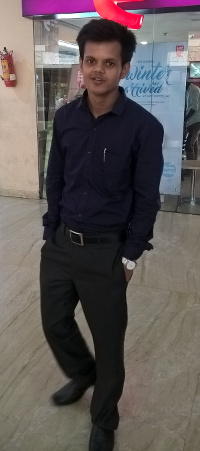
Xisco Fauli LibreOffice developer

A few weeks ago we talked to Muhammet Kara about his work on LibreOffice, and today we hear from Xisco Faulí, a Spanish developer who started with Easy Hacks to get familiar with the code…

Where are you based, and do you work for a LibreOffice-related company or just code in your spare time?

I live and work in Madrid, Spain, but originally I’m from Valencia, on the east coast of the Iberian Peninsula. Currently, I work for a private company as a QA engineer, so I write code for LibreOffice in my spare time, normally late at night.

How did you get involved with LibreOffice?

Before LibreOffice existed, I knew OpenOffice.org as the open source alternative to Microsoft Office, but I never thought of contributing to the project because from my point of view, it looked really difficult for someone like me with little knowledge in C++ and no previous experience in an open source project, to contribute to such a big project.

However, when LibreOffice was forked, I came across the LibreOffice Easy Hacks page and I realized that some of the easy hacks didn’t require much knowledge in C++ – so I decided to give it a try. In fact, my first contribution to the project was as simple as deleting some commented lines, but it was really encouraging to see how welcoming the community was to me and how fast my patch was merged into master, so I got hooked right away.

What areas of the code do you normally work on? Anything else you want to tackle?

In 2011, I was accepted as a student in the Google Summer of Code to work on porting Java wizards to Python in order to reduce the Java dependency. During the program, I ported the Letter, Fax and Agenda wizards. Later on, the Web wizard was ported by Javier Fernandez (Igalia). However, there are still some database wizards that need to be ported: tdf#83814. So I take the opportunity to encourage anyone interested to work on this task.

More recently, I’ve done some work in the SVG filter (which I hope it will be deprecated soon) and in the SVGIO filter, especially adding unit tests in order to avoid regressions. More info: http://x1sc0.blogspot.com. Besides, I’m also working on tdf#89329 with the help of Noel Grandin, and tdf#62525 with the help of Thorsten Behrens (thanks to them both!) and I must say it’s helping me a lot to improve my knowledge in the code base and in C++.

What is your vision for the future, or what would you most like to see improved in LibreOffice?

I’d love to see more Spanish contributors in the project and a more active Spanish community. It would be nice to have something like in Germany, Japan, Brasil or Italy and celebrate local meetings from time to time. This could also help to have more widespread use of LibreOffice in the Spanish public administrator, which would be another thing I’d love to see in the near future.

What do you do when you’re not working on LibreOffice?

I like sports, specially those done in the mountains like climbing, skiing and trail running. I also like traveling – recently I’ve discovered the pleasure of travelling by bicycle and I must say I love it. When I have evenings free, I like to go to the cinema, the theater or go out with friends.

Thanks Xisco! And to any other interested developers reading this: join our community and help to make LibreOffice even better.

LibreOffice developer interview: Muhammet Kara

Every new LibreOffice release is built on the work of developers around the world, who collaborate to add new features and fix bugs. But who are these developers? How did they get involved in LibreOffice, what is their vision for the future of the software, and how do they enjoy their free time?

We asked some contributors these questions, and will be posting their answers here on the blog in the coming weeks. Let’s start with Muhammet Kara

Where are you based, and do you work for a LibreOffice-related company or just code in your spare time?

I live in Ankara, Turkey. I am still a student, studying computer engineering, and I also work for TUBITAK-ULAKBIM in their Pardus Linux Group. They endorse the usage of Free and Open Source Software (FOSS) nationwide. They also encourage me to work on LibreOffice when I am not given other tasks. I am glad I am able to contribute to such a great project as LibreOffice in the workplace. I also code in my spare time.

How did you get involved with LibreOffice?

I have been using and advocating OpenOffice.org and LibreOffice for years, but my involvement as a code contributor started with encouragement of Abdullah Erol, manager of the Pardus Linux Project.

What areas of the code do you normally work on? Anything else you want to tackle?

I don’t have a particular preference, and I work on various areas usually related to C++ and the user interface. After gaining some more experience, first I would like to spend some time on Base because I felt like it needs some love. I am also interested in getting involved with writing tests because they guard us against the introduction of new bugs and reintroduction of old ones. But there is no reason not to work on Calc or Writer 🙂

What is your vision for the future, and what would you most like to see improved in LibreOffice?

A well-known and widely-used LibreOffice suite worldwide, and particularly in Turkey. I think integration of LibreOffice with the cloud is also crucial for the future.

What do you do when you’re not working on LibreOffice?

I like going to the movies, reading books, mountain driving, and localizing free software. Nowadays I am trying to get GNOME 3.22 development branch’s Turkish translation to 100% completion. Wish me luck with that 🙂

Thanks Muhammet! And to any other interested developers reading this: join our community and help to make LibreOffice even better.

Interview of Naruhiko Ogasawara, a localizer from Japan

LibreOffice can only exist since people are working on it: so please, tell us a bit about yourself.402282_464389833584422_1344809811_n

I’m a member of LibreOffice Japanese Team; working in the backyard of Japanese community. Driving translation, reporting bugs instead of people who can’t use English and attending FLOSS events in Japan.

In the team, my main task is translation of LibreOffice UI, and sometimes Wiki pages, and I’m one of the administrator of Pootle Japanese group. And now I have lots of interest about outreaching (I’ll talk about it later). It might be a special, I’m a “printer” guy. I have strong interest about the future of printing; not only print something from desktop application (e.g. LibreOffice), but also using mobile device, from cloud service, etc. In the future I want to get involved about printing related enhancement of LibreOffice.

In what other software projects have you been involved?

Ubuntu and GNOME (mostly translation), and OpenPrinting; standardize group of unix-like printing environments.

Where do you live (and/or study)?

Very east side of Tokyo (Katsushika-ku).

What do you do when you’re not working on LibreOffice?

My work is technical investigation of current FLOSS technologies, e.g, NoSQLs, Private IaaS Platforms, something something… includes LibreOffice also.

In private, reading books, sitting in front of my laptop and many many tweeting, or sometimes reading blogs or news. And just now I’ve started Yoga. It’s pretty good.

I love running rivers with a kayak. Most of 60 rivers I’ve visited, includes US and New Zealand. Paddling is wonderful 🙂

When do you usually spend time on the project?

About translation or Facebook pages administration, mostly off time of weekdays. Our LibreOffice meetup (read below) also are in weekday night. I guess almost 10 hours per week.

How did you hear about LibreOffice?

Because a friend of mine is the key person of Japanese LibreOffice (and former OpenOffice.org) community.

Why did you get involved? Is LibreOffice popular in your native-language?

Because my friend mentioned above need my help. At that time I had surprised how people in the community is active, full of love for LibreOffice itself, “wow it’s really nice community” I thought. That’s why I still spend a time for the community.

In Japan, LibreOffice is getting big I feel, but still “OpenOffice” as a brand is bigger than LibreOffice. If someone want to find fee-free office productive suite, he might google “openoffice.”

What was your initial experience of contributing to LibreOffice like?

Checking most of all printing-related UI translations and correcting because my special is printing.

What have you done since then?

About translation, I have expanded my area from printing-related to any other UI, and not only UI, but also some Wiki pages or else.

Now my most important work is to drive our own (LibreOffice-titled) event in Japan, and share them to global.

First, I’ve started monthly LibreOffice meeting “Kanto LibreOffice Study Group” (Kanto means around Tokyo area). This meeting might deal with widely theme from using how-to to introduction to development.

Then I administrate two Facebook pages: one https://www.facebook.com/LibreOfficeJa is for all of Japanese LibreOffice related people to discuss about LibreOffice in Japanese, and another https://www.facebook.com/LibreofficeStudyJapan is for LibreOffice meeting owners in Japan to exchange knowledge how to host meetings or anything else.

And I feel it’s important that we, Japanese community should let global people know how we’re active and share success stories and problems.

What would be your best suggestion or advice for anyone interested in getting involved in the localization of LibreOffice?

Don’t worry about English. If you can’t understand some translated string, the translation might be wrong. Please teach us. It’s first step to join us. No English is needed. We always need proofreading.

And LibreOffice community is very active, full of love, lots of nice people and easy to join.

What is your vision for the future and/or what would you most like to see improved in LibreOffice?

My currently interest is how to reach non-FLOSS, non-geek people in Japan to tell how LibreOffice is good for them. Most of them only know MS Office, few of them know also OpenOffice but not know LibreOffice. We need to reach them and get feedback what they want, and tell them to the global.

Of course migration in large companies and local governments from MS Office to LibreOffice is big issue, so we need supporting companies in our ecosystems in Japan. But this issue is out of focus for me as a community guy…

Anyway, my another point is writing codes. Because it is easiest way to put Japanese local requirements, but in Japan very few people have done that. So I want to became a developer and I also grow some young developers of LibreOffice.

Thanks a lot for your answers and time!

Interview by Charles-H. Schulz.

Interview with LibreOffice localizers around the world: Helen & Sophie

Today we interview two great women, Helen Ushakova and Sophie Gautier, from the Russophone and Francophone communities.helenrussian

LibreOffice can only exist since people are working on it: so please, tell us a bit about yourself.

Helen:  My name is Elena Ushakova, also known by nicknames as Helen Russian (helenrussian, helen_russian). I am 36 years old. I’m full-time employed as a corporate web applications programmer.

Sophie: My almost full name is Sophie Gautier, also known as sgauti or sophi or sofi. I’m usually a women, traveling in the open source world since 14 years now.

In what other software projects have you been involved?

H: In the past I used to work on some projects but it was a short time. Seriously I liked only OpenOffice.org. I took care of OOo UI and Help translations. We have the user forum and the site with useful tips. Now we are making the same things for LibreOffice. Also, I’m participating a little in the Apache OpenOffice project (mainly in the wiki).

S:  I’ve been deeply involved in the OpenOffice.org project, working on different areas, trying to understand all the aspect of this strange organization. I’ve done localization in French for other very small projects. I also participate in several associations.

Where do you live (and/or study)?

H:  Yekaterinburg, Russia.

S: I live where my feet are 😉 I guess it’s Paris for more than a year, yeah!

What do you do when you’re not working on LibreOffice?

H:  Well, I’ve got another pet project – DMOZ (Open Directory Project). I’m an ODP Editor since 2008. Also I like a lot of interesting things: whether it be cooking dinner for my family or playing musical instruments.

S: I own a consulting and training company dedicated to open source applications for the desktop. Creating objects and drawing is my favorite way to escape from the world.

When do you usually spend time on the project?

H: I don’t know… Every day. In the morning, in the evening. Each time when it is needed.

sgaS: Any time I’ve time, I think about it or work on it, I’m afraid it’s a kind of passion (no, I didn’t say poison!).

How did you hear about LibreOffice?

H: From news. And I remember the feeling of joy “Finally someone took this step” and then there was a long period of my doubts. The whole 10 long days. 🙂

S: I’ve been involved in The Document Foundation and LibreOffice since its creation, so the first time I heard about it was probably in my dreams.

Why did you get involved? Is LibreOffice popular in your native-language? 

H: First, people who are involved in the project are its precious thing. I love to be together with these people, to work in a team, to feel friendly support. Second, in the department of the company which I work, ODF is an internal corporate standard, so I dedicate a part of my work time to LibreOffice. As for the popularity of LibreOffice in Russia, we will definitely have to strive for it. However it still isn’t the main goal.

S:  I got involved with localization during the Openoffice.org time, I’ve been taught by professional linguists and it was natural for me to go on with the French localization of LibreOffice. LibreOffice is more and more used in the French speaking countries and supported by the French Government, hence my motivation to continue the work too.

What was your initial experience of contributing to LibreOffice like?

H: It is obvious: I sent a file with the Russian UI translation update on 2010-Oct-8. After that it became too late to retreat. 🙂

S: I was very happy to work with so many different people, with so many skills, having so many different ways of being and with so much understanding.

What have you done since then?

H: Russian LibreOffice community does a lot of work. My contribution is not very big. Usually I translate UI, resolve some administrative questions on the user forum or sites. Sometime I help Free Office users on our forum or in G+ LibreOffice Russia community.

S:  Speaking about FR l10n, not much. I’m still alone to localize the UI/Help with my old tools and my friend named grep. But now, the French QA team is helping a lot in proof reading and correcting my mistakes (and I’m sure they often have a good laugh at them 🙂

What would be your best suggestion or advice for anyone interested in getting involved in the localization of LibreOffice?

H: Don’t be afraid to start any work alone. Be ready for errors. Always begin any work in LibreOffice only in a good mood 🙂 . And in this case LibreOffice will be source of inspiration for you and your personal growth.

S: My advice would be : do not be afraid by the amount of words all around you when you’ll begin, you’ll see that fast and soon, the green will eat the grey on Pootle. Also, we are a team, always here and happy to help each other, so never hesitate to ask either on a translation or the use of the tools.

What is your vision for the future and/or what would you most like to see improved in LibreOffice?

H: I would like each NLC to have more attention from the global community and be more involved into community life. Let’s communicate more.

S: What I would like to see the most improved is the representation of the native language projects and their communication with the international project. A native language project is like a small projection of the international project, but with its specificity due to the language. It should not be seen as a barrier or a fragmentation, it’s on the contrary what makes our diversity and our plurality, but we need to communicate more, always more because we are one and only one project.

Thanks a lot for your answers and your time!

H: You’re welcome!

S:  Thanks a lot for your interview!

Interview done and prepared by Charles-H. Schulz & Marc Paré.

Developer Interview: KOHEI YOSHIDA

(Submitted by Marc Paré, November 5, 2012)

Kohei YoshidaKohei Yoshida is a well-known individual on the LibreOffice project. To many, he is considered as one of the core group of developers who have contributed to the steady development and code improvement of the project, and one of the leaders of the calc component. Kohei takes a little time out from his busy schedule to let us know a little more about himself and why the LibreOffice project appeals to him.

LibreOffice can only exist since people are working on it: so please, tell us a bit about yourself.

My name is Kohei Yoshida. I’m a Japanese national currently living in Raleigh, North Carolina. I used to work in the environmental science field but decided to change my profession to software engineering to make it more aligned with my passion and obsession. I’m very glad I made that switch. Now I can justify my obsession instead of apologizing for it since I’m now getting paid for it.

In what other software projects have you been involved?

Besides LibreOffice? Not much actually. Of course, I was involved in the OpenOffice.org project back in the old days, but that’s about it.

I once worked at SlickEdit as part of their development team for about one year, before I moved on to join Novell to work on OpenOffice.org full-time.

Where do you live (and/or study)?

I live in Raleigh, North Carolina.

What do you do when you’re not working on LibreOffice?

Bits and pieces of various things, such as taking my son to his Taekwondo practice, watching TV, mostly documentaries and news to learn about interesting developments around the globe, working out to stay in good shape…. that sort of stuff.

When do you usually spend time on the project?

That’s easy. Since this is my full-time job, I do it just like how other people go to work. But I also put a fair amount of personal time into it to mostly move forward some of my side projects that would not warrant using my employer’s time.

What is your preferred text editor? And why?

Unlike many other core developers who use mostly either emacs or vim, I do use SlickEdit which is a well-capable commercial code editor. It has built-in symbol database that scales very well with very large code base such as LibreOffice code base. It also has tons of other useful features that save me lots of time and effort. The fact that I used to work there developing the editor probably helped me initiate myself with the editor, and get stuck with it, so to speak.

How did you hear about LibreOffice?

Well, it’s hard not to have heard about LibreOffice as I’ve been there since day one.

Why did you get involved?

I got involved through my employer, SUSE.

What was your initial experience of contributing to LibreOffice like?

Again, this question may not apply to me personally since I was involved in LibreOffice from day one. But I think it’s worth saying that the new git-based repository made my job 100 times easier than our old system, which was basically nothing more than just a hand-crafted, custom patch management system wrapped around the upstream cvs/subversion/mercurial repos. If you are familiar with the Go-oo project, that’s what I’m talking about here.
Now that I look back, the system back then with the Go-oo project, it was terribly inefficient and not a great place to go wild with one’s creativity. I didn’t necessarily think that back in the days, but now I do.
There were rough edges even with the system we use in the LibreOffice project when we just started. But the good news is that we have since improved our system and most of the kinks are now gone. I’m very happy about that.

What have you done since then?

Well, I’ve done a lot of things since the project started. Due to the nature of my work, I tend to go to many corners of Calc, so it’s hard for me to list individual achievements. That said, overall, what I’ve done can be categorized as follows: 1) code cleanups, 2) new features and enhancements, and 3) core refactoring for better maintainability/performance/memory footprints. Recently, I’m mostly focusing on performance enhancements and core refactoring to make the code more readily extensible, easier to maintain and generally perform better. These changes are not very visible to the end users, but in my opinion just as important as more visible features.
I’ve also worked to extract some of the code into external projects, and have it maintained outside LibreOffice. Projects such as mdds and orcus are good examples of that effort.

What do you think was your most important contribution to LibreOffice so far?

The improvement in the pivot table engine, which is finally in a very good shape as of 3.6, and numerous unit test code I’ve written since inception of this project.

How will that improve things for users?

Hopefully users will have to wait less for things to get done when using pivot table. Also, having more code automatically tested by our unit test framework means less chance of having regressions. Unfortunately the coverage of our unit test framework is still not high enough, and we should still stay diligent in writing more and more test codes to accompany bug fixes. But things are improving, and hopefully as we make more releases and make more code changes (accompanied by more test code) we will increase the coverage of our unit test.

What is your vision for the future and/or what would you most like to see improved in LibreOffice?

My vision for this project is to make the code more modular; extracting more code into mdds, orcus etc to offload code maintenance, and more unit test coverage to improve the quality of the binary that we release. Of course, I can’t forget about making Calc run a lot speedier in all areas. But to achieve that goal we need to make lots of changes in lots of areas.
I would also like to someday spend some serious time tinkering with and understanding the drawing layer code. For now, I only know just a little, barely enough to get by. But some day that level of knowledge won’t be enough to carry out large scale refactoring or re-architecting of Calc’s drawing layer, which relies in large part on the common drawing layer code that all apps depend on. So, I’d like us to improve that situation one day.
The chart code is another beast that we don’t have an intimate knowledge of. Several of us have spent some time in that code, including myself, but the code still feels “foreign”. I’d like to see that changed.
Also, we really need to do something about the poor performance of ods and xlsx imports. But this is a difficult problem to solve, and while I have some ideas to improve the load performance, it’s for the long-term rather than short-term. I have some prototype ideas in orcus. The challenge is to figure out how to materialize those ideas to make them happen in LibreOffice proper. That won’t be easy, but we have to move in that direction some day.
Lastly, I’d really like to refactor Calc’s core cell storage to take advantage of newer CPU’s vectorization support, take advantage of GPU, or perhaps allow some super computer cluster to be plugged in to massively speed up formula calculations. Achieving that will be a major architectural challenge, but it’s a very interesting one.

What advise would you give new developers to make their first LibreOffice hacking steps easier?

Get a good idea of what you want to accomplish with this project, and if possible, try to establish a main area of interest, and keep forging ahead.

Anything else interesting you get up to when not hacking?

Not much, actually. I tend to spend a lot of time researching the latest on clean energy development. Too bad I can’t do much about it myself and I can only get to learn what awesome stuff other people have been doing in that area. But I do believe that we have a global-scale energy crisis, and I really appreciate those who are trying to solve this very hard problem. Meanwhile, I do my part by trying to make the application run faster which will consume less CPU power which will in turn draw less electricity and generate less excess heat.

Thanks a lot for your answers and time. We look forward to more of your great code in our favorite office suite.

Developer Interview: Lionel Elie Mamane, LibreOffice Base Maintainer and Volunteer

(Interview by Michael Meeks, edited by Marc Paré)

In our continuing series “Developer Interview”, Lionel Elie Mamane discusses his work with LibreOffice code and of his particular interest with Base. His lead role in maintaining the Base module is helping raise the use of Base among the LibreOffice community at large.

Lionel Elie Mamane

How did you hear about LibreOffice?

Debian switched to it from OpenOffice.org.

LibreOffice can only exist if people are working on it; so please, tell us a bit about yourself. In what other software projects have you been involved?

Mainly Debian, but I’ve always sent patches left and right to scratch my itches; a more or less random selection:

  • IPv6 support for privoxy, an anonyimising HTTP proxy
  • bugfix for gfax, a graphical interface to send faxes: handle spaces in telefax numbers gracefully
  • Linux, the kernel: In SIT tunnels set to “tos inherit”, propagate IPv6 transport class byte from the inner packet to the ToS byte in the outer packet, like IPIP and GRE tunnels already did
  • Pan (newsreader): fix interaction with mutt (email user agent)
  • Pan: bug in thread filter
  • Fixes in some LaTeX packages
  • mutt (email user agent): fix parsing of mailto: URLs

What do you do when you’re not working on LibreOffice?

Finish up my PhD dissertation in theoretical computer science/computer mathematics.

What is your thesis?

The field is proof assistants, that is programs that help mathematicians make theorems (proofs), manage them, etc. But also that check that a proof is correct.

My thesis is that the way current / historic proof assistants are going at it, we will “never” have a nice proof that we can show to a human and that will be “nice” to read. We have to change a bit (but not that much) how they are organized, both as concrete systems (programs), but also the theoretical underpinnings.

I handle the IT needs of a small (15 people) company.

What company? Can you give us a link and tell us of it’s products?

The company is Gestman S.A.. It does administrative, accounting and juridic work.

I’m also adviser to a charitable foundation called: Matanel. Its mission statement is summarized as “Matanel Spirit: The Matanel foundation, granted to give, encourages social entrepreneurship in all over the world.”  The full version of Matanel’s mission statement explains this in more detail.

Additionally to more “classic” charitable stuff (food, education, culture, …), I’m to blame for the logo being on Debconf11, Debconf12. You’ll notice my employer (Gestman s.a.) is also a sponsor of these conferences, and also pays my attendance to the same: http://debconf8.debconf.org/corporate.xhtml.en

When do you usually spend time on the project?

If I was interrupted in mid-thought or mid-bugfix by my carshare, I finish at home.

So European waking hours?

Yes.

Why did you get involved?

Because I want to use it as a programming platform for database-driven custom business applications at work. As a Microsoft Access killer, if you want. I started fixing bugs and adding small features that were useful to me, and before I really realized it, I find myself being the LibreOffice database expert.

Lovely, that’s exciting! What do your business applications do? Can you flesh that out a bit?

The business applications do:

  • customer database
    • contact data
    • track who is authorized to order which action on behalf of customer
  • billing: manual, automated, semi-automated
    • when customer asks for out-of-package work, bill by hourly tariff
    • statistics on which employee works how many billable/in-package/non-billable hours
    • statistics (for each customer) on how many hours spent on in-package work vs price of package.
  • tracking of assets and investments we manage
  • track advancement of work that needs to be done, and its bouncing from employee to employee or external entity.
  • For example, filing a company’s tax return:
    • accountant prepare balance sheet: employee 1
    • account manager validates: employee 2
    • send to auditor: employee 3
    • waiting for auditor: external service
    • file tax return as certified by auditor: employee 4
    • did we get the filing acknowledgment from the tax authority?

What was your initial experience of contributing to LibreOffice like? And how did that make you feel?

Very welcoming community. Err… Very welcome? My skills are recognized, contributions valued …

What was your first contribution to LibreOffice?

My first “applied as I wrote it” patch seems to be (date:   Sat Jan 15 05:39:40 2011 +0100):

#116187: report left/right page margin setting ignored on Unix 64 bit

The bug was: when one changed the left or right margin of a report on a 64 bit arch, all changes done in that dialog were lost.

What have you done since then?

Fixed a lot of stuff in Base, and a bit in scripting.

Great! Can you expand on the importance of fixing base?

Nearly all “enterprise/business applications” are more or less “read this from that database; do this work on it; push that to the database, …”. LibreOffice will never be a rapid application development platform à la Microsoft Office + Visual Basic for Applications without a solid database access / management / … component.

How will that improve things for users?

Users will be able to use LibreOffice for database access without crippling bugs.

What is your vision for the future and/or what would you like to see improved?

  • Ideally I’d like to have a rich, vibrant Developer/Tester/QA/ … community around base.
  • Interested in database stuff or scripting in LibreOffice? Come join  us! You can be useful at many different levels, with many different skills and levels of specialization: programming, bug triage, QA, testing, documentation writing, …
  • The reporting system is a bit primitive and could use a real upgrade.
  • It would be nice if forms could show several records at once (not only in grid mode).
  • The many dependencies on Java are a liability, and I’d like to have them curtailed / removed.

What do you think of the new build system?

gbuildification is a nice step forward, but it is “recursive make”, which is bad; see http://miller.emu.id.au/pmiller/books/rmch/  At least now it is not “much worse” than most other projects.

Errata: Actually, it was now explained to me that the “recursive” nature of our gbuild system is transitory, and that wen everything will be gbuildified, it won’t be recursive anymore (everything will be in the tail_build module). Great news!

I’m 100% convinced that our dependency information is incomplete and/or too low granularity. I still have build problems solved by a “make module.clean” or some such. And, when I try to do a more surgical “rm”, it often fails BECAUSE THAT FILE IS NOT REDONE, so, compilation of a different file fails with message “file you removed missing”.

Which is your preferred text editor and why?

Emacs. Habit (keybindings in muscle memory), features, programmability in a decent language (I’m a functional programming guy at heart), …

What would you encourage new contributors to work on with you?

I’ve made a few “easy hacks” with suggestions.

Anything else interesting you get up to when not hacking?

No, hacking is my life 😉

Thanks for your time and commitment to the project!