The Draw Guide 6.4 is Ready for Download

Draw Guide 6.4

Following the recent release of our updated guides, the LibreOffice Documentation Team is happy to announce the immediate availability of the LibreOffice Draw Guide 6.4, the complete handbook for the drawing tool of LibreOffice. The guide was updated from the existing release 4.3 and include all the improvements developed since early 2014, when the last version of the guide was published.

LibreOffice Draw is the vector drawing tool of LibreOffice, capable of creating and edit complex drawings, from basic geometric shapes to sophisticated technical drawings, including tri-dimensional composition, all supporting the ODF file format standard.

“Returning to the LibreOffice Documentation team was a great opportunity for me to continue to contribute for the LibreOffice Community. I used all my 35 years of professional experience as a technical writer in high end industries to bring the Draw Guide up to date with the latest publicly available release of LibreOffice (Version 6.4). I hope the community enjoy LibreOffice as this is an excellent office software package that is freely available” said Peter Schofield, who coordinated the update and release of the Draw guide.

“Our vision for LibreOffice goes beyond the software development and we care to create the elements of an authentic LibreOffice culture. It is a great joy for all of us to see the LibreOffice community and the documentation team actively working on the update of the Guides. These books are important assets of the LibreOffice ecosystem and a critical element to improve and enlarge the opportunities for all persons of the community” Said Emiliano Vavassori and Daniel Rodriguez, members of The Document Foundation Board of Directors.

The Draw Guide 6.4 is the result of the collaborative work of Peter Schofield, Claire Wood and Regina Henschel. A big thanks to them for all their work!

Peter Schofield Claire Wood Regina Henschel


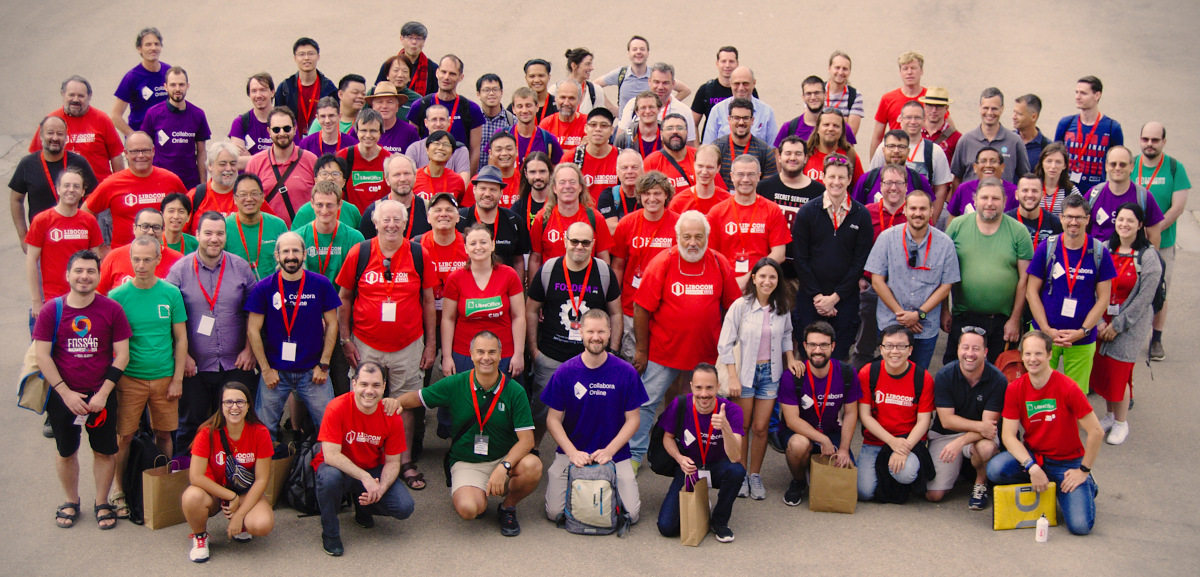
Meet the whole LibreOffice Documentation Team.

LibreOffice has extensive documentation in many languages, thanks to our worldwide community.

Download it

PDF version – recommended for viewing
ODT version – for opening/editing in LibreOffice

Everyone is welcome to join our documentation team! It’s a great way to build up experience in a large and well-known open source project, especially if you’re interested in a career in technical writing one day.

LibreOffice is a hot target for the Google Season of Docs 2020

For the second year in a row, The Document Foundation has been accepted as an organization in the Google Season of Docs, a programme whose goals are to give technical writers an opportunity to participate in contributing to open source projects, and to give open source projects an opportunity to engage the technical writing community.

This year we offer a wide range of projects for technical writers, and we’re extending the reach by providing projects for e-learning, mathematical documentation and code-oriented documentation.

During the programme, technical writers will spend a few months working closely with the LibreOffice community, bringing their technical writing expertise to the project’s documentation, and at the same time learning about the open source project and new technologies. Similarly, LibreOffice documentation team members will work with the technical writers to improve the project’s documentation and processes.

LibreOffice is an advanced office suite covering many areas of knowledge, from maths and sciences, engineering, financials, editing, drawing, printing and more. LibreOffice is also an application that is used cross-industry – so it’s a very rich opportunity for technical writing.

Olivier Hallot, LibreOffice’s documentation coordinator, will lead the GSoD project, supported by Ilmari Lauhakangas and members of the LibreOffice documentation team.

All information about the Google Seasons of Docs is on the GSoD website. An outline of the project’s different steps is available on the GSoD timeline. The next deadline is June 8, as we we need to find interested technical writers to discuss our ideas, which are summarized on the following TDF wiki page. The list includes some of our project’s permanent challenges, but should not be limited to these items. Technical writers must read the technical writer page of the programme.

LibreOffice contributors who are interested in becoming a mentor for the GSoD project should get in touch with Olivier Hallot by sending him a message. We look forward to hearing from you!

The New Getting Started Guide 6.4

The LibreOffice Documentation Team proudly announces the immediate availability of the LibreOffice Getting Started Guide 6.4, the introductory guide for the latest LibreOffice 6.4, aimed to the general public interested to quickly get familiar with the software.

The Guide was updated from the existing release 6.0 and includes an introductory documentation of the most common features of the free office suite and includes information on word processing, spreadsheets computing and charting, presentations, drawings, database management, equations and also macro programming. The update includes the changes in several components of the suite and new features introduced since release 6.0.

The Guide also introduces extensive information on the LibreOffice way of producing professional documents by using the rich set of formatting styles and correct document file format such as the Open Document Format. Needless to say, the Guide was edited, reviewed and assembled using LibreOffice 6.4.

The Getting Started 6.4 guide is the result of the collaborative work of Andrew Jensen, Claire Wood, Dan Lewis, Kees Kriek, Steve Fanning, Pulkit Krishna, Roman Kuznetsov and was reviewed and assembled by Jean Hollis Weber. A big thanks to them for all their work!

LibreOffice has extensive documentation in many languages, thanks to our worldwide community.

Download it

You can also get individual chapters via this page.

Everyone is welcome to join our documentation team! It’s a great way to build up experience in a large and well-known open source project, especially if you’re interested in a career in technical writing one day.

Announcing the LibreOffice Base Guide 6.2

LibreOffice has extensive documentation in many languages, thanks to our worldwide community. Recently, the guide to Base, LibreOffice’s database component, was updated by Pulkit Krishna, Dan Lewis, Jean Hollis Weber, Alain Romedenne, Jean-Pierre Ledure and Randolph Gamo. A big thanks to them for all their work!

The guide covers the process of setting up a database, followed by tables, forms, queries, reports, macros and other topics.

Download it

You can also get individual chapters via this page.

Everyone is welcome to join our documentation team! It’s a great way to build up experience in a large and well-known open source project, especially if you’re interested in a career in technical writing one day.

Announcing the LibreOffice Help editor

News from the documentation community: The Help project of LibreOffice underwent a major revamp in the last couple of years, with the introduction of the browser-based Help replacing the old Writer-Web solution. Still, editing the Help XML files (XHP) continued to be very hard for any volunteer or skilled developer, due to the specifics of the XML dialect and time required to be proficient in writing Help pages, which continued to be a major block for any individual.

To address the issue, we developed an online editor to assist and make textual editing quicker for any Help writer, by featuring the possibility of rendering the help page at once, at the click of a button. Also, we implemented a series of checking, including XML validity and the verification of ID unicity, crucial for translation.

Editor mains screen
Editor main screen with page loaded

The Help editor is available at https://newdesign.libreoffice.org/xhpeditor/index.php and contains features that greatly improve and simplify the XHP editing process. For instance, the menu allows users to write content in plain text and the wrap each text segment into the proper XHP tag. For example, after writing a paragraph in plain text, select the text and choose menu Paragraph – <paragraph> to wrap the text into a paragraph tag with the benefit of adding a unique identifier for the paragraph, which is vital for the translation process of LibreOffice Help.

Another nice feature is the editor autocompletion, which allows user to type only the start of a tag name and the editor suggests the rest of the name, sparing the energy spent in typing the whole tag name. When adding any tag to the text, the autoclose feature adds the closing tag automatically. Users can also press F11 to display the editing area in the whole browser area, enlarging the editing space, or even press Ctrl+F to open a search and replace window in the editor.

Page verification
Help page verification

You can open and save a local XHP file and select Tool – Render page to have it displayed in the browser area. Or you can copy the XHP plain text and paste in the editor area to continue edition. The XHP editor uses CodeMirror, a popular JavaScript editor with many, many interesting features.

Detailed instructions and a short User manual are available in the wiki page https://wiki.documentfoundation.org/DocumentationHelpEditor and can also be accessed from the editor Help menu. To read the XHP dialect reference , use menu Help > XHP Reference.

We hope the editor will encourage volunteers to address the challenge of writing and updating the Help pages. We are eager to receive suggestion and contributions to the editor project. Come and join us!