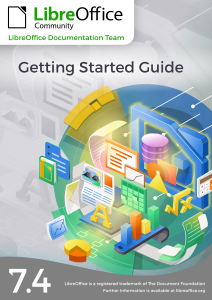
Writer Guide 7.2 macOS Edition

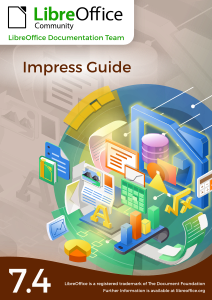
Thanks to the effort of Jean H. Weber of the LibreOffice Documentation Team, a special edition of the Writer Guide 7.2 for macOS users is now available for download.

Download Writer Guide 7.2 macOS edition

“The changes include translating keyboard keys from the Windows/Linux default to their Mac equivalents; replacing Windows/Linux screenshots with Mac equivalents (most screenshots were already taken from macOS); rewording some sections as required (removing Windows or Linux specific instructions). The only major change was about the Print dialog, which is quite different on macOS. I also amended the covers to include the words macOS edition“. Said Jean in her announcement to the documentation list mailing list.

Jean Weber

The guide is available for download at the documentation website and the LibreOffice bookshelf.

Join the Documentation Team


LibreOffice at FOSDEM 2022 – February 5-6

FOSDEM is a non-commercial, volunteer-organized European event centered on free and open-source software development – and one of the biggest such events of its kind. Normally it takes place in Brussels, but due to the pandemic, it’ll be online this year.

And the LibreOffice community will be there! We’ll have 25 talks about the technology behind the suite, open standards, and other topics.

See a full list of the talks here, and join us!

LibreOffice project and community recap: December 2021

Happy new year, everyone! Here’s our summary of updates, events and activities in the LibreOffice project in the last four weeks of 2021 – click the links to learn more…

  • We started December by announcing the LibreOffice Technology DevRoom Call for Papers for FOSDEM. This year, FOSDEM will take place online once again, and the LibreOffice community will be present with talks and discussions. Join us!

  • In December, TDF announced two updates for LibreOffice, for the 7.2 and 7.1 branches. These fix an important security issue and all users are recommended to upgrade.
  • Meanwhile, the Coalition for Competitive Digital Markets, a group of more than 50 technology companies from 16 different European countries, sent an open letter to members of the European Parliament to raise awareness about interoperability and to impose stricter rules on big companies – the so-called ‘big tech’ companies – that act as gatekeepers and prevent transparency and openness in digital markets.

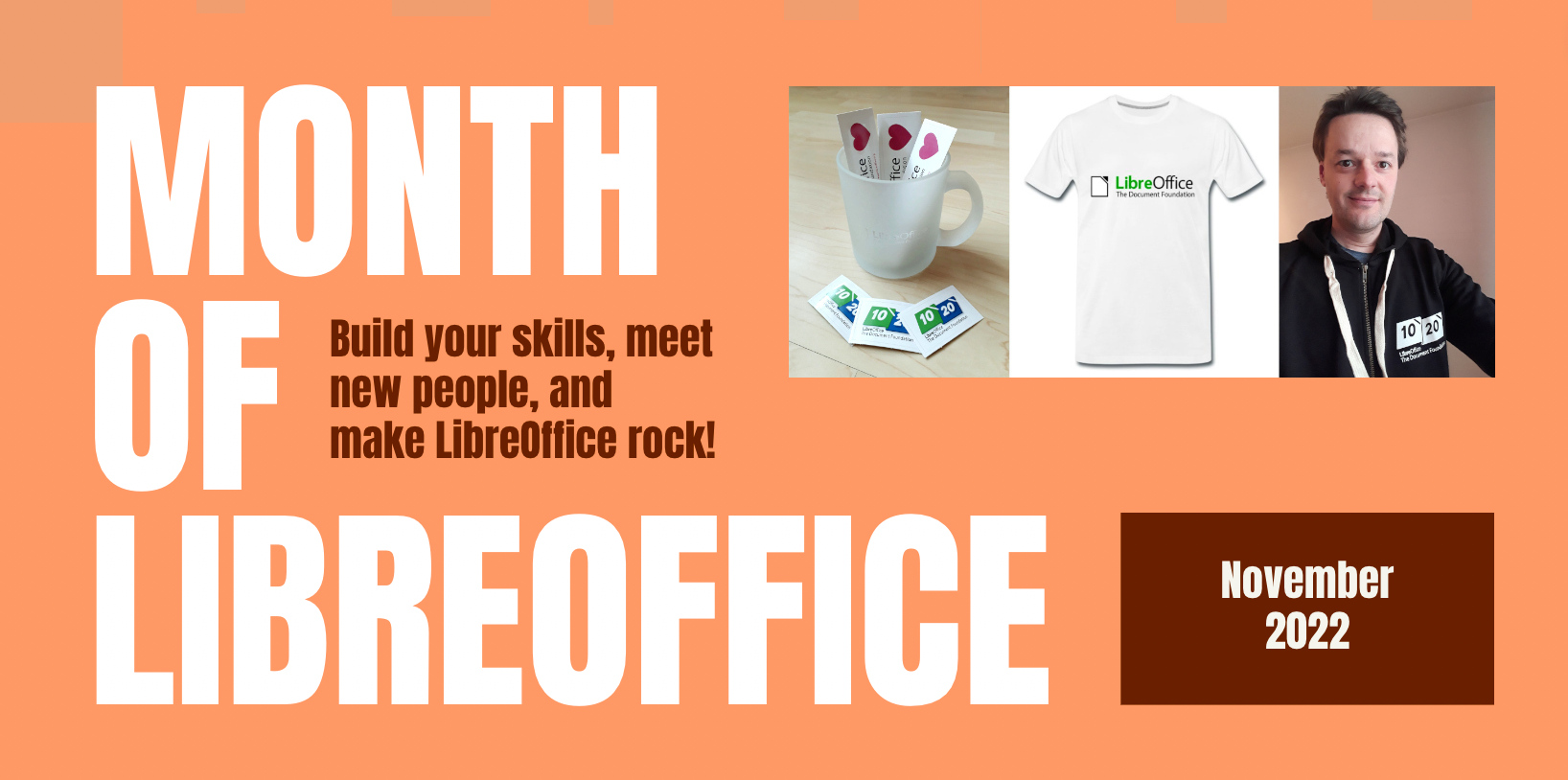
  • In November, we ran a Month of LibreOffice, crediting contributions all across the project. And in December, we announced the winners – 324 people could claim sticker packs! And we had extra merchandise to give away as well…

  • We talked to Ravi Dwivedi from the Indian LibreOffice community. He’s helping to spread the word about free software in India, and has interesting insights into free software adoption in his country.

  • The Document Foundation, the non-profit entity behind LibreOffice, recently had an election for its Board of Directors. Well, the preliminary results came in – click the link to see the lists of full and deputy members.
  • ODF is the OpenDocument Format, the native format used by LibreOffice (and supported by many other apps too). Then there’s the ODF Toolkit, a set of Java modules that allow programmatic creation, scanning and manipulation of ODF files. Svante Schubert gave us some updates.

  • Finally, we wished everyone a good start to 2022 – here’s hoping that we’ll be able to meet more in-person this year, and celebrate good times together.

Keep in touch – follow us on Twitter, Facebook and Mastodon. Like what we do? Support our community with a donation – or join us and help to make LibreOffice even better!

Best Wishes from TDF

Dear community members, TDF members, Advisory board members, team members, membership committee and board!

Another year marked by the global pandemic is coming to an end these days. In addition to all the depressing news and circumstances that affect us all, there are also pleasing and uplifting developments.

Apart from the painfully missed opportunity to meet in person, be it in the local communities or at our annual conference, we have nevertheless achieved so much together, worked together and brought our foundation forward, so that we can already say that it was one of the most successful years for and with our project.

I would like to thank all of you on behalf of our project. Everyone has contributed to the success story in different ways. All the contributions intertwine, and without these individual parts the whole thing would not be possible and so successful. Especially in these times. Thank you very much again for this.

And it is precisely this commitment, this proof of the resilience of our project during this time, that allows me to look to the future with good cheer. Please continue to support our community in so many ways in the coming year, every contribution is needed.

After two very intensive and busy years, I myself will say goodbye to the board, but after a short phase of rest, I will continue to work with you in the project in one or two different places again. I wish the newly elected board all the best!

I wish you and your beloved ones a few days of recreation at the end of this year and a stable good health for the next one.

Thanks again and hope to see you all with your contributions in the new year again,

yours
Lothar Becker
as chairman of the board

2021: The Year the LibreOffice Documentation Team Shined

Seasons Greetings

2021 is ending, so let’s recap our achievements and look forward for 2022. It has been a very tough year for all of us in our professional or personal matters, and for sure worsened by the persisting pandemic, even with the release of the COVID vaccines.

But this year was a great documentation year after all. We closed the gap between the LibreOffice major releases, and the update of the corresponding User Guides. By the year end, we will have all of our version 7 guides updated to the LibreOffice release 7.2, and ready to continue for the forthcoming release – 7.3 – due in early February 2022. The goal of tracking the software release closely was achieved, and now we are in a steady state of small updates between releases.

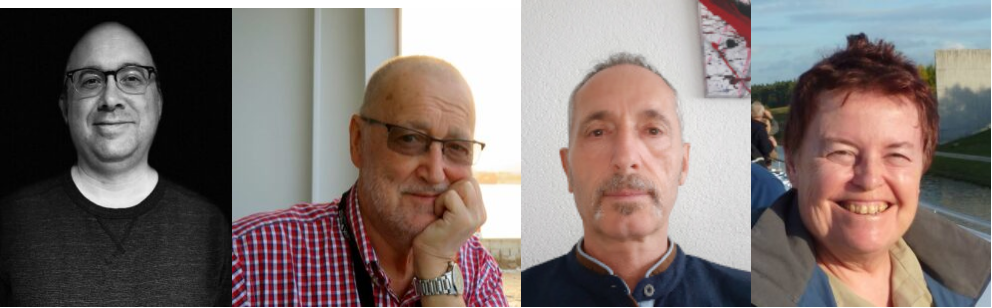
The updates and enhancements of the guides was an effort of all the team, coordinated by Jean Weber (Writer and Getting Started Guide), Steve Fanning (Calc and Base guides), Peter Schofield (Impress and Draw guides), Rafael Lima (Math guide). A number of volunteers also worked in each guide by writing and reviewing contents and suggesting improvements. A special thank to Jean Weber for making the guides available for sale on paper by Lulu Inc. The sad note of the year was the passing of Drew Jensen, a prominent member of the LibreOffice community for many years, and a documentation volunteer.

Coordinators

In the last quarter – thanks to The Document Foundation’s budget – some master documents bugs were fixed under contract by Michael Stahl of Allotropia, and now we can safely assemble our guides with master documents, and produce PDFs with hidden sections and correct navigation indexes in PDF readers.

Our documentation community also had a nice contribution of Jean Pierre Ledure, Alain Romedenne and Rafael Lima, for the development of the ScriptForge macro library, in synchronization with the much-needed Help pages on the subject, a practice rarely followed by junior developers of LibreOffice. As we know, undocumented software is software that’s lacking; features that are unknown to the user can be a cause of costly calls to the Help Desk in corporate deployments. ScriptForge developments came together with its documentation, a proof of the ScriptForge team’s professional maturity.

Special thanks to Steve Fanning for his leadership of the Calc Functions wiki pages maintenance. The wiki pages were initially developed by Ronnie Gandhi in 2020 under the Google Season of Docs programme, and are now run by Steve, providing richer content about the functions, with better descriptions, new examples, and other reference information. The in-depth review of the Calc Function wiki pages gave very good feedback for the Help pages, which also lead to Help improvements. The Calc functions wiki pages are available for translation, thanks to the dedication of Ilmari Lauhakangas.

Very important as well: we also had a team of Help page bug smashers, closing Help documentation bugs and gaps, fixing typos and improving quality, a must-have update to keep LibreOffice in-shape for its user base. Our Help pages, which are part of the LibreOffice code, have also been refactored continuously for better maintenance and code readability. The L10N team of volunteers (localization and translators) were quick in flagging typos and English mistakes – while translating the Help and the User Interface.

In 2021 we also launched the LibreOffice bookshelf, another download page for LibreOffice guides that, different from the current documentation.libreoffice.org server page, the bookshelf can be cloned and installed in organizations, libraries, colleges and schools, for immediate availability in controlled environments, as well as online reading of the guides. The ODF chapters were transformed into static HTML pages and are ready to display on computers, tablets and cell phones, bringing LibreOffice user guides closer to its public, anywhere, anytime. The conversion process is extensive and has been addressed in the LibreOffice 2021 Conference. It was also extended to the Portuguese translation of the guides, and can easily extended for other languages. Note: converting ODF documents into web pages is far beyond a simple export to HTML.

2022

For 2022, besides keeping the guides updated with the software releases and our wiki pages, we can elaborate on new projects and enhancements.

In the last couple of years, from reading users’ questions and feedback on TDF’s communication channels (mailing lists, Telegram channels, Ask LibreOffice and more), it became clear that the user community is permanently asking for support in writing macros for automating documents and converting from other suite macros. This calls for a new guide, probably a Scripting Guide for which contents shall address the use of the scripting languages by the casual user. The project is under construction and is open to editorial guidelines.

Scripting Guide

In the same direction of script documentation, the LibreOffice API documentation – created by automated tools – is excessively directed at skilled programmers, and falls short in readability, especially for the casual macro programmer. The project under construction is to illustrate the API pages with code snippets, as much as possible – a task suitable for newcomers and would-be programmers.

The bookshelf project shall be enhanced with new guide releases, new languages, and also demand for upstream control of the guide chapter formatting. Under discussion in the documentation team call meetings, it is interesting to write some sanity checks scripts for chapters compliance to the template, remove of unlisted styles, cleaning of direct formatting, object anchoring and more. These checks are important because the same visual output can be the result of very different techniques.

Portuguese bookshelf

Seasons Greetings!

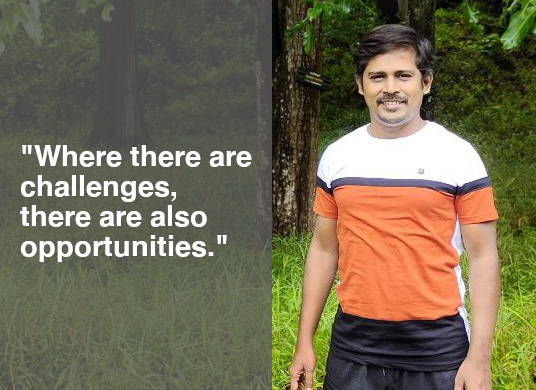
Community Member Monday: Ravi Dwivedi

Today we’re chatting with Ravi Dwivedi, a free software supporter who recently joined our marketing community

To start, tell us a bit about yourself!

I am from India, and I recently received my masters degree (M.Math) in mathematics from the Indian Statistical Institute in Kolkata. I am looking forward to doing a PhD in mathematics. My hobbies include listening to music, reading novels, playing chess, and meeting new people.

I campaign that software must respect users’ freedom. We call such a software free software, where ‘free’ refers to freedom and not price. In Indian languages, we call it “swatantra/mukt software” to remove the confusion. Free Software gives users the freedom to run, study, modify, share and improve the software. If the software lacks any of these freedoms, it is called non-free/proprietary software.

In my computing, I use only free software, except for some blobs in my phone. I volunteer for the Free Software Community for India. (FSCI). FSCI is not a registered organization, but a community of free software activists. It is also a non-hierarichal group. I raise awareness on why free software is important and the dangers of non-free/proprietary software.

I also raise awareness about the importance of digital privacy, and try my best to avoid privacy-invading technologies – and this means I usually have an amount of inconvenience for my freedom and privacy. Although I work on the issues of free software, I do care about other issues in society and actively look for opportunities to meet people who care about these issues. I believe in the power of collaboration.

I am an associate member of Indian Pirates, a group of people who would like to be a political party some day, with the goal of protecting the human rights of citizens. Within the groups FSCI and Indian Pirates, there is no leader, boss or hierarchy. I embrace the nonhierarchial structure of these groups, otherwise groups become(or, are liable to become) dictatorship of a few people.

What are you doing to spread the word about Free Software in India?

I hangout in FSCI chat groups. FSCI is very active in promoting free software, guiding people to switch to free software, providing technical support as well.

I am personally a part of the following activities by FSCI:

  • Convincing educational institutes to use Free Software and providing technical support to help them switch (see this page). Open letter to Kerala teachers is a part of this campaign. This is a hard and lifelong change that we are trying to bring and therefore, we need more volunteers. Snehal, who is from our group, could switch his department to fully free software for teaching.
  • Organizing Software Freedom Camp Diversity Edition 2021: We are trying to reach people from underrepresented (in the free software community) or underprivileged backgrounds. The main goal is to teach people about ethical issues in technology, and integrate them in our community. In the camp, people meet other like-minded people and interact with them. The learners participate in many activities in the camp and this makes it fun place. They also contribute to free software via technical (like programming) or non-technical means (like translations or organizing events).
  • Crowdfunding for fixing a problem with XMPP-matrix bridge: Matrix-XMPP bridge has a limitation that XMPP users miss messages posted in the groups hosted on matrix when they were offline. Sunday Nkwuda and Olatunji Ajayi, with help from team formed by Pirate Praveen, including me, are planning to fix the problem. Please help us to raise funds, so that we can fix the limitation. Check the fundraiser here.
  • With free software, users can fix the bugs themselves and share the modification with others, so that everyone benefits. With non-free software, we would have to beg the developer to fix the bridge. We need to actively think in terms of fixing things ourselves and building this attitude.
  • Privacy Yathra campaign: Promotes and raises awareness about privacy in India. The website is not up yet, but should be up this month. The website is here.

FSCI does a lot of other activities which I am not a part of. We run many services: poddery.com and diasp.in are our Matrix, XMPP, Diaspora service, Gitlab instance, Jitsi Meet, https://fund.fsci.in etc.

What are the challenges you face in convincing people?

There are many challenges. A lot of people do not get convinced about switching to free software or protecting their privacy.

I meet people on streets, trains, buses and wherever I find the opportunity – and I talk about the issue of free software and privacy. Usually, I try to understand what issues other people care about, and then relate digital privacy and free software with their issue.

For example, once a bookseller told me how people have stopped buying from physical bookstores, especially in COVID times, and instead buy books online from Amazon. I understood their issues and I told them that I never bought from Amazon even once (after June 2020) because ordering from Amazon puts me under surveillance. This way, I related the issues of privacy and free software with the ones they already care about. This is one good way to explain people.

Even when people don’t care, I tell them about these issues because it might be their first trigger, and they might need several triggers to consider the idea. I hope to raise some questions in people’s minds rather than convincing them. Also, I need to remind myself time and again that we cannot convince everyone that they should care for privacy. Apparently, it is a hard change to bring in today’s world and therefore, even small changes (like convincing and installing a few free software apps in their device) requires a lot of hard work.

You recently joined the LibreOffice community. How/why did you decide to join, and how’s your experience been so far?

I personally use LibreOffice as my office suite for all the work, as I am a devotee of free software. I also promote LibreOffice when I guide people to switch to free software. Further, I make my slides for talks in LibreOffice Impress, and tell the audience that the slides are made using LibreOffice which respects user’s freedom.

I think the LibreOffice community is doing very good work, and therefore I wanted to share some LibreOffice flyers with some college group, on my Mastodon and my website. Before doing that, I wanted to remove the term ‘open source’ with ‘freedom-respecting’ because personally, I don’t promote the term ‘open source’. Then I contacted Mike Saunders. We had some email exchanges and Mike gave me the idea of joining the LibreOffice Marketing team.

I found the LibreOffice community inclusive and welcoming, so I feel at home. Promoting LibreOffice also serves my broader goal of spreading free software. Therefore, I decided to help LibreOffice in marketing. Thanks a lot!

What else are you planning to do?

As of now, FSCI is planning to announce public meetings which help people switch to Free Software. It is similar to GNU/Linux installfests. We haven’t done this yet. We are planning to have our first session soon. I personally believe that even if people understand the dangers of non-free software and realize that they should switch to free software, they have some inertia. This type of meetings are aimed at breaking that inertia.

Currently, the adoption and awareness of free software is concentrated highly in a few Indian states, like Kerala. I am also planning to reach people in other areas of India too.

How can others help with Free Software adoption / spreading the word in India?

The most important part for free software adoption is to replace as much proprietary software you can with free software in your own computing. Then convince others to switch to free software.

Please visit fsci.in, and join our chat groups mentioned at the bottom of the page. Feel free to join and discuss. Help us with maintaining the services and other activities that we already do. You can start your own initiatives. One important aspect of community is that if you do the activism alone, you can easily get demotivated. Meeting like-minded people acts as a psychological boost. This is one reason I am able to boycott non-free software successfully.

Further, our goal (as FSCI) is not only creating more free software users but creating functional free software communities which are inclusive, welcoming and respectful.

I believe, we also need to have more free software businesses like libretech.shop, which sells free software powered laptops and mobiles.

Thanks for your time, Ravi! Finally, how can we reach you?

The contact page of my personal website lists the ways you can get in touch with me. You can also send me an email via ravi at ravidwivedi.in. Looking forward to hearing from you!