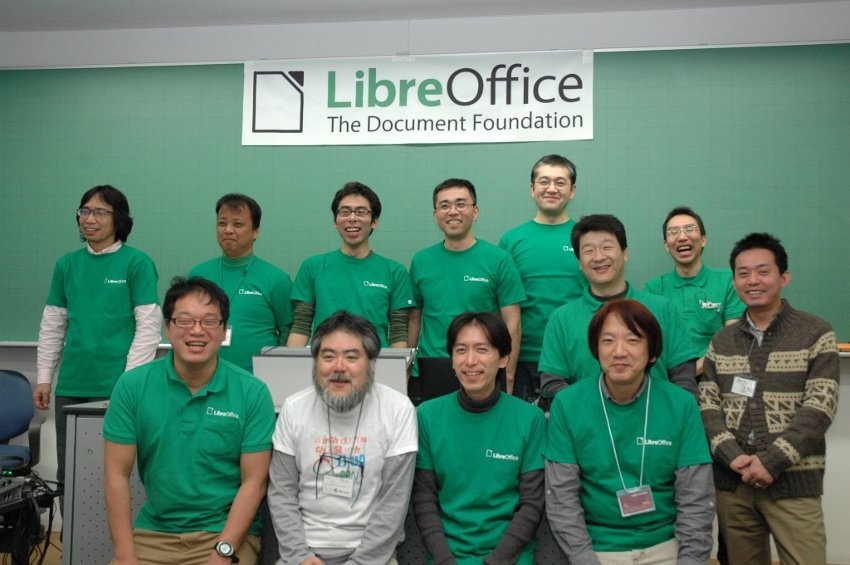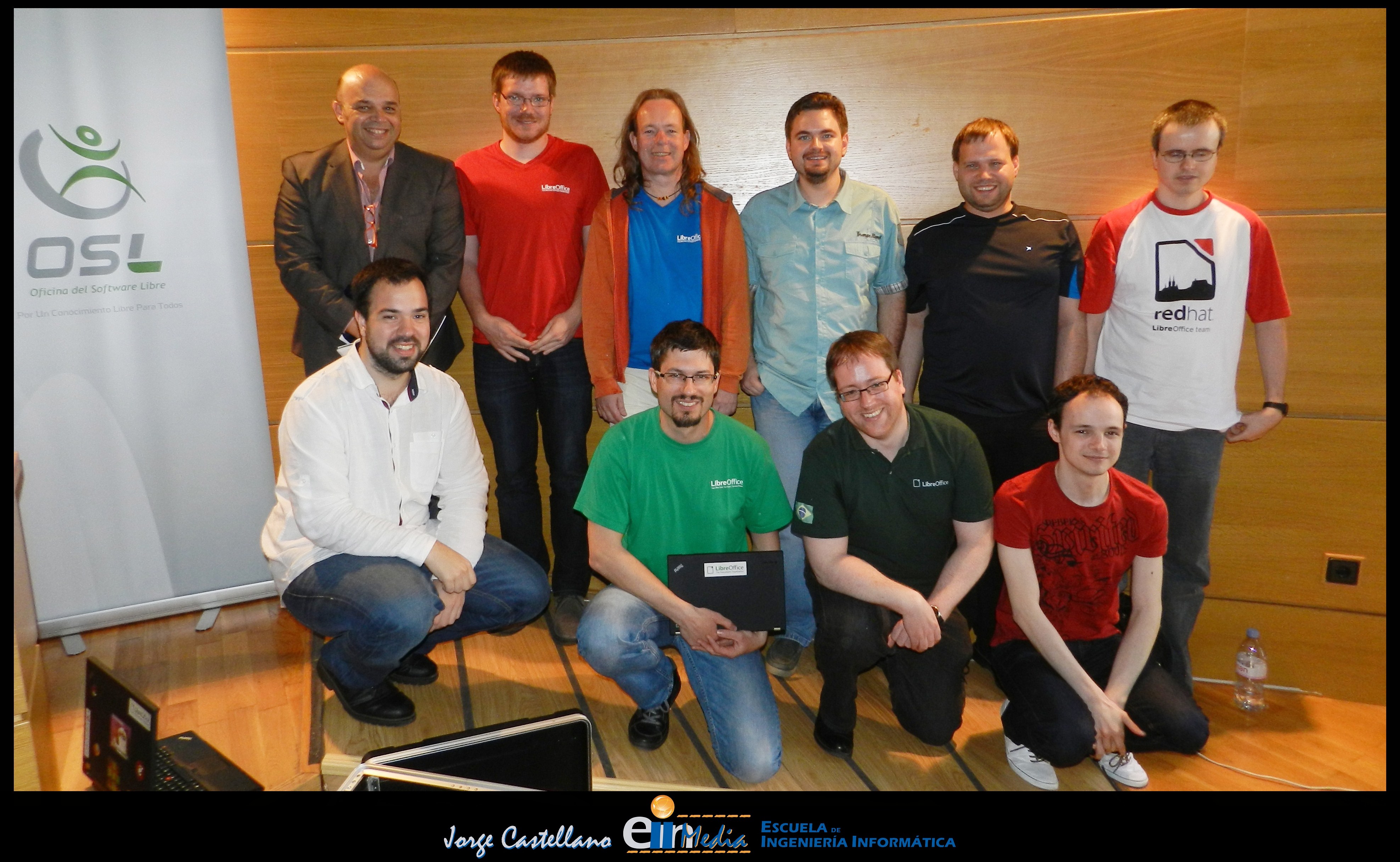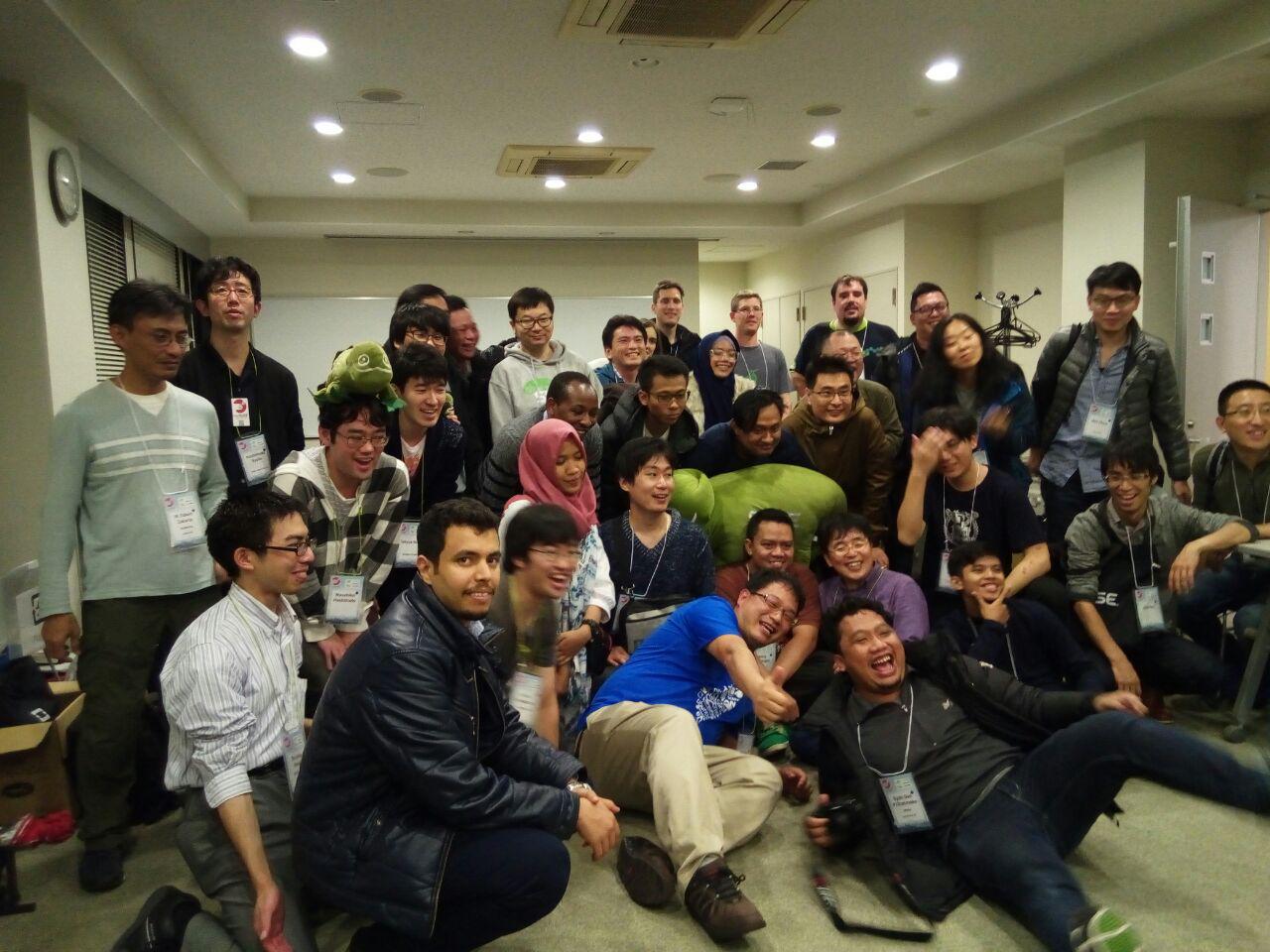
LibreOffice German community meeting, 23 – 25 June 2017

LibreOffice and Germany have a strong connection. StarOffice, the proprietary office suite that eventually became OpenOffice.org (and now LibreOffice) came to life in north Germany in the 1980s. Over time, more and more developers got involved, and when the suite became open source a thriving local community was established.

This continues today, and many German-speaking LibreOffice users, developers and supporters keep in touch on the mailing lists. But face-to-face meetings are important as well, so every year the German community meets up to exchange ideas, discuss new features, and make plans for the future.

This year, we met in Berlin at Endocode AG, an employee-owned software engineering company that focuses on open source. Its office features a great view of Berlin’s skyline, and – most importantly – plenty of coffee and comfy chairs for meetings and discussions. (Here’s Endocode’s blog post about the event.)

We had 17 participants in the event, and Saturday started with an introduction round. Many familiar faces who’ve been active in LibreOffice and OpenOffice.org for years were present, but there were also some new participants who were eager to get involved and help out. After choosing some discussion topics for the day, we split up into small groups and worked on tackling some issues.

For instance, one group asked the question: how can we convert LibreOffice end users into project contributors? What are the barriers? We noted that the German user mailing list has over 520 subscribers – so maybe we can provide them with some “Easy Hacks” (like in the development project) to get involved. These could be: fixing bugs and typos on the website, making small translation improvements, updating documentation, and confirming bugs. It was noted that due to our existing infrastructure, some of these tasks require good knowledge of English, though.

Other groups looked at strengthening outreach (eg getting LibreOffice into schools) and how the different projects in LibreOffice (development, documentation, QA, marketing etc.) can work together more effectively.

In the afternoon, all participants got together for a wide-ranging discussion. We talked about many things: does LibreOffice need a vision for the future? Or a killer feature? How can we steer development of LibreOffice based on such a vision? And how can we make end users feel more involved?

One idea is to run a survey of end user needs, in the style of the Open Source Survey 2017. Not only would this show that the LibreOffice community listens carefully to end users, but it could also guide the project, showing which things we need to work on, and which ones are already in good shape. (German speakers can find more notes from the discussion on our pad.)

Of course, the meeting wasn’t just about discussions – it was a great opportunity to network as well, over food and drink. We would like to thank our kind hosts from Endocode, Lisa and Mirko, very much for making that meeting possible and offering their office space for the community – we enjoyed it very much and made new friends!

If you’re a German speaker and want to join our community, sign up to the discuss@de.libreoffice.org mailing list. We look forward to hearing from you!

LibreOffice Migration Workshop in Tirana

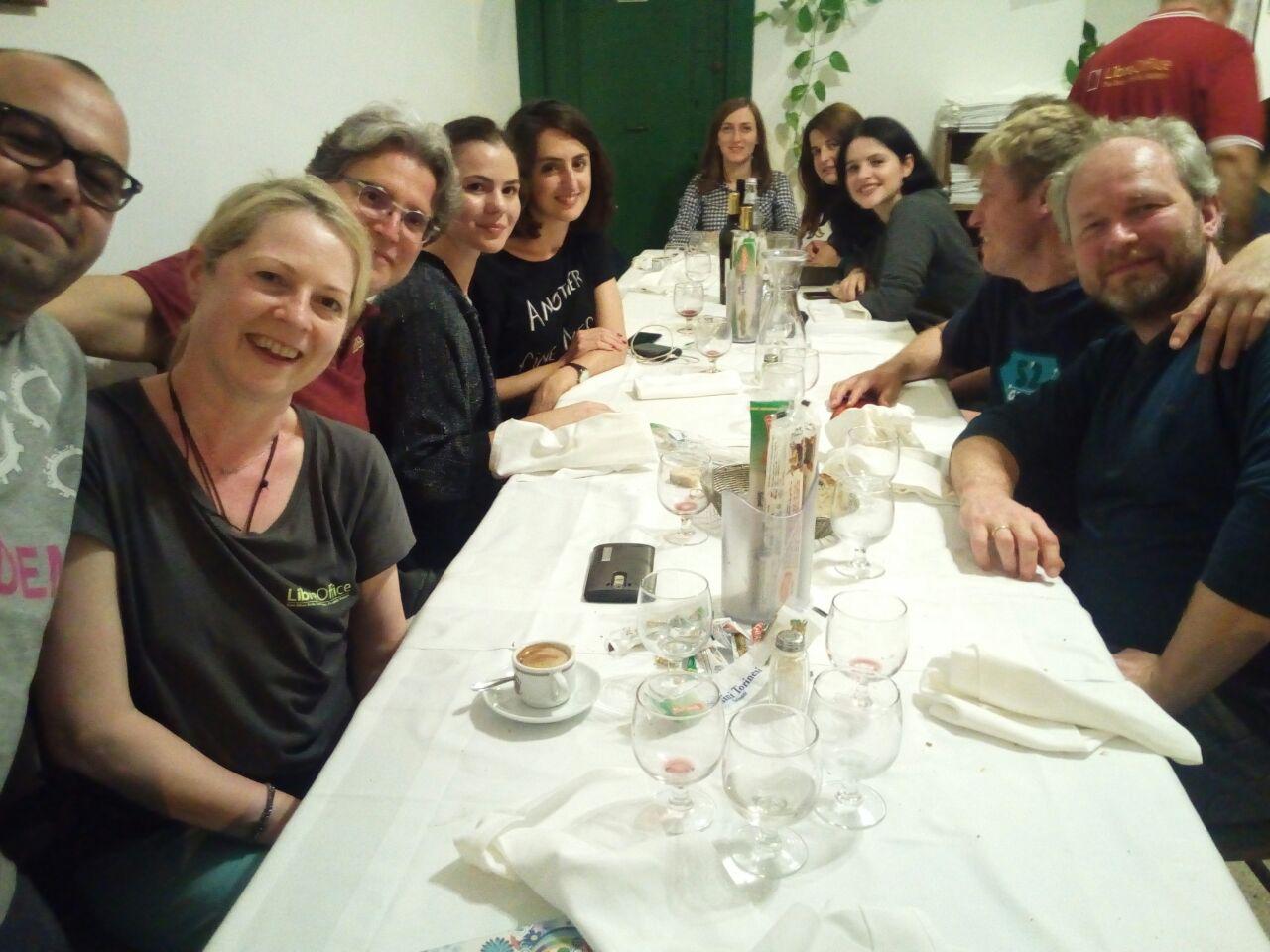
I have spent the last weekend in Tirana, the capital city of Albania, with a group of young members of the local LibreOffice/FLOSS community – Anxhelo Lushka, Augest Dalliu, Greta Doci, Jona Azizaj, Kristi Progri, Mariana Balla, Marinela Gogo, Redon Skikuli, Sidorela Uku, Silva Arapi and Suela Palushi – for a LibreOffice Migration Workshop.

As everyone can see from the picture, the LibreOffice/FLOSS community in Albania is different from any other open source community, as it has a large majority of women: in fact, the workshop was attended by seven women – Greta, Jona, Kristi, Mariana, Marinela, Sidorela, Silva and Suela (plus another two or three for a few hours) – and three men: Anxhelo, Augest and Redon.

We have planned the workshop at the end of OSCAL, the local FLOSS conference I have attended in mid-May, after a meeting with several representatives of the city of Tirana – organised by Redon Skikuli, and attended by Anxhelo Lushka, Jona Azizaj and me – during which the authorities have expressed their interest in LibreOffice.

During the two days of the workshop, we have covered a large number of topics, from the history of LibreOffice – including development, and activities focused on improving quality and reliability of the software such as Coverity Scan and OSS-Fuzz – to the Migration Protocol and the Training Protocol.

We have gone through every step of the Migration Protocol and we have focused on the different activities included in the analysis, as during the upcoming months the local team will support the city of Tirana for this stage of the project, to help understand the challenges of the migration to LibreOffice.

Last, but not least, I have presented – for the first time – the new slide deck explaining the advantages of ODF vs OOXML to end users, based on the extensive research on the subject I have done during the last six months.

All slide decks will be uploaded to TDF wiki during the next weeks (https://wiki.documentfoundation.org/Gallery_Presentations).


LibreOffice contributor interview: Daniel A. Rodriguez

Having concluded our video interviews from FOSDEM, we now return to our regular LibreOffice contributor interviews on the blog. Today we talk to Daniel A. Rodriguez, an Argentinian LibreOffice and Free Software supporter, who helps with marketing, translations and design.

Where do you live, and are you active on social media?

I live in Posadas, the capital of Misiones in the north-east of Argentina. Here’s my Google+ profile.

Do you work for a LibreOffice-related company or just contribute in your spare time?

I use my spare time to contribute.

How did you get involved with LibreOffice?

When the LibreOffice project started (as a continuation of OpenOffice.org) I was still quite a new GNU/Linux user, but wanted to return something to the global community which had helped me many times before. So, I subscribed to mailing lists and – I don’t remember exactly how – in January 2011 I started to translate the LibreOffice website into Spanish.

What areas of the project do you normally work on? Anything else you want to tackle?

I try to stay tuned to marketing, translating press releases, design blog posts and developer blog posts. I maintain several social media profiles as “Comunidad LibreOffice Argentina”:

All of these can, I think, help to attract volunteers to the project. But we must recognize that the Spanish community is fragmented into several geographical regions. And that’s why at the end of 2016, with help from two
other community member (Adolfo Jaime Barrientos and Carlos Parra Saldivar), we started a new blog at The Document Foundation. Now it has another well known LibreOffice user and advocate: Ricardo Berlasso. The goal is to get more people participating, now and then.

Sometimes I work on ideas that others can bring into reality – such as the airport advertisement for the launch of LibreOffice 4.0, or more recently the MUFFIN illustration for the blog post in December.

What was your initial experience of contributing to LibreOffice?

Being able to participate actively in an international community, with the push and motivation that revolves around LibreOffice and Free Software, was – and still is – indescribable.

What does LibreOffice need most right now?

I think that an option for automatic updates, like Firefox has for example, would be great.

Finally, what do you do when you’re not contributing to LibreOffice?

I work the whole day in a secondary school with a technical orientation. My obligations are to maintain the infrastructure on which different systems work: institutional management, Virtual Education Environment, proxy cache, DNS, among others.

Thanks Daniel! And thanks to everyone else involved in marketing and localisation of LibreOffice. If you’re reading this and want to join the friendly, worldwide LibreOffice community, get involved!

Month of LibreOffice, May 2017: The results!

So the Month of LibreOffice, May 2017 has come to a close. We’ve had awesome contributions all across the project, from code patches and bug report confirmations, through to translations and user support. Here’s how many stickers have been awarded:

Click the number for the full details. And then, if you see your name (or username) on that page, claim your sticker! Yes, you can get a cool sticker for your laptop or other devices. Simply email mike.saunders@documentfoundation.org with your name (or username) from the wiki page, along with your postal address, and we’ll send you a sticker in the next couple of weeks. It’ll look like this:

(Note that your postal address will only be used for posting the sticker to you, and not be stored afterwards or used otherwise.) Enjoy showing off your sticker, and thanks again for your contribution!

Behind the scenes

Meanwhile, let’s reflect on the past month. This graph shows how the number of awarded stickers grew over the 31 days of May:

While there was a big jump at the start as new names were added, it was good to see a steady stream of additional LibreOffice contributors over the month. There were no really “quiet” periods – we were monitoring code patches, bug report confirmations, translations, documentation contributions and user support (on Ask LibreOffice), and every day we added new people to the stickers list. This reflects on a healthy and lively project and community, so long may it continue!

And a final word: when you look at the “Contributing code patches” section of the stickers page, note that these are community contributions, on top of the daily work done by paid LibreOffice developers. It’s great to see so many people getting involved, exploring the source code and working on Easy Hacks.

We’ll be running another Month of LibreOffice later in the year – but you can get involved at any time. Join our friendly community, help make LibreOffice even better, and we look forward to your contributions!

Month of LibreOffice, May 2017: The final week

There’s one more week to go in the Month of LibreOffice for May 2017 – so you still have a chance to get a snazzy printed sticker for your laptop or desktop PC! Here’s how many stickers have been awarded so far:

Click the number to see how the contributions are spread across projects in the community. Want to get a sticker yourself? Read on! Just by helping other users on Ask LibreOffice, or confirming a bug report, you can make LibreOffice better and get one of these…

How to get a sticker

There are many ways you can help the LibreOffice project and claim a sticker:

  • Answer questions from users: Over on Ask LibreOffice there are many users looking for help with the suite. We’re keeping an eye on that site so if you give someone useful advice, you can claim a shiny sticker.
  • Help to confirm bugs: go to our Bugzilla page and look for new bugs. If you can recreate one, add a comment like “CONFIRMED on Windows 10 and LibreOffice 5.3.2”. (Make sure you’re using the latest version of LibreOffice.)
  • Translate the interface: LibreOffice is available in a wide range of languages, but its interface translations need to be kept up-to-date. Or maybe you want to translate the suite to a whole new language? Get involved here.
  • Write documentation: Another way to earn a badge is to help the LibreOffice documentation team. Whether you want to update the online help or add chapters to the handbooks, here’s where to start.
  • Contribute code: The codebase is big, but there are lots of places to get involved with small jobs. See our Developers page on the website and this page on the wiki to get started. Once you’ve submitted a patch, if it gets merged we’ll send you a sticker!
  • Spread the word: Tell everyone about LibreOffice on Twitter! Just say why you love it or what you’re using it for, add the #libreoffice hashtag, and at the end of the month you can claim a sticker. (We have a maximum of 100 stickers for this category, in case the whole internet starts tweeting!)

Don’t miss out! On June 1st we’ll post the results, and then start sending out the stickers…

Month of LibreOffice, May 2017: Printed stickers are here!

We’re 17 days into the Month of LibreOffice, May 2017 – and we’ve just gone over the 200 stickers mark. Yes, that’s 200 community members who’ve helped out with code, QA, translations, documentation, user support and marketing – and each one will receive a cool sticker for their laptops and other kit. Thanks everyone for your help!

Also, the printed stickers arrived at The Document Foundation today:

There are still two more weeks of the Month of LibreOffice to go – so don’t miss out on a sticker! Read on to find out how you can help the project (and millions of LibreOffice users around the world), and claim a sticker for yourself:

How to get a sticker

There are many ways you can help the LibreOffice project and claim a sticker:

  • Help to confirm bugs: go to our Bugzilla page and look for new bugs. If you can recreate one, add a comment like “CONFIRMED on Windows 10 and LibreOffice 5.3.2”. (Make sure you’re using the latest version of LibreOffice.)
  • Contribute code: The codebase is big, but there are lots of places to get involved with small jobs. See our Developers page on the website and this page on the wiki to get started. Once you’ve submitted a patch, if it gets merged we’ll send you a sticker!
  • Translate the interface: LibreOffice is available in a wide range of languages, but its interface translations need to be kept up-to-date. Or maybe you want to translate the suite to a whole new language? Get involved here.
  • Write documentation: Another way to earn a badge is to help the LibreOffice documentation team. Whether you want to update the online help or add chapters to the handbooks, here’s where to start.
  • Answer questions from users: Over on Ask LibreOffice there are many users looking for help with the suite. We’re keeping an eye on that site so if you give someone useful advice, you can claim a shiny sticker.
  • Spread the word: Tell everyone about LibreOffice on Twitter! Just say why you love it or what you’re using it for, add the #libreoffice hashtag, and at the end of the month you can claim a sticker. (We have a maximum of 100 stickers for this category, in case the whole internet starts tweeting!)
The Document Foundation All Rights Reserved 2025
Proudly powered by WordPress | Theme: Refined Magazine Pro by Candid Themes.