LibreOffice at KDE’s Akademy meetup in Almeria

Collaboration is essential within free and open source software projects – but it’s also important between projects as well. For instance, many LibreOffice users and contributors run it on the GNU/Linux operating system, with KDE as the desktop environment. With this in mind, members of the LibreOffice community attended Akademy, the yearly summit of KDE developers, users and supporters. It was held this year in Almeria, Spain.

Gabriele Ponzo from LibreItalia, Teodor Mircea Ionita (TDF’s new Development Mentor) and Xisco Fauli (QA engineer) set up a stand for two days of the event. They answered questions from LibreOffice users, and handed out stickers and promotional flyers:

They were assisted by Franklin Weng and Jeff Huang from the Taiwanese LibreOffice community. Franklin gave two presentations:

He also hosted a Birds of a Feather (BoF) session entitled “Migrating FOSS and KDE – Does KDE have chances?”, while Jeff gave a talk about the challenges faced by translation teams. Gabriele and Xisco ran BoF sessions on the value of becoming a TDF member, and they also discussed the newly-released LibreOffice 5.4.

Teodor summarised the event with: “Being somewhat new to the LibreOffice project, this has been a very lucrative opportunity to learn a lot regarding the community and how it works, meet members in person and get a bit more acquainted on a personal human level. Oh, we also had lots of fun too!”

So that was Akademy – but don’t forget that the LibreOffice Conference in Rome is coming up too, in early October. Register now!

TDF Dashboard: an open window on LibreOffice development

Berlin, August 2nd, 2017 – Effective immediately, The Document Foundation offers a transparent overview of LibreOffice development with the announcement of a Dashboard, available at http://dashboard.documentfoundation.org, which provides a visual representation of the activity on the source code.

LibreOffice Dashboard: activities during the last 30 days

Developed by Bitergia, the Dashboard is based on information retrieved from publicly available data sources, such as Git, Gerrit and Bugzilla repositories, or mailing lists archives. All tools used to retrieve, store, analyse and visualize data from repositories are based on free, open source software. The key component is GrimoireLab, a software development analytics toolset.

“The Dashboard shows the key information about LibreOffice development in several panels, each one including different visualizations, with many actionable elements”, says Bjoern Michaelsen, one of TDF BoD members who has managed the project. “When the user interacts with the actionable elements, the information in the whole panel (or in the whole dashboard) are reconfigured, by filtering in or out some data. Following our transparency guidelines, we are therefore offering an open window on LibreOffice development”.

“Bitergia was founded by a group of Spanish FLOSS enthusiasts, with a large experience in development, research and consultancy”, says company co-founder Jesus Gonzalez-Barahona. “We are very happy to see our software deployed by The Document Foundation for LibreOffice, one of the largest and most successful free software projects”.

Other key software used to produce the Dashboard are Python (to develop most of the retrieval and analytics programs), ElasticSearch (for data storage) and Kibitter, a fork of Kibana contributed back upstream (for data visualization).

Report from the Indonesian Community

I am Taufik Hidayat, Founder and Coordinator of BLOI (Belajar LibreOffice Indonesia) Community in Telegram. The BLOI group was created on March 16th, 2016, as GBLOI (Grup Belajar LibreOffice Indonesia). The acronym was then simplified in BLOI (Belajar LibreOffice Indonesia). The objective of the group is to help Indonesians to learn and use LibreOffice.

We announced the first book about LibreOffice in the same month, on April 21st, 2016. The original title was “Mari Mengenal Aplikasi LibreOffice”, then changed into “Mari Mengenal LibreOffice”. The book has 42 pages and has been written by 6 people (http://libreoffice.puskomedia.web.id/kontributor/). Two months after the release of the first book, we started our second project: “Lebih Dekat Dengan LibreOffice Writer”, to focus on Writer. This book has 225 pages and has been written by 15 people (http://libreoffice.puskomedia.web.id/kontributor/). The second book was completed in 3 months and was released on October 30, 2016, and has been reprinted three times since then. Both books can be downloaded from http://libreoffice.puskomedia.web.id/buku/.

We decided to print our second book to allow everyone to get a “phisical” copy, in addition to the digital one (e-book). But even after the publication of the second book, I still had the feeling that those two books were not enough. So, we decided to publish an improved version, which is called “Lebih Dekat dengan LibreOffice Writer Edisi Revisi 2” and contains many changes over the previous one (changes are listed here: http://libreoffice.puskomedia.web.id/2017/07/12/pesan-buku-lebih-dekat-dengan-libreoffice-writer-edisi-revisi-2/#more-46). We published only the printed version of this book, which we sell through the website to raise the money to pay contributors and cover the costs. All of our books are published under the CC BY-SA 3.0 license.

On July 12th, 2017, we have released the official website of the BLOI Community. Before, we were using my own blog at http://ubupediaindonesia.wordpress.com. The BLOI Community website has many contributors, which are listed on the same page: http://libreoffice.puskomedia.web.id/kontributor/. They contribute to the book, to the domain (website, subdomain and server), to the mirror, and to the different administrative tasks, including the delivery of orders.

Today, the BLOI Community has specific growth plans: collecting donations and member fees, organising online courses, creating jobs and providing directions for the community. We have announced jobs for people who want to help us share Free Software concepts in Indonesia (http://libreoffice.puskomedia.web.id/lowongan/). We are trying to make our members prosperous. For next year, we are planning either a seminar or a workshop to gather the community face-to-face, and educate people about free software and especially LibreOffice. For the future, we are also thinking about a 3rd collaboration book project: “Lebih Dekat dengan LibreOffice Calc”.We hope that our community becomes useful either for LibreOffice newbie or our country Indonesia. So we can share the spirit of free software to

We hope that our community becomes useful both for the LibreOffice newbie and our country Indonesia so that we can share the free software ethos to the whole country.

Month of LibreOffice: Stickers in action!

Back in May we had a Month of LibreOffice, celebrating contributions all across the project, from code and documentation through to translations and bug reports. 304 members of our worldwide community won stickers, and we’ve received some photos of them in action – so here they are!

The first is from Gabriele Ponzo, who is in The Document Foundation’s Membership Committee and already has plenty of LibreOffice stickers:

Next up is Osoitz E who helps to translate and localise LibreOffice into Basque:

Franklin Weng promotes LibreOffice and the Open Document Format in Taiwan, and sent us this photo:

Finally, Buovjaga from our QA community has a novel use for his sticker:

We’ll be repeating the Month of LibreOffice in November, so you’ll have another chance to grab a sticker – but you can get involved with our friendly community at any time. Join us and help make LibreOffice even better for millions of people around the world!

Day against DRM

Sunday, July 9, is the Day against DRM. The Document Foundation supports the global campaign led by FSF, to raise the awareness of issues related to the so called Digital Rights Management software. As any other proprietary technology, DRM is killing user freedom of choice, and should always be avoided.

LibreOffice users are fighting a similar battle when they are promoting the ODF standard file format against the OOXML pseudo-standard, and they should be amongst the first to support the Day against DRM on social media or by educating their contacts.

This is FSF campaign website: https://defectivebydesign.org/2017-dayagainstdrm-call-to-action.

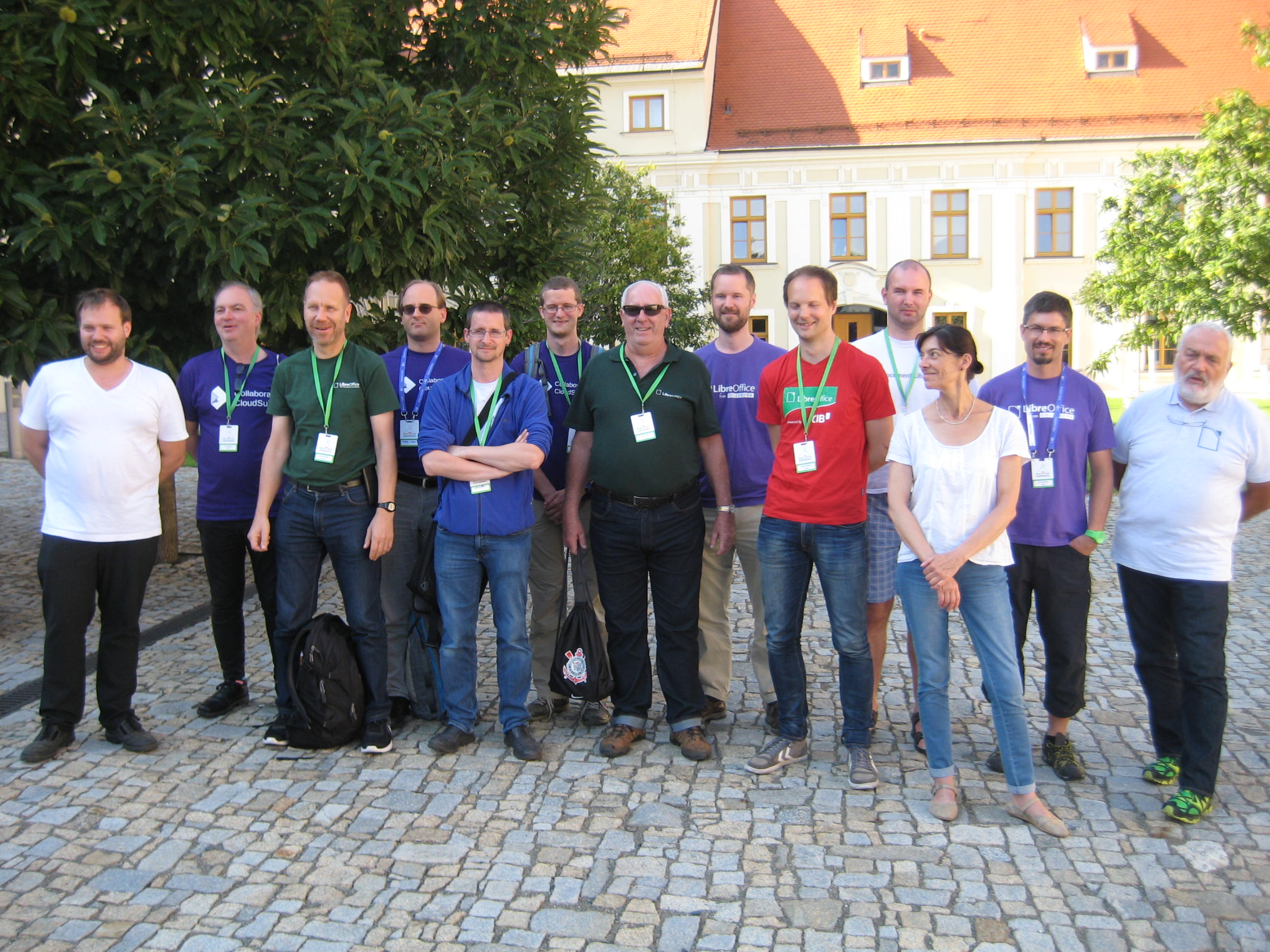
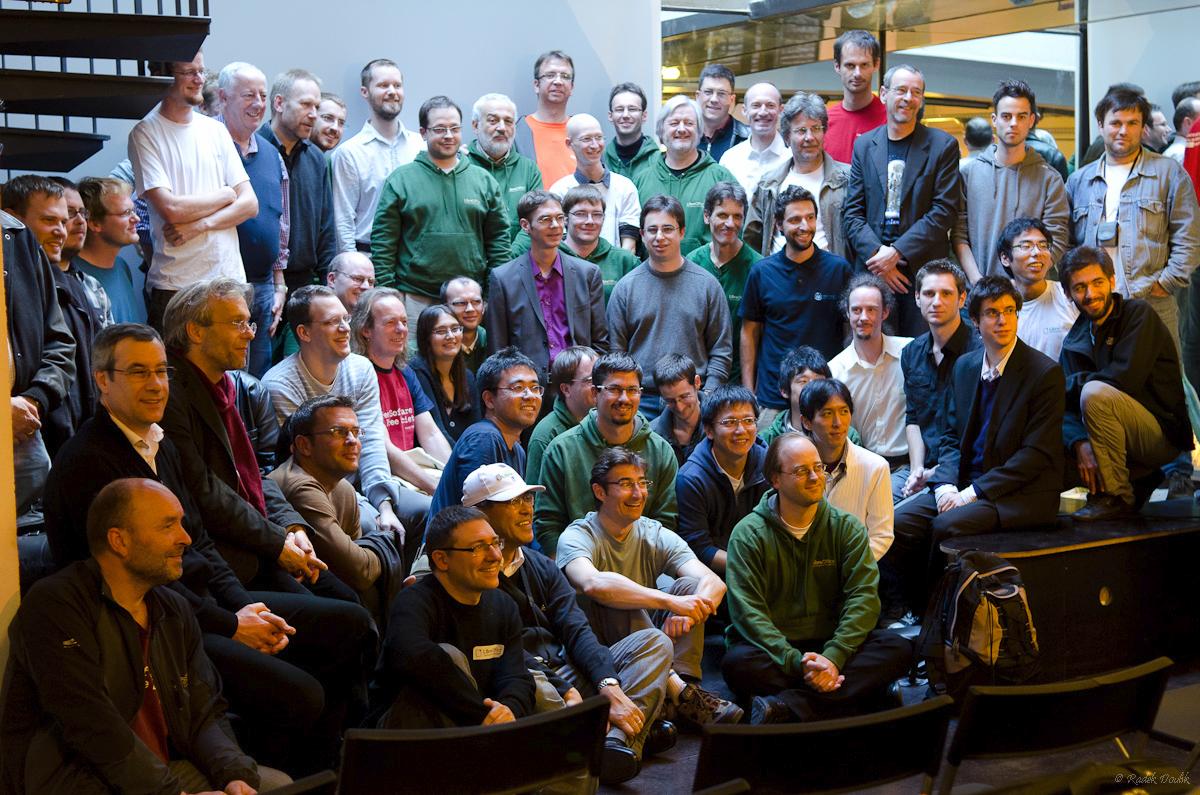
LibreOffice German community meeting, 23 – 25 June 2017

LibreOffice and Germany have a strong connection. StarOffice, the proprietary office suite that eventually became OpenOffice.org (and now LibreOffice) came to life in north Germany in the 1980s. Over time, more and more developers got involved, and when the suite became open source a thriving local community was established.

This continues today, and many German-speaking LibreOffice users, developers and supporters keep in touch on the mailing lists. But face-to-face meetings are important as well, so every year the German community meets up to exchange ideas, discuss new features, and make plans for the future.

This year, we met in Berlin at Endocode AG, an employee-owned software engineering company that focuses on open source. Its office features a great view of Berlin’s skyline, and – most importantly – plenty of coffee and comfy chairs for meetings and discussions. (Here’s Endocode’s blog post about the event.)

We had 17 participants in the event, and Saturday started with an introduction round. Many familiar faces who’ve been active in LibreOffice and OpenOffice.org for years were present, but there were also some new participants who were eager to get involved and help out. After choosing some discussion topics for the day, we split up into small groups and worked on tackling some issues.

For instance, one group asked the question: how can we convert LibreOffice end users into project contributors? What are the barriers? We noted that the German user mailing list has over 520 subscribers – so maybe we can provide them with some “Easy Hacks” (like in the development project) to get involved. These could be: fixing bugs and typos on the website, making small translation improvements, updating documentation, and confirming bugs. It was noted that due to our existing infrastructure, some of these tasks require good knowledge of English, though.

Other groups looked at strengthening outreach (eg getting LibreOffice into schools) and how the different projects in LibreOffice (development, documentation, QA, marketing etc.) can work together more effectively.

In the afternoon, all participants got together for a wide-ranging discussion. We talked about many things: does LibreOffice need a vision for the future? Or a killer feature? How can we steer development of LibreOffice based on such a vision? And how can we make end users feel more involved?

One idea is to run a survey of end user needs, in the style of the Open Source Survey 2017. Not only would this show that the LibreOffice community listens carefully to end users, but it could also guide the project, showing which things we need to work on, and which ones are already in good shape. (German speakers can find more notes from the discussion on our pad.)

Of course, the meeting wasn’t just about discussions – it was a great opportunity to network as well, over food and drink. We would like to thank our kind hosts from Endocode, Lisa and Mirko, very much for making that meeting possible and offering their office space for the community – we enjoyed it very much and made new friends!

If you’re a German speaker and want to join our community, sign up to the discuss@de.libreoffice.org mailing list. We look forward to hearing from you!