Join the LibreOffice Team as a Paid Developer focusing on RTL/CTL/CJK languages, full-time, remote (m/f/d)

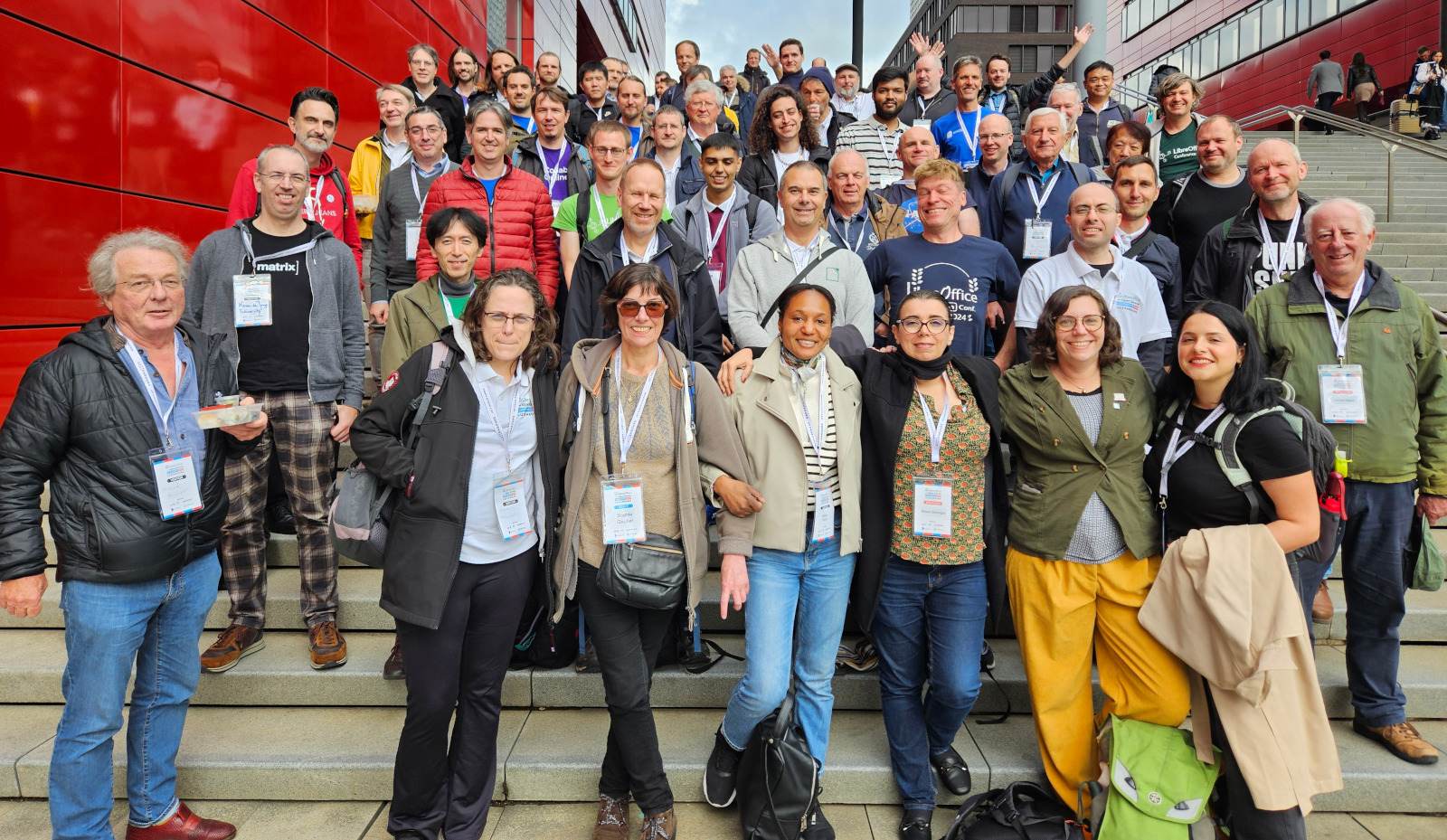
The Document Foundation's team

Love LibreOffice development? Want to turn your passion into a paid job? We are The Document Foundation (TDF), the non-profit entity behind LibreOffice. We’re passionate about free software, the open source culture and about bringing new companies and people with fresh ideas into our community.

To improve language support features in LibreOffice, the office productivity suite for over 200 million users around the globe, we’re searching for a developer (m/f/d) to start work (from home) as soon as possible. This is what you’ll do:

  • Work on the LibreOffice codebase (mostly C++)
  • Focus (initially) on right-to-left (RTL), complex text layout (CTL) and CJK (Chinese, Japanese, and Korean) languages in the LibreOffice code
  • Fix bugs, implement new features, and improve language support in LibreOffice

What we want from you:

  • Very good C++ development skills
  • Proven experience working on either RTL/CTL and/or CJK topics, or both
  • Good understanding of Unicode and internationalization (i18n)
  • Good understanding of text rendering and font issues
  • Proven contributions to FOSS projects (show us your repos!)
  • Good team-playing skills
  • Experience with LibreOffice development is a plus

Speaking and writing English is a mandatory requirement. Another language (for example: German, Spanish or Arabic) is a bonus.

A previously established relationship within the developer community, as well as with other teams such as QA is a plus, but it is not mandatory at the start and can be achieved during the work itself.

As always, TDF will give some preference to individuals who have previously shown a commitment to TDF, including but not limited to members of TDF. Not being a member does not exclude any applicants from consideration.

Join us!

All jobs at The Document Foundation are remote jobs, where you can work from your home office or a co-working space. The work time during the day is flexible, apart from a few fixed meetings. The role is offered as full-time (ideally 40 hours per week). Candidates that are resident in (or willing to relocate to) Germany will be employed directly by TDF. Otherwise, external payroll services will be used if available in the candidate’s country of residence.

Are you interested? Get in touch! We aim to schedule the first interview within two weeks of your application. You can also approach us any time for an informal chat, to learn about the role or in case of questions.

TDF welcomes applications from all suitably qualified persons regardless of their race, sex, gender, disability, religion/belief, sexual orientation or age. Don’t be afraid to be different, and stay true to yourself. We like you that way! 😊

We’re looking forward to receiving your application, including information about you (your resume), when you are available for the job, and of course your financial expectations. Pointing to public repositories with your code is very helpful. Please send us an e-mail to developers@documentfoundation.org no later than January 8, 2024. If you haven’t received feedback by February 9, 2024, your application could not be considered.

Also note: we only accept applications from the applicant, and not from any intermediary. We do not accept agency resumes. Please do not forward resumes to any recruiting alias or employee.

Half-way point in the Month of LibreOffice, November 2023!

Month of LibreOffice banner

Love LibreOffice? Help the community that makes it, learn new things, and get a sticker pack for your contributions! (Plus the chance to win some bonus extra merchandise, including mugs, T-shirts and hoodies…)

We’re two weeks into the Month of LibreOffice, November 2023. And so far, 211 people have already taken part and can claim their sticker packs at the end of the month. If you don’t see your name/username on that page yet, and haven’t taken part, here are some ways to join in:

How to take part – be a…

  • Handy Helper, answering questions from users on Ask LibreOffice. We’re keeping an eye on that site so if you give someone useful advice, you can claim your shiny stickers.
  • First Responder, helping to confirm new bug reports: Go to our Bugzilla page and look for new bugs. If you can recreate one, add a comment like “CONFIRMED on Windows 11 and LibreOffice 7.6.2”.
  • Drum Beater, spreading the word: Tell everyone about LibreOffice on Mastodon or Twitter! Just say why you love it or what you’re using it for, add the #libreoffice hashtag, and at the end of the month you can claim your stickers.
  • Globetrotter, translating the user interface: LibreOffice is available in a wide range of languages, but its interface translations need to be kept up-to-date. Or maybe you want to translate the suite to a whole new language? Get involved here.
  • Docs Doctor, writing documentation: Whether you want to update the online help or add chapters to the handbooks, here’s where to start.

Keep an eye on this blog and our Mastodon and Twitter accounts during November for more updates! 😊

Community Member Monday: Jean-Francois Nifenecker

Screenshot of TheCAT LibreOffice extension

Today we’re talking to Jean-Francois Nifenecker, who’s working on LibreOffice extensions and macros, and more…

Tell us a bit about yourself!

I’m 68 years old, freshly retired from a job as a French civil servant (local IT department). I’m married and have three children and nine grandchildren.

I’ve been living in Bordeaux for 35 years now, and I like going to the movie theater, walking, reading and… computing 😄

What are you working on in the LibreOffice project right now?

I’ve been a long time user of OpenOffice.org (since v.1.1.1 in 2005), and then naturally, LibreOffice. Since the beginning, I’ve wanted to learn about the tools I’m using and document them. This is why I’ve written a batch of user docs for OpenOffice.org (14 docs, still available on their web pages).

The user side of the documentation is still something I’m thinking of. But, in parallel, I’ve created a (very) small business to help a friend of mine, regarding migration and training from other office suites to LibreOffice. And then, as I have a programming background (mainly in Pascal and Object Pascal), I have been working on the macro side. This is a part of my business since migrating macros from Excel to Calc can be a chore. Naturally, I’ve spent “some” time into extensions creation (like the one pictured above).

I’ve written a set of reference cards (in French and in English) about BASIC macros programming, that Olivier was kind enough to publish on the extensions site 😄

LibreOffice reference card header

Thus, programming macros and extensions is my main current activity in LibreOffice.
I’ve written a set of “articles” in English for my own use until now, which I grouped under “The LibreOffice Macros Corner” title, with the aim to publish them sometime, when I’ve got time/desire enough to set a website (which is not the case).

Also I’ve got a book (currently in French) on my plate about extension creation. It is a long time project, started two-to-three years ago, which still requires much work. I think such a resource is missing and might help programmers to go one step further.

Why did you choose to join the LibreOffice project, and how was the experience?

I actually saw the project creation after Oracle took over Sun but had not much time to participate when I was still active (I guess I’m still active, but well…).

Anything else you plan to do in the future? What does LibreOffice really need?

My only “skill” is with documentation and macros programming, so I’d continue on this route.

As a heavy user of Writer (among others 😉), I’m missing a few features, but it seems that there aren’t enough resources to satisfy my demands: pages styles inheritance, real table styles instead of a fake one which is more annoying than helping are my main gripes 😄
Unfortunately I can’t help the developers here 🙁

Thanks a lot to Jean-Francois Nifenecker for his contributions and support! And if anyone else wants the features he mentioned, get involved and give us a hand, or consider funding a developer. Then everyone benefits!

Video: What is The Document Foundation, the non-profit behind LibreOffice?

At our recent LibreOffice Conference 2023 in Bucharest, The Document Foundation’s Membership Committee gave a talk about the foundation’s work, its governance, and why it’s important to become a member. Here’s a recording (or if you’d prefer to view on PeerTube, visit this link):

Please confirm that you want to play a YouTube video. By accepting, you will be accessing content from YouTube, a service provided by an external third party.

YouTube privacy policy

If you accept this notice, your choice will be saved and the page will refresh.

146 sticker packs already awarded in the Month of LibreOffice, November 2023

Month of LibreOffice banner

Last week we started the Month of LibreOffice, rewarding contributors in our projects and communities! So, how are we looking after the first seven days?

Well, 146 people have already taken part and can claim their sticker packs at the end of the month. (And possibly some bonus merchandise too!) But if you don’t see your name/username on that page yet, and haven’t taken part, here’s how you can join in:

How to take part

There are many ways you can help out – and as mentioned, you don’t need to be a developer. For instance, you can be a…

  • Handy Helper, answering questions from users on Ask LibreOffice. We’re keeping an eye on that site so if you give someone useful advice, you can claim your shiny stickers.
  • First Responder, helping to confirm new bug reports: Go to our Bugzilla page and look for new bugs. If you can recreate one, add a comment like “CONFIRMED on Windows 11 and LibreOffice 7.6.2”.
  • Drum Beater, spreading the word: Tell everyone about LibreOffice on Mastodon or Twitter! Just say why you love it or what you’re using it for, add the #libreoffice hashtag, and at the end of the month you can claim your stickers.
  • Globetrotter, translating the user interface: LibreOffice is available in a wide range of languages, but its interface translations need to be kept up-to-date. Or maybe you want to translate the suite to a whole new language? Get involved here.
  • Docs Doctor, writing documentation: Whether you want to update the online help or add chapters to the handbooks, here’s where to start.

Keep an eye on this blog and our Mastodon and Twitter accounts during November for more updates!