Berlin, 26 September 2023 – The Document Foundation is releasing LibreOffice 7.6.2 Community and LibreOffice 7.5.7 Community ahead of schedule to address a security issue known as CVE 2023-4863, which originates in a widely used code library known as libwebp, created by Google more than a decade ago to render the then-new WebP graphics format [1].
In addition to the CVE, the two new versions fix other bugs and regressions and are available immediately from www.libreoffice.org/download [2]. All users of LibreOffice are encouraged to update their current version as soon as possible.
The minimum requirements for proprietary operating systems are Microsoft Windows 7 SP1 and Apple MacOS 10.15.
For enterprise-class deployments, TDF strongly recommends the LibreOffice Enterprise family of applications from ecosystem partners – for desktop, mobile and cloud – with a wide range of dedicated value-added features and other benefits such as SLAs: www.libreoffice.org/download/libreoffice-in-business/.
The Document Foundation does not provide technical support to users, although it is available from volunteers on user mailing lists and the Ask LibreOffice website: ask.libreoffice.org.
LibreOffice users, free software advocates and community members can support the Document Foundation by making a donation at www.libreoffice.org/donate.
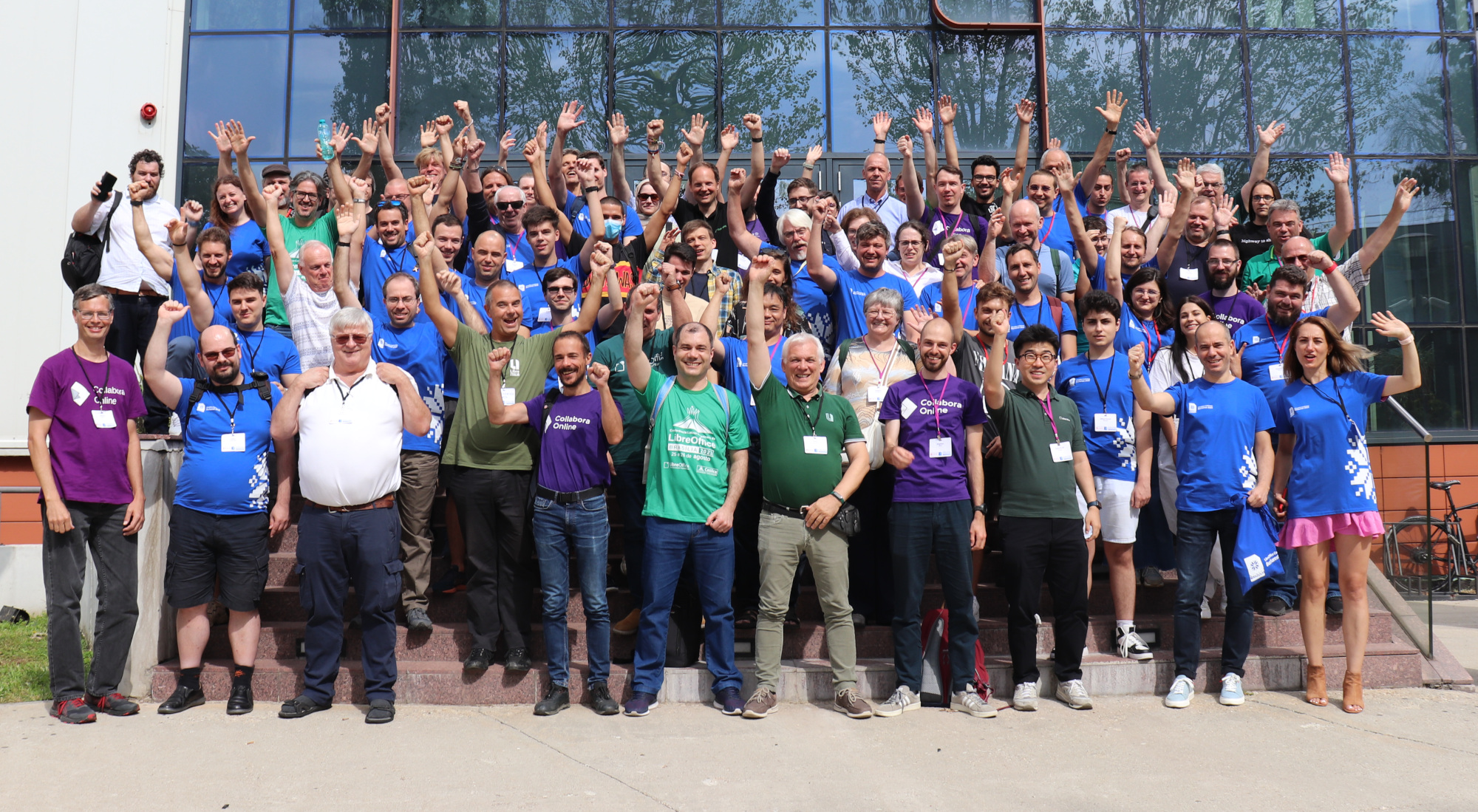
LibreOffice Conference 2023 will be hosted by the Universitatea Națională de Știință și Tehnologie Politehnica București, Facultatea de Automatică și Calculatoare (National University of Science and Technology, Polytechnic University of Bucharest, Faculty of Automation and Computer Science) at the PRECIS building from Wednesday 20 September to Saturday 23 Septembe. On Wednesday, the community will gather for the usual community meeting to discuss localisation and marketing activities at the local level. The conference will open on Thursday morning and continue with talks and workshops until Saturday lunchtime (schedule). Alongside this, there will be a technical workshop focusing on LibreOffice development.
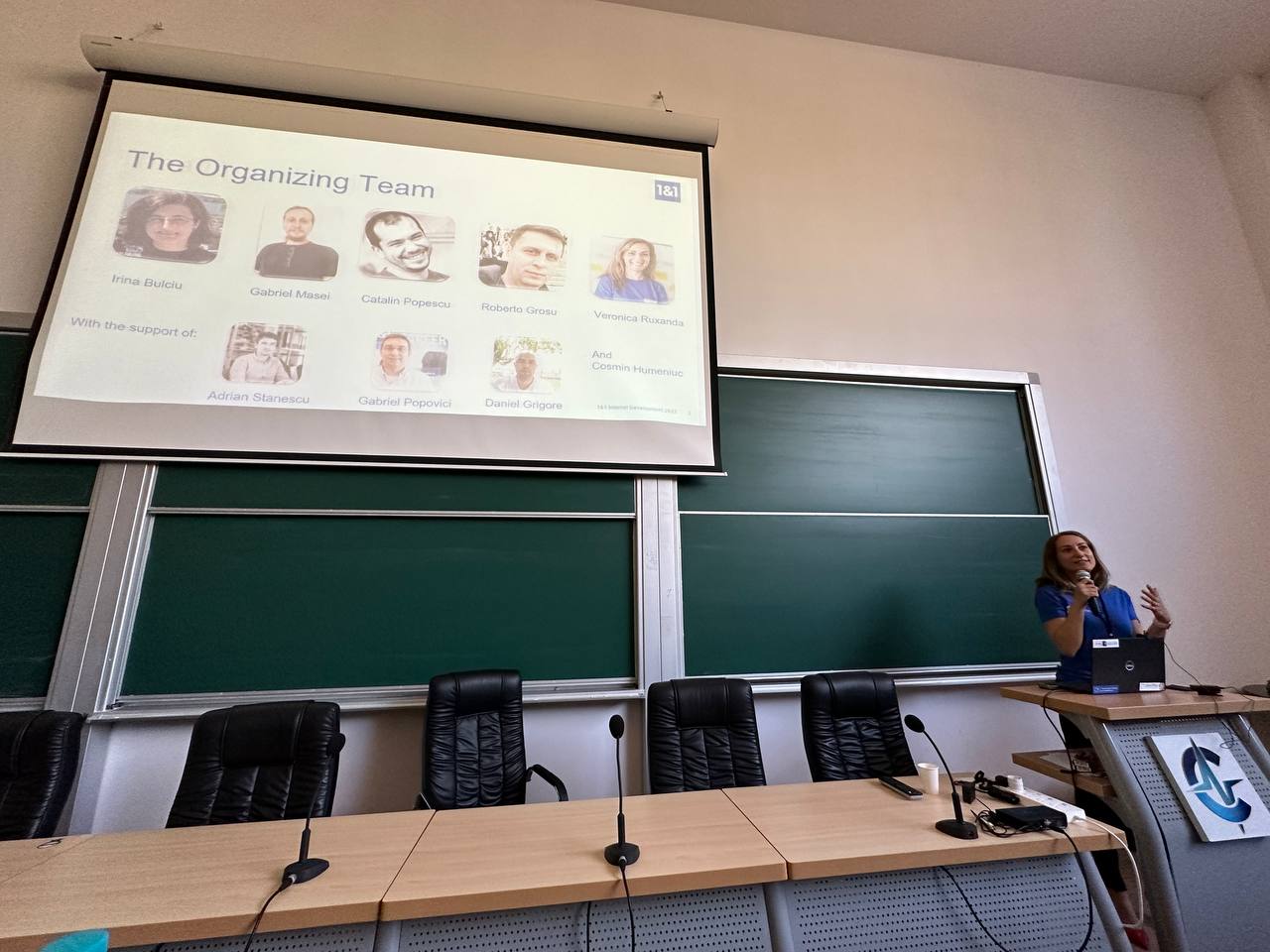
The conference is sponsored by Collabora Office and Allotropia (main sponsors), dvloper.io and 1&1, with a significant contribution from The Document Foundation, and the technical support of IT Genetics. The event has been organized by a local team of volunteers, backed by 1&1 and supported by the team at The Document Foundation with the help of local NGOs Rosedu and Tech Lounge. More information on the conference website.
This year, LibreOffice was once again a mentoring organization in the Google Summer of Code (GSoC), a global program focused on bringing more developers into free and open source software development. Five projects were finished successfully. Contributors and mentors enjoyed the time, and here we present some of the achievements, which should make their way into LibreOffice 24.2 in early February 2024!
LibreOffice can encrypt documents using OpenPGP public key cryptography by making use of external applications such as gpg4win, GPGTools and gnupg. Thanks to Ahmed’s work, it is now easier to manage and search keys and faster to navigate large keyrings.
Selecting tests to run on gerrit patches based on machine learning by Baole Fang
Mentors: Thorsten Behrens (allotropia), Stéphane Guillou (TDF), Christian Lohmaier (TDF)
This project was inspired by Mozilla’s work on Firefox’s continuous integration. There is now a system in place that makes predictions on the test failure possibility of submitted code changes and decides the most efficient way to build the changes. As this kind of machinery is very new to everyone, we expect many tweaks to follow.
APNG is short for Animated Portable Network Graphics. It is not an official extension to PNG, but nevertheless has broad support in web browsers these days. Thanks to Paris’s work, LibreOffice now fully supports this format.
Many thanks to all contributors who spent their summer time improving LibreOffice. You are awesome! And special thanks also to the mentors who always put so much love and energy into these tasks. That’s what makes LibreOffice rock.
Now we are looking forward to next year’s GSoC. If you are interested, why not prepare early? Learn more at out wiki page where some ideas are listed.
Participating in GSoC is a great way to build your skills, and show future employers what you’re capable of!
Berlin, September 14, 2023 – LibreOffice 7.6.1 Community, the first minor release of the 7.6 family of the volunteer-supported free office suite for desktop productivity, for Windows (Intel/AMD and ARM processors), macOS (Apple and Intel processors) and Linux is immediately available from www.libreoffice.org/download.
LibreOffice is the only open source office suite for personal productivity which can be compared feature-by-feature with the market leader. LibreOffice offers the highest level of compatibility in the office suite market segment, with native support for the Open Document Format (ODF) – beating proprietary formats for security and robustness – to superior support for MS Office files, along with filters for a large number of legacy document formats, to return ownership and control to users.
Based on the advanced features of the LibreOffice Technology platform for personal productivity on desktop, mobile and cloud, the LibreOffice 7.6 family provides a large number of improvements and new features targeted at users sharing documents with MS Office or migrating from MS Office. These users should check new releases of LibreOffice on a regular basis, as the progress is so fast, that each new version improves dramatically over the previous one.
LibreOffice 7.6 Community Highlights
GENERAL
Support for zoom gestures when using touchpads in the main view.
Support for document themes, and import and export of theme definitions for ODF and OOXML documents.
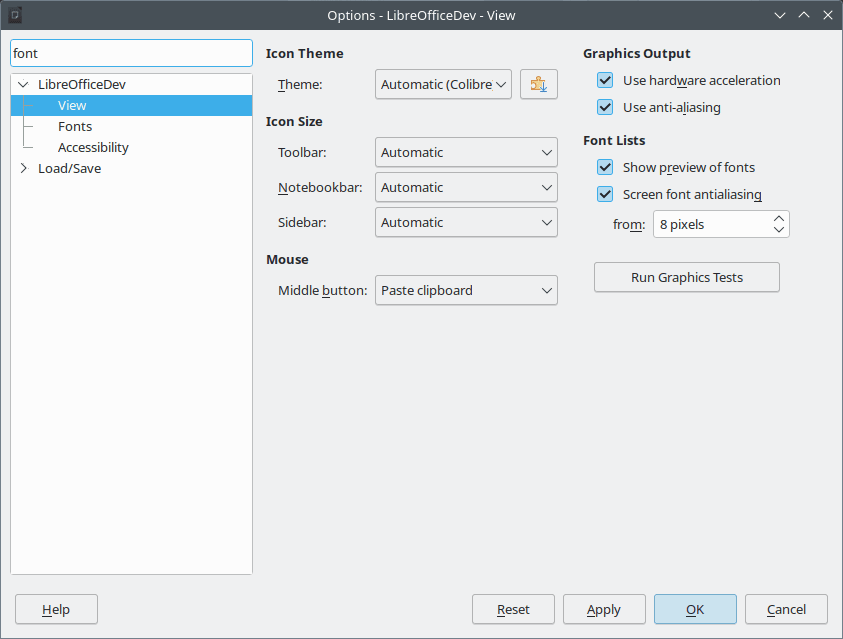
Many improvements to font handling, especially for right-to-left scripts, CJK and other Asian alphabets.
WRITER
New Page Number Wizard in the Insert menu, for easy one-step insertion of the page number in the header/footer.
The Paragraph Style dropdown in the Formatting toolbar shows a list of styles used in the document, rather than the full list of the available styles.
Tables of Figures can be generated more flexibly based on paragraph styles, and not only from categories or object names.
Bibliography entries can be edited directly from a bibliography table, and bibliography marks hyperlink by default to the matching row in a bibliography table.
Highlighting for used paragraph and character styles and direct formatting in text.
Phrase checking: multi-word dictionary items of Hunspell and custom dictionaries are now accepted.
CALC
Number format: “?” is now supported when exporting to ODF to represent an integer digit, replaced by blank if it is a non significant zero, and decimals for formats in seconds without truncation like [SS].00 are now accepted.
Spreadsheets copied to another document now retain a user-defined print range.
Solver settings are saved with documents, and page styles are exported even if they are not in use.
Support for drawing styles for shapes and comments, including a dedicated style for comments that makes it possible to customize the default look and text formatting of new comments.
New compact layout for pivot tables.
Autofilter support for sorting by colour. Filter/sort by color considers colours set by number format.
The Import Text dialog (as CSV file or as unformatted text) has a new option to not detect number in scientific notation (only if “Detect Special Numbers” is off).
IMPRESS & DRAW
New navigation panel for switching slides while viewing a presentation (option is enabled by flagging a checkbox in Slide Show Settings).
Objects can now be listed in front to back order in the Navigator, with the top-most object at the top of the list.
Support for free text annotations to PDFium import, plus support for ink, free text and polygon/polyline annotations in PDFium export.
Modified the auto-fitting text scaling algorithm to work in a way similar to MS Office. Text scaling now separates scaling for space (paragraph and line) and scaling fonts, where space scaling can be 100%, 90% and 80%, and font scaling is rounded to the nearest point size. Horizontal spacing (bullets, indents) is not scaled anymore.
Several improvements to font management for CJK and Arabic languages.
Please confirm that you want to play a YouTube video. By accepting, you will be accessing content from YouTube, a service provided by an external third party.
For enterprise-class deployments, TDF strongly recommends the LibreOffice Enterprise family of applications from ecosystem partners – for desktop, mobile and cloud – with a large number of dedicated value-added features and other benefits such as SLA (Service Level Agreements): www.libreoffice.org/download/libreoffice-in-business/.
Every line of code developed by ecosystem companies for their enterprise customers is shared with the community on the master code repository, and improves the LibreOffice Technology platform.
Products based on LibreOffice Technology are available for major desktop operating systems (Windows, macOS, Linux and ChromeOS), for mobile platforms (Android and iOS), and for the cloud.
Migrations to LibreOffice
The Document Foundation has developed a Migration Protocol to support enterprises moving from proprietary office suites to LibreOffice, which is based on the deployment of an LTS (long-term support) version from the LibreOffice Enterprise family, plus migration consultancy and training sourced from certified professionals who offer value-added solutions and services in line with proprietary offerings. Reference: www.libreoffice.org/get-help/professional-support/.
Indeed, LibreOffice – thanks to its mature codebase, rich feature set, strong support for open standards, excellent compatibility and LTS options from certified partners – is the ideal solution for businesses that want to regain control of their data, and free themselves from vendor lock-in.
Availability of LibreOffice 7.6.1 Community
LibreOffice 7.6.1 Community is available from www.libreoffice.org/download/. Minimum requirements for proprietary operating systems are Microsoft Windows 7 SP1 and Apple macOS 10.15. LibreOffice Technology-based products for Android and iOS are listed here: www.libreoffice.org/download/android-and-ios/.
For users who don’t need the latest features, and prefer a version that has undergone more testing and bug fixing, The Document Foundation maintains the LibreOffice 7.5 family, which includes some months of back-ported fixes. The current version is LibreOffice 7.5.6 Community.
The Document Foundation does not provide technical support for users, although they can get it from volunteers on user mailing lists and the Ask LibreOffice website: ask.libreoffice.org
LibreOffice users, free software advocates and community members can support The Document Foundation with a donation at www.libreoffice.org/donate.

 Berlin, 26 September 2023 – The Document Foundation is releasing LibreOffice 7.6.2 Community and LibreOffice 7.5.7 Community ahead of schedule to address a security issue known as CVE 2023-4863, which originates in a widely used code library known as libwebp, created by Google more than a decade ago to render the then-new WebP graphics format [1].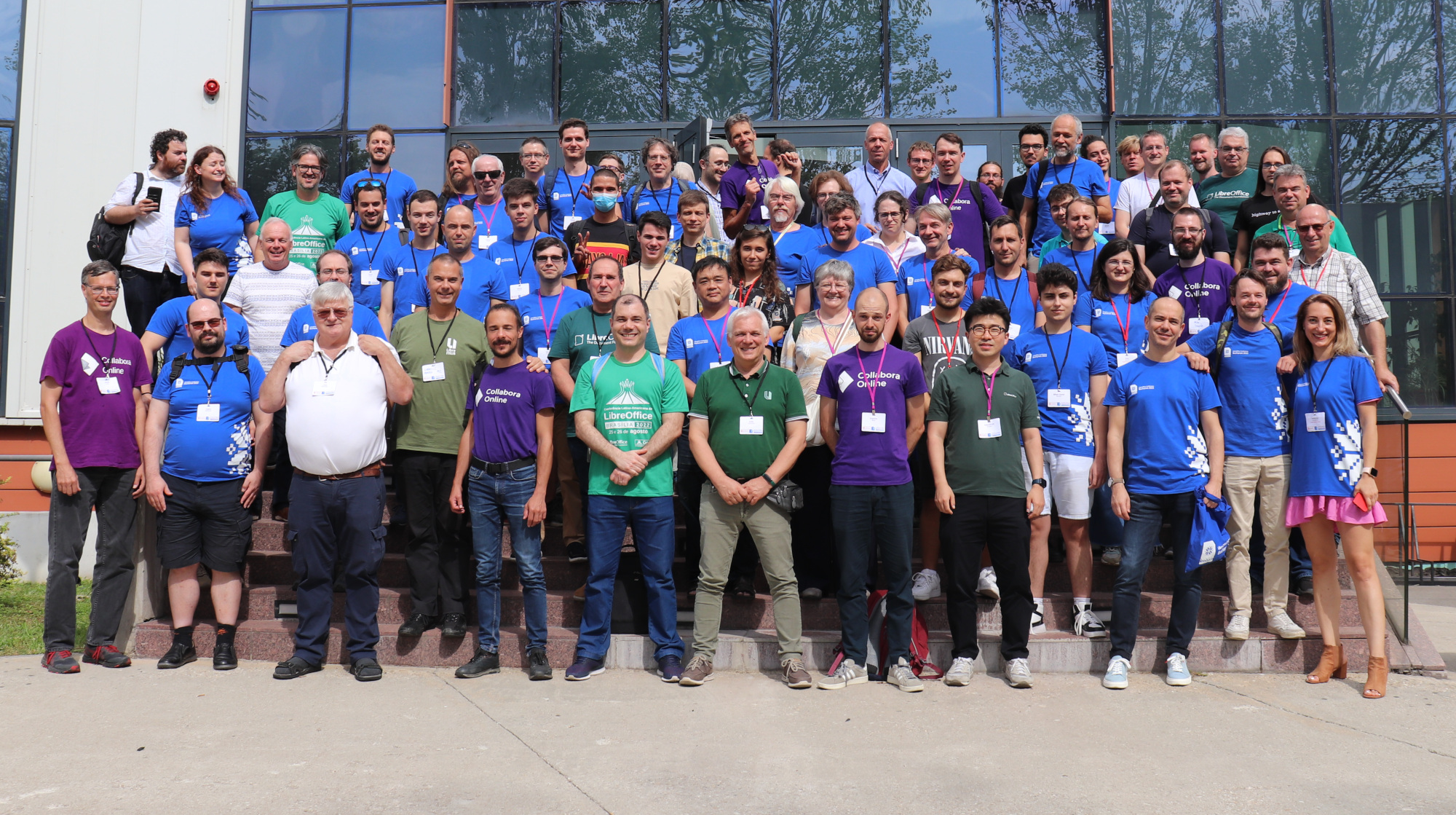

 Berlin, September 14, 2023 – LibreOffice 7.6.1 Community, the first minor release of the 7.6 family of the volunteer-supported free office suite for desktop productivity, for Windows (Intel/AMD and ARM processors), macOS (Apple and Intel processors) and Linux is immediately available from