Welcome Stéphane Guillou, new QA Analyst for LibreOffice

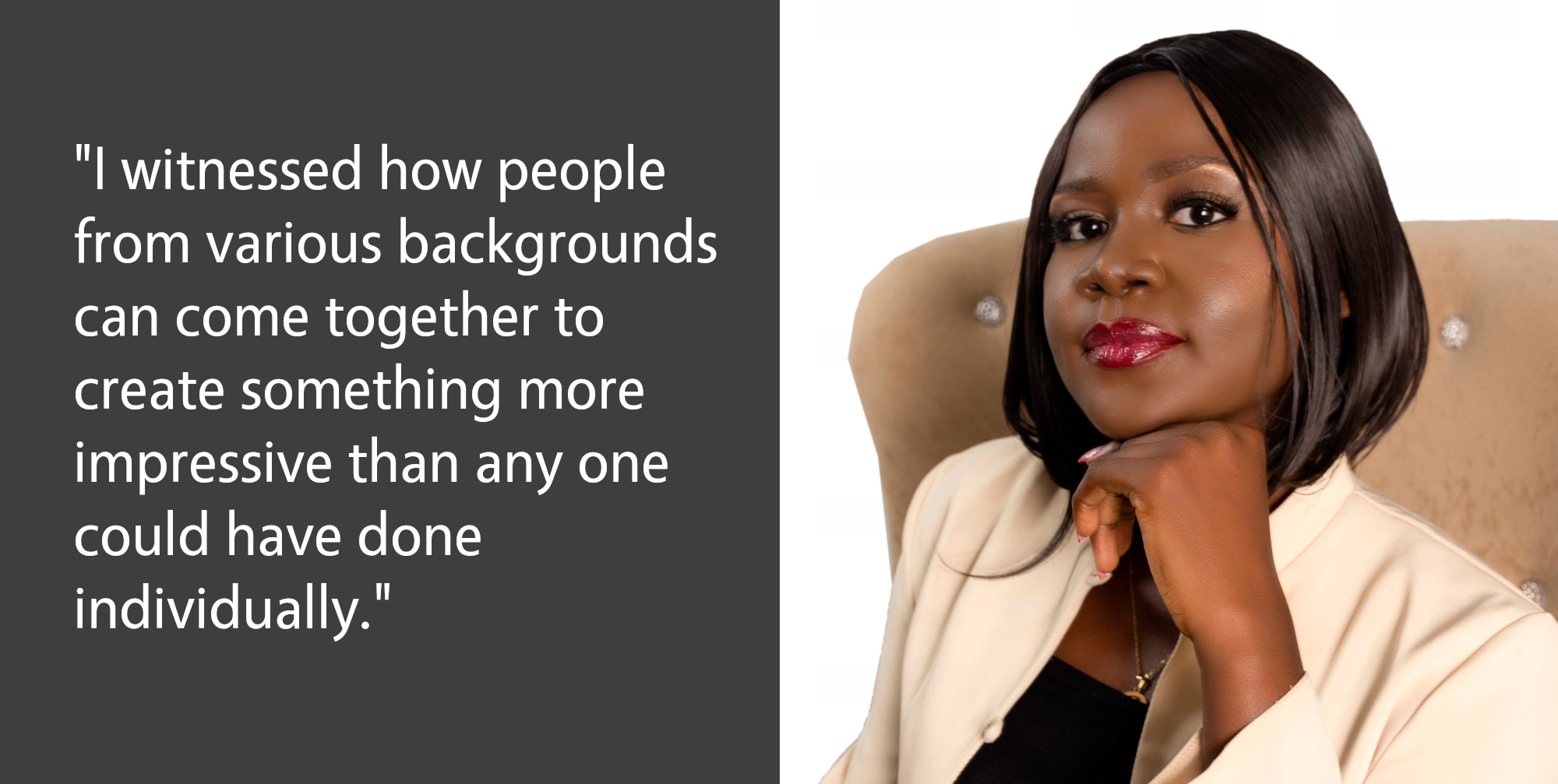
Photo portrait of Stéphane Guillou

We have a new team member at The Document Foundation, the non-profit entity behind LibreOffice! (That means we’re now 13 people.) Stéphane Guillou joins us as a Quality Assurance Analyst – so let’s get to know him better:

Tell us a bit about yourself!

I am from France, with roots also in Peru, but lived for the last 10 years in Australia with my awesome little family before coming back to France. We now live in Alsace, close to the forest in the Vosges mountains.

I studied plants, ecology and sustainability before working in agricultural research. I am still very passionate about plants and the environment, but my focus has moved towards supporting researchers in their data analysis, promoting Open Science principles and offering training about FLOSS research software, which I was able to do for the last 4 years at the University of Queensland’s Library, and before that as a certified instructor of the Carpentries organisation.

I am passionate about sharing information about Open Science, and contributing data to the Commons. You can for example find me on other wonderful projects like OpenStreetMap, iNaturalist and MusicBrainz.

When I am not parenting or working, I like spending time on electronic music, amateur radio and cycling.

What’s your new role at The Document Foundation?

I am the new Quality Assurance (QA) Analyst, and a lot of my time will be spent on triaging the issues users report on Bugzilla – our bug-reporting platform. There is a lot of activity on Bugzilla, and classifying and testing the reports is fundamental for us to focus on the most pressing issues, help the work developers are doing, and keep improving the software for everyone! Part of the work will also be to analyse and summarise the wealth of data available to help us see the bigger picture and make better decisions when allocating resources.

Pie chart showing the split between resolved bug statuses on Bugzilla. Four main categories are fixed (40.7%), duplicate (18.8%), insufficient data (13.1%) and works for me (12.5%).

Pie chart showing the split between resolved bug statuses on Bugzilla. Four main categories are “fixed” (40.7%), “duplicate” (18.8%), “insufficient data” (13.1%) and “works for me” (12.5%).

How did you get involved in LibreOffice, before you joined TDF?

I have used LibreOffice since it was first released in 2011, and have always liked reporting problems and helping out with the QA process in little bursts, just like I like doing with any FLOSS tool I use. I feel it’s a great way to give back to the community.

How can regular users of LibreOffice help out with the QA project?

Everyone can help our QA project by first using the software, and reporting problems when you encounter them. Have a look if the issue has been reported before, and if not, you might have found a new one! It’s important to not assume that someone has reported the issue before you. LibreOffice is a very customisable and rich office suite, so people use it in vastly different ways.

If you want to help some more, feel free to install development versions to test them, look at reports on Bugzilla to confirm issues and classify them, identify exactly when an issue arose (it’s called “bibisecting“), and share your learnings and processes with others! There is a wealth of tasks you can start on on our Wiki.

Thank you for your help building an office suite for all!

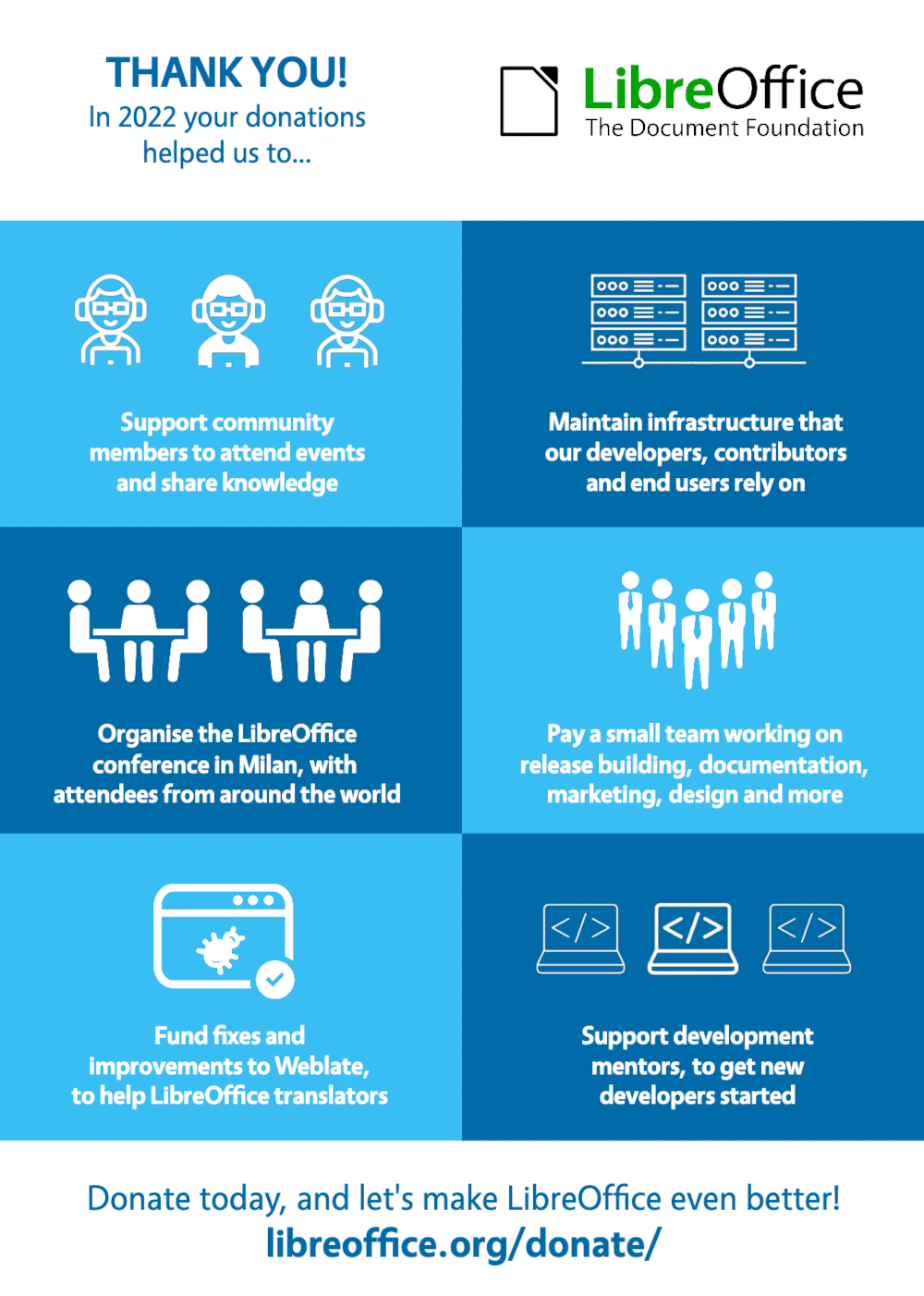
We’re really happy to have Stéphane on board! Donations from LibreOffice users help us to grow our team, maintain our infrastructure and support the communities working on LibreOffice. Support us here!

Quick tutorial – Docking Colour Palettes in LibreOffice Draw

Did you know? You can dock colour palettes in many places in LibreOffice Draw. Here’s a quick video from Harald Berger, from the German LibreOffice community:

Please confirm that you want to play a YouTube video. By accepting, you will be accessing content from YouTube, a service provided by an external third party.

YouTube privacy policy

If you accept this notice, your choice will be saved and the page will refresh.

LibreOffice Conference 2022 videos: Events, GSoC, CJK issues, graphics subsystems…

Here’s a new batch of talks from the recent LibreOffice Conference 2022! Watch the individual videos below, or click here to view the playlist.


LibreOffice Conference Latin America, Second Edition, with Gustavo Pacheco

Please confirm that you want to play a YouTube video. By accepting, you will be accessing content from YouTube, a service provided by an external third party.

YouTube privacy policy

If you accept this notice, your choice will be saved and the page will refresh.


Google Summer of Code 2022 panel, with Hannah Meeks, Tomaž Vajngerl and Miklos Vajna

Please confirm that you want to play a YouTube video. By accepting, you will be accessing content from YouTube, a service provided by an external third party.

YouTube privacy policy

If you accept this notice, your choice will be saved and the page will refresh.


A year of LibreOffice at Collabora, with Jan Holešovský

Please confirm that you want to play a YouTube video. By accepting, you will be accessing content from YouTube, a service provided by an external third party.

YouTube privacy policy

If you accept this notice, your choice will be saved and the page will refresh.


LibreOffice graphics subsystems, with Armin Le Grand

Please confirm that you want to play a YouTube video. By accepting, you will be accessing content from YouTube, a service provided by an external third party.

YouTube privacy policy

If you accept this notice, your choice will be saved and the page will refresh.


State of CJK issues of LibreOffice, 2022 edition, with Shinji Enoki

Please confirm that you want to play a YouTube video. By accepting, you will be accessing content from YouTube, a service provided by an external third party.

YouTube privacy policy

If you accept this notice, your choice will be saved and the page will refresh.

Month of LibreOffice, November 2022 – Half-way point…

So far, 203 sticker packs have been awarded in the Month of LibreOffice, November 2022. But we’re only half of the way through – so if your name (or username) isn’t on the list, join in, help to make LibreOffice even better, and get some cool swag! We’ll have 10 bonus pieces of merchandise to give away, to 10 lucky people…

How to take part

So, let’s get started! There are many ways you can help out – and as mentioned, you don’t need to be a developer. For instance, you can be a…

  • Handy Helper, answering questions from users on Ask LibreOffice. We’re keeping an eye on that site so if you give someone useful advice, you can claim your shiny stickers.
  • First Responder, helping to confirm new bug reports: go to our Bugzilla page and look for new bugs. If you can recreate one, add a comment like “CONFIRMED on Windows 10 and LibreOffice 7.4.2”.
  • Drum Beater, spreading the word: tell everyone about LibreOffice on Twitter or Mastodon! Just say why you love it or what you’re using it for, add the #libreoffice hashtag, and at the end of the month you can claim your stickers.
  • Globetrotter, translating the user interface: LibreOffice is available in a wide range of languages, but its interface translations need to be kept up-to-date. Or maybe you want to translate the suite to a whole new language? Get involved here.
  • Docs Doctor, writing documentation: Whether you want to update the online help or add chapters to the handbooks, here’s where to start.

Join in, learn new things, and have fun! We’ll post the final results in early December…

LibreOffice and blockchain: What cool things are possible?

Update 18 November: Based on the majority of feedback, we will not continue the discussion or explore this topic any further, as it is rather clear that the LibreOffice community is not interested. Thanks to everyone who let us know what they think.


Archive text:

As you’re no doubt aware, LibreOffice is free and open source software, which means that anyone can delve into the code behind it, study how it works, and adapt it for their needs. And we’ve seen many examples of this, with LibreOffice’s core engine being adapted by the ecosystem to work on mobile devices and in web browsers, for instance.

Meanwhile, blockchain is technology that provides a distributed ledger, made up of growing list of records (blocks), that are securely linked together using cryptography. The most famous (or sometimes infamous!) example of blockchain technology is cryptocurrencies (eg Bitcoin), but it can also be used in many other ways such as in smart contracts, authentication and games.

Blockchain addresses are most commonly thought of as financial accounts, but they can also function as permissionless credentials. Zero knowledge proofs (ZKPs), which provide cryptographic proof that something is true (such as that an account has a certain property or that a user is authorizsd to perform a certain action) without revealing anything else, open up many interesting possibilities like private and decentralised groups, anonymous contributions, and more.

Recently, we had a chat with the Ethereum Foundation about possible ways for people to combine LibreOffice with blockchain technologies. (We’re not talking about putting blockchain into LibreOffice!) We’ve discussed some ideas – but we’d like to hear from you, LibreOffice users! In what ways could people find a combination of LibreOffice Technology and blockchain be useful? Think of document authentication, collaboration and so forth.

Community Member Monday: Muthuramalingam Krishnan (Tamil project)

Today we’re talking to Muthuramalingam Krishnan, who’s helping to spread the word about LibreOffice in southern India…

Tell us a bit about yourself!

I’m Muthuramalingam, from Tirunelveli – a southern district in Tamil Nadu, currently living in Chennai. I was in the IT industry for around 10 years, from 2007 to 2017. Currently, I’m giving training on technical matters around open source programming languages like Java and Python in Payilagam, Chennai.

What are you doing with LibreOffice in Tamil?

A long time ago, I started contributing to LibreOffice by raising a few bugs. After a while, as I had the opportunity to meet a number of youngsters and graduates, I started introducing them to LibreOffice. Once they started using LibreOffice, it became very easy for us to get them involved in LibreOffice QA (Quality Assurance) related of activities. Thus, we started conducting few offline and online trainings. A few links about them are here, here and in this video.

What are some of the opportunities and challenges with free and open source software (FOSS) adoption in your region?

Let me think about the challenges first regarding FOSS adoption. As many people are using proprietary operating systems here, they don’t have much idea or clue about FOSS adoption. Thus, it would be difficult for us to convince them that they are capable of contributing to any FOSS software.

Where there are challenges, there are also opportunities. Hence, our easiest opportunity is creating awareness about open source first, and then ask them to use a FOSS operating system. (Linux Mint is a good start for Beginners.) Once they adopt the operating system (dual-booting is also fine for us), every other FOSS ddoption will automatically follow, including LibreOffice.

How can other people help out in the Tamil community?

There are lot of people who are involved in FOSS development in Tamil. There are many active communities including Kaniyam, ILUGC, KanchiLUG etc. They will definitely help us with spreading the word about events, by publishing on their websites, Telegram groups, Sometimes they will help us to get event spaces at places including colleges and Universities. We can get senior members of these communities to guide people with translations, QA and other activities.

Join the Tamil community on Telegram here! And thanks to Muthuramalingam for all his help 😊