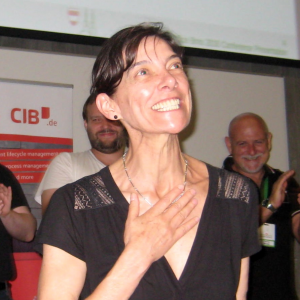
Community Member Monday: Onyeibo Oku

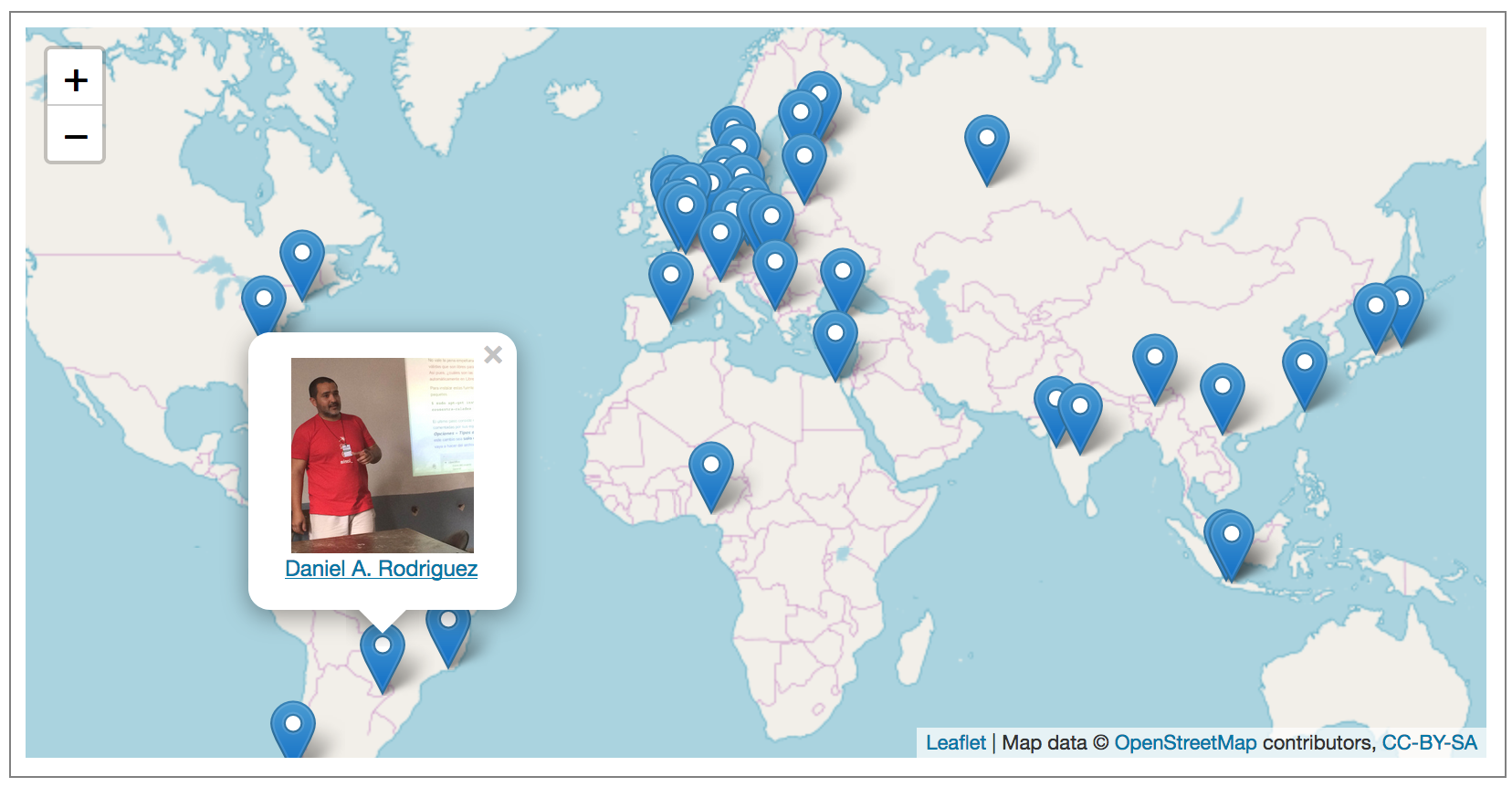
LibreOffice is a truly international project – its user interface has been translated into over 100 languages, and our community is made up of contributors all across the globe. Today we talk to Onyeibo Oku from Nigeria, who is helping to promote LibreOffice and open standards…

Tell us a bit about you!

I live in Enugu, which is in Enugu State, Nigeria. I lecture in a state university – and I also do graphic design and love music! By music, I mean “music” as an art – not just for consumption.

Although I didn’t go through formal training or education in music, I learned a bit of sight-reading (slow though), interpretation of chords, movements etc. and I play the keyboard (piano etc.). I communicate my understanding of music through digital sequencing. That implies that I compose and arrange sometimes. My choice of reference (genre) is wide but I appreciate classical, contemporary classics, jazz and choral music the most.

Sometimes I’m active on IRC: I spend some time in the #fedora-qa (quality assurance) channel on Freenode. I also visit #python when I run into problems with my programming. For communication I use Telegram, and I am also on Twitter and LinkedIn.

How do you use LibreOffice in your work?

I write reports and do grade sheets with Libreoffice. Every lecturer prepares result sheets – I do mine with LibreOffice. I also collaborate with students authoring research papers using Writer. The commenting feature is indispensable.

How are you promoting FOSS and LibreOffice?

I operate the ##floss4arch channel on Freenode. There, I discuss the benefits of open source tools in the practice of Architecture with students of the Enugu State University of Science and Technology. I am a Fedora Ambassador, and a (former) council member of the Free and Open Source Software Foundation for Africa (FOSSFA).

What are the challenges to adoption of FOSS in Nigeria?

The major challenge with adopting FOSS in Nigeria is the perception of “free”. Free things are considered “inferior”. Despite this mindset, it is hard to find a Nigerian who uses the internet without experiencing open source solutions like Firefox. Therefore, they’re mostly oblivious to how open-source products are pushing standards worldwide. Since Nigeria is weak in enforcing copyright laws, the average citizen has a skewed interpretation of licensing and the importance of software “freedom”.

What does LibreOffice need most right now?

For me, I think Libreoffice Calc should be able to retain header images when saving to MS Office DOC/DOCX file formats (and vice-versa). Currently, logos placed within headers disappear when the document is migrated to Microsoft’s format. A better commenting feature would certainly attract increased usage among the academics. Writer also sometimes seems jerky when working on documents with numerous pages.

What tools do you use for your work?

Apart from LibreOffice, I use Inkscape, GIMP, Blender, and Scribus. Python comes in when I need to automate tasks that support it. Then, I use Geany and Gedit for coding. Lilypond, Timidity++, Ardour and Audacity come into play when I need to arrange or sequence music.

Anything else you want to mention?

Yes – I work with FOSS 90-95% of the time. Open source software technologies are revolutionary!

Thanks to Onyeibo for his time! Anyone can help to promote LibreOffice and open standards in local communities: discover our existing native language projects, and also the regional mailing lists. If you want to start a new community, leave a comment below and we’ll get in touch!

Community Member Monday: Ahmad Haris

Today we talk to Ahmad Haris, who helps out with LibreOffice events in Asia, and has recently joined The Document Foundation’s Membership Committee. (Click here to learn more about the benefits of membership.) Here’s what he had to say…

Where do you live, how can people find you on the web, and what are your interests outside of LibreOffice?

I live in Bogor, West Java, Indonesia. However, I was born in East Java (the opposite side). I’m active on Facebook, Twitter, and sometimes Google+ and IRC (last one only for meetings with GNOME Foundation Members).

When I’m not working on LibreOffice, I play the guitar, or ride my motorcycle 🙂

What have you been doing in the LibreOffice community?

I helped to organize the Indonesia LibreOffice Conference 2018 in March this year. (See the full report here.) That’s my biggest contribution so far. Before that, I just using and testing the software.

How did you get involved?

In 2008, I was migrating a city (Central Aceh – Aceh Province) and a province (Yogyakarta Province) here in Indonesia to use Free and Open Source Software (FOSS). At that time I used OpenOffice.org. I was helping the government to use it for two years, based on my job. Then time flied… LibreOffice arrived, so I moved to it.

What does LibreOffice need most right now?

In my opinion, LibreOffice needs a growing community, especially in developing countries in South East Asia or Africa. And we need to do more research, for instance on how people in those locations use office suites, what kind of templates they need, and so forth. In Indonesia, many users ask about page borders (a feature in other office software).

What tools do you use?

My main tools in all of my laptops (I have more than one, for travelling, for work and for playing/recording music) are LibreOffice, Visual Studio for code editing, Inkscape for vector graphics, Gimp for bitmap graphics, and Audacity for editing audio.

Anything else you want to mention?

To increase technical contributions to LibreOffice, I’d like to see more how-to guides for beginners, such as for contributing code for the first time, and organising workshops. Also, we should highlight success stories about implementations of and migrations to LibreOffice (I can help here, in terms of Indonesia).

A big thanks to Haris (as he likes to be known!) for his support and contributions to our worldwide community. And to everyone reading this, wherever you are on the planet, you too can make a difference and help to spread the word about LibreOffice. See here to get started!

Interview: Guilhem Moulin on LibreOffice infrastructure and services

A large free and open source software project like LibreOffice requires a lot of infrastructure, to support our users, developers and worldwide community. Today we speak to Guilhem Moulin, who is in charge of TDF’s infrastructure and services, about new developments and how others can get involved…

To start, please give us a quick overview of TDF’s public infrastructure.

The public infrastructure is powered by about 50 Kernel-based Virtual Machines (KVM) spread across 4 hypervisors plugged to an internal 10Gbps switch and hosted at Manitu in St. Wendel (Germany), and managed with libvirt and its KVM/QEMU driver. The virtual disk images are typically stored in GlusterFS volumes — distributed across the hypervisors — except for some transient disks (such as cache) where the IOPS need is higher and the redundancy less important.

All our public VMs run Debian GNU/Linux (currently a mix of Jessie — which are to be upgraded — and Stretch), each typically hosting a single service for better isolation. The rest of the stack is fairly usual: systemd as PID 1 & service manager, a mix of MySQL and PostgreSQL as RDMS, and nginx as SSL/TLS endpoint & reverse HTTP proxy. All of this is orchestrated and managed using saltstack.

About half of our Virtual Machines host public-facing websites; the other half are used for test instances, various production backends and internal services, as well as for tinderboxes and other hacking VMs. Some of these websites are mostly useful for developers, such our Bugzilla or gerrit instances — an overview of the development-focused sites can be found at https://devcentral.libreoffice.org. The remaining sites include the main LibreOffice website, the download page, the Wiki, Askbot, and of course the blog.

Beside these VMs, we also operate a handful of other machines for backups, monitoring, and mail systems, which are hosted offsite for obvious reasons.

What have been the most significant infra developments in the last six months?

Single Sign On (SSO) is probably what’s been the most visible to the community. Traditionally each frontend (Wiki, Bugzilla, Askbot, etc.) has its own private authentication backend, so once someone sign in to multiple services, they would have to remember multiple sets of credentials, which is cumbersome and makes password & email rotation difficult.

We now have a central authentication system (which uses an LDAP DIT as backend), but aren’t pointing individual services to it, as it would 1/ expose the shared credentials to all services hence increase the attack surface; and 2/ doesn’t solve the fact that users would have to enter their password to each service individually. Instead we’re deploying a solution using the SAML 2.0 protocol: unauthenticated users are redirected to an authentication portal against which they can authenticate, and they are redirected to the protected page afterwards.

Not all services have been migrated to SSO yet. An issue is that we have to unify accounts (people use different usernames in different services); and while we want a “critical mass” of active user accounts in LDAP before migrating a service, it’s been rather difficult to reach out to people — even among TDF officials! — and convince them to create an account in the new system. Fortunately since we migrated the authentication system of our wiki, more and more people (among whom a lot of dormant accounts, probably spammers unfortunately) started using the new system.

While it’s only visible to infra team members, we also replaced our Graphite (+ Carbon + Icinga2) based monitoring system with Prometheus (+ data exporters + alert manager). Furthermore, still on the monitoring front but public this time, we just deployed a new service, CachetHQ, to show a quick overview of TDF’s infra status:
https://status.documentfoundation.org.

Last but not least, earlier this spring we were fairly busy with GDPR compliance.

What are you working on at the moment, and what are your plans for the next six months?

Aside from daily maintenance and occasional emergencies (system crashes, hardware hiccups, performances issues, etc.), infra team members still spends quite a lot of time on the above, as this is not completely finished yet. Projects for next year include working on a better backup solution, in particular regarding database snapshots. The data collection system for download metrics needs some improvement, too.

Finally, what cool things can new volunteer admins do to get involved and help the project?

We have a wide variety of systems, ranging for highly sensitive (election, internal mail, LDAP DIT, whitebox monitoring) to pretty much fully public beside the access logs (bitergia dashboard, blackbox monitoring). We can’t give upfront access to the sensitive side of the spectrum to everyone, but there are things to help with on the other side too (developer-focused services are typically less sensitive, since development is open anyway).

Sometimes we also start fresh and replace a service with something equivalent on a brand new box; in that case there is no sensitive data at stake, and it’s a great way for new volunteer admins to gain trust. I mentioned the monitoring migration earlier; we could also imagine replacing our ageing MirrorBrain deployment with a more modern solution like Mirrorbits, for instance.

Thanks to Guilhem for his time and help. If you’re interested in joining our infra community and gaining valuable experience in a large FOSS project, see here to get started!

Community Member Monday: Battsengel Ichinnorov

It’s time for another LibreOffice contributor interview! Today we speak to Battsengel Ichinnorov, a new TDF member, who helps to localise LibreOffice for Mongolian users…

Where do you live, and are you active on any social media?

I live in Munich, Germany, and I follow The Document Foundation and LibreOffice on Telegram. You can find some of my work on GitHub.

In which areas of the LibreOffice project are you active?

I am translating the wiki and LibreOffice itself into Mongolian (for instance, I made the keyboard layout for Mongolian for Windows: German and English. After this, I will create them for Linux.)

How did you get involved with LibreOffice?

A friend of mine, Dennis Roczeck is a helper and admin on the wiki.

What was your initial experience of contributing to LibreOffice like? What else do you plan to work on?

Everybody has a goal to reach, and mine is a free office for Mongolian people! Firstly I want to build a team and finish the user interface translation, then maybe get involved in development and/or ops and/or devops 🙂

What tools do you use for your work?

So I know many tools, but the best is for me for programming, to save time and be productive, is IntelliJ IDEA. Other tools which I use: Atom, Notepad++, ConEmu for WSL in Windows.

What do you do when you’re not working on LibreOffice?

Meet my friends and go hiking in the Alps, and study programming languages or test new technologies. At the moment I’m looking at Docker, Kubernetes and Terraform in the cloud.

Thanks to Battsengel for all his contributions! If you’re reading this and also want to join our friendly community, and help to make LibreOffice even better, we’ve made a page just for you. There are lots of ways to get involved – we look forward to meeting you!

Community Member Monday: Sam Tuke

Over the last few years we’ve posted many LibreOffice contributor interviews on this blog. Today, we catch up with Sam Tuke who is a member of the marketing community and helps out with QA too…

Where do you live, and are you active on IRC/social media?

I live in Berlin, Germany. Originally I’m from Suffolk, England. I like Twitter and Mastodon for community news. For my business, which makes Free Software newsletter app phpList, I use Facebook and Telegram too.

In which areas of the LibreOffice project are you active?

The marketing team, and filing occasional bugs.

How did you get involved with LibreOffice?

While in high school I started a small business building computers for local people. They needed an office suite to come with their new PCs, and OpenOffice.org was the perfect fit. I’ve been a user and advocate ever since, following my friends to LibreOffice when it was established.

Later on I became a full time Free Software developer, and after that a campaigner. From 2014 I worked on marketing LibreOffice-related products at Collabora. It was an exiting time and I had the opportunity to announce LibreOffice for Android and LibreOffice Online.

What was your initial experience of contributing to LibreOffice like?

Much like other open source apps: find and use a complicated bug tracker to report an annoying problem. But I was encouraged by quick follow up by a friendly bug triager, and since then several issues that I reported have been fixed and released. Satisfying!

What does LibreOffice need most right now?

Marketing. It’s a brilliant software suite which offers great potential value to most people alive today, particularly when you consider the mobile and web-based products. Reaching all those people who stand to benefit from LibreOffice is hard work, but it’s worth doing. Italo Vignoli and Mike Saunders have been making strides in this direction, and that’s fantastic to see.

Also: focus. With so many different kinds of users out there, LibreOffice can suffer from being too powerful for it’s own good. LibreOffice has had the benefit of contributions from a variety of usability experts and professionals. There’s plenty more to do, but recent releases, and particularly LibreOffice 6.1 include gratifying improvements from Kendy, Heiko, Andreas and others, which I’m eager to see.

What tools do you use for your work?

Markdown everywhere: Gedit, Writer, Nextcloud notes, and Pandoc to convert between them. Sometimes I also use Thorsten’s odpdown to make presentations.

Calc handles internal financial reporting at the firm, with many charts, and a few arcane formulas which LibreOffice fortunately includes. Draw is great for quick colourful diagrams like server infrastructure and organisational charts.

What do you do when you’re not working on LibreOffice?

Since finishing a Master’s degree in spring I’ve become a mentor of startups in West Africa, and had time so speak at more Free Software conferences at home and abroad. In order to keep up with new interns at work I’ve also been reading textbooks on marketing and security – perfect for long sunny evenings in the park.

Thanks Sam! Stay tuned to the blog for more interviews. In the meantime, if you’re new to the LibreOffice project and want to help us make it even better, start here!

LibreOffice interview: Andreas Kainz talks about new icons and the Notebookbar

Andreas Kainz

LibreOffice’s design community works on improving the user interface of the software. Today we talk to Andreas Kainz, who has created new icon themes and made improvements to the Notebookbar, an experimental and alternative user interface layout that will become an option in future releases…

Tell us a bit about yourself!

I live in Vienna, Austria. I have a KDE and LibreOffice-related blog, and a new one only for LibreOffice things, because I started by contributing to KDE, but in the last few years have been doing more and more with LibreOffice.

What have you been working on recently?

Here are some of the changes:

  • New default table styles for LibreOffice 6.0:

  • New area fill gradients for LibreOffice 6.1

And then, in terms of icons:

  • Colibre icon theme (for LibreOffice 6.1). Here’s what it looks like, with the Notebookbar activated:

All icon themes are available in PNG and SVG formats, under a GPL conforming licence, and I also maintain all three icon themes (Elementary, Colibre and Breeze – see below).

Regarding the Notebookbar, I have worked on the groupedbar full and compact, and the tabbedbar full and compact. I think that the Notebookbar is a great (optional) addition to the default toolbars and the sidebar.

(If you’re using LibreOffice 6.0 or 5.4, you can try the Notebookbar by following these steps. Please note that it’s still an experimental feature, though, and not ready for production use! But we’d like to hear your feedback.)

How much time do you spend contributing to LibreOffice?

I contribute in my spare time, between 23:00 – 01:00, when my daughter and wife are sleeping. Since 2014 I have submited 412 commits and 893,810 addition to LibreOffice core, which mean that I’m in second place in terms of additions (see the stats here – my username is DarkknightAK).

How did you get involved with LibreOffice?

I’m the maintainer of the Breeze icons for KDE, and in 2014 the LibreOffice community asked if the Breeze icons could be available for LibreOffice. Four months later, 2,500 breeze icons had been drawn and Breeze become default in LibreOffice 5 for KDE, Unity, macOS and LibreOffice Online. Here’s what Breeze looks like:

What was your initial experience of contributing to LibreOffice like?

LibreOffice is a friendly and structured project. With Gerrit and Jenkins it’s easy to have a good review process, when you’d like to submit a patch.

What does LibreOffice need most right now?

Contributors are always welcome. It would be awesome to have some goals where a team of developers AND designers work on them.

What tools do you use?

Inkscape and Kate.

Anything else you want to mention?

If you like my work, read my blog posts, join the LibreOffice design IRC channel (#libreoffice-design) or become a Patreon.

A big thanks to Andreas for his great work. As mentioned, LibreOffice users can try out the Notebookbar today, and give feedback to our design community, so that we can improve it further and make it available as a standard (optional) feature in the future!