Community Member Monday: Emmanuel Semutenga

Today we’re talking to Emmanuel Semutenga, who helps young people in Uganda to develop key IT skills. Of course, LibreOffice plays a role in this…

To start with, tell us a bit about yourself!

I’m currently a back-end web developer by profession. I’m also a Project Manager for the project entitled “ICT for youth employability” at Kampabits, where my main work is on curriculum development. I live in Kampala, Uganda, Rubaga Division.

My hobbies and interests include blogging, cycling with Ultimate Cycling Uganda, dancing, making new friends, movies and hackathons.

What is Kampabits, and what does it do?

Uganda currently has the highest youth population between 17 to 24 years – that makes 80 percent of the population, and most of these young people lack the practical skills to enable them to get employed. Hence the intervention of Kampabits.

Kampabits is a youth-based organization founded in 2010 that uses ICT multimedia creatively to improve the lives of less privileged youth from the non-formal settlements. We also create safe spaces for persons with disabilities to freely express themselves while learning these in-demand skills.

We have helped 350 young people since our inception, with skills in computer literacy, graphic design and coding skills (front-end, back-end and full-stack developers) during our six month trainings. Kampabits later places these young people in a three month internship with their partner companies.

Kampabits also runs a “Women in Tech” project that trains 15 women in advanced coding skills, to make them employable, in a period of six months. This project focuses on women who have prior knowledge of computer basics. They are later placed in outsourcing jobs in companies like Tunga.

How does LibreOffice fit into your work?

During the whole scope of the training, especially our computer literacy sessions, presentations and curriculum development, we use LibreOffice (Writer, Impress and Calc) to train the young people in word processing, presentations and business book keeping.

This is done to remove costs the involved in acquiring proprietary software, and also show the them that free alternatives will deliver the same quality of work as proprietary software. We use Ubuntu, Lubuntu and Linux Mint as our main operating systems – and they always come with LibreOffice preinstalled.

Other free software we use includes: Gimp as an alternative for Photoshop, Inkscape in place of Illustrator, OBS Studio for recording screencasts, Visual Studio Code as our main code text editor, and Scratch to introduce youth to computer programming

We also use both the Raspberry Pi 2 and 3 models to compliment our computer lab.

What advice would you have for other projects with similar goals?

Using free software alternatives can help to divert funds to the more pressing needs of organizations – like acquiring more computers to cater for more beneficiaries. So I would advice other organizations to try them out in phases, until they feel comfortable enough to overhaul the whole structure.

A huge thanks to Emmanuel for his work, and it’s great to see free and open source software making a big change all across the planet. Everyone is welcome to join the LibreOffice project, regardless of their location or language, and help us to spread the word and break down digital divides!

TDF Annual Report 2018

The Annual Report of The Document Foundation for the year 2018 is now available in PDF format from TDF Nextcloud in two different versions: low resolution (6.4MB) and high resolution (53.2MB). The annual report is based on the German version presented to the authorities in April.

The 52 page document has been entirely created with free open source software: written contents have obviously been developed with LibreOffice Writer (desktop) and collaboratively modified with LibreOffice Writer (online), charts have been created with LibreOffice Calc and prepared for publishing with LibreOffice Draw, drawings and tables have been developed or modified (from legacy PDF originals) with LibreOffice Draw, images have been prepared for publishing with GIMP, and the layout has been created with Scribus based on the existing templates.

All pictures are licensed under the Creative Commons Attribution-Share Alike 4.0 License, courtesy of TDF Members from Albania, Brasil, Germany, India, Indonesia, Italy, Japan, Nepal, Taiwan and Turkey. Stock photos are CC0 by Pixabay.

Marina Latini, Chairwoman of TDF Board of Directors, has written in the welcome address:

After eight full years, the challenge is to further grow the project, by leveraging the presence of active volunteers, enthusiastic supporters and happy users in many geographies. During the last couple of years, a growing number of events has been organized by native language communities around the world, with significant growth in Asia.

What we have achieved so far goes beyond the most optimistic forecasts of the project’s founders back in 2010, thanks to the commitment of the large group of people who manage the foundation and take care of related activities, and the volunteer contributions of organizations and individuals in every continent.
Of course, what we are now would not be possible without the generosity of thousand of donors and the valued members of the Advisory Board who support the growth of LibreOffice, the Document Liberation Project and the ecosystem around them.

Today, LibreOffice is the only suite for personal productivity with the ambition of providing desktop and cloud users with the same seamless experience, based on a solid set of features. Mobile apps are under development, to further extend the reach.

This Annual Report of The Document Foundation is a showcase of all community activities which support the growth of LibreOffice and the Document Liberation Project.

We are getting closer to our 10th anniversary. I look forward to another great year for our global community of friends, working united on the goal of creating the best free office software ever. Thank you very much to all of you who made this dream come true!

LibreOffice monthly recap: August 2019

Here’s our summary of updates, events and activities in the LibreOffice project in the last four weeks – click the links to learn more!

  • On August 8, we announced LibreOffice 6.3, a new major release with better performance, a large number of new and improved features, and enhanced interoperability with proprietary document formats. 10 days later, we followed this up with a look at some statistics – there had been 430,000 downloads of the new version, and 54,000 views of the press release. Check out some of the new features in this short video:

Please confirm that you want to play a YouTube video. By accepting, you will be accessing content from YouTube, a service provided by an external third party.

YouTube privacy policy

If you accept this notice, your choice will be saved and the page will refresh.

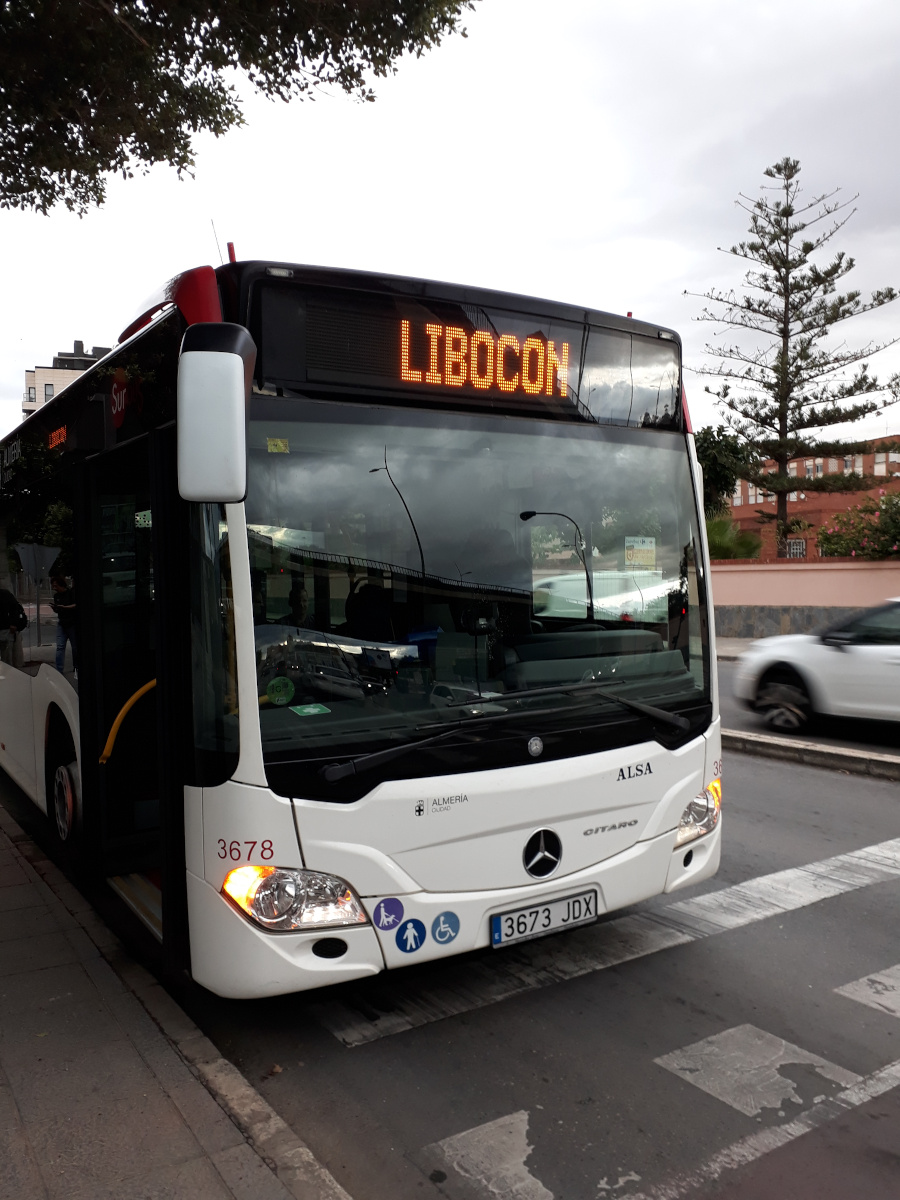
  • While we’re gearing up for the aforementioned LibreOffice Conference 2019, we’re also looking ahead to proposals for the 2020 event. The Document Foundation received two different proposals for the organisation of LibOCon 2020, from the Turkish and German communities. TDF members are voting to decide on exactly where it will take place, so stay tuned for the announcement…

  • In recent months, we’ve been putting content from our Annual Report 2018 on the blog, and this month we looked back at hackfests last year. These were opportunities for developers to meet face-to-face, work on new ideas, and enjoy good food and drink! In 2018, we had hackfests in Brussels, Hamburg, Tirana and Munich.

  • The Document Liberation Project (DLP) is a sister project to LibreOffice, which develops software to read and write data from proprietary and legacy document formats. This helps LibreOffice and other apps to access archives of data, freeing users from vendor lock-in. On August 21, we posted about updates from the DLP. If you have some old documents from legacy office software that you’d like to open in LibreOffice, give the developers a hand!

  • Finally, we started a new marketing campaign highlighting the fact that LibreOffice has no forced registration, subscriptions, payments or vendor lock-in. As many software vendors are pushing users towards online subscription models, the LibreOffice community is proud to offer a fully free, no-strings-attached office suite that people can use any time, any place, without worrying about subscriptions or “authentication” servers not working.

Keep in touch – follow us on Twitter, Facebook and Mastodon. Like what we do? Support our community with a donation – or join us and help to make LibreOffice even better!

Annual Report 2018: LibreOffice Hackfests

Most LibreOffice developers are working from their home offices, so hackfests provide a unique opportunity to spend some time working shoulder-to-shoulder with their peers. In 2018, LibreOffice developers and community members met at four hackfests in Brussels, Hamburg, Tirana and Munich.

Brussels (Belgium), February 5-6

The first hackfest of the year was organized at ICAB in Brussels immediately after FOSDEM, the largest European gathering of FOSS developers and advocates, which is organized every year at ULB (Brussels Free University) during the coldest weekend of the winter season. The hackfest was attended by over 30 people, equally split between those focused on development and those taking care of non technical tasks such as localization, documentation, certification and marketing. In term of development, there were achievements in various areas of the office suite and in quality assurance.

Hamburg (Germany), April 6-8

The community gathering started with a walk through the fascinating Hanseatic city of Hamburg, with its river, canals and lake in the centre (Binnenalster), and a sample of local food at the Groeninger Privatbrauerei.

On Saturday, around 45 people attended the hackfest, divided in two groups: the first focused on coding for fixing bugs and working on new features, and the second on the meeting of the German-speaking LibreOffice community. Developers worked on different topics, like making drawing layers ODF conformant, migrating old database to HSQLDB, speeding up VLOOKUP, and improving LibreOffice Viewer on Android, plus other random bits related to bugs, regressions and new features.

German community members discussed about bringing in potential new contributors, developing materials for courses (both online and in schools) about LibreOffice, and creating a new “Get Involved” flyer and page on the website, both in German. And at the end, we relaxed with drinks and food!

Tirana (Albania), September 27

As part of the LibreOffice Conference in Tirana, Albania, this “hacknight” was held at the Destil from 7:30PM to 11PM with over 100 participants, which have covered tasks such as development, localization, documentation, quality assurance, certification and marketing. In fact, the conference brings together a large number of community members from around the globe, and the hackfest is for many contributors the very first opportunity to meet face-to-face after months or even years of interaction on mailing lists and IRC.

Munich (Germany), October 26-28

In late October, CIB hosted a hackfest at modulE in Munich, Germany, with 25 participants over the three days. The meeting started with a few presentations on Friday evening, with Andreas Kainz showing the amazing progress on the NotebookBar design. During the event developers were able to fix several bugs and polish some new features for the upcoming LibreOffice 6.2 major release, while German community members discussed non-technical topics such as marketing and local events. Of course, there was Italian pasta, like in every hackfest in Munich. The meeting ended with a quick city tour and beer at the world-famous Hofbräuhaus.

Community Member Monday: Sanjog Sigdel

Members of The Document Foundation – more formally known as the “Board of Trustees” – are a crucial part of our community. They are people from across the globe who contribute time, effort and skills to the LibreOffice and Document Liberation projects, whether on a voluntary or paid basis. Today we’re talking to Sanjog Sigdel, a new TDF Member from our Nepalese community…

To start off, tell us a bit about yourself!

I’m currently a Graduate Student pursuing my MTech. in IT degree here in Kathmandu University, Dhulikhel, Nepal. Besides that, I am also a part-time instructor in a private college near the University: NIST College Banepa.

I love knowing how new technologies work and also love exploring new places. Unitil now I have traveled almost 30 districts of Nepal via trekking, project monitoring and tours. I’ve been using Linux-based operating systems (mainly Ubuntu) since 2012. And I am also a FOSS activist/volunteer. I teach my students to use open source software and most of them are using Linux, LibreOffice, and Python programming in the Nano text editor 🙂

Why did you decide to become a member of TDF?

Language translation is something I believe helps a large number of people in using all kinds of software. It breaks the digital divide created by language differences. Since 2017, with the guidance from my mentor, Mr Saroj Dhakal, I I have been contributing to LibreOffice localisation (L10N). I am currently the Project Reviewer for the Nepali language translation in the LibreOffice project.

Since I am already part of The Document Foundation, being a member and presenting myself as a formal representative of TDF in open source communities in Nepal could help other open source volunteers to join the FOSS Movement. Also, I will be working as a resource person for Kathmandu University Computer Club, an undergraduate computer club in the Department of Computer Science and Engineering, in case they want to conduct any FOSS Activities. There I can pitch ideas around translating LibreOffice and hacking on the source code.

Anything else you plan to do in the future?

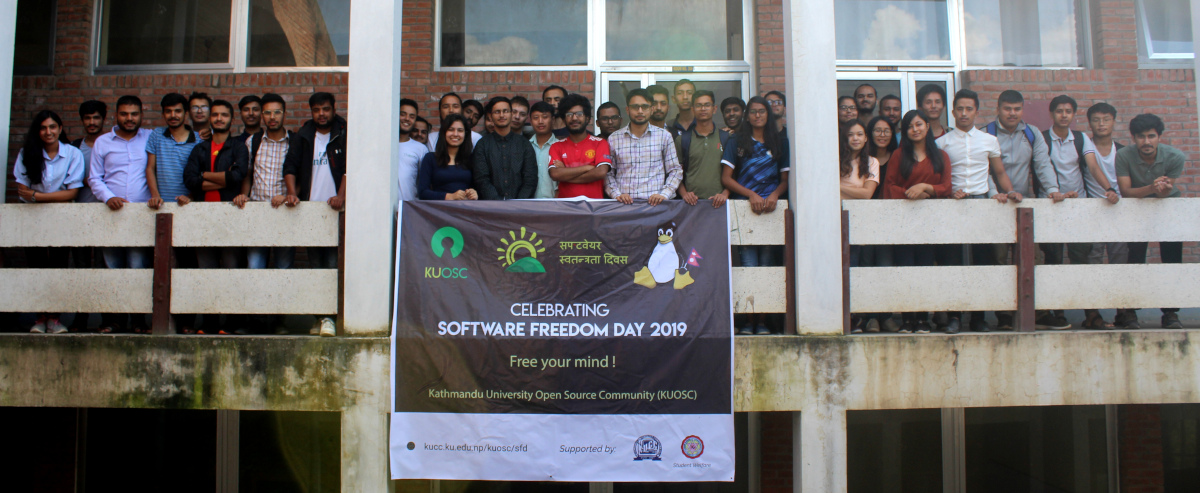
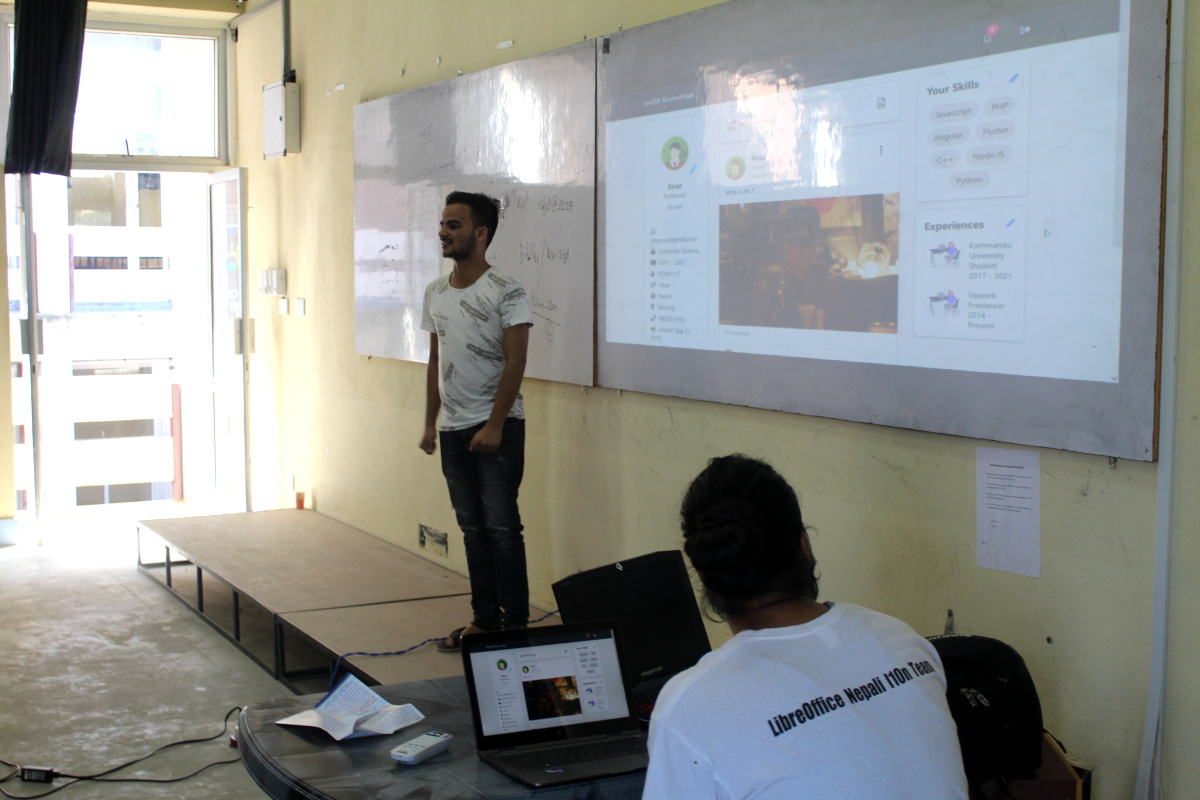
I am planning to conduct a LibreOffice localization event for the Nepali Langauge on Software Freedom Day, working together with Kathmandu University’s Open Source Community. I will update other TDF members on the mailing list soon.

Cheers to Sanjog for his contributions! And to everyone reading this who’s involved in the LibreOffice community, check out this short video and consider becoming a TDF Member too…

Please confirm that you want to play a YouTube video. By accepting, you will be accessing content from YouTube, a service provided by an external third party.

YouTube privacy policy

If you accept this notice, your choice will be saved and the page will refresh.

LibreOffice Conference 2020 Proposals

The Document Foundation has received two different proposals for the organization of LibOCon 2020 from the Turkish and German communities. When this has happened in the past, in 2012 (Berlin vs Zaragoza) and 2013 (Milan vs Montreal), TDF Members have been asked to decide by casting their vote.

This document provides an outline of the two proposals, which are attached in their original format.

TURKEY: ISTANBUL

City. Istanbul, formerly known as Byzantium and Constantinople, is the most populous city in Turkey and the country’s economic, cultural and historic center. Istanbul is a transcontinental city in Eurasia, straddling the Bosporus strait (which separates Europe and Asia) between the Sea of Marmara and the Black Sea. With a total population of around 15 million residents in its metropolitan area, Istanbul is one of the world’s most populous cities, ranking as the world’s fourth largest city and the largest European city. (Source Wikipedia)

Entity. Tubitak Ulakbim (Pardus) will handle legal and financial responsibilities on behalf of LibreOffice Turkish community. Tubitak Ulakbim is a research institute which support FOSS (mostly Pardus Linux and LibreOffice) and ODF in Turkey, targeting primarily public institutions. Each year, it funds and/or supports many FOSS events in Turkey.
Tubitak Ulakbim (Pardus) has agreed to support the event by covering expenses up to an amount of approximately 25,000 Euro.

Venue. Boğaziçi University (BOUN), İstanbul. The main venue has three conference rooms of different sizes and a foyer area, plus other conference rooms in a nearby building (at walking distance) which can be used in case of need. All conference rooms are in the same campus. Almost all areas in the venue are wheelchair-accessible. BOUN is extremely sensitive to this topic.

Team. Muhammet Kara: main contact. Nurcan Tür, Enes Kıdık, Furkan Tokaç, F. Ahmet Kara, M. Çağrı Dolaz, Ülkem Kasapoğlu, Ömer Çakmak, Doğa Deniz Arıcı, Berkay Aktunç.

We are a group of enthusiast volunteers who love LibreOffice, and would like to see LibreOffice/ODF widely used and known in Turkey, along with other FOSS projects. We see LibOCon as a very good opportunity to integrate the local and the global community, with a positive impact on the local community.

LibOCon2020 Turkey Proposal

GERMANY: NUREMBERG

City. Nuremberg is the second-largest city of the German federal state of Bavaria after its capital Munich, with 511,628 inhabitants in 2016. The city lies about 170 kilometres (110 mi) north of Munich. (Source Wikipedia)

Entity. The organization is lead by the openSUSE community and it’s legally supported by SUSE.

Dates. The proposal is to organize the conference during week 42, from October 12 to October 18, 2020, including internal pre-meetings and conference. The geek number 42 is the “Answer to the Ultimate Question of Life, the Universe, and Everything”.

Venue. Z-Bau, a large building with many rooms of several sizes, and a large outdoor area with a beer garden. With four event rooms, two outdoor areas and various project rooms, there is plenty of room for events of all kinds. The entire area is barrier-free and the various rooms are equipped with basic technical equipment for events and day-to-day operations.

Team. Douglas DeMaio and Marina Latini: main contacts. Andrew Wafaa, Axel Braun, Simon Lees, Christian Boltz, Gertjan Lettink, Richard Brown.

2020 will be an important milestone date for both the LibreOffice and the openSUSE project. LibreOffice will celebrate its 10th birthday while openSUSE will achieve the 15th anniversary of the project. One more notable connection between the two communities is the historically strong relationship between the core LibreOffice development team and SUSE, given that a big number of core developers were all working together at SUSE.

LibOCon2020 Germany Proposal