Community Member Monday: Baltasar García Perez-Schofield

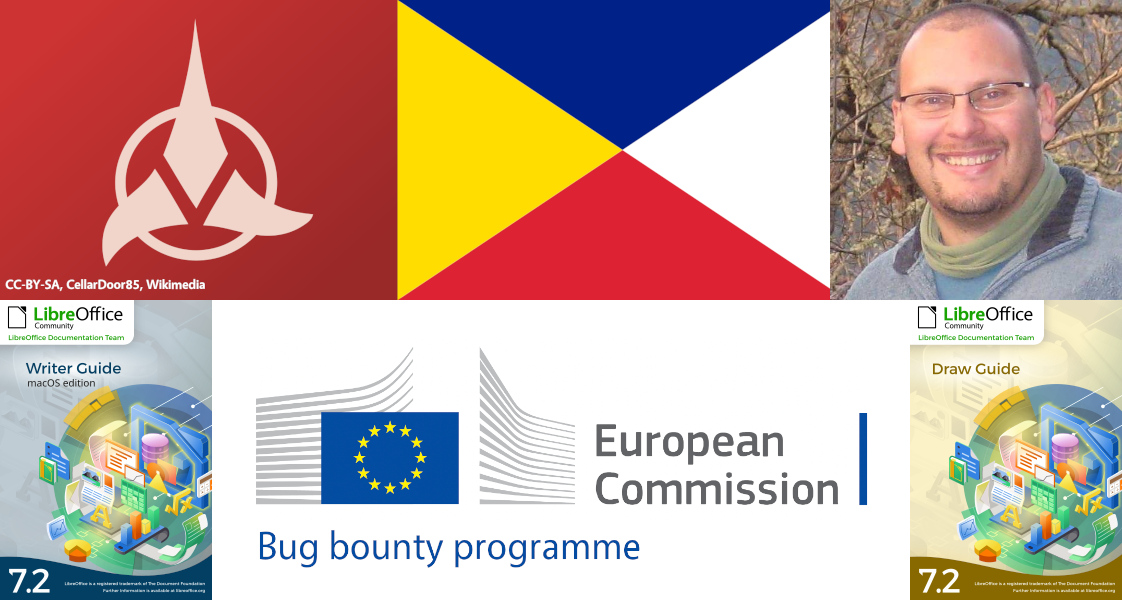
Today we have a quick chat with Baltasar García Perez-Schofield, who recently became a Member of The Document Foundation, the non-profit entity behind LibreOffice…

Tell us a bit about yourself!

I’m from Spain, in that north-west corner called Galicia. Professionally I’m a teacher of computer science, and dedicate my spare time to my family, swimming, hiking, and retro computing.

I defended my PhD Thesis in 2002, wrote it entirely in what was then OpenOffice, and later forked to LibreOffice, and more importantly spawned The Document Foundation. I then decided that I should somehow return the favor by collaborating (as far as I could), with the product.

What are you working on in the LibreOffice project right now?

I’ve lately dedicated my time to the Basic interpreter, solving simple bugs such as type-persistence through compilation and execution, or the behaviour of certain functions that do not adhere to the specification.

Why did you decide to become a member of TDF?

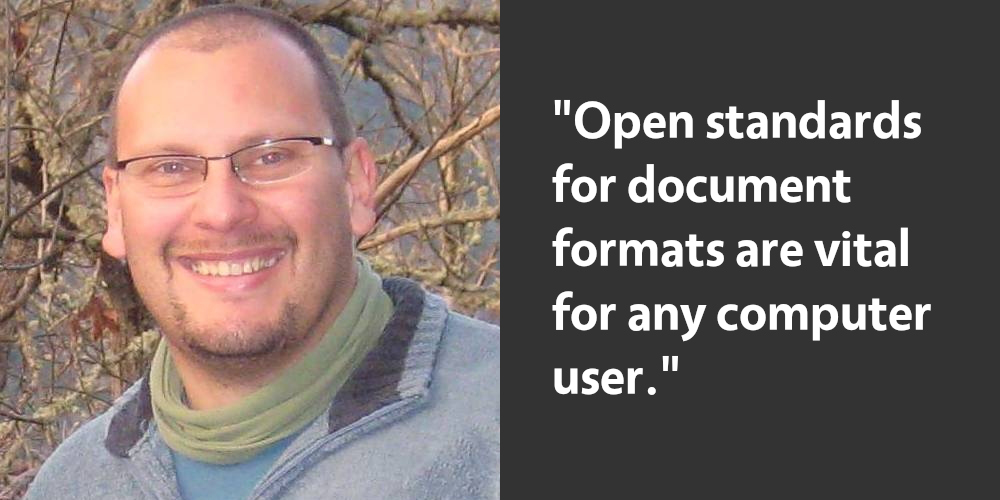
I think that the open standards for document formats are vital for any computer user, and therefore defend the TDF’s existence. In that sense, becoming a member was an honor for me, and I also perceived it as a recognition for the work I did.

Anything else you plan to do in the future? What does LibreOffice really need?

I plan to continue collaborating with LibreOffice, at least in my free time gaps. Regarding the needs of LibreOffice, I think it probably needs marketing and compatibility (right now it is a must) with MS Office. The objective would be to let computer users realize that they have the possibility to use a free product as capable (or even more so!) as the private one.

Thanks to Baltasar for all his contributions! All LibreOffice users can join him in helping to improve the software, and find out what they can do for LibreOffice. 👍

“LibreOffice Expert” magazines available for schools and communities

Recently, Linux New Media released a special edition magazine, full of tutorials, tips and tricks about LibreOffice. And some articles were contributed by members of the LibreOffice community! Well, we have 50 issues to give away – and we’d like to get them in the hands of students, communities and other projects around the world:

The magazines come with DVDs that include LibreOffice for Linux, Windows and macOS, alongside extra templates, extensions and guidebooks. So ideally, we’d like to get these magazines out to locations and communities where internet connections aren’t always available – so that the users can really benefit from the discs.

So, if you can help us to distribute these magazines to students, local communities and other places, drop us a line! Let us know what you plan to do with them, and how many you need. Send us an email and let’s spread the word!

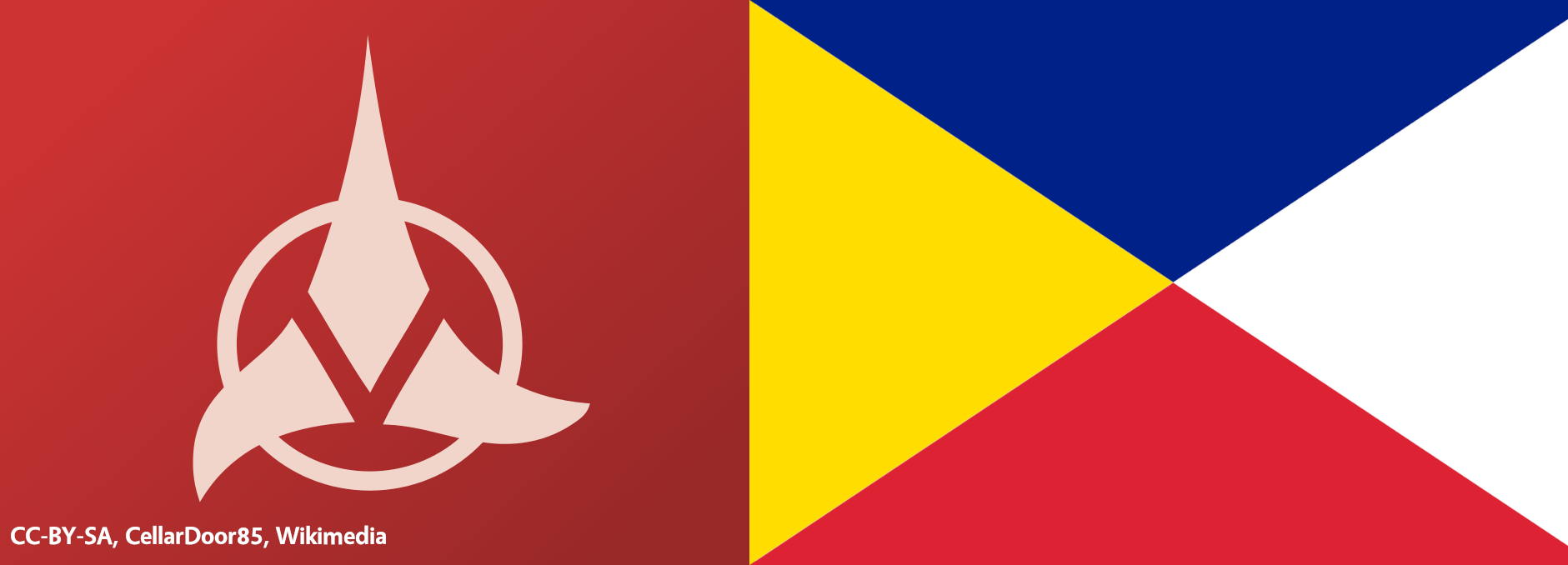
LibreOffice: The Klingons and Interslavs are already here

We happily report that Klingons have – at this point – not taken over control of the LibreOffice bug-tracker.

While Klingon language support still ranks somewhat low among issues thought not to be essential, the federation that is LibreOffice 7.3 will also bring Interslavic support to the mix when released come early February.

Since you were wondering, Interslavic is an artificial language meant to operate in the cross-section of Slavic interlingualism.

Targ-herders everywhere are reportedly mildly pleased. The synergy in KSL (Klingon as second language) regions is a potato harvest that we can all appreciate.

Undeterred by the confines of a monogalactic community of translators, LibreOffice numbers are growing. Hundreds of millions or earthlings alone now have powerful tools honed in their native languages.

Together we bring free and open source software to the Nekrit Expanse. We can go into space, and beyond. Use, inspect, improve and share freely — with all. Full tut ahead.

Thanks, Qapla’ and hvala!


Update: check out the Interslavic Spellchecker extension


And now, a bit more seriously…

Yes, initial language support for Klingon and Interslavic is coming to LibreOffice. But before you ask: “Why don’t you focus on X or Y instead?” Remember that LibreOffice is a volunteer-driven, community open source project. Individual developers (and companies in the ecosystem) work on what’s important for them, and not to the detriment of anything else. If someone wants to help with a Klingon translation, that doesn’t mean others in the project stop working on other important tasks!

And especially: even if Klingon and Interslavic support sounds like a novelty, it shows how versatile free and open source software is. As mentioned, LibreOffice is available in over 100 languages, and we’d like to expand that even further. The more languages the better, especially if we can help to boost IT skills in places which don’t otherwise have software in their native languages!

Join our localisation projects, and give us a hand!

LibreOffice 7.2.5 is now available

Berlin, January 6, 2022 – The Document Foundation announces LibreOffice 7.2.5 Community, the fifth minor release of the LibreOffice 7.2 family, which is available on the download page.

This version includes 90 bug fixes and improvements to document compatibility. The changelogs provide details of the fixes: changes in RC1 and changes in RC2.

For enterprise-class deployments, TDF strongly recommends the LibreOffice Enterprise family of applications from ecosystem partners, with long-term support options, professional assistance, custom features and Service Level Agreements: LibreOffice in Business.

LibreOffice Community and the LibreOffice Enterprise family of products are based on the LibreOffice Technology platform, the result of years of development efforts with the objective of providing a state of the art office suite, not only for the desktop but also for mobile and the cloud.

LibreOffice Technology-based products for Android and iOS are listed on this page, while products for App Stores and ChromeOS are listed here.

Get help, and support us

Individual users are assisted by a global community of volunteers, via our community help pages. On the website and the wiki there are guides, manuals, tutorials and HowTos. Donations help us to make all of these resources available.

LibreOffice users are invited to join the community at Ask LibreOffice, where they can get and provide user-to-user support. People willing to contribute their time and professional skills to the project can visit the dedicated website at What Can I Do For LibreOffice.

LibreOffice users, free software advocates and community members can provide financial support to The Document Foundation with a donation via PayPal, credit card, bank transfer, cryptocurrencies and other methods on this page.

LibreOffice 7.2.5 is built with document conversion libraries from the Document Liberation Project.

Download LibreOffice 7.2.5

LibreOffice at FOSDEM 2022 – February 5-6

FOSDEM is a non-commercial, volunteer-organized European event centered on free and open-source software development – and one of the biggest such events of its kind. Normally it takes place in Brussels, but due to the pandemic, it’ll be online this year.

And the LibreOffice community will be there! We’ll have 25 talks about the technology behind the suite, open standards, and other topics.

See a full list of the talks here, and join us!

LibreOffice project and community recap: December 2021

Happy new year, everyone! Here’s our summary of updates, events and activities in the LibreOffice project in the last four weeks of 2021 – click the links to learn more…

  • We started December by announcing the LibreOffice Technology DevRoom Call for Papers for FOSDEM. This year, FOSDEM will take place online once again, and the LibreOffice community will be present with talks and discussions. Join us!

  • In December, TDF announced two updates for LibreOffice, for the 7.2 and 7.1 branches. These fix an important security issue and all users are recommended to upgrade.
  • Meanwhile, the Coalition for Competitive Digital Markets, a group of more than 50 technology companies from 16 different European countries, sent an open letter to members of the European Parliament to raise awareness about interoperability and to impose stricter rules on big companies – the so-called ‘big tech’ companies – that act as gatekeepers and prevent transparency and openness in digital markets.

  • In November, we ran a Month of LibreOffice, crediting contributions all across the project. And in December, we announced the winners – 324 people could claim sticker packs! And we had extra merchandise to give away as well…

  • We talked to Ravi Dwivedi from the Indian LibreOffice community. He’s helping to spread the word about free software in India, and has interesting insights into free software adoption in his country.

  • The Document Foundation, the non-profit entity behind LibreOffice, recently had an election for its Board of Directors. Well, the preliminary results came in – click the link to see the lists of full and deputy members.
  • ODF is the OpenDocument Format, the native format used by LibreOffice (and supported by many other apps too). Then there’s the ODF Toolkit, a set of Java modules that allow programmatic creation, scanning and manipulation of ODF files. Svante Schubert gave us some updates.

  • Finally, we wished everyone a good start to 2022 – here’s hoping that we’ll be able to meet more in-person this year, and celebrate good times together.

Keep in touch – follow us on Twitter, Facebook and Mastodon. Like what we do? Support our community with a donation – or join us and help to make LibreOffice even better!