LibreOffice and Google Summer of Code 2021: The results

Google Summer of Code logo

This year, LibreOffice was once again a mentoring organization in the Google Summer of Code (GSoC), a global program focused on bringing more student developers into free and open source software development. Seven projects were finished successfully. Students and mentors enjoyed the time, and here we present some of the achievements, which should make their way into LibreOffice 7.3 in early February 2022!

You can experiment with the new features by using daily builds and report any problems in our bug tracker.


100 Paper Cuts by Bayram Çiçek

Mentors: Muhammet Kara (Collabora), Heiko Tietze (TDF)

100 Paper Cuts aims to improve user interface, implementing enhancement requests and solving the most annoying issues on the user experience (UX) side of LibreOffice.

Bayram fixed six bugs from different topics. Most notable are border preview not showing the diagonal border option, a bug where cropping flipped images occurred at the wrong side, and mouse-over effect for different palettes in the area tab.

Learn more about 100 Paper Cuts in the final report.

Screenshot of diagonal borders


Integrate .ui dialogs with translation tooling/string search webservice to help translators by Sary Nasser

Mentors: Christian Lohmaier, Olivier Hallot (TDF)

Sary automated the adding of screenshots to our translation platform, Weblate, while associating them with translatable words. This will greatly help translators by providing context for their work.

Learn more about the translation tooling in the final report.


Tests for the VCL graphic backends by Akshit Kushwaha

Mentors: Tomaž Vajngerl, Luboš Luňák (Collabora)

LibreOffice adapts its user interface to different operating systems with the help of its graphics toolkit Visual Class Library (VCL). Thanks to Akshit’s work, we have a working suite of automated graphics rendering tests. There is now also the ability for users to run the tests manually, inspect the results and attach them to our bug tracker in case there is a problem.

Learn more about the tests in the final report.

Screenshot of VCL tests


Improving table styles by Balázs Sántha

Mentors: László Németh (independent), Michael Stahl (allotropia)

This project resulted in fixes for the most annoying Writer table style issues. Further work is needed to provide full DOCX compatibility.

Learn more about DOCX tables styles in the final report.


Make SVM (StarView Metafile) format independent of the VCL Metafile + tests of the format by Panos Korovesis

Mentors: Tomaž Vajngerl, Miklos Vajna (Collabora)

Thanks to the work of Panos, the SVM file format is handled independently of internal VCL constructs, which will make important reorganisation of the VCL code possible. Panos also created automated tests for the SVM format.

Learn more about the SVM project in the final report.


Show text styles together in the sidebar by Anshu Khare

Mentors: Mike Kaganski, Tomaž Vajngerl (Collabora), Heiko Tietze (TDF)

Both paragraph as well as character styles are essential means to format text. Many users struggle with this concept and use direct formatting. Also, we don’t show both at once, and the two style families are not obvious to spot for casual users.

In order to improve the handling of styles (and as necessary preparation for the styles highlighter), Anshu started to rework the code. The new code makes it now possible to merge both lists into one view. A first patch was also part of the project – although it is not finished yet.


Implement Interface for external data source import into Calc by Tushar Kumar Rai

Mentors: Markus Mohrhard (independent), Heiko Tietze (TDF)

The data provider allows to import various data such as local CSV files or streams from external sources, and to apply transformations like adding/removing rows or columns, formatting and numerical operations with the data before it is inserted into the sheet. Plus, to update the data by still applying the transformations is just a click.

The project aimed to rework the user interface. Tushar organized the layout according the user workflow and common UI principles and made the workflow of adding/removing transformations easy to understand. He also added a couple of transformations.

Learn more about the data provider project in the final report.

Screenshot of Data Provider


Wrapping up

Many thanks to all students who spent their summer time improving LibreOffice. You are awesome! And special thanks also to the mentors who always put so much love and energy into these tasks. That’s what makes LibreOffice rock.

Now we are looking forward to next year’s GSoC. If you are interested, why not prepare early? Learn more at out wiki page where some ideas are listed.

Participating in GSoC is a great way to build your skills, and show future employers what you’re capable of!

Announcing the election for the next TDF Board of Directors

Marina Latini, on behalf of the Membership Committee, writes:

On October 18, we officially announced the upcoming election for the next Board of Directors of The Document Foundation, the non-profit entity behind LibreOffice.

As per § 7 II of our statutes (binding German version and non-binding English translartion) the Board’s term lasts two years. The current Board started its duty on February 18, 2020. Therefore, the old Board remains in charge until the end of February 17, 2022, so the new Board will be in charge the day after that, which is February 18, 2022.

That upcoming term will then (regularly) end on February 17, 2024, so the next election of the Board of Directors will take place before.

As per § 6 III, only members of the Board of Trustees of The Document Foundation, as well as current members of any of its bodies, are eligible to be elected into the Board of Directors, and the election is prepared and supervised by the Membership Committee (§ 7 II).

The active electoral right is reserved to those who have been members of the Board of Trustees before this announcement (§ 7 II).

§ 6 III also states that members of the Board of Directors or their deputies may not be members of the Membership Committee and vice versa. This means that current members of the Membership Committee are eligible to be elected, but with the acceptance of their new role they lose their current role in the MC. For clarification, they have to step down from the Membership Committee, with effect no later than to the beginning of the new term of the Board of Directors, the minute before accepting to become a member of the Board of Directors.

There is one more notable limitation: Per § 8 IV of the statutes, a maximum of 1/3 members of the Board of Directors is allowed to work on an employment basis for the same company, organisation, entity or one of its affiliate organisations.

Nomination of candidates fulfilling the above requirements, as well as self nomination is welcome. In total, at least seven Board of Directors members are required, and given there are enough candidates, up to three deputies can be elected (§ 7 II). As deputies are on duty quite often, we encourage many candidates to participate.

Re-election of current members of the Board of Directors is permitted (§ 7 II).


Please send nominations and self-nominations via e-mail to elections@documentfoundation.org (which reaches the Membership Committee in private) and at the same time to board-discuss@documentfoundation.org (which is a public mailing list).

We kindly ask nominees who would like to stand for election to provide a statement of up to 75 words – longer statements will be cut off at the maximum – on their candidacy as continuous text (so no bullet lists or multiple paragraphs). In addition, you have to provide and keep up to date your full name, e-mail address and your corporate affiliation, if any, or state the lack of an affiliation, and please announce that you will provide information on all future changes as soon as possible. Specifically, it is necessary to indicate all information regarding § 8 IV of the statutes.

Discussions with the candidates and questions to them as well as questions about the election should take place on the public board-discuss@documentfoundation.org mailing list. For details on how to use the mailing list, see here.

Eligible voters will receive further details via email prior to the start of election, including a summary of the candidates, details on how to access the voting system, and instructions on how to independently verify the vote count. Please ensure the Membership Committee has your recent and correct e-mail address on file. For questions, you can reach the Membership Committee in private at elections@documentfoundation.org.


Following the timeline set forth in § 7 II, requiring a 45 day advance notice, we hereby announce the following timeline for the election:

(00:00 is beginning of the day, 24:00 is end of the day)

  1. Monday, 2021-10-18: announcement of the election; and start of the nomination phase
  2. Thursday, 2021-11-25, 24:00 CET/UTC+1: end of the nomination phase (one week before the election starts, as per § 7 II)
  3. Friday, 2021-12-03, 00:00 CET/UTC+1: official start of the election (at least 45 days after announcement of the election, as per § 7 II)
  4. Monday, 2021-12-13, 24:00 CET/UTC+1: end of the election
  5. Tuesday, 2021-12-14: announcement of the preliminary results of the election and acknowledgement of role
  6. Wednesday, 2021-12-15, 00:00 CET/UTC+1: start of the challenging phase
  7. Monday, 2021-12-20, 24:00 CET/UTC+1: end of the challenging phase
  8. afterwards: official announcement of the final results
  9. Friday, 2022-02-18: new Board of Directors officially in charge, and election of a Chairperson and a Deputy Chairperson from among its members

Live sessions with the candidates: Between the end of the nomination phase (Thursday, 2021-11-25, 24:00 CET/UTC+1) and the official start of the election (Friday, 2021-12-03, 00:00 CET/UTC+1), the Membership Committee will organise public – and if possible recorded – live sessions, where members of the Board of Trustees can ask questions to the candidates. Everyone, also non-members, is invited to join these sessions. We will also make available to the general public the recordings and the answers given.

Questions to the candidates: In addition, after the end of the nomination phase (Thursday, 2021-11-25, 24:00 CET/UTC+1), the Membership Committee will provide a set of questions to all the candidates. All candidates are kindly invited to send their answers, which will also be made available to the general public.

Be advised that the newly elected Board of Directors will only be in charge from February 18, 2022 on. The current Board of Directors will however include them in the decision making process, to ease up the transition.

Challenges to this announcement with respect to the deadlines outlined have to happen no later than seven (7) days after this announcement, via e-mail to elections@documentfoundation.org (which reaches the Membership Committee in private).

Challenges to the preliminary results of the election have to happen until the deadline set forth above, via e-mail to elections@documentfoundation.org (which reaches the Membership Committee in private).

Community Member Monday: Hlompho Mota

Today we’re talking to Hlompho Mota, who’s working on the Sesotho LibreOffice translation project in Lesotho…

Tell us a bit about yourself!

I am a native of Lesotho, and a dreamer and a person who aspires to make changes. Currently I’m working in a business that serves other businesses in Lesotho to get recognition in the market, and generally grow to become more self-reliant. Other than my business, I do try and dabble in technology and try to understand how it works – and get a sense on how it can be relevant in the area of life that I live in at this moment.

But besides that, I consider myself as lifelong learner and I hope that the learning will continue for the rest of my life. Currently, I’m a self-taught developer trying to participate in as many open-source projects as possible, with the hope of bringing much-needed development to my part of the world.

How did the Sesotho LibreOffice translation project get started?

I’ll refer to a few individuals who I came across, who grew the seeds to contribute to this project.

  • Mamako Mota: My wife, who was somehow able to believe in some of my vision, and hopes that the vision will become reality someday. She was willing to help me get the word out to people.
  • Edwin R Brown: One of the most intelligent people that I had the honour of meeting. He lived by his philosophy of trying to make the world a better place. During the times that he came to Lesotho, we were able to talk about some of the many ways that we looked at the world. However, given that there are some serious changes that need to be brought about with developing the country, I feel that we need some changes in the outlook in my part of the world, and only then will we be able to understand this man’s vision.
  • Vincent D. Warmerdam: A machine learning practitioner and another person I was humbled enough to meet. From how he hold his talks on in the Python community, right down to how he does his work – it all radiates a purpose that has inspired me to have an outlook on what can happen when people have enthusiasm for the work that they do. Besides that, he has shown me some of the ways that vision can be used to develop language, and has shared the tools and resources that he personally developed.
  • Maele Neko: One person who I originally spent time with, where we had hoped to make significant developments in Lesotho and Sesotho. But we were originally came across the challenges that came along with translating, due to the differences in Lesotho and South African dialect. The challenges in life and the discussions I’ve had with him have inspired me to continue. However, he was able to contribute to Sesotho knowledge and language on Twitter.
  • Lastly, Red Hat, the company: I see it as a company that was driven to make a business model out of open source projects. In time, I would either hope to work with this organization, or build one like it – in the hope that I can be the change that is needed in Lesotho and Africa in total.

Is free and open source software widely known/used in Lesotho? Are there any challenges there to wider adoption?

This is where there is a tragedy, yet I aspire to help with creating a solution. Given some of the dynamics that are involved in the size and demographics of the the population, there has been little support from many of the profit-driven organizations. To make matters worse, the adoption of open source is yet to reach ideal levels because of the lack of understanding – because technology as a whole in our part of the world has been slow. The drive to do better is something that still needs to be developed.

With that being said, there are other parts of the my world where my work and passion cross paths – mainly in terms of developing businesses to become better, and helping them to become technologically savvy. So in that light, the aim of this project would be realised in time, when businesses begin to embrace technology, and the language barrier will be tackled in one way or another. In this case, my vision is that Lesotho will become a home of open source – and will become more of a player in the tech sector, rather than just a spectator.

How can people help with the translation or general promotion in your area?

The vision is not just in translation, but that we go though this process and that Lesotho has a better understanding of open source and technology. The open source community needs to understand that the vision of open source (or at least from my view) has always been about making progress more relatable to society as a whole, than just about competing with closed source software.

However, I hope to do my bit to make sure that open source spreads to as many people as possible. Translation is the first part of this, but in time I hope to be an ambassador and developer. (After fumbling with C and C++, hopefully I can help there as well.)

From this point onwards, I hope that we can not only just translate, but have a contextual discussion on why some ideas are named the way that they are – and hopefully then, open source can then make the impact that it’s meant to make.

Many thanks to Hlompho for his work, and sharing his thoughts! Check out our Native Language Projects for LibreOffice in many other languages around the world – and if yours is missing, you can help us to add it!

Next batch of videos from the LibreOffice Conference 2021

Here are some more videos from the LibreOffice Conference 2021! Check out the playlist, using the button in the top-right – or scroll down for links to individual videos:

Please confirm that you want to play a YouTube video. By accepting, you will be accessing content from YouTube, a service provided by an external third party.

YouTube privacy policy

If you accept this notice, your choice will be saved and the page will refresh.

Individual links

Note: many of these are also available on PeerTube, and more will be added…

Stay tuned for more videos from rooms 2 and 3 of the conference!

Let’s do awesome things! Get support for your projects and ideas from our budget

Want to organise a local (or online) LibreOffice event? Need some merchandise to boost your project or community? Then we can help you! The Document Foundation, the non-profit behind LibreOffice, is backed by contributions from ecosystem members and volunteers, as well as donations from end-users. This helps us to maintain TDF, but we can do a lot more too. And next year, we want to do a lot of projects again!

Each year, we set a budget that LibreOffice projects and communities can use for financial support. Some examples:

  • Booking a location, and travel refunds for a local event (eg a translation sprint)
  • Merchandise for community members, to use at events and conferences
  • Infrastructure to start a new project (or help an existing one)

So if you have some ideas for a meetup, project or activity that could benefit from financial help, let us know! We can also assist you in other ways: our team members are there to help you, and enable you to do exciting and interesting things.

You don’t need to work out all the technical details right now – the main thing is that we have an overview. To help us with planning, we kindly ask you to send your ideas by the end of November, as we try to prepare the 2022 annual budget during December.

You can send your proposal (with estimated costs) to budgets@documentfoundation.org and we’ll take a look. Of course, can’t guarantee that everything will be approved, but we’d love to hear your ideas!

Further reading

The Document Foundation announces LibreOffice 7.2.2 Community

Berlin, October 14, 2021 – The Document Foundation announces LibreOffice 7.2.2 Community, the second minor release of the LibreOffice 7.2 family targeted at technology enthusiasts and power users, which is available for download from https://www.libreoffice.org/download/. This version includes 68 bug fixes and improvements to document compatibility.

LibreOffice 7.2.2 Community is also available for Apple Silicon from this link: https://download.documentfoundation.org/libreoffice/stable/7.2.2/mac/aarch64/.

For enterprise-class deployments, TDF strongly recommends the LibreOffice Enterprise family of applications from ecosystem partners, with long-term support options, professional assistance, custom features and Service Level Agreements: https://www.libreoffice.org/download/libreoffice-in-business/.

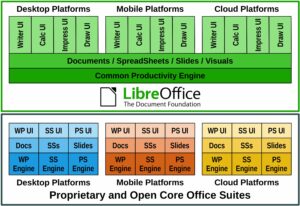
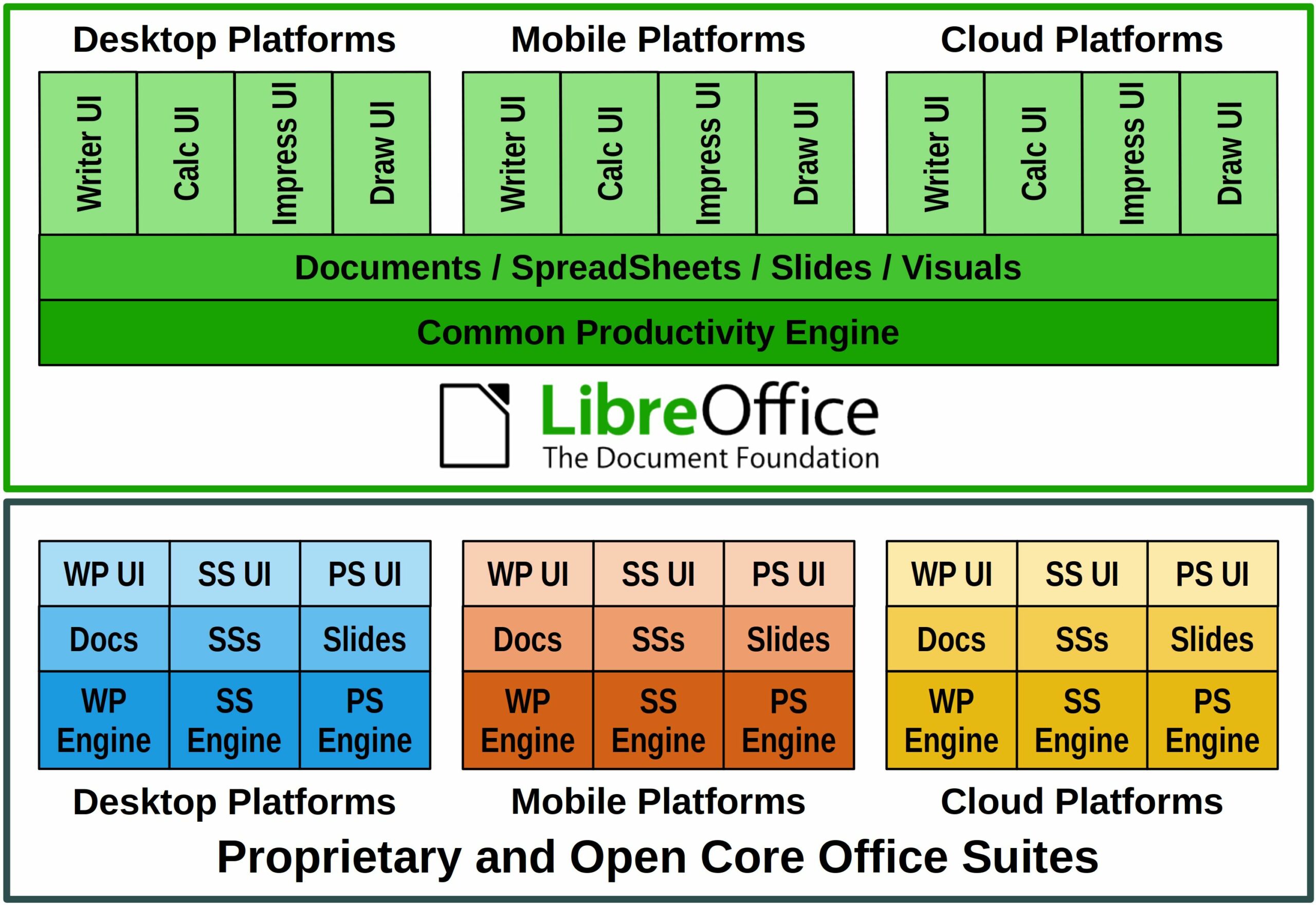
LibreOffice Community and the LibreOffice Enterprise family of products are based on the LibreOffice Technology platform, the result of years of development efforts with the objective of providing a state of the art office suite not only for the desktop but also for mobile and the cloud.

Availability of LibreOffice 7.2.2 Community

LibreOffice 7.2.2 Community represents the bleeding edge in term of features for open source office suites. For users whose main objective is personal productivity and therefore prefer a release that has undergone more testing and bug fixing over the new features, The Document Foundation provides LibreOffice 7.1.6.

LibreOffice 7.2.2 change log pages are available on TDF’s wiki: https://wiki.documentfoundation.org/Releases/7.2.2/RC1 (changed in RC1) and https://wiki.documentfoundation.org/Releases/7.2.2/RC2 (changed in RC2).

LibreOffice Technology based products for Android and iOS are listed here: https://www.libreoffice.org/download/android-and-ios/, while for App Stores and ChromeOS are listed here: https://www.libreoffice.org/download/libreoffice-from-microsoft-and-mac-app-stores/

LibreOffice individual users are assisted by a global community of volunteers: https://www.libreoffice.org/get-help/community-support/. On the website and the wiki there are guides, manuals, tutorials and HowTos. Donations help us to make all of these resources available.

LibreOffice users are invited to join the community at https://ask.libreoffice.org, where they can get and provide user-to-user support. People willing to contribute their time and professional skills to the project can visit the dedicated website at https://whatcanidoforlibreoffice.org.

LibreOffice users, free software advocates and community members can provide financial support to The Document Foundation with a donation via PayPal, credit card or other tools at https://www.libreoffice.org/donate.

LibreOffice 7.2.2 is built with document conversion libraries from the Document Liberation Project: https://www.documentliberation.org.