Behind the scenes at TDF: Marketing and Communications

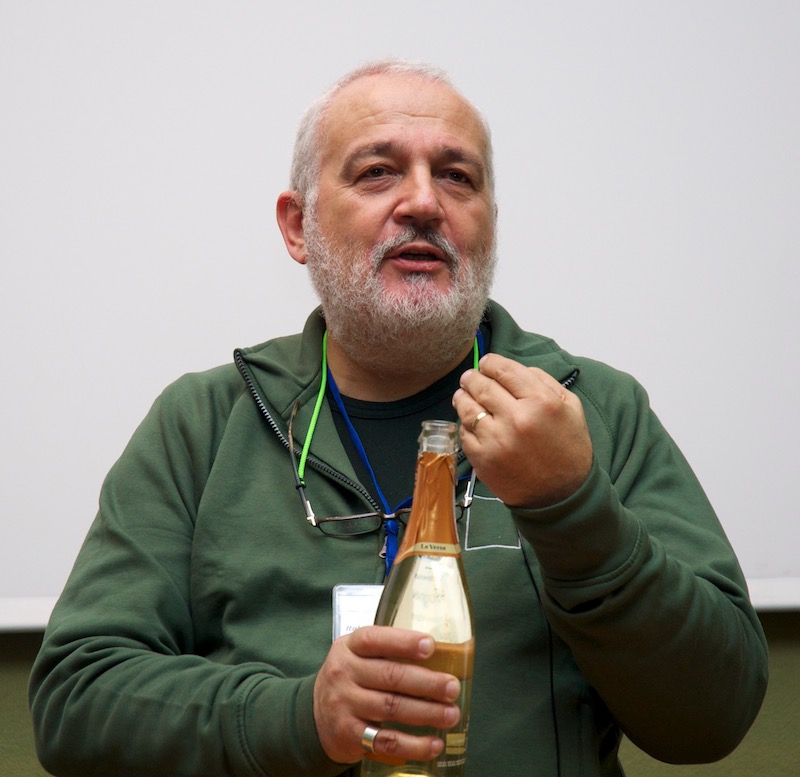
Italo VignoliThe months between April and the first half of August have been rather busy, as I have been working – together with the other members of TDF staff and several volunteers – at different projects: the first TDF Annual Report, the final development stage of LibreOffice 5.0, including two bug hunting sessions, the announcement of the publication of ODF 1.2 by ISO, and the launch of LibreOffice 5.0. In addition, I have worked at smaller tasks such a announcements of minor releases.

The bigger task, as everyone can imagine, has been the launch of LibreOffice 5.0, as we wanted to make a real impact with this new major release.

First of all, I started to update the mailing lists for the distribution of press releases, which are a fundamental tool for the success of the launch. Since January, TDF is using a dedicated open source tool – phpList – which is saving a lot of work, especially when keeping mailing lists updated. In fact, phpList keeps track of all bounces, which are stored in each record, making it easier to spot old or wrong email addresses.

Journalists move around quite frequently, and only a small percentage remembers to update their record. For all the others, you have to chase them using a combination of search engines and other tools such as LinkedIn and About.Me. It is a rather tedious activity, but is key to ensure the success of each press release.

Since TDF has a combined mailing list of over 13,000 journalists worldwide, I have had to review and update around 10% – or over 1,000 email addresses – between May and July. To avoid being burned by this task, I have done a few each evening, while watching TV.

In early July, I have started to work at the launch documents, by looking at new features and trying to identify those which were more important. I have also set the announcement date at August 5. In addition, together with Jan Holesovsky and Charles Schulz, and the graphic designer Barak Paz, we have worked at a new identity for LibreOffice 5.0, with a new splash screen and a new start center.

In mid July, I have started to “leak” some news to a selected number of journalists, to start getting coverage on the upcoming major release. I have sent short messages to all the editors who clicked on our previous announcements, showing some interest on our press releases. I have also invited these editors to pre-release conference calls on August 3, or to 1to1 interviews on August 3 or August 4.

In late July, I distributed the final draft of the press pack, which was based on a press release, a feature backgrounder, and a “road to LibreOffice 5.0” document highlighting the major features of all the previous LibreOffice releases since January 2011. I also developed a timeline infographics, to explain the three stages of LibreOffice development: 3.x for code cleaning, 4.x for code refactoring, and 5.x for UI and feature innovations. This document was published on TDF blog as a teaser release on July 29.

I also prepared a short slide show to introduce LibreOffice 5.0 to journalists, with some visuals which were supposed to be used also to embellish the articles.

On August 3, I hosted pre-announcement conference calls for journalists based in Europe and in the US, for a total of 8 journalists (Extension Media, Genbeta, Golem, IDG News, ITWeb, PC World, The Inquirer and V3). I also sent the Press Kit under embargo to Betanews, ECT News, Liliputing, IT World and Network World.

On August 4, together with Michael Meeks, I hosted the pre-announcement 1to1 interview with InfoWorld. In addition, I have provided some quick answers to questions raised by journalists who received the press kit.

On August 5, I published the announcement message and the blog post, and distributed the press release to over 4,000 journalists worldwide. Over 30% viewed the announcement and clicked on the link, and half of them – around 600 journalists – published an article. As a consequence, we had a spike of visits to the blog and a spike of donations (which are proportional to downloads). All in all, a very successful announcement, thanks to the work of our developer community who has been able to put together a fantastic product, and of the other volunteers who have contributed with ideas and comments to make LibreOffice 5.0 stand out from the office suite crowd.

Behind the scenes at TDF: LibreOffice QA, so much accomplished so far this year!

Many of you are familiar with LibreOffice or one of its predecessors (StarOffice, OpenOffice.org, etc..), but you may not be aware of the immense amount of work that goes into the production of the software and the careful testing of each release. Although there are many different teams within the LibreOffice community who each perform essential roles in the collaborative development process, I don’t have enough space to cover them all today, so I’ll focus on the LibreOffice QA Team, a group of volunteers and employees of various companies around the world who work tirelessly to identify issues with LibreOffice on all platforms, including issues of interoperability, process, accessibility, and ease of use.

robinson-in-brusselsThe QA Team has accomplished much in the first quarter of this year, including significant reduction of UNCONFIRMED bug count, broad testing of our support for media on all major platforms, migration of our Bugzilla bug tracker to our own infrastructure, information and advice for our Annual Report, exhaustive work testing our LibreOffice Android port, and major improvements with our bibisect repositories. I’m sure I’ve omitted something from that list, but the sentence was getting long enough that I figured I should stop before I ran out of breath 😉

As of mid-December of last year, our UNCONFIRMED bug count was steadily dropping, but was still above 500. Throughout the holiday season and into January, the QA Team amazed everyone by lowering the number of bugs that needed triage to sub-400, then to 359, and even down below 280. Although our current count has stabilized around 350, we hope that with increased participation we can continue to chip away at the remaining pile.

Although most of the code for displaying images is cross-platform, LibreOffice uses different libraries on Win, Mac, and GNU/Linux for audio and video playback. With confusion about media playback a persistent issue, the QA Team created a set of wiki pages to help clarify the extent and quality of media support on all of our platforms, as well as provide user-friendly information about what codecs we recommend for use. Test support is ongoing, and we very much welcome additional test results or suggestions on how we can increase our playback support on proprietary platforms such as Windows and Mac OS X.

QA’s biggest project this year to date has been our Bugzilla Migration from Freedesktop.org to TDF (The Document Foundation) infrastructure. With careful planning and dry-runs tested over many weeks, our migration went very smoothly and had minimal interruption to the overall development of LibreOffice. With TDF control of Bugzilla in place, we’ve been able to make additional changes to the bug tracker, add new Components and Products for all of our current software projects, and even make small tweaks and add well-crafted messages to assist our users in reporting, updating, and interacting with our bugtracker, with the QA Team, and our developers. We will continue to make changes and improvements to Bugzilla throughout 2015, and are eager to hear from you about any bugs you’ve found in LibreOffice or suggestions you have for enhancement. Please file all bugs and enhancement requests at: https://bugs.documentfoundation.org/.

Throughout 2014, people continually asked me about running LibreOffice on Android, and by the beginning of 2015, I was excited to hear that our port was on its way! Upon the arrival of editing support (currently in beta) in the LibreOffice for Android app, QA has provided insightful feedback about various aspects of document use, feature support, and even special, edge-case problems that affect only a limited number of our users, but which we would like to eliminate (as with all bugs!) With volunteers stepping up to test on phones, tablets, and even laptops, the QA Team has provided extensive testing of our port of LibreOffice to Android, and has committed to keeping UNCONFIRMED bugs for Android in the single digits.

As in 2014, our bibisect repositories remain one of the best investigative tools of the QA Team to help identify the point at which regressions have been introduced into the codebase. With the ability to use binary search and pre-built binaries to quickly focus-in on a particular regression, we can use our time much more effectively, avoiding building and re-building the same versions. The more steps that QA can take to ferret-out the particular commit that caused a crash or changed program behavior, the faster that developers can create a fix and patch the code for the next version of LibreOffice.

Historically, our bibisect repositories have contained only a fraction of all commits to our mainline repository. Due to a confluence of factors, including server resources, software limitations, and hard disk sizes, it was most prudent for us to include only every 60th commit, allowing us to drastically narrow the search field to a much more manageable size. Armed with faster hardware and some careful optimization of non-relevant commits, superstar volunteer Matthew Francis has created a breed of “max” bibisect repositories that include all relevant commits in a single repository. These new repositories will give the QA Team the ability to delve much deeper into the particulars of a given regression, often identifying the particular developer who committed the change, allowing us much faster feedback and progressed towards a clean and consistent codebase.

Of course, QA works on many other tasks as well, including testing and triaging our Android Impress Remote, providing feedback about our websites and infra, helping the Document Liberation Project, and helping to identify new enhancements for LibreOffice. Although our primary focus is the LibreOffice suite, we do our best to keep track of everything else in the ecosystem, so that we can identify any potential problems before they affect many users.

With new platforms such as LibreOffice Online announced, and more interesting developments on the horizon, the members of the QA Team will definitely have more than enough work to keep them busy throughout 2015. If you’re interested in joining our efforts, or just curious about what’s involved in testing such a large project, drop by #libreoffice-qa on Freenode or say hello on our mailing list.

Cheers, Robinson

Behind the scenes at TDF: Openness, transparency and projects

by Florian Effenberger, Executive Director of TDF

Florian Effenberger

With the second quarter being over, the longest day of the year having passed by, and summer vacation time coming up for many of us, it’s time to look back what happened at TDF the first six months of the year. With many projects, activities and developments going on, time has passed by once again at lightning speed, and I want to highlight a few of the things that happened, enabled by our invaluable volunteer contributions, our generous donors, and our wonderful and amazing community, end-users and adopters. In my capacity as Executive Director, I mostly shed a light on the administrative bits of the foundation running, and my staff colleagues will give an overview on their respective areas of working later on.

One of the most noteworthy things for sure is the publication of our annual report, which for the first time since TDF’s existance has been published in English and in German at the same time, a model we want to follow also for the upcoming years. The English version has been polished up by a designer, and will also serve as printed brochure for upcoming events and meetings.

Likewise, we have begun publishing the accounting ledgers to the general public, to give you an overview on how we spend donors money and what projects we invest in. Accompanied by that is the publication of the board reports on the various area of our project.

Staff-wise, I am very happy that since spring of 2015, Italo Vignoli has been contracted by TDF for marketing and PR, a role he has been filling on a volunteer basis for some time already. Supported by a future marketing intern, Italo will work on press releases in joint cooperation with the community, regular marketing calls and a TDF merchandising online store.

A lot of other projects have been prepared behind the scenes, like our tenders on MozTrap and on LibreOffice UX, where we’re working hard on making them a success just like last year’s Android tender.

Community-Meeting in Essen

On the foundation side, we now have 204 members and even more contributors around the globe. Being a Bavarian, one thing that makes me particulary proud is of course that we welcomed the city of Munich in our Advisory Board early this year.

There’s a lot of things cooking at TDF, and the second half of the year will be at least as exciting as the first one. With the LibreOffice Conference coming up in Denmark, the certification program growing strong and our grant request page online for community proposals, I’m more than excited to see what projects, ideas and new things come up at TDF the next weeks and months.

One of my personal tasks for the rest of the year is to engage stronger again in my native language community. We recently had an exciting community meeting at Linuxhotel in Essen, where we also had a chance to exchange thoughts and views with the Italian community, represented by Italo Vignoli. The German community has traditionally been a strong one, so 18 people in total found their way to the meeting. With the setup of regular German community phone conferences, including one dedicated call for the marketing of LibreOffice 5.0, we will work on getting more contributors in and engage in local marketing of LibreOffice – the best free office suite and one incredibly exciting community!

Behind the scenes at TDF: Certification Project, an update

Italo Vignoli is one of the founders of The Document Foundation, and has been a member of the first Steering Committee and then of the first Board of Directors until 2014. He has been active in marketing since the launch of the project, and has created the LibreOffice certification project from scratch. He is a member of the staff, in charge of certification and now also of marketing and public relations.

2015 is another year packed with exciting projects and ideas around LibreOffice and The Document Foundation, so we want to continue our behind-the-scenes series, to share achievements with our community and our generous donours, to whom we’d like to express our sincerest gratitude and thanks for their incredible and wonderful support and their invaluable contributions!

The LibreOffice Certification Project has seen a number of improvements since January, when we have had the first session at FOSDEM.

First, we have added Edmund Laugasson from Estonia and Carlos Rodriguez from Spain, who have gone through the peer-to-peer review process in early May, to the list of certified TDF members.

We have also leveraged the experience of the review sessions to improve the process, in order to make it more dependable for the future. Thanks to several contributions from Sophie Gautier, Lothar Becker and Thomas Krumbein, we have a hugely improved questions & answers document which will help reviewers to keep a high level of consistency between sessions.

In the future, we can easily keep track of the questions which have been asked to each candidate, to check – for instance – if weaknesses have been addressed since the previous review.

Also, we have introduced a face-to-face (via videoconferencing) meeting with Sophie and myself before the peer-to-peer review session, to meet the candidate in a more relaxed way and discuss informally about his certification related activities.

This meeting is not included in the existing review protocol (published online) but will be introduced in the new version released in June, which will become effective for the next peer-to-peer review session.

In June, most documents published on the certification website will be updated, based on the experience gained so far. In addition, other documents will be published, to improve the governance of the process.

Last, but not least, we are working at the first training session for third parties applying for certification.

The training has two objectives:

  • first, to teach candidates free software and related licenses, TDF governance, LibreOffice development and quality assurance,
  • second, meet the candidates face-to-face, and discuss their motivations to get LibreOffice certification.

LibreOffice certification is on its way to become a solid foundation for the ecosystem. The objective is to make it easier for certified professional to get rewarded for their competence, and for the value they can add to migration and training projects.

Behind the scenes at TDF: Localization and Native-Language Projects

Sophie Gautier has been a member of the OpenOffice.org project since its beginning, and then a founding member of The Document Foundation and LibreOffice. She is extremely active in the Francophone and international community, and is a staff member of The Document Foundation. She takes care of the French translation of LibreOffice (interface and help), is a member of LibreOffice certification committee and is a leading member of the quality assurance project.

2015 is more than ever a year packed with exciting projects and ideas around LibreOffice and The Document Foundation, so we want to continue our behind-the-scenes series, to share achievements with our community and our generous donours, to whom we’d like to express our sincerest gratitude and thanks for their incredible and wonderful support and their invaluable contributions!

The localization team has been very busy translating for the 4.4.x version, a lot of dialogues have been modified, so thousands of strings were touched, moved and need to be translated and validated again.

The L10N team had an important discussion on the workflow and the current workload due to changes on the sources, whether they are needed or purely cosmetic, which resulted in several decisions. The first is that the teams willing to work on master will have a new Pootle project reflecting the changes done there. It will be merged once a month and the template will be updated in Pootle accordingly. This allows us to check the strings much earlier and revert eventually unneeded changes. The teams wishing to work at the branch levels will still be able to do so.

To be able to reach out to developers more quickly and get a better communication between the teams, I attend and report the L10N activities and needs to the Engineering Steering Committee, by attending the weekly calls. For example, the request to have a mechanism that handles the localization of the templates will be provided for 4.5 and strings will be uploaded on Pootle.

The migration to the new Pootle version is going on. We are closely working with the Pootle team to get this done smoothly and to have the whole set of features the L10N team needs. The Deckard addendum will be the next step.

A cross work between the documentation and translation projects has been brought up by Milos Sramek from the Slovak community. They have developed a whole workflow to translate the user guides and to maintain them. After some tests in different languages, we have decided to use it for the whole project and document it on the wiki. This is handled via the OmegaT Project feature and we use the LibreOffice GitHub repository to manage revisions in the .ODT file, which turned out to be really time saving and reducing errors – even if the first work is important, it allows afterwards to only handle modifications needed by new LibreOffice versions. If you are willing to use this workflow for your own translation projects, even if it’s another LibreOffice writing, don’t hesitate to contact us either on the documentation or the L10N list.

Some new languages added to Pootle during the first quarter are: Guarani, Nahualt, Tigrinya, Pashto and a new contributor who will work on Tatar, which was stalled for the moment. Welcome to all of them, keep up the good work, guys!

It is a bit early, but let’s already talk about what L10N and NLPs wanted to discuss during the LibreOffice Conference. I am very happy to see that we will have a large group representing the teams this year! 🙂 If you are active in the L10N or NLPs groups and wish to attend, don’t hesitate to come back to me via e-mail and have a look also at the conference website. We will have workshops, discussions and presentations sharing our experiences, difficulties, tips & tricks, but the most importan,t we will be altogether in the same room 🙂 If you can’t attend, don’t feel sad, we will try to organize a hangout and an IRC chat as well.

TDF has also been a supporter of the Document Freedom Day, an event that will be followed by several groups all over the world. I’ll report about it next quarter. The Brazilian team has launched the 15th edition of its magazine. The Japanese team is, as always, organizing several events, trainings and mentoring during this quarter. Don’t forget to have a look at our calendar to follow the activities and perhaps meet a team exhibiting near your place.

Behind the scenes at TDF: Infrastructure

With the beginning of 2015, a new year packed with exciting projects and ideas around LibreOffice and The Document Foundation, we today finish our behind-the-scenes series, to share achievements in 2014 with our community and our generous donours, to whom we’d like to express our sincerest gratitude and thanks for their incredible and wonderful support and their invaluable contributions!

I’m Alexander Werner and I am responsible for the infrastructure of The Document Foundation on a contracted basis since March 2014. I have been with the project since its foundation in 2012, and been a longtime supporter of free and open source software. As a volunteer I helped setting up and maintaining our first server and optimizing it to handle the load of the first days.
The infrastructure is one of the most important things The Document Foundation provides for the community. As long as every part is working as expected, it is basically invisible. It is my job to make sure that this is always the case, mostly by orchestrating the different services on our growing number of virtual machines.

When the LibreOffice fork began, we started with only one server where all services were located – mailing lists, both private and public, website, mirror management, wiki and many more. As time went by, this server survived its first slashdot, but soon it became clear that more power was needed. So our infrastructure started growing organically as more and more servers were added. Our admins specialized on different parts of the infrastructure, while the whole configuration was centrally documented in a single ODT file.

It soon became clear that this was not a viable solution – our quest for infra 2.0, as we internally call it, began. The admin team worked under fast escalating load while looking for ways to optimize resource usage, inclusion of new volunteers, configuration documentation and management. Also high availablility of services became increasingly important. In our sparse free time we started creating concepts, tested HA with DRBD, Pacemaker and Heartbeat, evaluated different solutions for centralized documentation and started using tools for centralized configuration management.

It soon became clear that we needed more flexibility for working HA with the solution described above, so as interim solution we started virtualizing services first in paravirtualized guests with LXC and then switched to fully virtualized guests with KVM. For infrastructure documentation I suggested to use the documentation generator Sphinx. The source files for the documentation – human readable RST text files – are located in a git repository, and the online documentation is automatically updated on every push. For configuration management and deployment, I eventually stumbled upon SaltStack.

My daily work consists of working on various small recurring tasks such as helping people with mailing list troubles, adding and removing mirrors in MirrorBrain, installing updates and doing necessary reboots as well as handling unexpected incidents such as the Heartbleed bug.

In spring I started working on our Salt states, made them more reliable and made sure that all user accounts are now managed by Salt. I have setup a new virtualization host with VMs for Gerrit, Jenkins, Bugzilla and Plone. Apart from that I worked on improving the documentation of our services, looking for undocumented and unused services.

I also worked on our AskBot setup. While having set up the initial AskLibO instance, it was decided to contract Evgeny Fadeev, the primary developer of AskBot, to develop additional features needed by our community, which will then be made available upstream again. Despite that, I also did some changes such as enabling the newly-developed multilanguage support, fixed template bugs and administered the list of moderators.

Except for my ongoing work to improve the Salt states and adding more not yet managed servers to our Salt infrastructure, I also continued to concatenate various documentation sources into our centralized repository.

I also worked on a download counter that will be useful to track all our downloads by language, location, version and operating system.

But the most interesting, time consuming and fascinating part of my work was the planning, testing and setup of our new cluster/cloud infrastructure. As it was decided to virtualize all of our services, I looked for a solution that is easy to manage and maintain but provides powerful tools for easily creating highly available services.

After quite some time of evaluating I decided to go for oVirt – a KVM-based virtualization solution that provides a nice out-of-the-box experience, the simplicity of its setup was worlds apart from other solutions. It is also possible to provide fully high available services with only two nodes by having the management engine run as VM on the platform.

During the time of evaluation I also had contact to hardware suppliers and hosters, and after a good offer from manitu we decided to host our new platform on two large, dedicated servers, each with 256 GB RAM and 64 CPU cores. Until the end of the year, over 20 virtual machines were migrated and a third node was ordered that will be used primarily for crash testing and to increase the stability of the platform even more.

If you are interested in learning more about our infrastructure or helping out, consider subscribing to the website mailing list, where infra calls are announced or write a mail to alex@documentfoundation.org