
Coming up on October 21: First Bug Hunting Session for LibreOffice 6.4!

LibreOffice 6.4 is being developed by our worldwide community, and is due to be released in early February 2020 – see the release notes describing the new features here. Of course, we’re still early in the development cycle, so many more features are still to come!

In order to find, report and triage bugs, the LibreOffice QA team is organizing the first Bug Hunting Session for LibreOffice 6.4 on Monday October 21, 2019. Tests will be performed on the first Alpha version, which will be available on the pre-releases server a few days before the event. Builds will be available for Linux (DEB and RPM), macOS and Windows, and can be installed and run in parallel along with the production version.

Mentors will be available from 07:00 UTC to 19:00 UTC for questions or help in the IRC channel #libreoffice-qa and the Telegram QA Channel. Of course, hunting bugs will be possible also on other days, as the builds of this particular Alpha release (LibreOffice 6.4.0 Alpha 1) will be available until mid November. Check the Release Plan.

All details of the first Bug Hunting Session are available on the wiki. We look forward to seeing you soon – thanks so much for your help! Together we’ll make LibreOffice 6.4 a super solid release.

Coming up: Second Bug Hunting Session for LibreOffice 6.3, on July 08

LibreOffice 6.3 is being developed by our worldwide community, and is due to be released in early August 2019 – see the release notes describing the new features here.

In order to find, report and triage bugs, the LibreOffice QA team is organizing the second Bug Hunting Session for LibreOffice 6.3 on Monday July 08, 2019.

Tests will be performed on the first Release Candidate version, which will be available on the pre-releases server a few days before the event. Builds will be available for Linux (DEB and RPM) with GTK3 and KDE5 support, macOS and Windows. ( Note that it will replace your actual installation)

Mentors will be available from 07:00 UTC to 19:00 UTC for questions or help in the IRC channel #libreoffice-qa and the Telegram QA Channel. Of course, hunting bugs will be possible also on other days, as the builds of this particular Release Candidate (LibreOffice 6.3.0 RC 1) will be available until mid July. Check the Release Plan.

LibreOffice 6.3 on Linux, a statement

Following the availability of LibreOffice 6.3 Beta, there have been speculations about 32-bit compatibility based on a the missing 32-bit binaries for Linux.

We have prepared a short and a long statement to clarify the situation.

TL;DR

  1. The Document Foundation is ending the provision of 32-bit binaries, and NOT 32-bit compatibility as a whole.

  2. Distro vendors or anyone running a more current 32-bit Linux system can still create 32-bit versions of LibreOffice, as developers have not in any way removed 32-bit compatibility from the source code. Additionally, we are not removing any 32-bit builds that were previously created.

  3. Most Linux users are sourcing LibreOffice from their distro repositories, which are usually compiled against the distro’s version of the various external libraries. We do not anticipate distros dropping 32-bit LibreOffice packages.

  4. TDF does not anticipate the same decision happening for LibreOffice 32-bit binaries for Windows any time soon.

LONG

  1. During the last two years, the number of downloads of the 32-bit Linux distribution-neutral binaries provided by The Document Foundation have decreased to a very low number. Today, the time needed to compile, test, maintain and distribute those binaries is not worth the effort, based on current download numbers. So, TDF is ending the provision of 32-bit binaries, and NOT 32-bit compatibility as a whole.

  2. Today, 32-bit packages are very much the domain of specific Linux distros rather than a general user need. So, we are leaving them to distros, who will upstream fixes. Indeed, distro vendors or anyone running a more current 32-bit Linux system can still create 32-bit versions of LibreOffice, as developers have not in any way removed 32-bit compatibility from the source code. Additionally, TDF is not removing any 32-bit binaries that were previously created.

  3. Most Linux users are sourcing LibreOffice from their distro repositories, which are usually compiled against the distro’s version of the various external libraries. LibreOffice by itself ships a number of external components to avoid dependencies, while distros link against the versions of those components which are part of the distro anyway. TDF does not anticipate distros dropping 32-bit LibreOffice packages.

  4. The Document Foundation does not anticipate the same decision happening for Windows 32-bit binaries any time soon. Of course, if downloads of Windows 32-bit binaries from TDF mirror servers drop to the same very low number as Linux 32-bit packages, TDF will reconsider the situation.

First Bug Hunting Session for LibreOffice 6.3

LibreOffice 6.3 is being developed by our worldwide community, and is due to be released in early August 2019 (see release notes describing the new features here).

In order to find, report and triage bugs, the LibreOffice QA team is organizing the first Bug Hunting Session for LibreOffice 6.3 on Monday May 13, 2019. Tests will be performed on the first Alpha version, which will be available on the pre-releases server a few days before the event. Builds will be available for Linux (DEB and RPM), macOS and Windows, and can be installed and run in parallel along with the production version.

Mentors will be available from 07:00 UTC to 19:00 UTC for questions or help in the IRC channel #libreoffice-qa and the Telegram QA Channel. Of course, hunting bugs will be possible also on other days, as the builds of this particular Alpha release (LibreOffice 6.3.0 Alpha 1) will be available until the end of May. Check the Release Plan.

During the day there will be a dedicated session to test the ongoing work in the KDE5 integration from 14:00 and 16:00 UTC.

All details of the first bug hunting session are available on the wiki.

LibreOffice 6.2 community focus: Quality Assurance

LibreOffice’s worldwide community of volunteers and certified developers has been working hard on the many updates in LibreOffice 6.2. But while shiny new features are great for users, it’s important that they’re well-tested too! That’s where our QA (Quality Assurance) community comes into play. So today we talk to Xisco Fauli, The Document Foundation’s QA engineer, about the upcoming release…

What new features in LibreOffice 6.2 are you most excited about?

Obviously I’m very happy to see the NotebookBar finally moving out of experimental status, after some years under development. Kudos to the UX (user experience) team and the devevelopers who helped them. However, I’d like to highlight two major improvements done in two different areas of LibreOffice, that help to improve its quality and clean some old bugs in Bugzilla.

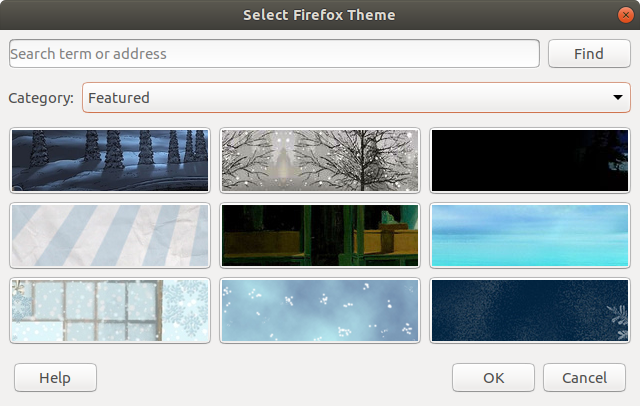
The first one is the work done by Muhammet Kara with regards to the personalization dialog. Support for Firefox persona was added in LibreOffice 4.0 and quickly became popular amongst users. However, it was slow to download themes, and from time to time it broke because Mozilla changed its API. At some point, we even discussed removing it in the ESC (Engineering Steering Committee) meetings. Fortunately, Muhammet decided to give it some love, and now will have a new, shiny, fast and reliable personalization dialog. Kudos to Muhammet for his work!
The second one is the work done by Mark Hung with regards to the .PPTX animations. At least 20 bugs have been fixed in this area. Besides, since OpenOffice times, there were many documents that couldn’t be opened in Microsoft Office after saving them as .PPTX in LibreOffice. Most of these problems are gone now – so thanks to Mark Hung.

What has the QA community been working on in preparation for this release?

A great milestone we achieved recently is the LibreOffice QA blog coming to life. We publish monthly reports where we highlight what happened during that month in QA and development, which gives an idea of what’s going on in the project (here’s an example). The report has some nice charts, like how the number of unconfirmed bugs evolves over time or how many bugs were reported every day, among others.

Besides, the QA community worked very hard to find regressions, triage new bugs, create UItests and test new features – just to mention some of the tasks the community does.

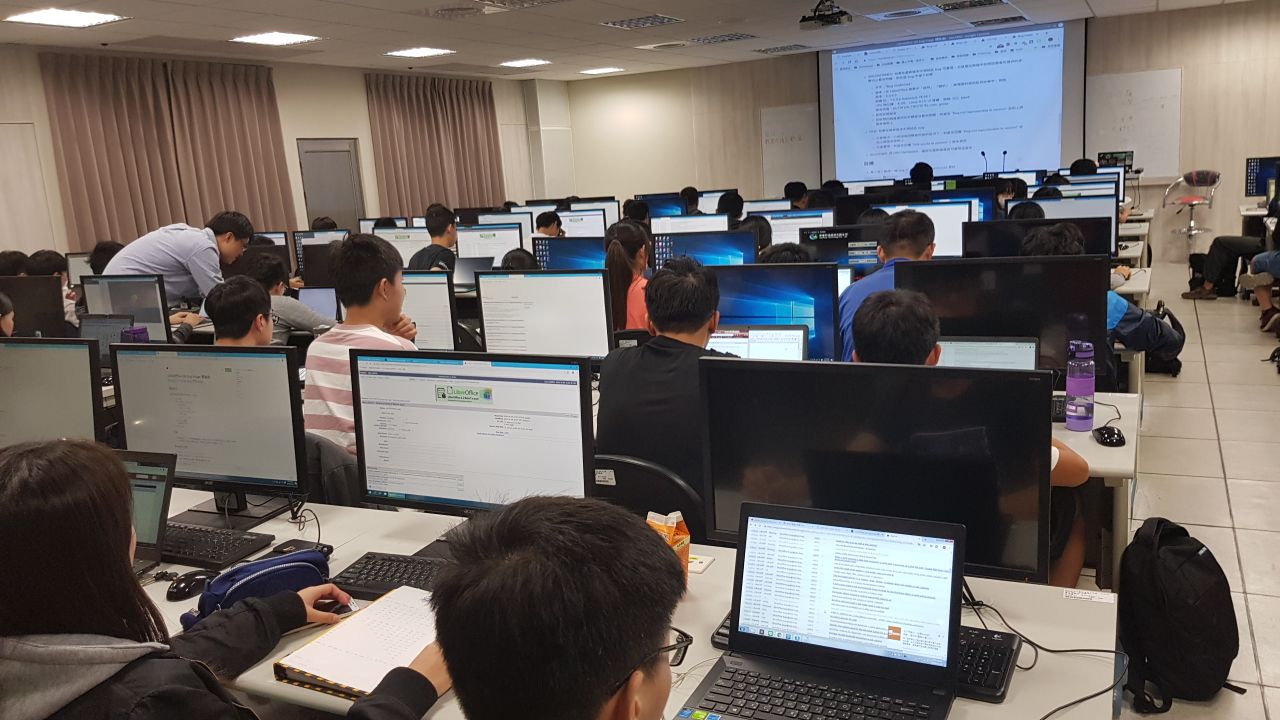
Last but not least, three Bug Hunting Sessions were organized in the last six months, plus one live session with 70 students in Taiwan, and another live session with eight participants in Ankara. Thanks to all the QA community and Franklin Weng, Cheng-Chia Tseng, Jeff Huang and Muhammet Kara for organizing the live events.
Looking further ahead, what else are you planning – or want to achieve – in the community?

Knowing that the next LibreOffice Conference will take place in Almeria, Spain, I would like to organize an online meeting for the Spanish community. It’s very active in the Telegram channel, with more than 450 members, so I think it’s about time to have these meetings in order to get to know each other better, share community ideas, organize events, talk about the Conference, etc… Personally I would love to see many of them coming to Almeria and meet them in person.

Finally, why should people get involved in QA, and how?

Joining our QA community is a good way to build up valuable experience in a well-known open source project, which can be useful if you want to go down that career path in the future. It looks good on a CV – and helps to keep LibreOffice reliable too!

The easiest way to join us to show up in the IRC channel #libreoffice-qa or join the Telegram channel and say hi! We’ll be happy to talk with you and get you started. On the other hand, if you are shy and you don’t want to say anything, we have a list of tasks waiting for someone willing to help. You just need to go to the get involved page and choose the one you like. As soon as you will start to use Bugzilla, you will get an email from me with different links to the QA documentation, in case you want to learn things more in detail.


Coming up on December 21: Bug Hunting Session for LibreOffice 6.2 RC 1

After the first and second Bug Hunting Sessions of LibreOffice 6.2, which were held on October 22th 2018 and November 19th 2018 respectively, we’re glad to announce the third and final Bug Hunting Session for LibreOffice 6.2 on December 21st. You can see the release notes describing the new features here.

In order to find, report and triage bugs, the tests during the Third Bug Hunting Session will be performed on the first Release Candidate (RC1) version of LibreOffice 6.2, which will be available on the pre-releases server on the day of the event. Builds will be available for Linux (DEB and RPM), macOS and Windows.

Mentors will be available on December 21st 2018, from 7AM UTC to 19PM UTC for questions or help in the IRC channel: #libreoffice-qa and its Telegram bridge. Of course, hunting bugs will be possible also on other days, as the builds of this particular Release Candidate (LibreOffice 6.2.0 RC1) will be available until mid January, 2019. See the release plan.

During the day there will be two dedicated sessions, one about the new KDE5 Integration between 11AM UTC and 13PM UTC and the other about the tabbed NotebookBar from 15PM UTC to 17PM UTC as it is not experimental anymore.