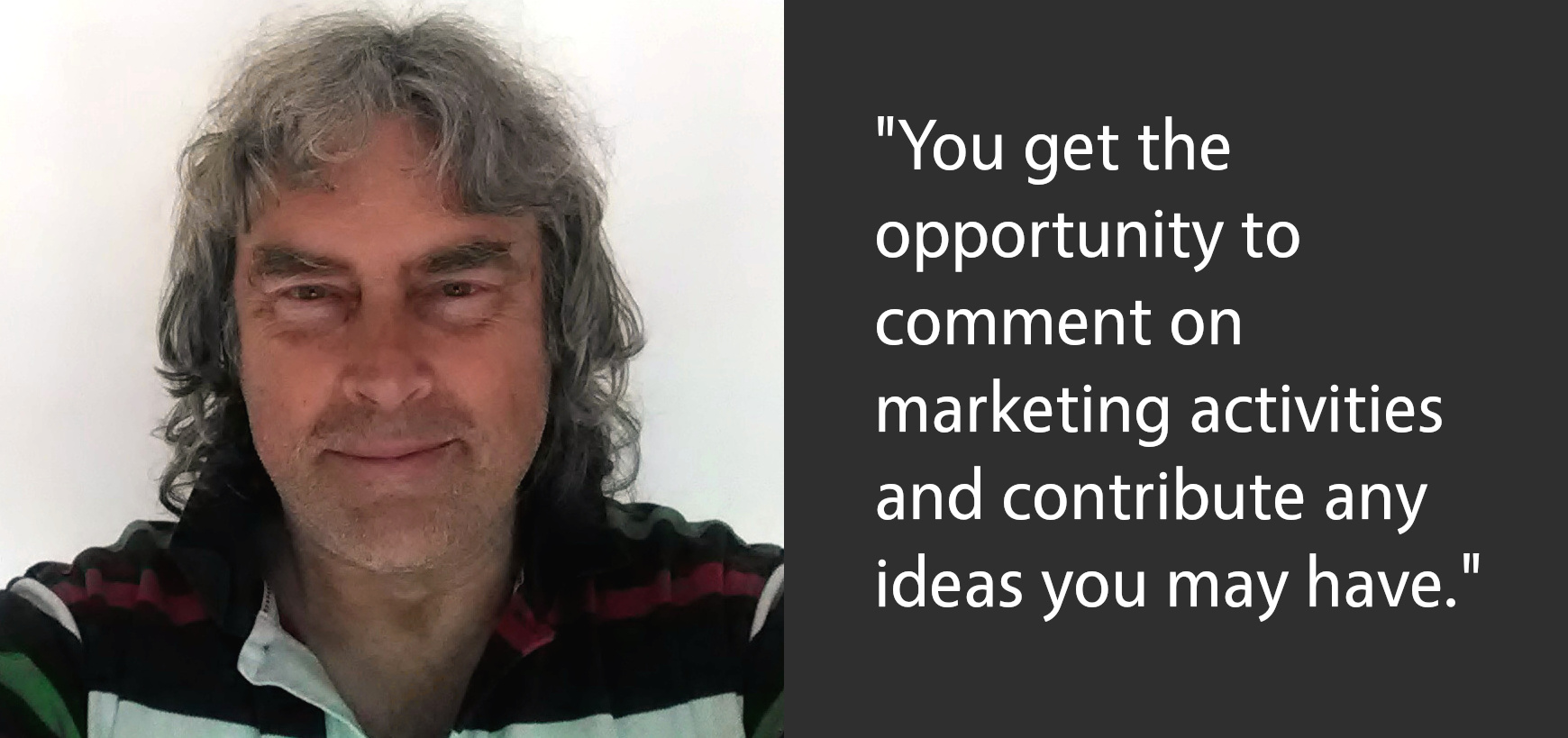
Today we’re chatting with Ravi Dwivedi, a free software supporter who recently joined our marketing community…
To start, tell us a bit about yourself!
I am from India, and I recently received my masters degree (M.Math) in mathematics from the Indian Statistical Institute in Kolkata. I am looking forward to doing a PhD in mathematics. My hobbies include listening to music, reading novels, playing chess, and meeting new people.
I campaign that software must respect users’ freedom. We call such a software free software, where ‘free’ refers to freedom and not price. In Indian languages, we call it “swatantra/mukt software” to remove the confusion. Free Software gives users the freedom to run, study, modify, share and improve the software. If the software lacks any of these freedoms, it is called non-free/proprietary software.
In my computing, I use only free software, except for some blobs in my phone. I volunteer for the Free Software Community for India. (FSCI). FSCI is not a registered organization, but a community of free software activists. It is also a non-hierarichal group. I raise awareness on why free software is important and the dangers of non-free/proprietary software.

I also raise awareness about the importance of digital privacy, and try my best to avoid privacy-invading technologies – and this means I usually have an amount of inconvenience for my freedom and privacy. Although I work on the issues of free software, I do care about other issues in society and actively look for opportunities to meet people who care about these issues. I believe in the power of collaboration.
I am an associate member of Indian Pirates, a group of people who would like to be a political party some day, with the goal of protecting the human rights of citizens. Within the groups FSCI and Indian Pirates, there is no leader, boss or hierarchy. I embrace the nonhierarchial structure of these groups, otherwise groups become(or, are liable to become) dictatorship of a few people.
What are you doing to spread the word about Free Software in India?
I hangout in FSCI chat groups. FSCI is very active in promoting free software, guiding people to switch to free software, providing technical support as well.
I am personally a part of the following activities by FSCI:
- Convincing educational institutes to use Free Software and providing technical support to help them switch (see this page). Open letter to Kerala teachers is a part of this campaign. This is a hard and lifelong change that we are trying to bring and therefore, we need more volunteers. Snehal, who is from our group, could switch his department to fully free software for teaching.
- Organizing Software Freedom Camp Diversity Edition 2021: We are trying to reach people from underrepresented (in the free software community) or underprivileged backgrounds. The main goal is to teach people about ethical issues in technology, and integrate them in our community. In the camp, people meet other like-minded people and interact with them. The learners participate in many activities in the camp and this makes it fun place. They also contribute to free software via technical (like programming) or non-technical means (like translations or organizing events).
- Crowdfunding for fixing a problem with XMPP-matrix bridge: Matrix-XMPP bridge has a limitation that XMPP users miss messages posted in the groups hosted on matrix when they were offline. Sunday Nkwuda and Olatunji Ajayi, with help from team formed by Pirate Praveen, including me, are planning to fix the problem. Please help us to raise funds, so that we can fix the limitation. Check the fundraiser here.
- With free software, users can fix the bugs themselves and share the modification with others, so that everyone benefits. With non-free software, we would have to beg the developer to fix the bridge. We need to actively think in terms of fixing things ourselves and building this attitude.
- Privacy Yathra campaign: Promotes and raises awareness about privacy in India. The website is not up yet, but should be up this month. The website is here.
FSCI does a lot of other activities which I am not a part of. We run many services: poddery.com and diasp.in are our Matrix, XMPP, Diaspora service, Gitlab instance, Jitsi Meet, https://fund.fsci.in etc.

What are the challenges you face in convincing people?
There are many challenges. A lot of people do not get convinced about switching to free software or protecting their privacy.
I meet people on streets, trains, buses and wherever I find the opportunity – and I talk about the issue of free software and privacy. Usually, I try to understand what issues other people care about, and then relate digital privacy and free software with their issue.
For example, once a bookseller told me how people have stopped buying from physical bookstores, especially in COVID times, and instead buy books online from Amazon. I understood their issues and I told them that I never bought from Amazon even once (after June 2020) because ordering from Amazon puts me under surveillance. This way, I related the issues of privacy and free software with the ones they already care about. This is one good way to explain people.
Even when people don’t care, I tell them about these issues because it might be their first trigger, and they might need several triggers to consider the idea. I hope to raise some questions in people’s minds rather than convincing them. Also, I need to remind myself time and again that we cannot convince everyone that they should care for privacy. Apparently, it is a hard change to bring in today’s world and therefore, even small changes (like convincing and installing a few free software apps in their device) requires a lot of hard work.
You recently joined the LibreOffice community. How/why did you decide to join, and how’s your experience been so far?
I personally use LibreOffice as my office suite for all the work, as I am a devotee of free software. I also promote LibreOffice when I guide people to switch to free software. Further, I make my slides for talks in LibreOffice Impress, and tell the audience that the slides are made using LibreOffice which respects user’s freedom.
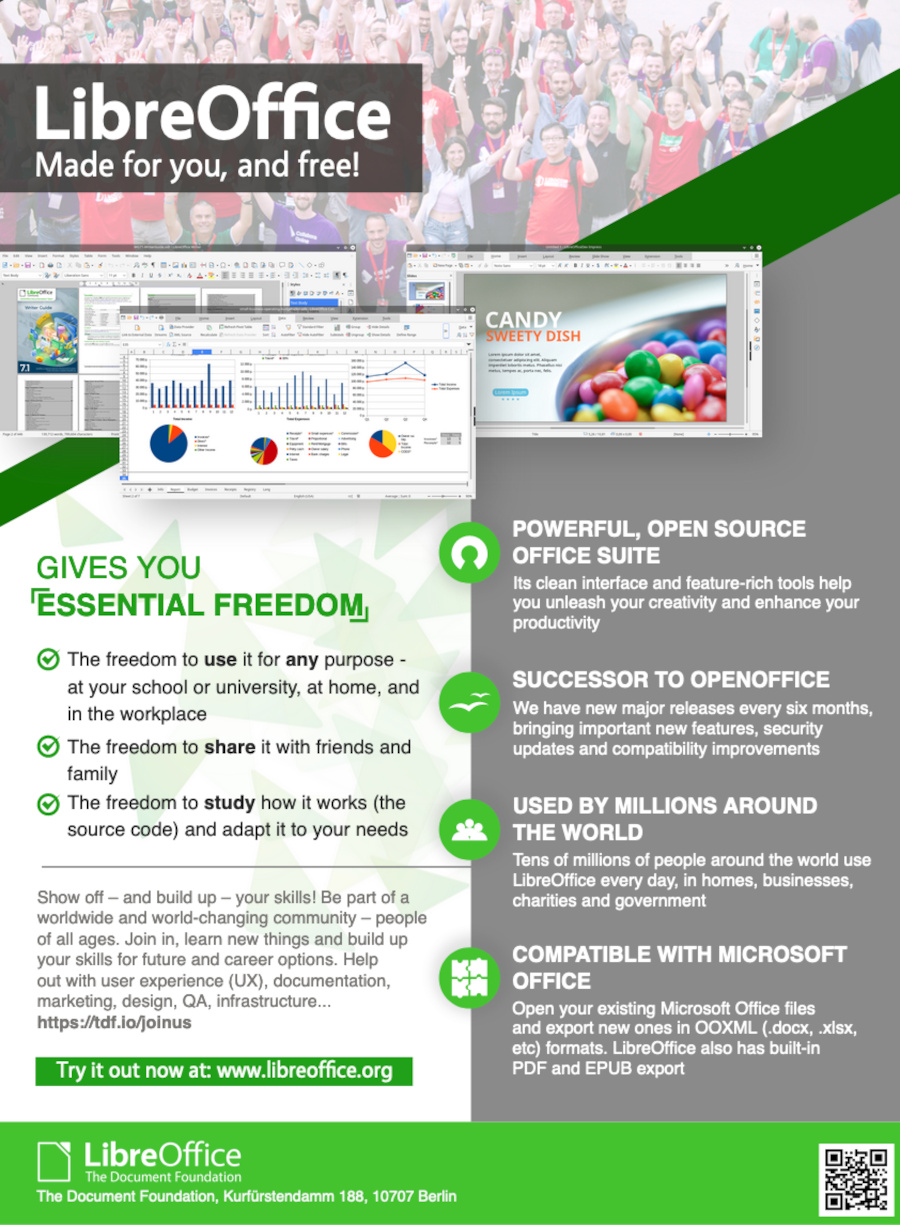
I think the LibreOffice community is doing very good work, and therefore I wanted to share some LibreOffice flyers with some college group, on my Mastodon and my website. Before doing that, I wanted to remove the term ‘open source’ with ‘freedom-respecting’ because personally, I don’t promote the term ‘open source’. Then I contacted Mike Saunders. We had some email exchanges and Mike gave me the idea of joining the LibreOffice Marketing team.
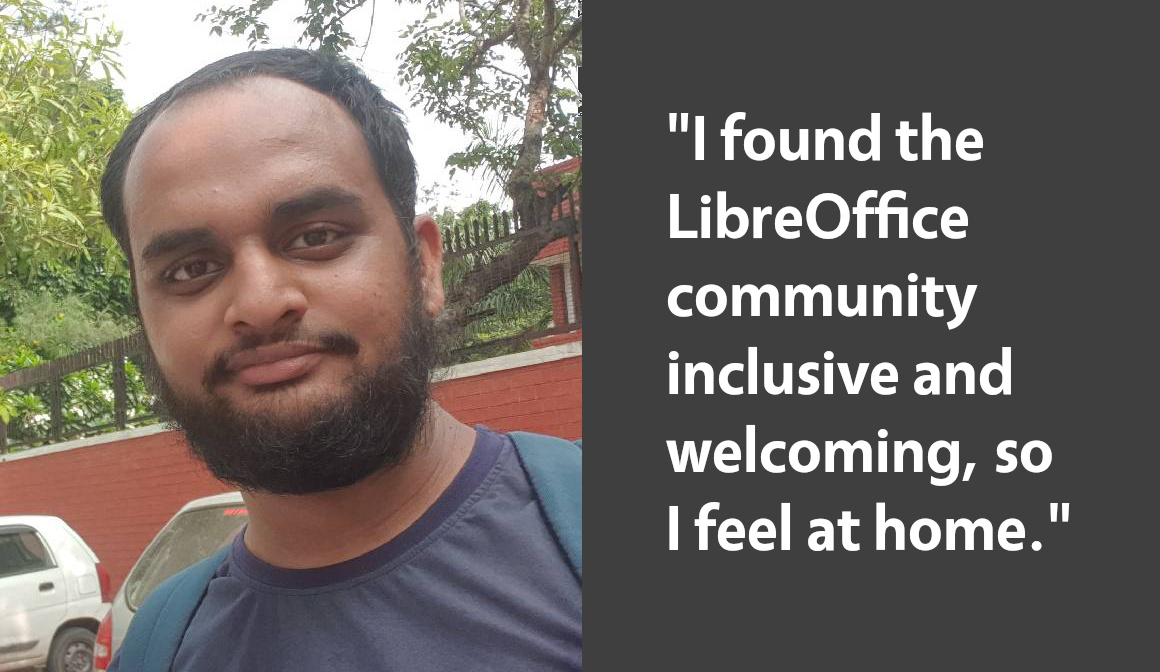
I found the LibreOffice community inclusive and welcoming, so I feel at home. Promoting LibreOffice also serves my broader goal of spreading free software. Therefore, I decided to help LibreOffice in marketing. Thanks a lot!
What else are you planning to do?
As of now, FSCI is planning to announce public meetings which help people switch to Free Software. It is similar to GNU/Linux installfests. We haven’t done this yet. We are planning to have our first session soon. I personally believe that even if people understand the dangers of non-free software and realize that they should switch to free software, they have some inertia. This type of meetings are aimed at breaking that inertia.
Currently, the adoption and awareness of free software is concentrated highly in a few Indian states, like Kerala. I am also planning to reach people in other areas of India too.
How can others help with Free Software adoption / spreading the word in India?
The most important part for free software adoption is to replace as much proprietary software you can with free software in your own computing. Then convince others to switch to free software.
Please visit fsci.in, and join our chat groups mentioned at the bottom of the page. Feel free to join and discuss. Help us with maintaining the services and other activities that we already do. You can start your own initiatives. One important aspect of community is that if you do the activism alone, you can easily get demotivated. Meeting like-minded people acts as a psychological boost. This is one reason I am able to boycott non-free software successfully.
Further, our goal (as FSCI) is not only creating more free software users but creating functional free software communities which are inclusive, welcoming and respectful.
I believe, we also need to have more free software businesses like libretech.shop, which sells free software powered laptops and mobiles.
Thanks for your time, Ravi! Finally, how can we reach you?
The contact page of my personal website lists the ways you can get in touch with me. You can also send me an email via ravi at ravidwivedi.in. Looking forward to hearing from you!