Community Member Monday: Peter Schofield

Today we’re talking to Peter Schofield from LibreOffice’s documentation community

Tell us a bit about yourself!

I am Yorkshire bred and born, which was a very long time ago. Left home at 16 to join the Royal Air Force. Served for almost 19 years as an Aircraft Technician, which is where my engineering knowledge started.

Became interested in Technical Writing in the early 80s and became qualified as a Technical Writer in 1985. This has enabled me to work in aviation, defence, mining, plant machinery, construction, electronics, telecommunications, computer peripherals and software. This did involve working in several countries, which has given me a very broad outlook on life.

Now official retired from paid work and have settled down in Poland with my lovely Polish wife.

How did you get involved in LibreOffice?

First came across an early version of LibreOffice in the 90s when I started using Star Office, which then became OpenOffice. I have always been interested in open software being freely available to users to help them save money, not having having to pay the big corporations.

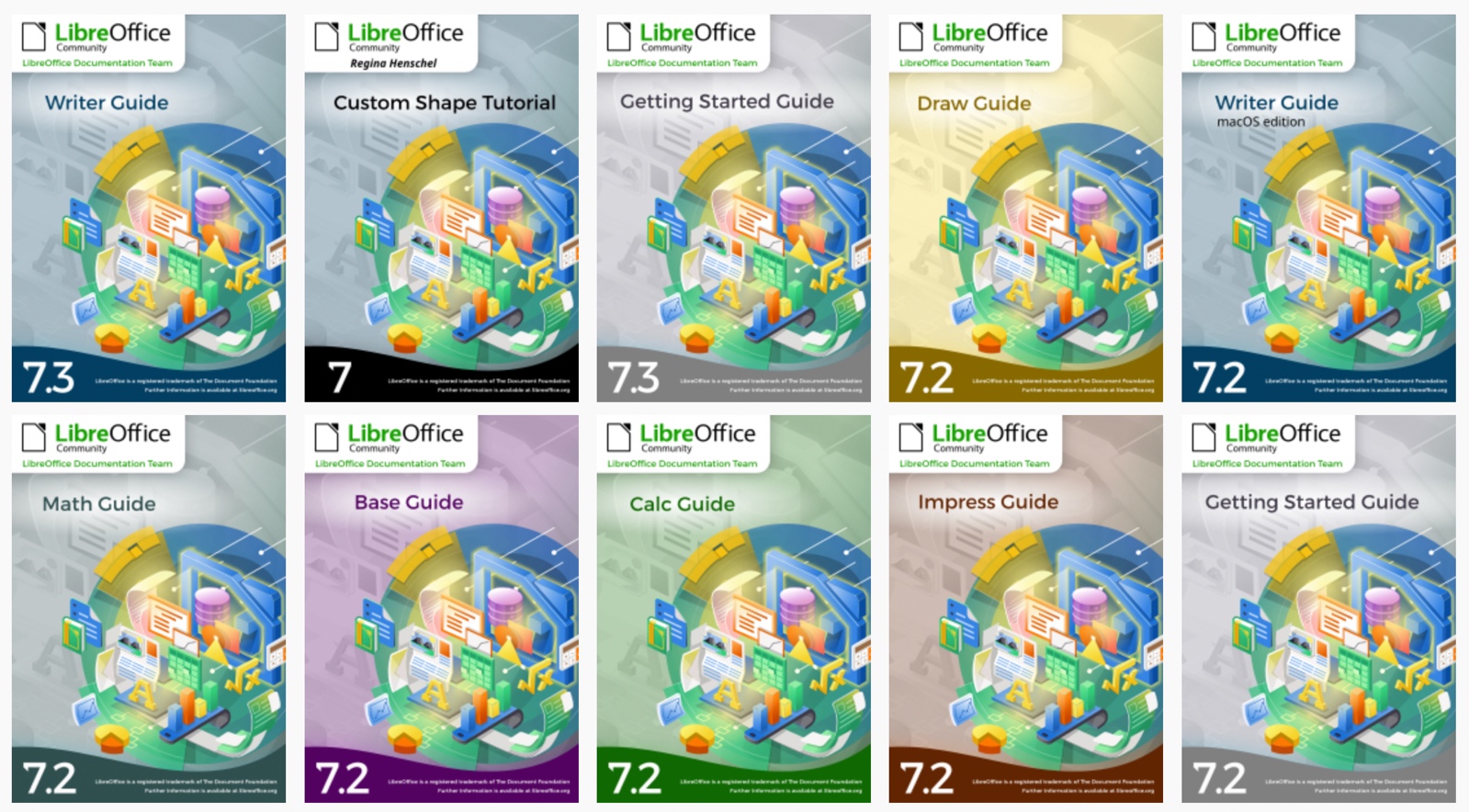
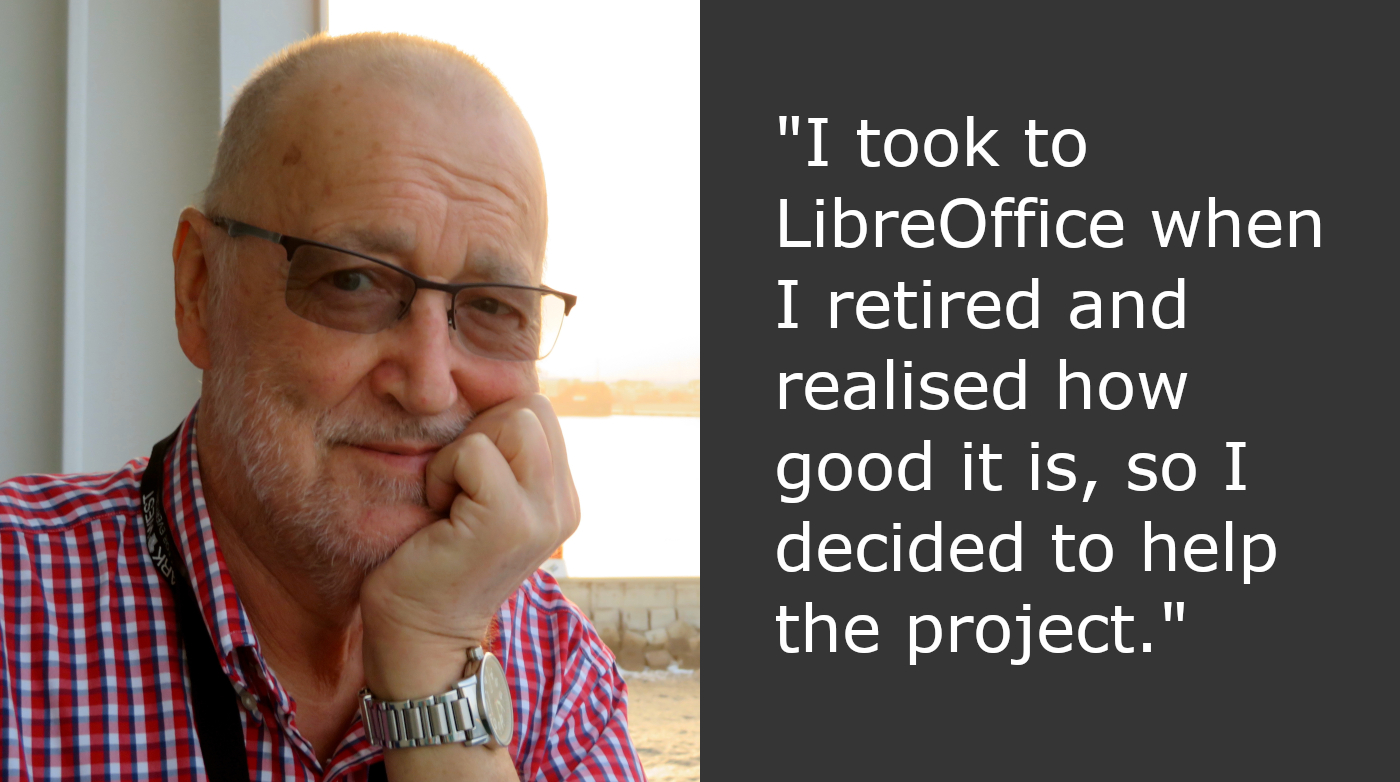
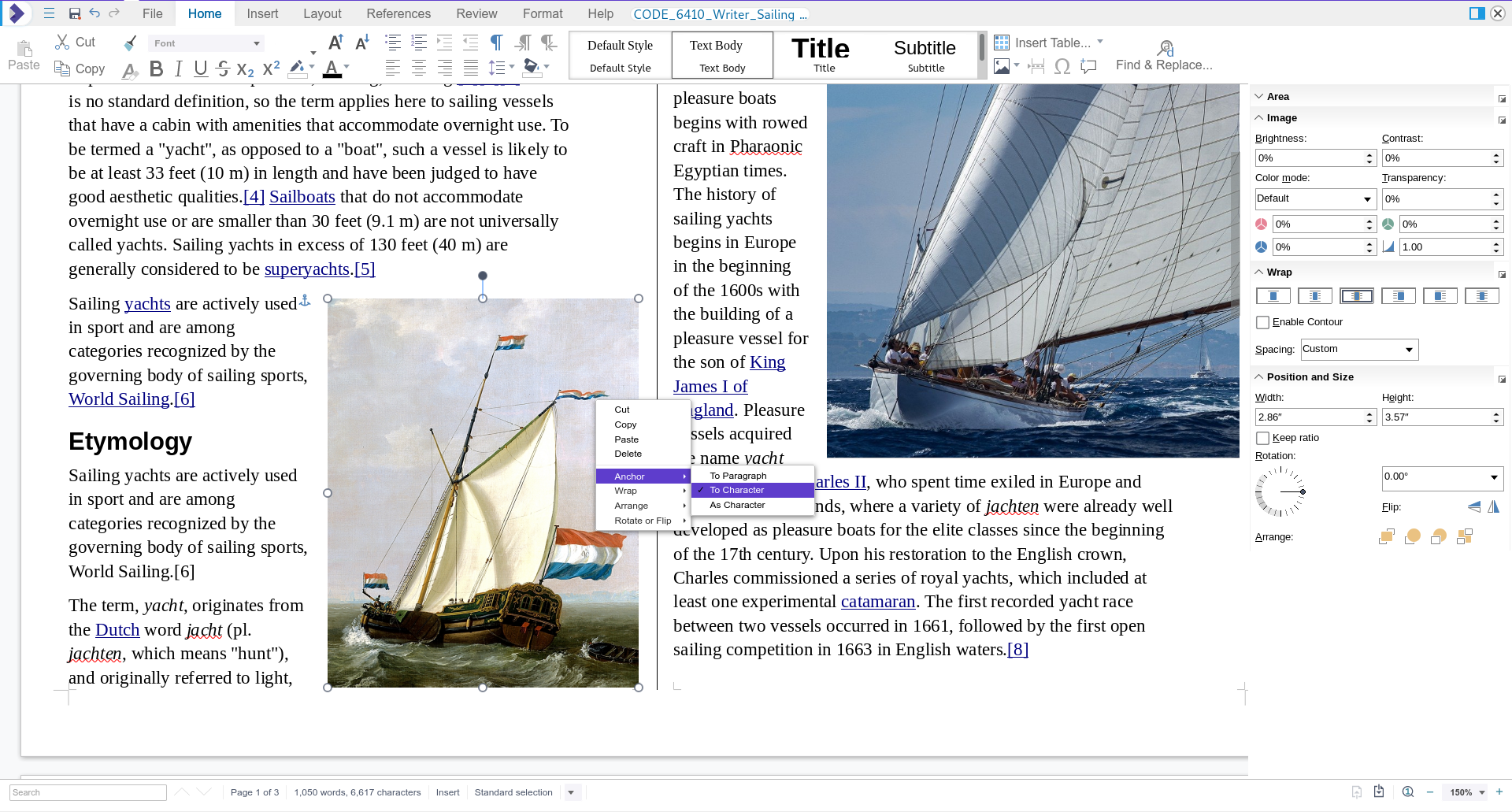
I took to LibreOffice when I retired and realised how good it is, so I decided to help the project. This gave me the chance to create user guides that LibreOffice users could easily understand (I hope). I am now in charge of the Impress and Draw user guides and starting to upgrade both of them to LibreOffice 7.4.

What else are you planning to work on?

My plans for the future is continue being a willing volunteer on the LibreOffice Documentation Team with the hope that I can improve usability of the user guides for the majority of users. I do believe that some parts of the LibreOffice user guides do need improvement because of the poor language used. With this in mind, I am now updating the template to help improve the quality of the user guides. This means that there are hints and ideas in the template on how to improve ones writing.

Eventually I would like to see all the user guides using an easy to understand English. This means it would make the text easier to translate into the languages LibreOffice is available in, and make the English easier to understand for users where English is not their first language. This idea is already in practice with several companies throughout the world. These companies use one of the versions of Simplified English that are available.

Many thanks to Peter for all his help! Everyone is welcome to join the Documentation Team and build up skills for a potential career in technical writing…

Community Member Monday: রিং/ring (S R Joardar)

Today we’re talking to রিং/ring (S R Joardar) from Bangladesh, who’s helping to spread the word about Free Software (as in freedom) – including LibreOffice – in his country…

Tell us a bit about yourself!

I am a GNU/Linux user, lover, translator and supporter since 2000, and a sysadmin since 2003 using Red Hat 5.0, later Fedora and RHEL. I am using Ubuntu in personal computers since December 2006. Canonical sent me a zero-priced gift pack of 10 CDs with Ubuntu 6.10 back then. I have started deployment of Ubuntu servers with Ubuntu 8.04 manual installations in 2009, and just provisioned a few instances with 22.04 on Linode and Digital Ocean. In the years 2009-2017, I personally made over 6,000 new desktop or laptop installations with Ubuntu and LinuxMint.

I am from Dhaka, Bangladesh. In 2011, I along with 21 more Free software enthusiasts formed an organization titled “FOSS Bangladesh (Foundation for Open Source Solutions Bangladesh)” and started with official tour to the Universities here in Bangladesh. Up to December 2019, FOSS Bangladesh had organized 75 events in various universities and colleges and schools to spread out the digital freedom knowledge among the pupils, the future leaders. I have invited Mr. Richard M. Stallman came in Dhaka, Bangladesh at Daffodil International University for a session in 2014 and he agreed to my request and visited. I am also a Mozillian (Mozilla Firefox and Thunderbird Fan, User and Supporter and end user support volunteer). At present I am working as the General Secretary of FOSS Bangladesh.

I am an IT Freelancer, working on PPH and Freelancer. I love to cook food and play cricket besides my computing and voluntary support to spread Free Software knowledge. 🙂

How well is FOSS, LibreOffice, GNU/Linux etc. known and used in Bangladesh? What are the obstacles to adoption?

In 2011, FOSS Bangladesh ran an online survey to gather approximate user data about GNU/Linux users, with the help of various online local language forums sites here in Bangladesh. Back then, it was around 9,000 people. As per my statistical knowledge nowadays, the pupils I had served with installations and had met by 2017 became professionals, and GNU/Linux users is now more than 100 times of that 15,000 count.

The obstacles to adoption of GNU/Linux and LibreOffice in here in Bangladesh is the lack of law bindings regarding software piracy. So far, can obtain a pirated copy of Windows 10 with Microsoft Office, and many more and get used to that closed, bind and blinded ecosystem. So when it comes to the professional workplace, most people got bound into that closed software ecosystem. They do not think that they are stealing – and on the piracy index globally, they make Bangladesh ashamed. Government offices here also go alike with the closed software ecosystem.

But the scenario is changing day to day. Those who once got the chance to get out of that closed system embracing the GNU/Linux ecosystem or the Free Software getting hold for his/her lifetime. They also spreads the enjoyment of Freedom to their surroundings.

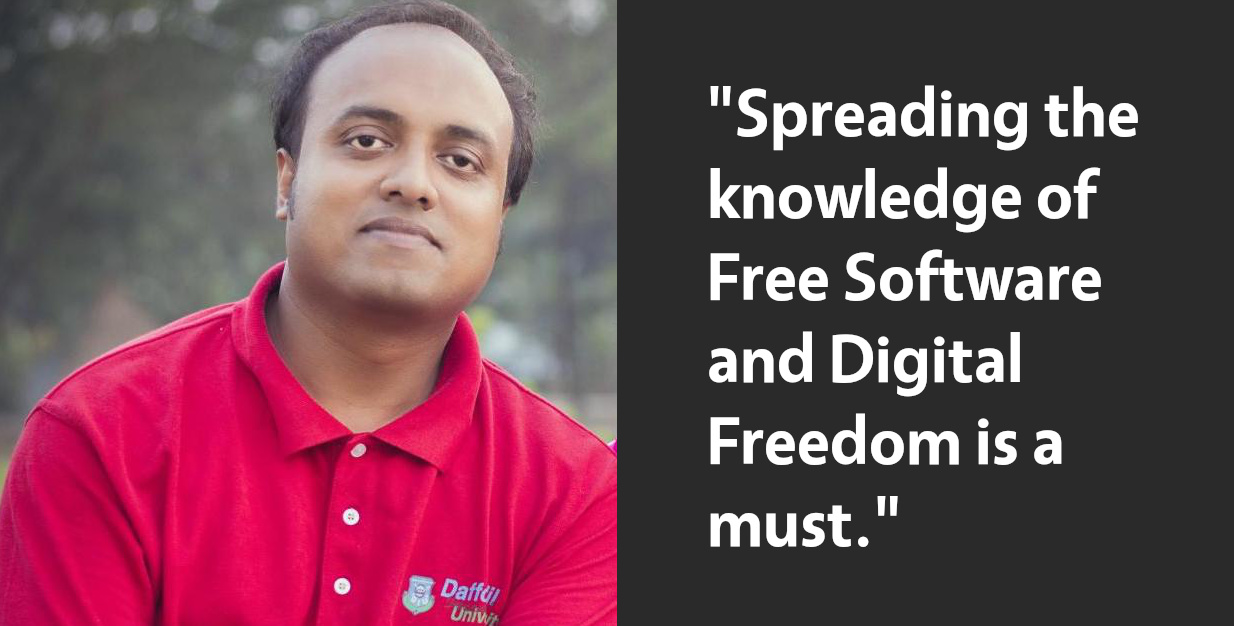
Spreading the knowledge of Free Software and Digital Freedom is a must. Only sharing and caring, and contributing to the Freedom Ecosystem, can make that happen in the future. But the COVID-19 pandemic affected local events ing FOSS Bangladesh since 2020. We hope to start with a new run soon, by November 2022.

You’d like to grow the LibreOffice community in Bangladesh. How can others help out and get involved?

Translation and helping others to use LibreOffice can help grow the community in Bangladesh more quickly. Since 2010, I have transformed three industries in Bangladesh from Microsoft Windows to Ubuntu, and then LibreOffice came along. To this date, date they are using Ubuntu 20.04 or Linux Mint 20.3 with LibreOffice 7.3.2. I have to install, train end users to get into the ecosystem, and provide day-to-day user support. Around 500 users are migrated and get evolved in this Free Software ecosystem, and using it in the professional arena. I can recall 15,000 valid contacts, but the real count is many more than that.

In Bangladesh, I know that there are there are more private companies running only on Free software.

Finally, how can people get involved and help to grow the LibreOffice and Free Software community in Bangladesh?

We have already have setup a Telegram group – join it here.

Many thanks to Ring and all members of the Bangladesh community for their work and support!

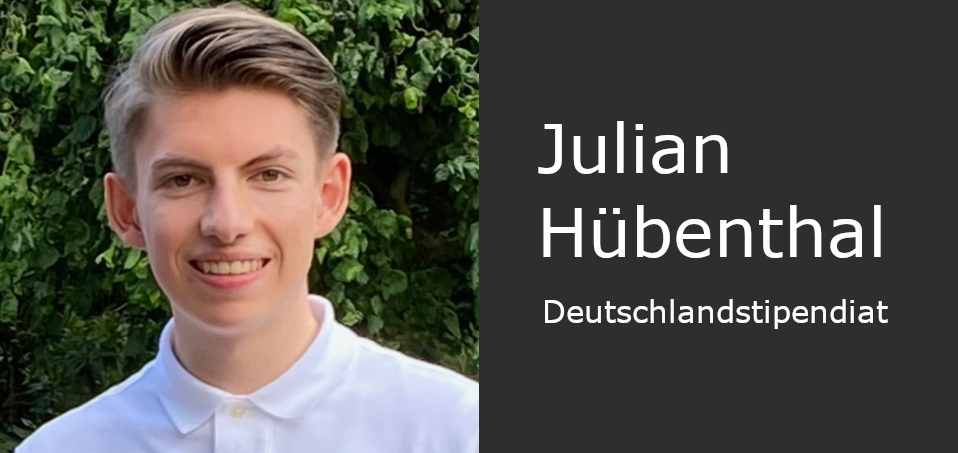
Interview with German Scholarship student Julian Hübenthal

In 2019, the German LibreOffice community unfortunately lost one of its most active members, Klaus-Jürgen Weghorn. In his memory, The Document Foundation decided to support a student through the Deutschlandstipendium initiative.

Let’s get to know him…


Tell us a bit about yourself!

I come from near Lüneburg. I graduated from the Wilhelm-Raabe-Schule Gymnasium in Lüneburg last year.

I have quite a wide range of interests, which certainly contributed to my Abitur [qualification at the end of secondary education] average of 1.0 and did not make my decision to study any easier. However, my main focus is certainly in the mathematical/scientific/technical subjects.

I like to ride my road bike and go cycling in general, and I like to travel, gladly combining both interests together.

What are you currently studying, and how is it going?

I am currently studying computer science in my second semester. The course is interesting and I like the challenge. However, I have found out that the course is not quite right for me. Therefore, I would like to change to business informatics for the coming winter semester, for which I am currently already taking the appropriate modules. I am impressed by what I have already learned in a comparatively short time during my studies. Apart from that, I have been able to maintain my Abitur during my studies.

Are you familiar with free and open source software?

I have already used free and open source software, for example the Linux distribution Ubuntu as part of my studies, or Eclipse even before my studies. However, I have not yet participated in such a project myself.

Apart from the questions, I would also like to thank you again for the support and recognition of my achievements.


You’re welcome, Julian! We wish you every success in your studies.

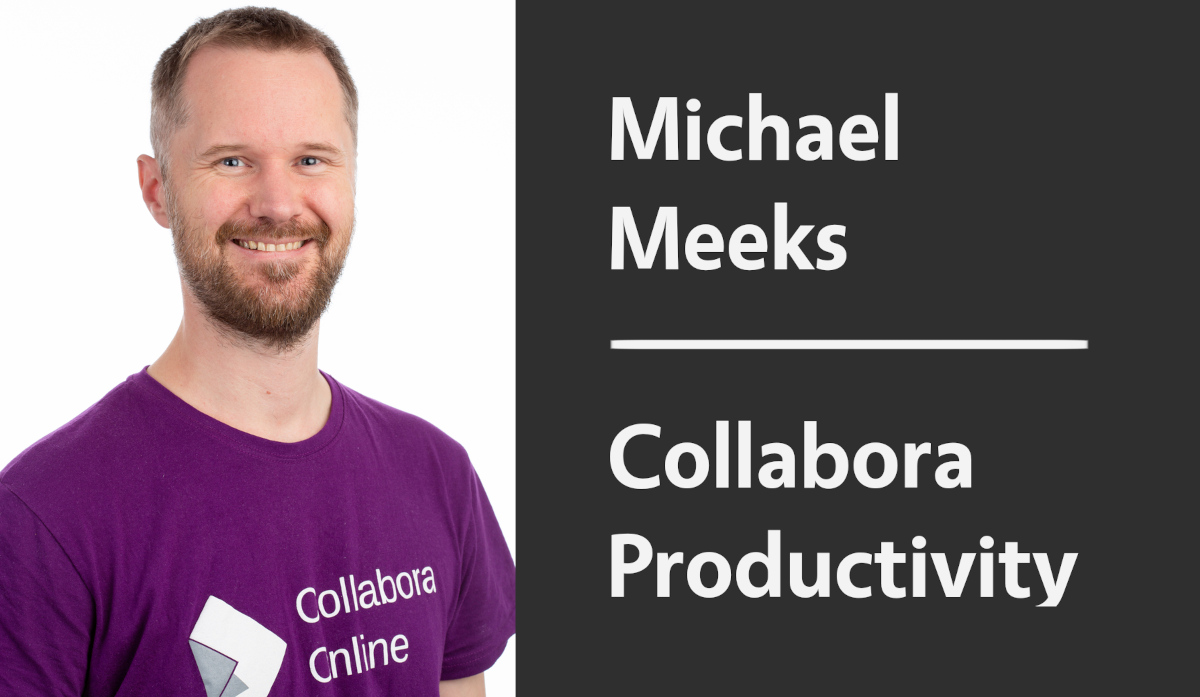
LibreOffice ecosystem interview: Michael Meeks at Collabora Productivity

Following our interviews with Caolán McNamara at Red Hat and Thorsten Behrens at allotropia, today we’re talking to Michael Meeks from Collabora Productivity:

Tell us a bit about yourself!

I’m Michael Meeks, a Christian, husband and enthusiastic open source developer. I run Collabora’s Office division with the assistance of an amazing team – leading our Collabora Online and Office products, and supporting customers and partners. I’ve served as a Director of the The Document Foundation from its founding until recently, and have contributed to both the OpenDocument Format and OOXML standardization.

I’d started some decades ago working on the Linux desktop in the GNOME project around the Gnumeric spreadsheet, first as a volunteer, then for Ximian – which was involved in the open-sourcing of OpenOffice.org. Since then, I’ve been involved with improving the codebase, although the name of my employer has changed from Ximian, Novell, Attachmate, Micro Focus, SUSE – and finally being spun out alongside a brave and talented subset of the SUSE LibreOffice team to Collabora Productivity some nine years ago.

What does Collabora Productivity provide in the LibreOffice ecosystem?

One big piece we do is improving the awesome LibreOffice Technology core engine / APIs, and performance for Collabora Online – which provides a real alternative to Microsoft Office 365 – with collaborative editing in the browser. We spend time working hard on integrations with popular open source products like Nextcloud, ownCloud, Seafile, EGroupware, and proprietary ones such as HiDrive, Filr – as well as helping hosting providers like Strato provide LibreOffice Technology to their users en-masse.

Around Collabora Online, we have a mission to allow you to control your documents. That means full control from open source software, open standard file formats, through to on-premise hosting, and full network control. It is encouraging to see the growing consensus these days between e.g. The European Pirate Party (enthusiastic Collabora Online users) talking positively about the importance of Digital Sovereignty, and at another pole – for instance, the head of the UK’s MI6 warning on the BBC:

“The data-trap is this: that if you allow another country to gain access to really critical data about your society, over time that will erode your sovereignty.”

For Collabora’s customers, we also take a new LibreOffice version each year and freeze this as our Long-Term Support (LTS) base; we create many hundreds of fixes and feature patches which we contribute up-stream, as well as back-porting the latest fixes to our enterprise branch: much as is done for an enterprise Linux distribution. We sell that toegher with services and support as Collabora Office. We also maintain a tool (Collabora OLE Automation Tool) to ease migration of vertical applications that use Visual Basic / OLE2 integration that makes LibreOffice behave like Microsoft Office via COM. In addition, we maintain Collabora Office and LibreOffice Windows Group Policy Templates – these make it easy to manage lots of LibreOffice machines via Group Policy.

Another strand of work is re-packaging Collabora Online / LibreOffice Technology as responsive mobile apps for Android and iOS, as well as Chrome OS. By delivering LibreOffice-based document editing to everyone’s browsers, PCs and mobile devices, we give people a real alternative that lets them choose their own document formats, security profile and threat model – real digital sovereignty.

What has Collabora been working on in LibreOffice 7.3?

We’ve been working on lots of things: some of the team have done a lot for interoperability, e.g. Miklos improving writer’s paragraph styling, or Dennis making charts more compatible, or Sarper re-working our PowerPoint header/footer interoperability. There is a constant stream of improvements based on customer feedback here.

Another big set of improvements in LibreOffice 7.3 are from Lubos and Noel around the performance of file opening, rendering, editing of documents as well as improving calculation threading. One particularly important piece here was the work done to very significantly improve performance of lots of editors in a single file – which has been back-ported to make Collabora Online very much faster in our latest releases.

We are looking forward to upgrading to LibreOffice 7.3 in the next months, and not having to carry these back-ports forward.

What new features are you particularly happy with?

I’ve been really pleased with the work we’ve done alongside AMD around Skia rendering – in LibreOffice 7.3 we make that the default for macOS (users, please report any problems), which for the first time allows us to share a single, modern rendering API between macOS, Linux and Windows for rendering – which is a huge step in the right direction.

What’s more: adding WebP support for images – interestingly, Firefox now requires this as a copy/paste format for images, and it’s long overdue to have this high quality format from Google supported.

Looking beyond this release, what else are you planning to do?

We work continuously on LibreOffice, all around the code from ongoing clean-ups, performance work, unit-tests (particularly important to avoid customer tickets regressing) and so on. We have a few things that are in the works currently.

Another thing that Tomaz, Sarper and Miklos will debut in LibreOffice 7.4 is the start of colour theme support for shapes, to allow us to re-style documents more deeply by changing the theme and palette. This should also help with interoperability and templating.

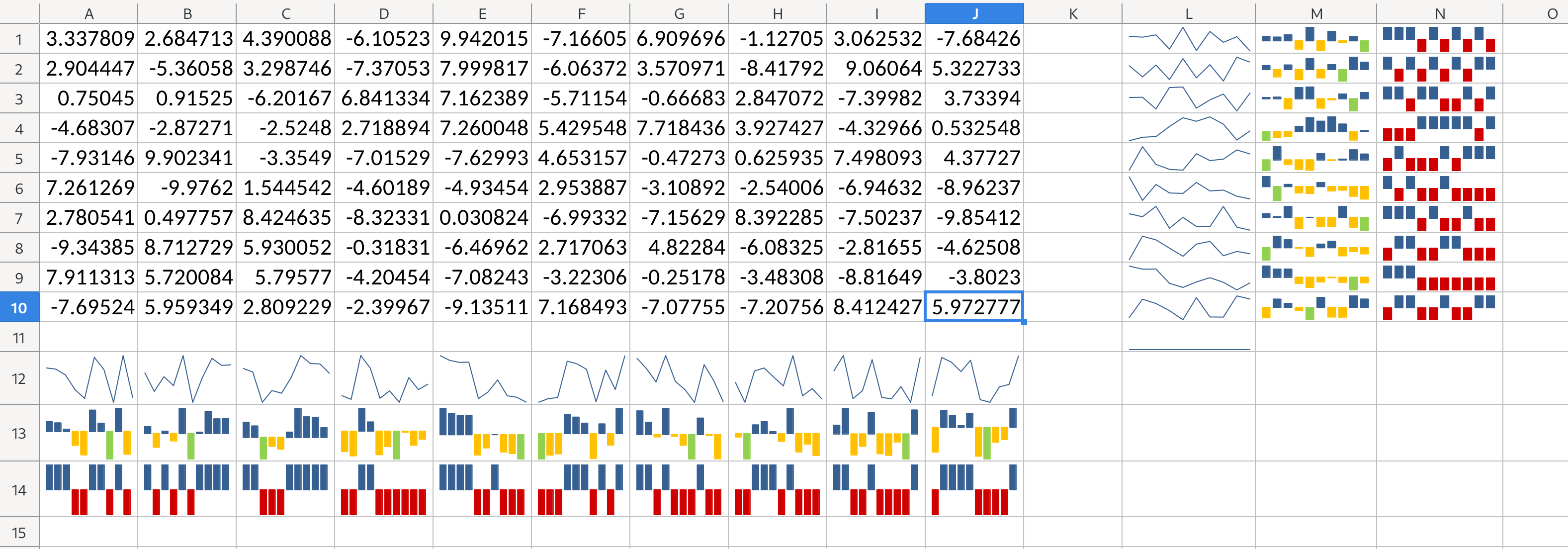
We’ve also added Sparkline support, providing a very pretty and useful way to quickly visualize data for LibreOffice 7.4.

You can read about the history of these from Edward Tufte.

Lubos has been working hard on jumbo sheets – allowing much larger number of columns in sheets (and more rows too) which should make interoperability much smoother for people with large spreadsheets.

And of course lots more – we’re expecting LibreOffice 7.4 to be packed with new and enhanced feature / function from the whole community – and Collabora.

Find out more

LibreOffice on the Sustain podcast

Sustain is a podcast that “brings together practitioners, sustainers, funders, researchers and maintainers of the open source ecosystem – we have conversations about the health and sustainability of the open source community.”

Mike Saunders from The Document Foundation, the non-profit entity behind LibreOffice, appeared on a recent episode of the podcast to talk about the LibreOffice community and long-term sustainable development. He discussed growing the project and ensuring that the work of volunteers and the wider ecosystem is recognised.

Click here to listen!