LibreOffice ecosystem interview: Caolán McNamara at Red Hat

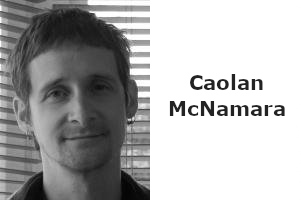
LibreOffice is developed by a worldwide community, made up of volunteers, certified developers and companies in the wider ecosystem. Today we’re talking to Caolán McNamara, a long-time LibreOffice developer who works for Red Hat…

Tell us a bit about yourself!

I’m a Principal Engineer at Red Hat, Inc. on the Desktop Team since 2004! And I live on the west coast of Ireland.

What does Red Hat do in the LibreOffice ecosystem?

We try and do a lot of different things, from integration with the GNOME desktop, Calc and UNO work, and porting to architectures such as aarch64 and ppc64le, but I can highlight some of the efforts we make in detecting flaws close to when they get introduced into LibreOffice.

We maintain the regular crashtesting infrastructure, where we import and export 120,000+ documents and typically fix, or identify the triggering commit, any new import/export failures as they are discovered.

Similarly, we maintain the LibreOffice Coverity instance and work to keep the warnings to an effectively zero level in over six million lines of code, as part of that early detection of code flaw process.

In the same theme, we manage the LibreOffice OSS-Fuzz work and work to maintain the level of import related issues to a minimum, especially as a tool to detect potentially security related regressions before they are released, with over 1000 fixed to date.

We recently released LibreOffice 7.3 – what did you work on in that version?

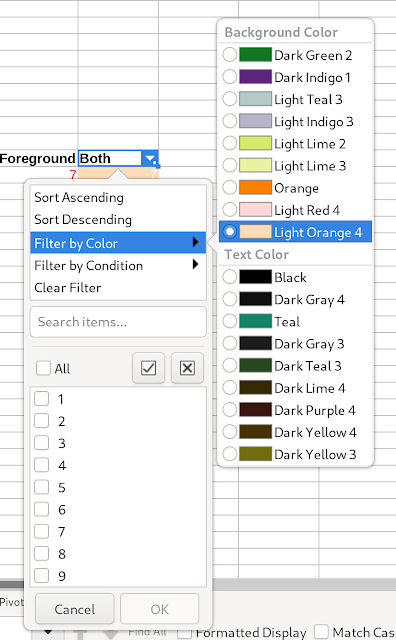
The last user interface feature I did for 7.3 was a little rework of the calc autofilter dropdown, to add “popup on hover” of the color filter submenus and adding color names and some other tweaks, which itself was just an extension of Samuel Mehrbrodt’s (allotropia) more substantial LibreOffice 7.2 work to support color filtering in the autofilter.

Another feature we worked on that landed in upstream 7.3 was extension of the command line conversion of spreadsheets to comma separated value files to additionally support the optional export of each tab of a spreadsheet to a separate output CSV file.

Looking beyond this release, what else are you planning to do?

I’m working on GTK4 version of LibreOffice. It’s not finished by any means, but it’s mostly functional and making progress.

Follow Caolán’s LibreOffice work on his blog, and check out his FOSDEM talk about the GTK4 port.

Community Member Monday: Baltasar García Perez-Schofield

Today we have a quick chat with Baltasar García Perez-Schofield, who recently became a Member of The Document Foundation, the non-profit entity behind LibreOffice…

Tell us a bit about yourself!

I’m from Spain, in that north-west corner called Galicia. Professionally I’m a teacher of computer science, and dedicate my spare time to my family, swimming, hiking, and retro computing.

I defended my PhD Thesis in 2002, wrote it entirely in what was then OpenOffice, and later forked to LibreOffice, and more importantly spawned The Document Foundation. I then decided that I should somehow return the favor by collaborating (as far as I could), with the product.

What are you working on in the LibreOffice project right now?

I’ve lately dedicated my time to the Basic interpreter, solving simple bugs such as type-persistence through compilation and execution, or the behaviour of certain functions that do not adhere to the specification.

Why did you decide to become a member of TDF?

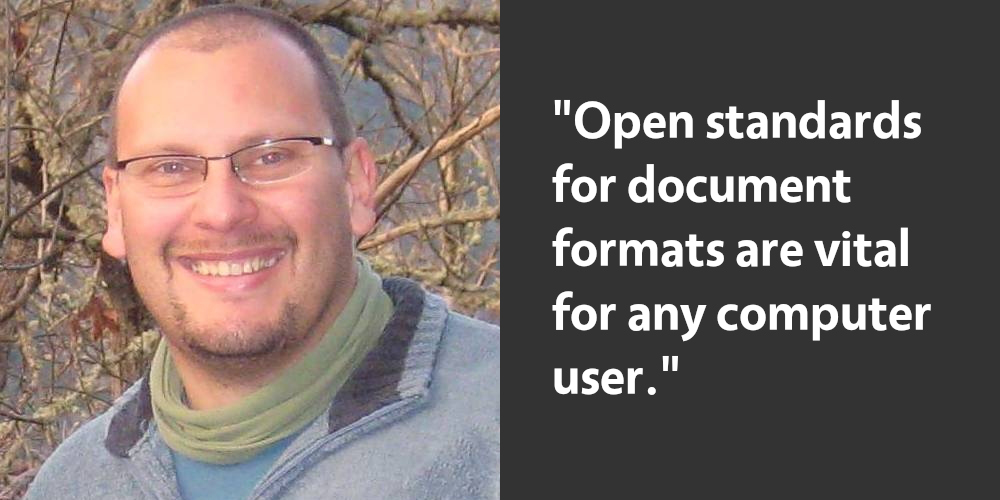
I think that the open standards for document formats are vital for any computer user, and therefore defend the TDF’s existence. In that sense, becoming a member was an honor for me, and I also perceived it as a recognition for the work I did.

Anything else you plan to do in the future? What does LibreOffice really need?

I plan to continue collaborating with LibreOffice, at least in my free time gaps. Regarding the needs of LibreOffice, I think it probably needs marketing and compatibility (right now it is a must) with MS Office. The objective would be to let computer users realize that they have the possibility to use a free product as capable (or even more so!) as the private one.

Thanks to Baltasar for all his contributions! All LibreOffice users can join him in helping to improve the software, and find out what they can do for LibreOffice. 👍

Community Member Monday: Ravi Dwivedi

Today we’re chatting with Ravi Dwivedi, a free software supporter who recently joined our marketing community…

To start, tell us a bit about yourself!

I am from India, and I recently received my masters degree (M.Math) in mathematics from the Indian Statistical Institute in Kolkata. I am looking forward to doing a PhD in mathematics. My hobbies include listening to music, reading novels, playing chess, and meeting new people.

I campaign that software must respect users’ freedom. We call such a software free software, where ‘free’ refers to freedom and not price. In Indian languages, we call it “swatantra/mukt software” to remove the confusion. Free Software gives users the freedom to run, study, modify, share and improve the software. If the software lacks any of these freedoms, it is called non-free/proprietary software.

In my computing, I use only free software, except for some blobs in my phone. I volunteer for the Free Software Community for India. (FSCI). FSCI is not a registered organization, but a community of free software activists. It is also a non-hierarichal group. I raise awareness on why free software is important and the dangers of non-free/proprietary software.

I also raise awareness about the importance of digital privacy, and try my best to avoid privacy-invading technologies – and this means I usually have an amount of inconvenience for my freedom and privacy. Although I work on the issues of free software, I do care about other issues in society and actively look for opportunities to meet people who care about these issues. I believe in the power of collaboration.

I am an associate member of Indian Pirates, a group of people who would like to be a political party some day, with the goal of protecting the human rights of citizens. Within the groups FSCI and Indian Pirates, there is no leader, boss or hierarchy. I embrace the nonhierarchial structure of these groups, otherwise groups become(or, are liable to become) dictatorship of a few people.

What are you doing to spread the word about Free Software in India?

I hangout in FSCI chat groups. FSCI is very active in promoting free software, guiding people to switch to free software, providing technical support as well.

I am personally a part of the following activities by FSCI:

  • Convincing educational institutes to use Free Software and providing technical support to help them switch (see this page). Open letter to Kerala teachers is a part of this campaign. This is a hard and lifelong change that we are trying to bring and therefore, we need more volunteers. Snehal, who is from our group, could switch his department to fully free software for teaching.
  • Organizing Software Freedom Camp Diversity Edition 2021: We are trying to reach people from underrepresented (in the free software community) or underprivileged backgrounds. The main goal is to teach people about ethical issues in technology, and integrate them in our community. In the camp, people meet other like-minded people and interact with them. The learners participate in many activities in the camp and this makes it fun place. They also contribute to free software via technical (like programming) or non-technical means (like translations or organizing events).
  • Crowdfunding for fixing a problem with XMPP-matrix bridge: Matrix-XMPP bridge has a limitation that XMPP users miss messages posted in the groups hosted on matrix when they were offline. Sunday Nkwuda and Olatunji Ajayi, with help from team formed by Pirate Praveen, including me, are planning to fix the problem. Please help us to raise funds, so that we can fix the limitation. Check the fundraiser here.
  • With free software, users can fix the bugs themselves and share the modification with others, so that everyone benefits. With non-free software, we would have to beg the developer to fix the bridge. We need to actively think in terms of fixing things ourselves and building this attitude.
  • Privacy Yathra campaign: Promotes and raises awareness about privacy in India. The website is not up yet, but should be up this month. The website is here.

FSCI does a lot of other activities which I am not a part of. We run many services: poddery.com and diasp.in are our Matrix, XMPP, Diaspora service, Gitlab instance, Jitsi Meet, https://fund.fsci.in etc.
What are the challenges you face in convincing people?

There are many challenges. A lot of people do not get convinced about switching to free software or protecting their privacy.

I meet people on streets, trains, buses and wherever I find the opportunity – and I talk about the issue of free software and privacy. Usually, I try to understand what issues other people care about, and then relate digital privacy and free software with their issue.

For example, once a bookseller told me how people have stopped buying from physical bookstores, especially in COVID times, and instead buy books online from Amazon. I understood their issues and I told them that I never bought from Amazon even once (after June 2020) because ordering from Amazon puts me under surveillance. This way, I related the issues of privacy and free software with the ones they already care about. This is one good way to explain people.

Even when people don’t care, I tell them about these issues because it might be their first trigger, and they might need several triggers to consider the idea. I hope to raise some questions in people’s minds rather than convincing them. Also, I need to remind myself time and again that we cannot convince everyone that they should care for privacy. Apparently, it is a hard change to bring in today’s world and therefore, even small changes (like convincing and installing a few free software apps in their device) requires a lot of hard work.

You recently joined the LibreOffice community. How/why did you decide to join, and how’s your experience been so far?

I personally use LibreOffice as my office suite for all the work, as I am a devotee of free software. I also promote LibreOffice when I guide people to switch to free software. Further, I make my slides for talks in LibreOffice Impress, and tell the audience that the slides are made using LibreOffice which respects user’s freedom.

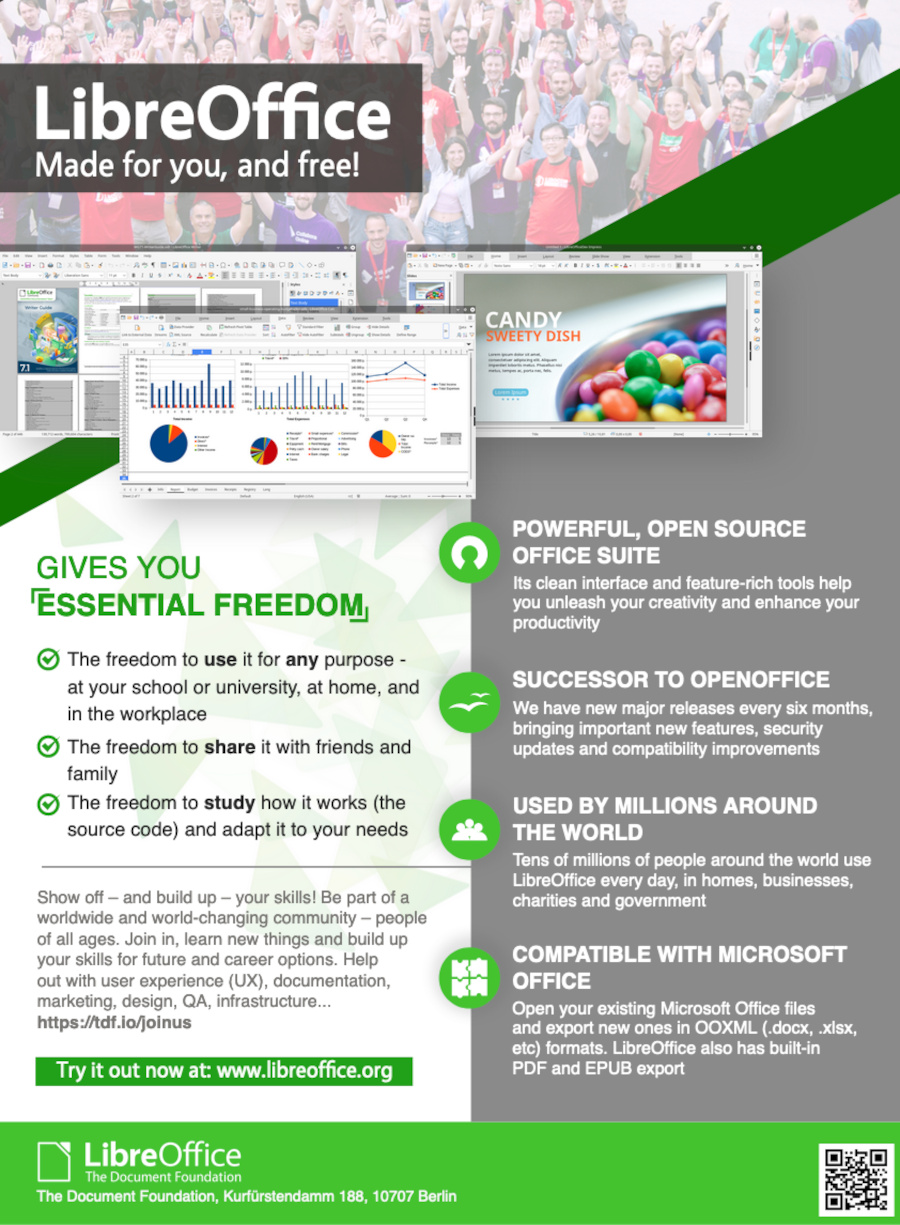
I think the LibreOffice community is doing very good work, and therefore I wanted to share some LibreOffice flyers with some college group, on my Mastodon and my website. Before doing that, I wanted to remove the term ‘open source’ with ‘freedom-respecting’ because personally, I don’t promote the term ‘open source’. Then I contacted Mike Saunders. We had some email exchanges and Mike gave me the idea of joining the LibreOffice Marketing team.

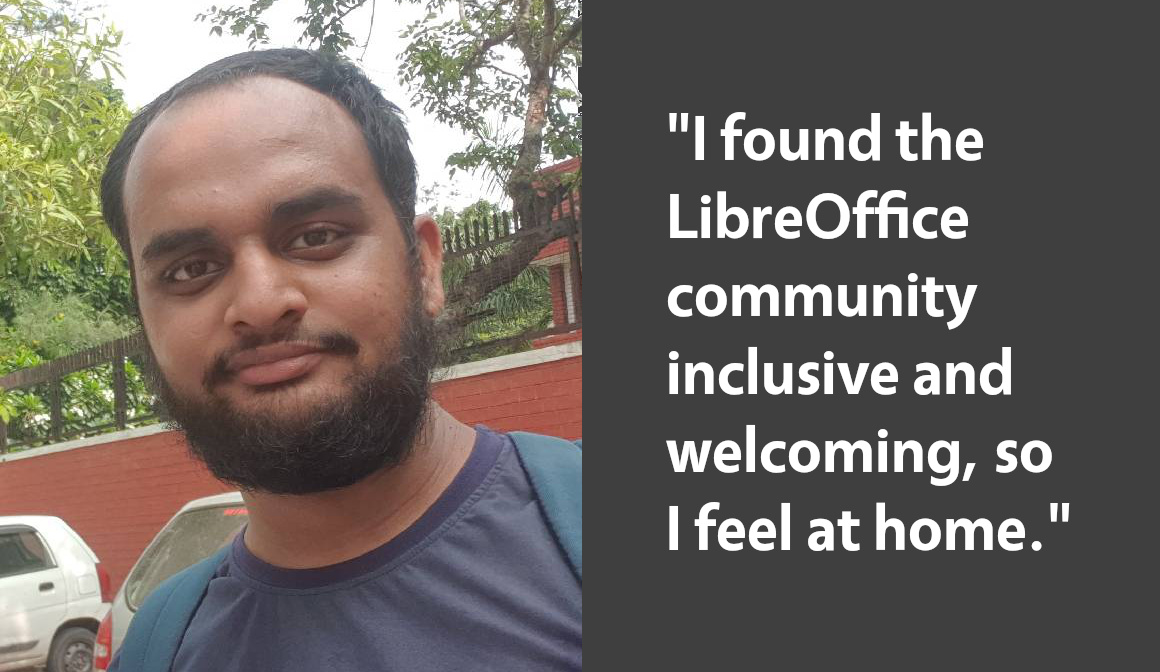
I found the LibreOffice community inclusive and welcoming, so I feel at home. Promoting LibreOffice also serves my broader goal of spreading free software. Therefore, I decided to help LibreOffice in marketing. Thanks a lot!

What else are you planning to do?

As of now, FSCI is planning to announce public meetings which help people switch to Free Software. It is similar to GNU/Linux installfests. We haven’t done this yet. We are planning to have our first session soon. I personally believe that even if people understand the dangers of non-free software and realize that they should switch to free software, they have some inertia. This type of meetings are aimed at breaking that inertia.

Currently, the adoption and awareness of free software is concentrated highly in a few Indian states, like Kerala. I am also planning to reach people in other areas of India too.

How can others help with Free Software adoption / spreading the word in India?

The most important part for free software adoption is to replace as much proprietary software you can with free software in your own computing. Then convince others to switch to free software.

Please visit fsci.in, and join our chat groups mentioned at the bottom of the page. Feel free to join and discuss. Help us with maintaining the services and other activities that we already do. You can start your own initiatives. One important aspect of community is that if you do the activism alone, you can easily get demotivated. Meeting like-minded people acts as a psychological boost. This is one reason I am able to boycott non-free software successfully.

Further, our goal (as FSCI) is not only creating more free software users but creating functional free software communities which are inclusive, welcoming and respectful.

I believe, we also need to have more free software businesses like libretech.shop, which sells free software powered laptops and mobiles.

Thanks for your time, Ravi! Finally, how can we reach you?

The contact page of my personal website lists the ways you can get in touch with me. You can also send me an email via ravi at ravidwivedi.in. Looking forward to hearing from you!
Community Member Monday: Bayram Çiçek

Today we’re talking to Bayram Çiçek, who’s helping to implement new features in LibreOffice as part of the Google Summer of Code…

Tell us a bit about yourself!

I live in Çanakkale, Turkey. I’ve just graduated with a bachelor’s degree in Computer Science from Çanakkale Onsekiz Mart University.

When I was a student, professors and instructors always told us about the importance and benefits of contributing to free and open source projects like LibreOffice. Since I was a LibreOffice user for years, the idea of not just being a user – but developing it, to go beyond being a user – has always been exciting to me. Therefore I decided to contribute to LibreOffice.

In November 2020, Hacettepe University organized an event called “ACM Hacettepe Lectures”. I attended the course “Contributing to Open Source Projects with C++” by Muhammet Kara. We sent our first patches to LibreOffice and Collabora Online together with other attendees, and this is how my journey began.

Then, I decided to apply to Google Summer of Code 2021, and I was lucky enough to get selected as a student under the mentorship of Muhammet Kara and Heiko Tietze, in the past summer. I worked on the most-annoying bugs, and tried to fix as many bugs as I could during GSoC.

What are you working on in the LibreOffice project right now?

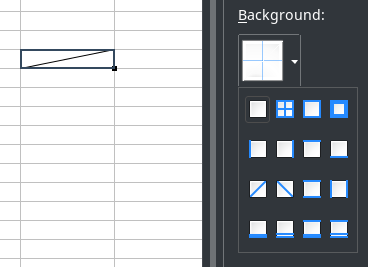
Currently, I’m working on Tables in Writer, and hoping to add a diagonal-borders feature to it. After gaining some more experience, I’ll be working on some bugs that related to my GSoC project, as I mentioned in my GSoC final report.

Why did you decide to become a member of The Document Foundation?

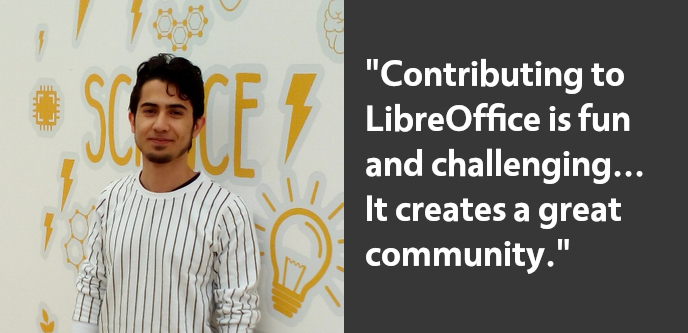
I think contributing to LibreOffice is both fun and sometimes challenging. When ‘fun’ and ‘challenge’ come together, it creates a great community, as LibreOffice does; and being a part of this community makes you more passionate and stronger. And that’s why I wanted to become a TDF member.

Anything else you plan to do in the future?

I will work on most-annoying bugs and I’ll be fixing as many bugs as I can in the future. Also, I want to actively contribute to Collabora Online.

On the other hand, I’ll continue to contributing to Turkish translation of LibreOffice and I want to be an active member of Turkish Community to spread the open source usage and LibreOffice.

Many thanks to Bayram for all his contributions, and enthusiasm in our community! And to everyone reading this: Find out what you can do for LibreOffice – have fun, build up your skills, and do awesome things 😊

Community Member Monday: Nige Verity

Today we’re talking to Nige Verity who’s helping out in the LibreOffice marketing community…

Tell us a bit about yourself!

I’ve been working in IT since the mid 1980s, spread across the aerospace, defence, science and financial services sectors. In the beginning I was mostly coding and testing, but as time went by I found myself working on requirements, designing systems and documenting them as much as doing any actual coding.

I first learned to program using Fortran on a VAX computer running the VMS operating system. Since then I’ve used all sorts of hardware and programming languages, even including a brief spell updating an ancient legacy system written in Algol running on an Elliott computer of late 1960’s vintage, for which the program was loaded from paper tape. This was an experience that gave me enormous respect for the programmers of the past for whom that was hi-tech.

Having worked on some extremely complex systems over the years I have come to value simplicity. When I am developing software for my own use my tool of choice these days is Gambas – an amazing but surprisingly little-known IDE, best described as “Visual Basic for Linux”, only Gambas is far superior to VB and leaves Python for dead in terms of productivity and performance.

Away from IT I am a musician – playing flamenco and blues guitar, and also the piano. In parallel with IT I’ve worked on the fringes of the art world, helping to organise four large-scale public art shows in recent years.

Although originally from London, I am blessed to live in rural South Shropshire, surrounded by farmland and arguably the most beautiful scenery the UK has to offer.

How did you become a LibreOffice enthusiast?

I started using GNU/Linux after years of frustration with the limitations and failings of Windows. My first distro was Xubuntu 8.10 which came with OpenOffice.org as its office software package. Until then I’d never heard of it, but it didn’t take long to discover that it had all the functionality that I’d ever used in MS Office, and a lot more besides.

When LibreOffice was launched as a fork of OO.org I jumped ship to it and have never looked back. I never cease to be astonished at how powerful and stable it has become. In my ideal world I would see Base become much more closely aligned with MS Access, in the way that the other components are close analogs for their MS Office counterparts. At the moment, any organisation with a sizeable investment in the use of Access is really not likely to migrate to LibreOffice.

What are you doing in the LibreOffice project at the moment?

Compared with most contributors I am a total lightweight. While my initial inclination was to get involved with developing the software itself, I felt daunted by the likely learning curve, given the size of the codebase, so it would be a long time before I could become really useful. I decided I might be more effective in helping to spread the word about LibreOffice.

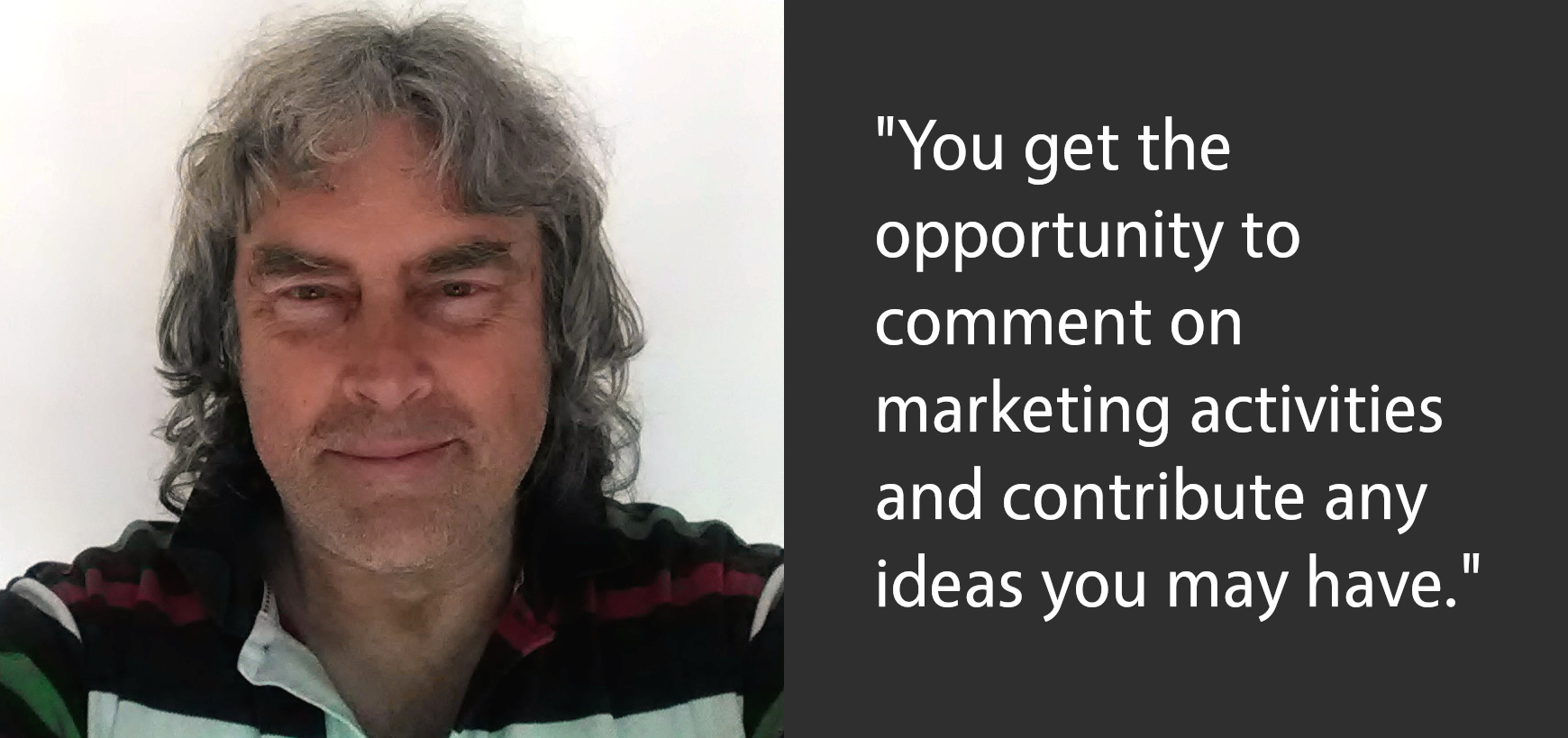
I got myself added to the marketing mailing list and this has proven to be a great way to get involved. You get an inside view of the project and initiatives to expand the userbase. Crucially you get the opportunity to comment on these marketing activities and contribute any ideas you may have.

Recently I have been distributing flyers promoting LO around secondary schools and colleges of Further Education in my area, along with the local university campus. My car has a LibreOffice banner displayed in the windscreen. Every email I send includes a promotion for LibreOffice in the signature section. These are minor activities in the scheme of things, but as I see it if every LO user successfully encourages just one other person to try it some of those new users will inevitably be decision makers, in a position to bring many others on board. “From little acorns….” and all that.

By putting myself forward as a LibreOffice point of contact I hope I will be able to help get some prospective new users “across the line”, by helping to resolve any questions or reservations which may be holding them back.

What are some of the challenges/opportunities with promoting LO and free software?

I feel the greatest challenge to the adoption of LibreOffice is simple resistance to change. In organisations where MS Office is already deeply entrenched, and possibly the only software many of their staff ever use at work, migrating from a tool they know very well to another which they may barely have heard of is a big ask. The bigger the organisation, the greater the task of migration is perceived to be. We have to persuade organisations that it is worth the effort.

A great opportunity where the UK is concerned is its highly dynamic business environment, which probably generates more startup companies than any other country in Europe. Some of these are highly professional, well-funded affairs but most involve only one or two people initially, seeking to create a business based on their skills and talents. With the bare minimum of funding and very little in their budget for software, this is where LibreOffice has great potential, if only ways can be found to reach people still in the planning stage of a new enterprise. This has the added advantage that if a startup includes LibreOffice in its workflows from day one, and that new business becomes a success, it is likely to stay with LO as it grows, thereby furthering its adoption.

In my experience of advocating the use of free software, people usually “get” the advantages of open source. They are not difficult to explain. The additional advantages of free software, however, are a much harder sell. If you are not involved in software development they really don’t seem that relevant. Does that really matter, though, as long as the applications people use are indeed free and open source? Does it really matter if the motivation for choosing that free software is the concept of free as in “gratuit” rather than free as in “libre”?

At the level of day-to-day users I don’t think it does all that much, as long as their managers understand that somebody somewhere has paid for their “cost free” software to be developed, in terms of man hours of effort and/or hard cash, and that this can only continue if sufficient numbers of users express their appreciation in financial or other practical ways.

Thanks a lot to Nige for his time and contributions! Everyone is welcome to join our marketing project, mailing list and Telegram group. Let us know your ideas – and we can provide you with materials, to help spread the word!

LibreOffice extension to remove blank cells – Help to improve it!

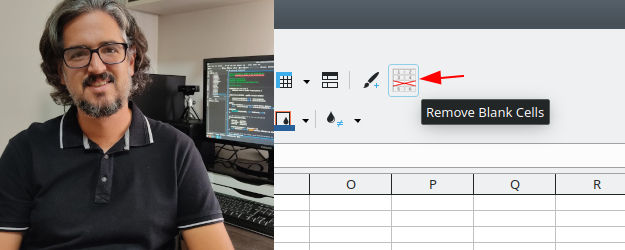
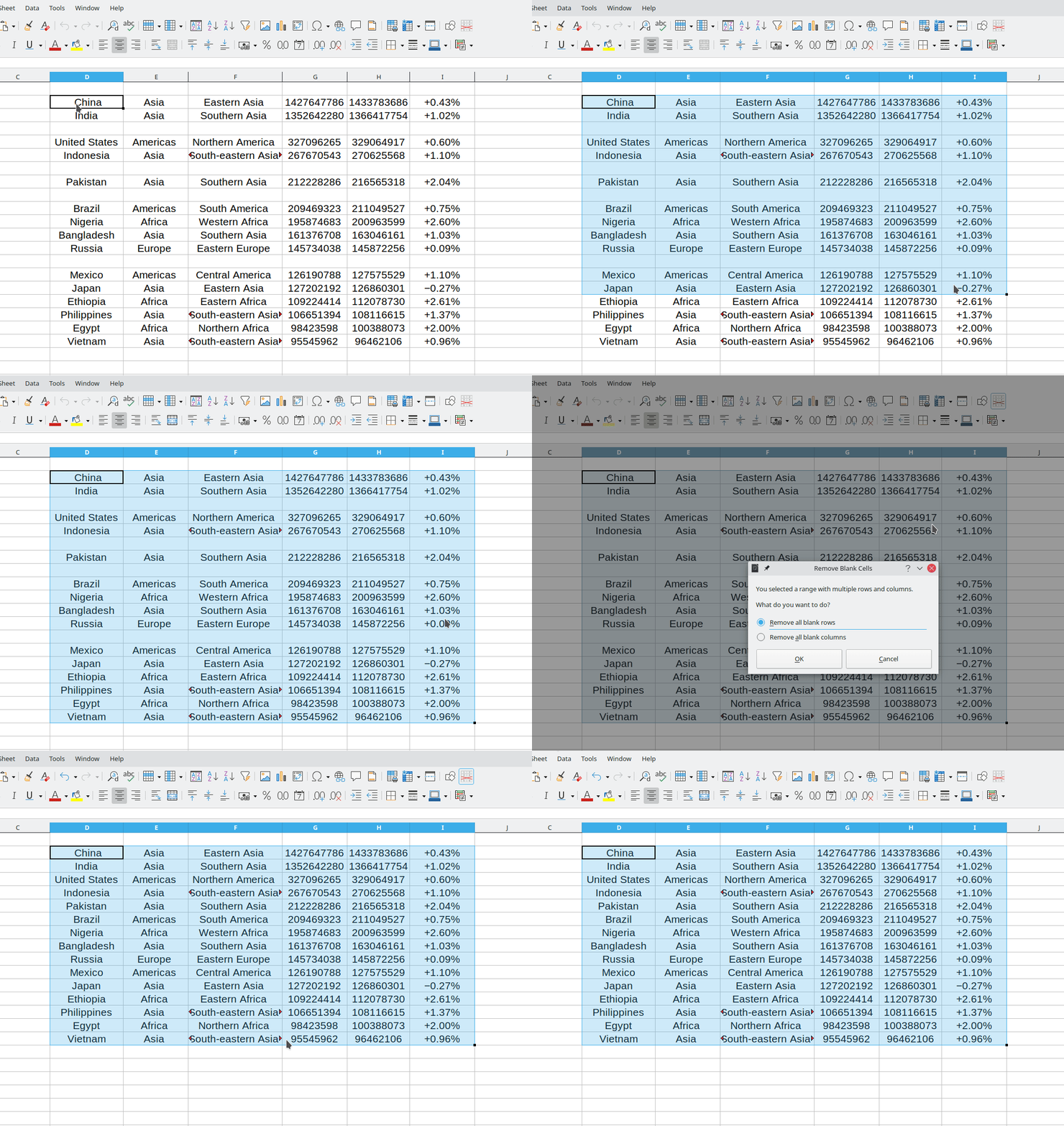
Rafael Lima from the Brazilian LibreOffice community is working on an extension to remove blank cells in LibreOffice Calc. It has four modes (single column, single row, blank rows and blank columns). Here’s a quick animation of it in action:

So far, the main functionality is there, but Rafael would like to improve it. We asked him for some more info…

What does the extension do?

The main purpose of this extension is to remove blank cells to easily compact data. For instance, suppose you have a table with data and then you delete the contents of some rows. The next thing you might want to do is remove these blank rows to compact your table. By using the Remove Blank Cells extension this can be done with a single click.

Currently the extension supports four modes to remove blank cells. The simplest one is when you select a single row or column, then the extension will detect the selection and compact the data removing all blank cells. However, if a matrix is selected, then a message will be displayed and you can choose if blank rows or blank columns are to be removed.

When did you start making it?

I started writing the extension in February this year and finished the first version in less than one month. Then I kept testing it and working on improvements and the final version was finished in July.

At first the extension focused on my use case, because in my work with data analysis I often have to remove blank rows and columns. However, after seeing many people asking about how to remove blank cells in LibreOffice, I decided to pack it and make it available for everyone since it might be useful for other people.

What are the current limitations of it?

The main limitation of the extension is when the user wants to process very large tables (with tens of thousands of rows), which might take some time to finish. In these cases a progress bar is shown so the user can keep track of the data processing.

Moreover, the extension still does not support translations, so the user interface is only available in English. I plan to support translations in the next release.

How can people help to improve it?

Because this is the first released version of the extension, I would appreciate having more people testing it and reporting issues on the extension’s GitHub page.

I would also like to invite the community to create a better icon for the extension, so that it would be more in line with the default icon theme in LibreOffice.

In the future I will also need some assistance with translating the extension’s strings.

So, everyone is welcome to try out the extension – and if you have some technical knowledge, jump in and help Rafael and the community to improve it! Check out the wiki for more information on extension development.