Community Member Monday: Adolfo Jayme Barrientos

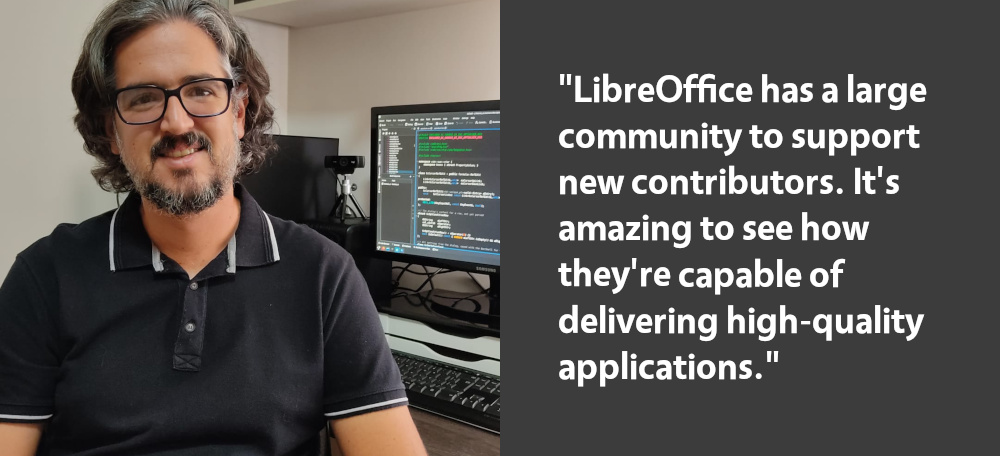
Today we’re talking to Adolfo Jayme Barrientos, who has been active in the LibreOffice community for many years. He helps out with translations, design and documentation…

To start, tell us a bit about yourself!

I live and work in Mexico. I grew up in a home where we didn’t have video games or a computer, but it was filled with books; I developed a liking for reading, typography, typesetting and book design.

I was mesmerised when I got my first computer: reading also gave me an edge for learning languages, and when it came to choosing a university major, I went straight to linguistics. I work as an EFL (English as a Foreign Language) teacher with 12 to 15-year-old pupils.

I started translating software eleven years ago, and started doing it professionally some five years ago, to finance my university tuition. I am now trilingual, and continue reading books in various Romance languages whenever I have free time.

What are you working on in LibreOffice?

As well as providing Spanish translations for the different products developed under The Document Foundation, I collaborate with the design and documentation teams.

How did you originally join the community – what was it like?

When the news broke that Oracle was buying Sun, I became concerned. I had been using Linux for a year; I feared that the main productivity suite available for Linux, OpenOffice.org, would gradually die as a result of bad leadership. Fortunately, the project’s community took the reins of it and avoided a negative fate for people like me who worry about having to store our life’s work in proprietary formats that may be deprecated in the future.

What else do you plan to work on? What does LibreOffice really need?

It’s great that TDF’s leadership has produced such a healthy ecosystem of companies who contribute developers to LibreOffice, without monopolizing power. Its community is very equitative as a result. However, investments are needed in the front-end. We can’t rely so much on volunteers to develop that kind of user interface enhancements that signal progress to end users. Papercuts like SVG icon rendering and touchscreen scrolling are long-needed, but haven’t yet found their funding.

As for my plans, I’d like to spend time learning about the best ways to market our products and attract contributors from my area.

A huge thanks to Adolfo for all his contributions and support over the years! And to all users reading this: find out what you can do for LibreOffice, to build your skillset, meet new people, and have fun in our worldwide community!

Community Member Monday: Pranam Lashkari (Collabora/GSoC)

Today we’re talking to Pranam Lashkari from our Indian community, who is working in the LibreOffice ecosystem at Collabora, improving the web-based version of the suite…

First off, tell us a bit about yourself!

Pranam! (It means namaste, and yes, that’s my name too 😂). I live in Rajkot, a city in the middle of the state of Gujarat in India. I am a computer engineer who started working on open source projects as a student, to expand my knowledge, which later got me into Google Summer of Code – twice as a student, and this year I became a mentor and a maintainer of one of the Boost C++ Libraries called GIL (Generic Image Library).

The eagerness for always working in open source led me to work with Collabora Productivity, where I’m privileged to work full-time to take LibreOffice development further. So far, all the code I have written in my life is open source.

When I am not programming, I like to spend my time playing cricket (or any sport), doing some observational astronomy, or reading things related to science.

You can find me on LinkedIn and GitHub.

What are you working on in the LibreOffice project right now?

Most of my work is focused on LibreOffice Online, which also happens to be the project behind the mobile version of Collabora Office. I started by removing the Poco framework, and then adding major features like smooth scrolling in mobile.

Currently, I am working on desktop browser version of LibreOffice Online, where I try to align features with the core version. On the other hand, in the mobile version, I solve different bugs in mobile wizards and enable new features which are not yet available in mobile. While working on the mobile wizard, I also try to optimize the performance wherever possible by avoiding and reducing unnecessary communication with the server – and making things look more snappy on mobile.

Why did you decide to become a member of The Document Foundation?

I love it when my code is used by people. Having a large number of users of LibreOffice attracted me to be a developer in TDF projects, and I am very thankful to Jan Holesovsky and Michael Meeks for giving me this wonderful opportunity and helping me get started and grow.

At first, I wasn’t aware of the existence of such programmes where one can become a member, until I received an email inviting me to apply to become a member of TDF because of my continuous involvement in TDF projects the last six months. I decided to apply for the membership because it would help me align the development with the goals set by the organisation, and get a clear picture of further required development.

The best way to move forward is by collaborating and becoming a part of the project. By becoming a member, I also wish to give my feedback on decisions and strategies.

Anything else you plan to do in the future? What does LibreOffice really need?

In my work for Collabora, we focus on what our customers and partners most want to be done next – always something interesting.

Finally, one thing I would like to add: working on these projects which are involved in changing the user experience forever is one of the best experiences I have had as a developer. I would like to thank Collabora and TDF for this.

TDF says: we’d like to thank you, Pranam, for all your work! A strong and healthy ecosystem is essential for the future of LibreOffice, so we’re glad you’re enjoying working for Collabora and improving LibreOffice Online. Cheers!

Community Member Monday: Tomáš Chvátal

Today we’re talking to Tomáš Chvátal from the Czech LibreOffice community, who recently decided to become a Member of The Document Foundation…

To start, tell us a bit about yourself!

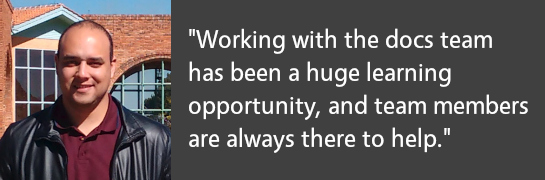
I am from Prague, Czech Republic, where I work for SUSE as a Team Lead for software development/packaging. For SUSE and openSUSE I am responsible for the LibreOffice packages, and ensure they are built and delivered for everyone.

In my spare time I play with my parrots, read books and generally just slack around 🙂

Why did you decide to become a member of TDF?

I think the ability to open documents – created wherever and however – should not be limited by having to pay to view the content. For instance, when you’re communicating with the government, you should not be tied to paid services, and there should be no hurdles for anyone.

What are you working on in the LibreOffice project right now?

Mostly making sure the package is fresh and crispy on the openSUSE and SUSE stack, and fixing all the reported issues found by the users.

SUSE has a partnership with Collabora Productivity, and as such we also fix various compatibility issues between Microsoft Office and LibreOffice to make it easier for people to switch to free (and better :P) alternatives.

Anything else you plan to do in the future?

I do not really radically plan to change my contributions. Put simply, I will keep making sure that LibreOffice keeps working, and whenever the current pandemic boils over, promote The Document Foundation at conferences again.

Thanks to Tomáš for all his contributions! Everyone who’s active in the LibreOffice community is welcome to join The Document Foundation, and help to shape the future of the software:

Please confirm that you want to play a YouTube video. By accepting, you will be accessing content from YouTube, a service provided by an external third party.

YouTube privacy policy

If you accept this notice, your choice will be saved and the page will refresh.

Community Member Monday: Pulkit Krishna

Today we’re talking to Pulkit Krishna, who’s a new member of The Document Foundation, the non-profit entity behind LibreOffice. He’s also active in our documentation community…

Hi Krishna! Tell us a bit about yourself…

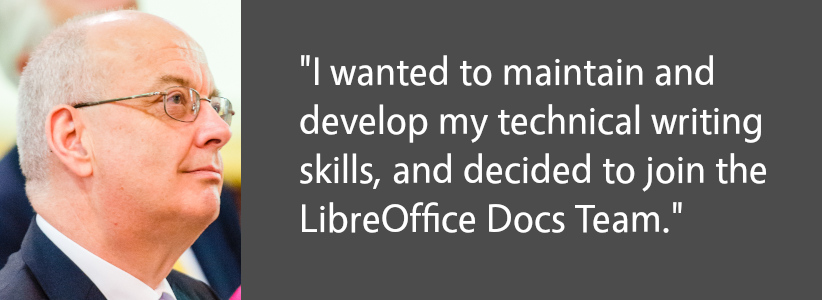
I am from Bihar, India. I am a teacher by profession, and technical writing is my hobby.

Why did you decide to become a member of TDF?

In my country, very few people know that there are other office suites than Microsoft Office. They do not know that there is a suite that’s free and open source software. I am not talking about everyone – but the majority of people.

By becoming a member, I think I can help to spread the word, that there is a very good free office suite, LibreOffice. Also, almost everybody in my country thinks that to become a part of a software community, you have to be a developer. I want to remove this stereotype. I am not a developer and yet I am a member of TDF.

What are you working on in the LibreOffice project right now?

Currently, I am working on updating the Base Guide to version 6.4. The base guide 6.2 was translated from German, but for version 6.4 we are updating it from 6.2. It is going to be a quick update, because Base has not changed much.

Anything else you plan to do in the future? What does LibreOffice really need right now?

As the Base Guide 6.2 was translated from German, its English could be improved. Also, there are some translation mistakes. I plan to rewrite the whole guide for 7.0. The screenshots in the guide are old – they need to be updated. I am going to use the format suggested by Dan Lewis.

In the future, I would also like to spread the word about LibreOffice in my country. Although the government has declared that free and open source software should be promoted, very few people in my country even know that such a thing exists.

Thanks, Krishna! Indeed, our marketing community is reaching out and spreading the word – everyone is welcome to join and give us a hand!

Community Member Monday: Sandra Louvezo

Today we’re talking to Sandra Louvezo, who is helping to spread the word about LibreOffice and FOSS in Congo. Also, she recently became a Member of The Document Foundation, the non-profit entity behind LibreOffice…

To start with, tell us a bit about yourself!

I was born on August 31, 1984 in Pointe-Noire, the economic capital of Congo-Brazzaville. I achieved a BAC+3 in Human Resources Attaché at the Magrebin Institute of Science and Technology in Tunis, Tunisia (IMSET) in 2008.

Then I returned to Congo in 2009, where I worked for five years in local companies as an Accounting Assistant – Claims Writer – Head of Life and Health Insurance services at the Huet de Baroquer group, under the H branch in B Congo Insurance. Then I was Director of Human Resources in a service subsidiary and provision of Health, Safety and Environment (HSE) staff for two years.

For the past two years, until now, I have started my own business as a motivational and personal development coach, as well as a nutritional coach and caterer.

What are you working on in the LibreOffice project right now?

In Pointe-Noire I belong to a community called “Librists”. Our goal is to help people discover the world of open source software here in Congo – which very few people know about. I am responsible for training people to use the LibreOffice suite, and we have named the training “SPRINT”, which lasts 60 days per component starting from Writer, Calc, Impress etc.

The aim of this sprint is to help users learn the applications, and get their comments, to then bring back to the LibreOffice Francophone community, to which I also belong. Then we can continue to improve LibreOffice.

Why did you decide to become a member of TDF?

I decided to become a member in order to raise awareness, mobilize people, and bring LibreOffice to my country and Africa in general. Discovering LibreOffice and open source was a delight for me, and I want to teach others this life lesson: contribute back to open source, and help make the world a better place.

Anything else you plan to do in the future?

I am training to prepare the next SPRINT, which will start from the end of July to the beginning of August 2020 in several African countries such as: Congo Brazzaville, Cameroon, the Democratic Republic of Congo, Togo, Senegal and Benign. For 60 days, users will learn to use and discover LibreOffice Writer in the form of exercises, and the answers will be returned at the end of ech day.

The goal is to be present, so that each African country discovers LibreOffice and builds a mini community around it, before we start to offer the application to the different companies that have everything to gain from using it.

Thanks to Sandra for all her contributions! Our native language communities are always open for more help – so if you want LibreOffice and its website localised in your language, give us a hand!

Community Member Monday: Khairul Aizat Kamarudzzaman

Today we’re talking to Khairul Aizat Kamarudzzaman from our Malaysian community. He’s a long-time fan of free and open source software, and is helping with LibreOffice advocacy and marketing…

To start off, tell us a bit about yourself!

I’m from Kuala Lumpur, Malaysia. I started exploring and using FOSS way back in 2004 (Debian, Red Hat, the BSD family and sticking with Ubuntu till today) when I was studying at the university. From there I started exploring and contributing to Ubuntu, which you can find here, and I was accepted to be an Ubuntu Member, Kubuntu Membes (merits as Ubuntu contributor). Finally I was appointed to be part of the Asia Oceania Membership Board.

A a FOSS community member, I work in a few IT companies in Malaysia and was one of the engineers working at Open Source Competency Centre (OSCC) under Malaysian Administrative Modernisation and Management Planning Unit (MAMPU). Now I own my own IT company, namely Informology Sdn Bhd. Not stopping there, I continue actively being a FOSS enthusiast in Malaysia. When the cloud computing era came, I was involved by leading Malaysia OpenStack User Group, and I’ve recently been exploring and leading the Endless OS user group for Malaysia.

What are you working on in the LibreOffice project right now?

I started the LibreOffice Malaysia Group on Facebook, and I’m planning with the group to finish the LibreOffice Malay translation as soon as possible, with guidance from the Indonesian LibreOffice translation team – so that we can have Malay language support in LibreOffice and Collabora Office.

Why did you decide to become a member of The Document Foundation?

It’s in line with what I’ve done since I started using FOSS: open source advocacy targeted at students, teachers, government staff and the open Source community members in Malaysia. I especially focused on Linux, and office automation like LibreOffice and Collabora Office as an alternative to Microsoft Office. Then, last year in 2019, I managed to participate in the Gnome Asia Summit 2019 in Surabaya, Indonesia where I met a lot of FOSS enthusiasts who are advocating and spreading open source in Indonesia, along with a few awesome TDF members (Ahmad Haris), TDF Board member (Franklin Weng) and GNOME Foundation Staff.

So I asked myself… since I already pitching the Open Document Format (ODF) since I was in OSCC, why not start contributing more to LibreOffice by doing translations? So I challenged myself by applying to become a TDF member, with advice from Ahmad Haris and Franklin Weng.

Anything else you plan to do in the future?

Keep spreading and marketing LibreOffice in Malaysia – especially in the government and educational sectors. Give these sectors LibreOffice as an alternative, by not using piracy and a cracked version of Microsoft Office.

Maybe the LibreOffice Malaysia group can suggest to TDF to host the LibreOffice Conference in Malaysia one day in the future!

Thanks Khairul! And indeed to everyone in the Malaysian LibreOffice community. Your work is essential to help spread awareness of LibreOffice across the globe.

Join the LibreOffice community today! Have fun and build up your skillset…