Harald Berger is a volunteer in our German-speaking LibreOffice community, and over the years has created many tutorial videos for the software. We’re really thankful for his work, and we decided to find out exactly how he goes about creating the videos…
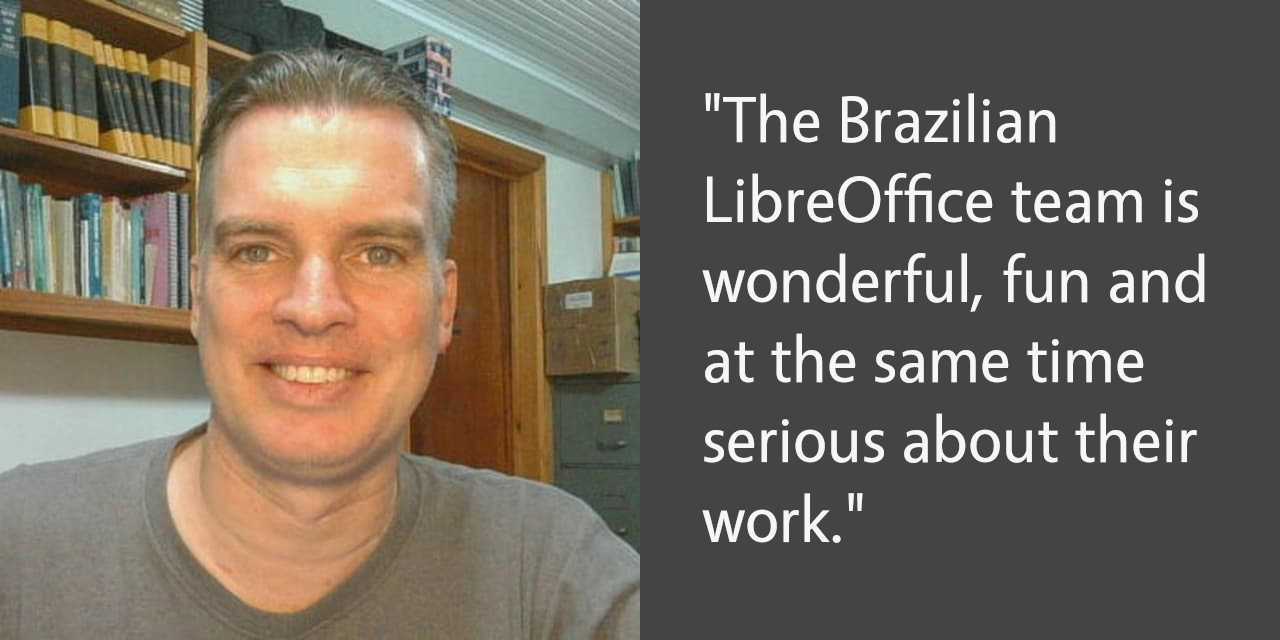
I am a son and grandson of American missionaries who moved to Brazil in 1952. Since my mother was born here (my father was a seven month old baby), I was born automatically a Brazilian citizen – even though I was born in the USA. Being brought up in Brazil, I learned both American English in the home, and learned Brazilian Portuguese in parallel. I am fluent in both languages. Computers came into my life as my dad saw the importance and value of them in the eighties. Watching him hack an Apple IIe and a daisy wheel printer to get the tilde accent over the letter “y” was an adventure in and of itself.
I have been on a learning journey for most of my life. Everything I have learned is self-taught, including LibreOffice. My main activity in life is teaching in general. Teaching software to newbies such as the elderly, the underprivileged and young people is a passion I have. LibreOffice is an excellent starting point as it has virtually all the basic areas: text, images, markup languages, programming logic on a very simple scale with macros, databases etc., and much, much, more.
What are you working on in the LibreOffice project right now?
Right now, I am on the Brazilian translation and editing team. I am new, and am still learning how to organize myself better. The Brazilian team lead by Olivier Hallot is wonderful, fun, and at the same time, very serious about their work. Our Wednesday night meetings are in a fun and enjoyable environment – without losing the fine touch necessary for an editing team. I learn a lot from them just by listening to them.
Why did you decide to become a member of The Document Foundation?
Firstly, becoming a member of TDF is a way to begin to know other people, and, secondly, I believe becoming a member adds prestige to a curriculum vitae.
Both contact with people around the globe, and being part of something free, open and serious as TDF will open new doors for me to help “convert” people to LibreOffice, the ideals of TDF and open source software in general.
Anything else you plan to do in the future? What does LibreOffice really need?
There are two main things I would like to do with LibreOffice:
Create a teaching standard for IT.
Convince businesses to adopt more open standards via LibreOffice.
Participating in many different LibreOffice groups, I have noticed a major request for a change in LibreOffice’s appearance. It may seem trivial, but, many non-technical people make a decision of acceptance or rejection based on the look of something. I believe it would be wise to do an overhaul of the visuals.
Personally, I don’t pay too much attention to that since I focus on usability, but I am surrounded by people who reject many things simply because the look isn’t “modern”, “contemporary”, or “cool” enough.
I am 47 years old, so, my age may be a factor that adds into the way I interpret the visual aspects (meaning I don’t care too much about them). On the other hand, as the years go by, I notice that my way of thinking and doing things has somewhat solidified. An older generation can run the risk of not paying attention to the new generation and this generation (my children’s or younger) are a highly visual generation.
Many thanks to Tim for all his contributions! Everyone helping out in the LibreOffice project is welcome to apply for membership of TDF, and help us to steer our projects into the future 👍
Please confirm that you want to play a YouTube video. By accepting, you will be accessing content from YouTube, a service provided by an external third party.
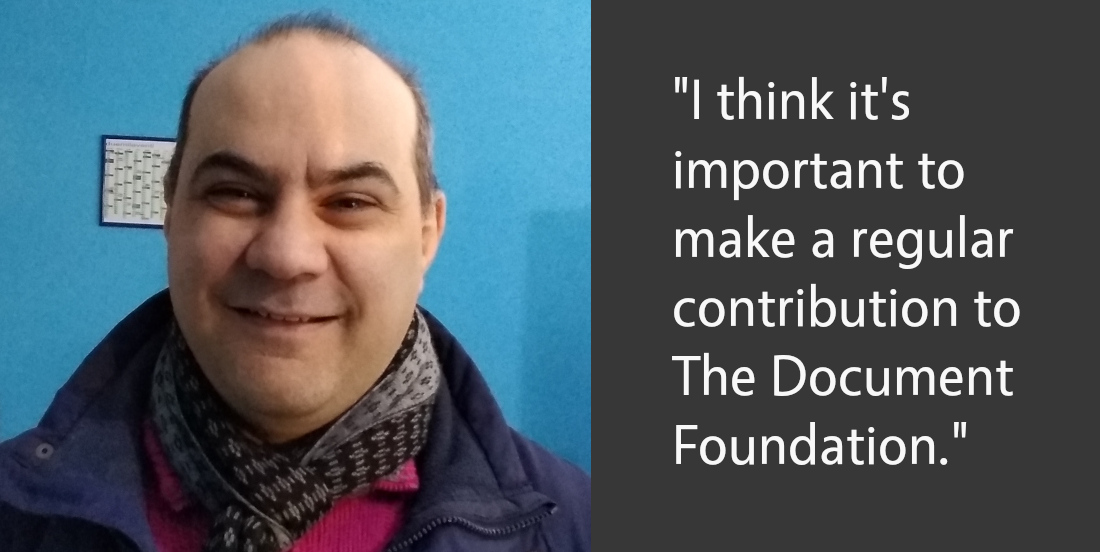
I’m from Modena, Italy and I’m still living in this city. I’m just a normal free software user – a GNU/Linux user since 2001. I moved from Debian to Ubuntu, and then returned to Debian. The first love is never forgotten! 🙂
I use free and open source software and both in private and in my work. I have a Dell series 3500 laptop, an old IBM T42 ThinkPad in private and a HP Compaq 6000 pro at work, all with Debian 10. I am very much a beginner programmer (HTML, CSS, JavaScript) and also a beginner hardware technician. For both software and hardware specializations, I have not been in the world of work since 2003, since I became a tobacconist.
I don’t like obscure software updates that last an eternity without knowing what is being updated.
What are you working on in the LibreOffice project right now?
Now I’m working on wiki pages: I translate from English to Italian.
Why did you decide to become a member of TDF?
I’m part of the Italian LibreOffice guides localization team, in particular for Base, and the wiki pages localization team from 2018. I become a TDF member in 2021 thanks to Italo Vignoli and Marina Latini. I think it’s important to make a regular contribution to the TDF project: a little every day, it’ll become a mountain one day.
Anything else you plan to do in the future?
In future, to live happy with my wife and to be healthy. About LibreOffice: I hope for better support in the database module. Right now I use Calc to do what I’d like to do with Base.
Many thanks to Manuel for his support and contributions. Everyone is welcome to discover what they can do for LibreOffice, build up skills and have fun!
I’m a passionate administrator and open source enthusiast, starting my career 26 years ago. I live in Istanbul, and enjoy keeping myself up to date with the latest in the open source world, and trying out the latest tools, features, and services around Linux. In my spare time, I participate in the Turkish translation of open source applications.
You recently decided to become a Member of The Document Foundation, the non-profit behind LibreOffice. Tell us about that…
I want the OpenDocument Format and LibreOffice application to be used in my institutions and city. For this reason, I wanted to support The Documentation Foundation individually.
Also, I am here because I think the LibreOffice community has a differentiation from other open source communities. You can install and use open source applications, but there is a need for the OpenDocument Format to become widespread in order to use the produced output.
Here, I want to be a part of this dissemination and I believe that there will be an opportunity for this. Open source usage in Turkey is not at the desired level yet. In addition, it is very sad that many individuals and institutions are unaware of the OpenDocument Format and LibreOffice. I want to strive to eliminate this problem.
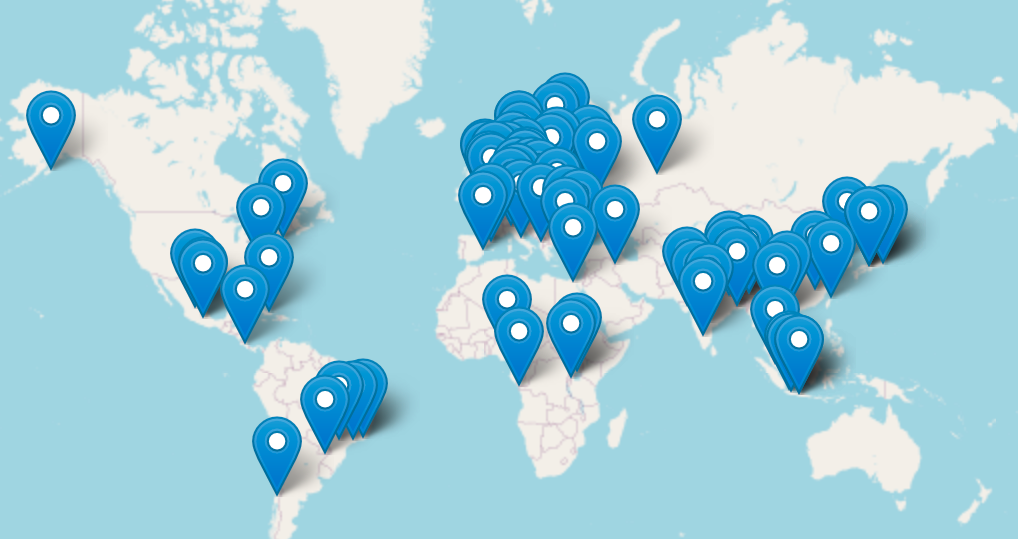
(This image shows some LibreOffice community members from our map. If you’re not there, or want to get your location on the map, let us know!)
Today we’re talking to Dante Doménech, who’s helping to improve LibreOffice Math…
Hi Dante – tell us a bit about yourself!
I’m from Spain – the biggest city in the area is Valencia. I’m a physics student, and my hobbies are coding and reading about other scientific fields.
What are you doing in the LibreOffice project right now?
I’m working on updating the suite’s formula editor to be fully compatible with MathML. This would increase the strength of our formula editor, by backing it with a solid standard.
Additionally, I’m working on adding support for Kahan summation, for handling sums in LibreOffice Calc. This would increase the accuracy of statistical operations – in particular sum, average, standard deviation …
How did you originally get involved, and what was the experience like?
There was no way of using custom RGB colors in Math formulas – so I added the feature myself. It was easier than expected, because the people in the community directly pointed me to the code I was looking for.
Is there anything else you’d like to work on?
Once I’m finished with the formula editor, I may improve the collection of numerical calculus functions in Calc. I also may help with making a new Math guide.
Many thanks to Dante for all his contributions! Some of them will arrive in LibreOffice 7.2, due this summer. Stay tuned to the blog for more updates…
Today we’re talking to Necdet Yücel from the Turkish LibreOffice community, who has been mentoring students and helping them to get involved with LibreOffice…
Tell us a bit about yourself!
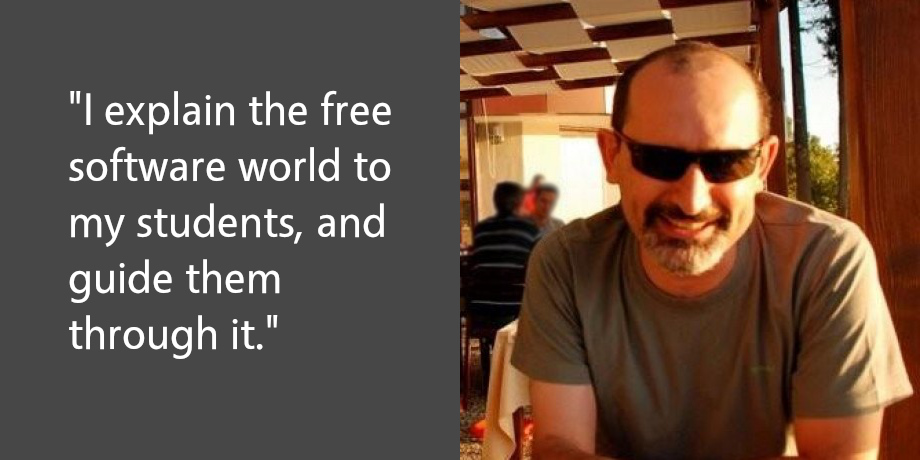
I have been working as a lecturer at a university for more than 20 years. I teach programming and computer networks courses in the computer engineering department. My main area of interest is free software. My personal contribution to the free software world is mostly by making Turkish translations of free software – and I try to explain the free software world to my students, and guide them through it.
What are you doing in the LibreOffice project right now?
I’m one of the old translators of LibreOffice. I have translated hundreds of thousands of words, but I have no motivation to work on translations for a while.
Since 2015, the year Gülşah Köse become a LibreOffice developer, more than 15 of my students made contributions to LibreOffice. One of them is Mert Tümer’s, who is an active LibreOffice developer. Gülşah’s work was a major influence for LibreOffice developments in Turkey. I am very proud of my students, who started with her and continued until Gökçe Küler.
Do you have any tips/thoughts to share from bringing people into the community?
I think we have no choice but to direct students to free software in universities. Because it’s the only chance to to study how the programs work. Reading well-written code, changing it, compiling and redistributing it are the main requirements for being good developers. If we can explain them to students, they will become free software developers.
Is there anything else you plan to do in the project
The only thing I think I know well is mentoring students to free software. My short term plan is to continue translating and consulting students for free software.
Many thanks to Necdet for all his contributions! And to everyone reading this who uses LibreOffice and is interested in getting more involved: find out what you can do here. We’d love to have you on board, in our community!