The Document Foundation (TDF) is the non-profit entity behind LibreOffice, providing infrastructure and support for the community that makes the suite. Recently, TDF decided to expand its small team with two new Developers – the first (Khaled Hosny) focusing on “complex” text layout languages. Today, we welcome our second Developer, Michael Weghorn, who will initially focus on accessibility improvements. Let’s hear from him…
Tell us a bit about yourself!
I am from Germany, and have been living in Munich since moving here for my studies in computer science about 12 years ago.
I am a free and open source software enthusiast.
Before coming to TDF, I was working for the City (administration) of Munich, first being part of their Linux client team – and since 2018 with the main focus on LibreOffice development. I am also a member of the LibreOffice Engineering Steering Committee (ESC).
Besides my involvement in LibreOffice, I have also contributed a few changes to other open source projects – mostly fixes for issues that I ran into myself as a user. The possibility to do this is certainly one of the many benefits of open source software.
Besides being an open source software developer, I’m involved in a Christian church and like meeting friends, sports and reading.
You’ve been in the LibreOffice project for a while – what have you been working on so far?
The first code change I was working on had to do with the selection of the Java runtime on LibreOffice startup, and I was also translating German comments in the source code back then.
Since then, I have mostly been working on fixing bugs in different areas of LibreOffice. The main areas that I have been focusing on are Qt/KDE integration, the Android version and accessibility.
What’s your new role at TDF, and what will you be working on?
I’m joining TDF as a LibreOffice Developer, focusing on accessibility.
Accessibility is quite a broad topic, ranging from the accessibility of LibreOffice’s user interface to the accessibility of the documents that the program creates.
From what I have seen so far, LibreOffice has a good basis regarding accessibility. It’s also great to see recent contributions by others to further improve accessibility (eg improvements for document accessibility and PDF/UA export, the accessibility checker and accessibility on macOS), but there are certainly also areas that will benefit from getting some more attention.
My initial focus will probably be fixing problems encountered in the user interface when using LibreOffice with a screen reader.
From my experience so far, this often not only involves making changes to LibreOffice itself, but also to the corresponding screen reader or elsewhere in the accessibility software stack. Therefore, cooperation with other projects is also essential.
How can all users of LibreOffice help out?
There are different ways to get involved – for example:
Report accessibility issues in the Bugzilla issue tracker and set the “accessibility” keyword for accessibility-related bugs, so developers become aware and can fix them
Confirm already existing bug reports and add more helpful information to them
Test development versions of LibreOffice with assistive technology (and report bugs), so issues can be fixed before a new version is released
If you’re a developer: help with fixing reported bugs
There’s also an accessibility page in the wiki, which contains some more information and will be further updated in the future.
Great to have Michael on board! 😊 Follow this blog and our Mastodon and Twitter accounts for updates on his work – plus more news from the LibreOffice community.
In 2022, the marketing team continued the deployment of the Strategic Marketing Plan, without overlooking ongoing activities to promote LibreOffice and support the efforts of native language communities
(This is part of The Document Foundation’s Annual Report for 2022 – we’ll post the full version here soon.)
LibreOffice Strategic Marketing Plan
We have invested in the deployment of the Strategic Marketing Plan, with additional activities such as the release of generic presentations about The Document Foundation (History, and Digital Sovereignty), LibreOffice (Technology, also with comments, and Sustainability) and Open Document Format (Generic, ODF and Interoperability, and OOXML Issues), to be used by community members. Videos who help to personalize a slide deck according to the audience are also available.
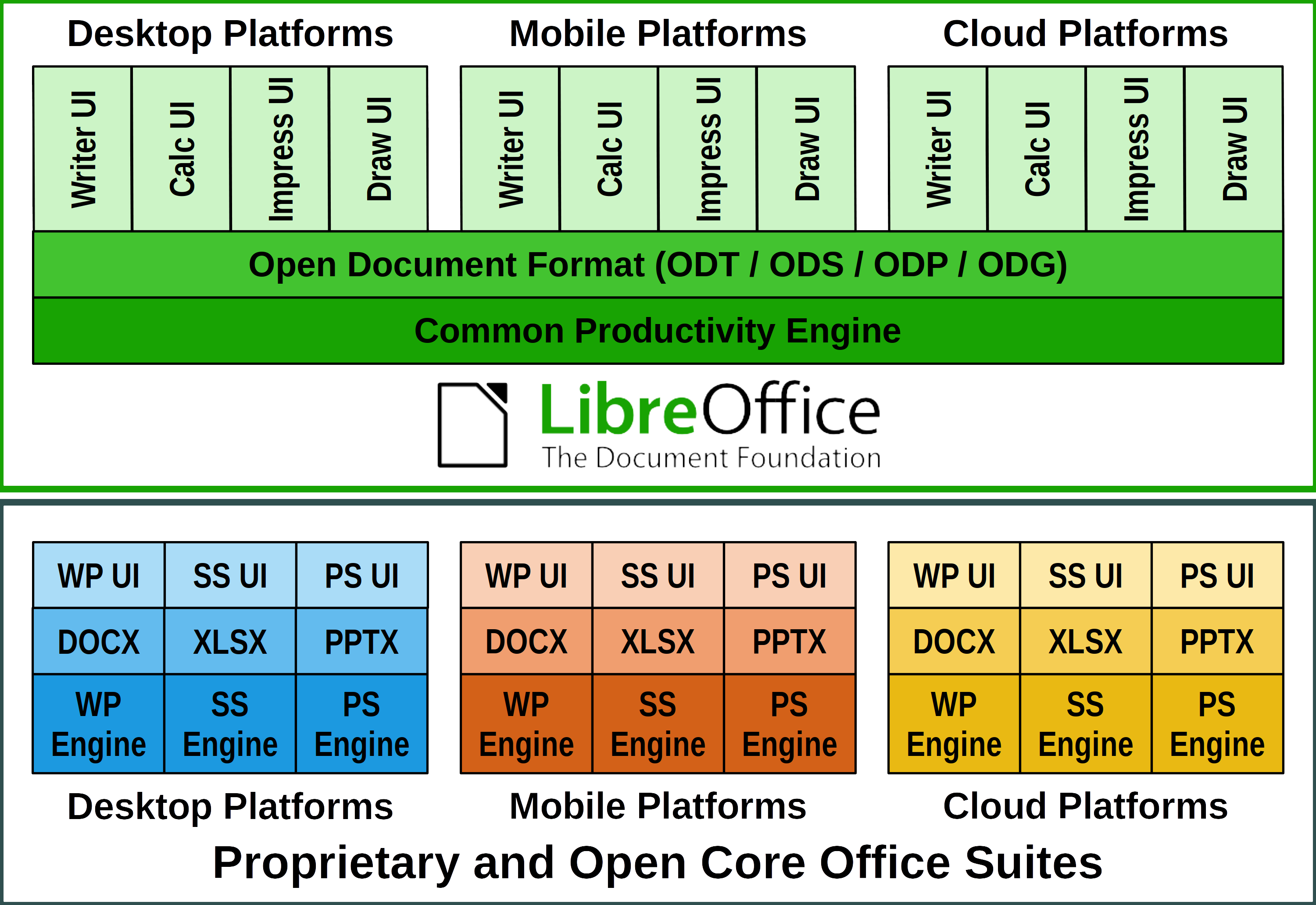
We have also released a White Paper about LibreOffice Technology, to explain the evolution of LibreOffice from a single desktop product to a product based technology for individual or enterprise productivity, which is the foundation for a series of products optimized for different platforms, such as desktop, mobile and the cloud. To underline the importance of the LibreOffice Technology concept, a specific logo has been created, to make visually easier to associate all products based on this technology platform.
A second logo about the LibreOffice Ecosystem was also developed, to make it easier to recognize companies who provide development, support, migration or training services around a product based on the LibreOffice Technology. This logo has not yet been adopted on a large scale, and because of this there will be some specific actions in 2023 to encourage companies which belong to the ecosystem to use it.
The project will also continue to invest in the communication of FOSS sustainability, as enterprises should consider that focusing on the “free as in beer” nature of the software can seriously harm projects that they rely on as strategic assets of their infrastructure. It is a short-sighted decision, as they can save a lot by not paying a single dime, but they may also have to spend quite a lot tomorrow if the original project is not able to self sustain, as they will have to switch back to a proprietary solution.
The Importance of Donations
Donations are vital for current operations and future developments of The Document Foundation, as they allow us to keep the organization alive, to fund specific activities, to support events and other marketing tasks organized by native language projects, and to maintain a small team working on various aspects of LibreOffice.
In addition, funds from donations were used to for several development related tasks.
Ongoing Marketing Activities
Marketing at The Document Foundation and LibreOffice is a large team effort, with contractors paid for their activity – thanks to the money made available by our generous donors – and several volunteers carrying out actions both at global and local levels to increase visibility and brand awareness.
One of the ongoing projects is the Community Member Monday Series, with interviews of one or more community members about their contributions to the project.
The marketing team, supported by many volunteers, created a series of New Features videos for the announcement of LibreOffice 7.4 and LibreOffice 7.5, covering the suite as a whole – and Writer, Calc and Impress in detail. These videos are a great way to demonstrate new features to end users and are often embedded into news websites. They have also been translated into different languages by volunteers of the localization community.
Please confirm that you want to play a YouTube video. By accepting, you will be accessing content from YouTube, a service provided by an external third party.
If you accept this notice, your choice will be saved and the page will refresh.
Activities Month by Month
In early January, we announced LibreOffice 7.2.5 Community, the fifth minor release of the LibreOffice 7.2 family, with 90 bug and regression fixes and many improvements to document compatibility. Also, we announced Klingon and Interslavic support for the upcoming LibreOffice 7.3 release.
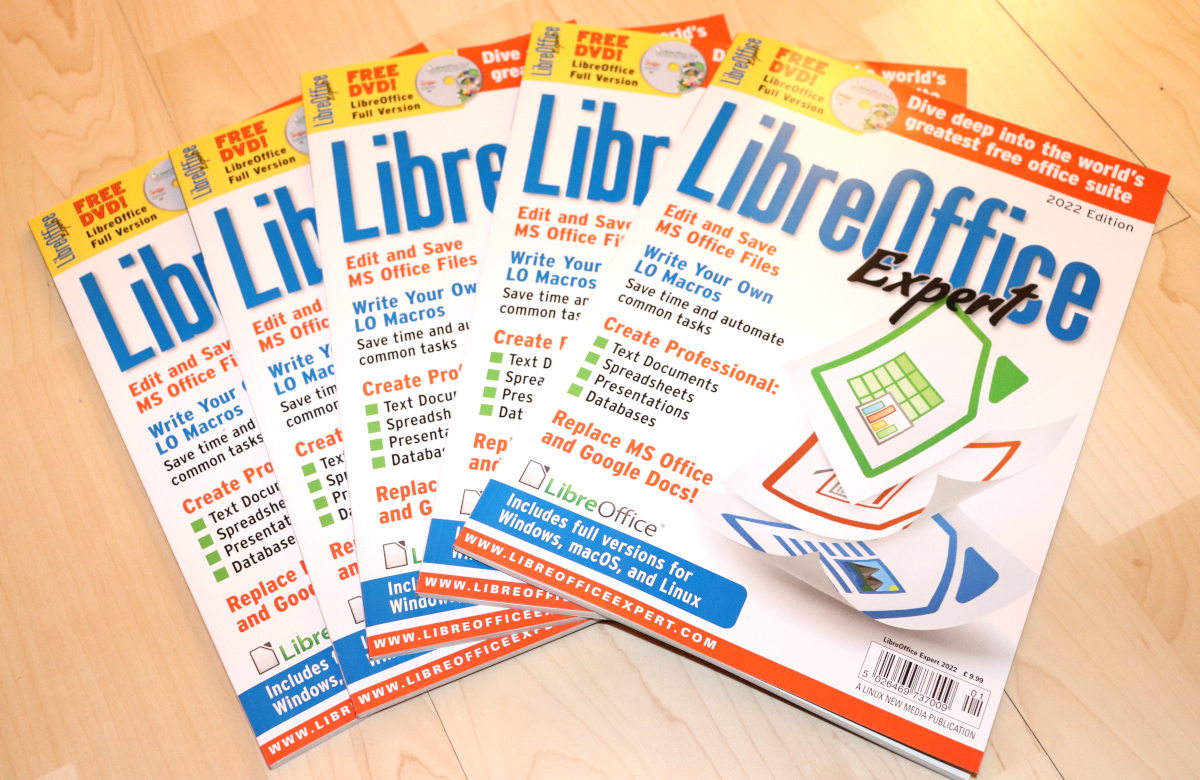
In mid January, Linux New Media released a special edition magazine, full of tutorials, tips and tricks about LibreOffice. Some of the articles were contributed by members of the LibreOffice community. The magazines come with DVDs with LibreOffice for Linux, Windows and macOS, plus extra templates, extensions and guidebooks, and we had some copies to give away to schools and communities.
In late January, the Matrix bridge for the LibreOffice IRC Channels was launched, to allow the use of a modern chat tool to participate more efficiently in LibreOffice-related discussions. At the same time, the European Commission OSPO (Open Source Program Office) announced a bug bounty program to help selected projects – such as LibreOffice – find (and potentially fix) security issues. Rewards were from € 250 up to € 5,000 for security bug disclosures, with 20% added on top if the researcher was also able to provide a fix for the bug.
In early February, the announcement of LibreOffice 7.3 Community represented another giant step in the direction of interoperability with Microsoft Office’s proprietary files, as the release provided a large number of improvements targeted at users migrating from Microsoft Office to LibreOffice, or exchanging documents between the two office suites.
After the announcement, the project was at the virtual FOSDEM with a devroom and a booth. During the two busy days we had the opportunity to meet LibreOffice advocates and answer their questions after presentations or in chat rooms.
On February 17, we celebrated the 10th anniversary of The Document Foundation, and the new Board of Directors started the two year term. Members are: Thorsten Behrens, Paolo Vecchi, Jan ‘Kendy’ Holešovský, Emiliano Vavassori, Caolán McNamara, Cor Nouws and László Németh. Deputies are: Gábor Kelemen, Ayhan Yalçınsoy and Gabriel Masei. After Russia’s aggression in Ukraine, one of the first decision of the newly appointed BoD was to suspend the Russian company RusBITech from the foundation’s Advisory Board.
In late February, we started working on TDF’s Annual Report, creating most of the content and visuals with LibreOffice, and collecting images from community events for the final version. The final booklet is entirely produced with free software (LibreOffice and GIMP for tweaking images, Scribus for creating the layout, and the free Croscore fonts: Carlito and Caladea).
In early March, the project announced LibreOffice 7.3.1 Community, the first minor release of the LibreOffice 7.3 family, providing a solution to LibreOffice 7.3 bugs such as the Auto Calculate regression on Calc, the crashes running Calc when lacking AVX instructions and the crashes related to the Skia graphic engine on macOS. On March 8th, we celebrated the International Women’s Day, which was followed by the release of LibreOffice 7.2.6 Community.
In mid March, we announced the participation of LibreOffice to Google Summer of Code (GSoC) for the 10th straight year. During the month, we also celebrated Document Freedom Day 2022, and announced several communication channels for the LibreOffice community in India: Matrix and Telegram. At the end of the month, the project released LibreOffice 7.3.2 Community.
At the same time, the 2022 edition of the Latin-American LibreOffice Conference was announced. The event, organized by the Brazilian community, was scheduled for August 25 and 26 at the Catholic University of Brasília, in the Taquaritinga area of Federal District.
In May, we organized the “Month of LibreOffice” campaign, which gave contributors the opportunity to thank other members of the community for their work by awarding a sticker or a mug, a hoodie, a T-shirt or a rucksack. During the month we also released LibreOffice 7.3.3 Community and LibreOffice 7.2.7 Community.
In mid May we announced the LibreOffice Conference 2023, scheduled for the month of September, from Thursday, September 29th, to Saturday, October 1st, in Milan, Italy. At the same time, we announced the call for papers and the sponsorship packages.
In late May, several representatives from the LibreOffice project and the ecosystem companies allotropia and Collabora attended the Univention Summit 2022 in Bremen, northern Germany. They had a stand with LibreOffice merchandise, talked to visitors and answered questions.
In early June, the marketing team announced the availability of the index of LibreOffice training videos, which is available on this blog in the Media Hub section. The index is for videos in English.
In June, we announced LibreOffice 7.3.4 Community, followed in July by LibreOffice 7.3.5 Community.
In August, we finalized all materials for the announcement of interoperability focused LibreOffice 7.4, with the press release localized in many languages thanks to volunteers from several native language communities. Thanks to this large effort, press releases are reaching journalists in their idiom, and this increases the chances of getting published.
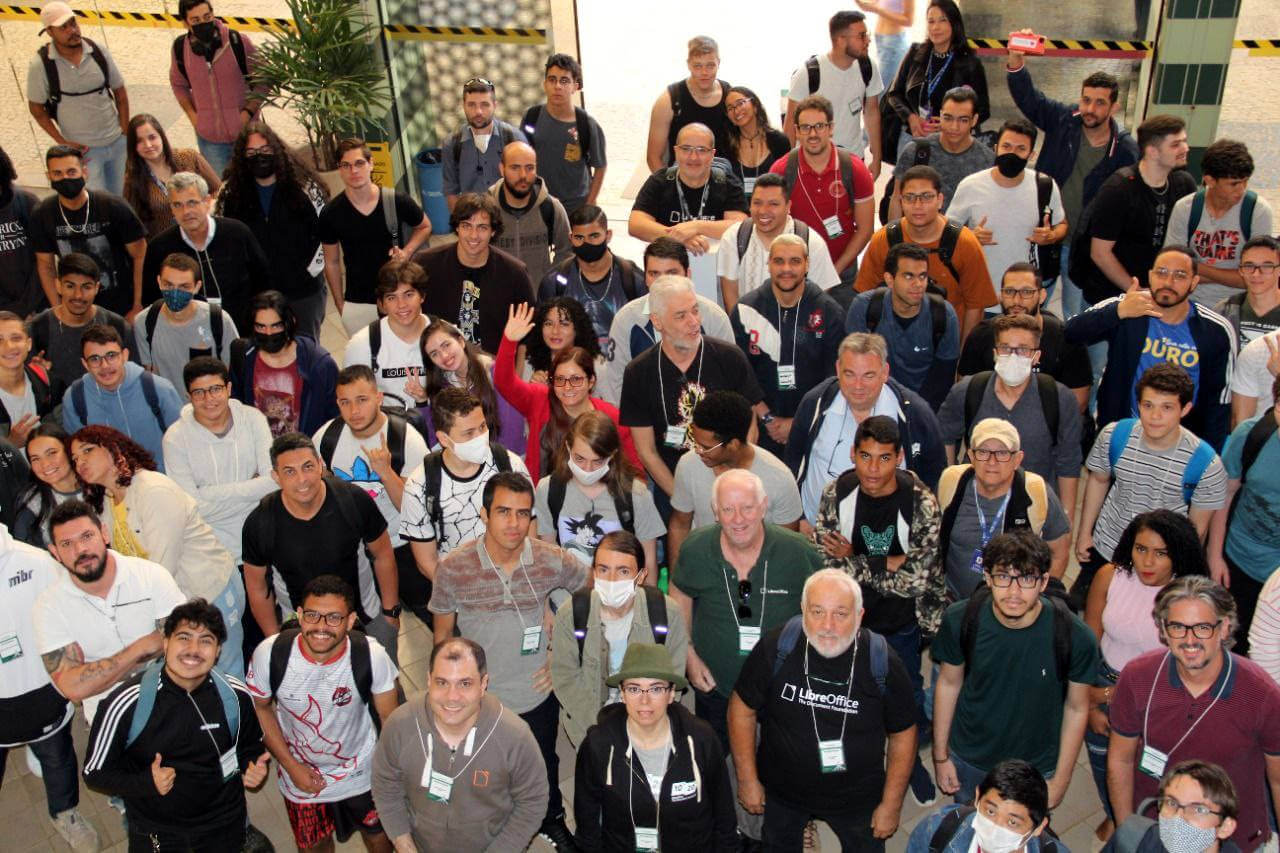
In late August, the LibreOffice LATAM Conference gathered around 400 people, among them students and IT professionals, and was opened to the public on Thursday August 25th in a ceremony chaired by Prof. Wesley Sepulveda, representing UCB, Lothar Becker (formerly on the Board of Directors of The Document Foundation) and Olivier Hallot representing the LibreOffice community.
In September, we announced LibreOffice 7.3.6 Community, and at the same time we celebrated the 10,000th follower on our Mastodon account (Fosstodon server). Later in the month, we announced LibreOffice 7.4.1 Community, and released LibreOffice on Apple’s Mac App Store.
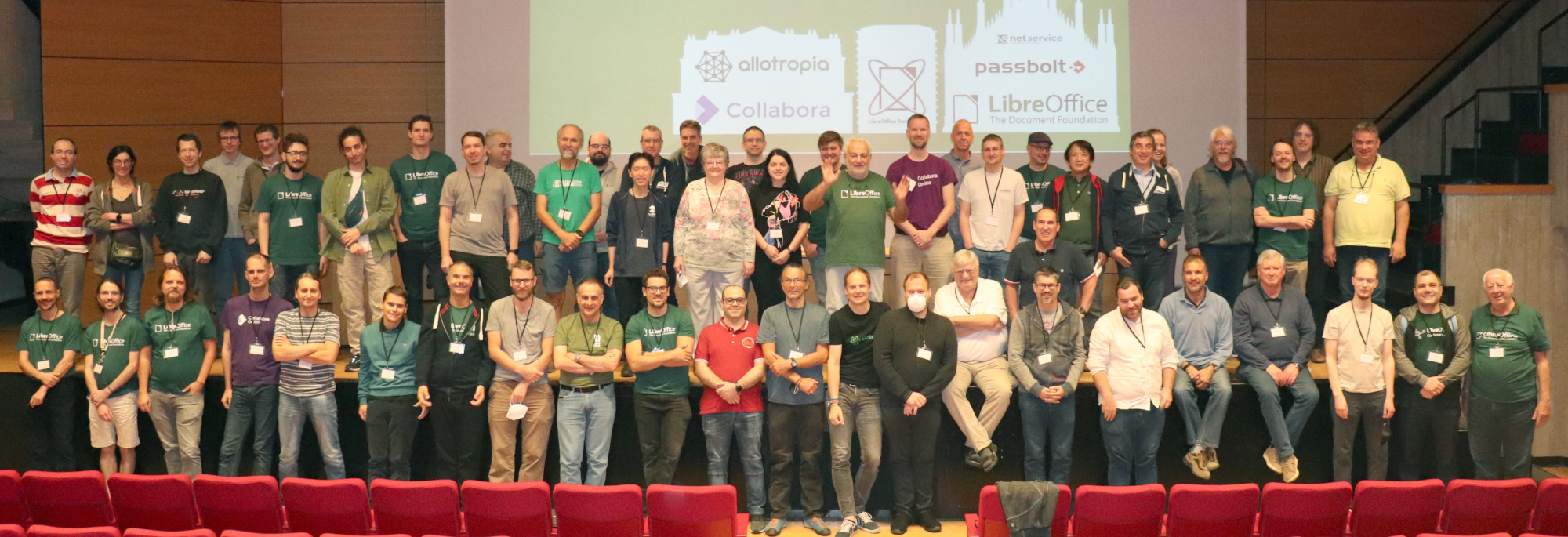
At the end of the month, the LibreOffice community gathered in Milan for the LibreOffice Conference 2022, from September 29 to October 1st. During the event, which started on September 26 with internal meetings of TDF Team, followed by community meetings, we celebrated the project’s 12th anniversary.
In early October, we announced the release of LibreOffice 7.4.2 Community, and the availability of LibreOffice on the Microsoft Store. We also announced the election for the next Board of Directors of The Document Foundation. Following the discussions at the conference, we also announced the Liaison role for Native Language Communities.
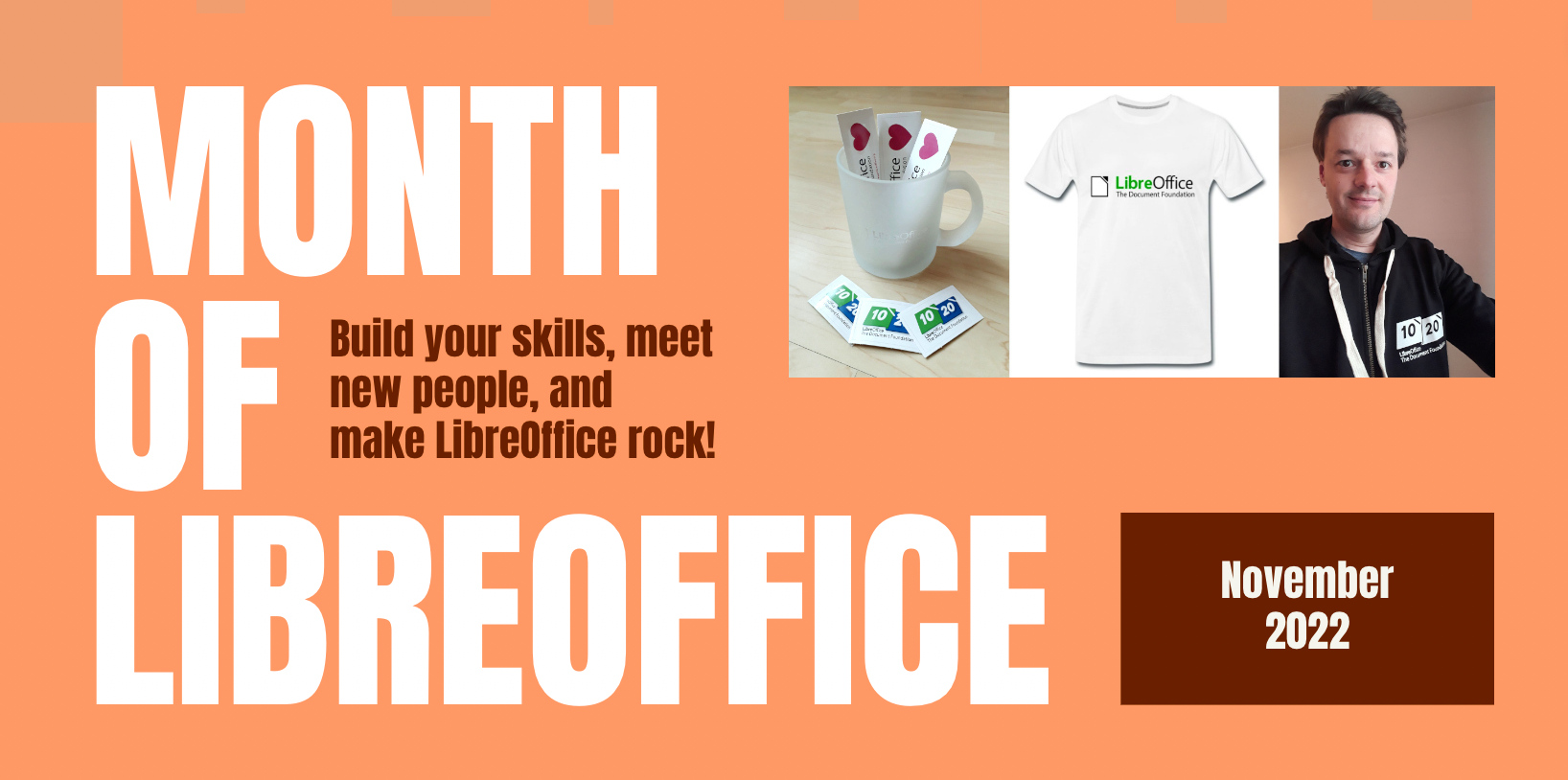
In November, which was another “Month of LibreOffice”, with TDF awarding stickers, glass mugs, T-shirts and hoodies, we announced both LibreOffice 7.3.7 Community and LibreOffice 7.4.3 Community. We also launched the Call for Papers for the LibreOffice Technology FOSDEM DevRoom, and welcomed Stéphane Guillou as a member of TDF Team in the role of QA Analyst for LibreOffice.
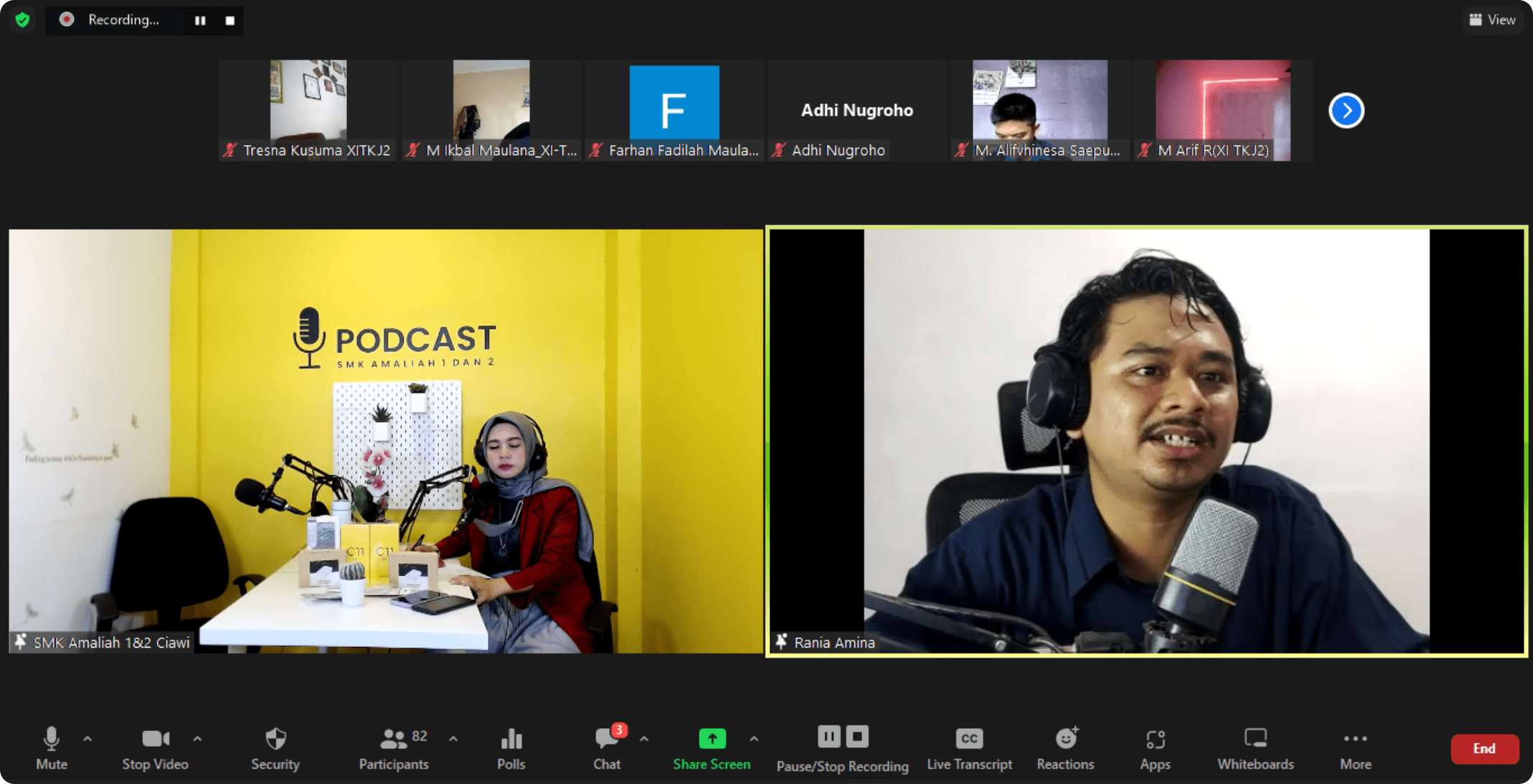
During the month, LibreOffice’s Indonesian community collaborated with the Organizing Committee of the Indonesia Linux Conference 2022, to hold a short presentation: “Implementation of LibreOffice in the Ecosystem at a University”.
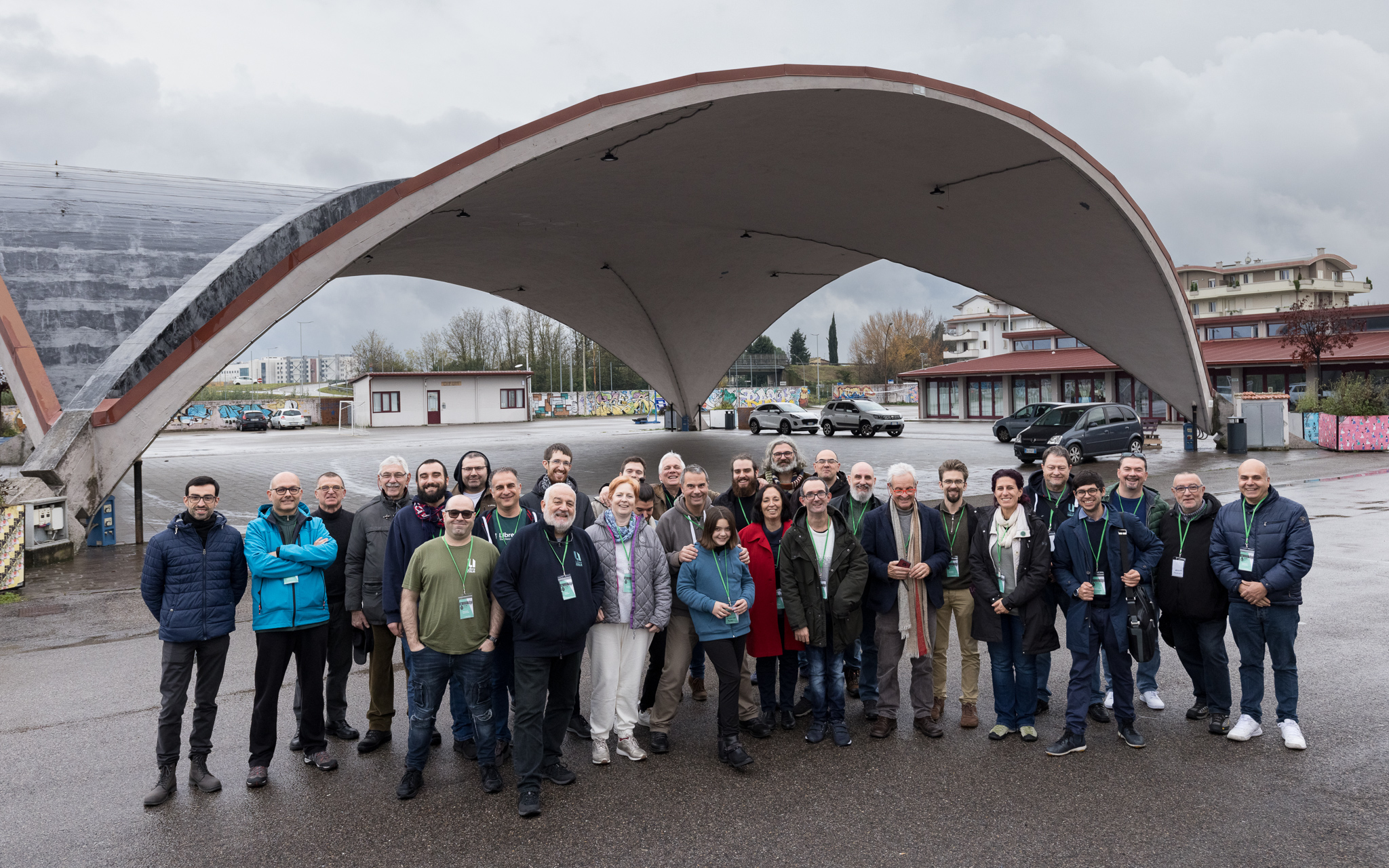
In December, the Italian community gathered in Empoli, Tuscany, for the LibreItalia Conference. The event opened with welcome speeches by President Enio Gemmo and Gruppo Operativo Linux Empoli (GOLEM), followed by those of Flavia Marzano and Professor Andreas Formiconi of the University of Florence on the importance of FOSS for Education.
In 2022, the infrastructure team deployed a second web-based alternative to mailing lists, and upgraded many services
(This is part of The Document Foundation’s Annual Report for 2022 – we’ll post the full version here soon.)
LibreOffice’s infrastructure team is responsible for maintaining the hardware, virtual machines and services that enable the wider community to develop, market, test, localize and improve the software.
For some years, the public infrastructure has been powered by kernel-based virtual machines (KVMs) spread across four hypervisors hosted at Manitu in St. Wendel (Germany), and managed by TDF. This setup served well in the past, but started showing age and arguably no longer met the community’s growing needs. In 2022, the decision was made to migrate about half of the virtual machines (roughly 30) to Hetzner, using a mix of real hosts and virtual machines located in Nuremberg, Falkenstein, and Nuremberg. Among the migrated services are many production services such as Gerrit, Bugzilla, Mediawiki, Discourse and Nextcloud instances.
Our infra team also deployed a second Discourse site to be used for discussion in addition to (or in lieu of) mailing lists. A web-based discussion platform has long been requested by community members who compared to the early day of the project are less keen to use e-mail for everything. Several teams have requested migrated existing mailing lists to the new platform.
On the backend front, our infra team continued with the upgrade of our Debian GNU/Linux machines to version 11 (codename “Bullseye”), and upgraded services following the respective upstream schedules (notably, Gerrit was upgraded to branch 3.6, Weblate to 4.11, Discourse to 2.8, and Redmine to 4.2).
By helping to translate and market LibreOffice around the world, native language projects bring enthusiasm and passion to the global community. Here’s what they did in 2022…
(This is part of The Document Foundation’s Annual Report for 2022 – we’ll post the full version here soon.)
Czech
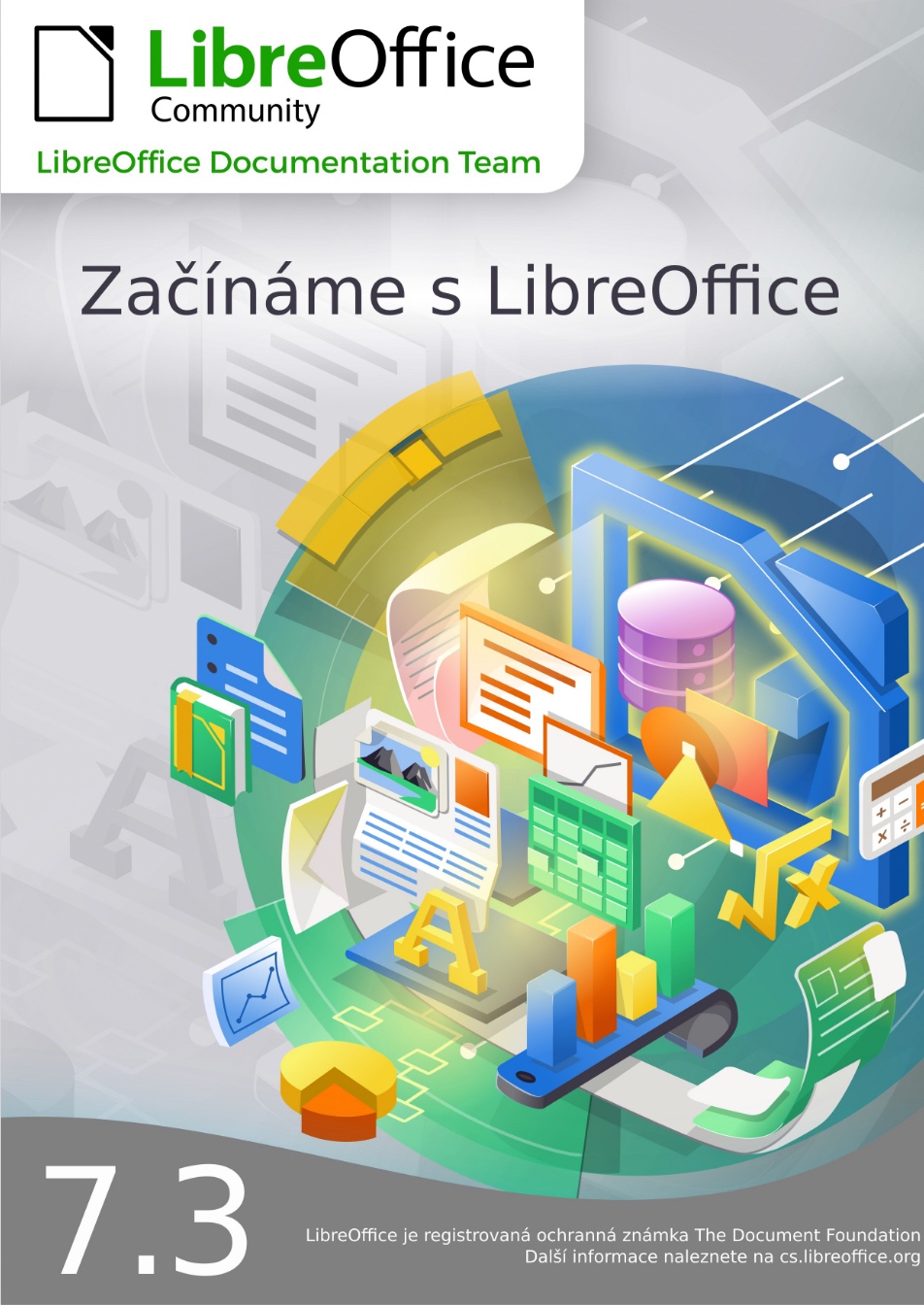
Czech speakers worked on updating translations of LibreOffice’s user interface and in-app help content, keeping them complete. They also helped with translations of guidebooks: the Getting Started Guide for LibreOffice 7.3 was translated and published in May 2022; the Base Guide for LibreOffice 6.4 was translated and published in March 2022; and the Writer Guide for LibreOffice 7.2 was translated and published in February 2022. New versions of Calc and Base Guides are in progress.
On the Ask LibreOffice website, Czech community members helped to support end-users, and they also maintained the Czech Facebook and Twitter account. In addition, they updated the Numbertext library to be usable for the Czech language.
Finally, at the InstallFest conference in Prague, community members had a booth with LibreOffice merchandise, and could answer questions from visitors.
Dutch
Throughout the year, the Dutch-speaking community supported users by answering questions on the Ask LibreOffice website and mailing lists. They also maintained the Dutch LibreOffice website, and participated in the documentation team’s work on English guides by reviewing chapters.
Regarding Dutch translations of LibreOffice guides, the community published the following: Getting Started for LibreOffice 7.2 in January; Writer Guide for LibreOffice 7.3 in April; Draw Guide for LibreOffice 7.3 in June; Math Guide for LibreOffice 7.3 also in June; Calc Guide for LibreOffice 7.4 in September; Impress Guide for LibreOffice 7.4 in October; and Getting Started Guide for LibreOffice 7.4 in December.
On Weblate, the community managed to keep up with changes to LibreOffice’s user interface, maintaining its status as 100% translated. The help content was extended, which the community regards a good thing, but a lot of work to translate for a small group of volunteers. Although the help content kept growing, the community was able to maintain it at 100% translated.
Esperanto
By the end of 2022, the LibreOffice translation status for Esperanto was as follows: user interface 99.98%, LibreOffice Online 100%, Impress Remote 100%, help content 41%, and the website 100%.
Finnish
During 2022, there was translation work of LibreOffice’s user interface and its help content The Quick Reference Guide was translated, user interface translations were reviewed, and a style guide for Finnish translations was created with funding from Fuugin säätiö (Finnish Unix users’ group foundation).
French
Thanks to the work of French speakers, LibreOffice’s user interface was 100% translated, while the help content reached 95%. Translation of Calc functions on the wiki continued, while release notes were translated, and French questions on Ask LibreOffice were answered too.
Community members attended the OSXP (Open Source Experience) event in Paris, along with the conference Capitole du Libre in Toulouse. They also had a LibreOffice booth at two events in Lyon: Campus du Libre and the Journée du Logiciel Libre.
German
LibreOffice’s German-speaking community updated the Base Guide for version 7.4, and published it in August 2022. They also published example files and content (“Beispieldatenbanken_V74”) for many specialised database solutions around the same time. The layout of both was changed – the font “DejaVu” became the default font now for the content. Code is now numbered with “001”, “002” and so forth.
Regarding translations: in Weblate, the translation status of LibreOffice’s user interface was 100%, while the Help content is 98%. German-speaking community members provided user support by answering questions on Ask LibreOffice and mailing lists, while they also worked on translating Release Notes for major LibreOffice versions, and publishing videos to demonstrate the new features.
Indonesian
A LibreOffice Translation and Quality Assurance event (LOTQ) 2022 was successfully held in two cities, Bogor (West Java) and Gresik (East Java) on 13 and 14 August 2022. This event was held to highlight of the Indonesian community‘s active contribution to LibreOffice, especially in terms of translations and also QA.
Andika Triwidada was present at LOTQ 2022 as a senior Indonesian translator mentor. Around 25 people from various backgrounds attended and participated in this event. Unfortunately, the speaker for QA, Rizal Muttaqin, was unable to attend, so Ahmad Haris took over the QA topic.
For two days, participants were guided to translate strings from the source language into Indonesian. Apart from that, they also discussed several other matters related to translation. Here are some of the questions raised in the discussion session: Can the official LibreOffice page be translated into Indonesian? The vocabulary in the spell checker in LibreOffice needs to be updated – and for this reason it is necessary to improve the vocabulary and the hyphenation information for each word to be used in the LibreOffice spell checker. It is necessary to conduct a large-scale survey (estimated 3,000 participants) regarding the components and aspects that should be prioritized for translation.
The Document Foundation provided support for the event, allowing the organisers to print LibreOffice T-shirts, and provide attendees with snacks during the workshops.
Japanese
The LibreOffice Kaigi 2022 Online was held on Saturday 16 July 2022. LibreOffice Kaigi is an annual gathering in Japan, and was held online again last year, using Jitsi meet and YouTube Live, with a maximum of 22 participants in total. It was sponsored by The Document Foundation and iCraft Inc. Ltd.
In his keynote speech, Junji Shimonoh, who is active in the W3C’s Internationalisation Working Group, spoke about the “Current status of Japanese typesetting requirements”. The requirements for Japanese typesetting processing (JLreq) are referenced in the development of specifications such as CSS, but they are also referenced by the OpenDocument Format (ODF, as used in LibreOffice) and are important for Japanese language users, as they are referred to when implementing Japanese typesetting in LibreOffice.
The presentation included an introduction to the overall activities of the Internationalisation Working Group, the history of JLreq and its overview, and the requirements for Japanese digital text typesetting (JLreq-d), which are currently under consideration. The presentations were pre-recorded, but the Q&A session was live – and so lively that there were so many questions as time was running out.
Enoki and Meguro gave a “Review of the state of LibreOffice over the past year”, introducing the status of LibreOffice in the global and Japanese communities. They introduced activities in Japan, such as the translation status, the release of videos for users and the “Ask” question site. Regarding global activities, he explained that the development status is relatively stable, referring to data from The Document Foundation’s dashboard, showed downloads and donations are growing, and also explained budgetary efforts.
The Japanese community continued to organise “LibreOffice Hackfest Online”, where the community works together on Tuesdays at 20:00. The activity was often answering questions on the “Ask” site, along with occasional bug triaging, translations, and other activity.
There were other meetups too: two Study Parties (where LibreOffice users share know-how and interact with each other), FOSSASIA Virtual Summit 2022 and COSCUP 2022 (Taiwan), where LibreOffice community members were present. Every month, small meetups for LibreOffice users and contributors took place – held at the same time as a local activity meetup called “Open Awaji”. Then there was the Kansai Open Forum 2022, an open source and IT event in Kansai. In 2022, it became a hybrid event, so the Japanese LibreOffice community held a seminar locally.
In other news, the community used an automatic translation service (with an open source license), provided by a research institute related to the Government of Japan (NICT). They published three translated handbooks (Getting Started, Writer and Calc), and worked on an online video series called “Tech Tech LibreOffice” that highlights various features in the suite. Meguro-san created 15 how-to videos and posted them on YouTube throughout 2022. There were also 100 new questions or updates in on the Japanese “Ask” website.
Kazakh
Thanks to the work of the Kazakh-speaking community, the LibreOffice Impress Remote was 100% translated, while the desktop app’s user interface jumped from being 84% to 92% translated, during the year.
Korean
At the Ubucon Asia 2022, DaeHyun Sung from the Korean-speaking community promoted LibreOffice in-person – the first such presentation since the COVID-19 pandemic that began in 2020. He gave a talk called “Status and future of LibreOffice Korean community”.
Portuguese (Brazilian)
In August, the Latin American LibreOffice Community organised a local conference in Brasilia, the capital of Brazil. It gathered around 400 people, among them students and IT professionals, and was opened to the public on Thursday August 25th in a ceremony presided by Prof. Wesley Sepulvida, representing UCB, Lothar Becker (formerly on the Board of Directors of The Document Foundation) and Olivier Hallot representing the LibreOffice community.
The conference was organized entirely by volunteers, and followed up on the first event held in the city of Asunción in Paraguay in 2019. Brasilia was chosen to host the conference in 2022 because of its importance in the Latin American context and its excellent infrastructure. The lectures and workshops were given by members of the LibreOffice community from Italy, Spain, Mexico, Brazil and Argentina, on August 25 and 26 at the Catholic University of Brasília, on the Taguatinga campus.
Meanwhile, work continued on translations of the LibreOffice Guides, with the Math Guide 7.3 being published with the help of Vitor Ferreira. In addition, the community achieved 100% translation status for LibreOffice’s help content, using Weblate (Luciana Mota, Rafael Lima, Timothy Brennan, Olivier Hallot), and 100% translation of the suite’s user interface (Olivier Hallot). Diego Peres worked on translations of several wiki pages, while Henderson Matsuura assisted with blog posts.
Some more statistics: the Brazilian community maintained two Telegram groups, with “LibreOfficeBR” reaching 965 members and LibreOffice Português reaching 384 members. Therei is also Facebook group and Ask LibreOffice forum in Portuguese with over 3,700 questions, and videos on YouTube by Jessé Moreira, Beto Garcia (aka NOMOUSE), and many, many others.
Right-to-left (RTL) languages
RTL-languages are written from right-to-left, and include (among others) Arabic, Hebrew, Kashmiri, Pashto, Persian, Uighur, Sorani Kurdish, Pakistani Punjabi, Sindhi and Urdu. In 2022, there was occasional activity in the “LibreOffice RTL” Telegram group, and an invite link to the group was added on TDF’s bug tracker. In addition, at the LibreOffice Conference 2022 in Milan, there was some lively discussion around RTL issues.
Please confirm that you want to play a YouTube video. By accepting, you will be accessing content from YouTube, a service provided by an external third party.
If you accept this notice, your choice will be saved and the page will refresh.
Regarding RTL-related bugs: 44 non-language-specific known bugs were filed in 2022 (up until Dec 10th), 18 by community/channel members, 14 by significant LibreOffice contributors who aren’t channel members, 16 by Eyal Rozenberg and nine by Hossein Nourikah. Community members were involved in triaging and testcase authoring of most of these bugs. There were an additional 23 RTL-language-specific bugs.
Only about half of the bugs filed were marked as blocking RTL-CTL, RTL-Arabic, RTL-Hebrew or RTL-UI (and a much lower ratio if we don’t include bugs filed by channel members). This was corrected later, so that by now, all of these bugs block one of the meta-bugs.
As in previous years, there was a positive, friendly, cooperative and zero-drama atmosphere on the channel. Although there were no community events or projects this year, two talks were given at the LibreOffice Conference 2022 on community-related issues: “The state of RTL language support in LibreOffice” and “Five things we can do to help language communities flourish”.
Finally, the RTL community reported some “demographics”: in the Telegram channel, members: 32 members (seven joined and one left). For languages: Arabic had under representation in membership and activity; Hebrew had over representation in membership and activity; and Farsi had under representation in membership and activity.
There were no speakers/writers of other RTL languages in the community: Urdu, N’Ko, Rohingya, Kurdish, Manding, Fula, Mende, although a few Hungarian users joined (there is an old RTL Hungarian runic script).
Slovak
Slovak speakers worked in 2022 on keeping translations of LibreOffice’s user interface up-to-date, and also supported the Czech translation team with their translations of the user guides.
Slovenian
In 2022, there was ongoing translation and review work of LibreOffice’s user interface and help content; both reached 100% translated status, while release notes for major versions of the suite, along with the website, were 100% translated too. The Slovenian language pack was updated with an upgraded thesaurus (from tezaver.si), while the community published articles in Slovenian on their blog, and posted updates on the Twitter and Mastodon social media accounts. Finally, there was work on Bugzilla regarding localisation and proofing tools.
Spanish
LibreOffice’s Spanish user interface and help content translation statuses reached 99% and 87% respectively, in 2022. Then, 28 articles were published on the Spanish blog; some of them were translations of announcements on the English blog, but there were also several articles written independently.
In terms of documentation, the Spanish version of the Getting Started Guide 7.2 was published – and work is progressing on the Writer Guide 7.3. Additionally, the Impress Guide 7.0 and the Getting Started Guide 7.2 were published in HTML format.
Spanish community members supported LibreOffice users in the Telegram group, which had over 1,000 subscribers. Activity in the Python macro group (which has recently moved to Mastodon) also continued, along with user support on the Spanish Ask LibreOffice subforum.
An invoicing workshop was held using LibreOffice and Firebird, in which the community tried to test the viability of using LibreOffice Base to manage the invoicing of a small company. Every step was published on YouTube and announced in the Telegram channel.
Tamil-speaking LibreOffice supporters took part in online and offline LibreOffice QA “Hackathon” events. One such event, with Ilmari Laukahangas from The Document Foundation, showed attendees how to join the LibreOffice community and work on improvements to the software.
We at The Document Foundation would like to say a huge thank you to everyone who in the native language communities. Your work makes LibreOffice accessible to hundreds of millions of people around the world, and your passion is wonderful. Thank you!
In 2022, 11,769 commits were made to the LibreOffice source code, from 218 authors, in 10 repositories. We also took part in the Google Summer of Code, to support student developers
(This is part of The Document Foundation’s Annual Report for 2022 – we’ll post the full version here soon.)
Infrastructure for developers
TDF provides infrastructure for the developer community to continue their work on LibreOffice. These include Git and Gerrit, to make changes to the source code, along with Bugzilla (to track bug reports and enhancement requests), a wiki (to document changes), and Weblate (for translations).
Most technical discussions took place on the developer mailing list and IRC channel, with the latter providing more real-time communication. Members of the Engineering Steering Committee met weekly, to discuss the most pressing issues with the codebase.
Google Summer of Code (GSoC)
GSoC is an annual programme in which student developers of free and open source software projects receive stipends from Google for their work. LibreOffice takes part in GSoC every year, and in 2022, two students developed features and updates in the software. Let’s go through them…
Hannah Meeks – VBA Macros – Tests and missing APIs: LibreOffice supports VBA (Visual Basic for Applications) Macros, but the implemented API isn’t complete and the API functions aren’t largely tested. The consequence of this is that the VBA macros in OOXML documents don’t run as intended in LibreOffice, which causes compatibility problems. The goal of this project is to add tests for the functions already implemented and then look for what functions are missing for a method or module and add them. Hannah described her results:
I wrote lots of macros tests which was the main aim of the project and found lots of bugs/areas to fix, so my summer was a success! I also really enjoyed looking into the core and fixing some of these problems. Lots of my tests are still broken in LibreOffice so need fixing – for example, I found that there seem to be problems with new lines being created in Microsoft Word that are not created in LibreOffice Writer.
The second project was by Paris Oplopoios – Extend Z compressed graphic format support. Some graphic formats are compressed with ZIP (deflate) to make them smaller, while the formats themselves don’t support compression. In LibreOffice we already support SVGZ format, but not other formats. The goal of this idea was to look at how SVGZ is implemented and extend that to other formats (EMF, WMF). The extended goal was to implement support for compressing in addition to extracting.
Paris got off to a flying start with the originally defined goal, which was to add import functionality for Z compressed EMF and WMF graphics and thus to improve compatibility with Microsoft documents. In the end, he also implemented exporting of WMZ, EMZ and SVGZ graphics, replaced homegrown PNG export code with one that uses libpng and added automated tests for PNG export in addition to tests for the Z compressed formats.
For more details about the students’ great achievements, see the video below and the results post – and thanks to Tomaž Vajngerl and Miklos Vajna (Collabora) and Thorsten Behrens (allotropia) for mentoring the students.
Please confirm that you want to play a YouTube video. By accepting, you will be accessing content from YouTube, a service provided by an external third party.
If you accept this notice, your choice will be saved and the page will refresh.
Quality Assurance (QA)
In 2022, the QA team triaged thousands of bugs, bisected hundreds of regressions, and answered questions from countless bug reporters. As one of the most visible groups directly responding to end users, the QA team must be nimble and able to adapt to changes. In addition, it must deal with specific requests for help from other teams.
The QA team meets regularly on IRC on the #libreoffice-qa channel, which is the best medium for discussing bugs and regressions. The IRC channel provides an excellent opportunity to remain in close contact with team members, and to tutor new members in the art and skill of LibreOffice QA. This is bridged to the Telegram group.
During 2022, 5,966 bugs were reported by 2,650 users, which means 115 new bugs were reported every week on average. The QA team prepared monthly reports about their activity and posted on the QA blog.
Top 10 bug reporters
Telesto (288)
Eyal Rozenberg (207)
Mike Kaganski (165)
Xisco Faulí (126)
Gabor Kelemen (111)
Rafael Lima (108)
sdc.blanco (104)
Regina Henschel (93)
NISZ LibreOffice Team (93)
Hossein (59)
Triaging
During 2022, 6,100 bugs were triaged by 391 people. Here are the top 10 bug triagers:
Buovjaga (675)
Dieter (462)
Heiko Tietze (445)
Xisco Faulí (354)
Timur (327)
raal (303)
Julien Nabet (276)
m.a.riosv (268)
Rafael Lima (218)
Mike Kaganski (207)
Bibisecting
Also, during 2022, the QA team performed 622 bibisects of regressions by 32 people. These are the top 10 bisecters:
The Document Foundation (TDF) is the non-profit entity behind LibreOffice, providing infrastructure and support for the community that makes the suite. Recently, TDF decided to expand its small team with a new Developer, focusing on improving LibreOffice’s language support. This will help to make the software more accessible to hundreds of millions of people around the world.
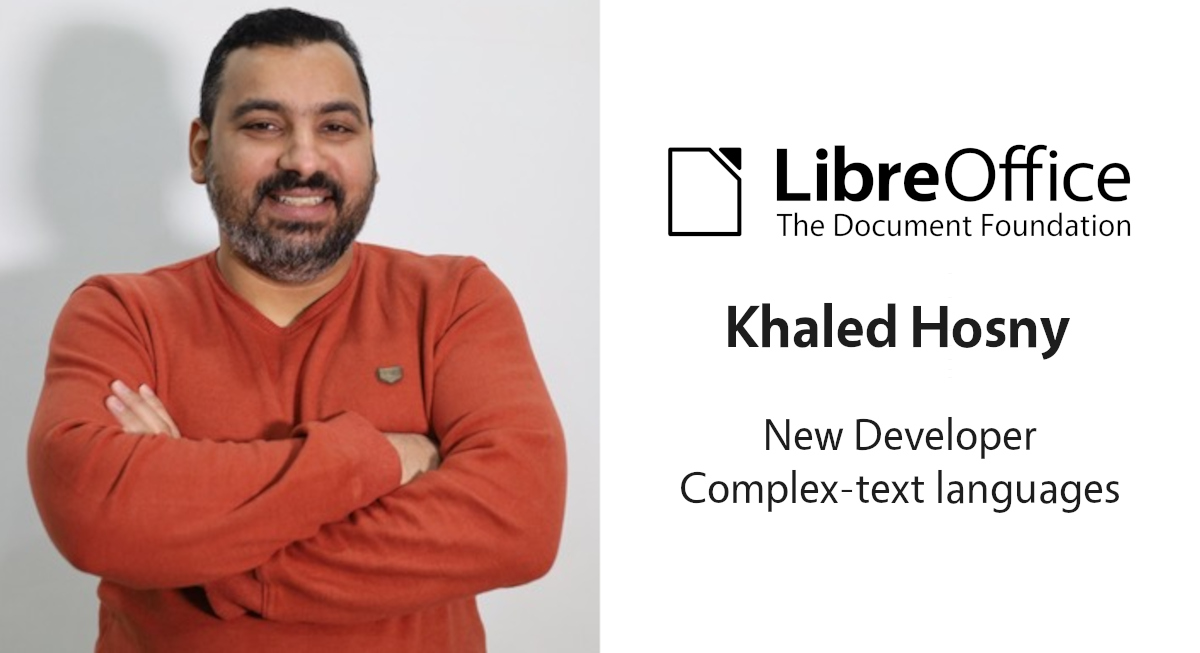
The new Developer is Khaled Hosny, so let’s hear from him…
Tell us a bit about yourself!
I’m a software developer based in Cairo, Egypt. My area of expertise is centered around written language; fonts, text layout in general and so-called “complex” text layout in particular (I don’t like how some text layout is signaled out as being complex – all text layout is complex, but some complexity is obvious right away while others are more subtle), PDF, and so on.
I have been involved with FOSS since 2006. I started with doing Arabic localization, then Arabic fonts, and a few years later I started programming to fix Arabic bugs (I think my first patch was to fix a right-to-left UI issue for Sugar, the desktop environment for the OLPC XO laptop, if anyone still remembers it). I contributed and continue to contribute to many FOSS projects – Firefox, GNOME, HarfBuzz, XeTeX, LuaTeX, to name some.
I got involved with LibreOffice in early 2011, and I have been lurking around since then.
I’m also a type designer and font engineer. I have designed and built a few Arabic and math fonts (I can’t read much of the math notation – I was taught math in Arabic notation and I hardly remember any of that either, but I’m fascinated by the 2D nature of math typesetting).
Funnily enough, I had no formal training in any of this, I actually graduated from medical school and worked as a doctor for few years before quitting to focus on a software career (I was already deep into localization and fonts while still at medical school).
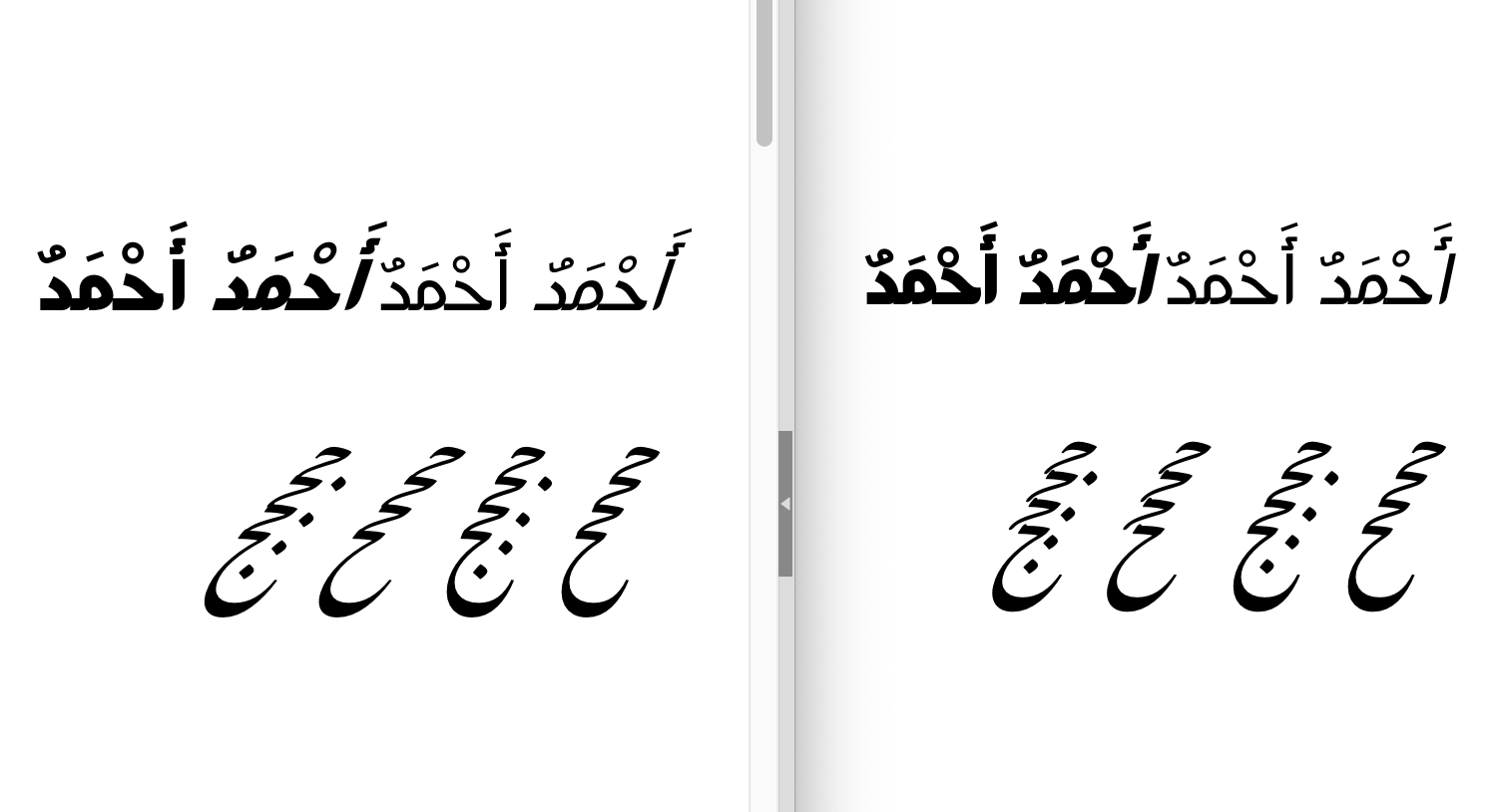
Improved glyph positioning of artificial italic text, especially combining marks – implemented by Khaled in LibreOffice 7.5
What’s your new role at TDF?
I’m joining the team as a LibreOffice developer focusing on areas of right-to-left and the aforementioned so-called “complex” text layout. These are some of the underserved areas of LibreOffice development while disproportionately affecting a very large group of (existing and potential) users.
I hope my role at TDF will help to widen the LibreOffice community, attract more people to it, and make it accessible to more users.
What will you be working on?
I will be fixing bugs and implementing features related to right-to-left text layout and user interface issues which affect languages like Arabic, Hebrew, Persian, and Urdu, as well as text layout issues involving writing systems that require more involved text layout, like Arabic script, and the Indic group of scripts.
I will be also working on fonts, PDF export (text extraction from PDF is major pain point for many scripts), and related areas.
I’m also looking forward to mentoring new developers interested in working on any of these areas.
Do you have any tips for new developers, who’re eager to get involved with the LibreOffice codebase?
LibreOffice is a large code base and can be overwhelming, so try to read any existing documentation as much as possible, don’t be afraid to ask for help, and in general be patient.
We’re really happy to have Khaled on board! Follow this blog and our Mastodon and Twitter accounts for updates on his work – plus more news from the LibreOffice community.