Annual Report: TDF’s infrastructure in 2021

In 2021, the infrastructure team migrated our “Ask LibreOffice” site to Discourse, deployed a Decidim instance, and assisted with video streaming during the LibreOffice Conference.

(This is part of The Document Foundation’s Annual Report for 2021 – we’ll post the full version here soon.)

LibreOffice’s infrastructure team is responsible for maintaining the hardware, virtual machines and services that enable the wider community to develop, market, test, localize and improve the software. The public infrastructure is powered by around 50 kernel-based virtual machines (KVMs) spread across four hypervisors, plugged to an internal 10Gbps switch, hosted at Manitu in St. Wendel (Germany), and managed with libvirt and its KVM/QEMU driver. The virtual disk images are typically stored in GlusterFS volumes – distributed across the hypervisors – except for some transient disks (such as cache) where the IOPS requirement is higher and the redundancy less important.

As 2021 marked another “pandemic year” with only online events, the infrastructure team helped to make these a pleasant experience from home. Notably, they deployed a Pretalx instance to manage conference submissions and the schedule, and put in place a streaming backend based on Jitsi/Jibri/RTMP during the annual conference, thereby providing several participation options to chose from.

Ask LibreOffice

After several months of tests and feedback from the community, the infra team also concluded the migration of LibreOffice’s Q&A platform (“Ask LibreOffice”) to Discourse. Over 65,000 questions and 130,000 replies from 50,000 users — spanning over 17 languages — were imported, with a focus on preserving post attribution and overall layout. The metric collection engines (Matomo as well as the public Grimoire Dashboard) were updated to reflect that change.

Also on the community participation front, the infrastructure team deployed a Decidim instance to structure debate and encourage democratic participation from community members. The instance is currently still under test.

On the Continuous Integration (CI) front, the team deployed new buildbots for Windows and Linux baselines, as well as a buildbot for the WebAssembly (WASM) effort. They also migrated and refactored the bibisect setup to better suit the needs of the quality assurance community.

Backends

As for the backends: Debian GNU/Linux 11 (codename “Bullseye”) was released in the middle of 2021, and the team upgraded most of TDF’s virtual machines accordingly during the second half of the year. However, for the lower layers of the virtualization stack, the upgrade is planned for 2022. Furthermore, lots of work was done in planning the restructuring of database engines, most notably around Point-in-Time Recovery; this work was driven by contributor Brett Cornwall. Finally, the team assisted the Membership Committee with the architecture of the back-end side of their new tooling.

Like what we do? Support the LibreOffice project and The Document Foundation – get involved and help our volunteers, or consider making a donation. Thank you!

Annual Report: LibreOffice Quality Assurance in 2021

Quality Assurance (QA) is a cornerstone of the LibreOffice project, thanks to the activity of a large number of volunteers and the feedback of many users who help in reporting bugs and regressions.

(This is part of The Document Foundation’s Annual Report for 2021 – we’ll post the full version here soon.)

In 2021, the QA team triaged thousands of bugs, bisected hundreds of regressions, and answered questions from countless bug reporters. As one of the most visible groups directly responding to end users, the QA team must be nimble and able to adapt to changes. In addition, it must deal with specific requests for help from other teams.

The QA team meets regularly on IRC on the #libreoffice-qa channel, which is the best medium for discussing bugs and regressions. The IRC channel provides an excellent opportunity to remain in close contact with team members, and to tutor new members in the art and skill of LibreOffice QA. This is bridged to the Telegram group.

During 2021, 6,804 bugs were reported by 3,022 users, which means 131 new bugs were reported every week on average.

Top 10 bug reporters

  • Telesto (571)
  • NISZ LibreOffice Team (296)
  • Regina Henschel (126)
  • Mike Kaganski (115)
  • Xisco Faulí (104)
  • Eyal Rozenberg (87)
  • Rafael Lima (66)
  • sdc.blanco (60)
  • Valek Filippov (54)
  • Colin (50)

Bug Hunting, Bibisecting

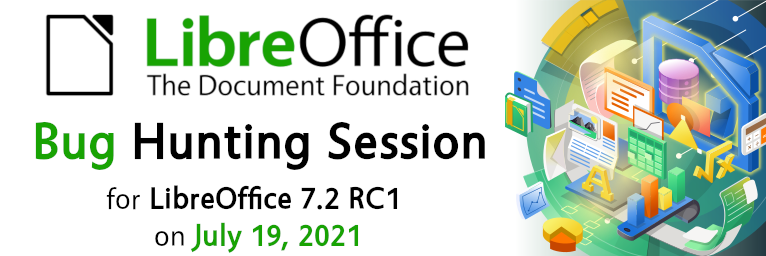
In July 2021, the QA Team organized an online Bug Hunting Session for LibreOffice 7.2. This provided the opportunity for all users, especially those with technical knowledge, to test pre-release versions and provide their feedback in the IRC channel and Telegram group. They were helped to report and confirm bugs, which led to improved stability in the final release.

Also, during 2021, the QA team performed 652 bibisects of regressions.

Top 10 Bisecters

  • Xisco Faulí (166)
  • Timur (85)
  • Aron Budea (68)
  • raal (66)
  • Buovjaga (48)
  • Telesto (46)
  • NISZ LibreOffice Team (29)
  • Justin L (23)
  • Roman Kuznetsov (23)
  • Kevin Suo (18)

Learn more about the QA project on this page, and give the team a hand!

Like what we do? Support the LibreOffice project and The Document Foundation – get involved and help our volunteers, or consider making a donation. Thank you!

Annual Report: LibreOffice Documentation Project in 2021

The LibreOffice Conference is the annual gathering of the community, our end-users, developers, and everyone interested in free office software. This year, it took place online once again.

(This is part of The Document Foundation’s Annual Report for 2021 – we’ll post the full version here soon.)

New and translated guides

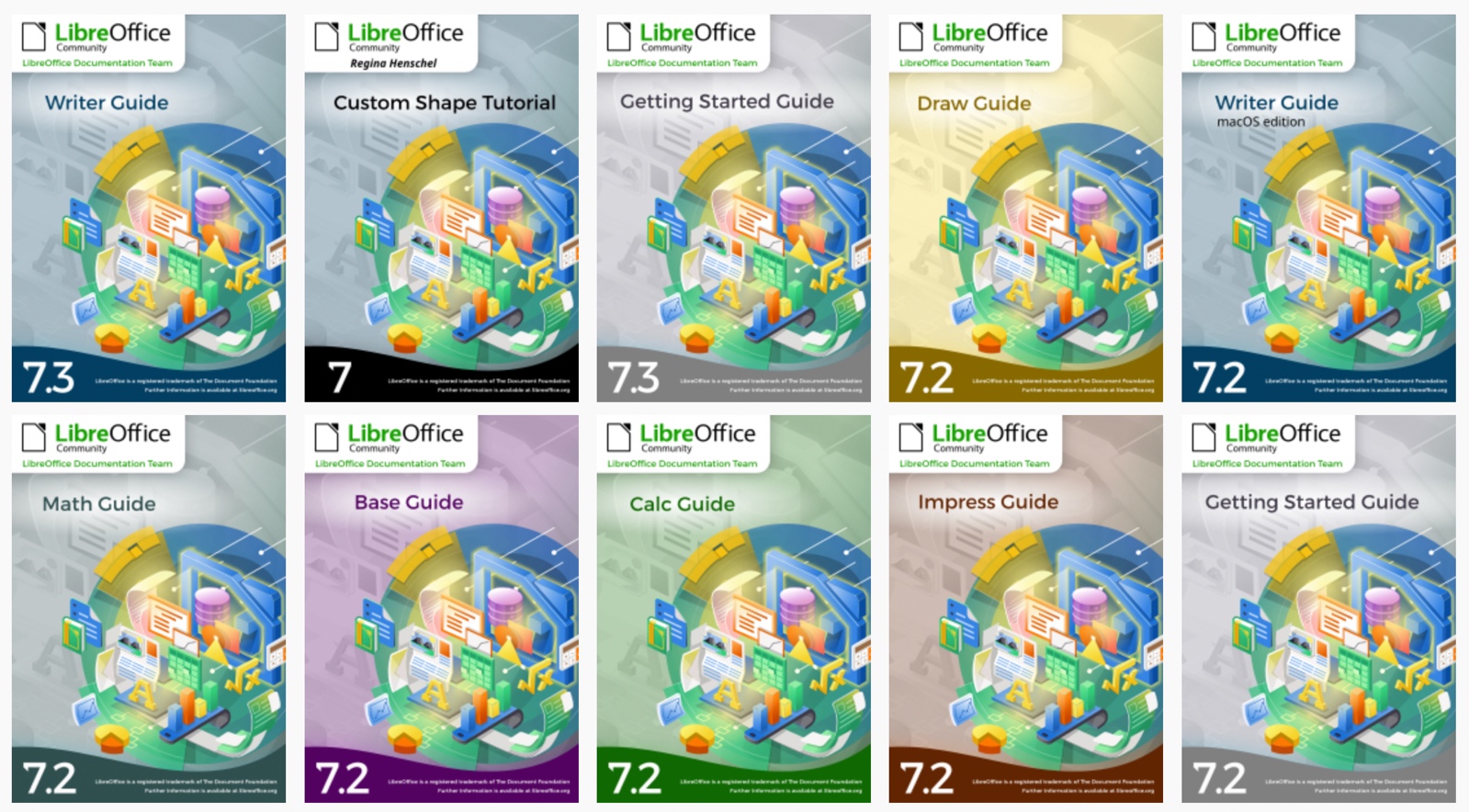
Throughout the year, the documentation project closed the gap between LibreOffice major releases, and the updates of the corresponding user guides. By the year end, all of the version 7 guides updated to match the release of LibreOffice 7.2, and ready to continue for the forthcoming release – 7.3 – which arrived in February 2022. The goal of tracking the software release closely was achieved, and the documentation team is now in a steady state of small updates between releases.

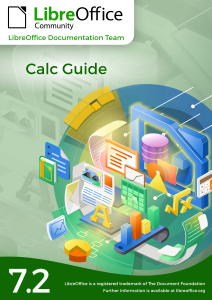
The updates and enhancements of the guides was an effort of all the team, coordinated by Jean Weber (Writer and Getting Started Guide), Steve Fanning (Calc and Base guides), Peter Schofield (Impress and Draw guides), Rafael Lima (Math guide). A number of volunteers also worked in each guide by writing and reviewing contents and suggesting improvements. Special thanks to Jean Weber for making the guides available for sale in printed format via Lulu Inc.

In the last quarter of 2021, thanks to The Document Foundation’s budget, some master documents bugs were fixed under contract by Michael Stahl of allotropia, and now the documentation team can safely assemble it guides with master documents, and produce PDFs with hidden sections and correct navigation indexes in PDF readers.

ScriptForge Library and Wiki Pages

The documentation community also had a nice contribution from Jean Pierre Ledure, Alain Romedenne and Rafael Lima, for the development of the ScriptForge macro library, in synchronization with the much-needed Help pages on the subject, a practice rarely followed by junior developers of LibreOffice. As we know, undocumented software is software that’s lacking; features that are unknown to the user can be a cause of costly calls to a help desk in corporate deployments. ScriptForge developments came together with its documentation, demonstrating the ScriptForge team’s professional maturity.

Special thanks to Steve Fanning for his leadership of the Calc Functions wiki pages maintenance. The wiki pages were initially developed by Ronnie Gandhi in 2020 under the Google Season of Docs programme, and are now run by Steve, providing richer content about the functions, with better descriptions, new examples, and other reference information. The in-depth review of the Calc Function wiki pages gave very good feedback for the Help pages, which also lead to help content improvements. The Calc functions wiki pages are available for translation, thanks to the dedication of Ilmari Lauhakangas at TDF.

Very important as well: the documentation community also had a team of Help page bug fixes, closing Help documentation bugs, bridging gaps, fixing typos and improving quality, a must-have update to keep LibreOffice in-shape for its user base. The Help pages, which are part of the LibreOffice code, were also refactored continuously for better maintenance and code readability. The L10N team of volunteers (localization and translators) were quick in flagging typos and English mistakes – while translating the help content and the user interface.

LibreOffice Bookshelf

In 2021, the documentation community also launched the LibreOffice Bookshelf, another download page for LibreOffice guides that is different from the current documentation.libreoffice.org server page. The Bookshelf can be cloned and installed in organizations, libraries, colleges and schools, for immediate availability in controlled environments, as well as online reading of the guides. The OpenDocument Format chapters were transformed into static HTML pages, and are ready to display on computers, tablets and cell phones, bringing LibreOffice user guides closer to its public, anywhere, anytime. The conversion process is extensive and was described at the LibreOffice 2021 Conference. It was also extended to the Portuguese translation of the guides, and can easily extended for other languages. Many thanks to Tulio Macedo for his work on it.

Like what we do? Support the LibreOffice project and The Document Foundation – get involved and help our volunteers, or consider making a donation. Thank you!

Open Letter for the Right to Install any Software on any Device

To: Legislators in the European Union

In copy: Citizens of the European Union

The universal right to freely choose operating systems, software and services

Software design is crucial for the ecodesign and sustainability of products and hardware. Free Software systems and services enable reuse, repurposing and interoperability of devices. The universal right to freely choose operating systems, software and services is crucial for a more sustainable digital society.

The ongoing digitization of infrastructures and services comes along with a continuously growing number of electronic devices that are connected to the Internet – be it in private, public or business environments. Many of these devices need more energy and natural resources to be produced than the energy they consume during their entire lifespan. And way too many of these devices are being wasted and not reparable simply because the software stops working or is not being updated anymore.

Once the pre-installed software stops users from continuing to use their hardware, restrictive ownership models prevent users from helping themselves to enjoy longer use of their devices. Restrictions span from physically locking down hardware, to technical obscurity by using proprietary software, to legal restrictions via software licenses and end user license agreements. This way, manufacturers often prohibit repairability, access and reuse of their devices. Even after purchase, customers often do not really own their devices. They are not able to do what they want with their very own devices. If you cannot install the software you want on your own device – you don’t own it.

We, the signees of this open letter,

  • recognize that free access to the hardware and software determines how long or how often a device can be used or reused.
  • declare the increased longevity and reusability of our devices to be inevitable for a more sustainable digital society.

That is why we ask legislators around Europe to make use of the historic chance and enable a more sustainable use of electronic products and devices with a universal right to install and run any software on any device. To this end, we demand that:

Users have the right to freely choose operating systems and software running on their devices

Our tablets, phones and other connected devices are general purpose computers. Replacing software and operating systems on these devices enables us to extend the initial lifespan of a device and to make full use of our hardware. For the ability to reuse and repurpose our resources in a creative and sustainable way we need the universal right to install and develop any operating system and software we want on any of our devices. Any legal, technical or other obstacles to reuse these devices for any purpose must not be allowed.

Users have the right to freely choose between service providers to connect their devices wit

Users must have the free choice of providers offering software related services, meaning they can use the device from one manufacturer with the service provided by another. Many connected clients today go to waste simply because their online services go offline. Free choice of services allows these clients to be reused by connecting to another service.

Operating systems and embedded software determine possible interactions between generic sensors, modules and systems with their connected online services. For users to exercise free choice of services, they must be able to use the device from one manufacturer with any online service, which could be supplied by any other third party or by themselves. Connected services as well as the software on connected devices and applications must offer interoperability and full functionality of a device’s initial purpose with the use of Open Standards.

Devices are interoperable and compatible with open standards

Software designs and architectures determine accessibility and compatibility of hardware via standards, drivers, tools, and interfaces. Proprietary software and protocols hinder competition among manufacturers, undermine repairability of devices and create an artificial incompatibility of different devices within the same infrastructure. Interoperability of single devices however is crucial for the creation of sufficient, sustainable and long-lasting IT infrastructures. To enable interoperability, manufacturers must ensure that any data necessary to run a device’s primary function is compatible with and possible to import/export in open standards.

Source code of drivers, tools, and interfaces are published under a free license

Smaller components of a device often require specific drivers, tools, and interfaces to operate. Users need full access and free reusability of the source code of those drivers, tools, and interfaces to analyse and integrate a device within a set of interconnected devices from different manufacturers. Source code reusability is also key to exercise the full right to repair for any third-parties from professional repair shops to repair cafés to end users.

A free license is any license that gives everyone the four freedoms to use, study, share and improve the software, including Free Software and Open Source Software licenses. The obligation to publish drivers, tools, and interfaces under such a free license after market entry is key for full access to our devices and exercising the universal right to repair.

EU Ecodesign: 38 organisations demand the right to access and to reuse hardware

Open Letter on Free Software Foundation Europe (FSFE) Website


Annual Report: LibreOffice Conference 2021

The LibreOffice Conference is the annual gathering of the community, our end-users, developers, and everyone interested in free office software. This year, it took place online once again.

(This is part of The Document Foundation’s Annual Report for 2021 – we’ll post the full version here soon.)

Normally, the conference takes place at a different venue each year, to reflect the international and diverse LibreOffice community. For instance, in 2019 we were in Almeria, in 2018 in Tirana, and in 2017 in Rome. Due to the coronavirus pandemic, though, we decided to move the conference online in 2020. This wasn’t an easy decision, as face-to-face meetups are important for free and open source software projects, but we focused on making it work.

We faced the same situation in 2021: ideally, we would have had an in-person conference, but uncertainty surrounding travel restrictions and containment measures means that we decided to move the conference online for another year.

The conference took place from 23 – 25 September, with sessions usually running from 10:00 to 16:00 (UTC). We created multiple Jitsi “rooms” for the various talks and presentations, along with extra channels for social interaction and general chit-chat via IRC, Matrix and Telegram. Although the conference was online, some members of the German community met in-person in Hamburg.

Here’s a video of the opening session (also available on PeerTube):

Please confirm that you want to play a YouTube video. By accepting, you will be accessing content from YouTube, a service provided by an external third party.

YouTube privacy policy

If you accept this notice, your choice will be saved and the page will refresh.

Conference Tracks

Following the opening session, presentations and talks were given across various “tracks”, or categories: Development, Advocacy, Marketing, Design, OpenDocument Format, Quality Assurance, Documentation and more. There were highly technical talks focused on specific areas of the software and source code, along with more open discussions about community building and recent updates from The Document Foundation.

On the final day, the conference wrapped up with a closing session, headed by TDF’s Chairman, Lothar Becker. He thanked the presenters and all attendees for their support and contributions to the conference.

Sponsoring and merchandise

The event was sponsored by Collabora, allotropia, the Linux Professional Institute, Omnis Private & Hybrid Cloud, and Carbone.io. Conference merchandise was provided by FreeWear, a company that specialises in clothing items and other merchandise for free and open source software projects.

Full Programme

Full details about the event are available on the main conference website. For a quick overview of all the talks, including links to PDF versions of the presentations, see the schedule. Videos from most of the talks are available as a playlist on our YouTube channel, and on PeerTube:

Please confirm that you want to play a YouTube video. By accepting, you will be accessing content from YouTube, a service provided by an external third party.

YouTube privacy policy

If you accept this notice, your choice will be saved and the page will refresh.

Conference in 2022

At the time of writing, we are hoping to organise an in-person conference in northern Italy, in late September. We will post updates on this blog as we get closer to the event.

Like what we do? Support the LibreOffice project and The Document Foundation – get involved and help our volunteers, or consider making a donation. Thank you!

Annual Report: The Document Foundation in 2021

The Document Foundation (TDF) is the non-profit entity behind LibreOffice. In 2021, we had elections for the foundation’s Board of Directors, along with regular Advisory Board calls, and support for other projects and activities.

(This is part of The Document Foundation’s Annual Report for 2021 – we’ll post the full version here soon.)


Election of new Board of Directors

The Board of Directors (or “BoD”) is the main administration of the foundation’s projects and teams. Directors are directly elected by Community Members. The Board of Directors consists of seven members and three deputies. The Board of Directors may launch any other teams or committees ad hoc if necessary.

The Board of Directors decides on all fundamental matters on its own authority in accordance with the Articles and conducts the ongoing business of the foundation. The Executive Board has the status of a legal representative and represents the foundation in and out of court. More about the Board’s responsibilities and decision-making processes is in the foundation’s statutes.

In October, Marina Latini – on behalf of the Membership Committee – announced the start of the election process. The existing Board started its duty on February 18, 2020, and remained in charge until the end of February 17, 2022 – so the new Board was set to take charge the day after that, ie February 18, 2022.

After the nomination phase, which ran until late November, the elections began, with 10 days for TDF Members to cast their votes. Between the end of the nomination phase, and before the official start of the election, the Membership Committee organised public (and recorded) live sessions, where members of the Board of Trustees could ask questions to the candidates. Everyone, including non-members, was invited to join these sessions. TDF then made available to the general public the recordings and the answers given.

In December, TDF’s Membership Committee announced the preliminary results, with the following confirmed as Full Members: Thorsten Behrens, Paolo Vecchi, Jan ‘Kendy’ Holešovský, Emiliano Vavassori, Caolán McNamara, Cor Nouws and László Németh. Deputies: Gábor Kelemen, Ayhan Yalçınsoy and Gabriel Masei.

TDF would like to say thank you to all past and new members of the Board for their service to the community, and to all candidates for running. Congratulations to the newly elected Board members and their deputies.


Advisory Board members and meetings

The Document Foundation relies on its Advisory Board Members in order to receive advice and support. The Advisory Board’s primary function is to represent The Document Foundation’s supporters and to provide the Board of Directors with advice, guidance and proposals. Current members are Adfinis SyGroup, allotropia software GmbH (joined in 2021), Red Hat, Hypra (joined in 2021), Collabora, GNOME, Google, Kopano b.v., City of Munich (Landeshaupstadt München), CIB Software, IHC Invest Inc., Software in the Public Interest (SPI), KDE e.V., UK Government Digital Services, and the Free Software Foundation Europe (FSFE).

Throughout the year, TDF had regular calls with representatives of the Advisory Board. Team and Board of Directors members at TDF provided updates on the foundation, software and community, and described plans and activities for the future. Advisory Board members were invited to provide valuable feedback on TDF’s work, and various ideas and proposals were discussed during the calls. TDF would like to express its thanks to all of the members for their help and support.


Highlights of activities

Throughout the year, TDF supported – and provided information about – various campaigns and events, via this blog and social media channels. For instance, on 14 February we joined the Free Software Foundation Europe’s campaign “I love Free Software”. This was the perfect opportunity to say thank you to the contributors of the various Free Software we love: developers, translators, designers, testers, or documentation writers, of huge software projects – or smaller ones.

Similarly, we backed International Women’s Day on March 8, raising awareness against bias and prejudices. Free Software projects tend to be heavily male-dominated, but our community is trying to be more open and inclusive.

In October, we reported that the Free Software Foundation Europe was starting a new competition, “Youth Hacking 4 Freedom”. This was open for 14 – 18 year-olds who live in Europe, and who like to work on and “hack” (develop) free software projects. The competition helped like-minded people from around Europe to connect, win cash awards, and travel to Brussels to meet others in the free software movement.

In November, TDF spread the word about a German state planning to switch 25,000 PCs to LibreOffice. The north-German state of Schleswig-Holstein had made public its plans to switch to open source software, including LibreOffice, in its administration and schools.

In doing so, the state plans to reduce its dependence on proprietary software, and eventually end it altogether. By the end of 2026, Microsoft Office is to be replaced by LibreOffice on all 25,000 computers used by civil servants and employees (including teachers), and the Windows operating system is to be replaced by GNU/Linux.

Lothar Becker and Thorsten Behrens from TDF were invited to a meeting with those responsible for the planned migration. The focus was on cloud solutions, integration with LibreOffice and other systems, and video conferencing tools. We at TDF are pleased that LibreOffice is being used in public institutions, and hope that more federal states, governments and other organisations around the world will join the migration.

Finally, throughout the year we celebrated our community of translators, which provide LibreOffice in over 110 different languages (with more hopefully becoming available in the future), more than any other software. This helps us to fulfil one of the most important objectives of The Document Foundation: “to support the preservation of mother tongues by encouraging all people to translate, document, support, and promote our office productivity tools in their native language”. Today, there are over four billion people in the world who can use LibreOffice in their native languages. We are very thankful to our hard-working community which makes all of this possible.

Like what we do? Support the LibreOffice project and The Document Foundation – get involved and help our volunteers, or consider making a donation. Thank you!