LibreOffice monthly recap: April 2018

Lots of things are happening in the LibreOffice community – in development, documentation, design, QA, translations and much more. Here’s a summary of news and updates in April…

  • LibreOffice 6.0.3 was released on April 3. It includes over 70 bug and regression fixes – see the release announcement for more details.
  • From April 6 – 8, we had a LibreOffice community meeting and Hackfest in Hamburg. There were around 45 participants, who split into two groups. One group focused on a hackfest – a joint coding session. At the same time, a meeting of the German-speaking LibreOffice community took place. See here for the results of the hackfest, and what we discussed.

  • We talked to Edmund Laugasson from the Estonian LibreOffice community about his efforts to promote free and open source software in his country. “ODF is quite widely used in Estonia – for instance, educational institutions usually have LibreOffice installed, along with some local authorities.”Full interview here.
  • Preparation began for the Month of LibreOffice, May 2018 – crediting contributions all across the project. If you’re a proud user of LibreOffice and would like to join our community, get involved! (We’ll even send you a cool sticker pack.)

  • The next LibreOffice Conference will take place from September 26 – 28 in Tirana, Albania, and TDF put out a call for papers. All members and contributors are invited to submit talks, lectures and workshops for the conference – see here for more info.

  • Finally, we gave a warm welcome to our new Google Summer of Code 2018 students. We have a record off 11 students this year, and they will help to improve LibreOffice in many areas: the LOEclipse Plugin, Notebookbar, LibreOffice Viewer for Android and more. So a big hello to Daniel Silva, Ekansh Jha, Hrishabh Rajput, Kshitij Pathania, Manuj Vashist, Muammer Mert Tümer, Nickson Thanda, Raghav Lalvani, Saurav Chirania, Shobhan Mandal and Vikas Mahato!

Keep in touch – follow us on Twitter, Facebook and Google+. Like what we do? Support our community with a donation – or join us and get involved!

LibreOffice @ 17th Linux-Infotag in Augsburg, Germany

LibreOffice is the default office suite in almost every desktop Linux distribution, and the Linux community has done a lot to help support, develop and promote LibreOffice over the years. So we like to meet up with Linux users and free software enthusiasts face-to-face – and on April 21 we were at the 17. Augsburger Linux-Infotag in southern Germany.

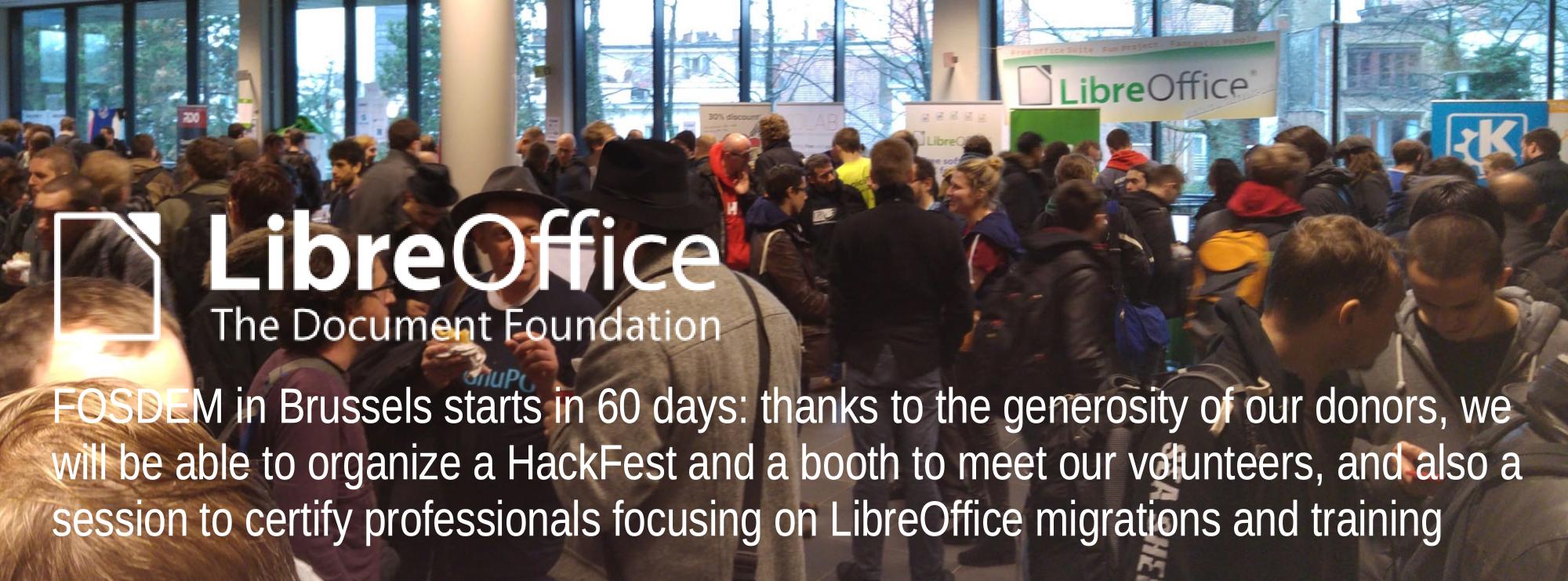
This yearly event has been running since 2001, and is described as being “one of the oldest and biggest Linux-related events in the area”, with around 350 visitors. Christian Lohmeier and Mike Saunders from the LibreOffice community set up a booth which had a screen showing a video of LibreOffice 6.0, along with stickers and (most importantly) flyers encouraging people to get involved with the project:

Virtually every Linux user has heard of LibreOffice, so we didn’t have to explain what the software does. But we talked about what the community is doing, some things we’re working on, and how people can help. One especially hot topic was LibreOffice Online – so we demonstrated the latest version, showing its collaborative editing features.

Many other Linux and free software-related communities were present, and there were talks on security, programming, networks and containers (eg Docker). In the afternoon, Mike gave a talk in German called “LibreOffice: where we’re from, where we’re going, and how to get involved”. On the whole, it was great to meet so many passionate FOSS fans, and we look forward to going again next year. Thanks to everyone who stopped by and said hello!

LibreOffice Community Meeting and Hackfest in Hamburg: the results

The LibreOffice community communicates mainly over the internet, using our mailing lists, IRC channels and other services. But it’s often good to meet in person, to discuss ideas face-to-face, tackle problems together, and enjoy good company over food and drinks! And from April 6 – 8, in Hamburg, we did just that…

Friday: Meet and Greet

Some participants arrived early and had a chance to explore the fascinating Hanseatic city of Hamburg, with its river, canals and lake in the centre (Binnenalster, shown below). In the evening we sampled local food at the Groeninger Privatbrauerei.


(Picture: Thomas Ulrich, CC-BY-SA 2.0)

Saturday and Sunday: Hackfest

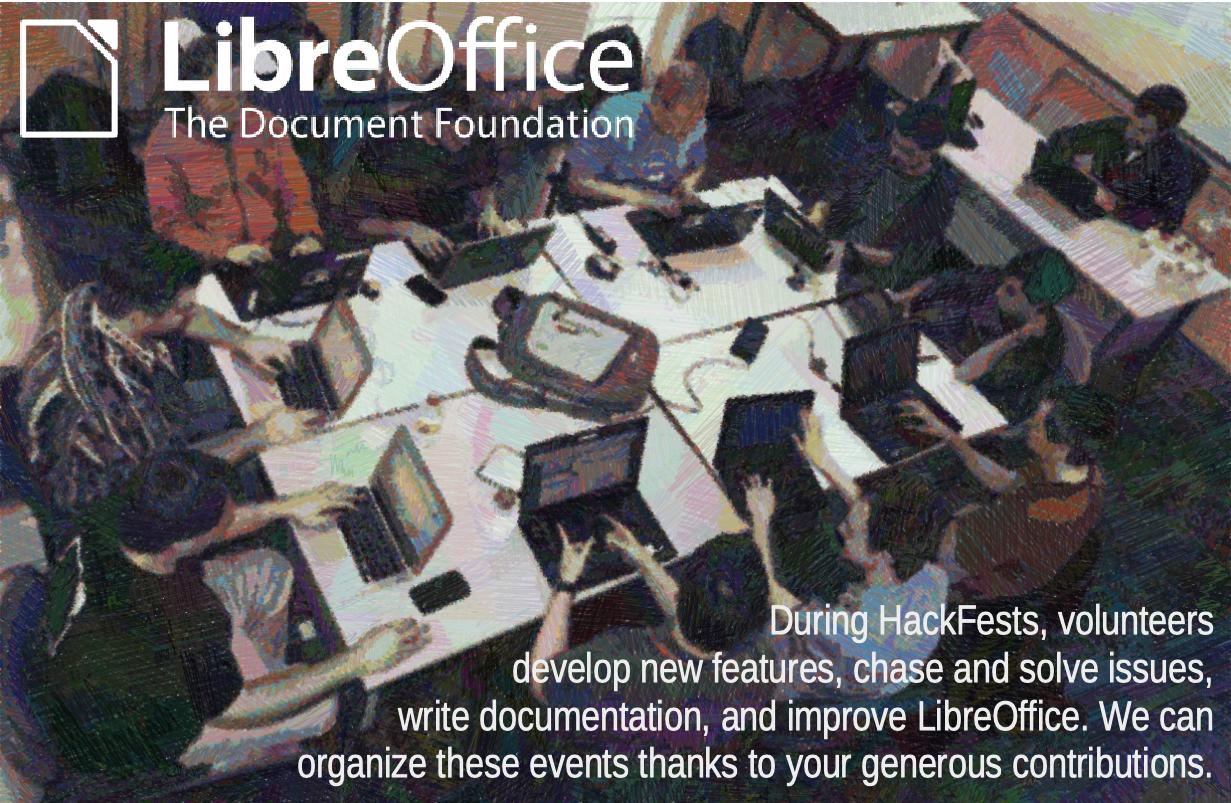
Starting on Saturday, we had around 45 participants, who split into two groups. One group focused on a hackfest – that is, a joint coding session for fixing bugs, working on new features and sharing information. Here’s a summary of the achievements from each participant:

  • Miklos Vajna: mostly mentored Patrick, Nithin, Linus and Zdeněk (aka raal)
  • Michael Stahl: mentored Nithin and remote participant Heiko; worked with Christian Lohmeier to install a GUI text editor as an alternative to Emacs and Vim; reviewed some old Gerrit patches; and investigated regression tdf#77919 (it was already fixed on master but it wasn’t obvious how)
  • Regina Henschel: worked on the topic “Make drawing layers ODF conformant”
  • Tamás Bunth: mostly worked on HSQLDB migration; also picked a random Firebird-related bug
  • Heiko Tietze: solved (remotely) issues with inline tooltips on tracked changes, with help from Michael Stahl
  • Michael Meeks: tweaked, reviewed and merged patch(es) for a 5-10x speedup for VLOOKUP
  • Xisco Fauli: spent most of his time trying to make LibreOffice Viewer work on Android emulator; also showed Marina Latini how to create a bisect repository from scratch
  • Markus Mohrhard: reviewed patches for Zdeněk, and analysed a Calc memory corruption issue
  • Patrick Jaap: worked on tdf#115094, a bug relating to misplaced images in tables when importing .docx files
  • J-NA: worked on fixing up sw uitests with Linus
  • Marina Latini: fixed Italian translation typos; worked on fixing a GPG problem
  • Nithin: worked with Miklos on adding line feeds to section styles
  • Linus Behrens: improved sw uitests, making them more pythonic with J-NA; removing unused includes
  • Lothar Becker: explained the LibreOffice certification programme to Silva from the Albanian community
  • Zdeněk Crhonek (raal): looked at building the LibreOffice Viewer app for Android
  • Jan-Marek Glogowski: worked on font problems in the Qt5 backend
  • Tim Janik: talked to people, discussing toolkits and technology
  • Sophia Schröder: fixing up help, and some translation work
  • Stephan Bergmann: mentored people; worked on fixing regressions with UBSAN, and fixing repaint issue in basic IDE
  • Rheinhard: observed and interacted, as he’s writing about open source communities

So lots of great work from everyone involved – thanks so much for your contributions! The hackfest showed that meeting face-to-face is really effective for fixing issues and sharing information.

German community meeting

At the same time as the hackfest, a meeting of the German-speaking LibreOffice community took place. Last year we met in Berlin (text in German) to discuss various ideas and issues in the project, especially from a German-language perspective, and we followed them up this year to see what progress had been made.

Specifically, we talked about attending more conferences in the German-speaking region, with a more targeted focus: instead of just telling people what LibreOffice is (which most Linux users already know, for instance), we should focus more clearly on bringing in potential new contributors.

Then we turned to the topic of education. It was noted that the Citavi citation software no longer works with LibreOffice 6, and the community lacks materials that could be used to create courses (both online and in schools) about LibreOffice.

We also discussed having more regular face-to-face meetups. Silva Arapi from the Albanian community shared her experiences, but in a larger country like Germany, it’s difficult to get everyone together in the same place. So one idea was to organise more local events, like the Duisburg “Stammtisch” run by Andreas Mantke.

Finally, we set up some “action items”, including the creation of a new “Get involved” flyer for events, and a German translation of the “Get involved” page on the website.

Wrapping up

On the whole, it was a fun and productive event, with some familiar faces, some new faces, and lots of coding, ideas and proposals. Many thanks also to Bjoern Michaelsen and Thorsten Behrens for organising the event, serving up coffee and mentoring developers. And another big thanks to freiheit.com who generously hosted us – and even let us play on their pool table!

We plan to run more hackfests and local community events in the future, so keep an eye on this blog and our social media channels to hear about them: Twitter, Google+ and Facebook!

Coming up: the Month of LibreOffice, May 2018!

Joining an open source project is awesome, for many reasons. You get to:

  • Talk to, meet and share ideas with people around the world
  • Build up valuable skills that could be useful in a future career
  • Make the world a better place, by improving software for everyone to use

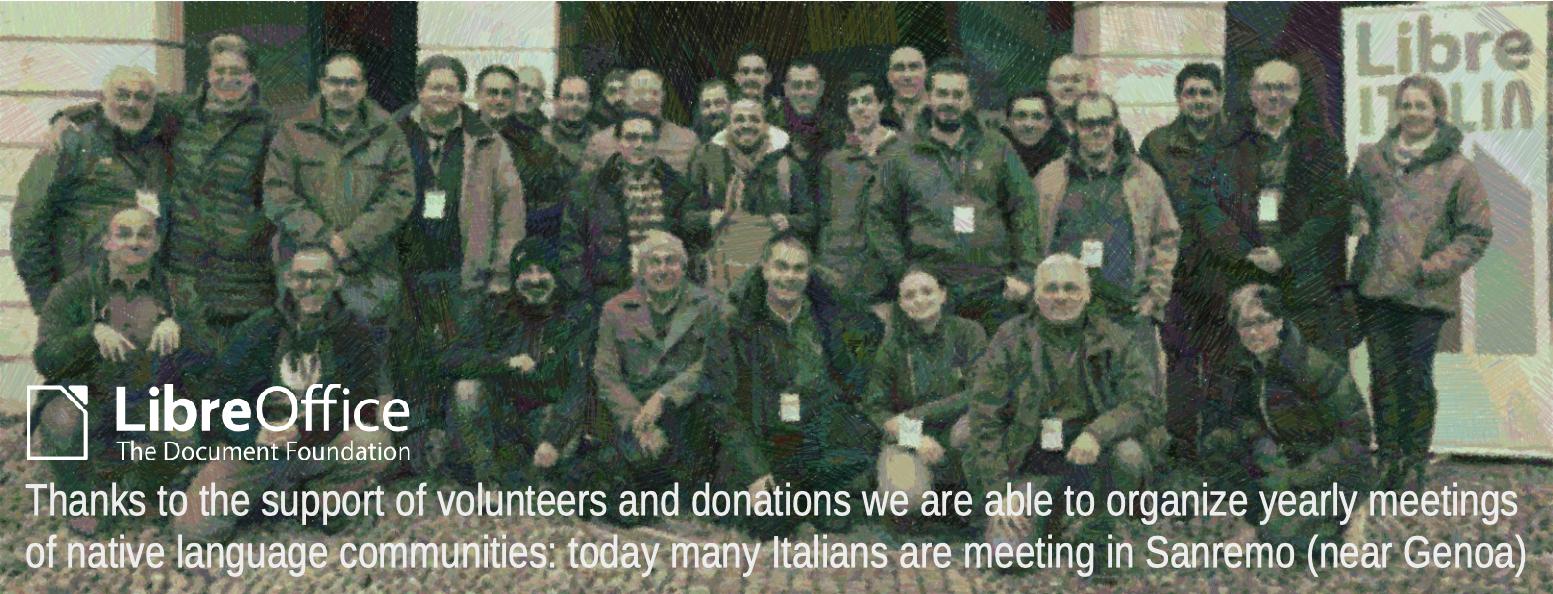
In the case of LibreOffice, you can join us at our yearly conference too! Here’s our community posing for a photo in Brno, Czech Republic:

LibreOffice Conference 2016

In May, we’ll be celebrating contributions all across the project with a “Month of LibreOffice”. Everyone who helps out with development, design, documentation, QA, marketing, translations and user support will get a big “thank you” from us, and a nifty sticker pack in the post:

(Oh, and there’s an extra special surprise as well, but more on that later!) We’ll post full details on May 1st, but in the meantime, you can find out more about joining the project on our Get Involved page. You don’t have to be a software developer – you can help out in many other areas as well. See you soon!

Document Freedom Day 2018 in Cuba

The Document Foundation has supported the Cuban LibreOffice community, represented by Carlos Parra Zaldivar, for the Document Freedom Day 2018 in Holguín, on the opening day of the International Book Exhibition in the local library Biblioteca Provincial “Alex Urquiola”. LibreOffice is included in the Cuban GNU/Linux distribution Nova, and as such is part of the IT syllabus in all schools.

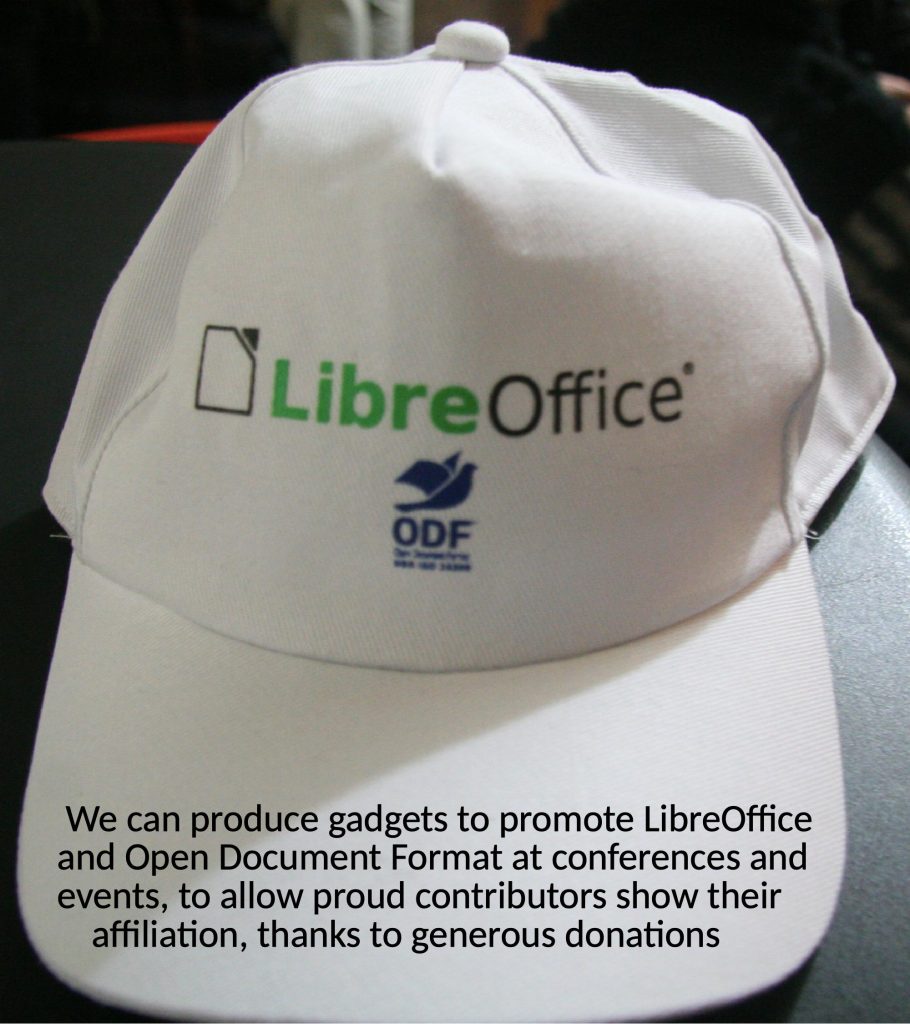
Below, some pictures shot during the event of Carlos Parra Zaldivar speaking about LibreOffice and ODF (Open Document Format) and some of the promotional materials produced by the Cuban LibreOffice community.