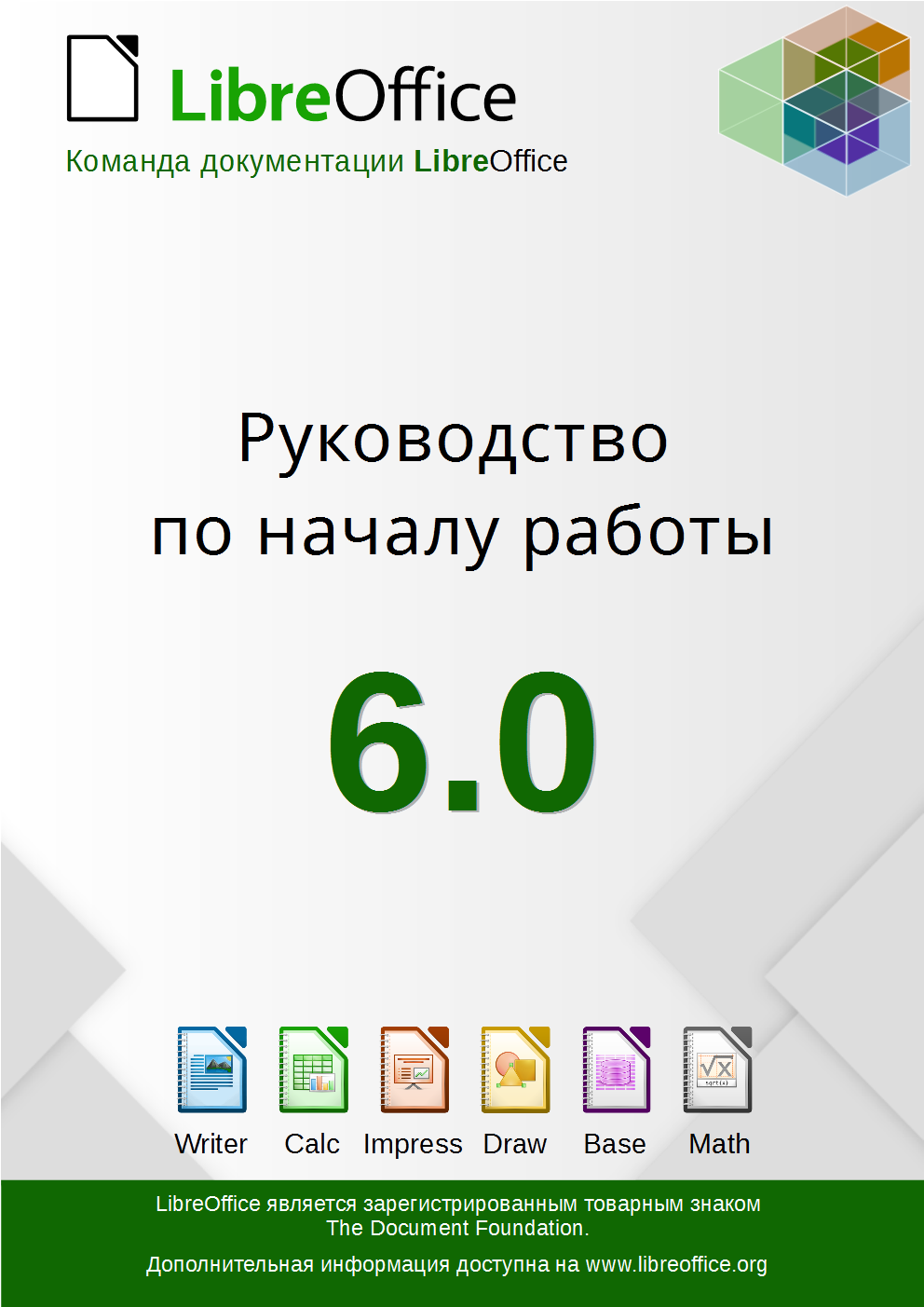
LibreOffice has extensive documentation, thanks to our worldwide community of volunteers. Recently, Lera Goncharuk, Alex Denkin and Roman Kuznetsov worked on a Russian translation of the getting started guide – click the image below to read it. If you want to help with a translation in your own language, see this page to get started – and thanks for your help!
We’ve uploaded some more presentations from the recent LibreOffice Conference 2019 in Almeria, Spain. First up, “Generating ODF reports on server side” with Jeff Huang:
Please confirm that you want to play a YouTube video. By accepting, you will be accessing content from YouTube, a service provided by an external third party.
If you accept this notice, your choice will be saved and the page will refresh.
Then “How best to migrate to LibreOffice” with Andras Timar:
Please confirm that you want to play a YouTube video. By accepting, you will be accessing content from YouTube, a service provided by an external third party.
If you accept this notice, your choice will be saved and the page will refresh.
“Grow out of nothing” with Wen-Ke Huang:
Please confirm that you want to play a YouTube video. By accepting, you will be accessing content from YouTube, a service provided by an external third party.
If you accept this notice, your choice will be saved and the page will refresh.
“Agile LibreOffice: how not to lead an open source project” with Björn Michaelsen:
Please confirm that you want to play a YouTube video. By accepting, you will be accessing content from YouTube, a service provided by an external third party.
If you accept this notice, your choice will be saved and the page will refresh.
“Recruiting is hard, let’s go shopping” with Ilmari Lauhakangas:
Please confirm that you want to play a YouTube video. By accepting, you will be accessing content from YouTube, a service provided by an external third party.
If you accept this notice, your choice will be saved and the page will refresh.
“TDF’s Membership Committee: how does it work” with Gabriele Ponzo:
Please confirm that you want to play a YouTube video. By accepting, you will be accessing content from YouTube, a service provided by an external third party.
If you accept this notice, your choice will be saved and the page will refresh.
“Handling TDF membership applications with the mcm-script” with Gustavo Buzzatti Pacheco:
Please confirm that you want to play a YouTube video. By accepting, you will be accessing content from YouTube, a service provided by an external third party.
If you accept this notice, your choice will be saved and the page will refresh.
“LibreOffice Asia Conference 2019 Tokyo: what we achieved, and what’s next” with Naruhiko Ogasawara, Shinji Enoki and Jun Nogata:
Please confirm that you want to play a YouTube video. By accepting, you will be accessing content from YouTube, a service provided by an external third party.
If you accept this notice, your choice will be saved and the page will refresh.
“Making LibreOffice a lifesaver for dying languages in Asia” with Kuan-Ting Lin and Xiao-Wu Wang:
Please confirm that you want to play a YouTube video. By accepting, you will be accessing content from YouTube, a service provided by an external third party.
If you accept this notice, your choice will be saved and the page will refresh.
And finally, “The challenge of a regional LibreOffice Conference” with Gustavo Buzzatti Pacheco:
Please confirm that you want to play a YouTube video. By accepting, you will be accessing content from YouTube, a service provided by an external third party.
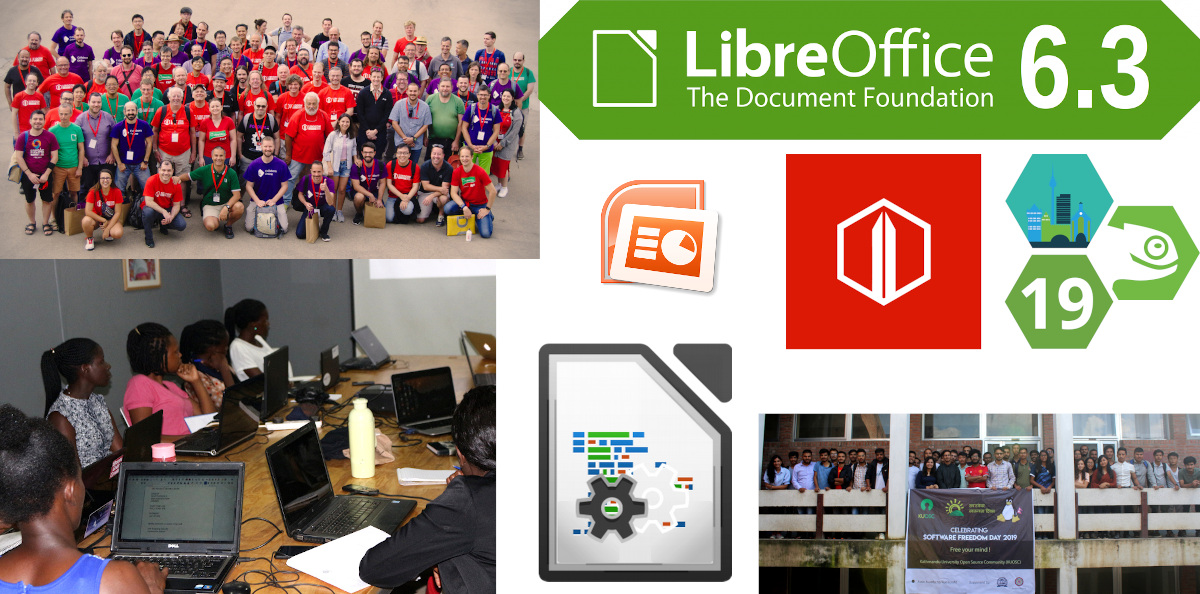
Here’s our summary of updates, events and activities in the LibreOffice project in the last four weeks – click the links to learn more!
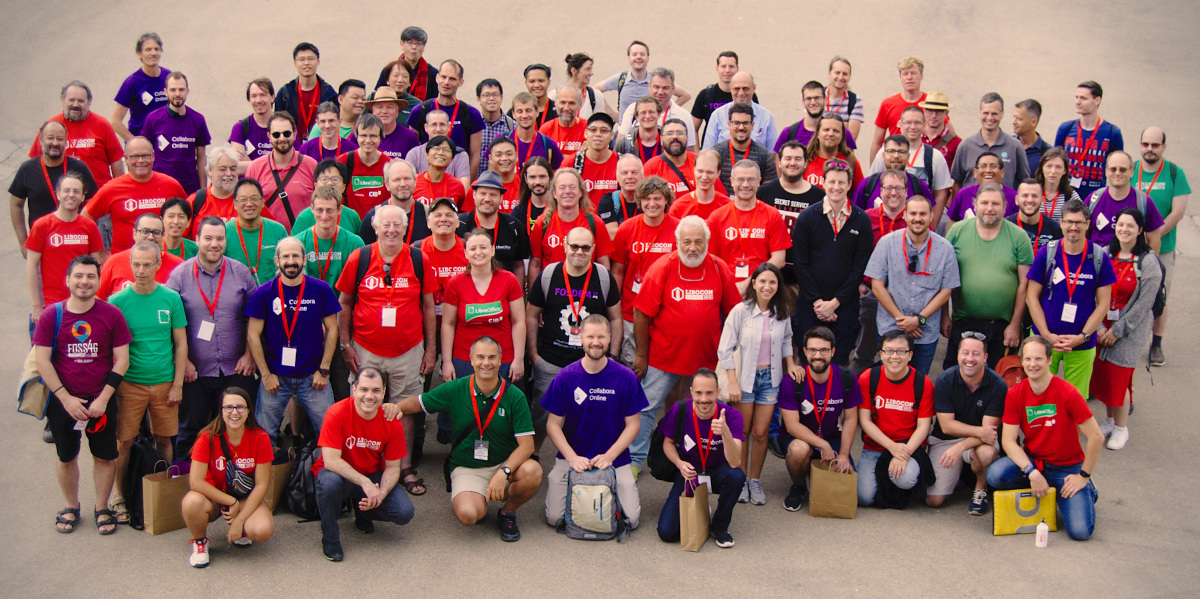
The biggest event in September was the LibreOffice Conference 2019 which took place in Almeria, Spain. Over 100 people from across the globe met up to discuss current developments in LibreOffice, make plans for the future, and have fun. Here’s our group photo:
We also made a short video recap of the conference – check it out!
Please confirm that you want to play a YouTube video. By accepting, you will be accessing content from YouTube, a service provided by an external third party.
If you accept this notice, your choice will be saved and the page will refresh.
Furthermore, we’ve started uploading presentations from the conference. Here’s a playlist, starting with the opening session; use the icon at the top to switch to other videos:
Please confirm that you want to play a YouTube video. By accepting, you will be accessing content from YouTube, a service provided by an external third party.
If you accept this notice, your choice will be saved and the page will refresh.
But plenty more was happening in the LibreOffice community, outside of the conference! For instance, a group of developers teamed up to improve PPT/PPTX (PowerPoint) file support. They will work together on code reviews and bug reports.
In addition, a new macro team was created to improve LibreOffice’s macro support. They will work together with the QA community.
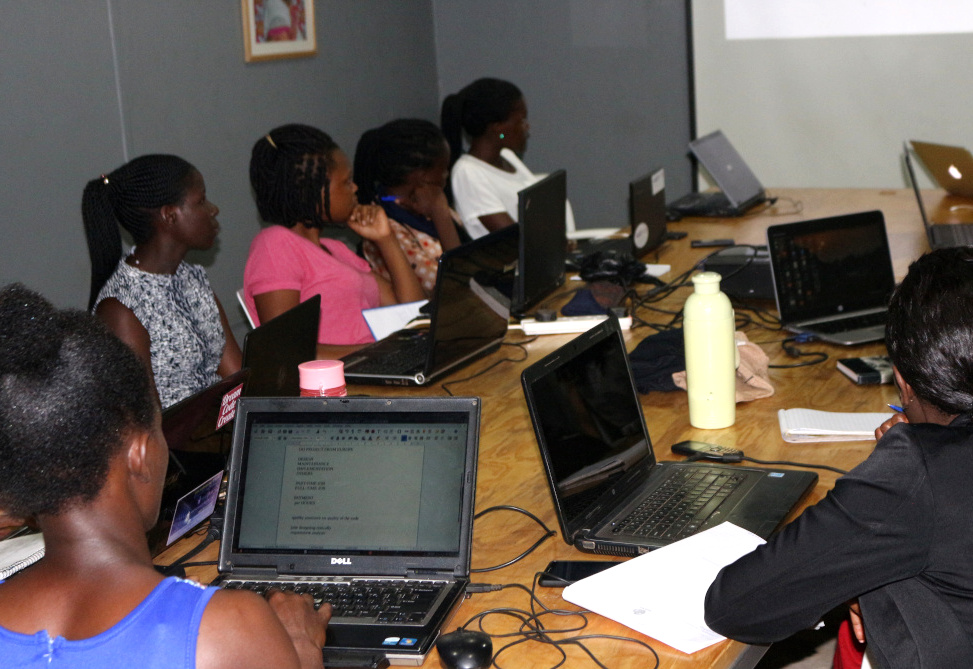
Over in Uganda, Emmanuel Semutenga is helping young people in Kampala to improve their IT skills – using LibreOffice and other free software tools. He told us about his experiences and what advice he has for other projects with similar goals.
During September, The Document Foundation announced three new minor releases of LibreOffice, fixing bugs and improving compatibility.
LibreOffice 6.3.1 and LibreOffice 6.2.7 arrived on September 5, while version 6.3.2 was released on September 26.
Next year’s LibreOffice Conference will be held in Nuremberg, Germany – and it’ll be a joint conference with the openSUSE project. And we need a logo! You can help us to design this logo and win a mystery box at the end… Here are the logos for the 2019 conferences, for inspiration:
Finally, LibreOffice celebrated its 9th birthday near the end of the month. We’d like to say a huge thanks to all users, supporters, developers and donators who’ve helped to make LibreOffice possible. Here’s to another nine years!
The LibreOffice and openSUSE communities will have a joint conference next year in Nuremberg, Germany, and for this special co-conference, we are having a logo competition. The dates of the event are still being finalized, but there are some things we can do beforehand.
A logo is essential for the conference and we want to visualize both communities during this co-conference as LibreOffice will celebrate its 10-year anniversary and openSUSE will celebrate its 15-year anniversary during the conference.
You have seen both the openSUSE Conference logo and LibOCon logo change over the years. For this unique co-conference, we would like to have a unique logo reflecting both communities in one logo.
The competition is open now and ends on January 17, 2020. The organising team will send a “Mystery Box” as an appreciation for the best logo designed. This year, logo will be voted on by the organizers of the conference.
The logo should be licensed under CC-BY-SA 4.0 and allow everyone to use the logo without attribution (BY) if your work is used as the logo of LibOCon/oSC20. Note that the attribution is going to be shown on the conference website.
Design must be original and should not include any third party materials.
Both monochromes and color formats are essential for submission.
Submissions must be in SVG format.
Design should reflect the LibreOffice and openSUSE communities.
The logo should avoid the following things:
Brand names or trademarks of any kind.
Illustrations that may be considered inappropriate, offensive, hateful, tortuous, defamatory, slanderous or libellous.
Sexually explicit or provocative images.
Violence or weapons.
Alcohol, tobacco, or drug use imagery.
Discrimination based on race, gender, religion, nationality, disability, sexual orientation or age.
Bigotry, racism, hatred or harm against groups or individuals.
Subject: Co-Conference Logo Design 2020 – [your name]
Your name and mail address to contact
A document about philosophy of the design (txt or pdf)
Vector file of the design with SVG format ONLY (created in eg LibreOffice Draw, Inkscape or another tool)
Bitmap of design in attachment — image size: 256*256 px at least, PNG format
File size less than 512 KB
The co-conference organizing team will decide on the logos, which is subject to the conditions that the logo meets all the requirements. The final decision will be made by the co-conference organizing team and it may not be the highest scored design.
We look forward to seeing your designs!
(Note: The LibOCon logo competition should not be confused with the LibreOffice 10th anniversary logo contest, which will be announced separately via our blog – stay tuned for more…)
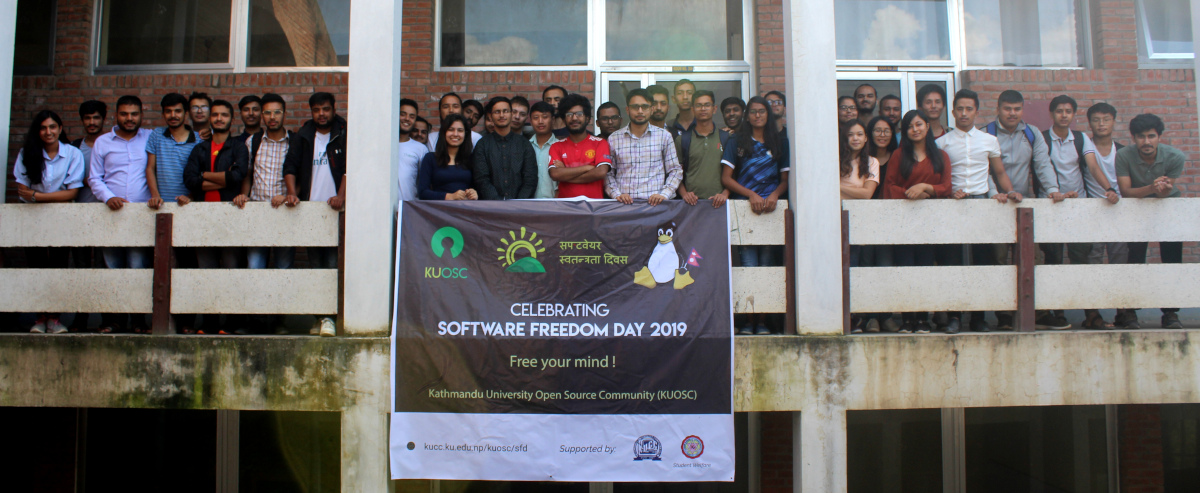
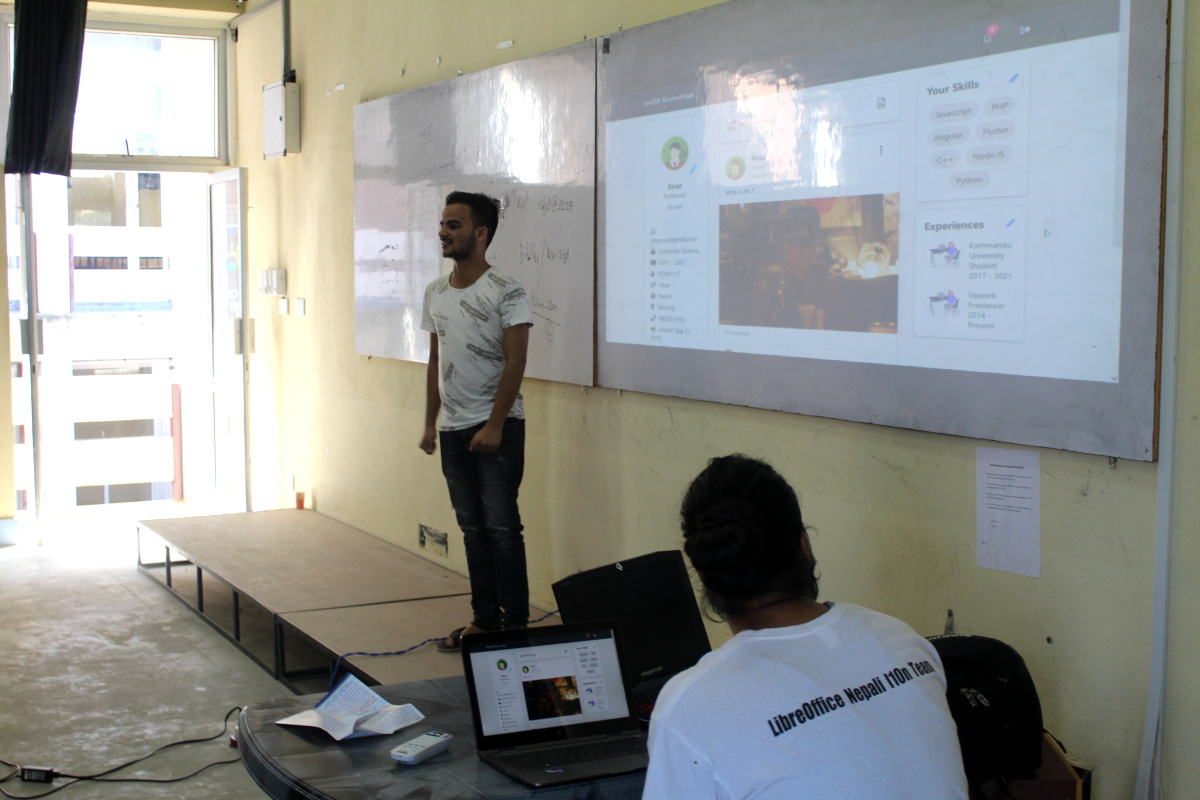
Thanks to our worldwide community, LibreOffice is available in over 100 languages. Volunteers help to translate the software, documentation and website – and on Software Freedom Day, the Nepalese LibreOffice community organised a localisation event. Sanjog Sidgel reports:
Title: LibreOffice L10N, organised by Kathmandu University Open Source Community on Software Freedom Day 2019 Organizer: Kathmandu University Open Source Community, Kathmandu University, Dhulikhel, Nepal Date: September 21st, 2019 Focus: LibreOffice English to Nepali Localization Hosted by: Sanjog Sigdel & Saroj Dhakal Duration: 1 hour Outcome: 14 new volunteers signed up; we presented the guidelines for doing the translations; and together we translated around 376 text strings into the Nepali language in an hour.
I would like to give a shout out to Mr. Anil Shrestha, Co-ordinator of Kathmandu University Open Source Community and his working committee, for making this Software Freedom Day 2019 a grand success.
The Document Foundation says a big thanks to Sanjog, Saroj and everyone else for taking part – your efforts are really appreciated! Because of your help, millions of people around the world can benefit from free, open and standardised productivity tools, in many languages. Cheers!
LibreOffice can open documents in many formats, including Microsoft Office files (.docx, .xlxs, .pptx). But it’s native file format is the fully open and standardised OpenDocument Format (ODF). At the recent LibreOffice Conference 2019 in Spain, community members gave presentations about news and updates for ODF. So, here are the first videos from the presentations (use headphones for best audio quality).
Firstly, Marina Latini and Italo Vignoli explain the COSM project – the Community of ODF Specification Maintainers:
Please confirm that you want to play a YouTube video. By accepting, you will be accessing content from YouTube, a service provided by an external third party.
If you accept this notice, your choice will be saved and the page will refresh.
Version 1.3 of the ODF specification is being developed, and Michael Stahl provides some technical background:
Please confirm that you want to play a YouTube video. By accepting, you will be accessing content from YouTube, a service provided by an external third party.
If you accept this notice, your choice will be saved and the page will refresh.
Finally, Svante Schubert introduces the new ODF Toolkit from The Document Foundation:
Please confirm that you want to play a YouTube video. By accepting, you will be accessing content from YouTube, a service provided by an external third party.