Get to know TDF Core Team: interview with Sophie Gautier

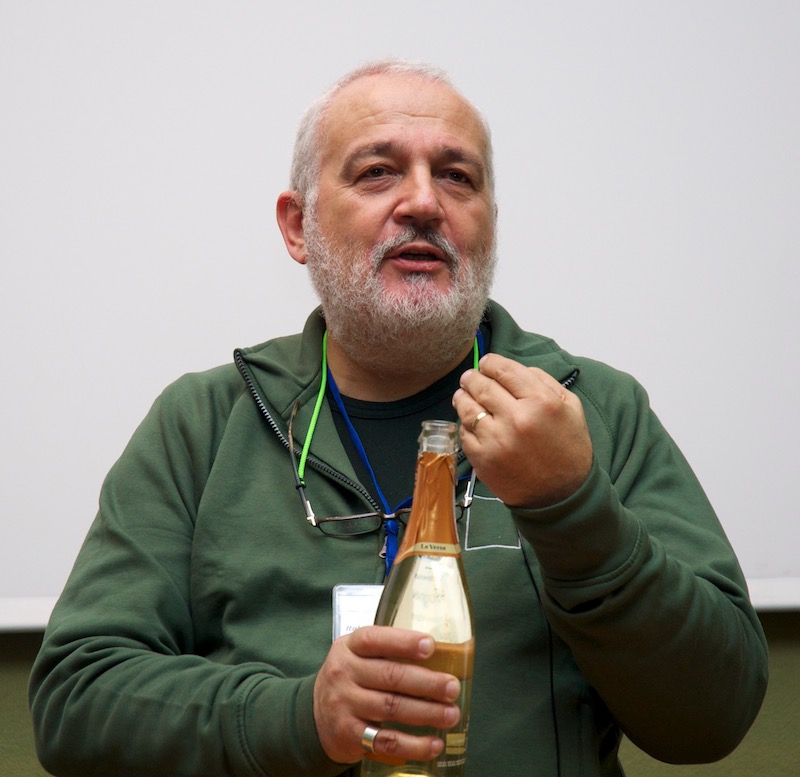
brno47Typical day of Sophie

A first thing of the day (together with coffee) is to read mails in my inbox, sort them by priorities and begin to answer. Then I do moderation on Ask instances and on Nabble gateway and answer mails to the different lists. I try to do administrative tasks for the Foundation in the morning, like meeting organization with a follow-up on Redmine. I work with localization team and local communities in the afternoon unless they need another time zone and unless I have a big task to manage like Advisory Board meetings or LibOCon. For that, I’m available for several social media (Telegram and Messenger, for example) and IRC to discuss with the community members at the place they contribute, help and coordinate where I’m needed.

2016 so far for LibreOffice and for TDF: your personal perspective

It’s a very nice team, each one is passionate about his work, with good communication and coordination among each others. The Foundation in itself is doing quite well from the feedback we have, thanks to the Board and Flo’s work (and it’s a lot of work to be done on a daily basis). What I really like and am proud of is the constant focus of transparency before our members.

On the community side, we need to increase the local communities in order to enhance the global participation to the different sub-projects. It’s not easy, but we learn each day how to do better the next one and I’m confident that by next year we will be much better at recruiting even more people. If we improve the participation on QA, documentation and marketing at a local level, help those small language communities find their way to the product, that will give more visibility to LibreOffice locally, make users more confident in the product, develop a local ecosystem. All these steps will make the overall community stronger and increase the participation at the international level.

For LibreOffice, I would like to underline the work done by the UX guys this year, it’s an incredible ant achievement they have provided to our product, really kudos to them. On my side of the project, I’m happy with the confidence built between the NLP/L10N community. This is a peaceful place to work and even if localization has still an important work load, PR translations are often late, we are one team. Also the number of languages on which LibreOffice is available is slowly growing and that makes me really happy. Interaction between the marketing team and the local communities bring a lot of value and is an important cement.

What do you see as the most important challenges for TDF in 2017 and beyond?

TDF must continue to be a strong community with a nourished reflection on the diversity of its members. TDF is not only LibreOffice, it is also the Document Liberation Project, and might host other projects too. Each TDF project should benefit the same energy, loyalty, transparency and accountability. For that, each TDF member is an important asset, both through the work he brings to the foundation and by the feedback on how the Board and the team are doing.

Where do you see TDF and LibreOffice in 2020? And in 2025?

A cloud version of LibreOffice is on the horizon of the LibreOffice ecosystem. Those who want to protect the investment they made in a migration should now protect it by helping this development. I’m also concerned by emerging countries and almost sure that a phone version will be needed in the future. Phone is the primary media used in the world, with more than 5 billions by 2019. Concerning the Foundation, my hope is to see it as innovative as it is today concerning its governance model, redefining the rules and building further an international team intrinsically involved in voluntary community as it is today, to port and serve it.

You have been with the project since day one: which is your opinion about what we have achieved, and what we could have achieved?

I’m very proud and happy about what we have achieved and what I personally’ve learned. That has been a very important step in my professional and personal life. Who could be more happy when changing is hobby on a living and I’m even more happy because we open the road to different models whether economic or political. It’s not only products we are developing, but also another way of life, including openness, transparency and consideration to all levels of governance.

Are you contributing to other open source projects? If yes, which is your role, and which are your expectations?

I’ve not so much time left to contribute to other projects, I’m still contributing as a volunteer to LibreOffice out of my day job. But I try to help the French part of DemocracyOS, an open source platform for collaborative decision-making, with my development and community knowledge. I’m also following Hacking Debout activities which are the digital part of Nuit Debout, my curiosity leads me to the Civic Tech Right now also, I’m reviewing the French translation of Mattermost to share my experience on localization with their community. I’m part of the Advisory Board of AppHub, a nonprofit marketplace that helps dissemination of open source software. I exchange also with DINSIC on several topics like relation with open source communities or accessibility. I participate in several events, hackathons, workshops, conferences where I can share my open source knowledge and experiences.

Last, but not least, which is your personal hardware/software configuration? Do you have any preferred tool?

I have two ASUS computers where I use Debian 8 and Ubuntu 16.04 with Gnome on both. Thunderbird (Mutt when I’m traveling), Chrome or Firefox, LibreOffice daily builds, Vim, Gedit, OmegaT and Guake are my (almost) daily (preferred) tools.

Interview with Guilhem Moulin, TDF Infrastructure

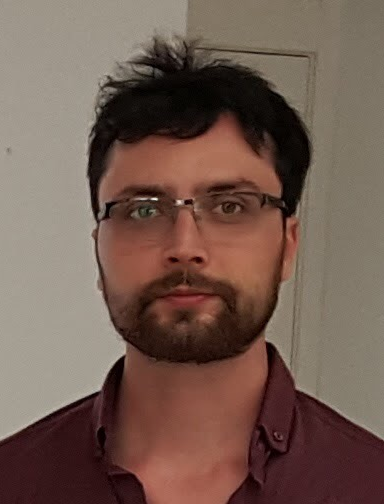
Photo by Kévin Perrot, CC BY

A short interview to introduce Guilhem Moulin, the team member in charge of the development and the maintenance of The Document Foundation (TDF) infrastructure since October.

Q1. You have just started to take care of TDF infrastructure. Why did you apply for the role?

I finished my studies last spring and wanted to take a few months off to travel a bit and try to tie some loose ends on the many side projects I started earlier and never had time to finish. In particular, with the Debian 9 freeze approaching, I wanted to do some triaging on the BTS to help uploading some new upstream releases to the next Debian Stable. All in all, I was not really in a hurry to start with a new day job.

Of course, although I live rather cheaply, I had limited savings and I knew at some point I would have to find a job to pay the bills. I was looking for that day with apprehension, because I didn’t want to take a usual “9 to 5” job in an office, and was also afraid to have to make compromises and use proprietary software or closed formats to comply to an employer’s internal policy.

Although I never was a member, I knew TDF as a major actor of the Free Software ecosystem and as a strong supporter of open formats. So when one of my friends tipped me about the opening at TDF, I jumped on my keyboard to prepare an application. The mere fact of managing the infrastructure of one of the most popular Free Software projects out there was a unique enough opportunity to combine the practical and the enjoyable without renouncing my convictions. Furthermore, working from home with flexible working hours was particularly appealing to me.

Q2. Can you provide a short personal background, including both your education and work experiences?

I’ve been at school until very recently, actually I grew up in France and moved to Gothenburg (Sweden) in 2010 for my doctoral studies. I have graduated earlier this year with a PhD in theoretical Computer Science from Chalmers University of Technology [0].

In parallel to my studies, I did some volunteering work for various organizations. In particular, I’ve been a volunteer system administrator at Fripost [1], a Sweden-based association (ideell
förening) providing an email infrastructure for its members.

Q3. Which is your perception of the project, as seen from outside and then as a team member (even for a short time)?

As a mere user, I was aware that LibreOffice was one of the biggest Free Software project out there, and although I wasn’t familiar with TDF internals, I was very pleased it was managed by a non-profit organization.

My first contact with the community was in Brno earlier this year (at the LibreOffice Conference), and I was impressed by its cohesion. I also immediately felt very welcome! Moreover, I’m used to go to conferences where the audience is a lot less diverse, and I was pleased to see a better gender / ethnic / background balance at LibreOCon. Even if I know there is still a long, long way to go…

As a very fresh team member, I’m still trying to get up to speed on the infrastructure. But I’d say staff & team members reflect the atmosphere of the general community and so far have been very helpful and very welcoming.

Q4. Which are the objectives of your role within TDF, in the short and long term?

Aside from regular internal infrastructure maintenance, which is probably irrelevant for most members and contributors, my short term goal is to implement Single Sign On (starting with the most popular services, namely Gerrit, the wiki, and Bugzilla) so people don’t have to remember one set of credentials per service. I’m also eager to try out Jabber/XMPP [2] as a modern (and free!) alternative to our weekly phone calls.

A long term goal would be to lower the threshold to get oneself accustomed to the infrastructure. Getting fresh blood in the infra team is crucial for sustainability, especially in a non-profit where most of the contributors are volunteers.

Q5. How would you describe yourself?

I guess I’m an idealist, and rather binary: I’m absolutely passionate about the things I care about — and find it really hard to make compromises about these (so I guess it’s good I ended up in infra and not in marketing :-D) — and I tend to neglect the rest. As such, I live a relatively simple life and value principles over comfort or convenience.

Q6. Are you contributing to other open source projects? If yes, which is your role, and which are your expectations?

I’ve been a Debian GNU/Linux [3] user for over a decade, but only became a maintainer around 2 years ago, after a couple of months contributing to various packages. Debian is aiming at being the “the universal operating system”, and of course I expect its releases to become better and better.

Beside package maintenance and some minor contributions to my packages’ upstream I enjoy email-related protocols, and one of my long-term project is to write an email client to replace the venerable mutt [4] I’ve been using for around 10 years.

I also feel close to the GnuPG [5] and Tor [6] communities, although for the latter, I mostly contribute by only running relays these days.

Q7. Last, but not least, which is your personal hardware/software configuration? Do you have any preferred tool?

I still use the old Thinkpad X60s I bought second hand in 2010 (although I believe I changed every single part by now: screen, motherboard, case,…) the BIOS of which I replaced by a free one (libreboot [7]). By today’s standard a Core™2 Duo isn’t that fast anymore, but it doesn’t bother me much as I tend to use my laptop merely as a terminal: for builds or heavy computation I remotely access a workstation. I also recently bought an USB armory from Inverse Path [8] which I would like to use as an air gap for my GnuPG secret keyring.

Of course, I run Debian GNU/Linux [3] on all my machines (sid on my laptop & workstations, and the latest stable on servers) I don’t use a desktop environment like GNOME or KDE, but a minimalist tiling window manager (dwm [9]) instead. My editor of choice is Vim, and the current email client is mutt [4]. For web browsing I pretty much exclusively use the Tor Browser. In fact, I’d say Tor is my favorite tool.

[0] https://www.chalmers.se/en/, [1] https://fripost.org/, [2] https://en.wikipedia.org/wiki/XMPP, [3] https://www.debian.org/, [4] http://www.mutt.org/, [5] https://gnupg.org/, [6] https://www.torproject.org/, [7] https://libreboot.org/, [8] http://inversepath.com/usbarmory, [9] http://dwm.suckless.org/.

Presenting Xisco Fauli, the new QA Engineer

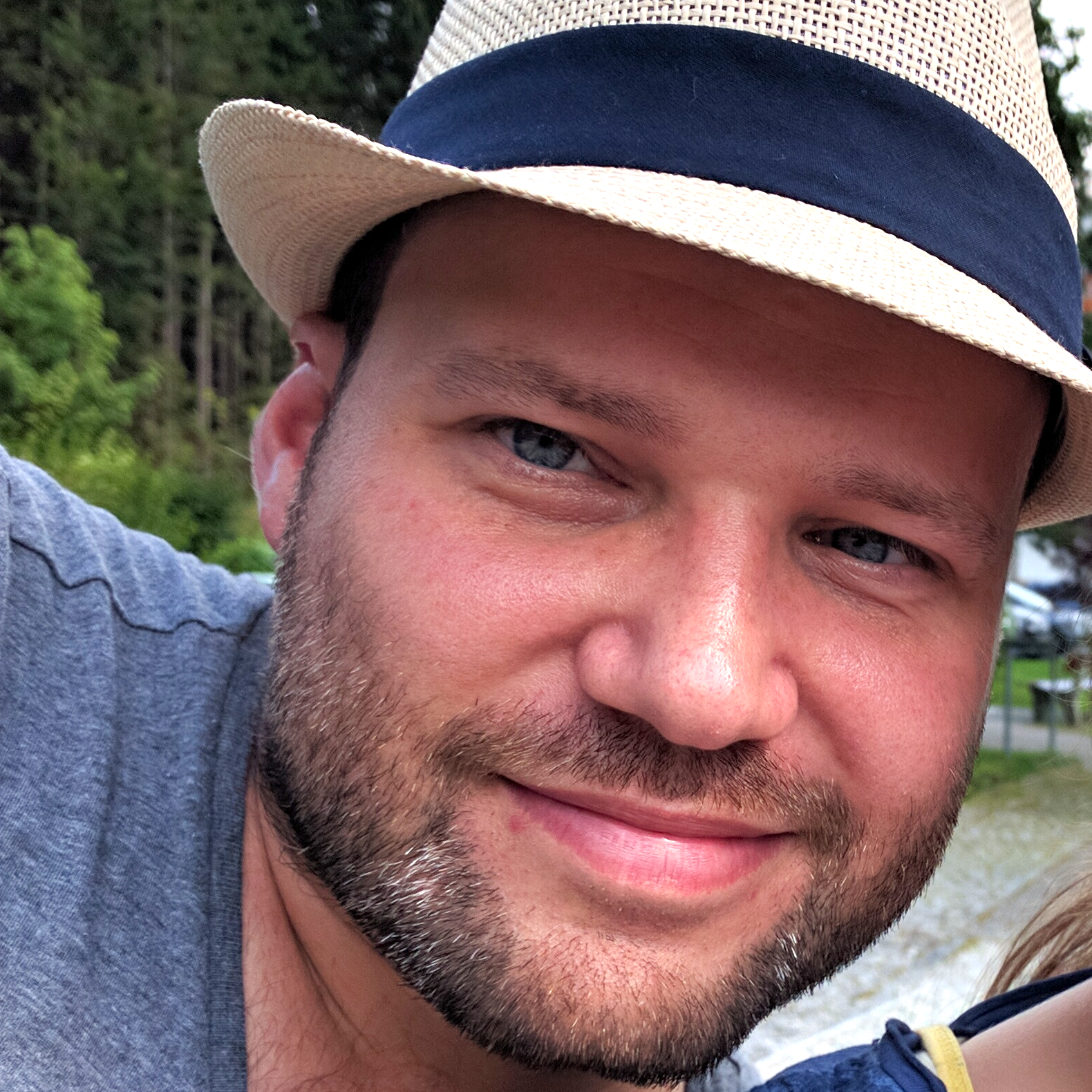
developer_xisco_fauliXisco Fauli, a Spanish LibreOffice developer working in Madrid as a Quality Assurance (QA) specialist, will be a consultant for The Document Foundation effective from September 1st, as QA Engineer.

Xisco got a bachelor’s degree in system data processing at the Polytechnic University of València in 2011. Since then, he has worked for four years as a QA Engineer for a company providing Digital TV solutions, where he has focused mainly on testing software for PCs and portable devices.

Xisco has recently been interviewed by Mike Saunders based on his volunteer development activity and his involvement in the project.

Xisco’s main responsibilities will be the following:

  1. Monitor and report about the state of LibreOffice QA, fostering communications between QA and other teams and encouraging people to join the QA team (and help onboarding new contributors);

  2. Provide and maintain bibisect repositories of the LibreOffice codebase;

  3. Maintain, update and create feature patches for TDF Bugzilla instance;

  4. Organize and coordinate bug hunting sessions, test LibreOffice development builds daily on multiple platforms, run master to try to find regressions early in release cycles, and run release tests on alphas, betas and release candidates to identify blockers;

  5. Triage unconfirmed bugs on master;

  6. Create, improve and keep up-to-date introductions, documentation and howtos for volunteers to LibreOffice QA;

  7. Represent the QA project during weekly Engineering Steering Committee calls.

Behind the scenes at TDF: LibreOffice major releases

tdf-roadtolo52LibreOffice has a time-based release schedule (https://wiki.documentfoundation.org/ReleasePlan), with a major announcement every six months: early February, and early August. A time-based release schedule is predictable, and as such makes it easier to plan large deployments and subsequent updates.

On the other hand, a major announcement every six months translates to a “project that never sleeps”. In fact, you start thinking about the next major release a few weeks after the previous one is over.

In advance of every release, we listen to end users about requested features and changes requested to support the individual workflow. We do not only listen but iteratively present proposals in order to create a user experience that is in alignment with our long-term vision of being the best free office suite, easy for beginners and powerful for experts.

noun_27464Let’s take the just-released LibreOffice 5.2 as an example of the many activities which have been carried out during five full months – from early March to early August – by several members of the team, and a very large number of community members in every geography.

LibreOffice is available in a large number of native languages (actually, it is the office suite available in the largest number of native languages), thanks to the localization activity carried out by volunteers in many geographies. This activity is extremely important, but is one of the less known, as many of the people involved are more interested in getting the work done than in raising their visibility inside the project.

In early March, the development team consolidates the release plan (https://wiki.documentfoundation.org/ReleasePlan/5.2), and the marketing team sets the release date according to industry events or major software announcements. Of course, the release date might need last minute changes, as in 2015, when the launch of LibreOffice 5.0 was shifted because of the announcement of Windows 10.

From that point on, developers work on finalizing new features, which are usually described in the release notes on the wiki (https://wiki.documentfoundation.org/ReleaseNotes/5.2). Based on that page, and on other sources of information within the project, the marketing team starts to brainstorm about the messaging.

LibreOffice 5.2 has been a rather nice example of successful messaging, as many significant articles on popular media underlined the enterprise focus based on a few specific features like document classification and new Calc financial forecasting functions.

noun_83830_ccAt the same time, the Quality Assurance team – with volunteers active in many geographies on many different language version of the office suite – start testing nightly builds to discover bugs and regressions over previous LibreOffice releases. As soon as Alphas and Betas are available, Quality Assurance volunteers organize global bug hunting sessions (https://wiki.documentfoundation.org/BugHunting_Session_5.2.0_Alpha).

Bug hunting sessions are one or two day “virtual” events, where Quality Assurance volunteers provide their expert support to less skilled users, to help them file reports about bugs and regressions. Although they may look boring on paper, they are usually rather engaging, as most people involved get the distinctive feeling of contributing in a significant way to the success of the new LibreOffice major release.

Bug hunting sessions are usually announced in advance on this blog. Stay tuned for the next one, to test the first Beta of LibreOffice 5.3.

Alphas and Betas are extremely important for the marketing team, too. In fact, they are used to test new features, and to understand their relevance for the upcoming announcement. In some cases, as for the classification feature, the team gathers additional information, to add a background document to the press kit.

When the first Release Candidate is announced, around six weeks before the launch date, most of the back office activities have been completed. At that time, the different teams start to concentrate on the final details, to be ready for the new major release.

Localizers have already completed their activity, and committed all translated strings into the Pootle translation system. Quality Assurance experts are focusing their attention on bugs and regressions which might impact on the release, with the help of developers who are refining new features while getting rid of the last “wrinkles” in the source code.

The marketing team defines the announcement strategy, and the media relations activities for the week prior to the announcement. According to the media angle, they develop a couple of different mailing lists: a smaller one for press briefings where recipients are sent individual messages, and a large one for press releases. In addition, country-specific mailing lists are used for press releases in native languages.

classificationAt the same time, the launch documents go from draft to final: a press release, a technical backgrounder for the classification feature, the image visually explaining classification levels, an infographics for the top feature list, and a slide deck which is going to be used for press briefings.

The last steps are coordinated by team members: release management prepares the builds and loads them on the mirrors, in time for the launch, while marketing hosts the phone press briefings with journalists (with the participation of board members, who provide statements about the new release).

On the launch date, release management switches the links on the download page, while marketing publishes the blog post and sends out the email to TDF members and announce mailing lists (https://blog.documentfoundation.org/blog/2016/08/03/libreoffice-5-2-fresh-released-for-windows-mac-os-and-gnulinux/). In addition, it handles the distribution of press releases in English, and in many other native language translations provided by community volunteers, by using the free open source PHPList.

Each LibreOffice major release is a real team effort, which is possible thanks to the contribution of many people around the world.

Last, but not least, we should not forget companies sitting in the Advisory Board (http://www.documentfoundation.org/governance/advisory-board/), which are supporting the global development effort by employing a large number of full time hackers. In addition, a couple of these companies provide a Long Term Supported version of LibreOffice (at the moment, based on the LibreOffice 5.1 family).

Improving LibreOffice User Experience (UX)

g4hDOEET

Effective from May 2016, Heiko Tietze has started working as a consultant to drive LibreOffice UX one step further.

Heiko has been one of the most active UX volunteers during the last few years, and has been instrumental in a rather large number of the user interface improvements since LibreOffice 4.4.

In addition, he has coordinated UX focused research, which has – amongst other results – led to the development of the human interface guidelines (HIG), and to incremental UI changes to menus and toolbars. Currently, the focus is on the improvement of the LibreOffice Draw user interface.

Most of Heiko’s and other UX volunteers’ activities are reflected in the TDF Design blog, where Heiko has extensively reported about the research and the most significant UX improvements, such as the reorganization of toolbars and the new application specific-menus launched in LibreOffice 5.1.

Heiko’s main objectives will be to work with developers to find out what is technically possible and makes sense to improve LibreOffice UX, to grow the UX and design contributor base, and help with UX-related bugs.

Heiko Tietze has a degree and a doctorate in psychology at the University of Jena, where he has also worked as researcher in general psychology. In his professional career, he has worked with neurophysiological methods like electroencephalogram (EEG) and eye tracking (EOG) on different topics, such as vigilance in traffic and the outcome of automation.

On top of his strong methodological and statistical background, he has developed the skills to write software code to deal with large bulks of data, and has specialized in computer science. In the last ten years, he has focused on usability for different customers, with projects from embedded systems to complex desktop software.

In addition to LibreOffice, Heiko is also a long time contributor to the KDE project and a member of the visual design group (VDG).

TDF Marketing Activity (and a Debian Bug Squashing Party!)

As we head towards the second half of the year – and an exciting new release of LibreOffice in August – I wanted to recap some work from the Marketing Team that I’ve been involved in over the last few months. But before that, I’d also like to say congratulations to the LiMux team for a great Debian Bug Squashing Party!

LiMux is a project by the City of Munich to transition away from proprietary software and closed document formats to free software and open standards. GNU/Linux and LibreOffice are key components in this migration, and on 27 – 29 May the LiMux offices hosted a Debian Bug Squashing Party. As the name suggests, this is a mini hackfest where developers work to fix bugs in the Debian GNU/Linux distribution (and related software).

LiMux is based on Kubuntu, which in turn builds on Debian’s mighty foundations; other developers associated with KDE, Kolab and LibreOffice were present as well. Lots of hacking was done and bugs fixed – but it was also a great opportunity just to chat about the state of LiMux, make new contacts, and try great food! The Indian dishes on the first evening were especially good…

Marketing updates

Moving on to Marketing at The Document Foundation: we’ve had a busy few months, attending the CeBIT show in Hannover with new flyers and other materials. Thanks to the ever-industrious community, we received audio translations for our LibreOffice 5.1 New Features videos – so there are now versions in French, German and Spanish. Following this, we started work on the 2015 Annual Report, a summary of last year’s news and activity inside The Document Foundation and LibreOffice. It will be online soon, so stay tuned to this blog!

The LibreOffice main website and The Document Foundation wiki are packed with useful information, but some of it is duplicated or slightly dated, so we’ve been going through both sites to perform cleanups and updates. In addition, we added a new page to track migrations to LibreOffice, a First Steps guide for potential contributors to the marketing project, along with a style guide. On the main website we updated the screenshots and added a new “Who uses LibreOffice?” page.

The Document Liberation Project (DLP) is another effort supported by The Document Foundation, and we’ve been working to raise awareness about its mission and spread the word. After talking with the teams at Inkscape and Scribus, both of those projects now feature DLP logos on their sites, while the DLP front page has been redesigned to more succinctly express what it does. On top of that, we made a short video summarising the DLP’s goals.

Month of LibreOffice

Most recently, we had our Month of LibreOffice campaign, highlighting activity across all areas of the software. Many people think that contributing to an open source project is all about code – but we’ve tried to show that it’s possible to help in other ways including translations, confirming bugs, writing documentation and simply spreading the word. We awarded over 330 badges, so thanks to everyone who got one, and we plan to do another campaign like this later in the year.

The next few months are going to be busy as well: LibreOffice 5.2 is due to be released in August with many new features, and then we’ll have our yearly conference in September. We hope to see you there!