The Document Foundation is looking for an Administrative Assistant

The Document Foundation is the home of the LibreOffice community and one of the most popular open source projects, with an estimated user base of 200 million people worldwide.

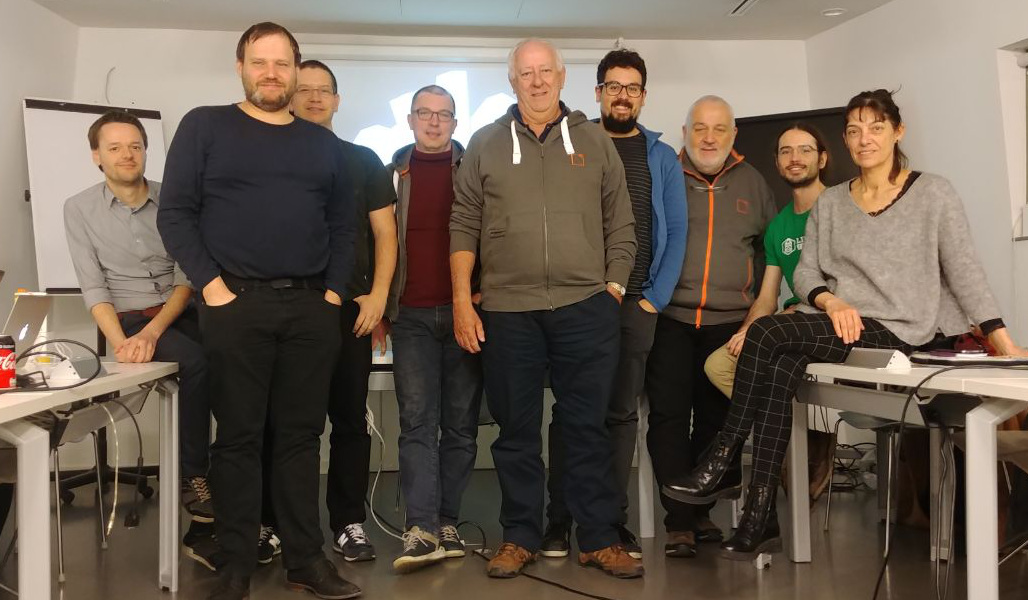
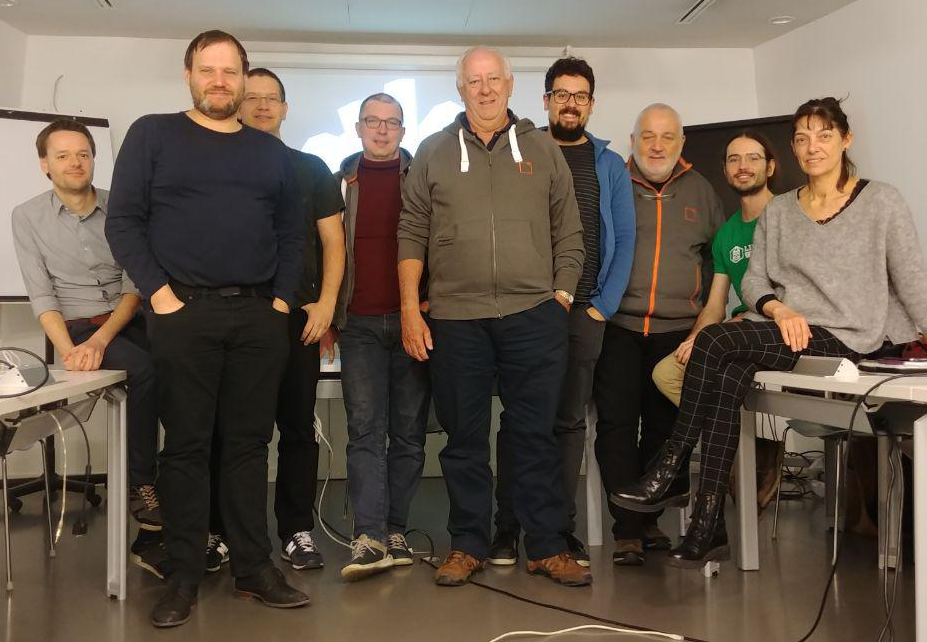
The foundation has existed for seven years and today several activities are coordinated by a multi-national team of open source advocates who look after release management, infrastructure, marketing, quality assurance, mentoring, documentation, user experience and design.

The team is working on lowering the barriers to entry, fostering participation in native language communities, providing the server infrastructure, organizing events, handling travel refunds and – in general – to make it easier to join the volunteers active in all areas of the project.

We are now looking for an Administrative Assistant. The position requires speaking both German and English (which is and remains the project’s main language) and this is the reason why the following tender is in German. Find the official tender below:

Hallo Welt!

Kennst du LibreOffice, das freie Office-Paket?

Wir sind die gemeinnützige Stiftung „The Document Foundation“ und das Zuhause der LibreOffice-Community. Weltweit arbeiten viele Firmen und hunderte Ehrenamtliche gemeinsam an einem der bekanntesten Open-Source-Projekte, das von über 200 Millionen Menschen weltweit eingesetzt wird.

Die Stiftung gibt es seit sieben Jahren und unser vielköpfiges Team aus verschiedenen Ländern sorgt dafür, dass sich Ehrenamtliche u.a. in Marketing, Qualitätssicherung, Entwicklung, Dokumentation, User Experience und Design einbringen können, indem wir beispielsweise die Einstiegshürden senken, die Serverinfrastruktur bereit stellen, Veranstaltungen organisieren, Reisekosten bezahlen und somit den Ehrenamtlichen das Mitmachen erleichtern.

Wir suchen so bald als möglich eine im Home-Office arbeitende

Assistenz der Geschäftsführung (m/w/divers)

in Teilzeit (20 Wochenstunden) zur Festanstellung.

Als spendenfinanzierte gemeinnützige Einrichtung können wir dir zwar keine teuren Boni bieten, dafür ist Arbeiten im Home-Office bei uns Standard, genauso wie flexible Arbeitszeiten und flache Hierarchien. Ideal ist, wenn du im Großraum München lebst, das macht den regelmäßigen Austausch mit den deutschsprachigen Kollegen noch einfacher.

Du kannst mit deinem Einsatz bei uns etwas für den guten Zweck tun und das Arbeiten in einer internationalen Community bereichert ungemein.

Zwar gibt es auch bei uns eine Probezeit, wir wollen mit dir aber langfristig zusammenarbeiten.

Deine Aufgaben

Wir sind in den letzten Jahren gewachsen, deswegen suchen wir jemanden, der verlässlich, zuverlässig, eigenverantwortlich und kompetent administrative Aufgaben übernimmt. Die Administration ist ein notwendiger Teil der Stiftungsarbeit und kommt vor allem unseren Ehrenamtlichen zugute, denen wir damit den Rücken freihalten und viele Projekte überhaupt erst ermöglichen.

Zu deinen Aufgaben gehört unter anderem

  • Du bist erster Ansprechpartner nach außen. E-Mails an unsere info@-Adresse, Anrufe auf der zentralen Nummer und der Posteingang landen bei dir, du antwortest entweder selbst oder leitest an’s Team weiter und du verschickst ausgehende Post.
  • Du kümmerst dich um die Spendenverwaltung. Du erstellst Spendenbescheinigungen, pflegst die Spendendatenbank, beantwortest Rückfragen, führst etwaige Rückbuchungen durch und behältst die verschiedenen Spendenkonten im Blick.
  • Du unterstützt uns bei der vorbereitenden Buchhaltung. Du sammelst, sichtest und prüfst Belege und Kontoauszüge, hast die Budgets, Sachkonten und Umsatzsteuervoranmeldungen im Blick und pflegst die nötigen Zahlen in das DATEV-Modul ein. Eingehende Rechnungen prüfst und bezahlst du. Die anonymisierten Monatsabschlüsse übersetzt du ins Englische, da wir diese regelmäßig veröffentlichen.
  • Du hilfst mit bei der Organisation von Projekten, Ausschreibungen und der jährlichen LibreOffice Conference, die im Jahr 2019 beispielsweise in Almeria in Spanien stattfindet.
  • Du pflegst und organisierst unsere interne Nextcloud-Dateiablage und scannst und archivierst Dokumente.
  • Du bist verantwortlich für unsere Inventarverwaltung und übernimmst den Versand von Marketing-Materialien und von Hardware für Veranstaltungen.
  • Du bearbeitet Reisekostenabrechnungen. Dazu prüfst du die Anträge und Belege, führst Überweisungen ins In- und Ausland durch und buchst ggf. auch Hotel, Konferenzräume und die Anreise für ganze Gruppen.
  • Du bereitest für Sitzungen und Telefonkonferenzen die Einladung, Tagesordnung und Beschlussvorlagen vor, führst und veröffentlichst das Protokoll (i.d.R. auf Englisch), stellst die Präsentationsfolien zusammen und prüfst regelmäßig, wann Entscheidungen des nichtöffentlichen Teils publiziert werden können.
  • Du unterstützt das Mitglieder-Komitee bei der Mitgliedsverwaltung und der Meldung an die Stiftungsaufsicht.
  • Du bereitest Veränderungsanzeigen unter anderem an Stiftungsaufsicht, Versicherung, Bank und Transparenzregister vor.
  • Du hilfst uns dabei, Termine, Fristen und Wiedervorlagen im Blick zu behalten.

Was du können solltest

Sag uns, warum du den Job kannst und welche Praxiserfahrung du hast! Wichtig sind folgende Punkte:

  • Du hast Erfahrung mit (gemeinnützigen) Organisationen.
    Begriffe wie Jahresabschluss, Sachkonto, Tätigkeitsbericht, Umsatzsteuervoranmeldung, A1-Meldung, VBG, DATEV, Zuwendungsbestätigung, Künstlersozialkasse und Zweckbetrieb sind dir nicht fremd. Mit fachlicher Unterstützung navigierst du auch durch die Grundzüge der Buchhaltung.
  • Du beherrscht fließendes und gutes Deutsch und Englisch in Wort und Schrift.
    Du wirst nach außen hin unter anderem mit Behörden, Dienstleistern und Partnern kommunizieren, die Projektsprache intern hingegen ist ausschließlich Englisch. Da du häufig als „Gateway zwischen den Welten“ fungieren wirst, musst du in beiden Sprachen sattelfest sein.
  • Da wir LibreOffice herausgeben und das natürlich auch selbst benutzen, ist ein souveräner Umgang damit wichtig.
    Ein Teil deiner Arbeit besteht in der Gestaltung von Dokumenten und Anschreiben (Writer), dem Erstellen von Präsentationen (Impress) und dem Kalkulieren von Budgets und Kosten (Calc).
  • Fit solltest du auch im Umgang mit vielen E-Mails sein, beispielsweise in Mozilla Thunderbird, mutt oder Roundcube.
    Die Hauptkommunikation im Projekt erfolgt mittels E-Mail – mittels vieler E-Mails! Den Umgang mit Mailinglisten, Mailfiltern und Verteilerlisten musst du beherrschen. Wir nutzen dabei bevorzugt freie Lösungen.

Ebenfalls sehr hilfreich ist Folgendes:

  • Wenn du dich für das Open-Source-Prinzip begeistern kannst und weißt, was es damit auf sich hat, hilft dir das definitiv, dich bei uns zurechtzufinden. Der beste Start gelingt dir, wenn du selbst bereits freie Software einsetzt!
  • Das Arbeiten im Home-Office bietet viele Freiheiten, verlangt aber auch gute Organisation und Selbstdisziplin, damit dir nicht die Decke auf den Kopf fällt. Wenn du mit dieser Arbeitsform schon Erfahrungen sammeln konntest, ist das sicher ein Plus.

Wir freuen uns über deine Bewerbung per E-Mail, inkl. Lebenslauf, Gehaltsvorstellung und frühestmöglichem Eintrittsdatum bis spätestens 5. April 2019 an Florian Effenberger unter floeff@documentfoundation.org. Du kannst deine E-Mail an diese Adresse mittels PGP verschlüsseln.

Bewerbungen, die bis zum 10. Mai keine Rückmeldungen erhalten haben, waren nicht erfolgreich.

Join our team! Job Search for a Development Mentor (#201902-01)

Note that we’re at FOSDEM (building K, level 1, group A) on February 2 and 3, so you can talk to us in person there!

The Document Foundation (TDF), the charitable entity behind the world’s leading free office suite LibreOffice, seeks an individual – or individuals part (or full) time – to be

a Development Mentor

to start work as soon as possible. The role requires the following:

  • Self-starting, remote working experience
  • Experience contributing to FLOSS communities
  • Excellent communication skills, with enthusiasm for mentoring
  • Coding experience (LibreOffice coding preferred)
  • Willingness to travel to Hackfests & conferences in Europe and globally

The role involves working from home at your location for at least 10 hours per week, up to full-time and includes among other items:

Supporting existing mentors in the LibreOffice community including:

  • Building relationships between existing mentors and new contributors
  • Identifying and on-boarding new contributors
  • Affirming and encouraging their contribution
  • Building initial relationships with them
  • Encouraging them to join IRC to meet the teams
  • Introducing them to domain experts for deeper learning
  • Helping to educate new contributors by
  • Positively reviewing their code contributions
  • Introducing them to our tooling and culture
  • Attracting new contributors by promoting the project
  • Interaction with UX volunteers

Previous experience with such tasks is highly welcome, so is using free software. Speaking and writing English reasonably well is a mandatory requirement.

The work time during the day is flexible, apart from some fixed times when availability is required (e.g. during meetings, which usually take place at 14:00 or 15:00 UTC once per week).

TDF welcomes applications from all suitably qualified persons regardless of their race, sex, disability, religion/belief, sexual orientation or age.

As always, TDF will give some preference to individuals who have previously shown a commitment to TDF, including but not limited to members of TDF. Not being a member, or never having contributed before, does not exclude any applicants from consideration.

TDF is looking forward to receiving your applications, including curriculum vitae, your financial expectations, and the earliest date of your availability, via e-mail to Florian Effenberger at floeff@documentfoundation.org no later than March 29, 2019. You can encrypt your message via PGP/GnuPG.

If you haven’t received feedback by April 29, 2019, your application could not be considered.

Marketing Activities, January to September 2018

The new year at The Document Foundation starts with FOSDEM, where many LibreOffice contributors gather for the largest Free and Open Source Software (FOSS) meeting in Europe. In 2018 we had a booth in the main hall of building K, where most of the largest projects are based, and a devroom focused on OpenDocument Format (ODF) editing software.

The marketing team at TDF was in charge of the booth and the devroom, and also of logistics for the internal meetings and the hackfest organized at ICAB just after FOSDEM. I also helped to cook some real Italian pasta for the social dinner on Saturday, where the community gathered together with some friends.

Just before FOSDEM, we announced LibreOffice 6.0. We coordinated the announcement, drafting the documents for the press kit and organizing several pre briefings with journalists. As usual, thanks to the efforts of localization volunteers we were able to distribute the press release in some local languages.

We then followed up with announcements of minor releases, with a reduced emphasis in comparison with the major announcement.

After FOSDEM, we started working on TDF’s Annual Report, drafting most of the content and illustrations, and collecting images from community events for the final version. We have managed the final layout, using only free software (LibreOffice for drafting text and drawings, GIMP for tweaking images, and Scribus for creating the final layout, using the free fonts Carlito and Caladea).

After releasing the Annual Report, we started to concentrate on the next major announcement, preparing journalist mailing lists. We have a large number of contacts in media outlets around the world, which we have to update regularly.

Mailing lists are key to maintaining regular contacts with journalists. Of course, relationships must be nurtured over time, and the fact that we have always been proactive and responsive has increased our reputation. We have always replied to requests in due time, and pitched new article ideas as often as possible.

We also increased TDF and LibreOffice presence on social media, by increasing the number of tweets and posts. This will further grow in the next few months, as an increasing number of journalists are shifting to social media as the main source of information for news stories.

In early August we announced LibreOffice 6.1, with a test of the increased Twitter activity, based on a policy document that we drafted and shared with community members. We duplicated step-by-step most of the activities from the previous announcement, but we managed to organize a smaller number of pre-briefings.

In addition to these “major” marketing activities, we also managed several background tasks which are useful to keep TDF engine in good shape. The first is keeping track of donations, which provide the economic resources for the project. We are closely following donation trends, and have been implementing A/B testing for the donation page.

Starting from the month of November, this will include fundraising. If we want to bring the project to the next level, we need to raise money to increase the level of support for local communities, and for marketing and education activities behind the OpenDocument Format.

Last, but not least, we warmly invite community members to attend marketing calls. If the schedule is not the right one please let us know, and we will change it to suit your needs. If necessary, we can schedule two different calls to talk with people in different time zones (Asia and the Americas are hard to fit into the same time slot, but we have active community members in both continents).

Sophie Gautier: an update about LibreOffice localization

Once in a while, I try to look back to see what the l10n project has achieved in the last months. And it is a lot! When you consider that almost every change in the LibreOffice interface means some work for the localizers, open LibreOffice and have a look, you will see new toolbars, new functionalities with new dialogues, some different labels, so many tiny things which request translator’s work.

And it’s only part of the work, a lot has been achieved also in the help. Old articles removed, texts on features that have never been documented have been added, new features are described. Finally, a fair amount of help pages have been changed or created and it’s much work for the translators. For example, between LibreOffice 5.4 and the next version, this is about 4,000 words that have been added to both UI and Help. This counts only new words, not those who are fuzzy or need correction.

Another part is LibreOffice online. Parts of the strings are already translated, but new words come that are not the easiest to translate because there is no context. For 2018, we are looking into deploying instances for localizers and the community at large to actually test the translation. The good news it that it’s much more light than the local application (2,768 words compared to 98,235 words in the UI).

There’s also a lot of work in Pootle going on with features rolled out and improved for our specific needs and purposes. We’ve learned that we run probably one of the largest installations of it and therefore quite some time is spent on improving it for our requirements. There are many corner cases that need reflecting, and lots of work is done in the background to streamline the process. To explain a bit the changes in the translation system without technical details, we previously used the resource src/res system and migrated to the gettext standard, for a better support of localisation in the product, so it’s an important step for the quality of LibreOffice localisation and a better recognition of our translators. Help is of course always welcome

Being a welcoming and open community requires ongoing work, for example, most of the contributors are not English native speakers while all the work is done in English. It’s true also for the strings added to the product but it’s not a problem because with all the eyes of the l10n community each typo made in the sources is reported, even a double space is reported and corrected. This is an unseen work done by the localisation team on the en_US version and I would like to thank them a lot for that.

And we have welcomed our newest languages: Plautdietsch and Sardinian.

In addition to the IRC channel #libreoffice-nlp on Freenode, we have now three new discussion groups on Telegram: LibreOfficeLocalisation for general discussions and information on localisation, LibreOfficeCJK for Chinese, Japanese and Korean languages and LibreOfficeRTL for languages using complex scripts. Exchanges going on there are mostly about bugs encountered on these writing modes more than on localisation. Most important news and information still go to the mailing lists.

Part of the translation work concerns also not only the product but the marketing activity, be it on the product or on the community. Thus we also work on videos subtitles, press releases, website updates. We also translate the surveys the UX/Design team is running to get feedback on the user preferences/habits.
The community is made of great people helping in all the facets of the project. LibreOffice project is big and it’s difficult to get the whole picture in mind when you’re not here for years and when you concentrate your efforts on a particular area. So part of my role is to help that each project is working well with others. Helping local marketing contributors to adapt the campaigns to their local target, helping UX to integrate localisation at the beginning are some examples.

There is a special thank I wanted to add for Yousuf Philips and the tireless help he brings in solving CJK and RTL bugs and simplifying the UI with a never-ending enthusiasm, big thanks to you Jay!

Update about Marketing Activities in 2nd Half of 2017

LibreOffice has turned seven on September 28, 2017. When we launched our first press release on September 28, 2010, our entire mailing list was quite small: 200 recipients gathered from different sources with journalists and media contacts from all over the world.

During these seven years, my main task has been media relations. One of the most important objectives has been the improvement of the mailing lists, both in terms of quantity and quality.

Today, after seven years, the size of the database has changed dramatically, as we have almost 19,000 email address in our mailing lists, which are targeted based on country, platform (desktop, iOS, Android, mobile, cloud) and focus (security and reviews). In 2017, we have started to target industry analysts, but this list is far from being complete.

Based on geography, we have 6 global lists (journalists, analysts, teams), 70 lists for Europe, 30 lists for the Americas, 5 lists for Pacific, 21 lists for Africa, 18 lists for Asia Middle East, 17 lists for Asia, and 24 lists for Asia Far East. In addition, around 5,000 records are updated and 2,500 are added each year.

Lists are global by country, plus each country – when possible – has a specific list of people who opened a previous press release. Thanks to this targeted database, we have a hit rate around 30%, twice as much as the global PR industry.

For major announcements, individual emails are sent to friendly journalists with a specific angle. I am connected to over 2,000 journalists via LinkedIn, and I have regular contacts with many of them.

Of course, taking care of mailing lists would not be enough without a monthly average of 50 personal contacts with editors, via email and/or phone, and over 100 answers to specific requests (pictures, statistics, review related questions and other info about TDF and LibreOffice).

Another project I have been working at is the production of basic slide decks on different subjects, which can be used by community members to create their own slide decks for presentations. At the moment I am working at updating the following slide decks: Project History & Background, LibreOffice & Competitive Presentation, Document Standards & Open Document Format, Advantages of ODF vs OOXML, Migration Protocol & Training Protocol, plus Useful Slides for Presentations. I also have less organized slides about Digital Citizenship, or the relationship between Technology and Individual Freedom of Choice.

Community members are warmly invited to send me an email to check if I have something which can help them to add some beef to their presentations. In fact, in some cases I test slide decks – adding new angles and concepts – in front of small audiences, before releasing them “officially” on the wiki.

Looking forward, I plan to bring analyst relations up to speed (as media), and improve community-focused activities, supporting the organization of local events and participate when it makes sense budget wise. I would also like to facilitate NLP (native language projects) involvement in the project, helping the integration of local communities within TDF and fostering their growth when they are small or even completely missing.

Coming up on 28th September: Reddit “Ask us Anything” (and a birthday)

Thursday, 28th September 2017 will be a special day – not only is it the seventh birthday of The Document Foundation, but we will also be running an “Ask me (us) Anything” session on Reddit – specifically, the /r/linux subreddit.

Team and board members from The Document Foundation will be on hand to answer questions and point people in the right directions. The AmA will run from 12:00 UTC, and we’ll be around for several hours to answer questions. (And indeed we’ll check the post the following day for any extra questions).

We look forward to taking part and talking to everyone!