Community Member Monday: Vera Blagoveschenskaya

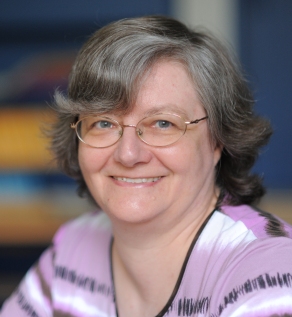
Today we’re talking to Vera from the Russian LibreOffice community, who has been especially active in our Quality Assurance (QA) project recently…

First, tell us a bit about yourself!

I live in Obninsk, Russia – it’s one of the major Russian science cities. You know, the first nuclear power plant was built in Obninsk. At the moment I work at BaseALT as a QA engineer. I really love testing! (I’ve noticed a minor bug in LibreOffice Writer while typing these words – I will surely report it later 🙂)

I’m also mother of a teenage girl, so a lot of my spare time is dedicated to supporting her interests. Now she is really into biking and swimming, and we dream of visiting the Tokyo Olympics in 2020.

What are you working on in LibreOffice at the moment? And is there anything you’d like to try in future?

I find and report bugs in Bugzilla and check fixes. In addition, I try to reproduce unconfirmed bugs and categorize them. For the future, well, it’s really hard to choose – there are so many options! But I undoubtedly would like to have more time to contribute to LibreOffice.

How did you get involved with LibreOffice – and what was the
experience like?

When I started to work in BaseALT, one of the tasks was to test LibreOffice for KDE 5.
I took part in the Bug Hunting Session for LibreOffice 6.2 in October 2018 and had success. I was mentioned in the November 2018 QA report; it was unexpected and very pleasant!

A bit later, Aleksei Nikiforov (who works at BaseALT as well) got involved in work and fixed some KDE 5 crashes. Now we work together, thereby continuing the tradition of contributing to LibreOffice. You know, BaseALT was formed from the ALT Linux Team, which helped to localize StarOffice a long time ago.

Finally, what do you see in the future for LibreOffice?

My opinion: LibreOffice needs to be promoted more widely. Most Windows users don’t know that there is a great and free alternative to Microsoft Office.

Thanks to Vera for her time and contributions! And indeed, we in the LibreOffice project would appreciate more help spreading the word – join our marketing community today!

Community Member Monday: Roman Kuznetsov

Today we’re chatting with Roman Kuznetsov, a Russian contributor to LibreOffice who helps out in QA and other areas:

Your nickname in the LibreOffice project is “Kompilainenn” – where did that come from?

Oh, it’s simple: one day I was trying to compile the Linux kernel for my old and slow PC. And I came up with my current nickname: Kompilainenn 😀

So tell us a bit about yourself – where you’re from, where you live, how to find you on social media, and what do you do in your spare time!

I’m a member of The Document Foundation from Russia, and I live in Lipetsk – it’s an industrial metallurgical city. You can find me on Telegram as @Kompilainenn, and on IRC in the channel #libreoffice-ru. I have a blog about LibreOffice in Russian: the blog has strange address with the prefix “anti”, but in reality the blog isn’t against LibreOffice 😉

I work for a large agribusiness company, as the boss of the “build cost calculation and conclusion of contracts” department. In my spare time I read books, play with my children, play computer games or walk outdoors – and of course make LibreOffice better 😉

What are you working on in LibreOffice at the moment?

At the moment I’m doing some quality assurance (QA) work – filing bug reports, retesting and sorting many old bugs. It’s huge area of activity – and also, I’ve fixed a pair of user interface bugs. I have translated my Conditional Formatting Guide into English as well.

Is there anything else you’d like to work on in the future?

First, I would like to learn C++ and I want to try to improve the management of macros in LibreOffice.

Second, there is the LibreOffice Style Guide in Russian. But it has much information about Writer styles, and very little info about styles in all another modules of LibreOffice. I want to add more info about styles for all modules, and then translate the guide to English.

Third, I want increase the number of active members in the Russian community – to involve more Russian developers in LibreOffice development. It will take a lot of work!

How did you get involved with LibreOffice – and what was the experience like?

I used OpenOffice.org from 2008, and then LibreOffice when it came to life. In 2013, I knew about the Russian forum http://forumooo.ru and created an account there.

At the end of 2014, Lera Goncharuk (aka “tagezi”) invited me to help him with translating LibreOffice’s FAQ into Russian on our wiki. And I agreed. Since then, I translate all Release Notes for new versions of LibreOffice into Russian.

Other tasks I worked on were translating the Getting Started Guide and Draw Guide. Then I began to send bug reports and some enhancements. Also, I worked on translations of Math and Impress guides. In the last year I have tried fix simple UI bugs in the source code of LibreOffice – now I have over ten simple bug fixes aready!

I got valuable experience communicating with a worldwide community, along with some practice in English, working in Bugzilla and making good bug reports. Now that I know more about how LibreOffice’s user interface is created, I like to make new dialogues in Glade and create UI mockups in Pencil.

Finally, what do you see in the future for LibreOffice? What does it need most?

First, I fully agree with Khaled Hosny, who was interviewed recently. LibreOffice needs to have a more clear vision and development agenda.

Second, every month I see about 600 new bug report and only 150 bug fixes. Our project need more developers and needs to pay more attention to attracting programmers to the project.

Third, it need to have more marketing materials about LibreOffice in various world languages – things like stickers, posters, etc. People should know about alternative software in the office world.

But to finish: thanks to everyone in the LibreOffice community for their work!

And thanks to Roman for his time and contributions! Our project and community is always open to newcomers, in many areas: marketing, design, programming, documentation, QA and more. Learn new skills, meet new people and get involved today!

Community Member Monday: Biraj Karmakar

India has 23 official languages according to the country’s constitution, but over 750 other languages are spoken there as well. Today we talk to Biraj Karmakar, who helps to translate LibreOffice into Bengali, and is a passionate supporter of other free and open source software projects:

Where do you live, and can we follow you on social media or IRC?

I’m based in Kolkata, India, and I’m active on Twitter: @birajkarmakar. I always try to help people through social media. Other than that I am available on IRC (biraj) and Telegram (@birajkarmakar).

What do you do when you’re not working on LibreOffice?

Basically I am a professional linguist – I work from my own office. Also, I am a digital marketing consultant, helping small business to grow in online markets. Other than that I run many social entrepreneur activities like Digital Literacy for Kids and Women, and I am a pure hardcore open source supporter. I have been contributing to open source projects like Mozilla, DuckDuckGo, GNOME, SaifishOS, VLC etc from 7 years. There I generally do localisation (l10n) and community events, along with quality assurance (QA) activities.

What do you do in the LibreOffice project? What are you working on?

Basically I am the bn-IN (Bengali) locale leader in the LibreOffice project, trying to complete the pending translation. Also I have done some translation for two marketing videos. I am planning to organize one translation workshop for bn-IN language very soon. Then there’s one QA event in my list.

How did you get involved? Was it a good experience?

Actually, I knew about LibrepOffice when I started using Linux. It looked good to me because we got it free for our office-related work. As I am an open source fan, I thought: why not get involved in this project? Then a few community members introduced me to the LibreOffice community!

What does LibreOffice need most right now?

I think the LibreOffice community is growing – But we don’t have much exposure in India. It would be great if we could arrange meet-ups in India where we recruit new community members, especially in colleges and university campuses, who can help us to promote the software in India.

Thanks to Biraj for his time and contributions! Learn more about localising LibreOffice here – and, of course, there are many other ways to get involved as well!

Community Member Monday: Dieudonne Dukuzumuremy and Tomas Kapiye

LibreOffice is an international project, available in many languages thanks to our enthusiastic worldwide community! Today we speak to two contributors from Africa who are currently living in Japan, starting with Dieudonne Dukuzumuremy:

Firstly, tell us a bit about yourself (where you live, your experience, and what you love – apart from LibreOffice of course!)

I live in Japan (Kobe City). In fact, I have graduated in Japan as a Master’s holder in Information Systems. Currently, I’m doing a post-graduation internship. When I’m not working on LibreOffice, I work as software developer.

Besides that, I will stay in Japan until December – then after I will go back to my home country Rwanda, where I work as a lecture in at the Integrated Polytechnics University. There I provide the fundamentals of programming such as PHP, HTML, CSS, MySQL, SQL Server, VB.net, WordPress etc..

I’m interested in learning new global technologies and bringing more ICT innovations to developing countries, sharing knowledge as well as being result-oriented.

My hobbies are playing football and futsal, along with meeting and making friends.

What do you do in the LibreOffice project?

In LibreOffice I do bug triaging and translations. Currently I’m working on bug reports, reproducing bugs, and translating LibreOffice into the Kinyarwanda language – which is one of the languages of Rwanda.

How did you get involved? Was it a good experience?

I joined a post-graduation internship in a company which has a department of open source software department, and they are focusing on LibreOffice. So LibreOffice is my main task during my internship.

A good experience is that I understand how LibreOffice works as open source, in terms of the different categories of contributors. It was my first time participating, and providing a contribution. It is also interesting to translate LibreOffice into my own language.

What does LibreOffice need most right now?

LibreOffice needs more active collaborative teamwork, to keep improving its features, in order to make it more reliable for users. LibreOffice also needs to improve more in marketing, so that people around the world understand it. Most developing countries spend a lot of money to buy licensed office softwares – but LibreOffice makes it cheaper and gives more to local people who support it.

Tomas Kapiye

Where do you live, and what do you get up to in your spare time?

I also live in Kobe, Japan. In my spare time I like surfing the net, in search for new news on technology, international relations, business and finance, and social well-being. Sometimes I study computer networking (I am originally a Computer Engineer (CCNP)), or I study Python since I have a personal interest in it.

When I have more time, I meet friends for a chess game, go swimming or exercise in the park. Oh and I like catching fish, making friends from all over the world, and spending some time in the kitchen 🙂

What do you do in the LibreOffice project?

I am doing translations mostly, but periodically also do bug triaging.

How did you get involved?

I got involved by joining an internship programme at a company called iCraft in Kobe, Japan. It was a good experience – I wouldn’t have imagined all of the efforts that are happening behind-the-scenes in applications such as LibreOffice, especially to deliver good service to end users.

Lastly, what does LibreOffice need most right now?

User-friendly materials about the processes to follow when someone wants to get involved. LibreOffice also needs to expand its efforts into Africa, especially considering that many things are moving there and all forms of development are taking place there.

A big thanks to Dieudonne and Tomas for their time and contributions! If you’re reading this and are based on the African continent, you can help us to localise the software and spread the word about it!

Find a LibreOffice community member near you!

Hundreds of people around the world contribute to each new version of LibreOffice, and we’ve interviewed many of them on this blog. Now we’ve collected them together on a map (thanks to OpenStreetMap), so you can see who’s near you, and find out more! Click the image to see the live map:

Don’t see anyone near you? Help us to create a new native language community in your country! (Or if you’re already active in the project and would like to be interviewed, just drop us a line.)

Community Member Monday: Khaled Hosny

With LibreOffice 6.2 now available, we return to our regular chats with LibreOffice community members! Today we’re talking to Khaled Hosny, who is working on the software’s font handling and user interface…

To start with, tell us a bit about yourself!

I’m based in Cairo, Egypt. I use IRC but not very actively – my nick is KhaledHosny. I’m a bit active on Twitter as well. I’m also on GitHub (which, after all, is a social network of sorts): https://github.com/khaledhosny.

Outside of my work on LibreOffice, I’m also a localizer and typeface designer, both in a professional capacity and as a hobby. I’m also an avid reader, and an amateur calligrapher and artist.

Do you work for a LibreOffice-related company or just contribute in your spare time?

I contribute in my spare time mostly, but some of my work was sponsored by The Document Foundation.

How did you get involved with LibreOffice?

I was trying to fix some bugs with Arabic text layout in OpenOffice.org (the predecessor to LibreOffice) on Linux. It wasn’t the most pleasant experience, to say the least, and I never got to finish the fix I was working on. So, when I became aware of LibreOffice in early 2011, I switched immediately and was able to finish and submit my first patch, which got reviewed and accepted. I have been contributing to LibreOffice intermittently since then.

What areas of the project do you normally work on? Anything else you want to tackle?

I’m mostly interested in areas of text layout and font handling, especially for Arabic and other writing systems that require advanced text layout. I also sometimes work on UI issues affecting right-to-left writing systems, as well as layout of mathematical equations.

What was your initial experience of contributing to LibreOffice like?

That was over eight years ago, so my memory is fading away, but I remember that it was much better than working on OpenOffice.org, and the build system (even then) was much more pleasant to use. Also, I think my first patch was accepted without much friction and delay, which is not my experience with many other open source projects.

What does LibreOffice need most right now?

In my humble opinion, I think the project needs a clearer vision and development agenda. Right now things seem to be moving organically without much coordination, and every one is working on whatever interests them. I understand that such development organisation is not easy or even feasible in an open source development model and might not even be desirable, but maybe The Document Foundation should take a more active role in steering LibreOffice development.

Thanks to Khaled for his time, and contributions to LibreOffice! Our community would benefit from more help in translating the website and user interface into Arabic, so if you’re interested, start here!

The Document Foundation All Rights Reserved 2025
Proudly powered by WordPress | Theme: Refined Magazine Pro by Candid Themes.