LibreOffice monthly recap: October 2020

Here’s our summary of updates, events and activities in the LibreOffice project in the last four weeks – click the links to learn more…

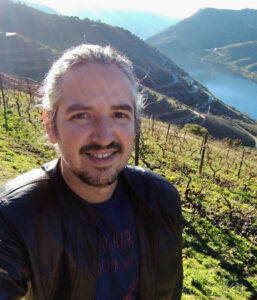
  • We started the month by chatting with Adolfo Jayme Barrientos, a long-time member of the LibreOffice community. He told us how he joined the project, what he’s working on, and where he thinks we should go in the future…
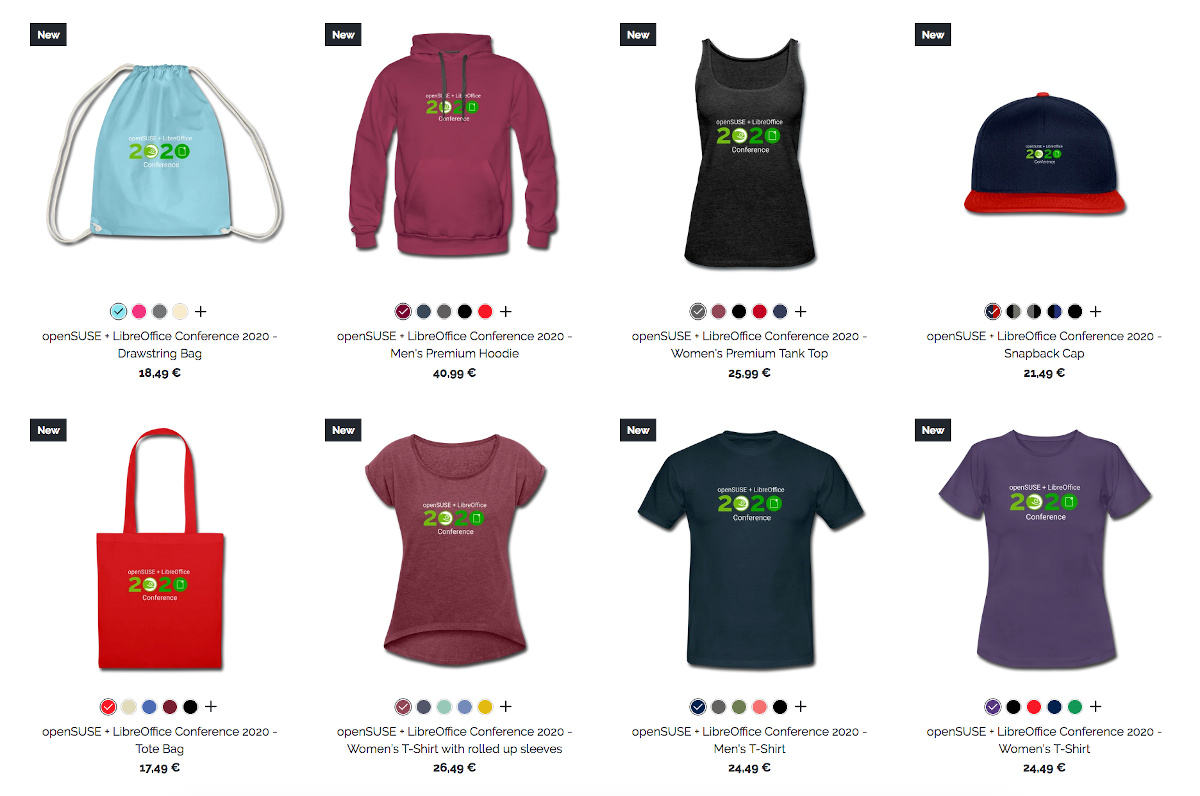
  • Our yearly conference took place this month (more on that later), but before it started, we added merchandise to our online shop. It’s still there, so don’t miss the chance to get a cool 2020 hoodie, T-shirt, bag or baseball cap!
  • There were two bugfix updates to LibreOffice in October: 7.0.2 on the 8th, and 7.0.3 on the 29th. With these releases, LibreOffice 7.0 is becoming a mature branch of the suite, and 6.4 will no longer receive updates after the end of November.

  • On the 19th, we caught up with Marcin Popko, who joined the project recently to help out with social media in Poland. Thanks to Marcin’s efforts, more and more people in his country are learning about LibreOffice – and indeed, everyone around the world is welcome to help us with social media channels in many languages.
  • In technology news, TDF published a tender to finish the transition of LibreOffice to OpenDocument Format 1.3. If you’re a LibreOffice developer with some experience in this field, check out the requirements – it might be something perfect for you…
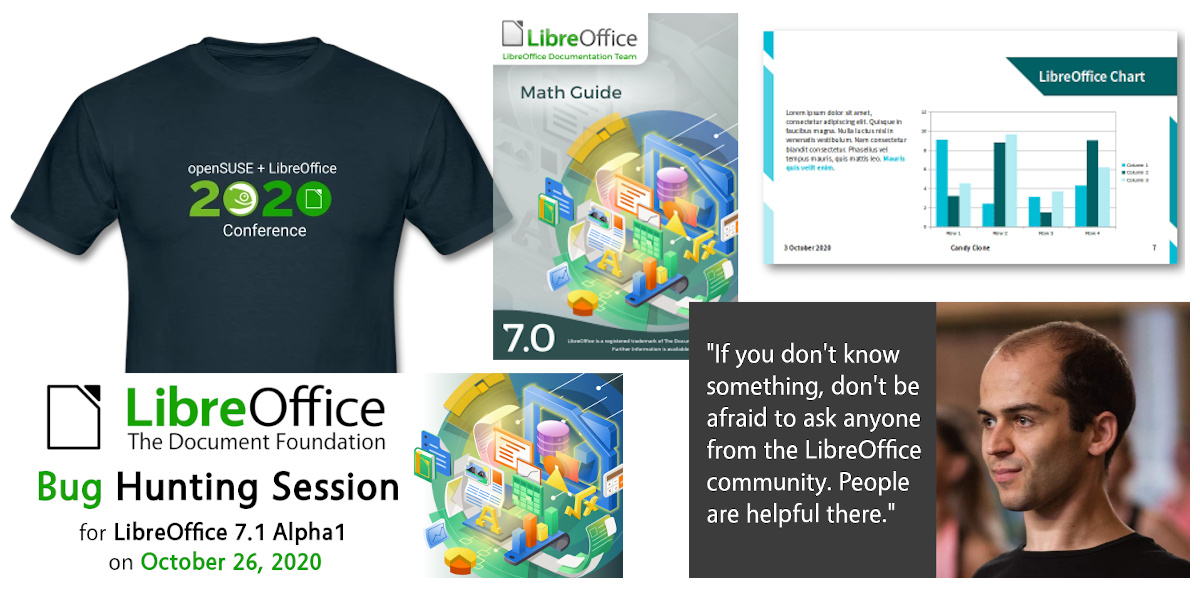
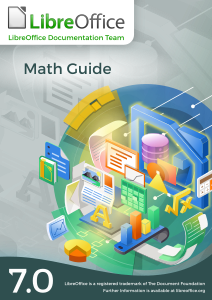
  • Our documentation community announced the LibreOffice Math Guide 7.0. Many thanks to Rafael Lima, Jean H. Weber, Rizal Muttaqin and Drew Jensen for their work on this!
  • LibreOffice 7.1 is due to be released in early February, and our QA team is already running Bug Hunting Sessions. We’ll have more in the run-up to 7.1 – so to ensure that it’s a rock-solid release, give them a hand!
  • And finally… The joint openSUSE + LibreOffice Conference 2020 took place this month! Hundreds of people attended talks, presentations and workshops, so we’re really grateful to everyone who took part. And now we’ve put some of the videos online – see here for the playlist. There are 21 videos so far, but we plan to add more (and upload to PeerTube as well).
Keep in touch – follow us on Twitter, Facebook and Mastodon. Like what we do? Support our community with a donation – or join us and help to make LibreOffice even better for everyone!

LibreOffice Math Guide 7.0 is Published

The Math Guide 7.0 is the first book published based on LibreOffice 7.0

The Documentation Team is happy to announce the publication of the Math Guide 7.0, the latest update of the guide based on the recently released LibreOffice 7.0, the best open source office suite ever.

Math Guide 7.0

The effort was mostly carried by Rafael Lima and reviewed by Jean H. Weber. The new guide covers were designed by Rizal Muttaqin and Drew Jensen. The final publication was carried by Olivier Hallot.

“I work as a university professor in Brazil and I often write papers and prepare presentations that involve mathematical models and notation, and for that I’ve been using LibreOffice Math for over a year. When I read about the Documentation Team on a TDF blog post and learned that the Math Guide needed a volunteer, I felt it was my chance to contribute back to the LibreOffice project” said Rafael Lima, leader of the project. “The experience was seamless and it has been a pleasure working with the Documentation Team. Now I am looking forward to continuing contributing to the project, not only with the Math Guide, but also in other publications developed and maintained by the team.” he added.

Rafael Lima

The new Math Guide is available at the documentation website at https://documentation.libreoffice.org and the source files are on the LibreOffice wiki at https://wiki.documentfoundation.org/Documentation/Publications#LibreOffice_Math_Guide

Happy documenting!

Community Member Monday: Marcin Popko

Today we’re talking to Marcin Popko, who is helping to grow the LibreOffice community in Poland…

Hey Marcin! Tell us a bit about yourself…

Hello! I’m from Bialystok, a city in north-east Poland. I work as an electromagnetic compatibility tester – it’s a seriously crazy and interesting area of electronics development. I’m quite an artist soul; in my free time I dance bachata and sing in a folk band called “Kurpie Zielone”. I also write a blog about dance, emotions and technology here.

What is the free software/Linux/LibreOffice scene like in Poland?

FLOSS (free/libre and open source software) has rather more awareness in geeky and technological domains, than in everyday normal life. LibreOffice is not well know among my friends – some of them are using Microsoft Office, and some of them are even using OpenOffice. So that’s my mission here: inform them 🙂 Companies use LibreOffice when they can’t afford Microsoft Office or when it’s not seriously needed.

You’ve recently been running Polish LibreOffice social media. How did that get started, and how has it developed?

If found a blog post about abandoned native language projects and social media sites, wrote an e-mail to the mailing list, and there I started working with Mike Saunders from The Document Foundation.

We couldn’t reach the the existing administrator of the old Polish LibreOffice fanpage, so we decided to create a new one. Then I also added a Twitter account. Step-by-step, I did surveys about our community, and I wrote articles on Polish technology sites about the current LibreOffice situation, like this one.

Then we reached 150 fans on Facebook, and I ran a sticker giveaway – thanks to Mike and TDF I can pass these stickers on to the community. We’ve also prepared a new official Polish LibreOffice site (the old one has corrupted download links).

Any tips for other people who want to start LibreOffice/FOSS social media in other countries/languages?

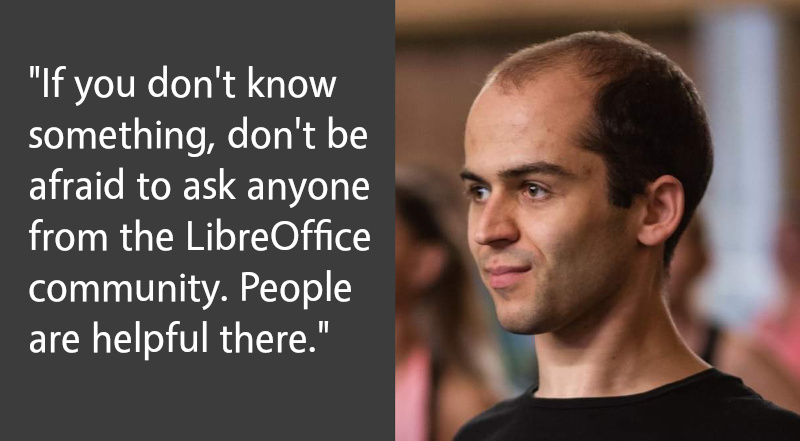
If you don’t know something, don’t be afraid to ask anyone from the LibreOffice community. People are helpful there and they redirect you to appropriate place if you get lost.

Many thanks to Marcin for his superb work and help! And for everyone reading this who wants to start (or expand) social media in more languages, get in touch and we’ll assist you along the way. You can gain valuable experience running social media, and of course it helps to spread the word about LibreOffice too!

Get cool merchandise for upcoming openSUSE + LibreOffice Conference

The joint openSUSE + LibreOffice Virtual Conference 2020 will take place from October 15 – 17. And there’s lots going on! We’ll have talks, presentations, keynotes, tutorials and much more – see the full schedule for all the details.

And there’s more: we’ve got merchandise too! Get prepared for the conference with a T-shirt, hoodie, bag or baseball cap, and help to support The Document Foundation, the non-profit entity behind LibreOffice.

We look forward to seeing you at the conference!

Community Member Monday: Adolfo Jayme Barrientos

Today we’re talking to Adolfo Jayme Barrientos, who has been active in the LibreOffice community for many years. He helps out with translations, design and documentation…

To start, tell us a bit about yourself!

I live and work in Mexico. I grew up in a home where we didn’t have video games or a computer, but it was filled with books; I developed a liking for reading, typography, typesetting and book design.

I was mesmerised when I got my first computer: reading also gave me an edge for learning languages, and when it came to choosing a university major, I went straight to linguistics. I work as an EFL (English as a Foreign Language) teacher with 12 to 15-year-old pupils.

I started translating software eleven years ago, and started doing it professionally some five years ago, to finance my university tuition. I am now trilingual, and continue reading books in various Romance languages whenever I have free time.

What are you working on in LibreOffice?

As well as providing Spanish translations for the different products developed under The Document Foundation, I collaborate with the design and documentation teams.

How did you originally join the community – what was it like?

When the news broke that Oracle was buying Sun, I became concerned. I had been using Linux for a year; I feared that the main productivity suite available for Linux, OpenOffice.org, would gradually die as a result of bad leadership. Fortunately, the project’s community took the reins of it and avoided a negative fate for people like me who worry about having to store our life’s work in proprietary formats that may be deprecated in the future.

What else do you plan to work on? What does LibreOffice really need?

It’s great that TDF’s leadership has produced such a healthy ecosystem of companies who contribute developers to LibreOffice, without monopolizing power. Its community is very equitative as a result. However, investments are needed in the front-end. We can’t rely so much on volunteers to develop that kind of user interface enhancements that signal progress to end users. Papercuts like SVG icon rendering and touchscreen scrolling are long-needed, but haven’t yet found their funding.

As for my plans, I’d like to spend time learning about the best ways to market our products and attract contributors from my area.

A huge thanks to Adolfo for all his contributions and support over the years! And to all users reading this: find out what you can do for LibreOffice, to build your skillset, meet new people, and have fun in our worldwide community!

International Translation Day

International Translation Day is an international day celebrated every year on September 30 on the feast of Saint Jerome, the Bible translator who is considered the patron saint of translators. The celebrations have been promoted by International Federation of Translators (FIT) ever since it was set up in 1953. In 1991 FIT launched the idea of an officially recognized International Translation Day to show solidarity of the worldwide translation community in an effort to promote the translation profession in different countries. This is an opportunity to display pride in a profession that is becoming increasingly essential in the era of progressing globalization. In line with the celebration of 2019 as International Year of Indigenous Languages, the theme for 2020 is “Finding the words for a world in crisis”.

We celebrate our community of translators, which is providing LibreOffice in 119 different languages (with other 26 hopefully becoming available in the future), more than any other software, fulfilling one of the most important objectives of The Document Foundation: “to support the preservation of mother tongues by encouraging all peoples to translate, document, support, and promote our office productivity tools in their native language”. Today, there are over 4 billion people in the world who can use LibreOffice in their native language, and this is an achievement which deserves a recognition.