Get involved – Meet the TDF team

Joining a free and open source software project, such as LibreOffice, is a great way to build your skills, gain experience for future career options, meet new people – and have fun!

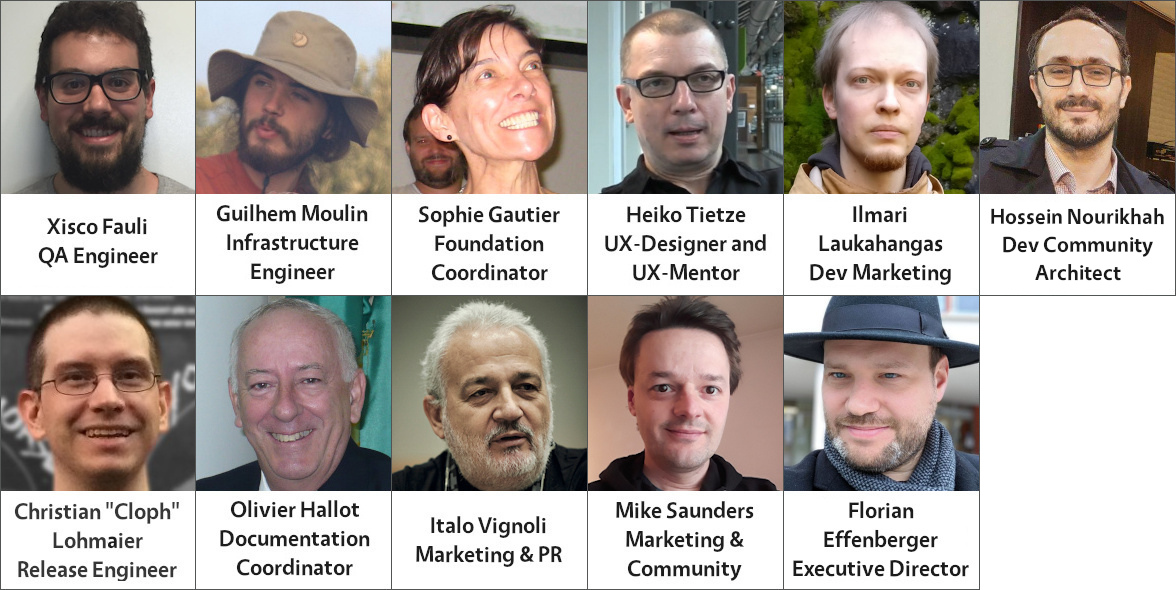
But sometimes, joining a large and well-established project can be a bit daunting at the start. So here we’ll introduce you to the small team at The Document Foundation, the non-profit entity behind LibreOffice. Most team members oversee certain sub-projects in the LibreOffice community – click on their names to learn more in interviews…

Note that this is just the team at The Document Foundation; the LibreOffice community is made up of hundreds of people! Most of the new features are implemented by developers in our ecosystem and volunteers.

Now that you know who we are, click here to get involved and join our projects!

Documentation Team Status

By Dave Barton

In recent times, the very small LibreOffice Documentation Team has been making real progress in revising and updating the user guides:

Release 6.4

Release 7.0

Calc Guide Published Work in progress
Base Guide Published Work in progress
Draw Guide Published Work in progress
Impress Guide Skipped Work in progress
Math Guide Published Awaiting volunteer contributors
Writer Guide Published Awaiting volunteer contributors
Getting Started Guide Published Awaiting volunteer contributors

While this progress in shortened documentation development time is fairly good, it can be substantially improved by having more contributors on the team.

It would be terrific if all contributors were a skilled technical writers, but in reality anyone with a reasonable command of the English language and an eye for detail can make a valuable contribution. No contributor is expected to rewrite entire guide books, although some of our most experienced, long term contributors do exactly that. In fact nothing is expected or demanded of any contributor, other than to let other members of the team know what they what they have chosen to work on.

In some cases, that might be to update a chapter of an existing guide, or reviewing the work of another team member. Reviewing can take the form of proof reading, or researching the accuracy of the guide information in relation to the software’s actual operation. By identifying yourself as a Docs Team contributor does not mean you are making any permanent or long term commitment – many contributors come and go over long periods according to the demands of their “real” life.

It can be seen in the documentation status above there are at least three guides where the input of new contributors would be very welcome. If you are interested in contributing these guides you can see the team guidelines here:

https://wiki.documentfoundation.org/Documentation/DocumentationTeamInfo/JoinDocTeam

Or to get a wider view of the Documentation Team activities visit this page:

https://documentation.libreoffice.org/en/join-the-documentation-team/ where you will also find information about maintaining the LibreOffice Help pages and the documentation wiki.

If you have any questions you are welcome to post them to: documentation@global.libreoffice.org  or you can also join our Telegram group for documentation at https://t.me/joinchat/ALeRuUFCxyZY0wzoddldWQ

The team also gather together in our open to all bi-weekly on-line meeting: https://jitsi.documentfoundation.org/tdfdocteam see: https://wiki.documentfoundation.org/Documentation/Meetings for dates and times.

Join us! Happy documenting!

Community Member Monday: Pranam Lashkari (Collabora/GSoC)

Today we’re talking to Pranam Lashkari from our Indian community, who is working in the LibreOffice ecosystem at Collabora, improving the web-based version of the suite…

First off, tell us a bit about yourself!

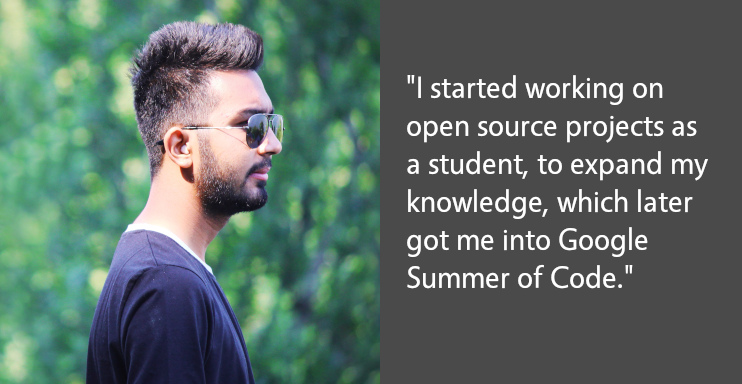
Pranam! (It means namaste, and yes, that’s my name too 😂). I live in Rajkot, a city in the middle of the state of Gujarat in India. I am a computer engineer who started working on open source projects as a student, to expand my knowledge, which later got me into Google Summer of Code – twice as a student, and this year I became a mentor and a maintainer of one of the Boost C++ Libraries called GIL (Generic Image Library).

The eagerness for always working in open source led me to work with Collabora Productivity, where I’m privileged to work full-time to take LibreOffice development further. So far, all the code I have written in my life is open source.

When I am not programming, I like to spend my time playing cricket (or any sport), doing some observational astronomy, or reading things related to science.

You can find me on LinkedIn and GitHub.

What are you working on in the LibreOffice project right now?

Most of my work is focused on LibreOffice Online, which also happens to be the project behind the mobile version of Collabora Office. I started by removing the Poco framework, and then adding major features like smooth scrolling in mobile.

Currently, I am working on desktop browser version of LibreOffice Online, where I try to align features with the core version. On the other hand, in the mobile version, I solve different bugs in mobile wizards and enable new features which are not yet available in mobile. While working on the mobile wizard, I also try to optimize the performance wherever possible by avoiding and reducing unnecessary communication with the server – and making things look more snappy on mobile.

Why did you decide to become a member of The Document Foundation?

I love it when my code is used by people. Having a large number of users of LibreOffice attracted me to be a developer in TDF projects, and I am very thankful to Jan Holesovsky and Michael Meeks for giving me this wonderful opportunity and helping me get started and grow.

At first, I wasn’t aware of the existence of such programmes where one can become a member, until I received an email inviting me to apply to become a member of TDF because of my continuous involvement in TDF projects the last six months. I decided to apply for the membership because it would help me align the development with the goals set by the organisation, and get a clear picture of further required development.

The best way to move forward is by collaborating and becoming a part of the project. By becoming a member, I also wish to give my feedback on decisions and strategies.

Anything else you plan to do in the future? What does LibreOffice really need?

In my work for Collabora, we focus on what our customers and partners most want to be done next – always something interesting.

Finally, one thing I would like to add: working on these projects which are involved in changing the user experience forever is one of the best experiences I have had as a developer. I would like to thank Collabora and TDF for this.

TDF says: we’d like to thank you, Pranam, for all your work! A strong and healthy ecosystem is essential for the future of LibreOffice, so we’re glad you’re enjoying working for Collabora and improving LibreOffice Online. Cheers!

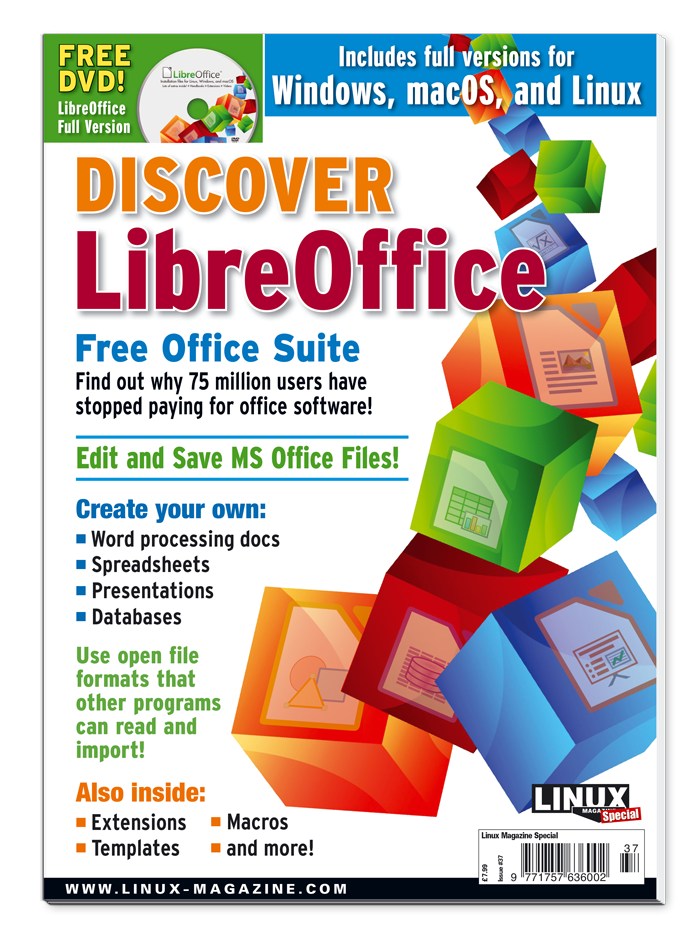
“Discover LibreOffice” magazines for schools and communities

Do you work in a school, college or university? Perhaps you’re involved in local community events, and want to help spread the word about LibreOffice? Or maybe you work at a local library or non-profit that could benefit from learning about free and open source software. Well, we have some of these magazines to give away:

Discover LibreOffice is a complete guide to the suite, with extra articles about OpenDocument, migrations, the community and more. Much of the content was written by members of the LibreOffice community. There’s also an accompanying DVD with LibreOffice 6.1 – which is a slightly older version, but the disc may be useful in some places without regular internet access.

We’d like to get these into the hands of students and local communities as mentioned, so if you could help to distribute them, please drop us a line! Let us know:

  • Where you are
  • Who you plan to give them to
  • How many copies you need

And we’ll get back in touch. Note: this is not a giveaway of free copies for personal use. If you want a copy for yourself, check out the publisher’s shop for the latest version.

Hispanic LibreOffice Community: Fourth virtual meeting

Daniel Armando Rodriguez writes:

On Saturday August 22, in the Ibero-American afternoon/evening, the Hispanic Community met for the fourth consecutive month with panelists who covered several topics related to the office suite par-excellence in the FLOSS world.

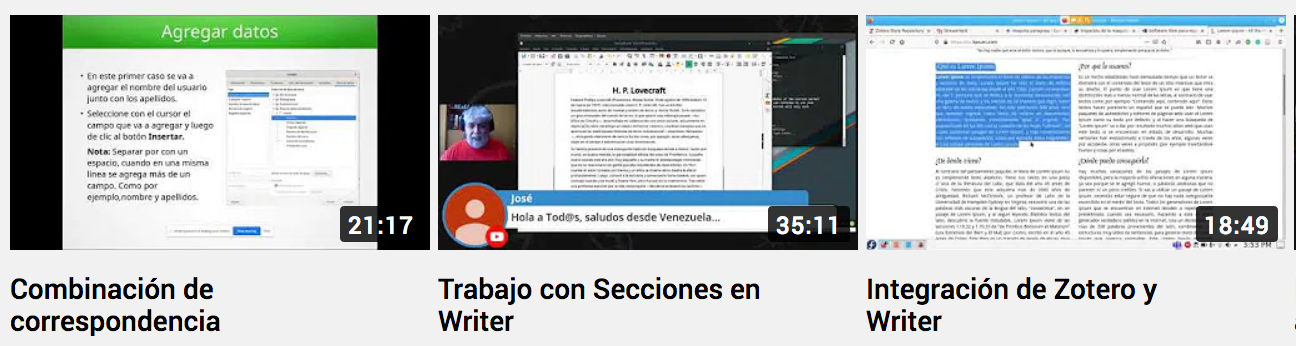
The event was broadcast live on YouTube and Facebook. The activity began at 16:00 UTC, extended for almost 4 hours and presented speakers of 6 nationalities recognized for their participation and collaboration in the project. All the talks are available on the LibreOffice Hispano channel.

  • Ismael Fanlo, from Spain, presented the work with sections in Writer.
  • Celia Palacios and Jazmín Hurtado, from Mexico, talked to us about social service at the Universidad Autónoma de la Ciudad de México and LibreOffice.
  • Daniel Rodriguez, from Argentina, spoke about the use of alternative fonts.
  • Xiomara Céspedes, from Costa Rica, gave a presentation on Mail Merge.
  • Ameck Bozo, from Venezuela, showed how to work with Linear Regressions in Calc.
  • Emiliano Gonzalez, from Spain, spoke about Base: Forms / Reports, HSQLDB / Firebird.
  • Klaibson Ribeiro, from Brazil, gave a talk on the Integration of Zotero with Writer.
  • Andrea Navarro, from Argentina, presented the creation and management of thesis and final works with LibreOffice.

This was, of course, an open event – free and aimed at anyone who is interested in knowing a little more about LibreOffice. Also, we thank our friend Servio Paladines from the Latin Community of Free Technologies, who managed the live broadcast.

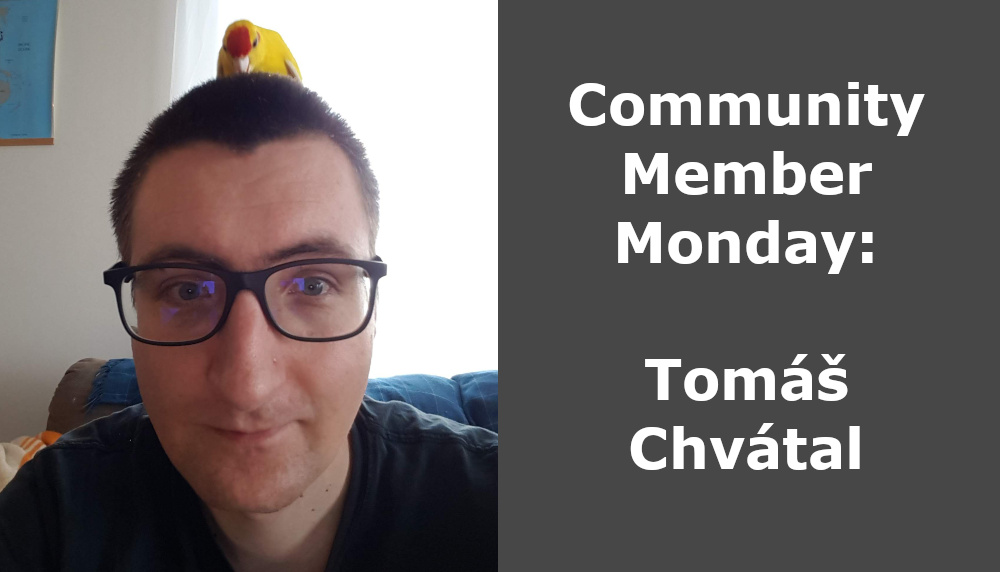
Community Member Monday: Tomáš Chvátal

Today we’re talking to Tomáš Chvátal from the Czech LibreOffice community, who recently decided to become a Member of The Document Foundation…

To start, tell us a bit about yourself!

I am from Prague, Czech Republic, where I work for SUSE as a Team Lead for software development/packaging. For SUSE and openSUSE I am responsible for the LibreOffice packages, and ensure they are built and delivered for everyone.

In my spare time I play with my parrots, read books and generally just slack around 🙂

Why did you decide to become a member of TDF?

I think the ability to open documents – created wherever and however – should not be limited by having to pay to view the content. For instance, when you’re communicating with the government, you should not be tied to paid services, and there should be no hurdles for anyone.

What are you working on in the LibreOffice project right now?

Mostly making sure the package is fresh and crispy on the openSUSE and SUSE stack, and fixing all the reported issues found by the users.

SUSE has a partnership with Collabora Productivity, and as such we also fix various compatibility issues between Microsoft Office and LibreOffice to make it easier for people to switch to free (and better :P) alternatives.

Anything else you plan to do in the future?

I do not really radically plan to change my contributions. Put simply, I will keep making sure that LibreOffice keeps working, and whenever the current pandemic boils over, promote The Document Foundation at conferences again.

Thanks to Tomáš for all his contributions! Everyone who’s active in the LibreOffice community is welcome to join The Document Foundation, and help to shape the future of the software:

Please confirm that you want to play a YouTube video. By accepting, you will be accessing content from YouTube, a service provided by an external third party.

YouTube privacy policy

If you accept this notice, your choice will be saved and the page will refresh.