Hypra joins the Advisory Board of The Document Foundation

Hypra is a French social-impact company with a specific competence in hardware and free software accessibility. Its mission is to make IT accessible to everyone – especially seniors, people with disabilities and first-time users – through a universal design approach. By relying mainly on free software, Hypra is giving back users full control over their personal data, and making them part of a global project for a “digital common good”.

Hypra was founded in 2015 by Corentin Voiseux and Jean-Philippe Mengual, and is based in Paris. The company provides hardware solutions for seniors and people with disabilities, supported with training and technical assistance, and enterprise solutions to facilitate the integration of people with disabilities into the business world.

Lothar Becker, Chairman of The Document Foundation, says: “We at TDF are proud to welcome Hypra as a member of our Advisory Board. Accessibility is a key factor in the inclusiveness of the digital transformation, and Hypra’s expertise in this area – and in FOSS – are ideal complements to the LibreOffice project and ecosystem expertise in developing a free office suite.”

“Hypra is delighted,” says its co-founder Jean-Philippe Mengual, “to be part of The Document Foundation’s Advisory Board, and honored to work alongside the organization to improve the Free Software digital environment’s accessibility.”

You can find additional information about Hypra at https://www.hypra.fr/ (the website is only in French for now).

LibreOffice 7.2 Community is strong on interoperability

Over 60% of code commits for the brand new version of the best free and open source office suite are focused on interoperability with Microsoft’s proprietary file formats

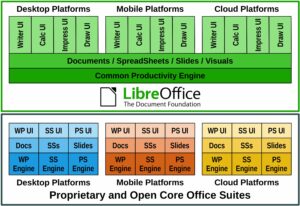
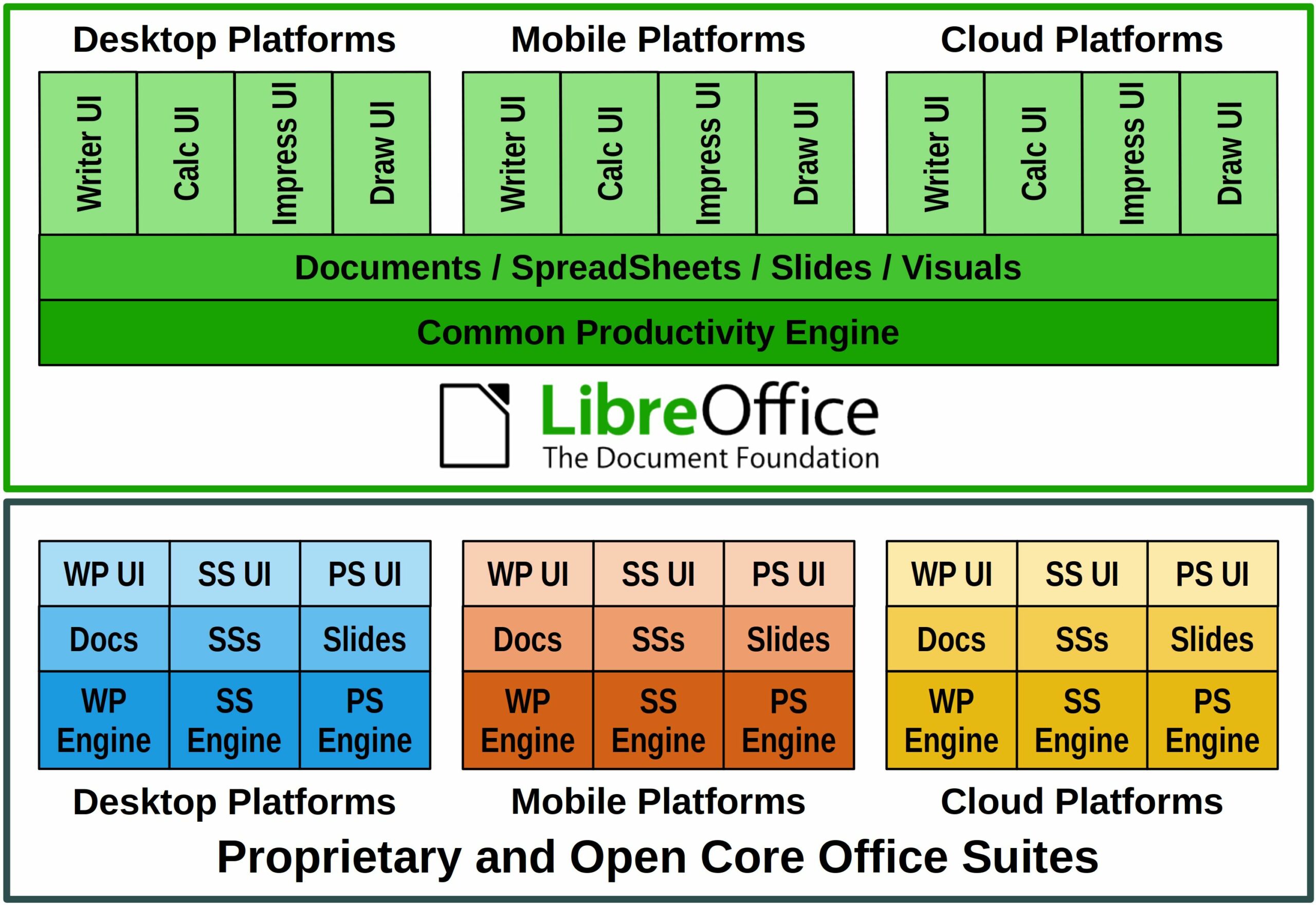
Berlin, August 19, 2021 – LibreOffice 7.2 Community, the new major release of the volunteer-supported free office suite for desktop productivity, is available from https://www.libreoffice.org/download. Based on the LibreOffice Technology platform for personal productivity on desktop, mobile and cloud, it provides a large number of interoperability improvements with Microsoft’s proprietary file formats. In addition, LibreOffice 7.2 Community offers numerous performance improvements in handling large files, opening certain DOCX and XLSX files, managing font caching, and opening presentations and drawings that contain large images. There are also drawing speed improvements when using the Skia back-end that was introduced with LibreOffice 7.1.

LibreOffice 7.2 is now available natively for Apple Silicon, a series of processors designed by Apple and based on the ARM architecture. Because of the early phase of development on this specific platform, binaries are provided but should not be used for any critical purpose at this stage. Software will be available from the following page: https://download.documentfoundation.org/libreoffice/stable/7.2.0/mac/aarch64/.

LibreOffice and Interoperability

LibreOffice 7.2 Community adds a significant number of improvements to interoperability with legacy DOC files, and DOCX, XLSX and PPTX documents. Microsoft files are still based on the proprietary format deprecated by the ISO in April 2008, and not on the ISO approved standard, so they embed a large amount of hidden artificial complexity. This causes handling issues with LibreOffice, which defaults to a true open standard format (the OpenDocument Format).

The LibreOffice community is happy to have many talented developers who are tackling these issues.

Thanks to the focused development activity from volunteer and sponsored developers, LibreOffice 7.2 takes a significant step forward in terms of transparent interoperability, while maintaining many advantages in terms of resiliency, robustness and compliance with standards – to the benefit of enterprise and individual users.

LibreOffice offers the highest level of compatibility in the office suite market segment, starting with native support for the OpenDocument Format (ODF) – beating proprietary formats in the areas of security and robustness – to superior support for DOCX, XLSX and PPTX files. In addition, LibreOffice provides filters for a large number of legacy document formats, to return ownership and control to users.

LibreOffice 7.2 Community New Features [1]

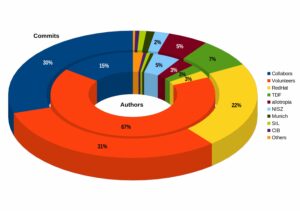
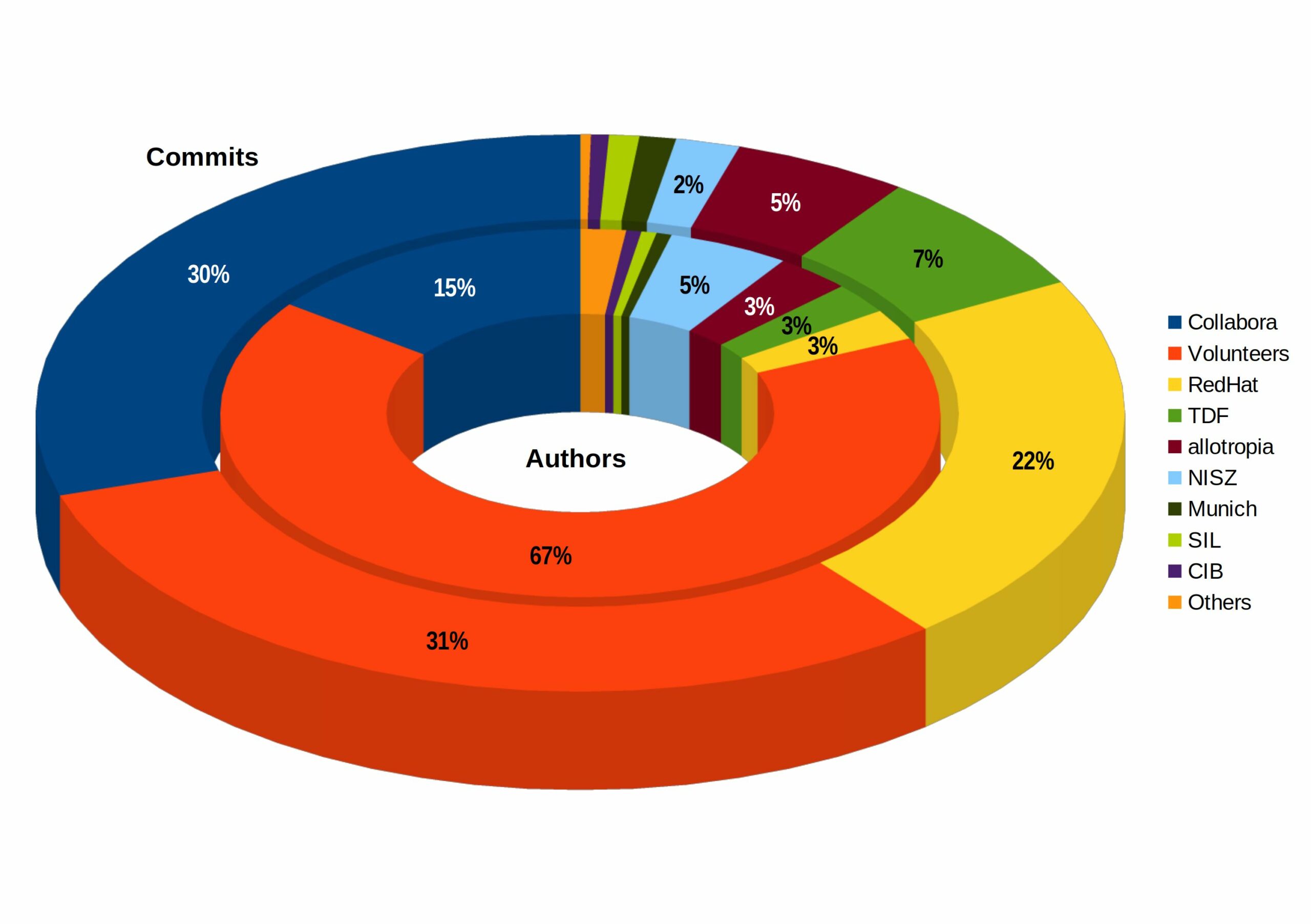
LibreOffice 7.2 Community’s new features have been developed by 171 contributors: 70% of code commits are from 51 developers employed by three companies sitting in TDF’s Advisory Board – Collabora, Red Hat and allotropia – or other organizations (including The Document Foundation), and 30% are from 120 individual volunteers.

In addition, 232 volunteers have provided localizations in 151 languages. LibreOffice 7.2 Community is released in 119 different language versions, more than any other free or proprietary software, and as such can be used in the native language (L1) by over 5.4 billion people worldwide. In addition, over 2.3 billion people speak one of those 119 languages as their second language (L2).

GENERAL

• Popup list to search for menu commands
• Scrollable style picker in the NotebookBar
• Fontwork panel in the Sidebar
• New list view for the templates dialog
• Built-in “Xray”-like UNO object inspector

WRITER

• Background fills can cover whole pages, beyond margins
• Page styles can now have a gutter margin
• Mail merge shows a warning about nonexistent data sources
• RDF metadata in Style Inspector
• Custom color metadata field shadings

CALC

• Calc now can filter by color in AutoFilter
• HTML tables listed in the External Data dialogue now show captions
• “Fat cross” cursor available in the options
• Type can be selected in “Moving Average” trend lines

IMPRESS & DRAW

• New templates: Candy, Freshes, Grey Elegant, Growing Liberty, Yellow Idea
• Multiple columns now available in text boxes
• Direct access to the scaling factor via the status bar

A video summarizing the top new features in LibreOffice 7.2 Community is available on YouTube: https://www.youtube.com/watch?v=cWmURg_rM2o and PeerTube: https://peertube.opencloud.lu/videos/watch/d9413c81-a568-4a0e-b570-6200fc1d062c.

LibreOffice for Enterprises

For enterprise-class deployments, TDF strongly recommends the LibreOffice Enterprise family of applications from ecosystem partners – for desktop, mobile and cloud – with a large number of dedicated value-added features. These include long-term support options, professional assistance, personalized developments and other benefits such as SLA (Service Level Agreements): https://www.libreoffice.org/download/libreoffice-in-business/.

Despite this recommendation, an increasing number of enterprises are using the version supported by volunteers, instead of the version optimized for their needs and supported by the different ecosystem companies.

Over time, this represents a problem for the sustainability of the LibreOffice project, because it slows down the evolution of the project. In fact, every line of code developed by ecosystem companies for their enterprise customers is shared with the community on the master code repository, and improves the LibreOffice Technology platform.

Products based on LibreOffice Technology are available for major desktop operating systems (Windows, macOS, Linux and Chrome OS), for mobile platforms (Android and iOS), and for the cloud. Slowing down the development of the platform is hurting users at every level, and may ultimately lead to a stagnation of the LibreOffice project.

Migrations to LibreOffice

The Document Foundation has developed a Migration Protocol to support enterprises moving from proprietary office suites to LibreOffice, which is based on the deployment of an LTS version from the LibreOffice Enterprise family, plus migration consultancy and training sourced from certified professionals who offer CIOs and IT managers value-added solutions in line with proprietary offerings. Reference: https://www.libreoffice.org/get-help/professional-support/.

In fact, LibreOffice – thanks to its mature codebase, rich feature set, strong support for open standards, excellent compatibility and long-term support options from certified partners – represents the ideal solution for businesses that want to regain control of their data and free themselves from vendor lock-in.

Availability of LibreOffice 7.2 Community

LibreOffice 7.2 Community is immediately available from the following link: https://www.libreoffice.org/download/. Minimum requirements for proprietary operating systems are Microsoft Windows 7 SP1 and Apple macOS 10.12.

Change Logs: https://wiki.documentfoundation.org/Releases/7.2.0/RC1 (RC1), https://wiki.documentfoundation.org/Releases/7.2.0/RC2 (RC2), https://wiki.documentfoundation.org/Releases/7.2.0/RC3 (RC3).

LibreOffice Technology-based products for Android and iOS are listed here: https://www.libreoffice.org/download/android-and-ios/, while for App Stores and ChromeOS are listed here: https://www.libreoffice.org/download/libreoffice-from-microsoft-and-mac-app-stores/.

For users whose main objective is personal productivity, and therefore prefer a release that has undergone more testing and bug fixing over the new features, The Document Foundation maintains the LibreOffice 7.1 family, which includes some months of back-ported fixes. The current version is LibreOffice 7.1.5.

The Document Foundation does not provide technical support for users, although they can get it from volunteers on user mailing lists and the Ask LibreOffice website: https://ask.libreoffice.org.

LibreOffice users, free software advocates and community members can support The Document Foundation with a donation at https://www.libreoffice.org/donate.

LibreOffice 7.2 is built with document conversion libraries from the Document Liberation Project: https://www.documentliberation.org.

[1] Release Notes: https://wiki.documentfoundation.org/ReleaseNotes/7.2.

Press Kit

Download link: https://nextcloud.documentfoundation.org/s/AgY6G3WAAtsCZrn.

Announcement of LibreOffice 7.1.5 Community

Berlin, July 22, 2021 – LibreOffice 7.1.5 Community, the fifth minor release of the LibreOffice 7.1 family, targeted at technology enthusiasts and power users, is available for download from https://www.libreoffice.org/download/. LibreOffice 7.1.5 includes around 55 bug fixes, with 20% focused on Microsoft Office file compatibility (DOCX, XLSX and PPTX, and legacy DOCs).

For enterprise-class deployments, TDF strongly recommends the LibreOffice Enterprise family of applications from ecosystem partners, with long-term support options, professional assistance, custom features and Service Level Agreements: https://www.libreoffice.org/download/libreoffice-in-business/.

LibreOffice Community and the LibreOffice Enterprise family of products are based on the LibreOffice Technology platform, the result of years of development efforts with the objective of providing a state of the art office suite not only for the desktop but also for mobile and the cloud.

Products based on LibreOffice Technology are available for major desktop operating systems (Windows, macOS, Linux and Chrome OS), mobile platforms (Android and iOS) and the cloud. They may have a different name, according to each company brand, but they share the same LibreOffice unique advantages, robustness and flexibility.

Migrations to LibreOffice

The Document Foundation has developed a Migration Protocol to support enterprises moving from proprietary office suites to LibreOffice, which is based on the deployment of a LTS version from the LibreOffice Enterprise family, plus migration consultancy and training sourced from certified professionals who offer CIOs and IT managers value-added solutions in line with proprietary offerings. Reference: https://www.libreoffice.org/get-help/professional-support/.

Availability of LibreOffice 7.1.5 Community

LibreOffice 7.1.5 Community represents the bleeding edge in term of features for open source office suites. For users whose main objective is personal productivity and therefore prefer a release that has undergone more testing and bug fixing over the new features, The Document Foundation provides LibreOffice 7.0.6.

LibreOffice 7.1.5 change log pages are available on TDF’s wiki: https://wiki.documentfoundation.org/Releases/7.1.5/RC1 (changed in RC1) and https://wiki.documentfoundation.org/Releases/7.1.5/RC2 (changed in RC2).

LibreOffice Technology based products for Android and iOS are listed here: https://www.libreoffice.org/download/android-and-ios/, while for App Stores and ChromeOS are listed here: https://www.libreoffice.org/download/libreoffice-from-microsoft-and-mac-app-stores/

LibreOffice individual users are assisted by a global community of volunteers: https://www.libreoffice.org/get-help/community-support/. On the website and the wiki there are guides, manuals, tutorials and HowTos. Donations help us to make all of these resources available.

LibreOffice users are invited to join the community at https://ask.libreoffice.org, where they can get and provide user-to-user support. People willing to contribute their time and professional skills to the project can visit the dedicated website at https://whatcanidoforlibreoffice.org.

LibreOffice users, free software advocates and community members can provide financial support to The Document Foundation with a donation via PayPal, credit card or other tools at https://www.libreoffice.org/donate.

LibreOffice 7.1.5 is built with document conversion libraries from the Document Liberation Project: https://www.documentliberation.org.

The Document Foundation welcomes allotropia to its Advisory Board

Berlin, July 1, 2021 – The Document Foundation (TDF) announced today that allotropia – a German company that provides services, consulting and products around LibreOffice and related open source projects – has joined TDF’s Advisory Board.

Founded in late 2020 with five long-time LibreOffice developers, allotropia’s stated mission is to bring LibreOffice to shine – in as many different shapes and forms as necessary, to serve the modern needs of office productivity software. allotropia was spun off from CIB, another long-time provider of LibreOffice-based products and services (and also a member of the Advisory Board).

Lothar Becker, Chairman of the Board of Directors at TDF, says:

allotropia joining the Advisory Board, as a new and valuable ecosystem partner for LibreOffice, is a great achievement and help for TDF. The mix of “innovation style” of a start up, as well as the staff and management – who are well known in our community for years – will bring synergy effects for both sides. We warmly welcome allotropia as a new ecosystem partner, and wish them all the best and good luck in their business activities.

Thorsten Behrens, CEO and owner of allotropia software GmbH, adds:

We are super excited to be working with the LibreOffice community in this new setup. There are many areas where innovation is needed and we are investing, for example in running LibreOffice client-side in a browser. On the other hand, with the experienced team we have here, it is a privilege to serve our existing customers and help them to run LibreOffice securely and conveniently.

About the Advisory Board

TDF’s Advisory Board’s primary function is to represent supporters of the project, and to provide the Board of Directors (BoD) with advice, guidance and proposals. In addition, the AB is at the kernel of the LibreOffice ecosystem, and as such is key to the further development of the project.

Links

ODF 1.3 is an OASIS Standard

The Document Foundation is pleased to announce that LibreOffice’s native document format – the OpenDocument Format for Office Applications (ODF) 1.3 – has been approved as OASIS Standard with 14 affirmative consents and no objections. ODF is a free, open XML-based document file format for office applications, to be used for documents containing text, spreadsheets, charts and graphical elements. ODF 1.3 is an update to the international standard Version 1.2, which was approved by the International Organization for Standardization (ISO) as ISO/IEC 26300 (2015).

The OpenDocument Format specifies the characteristics of an open XML-based application-independent and platform-independent digital document file format, as well as the characteristics of software applications which read, write and process such documents. It is applicable to document authoring, editing, viewing, exchange and archiving, including text documents, spreadsheets, presentation graphics, drawings, charts and similar documents commonly used by personal productivity software applications.

The most important new features of ODF 1.3 are digital signatures for documents and OpenPGP-based encryption of XML documents, with improvements in areas such as change tracking and document security, additional details in the description of elements in first pages, text, numbers and charts, and other timely improvements. The development of ODF 1.3 features has been funded by donations to The Document Foundation.

ODF Technical Committee has received 3 Statements of Use from The Document Foundation, CIBlabs GmbH, and Collabora Productivity.

ODF 1.3 Specification can be downloaded from OASIS website.

Part 1: Introduction
https://docs.oasis-open.org/office/OpenDocument/v1.3/os/part1-introduction/OpenDocument-v1.3-os-part1-introduction.odt (Authoritative)
https://docs.oasis-open.org/office/OpenDocument/v1.3/os/part1-introduction/OpenDocument-v1.3-os-part1-introduction.html
https://docs.oasis-open.org/office/OpenDocument/v1.3/os/part1-introduction/OpenDocument-v1.3-os-part1-introduction.pdf

Part 2: Packages
https://docs.oasis-open.org/office/OpenDocument/v1.3/os/part2-packages/OpenDocument-v1.3-os-part2-packages.odt (Authoritative)
https://docs.oasis-open.org/office/OpenDocument/v1.3/os/part2-packages/OpenDocument-v1.3-os-part2-packages.html
https://docs.oasis-open.org/office/OpenDocument/v1.3/os/part2-packages/OpenDocument-v1.3-os-part2-packages.pdf

Part 3: OpenDocument Schema
https://docs.oasis-open.org/office/OpenDocument/v1.3/os/part3-schema/OpenDocument-v1.3-os-part3-schema.odt (Authoritative)
https://docs.oasis-open.org/office/OpenDocument/v1.3/os/part3-schema/OpenDocument-v1.3-os-part3-schema.html
https://docs.oasis-open.org/office/OpenDocument/v1.3/os/part3-schema/OpenDocument-v1.3-os-part3-schema.pdf

Part 4: Recalculated Formula (OpenFormula) Format
https://docs.oasis-open.org/office/OpenDocument/v1.3/os/part4-formula/OpenDocument-v1.3-os-part4-formula.odt (Authoritative)
https://docs.oasis-open.org/office/OpenDocument/v1.3/os/part4-formula/OpenDocument-v1.3-os-part4-formula.html
https://docs.oasis-open.org/office/OpenDocument/v1.3/os/part4-formula/OpenDocument-v1.3-os-part4-formula.pdf

XML/RNG schemas and OWL ontologies: https://docs.oasis-open.org/office/OpenDocument/v1.3/os/schemas/

OASIS provides a complete package of the specification and any related files in a single ZIP: https://docs.oasis-open.org/office/OpenDocument/v1.3/os/OpenDocument-v1.3-os.zip

ODF is the only document format which protects the rights of users as digital citizens, and allows transparent sharing of content without disruption, today and in the future.

Hossein Nourikhah joins the TDF team as Developer Community Architect

Next week, Hossein Nourikhah will join the team at The Document Foundation, the non-profit behind LibreOffice, as Developer Community Architect. Hossein is a developer, university lecturer and FOSS advocate. He writes programs, teaches programming to students, and is an advocate for the use of free software applications, because they have a huge positive impact on the quality of our life by providing the essential freedoms that we all deserve.

Hossein has a B.Sc. in Computer Engineering (Software) from Isfahan University of Technology, and a M.Sc. and a Ph.D. in Information Technology from Amirkabir University of Technology, also called the Tehran Polytechnic. Since 2016 he has been an instructor at the Amirkabir University of Technology, teaching various courses including C/C++ programming, operating systems, software design, and many others.

Hossein started programming in BASIC and Pascal when he was 12, and after two and a half decades he is still involved in programming for fun and profit. He has worked with several programming languages, including C/C++, Java, Pascal, PHP and many more.

Industry experience

In addition to the university activities, including teaching and research, Hossein has several years of experience in the industry, working at various software/hardware companies as a C/C++/Java programmer – and lately as a software team manager and lead developer.

Hossein’s work experience ranges from web development with PHP to industrial application development with C++/Qt. He considers Qt a great platform for C++ software development, and he likes it very much as a clean and lovely tool.

Hossein has worked with many programmers as mentor, helping them to improve and reach their potential in software development by better understanding programming languages, libraries and tools. He feels great when he can empower other people, also because this helps him to expand his knowledge and understand things much better than before.

As Developer Community Architect, Hossein will be responsible for attracting new contributors to the LibreOffice project by identifying and onboarding new potential developers, building relationships between them and the community, and introducing them to TDF’s communication channels – where they will meet fellow co-hackers. He will encourage everyone’s contribution, and show community members ways to grow by bringing the more skilled contributors in contact with existing experts in the various fields for even deeper learning.

We’re happy to have him on board, and look forward to working with him!