TDF Annual Report 2024

The Annual Report of The Document Foundation describes the foundation’s activities and projects, especially in regard to LibreOffice and the Document Liberation Project. We’ve been posting sections of the 2024 report here on the blog, and now the full version is available in PDF format on TDF’s Nextcloud server in two different versions: low resolution (6.6MB) and high resolution (56.2MB). The Annual Report is based on the German version presented to the authorities. The document has been entirely created with free open source software: written contents have obviously been developed with LibreOffice Writer (desktop) and collaboratively modified with LibreOffice Writer (online), charts have been created with LibreOffice Calc and prepared for publishing with LibreOffice Draw, drawings and tables have been developed or modified (from legacy PDF originals) with LibreOffice Draw, images have been prepared for publishing with GIMP, and the layout has been created with Scribus based on the existing templates. We at The Document Foundation are very grateful to all contributors to our projects and communities in 2024 – none of this would be possible without you!

LibreOffice for End User Privacy – TDF’s Annual Report 2024

LibreOffice stands out as a privacy-respecting open source office suite. Unlike proprietary alternatives, the software is designed with privacy, user control and transparency in mind. (This is part of The Document Foundation’s Annual Report for 2024 – we’ll post the full version here soon.) Introduction Concerns about end user privacy in the digital world have grown significantly over the past two decades, with increasing awareness of data collection, user tracking and online surveillance. Many proprietary applications, including office productivity tools, often collect vast amounts of user data, in most cases without clear user consent. All this has been clearly documented by Shoshanna Zuboff in her book: The Age of Surveillance Capitalism, which is defined as a new economic strategy that uses the activities and experience of the individual as a free raw material for hidden commercial practices of extraction, prediction, profiling and selling. In this context, open source software differs substantially because respect for the user and for privacy are part of the ethical principles that guide the development of all applications. And LibreOffice stands out as the only office suite – open source or not – that respects privacy. Unlike proprietary alternatives, LibreOffice is designed with privacy, transparency, and

LibreOffice Design team work in 2024 – TDF’s Annual Report

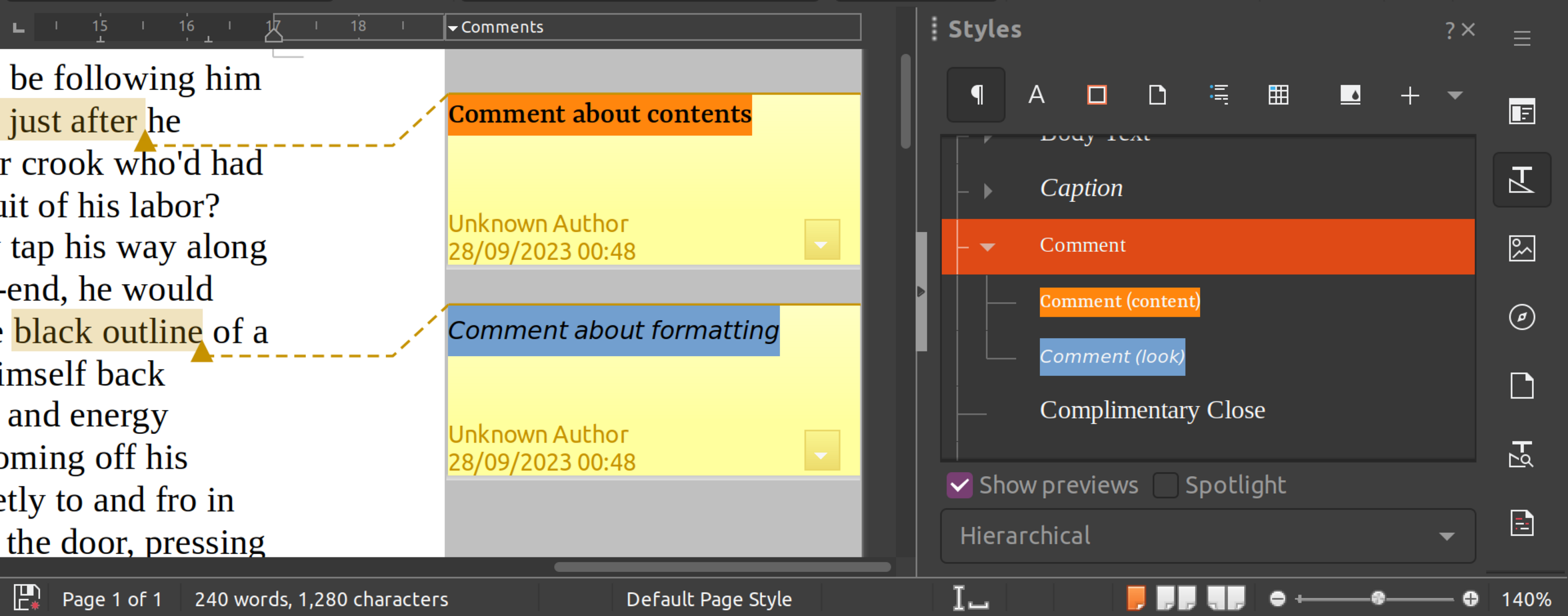
Design has been one of the major focus points of LibreOffice in recent years. The design/UX community has continued to support QA by evaluating user reports on Bugzilla, helping development with mockups, and mentoring volunteers and students in different projects. (This is part of The Document Foundation’s Annual Report for 2024 – we’ll post the full version here soon.) Besides a large number of fixed issues on macOS thanks to Patrick Luby, and continuous work on the Navigator by Jim Raykowski, we had many more improvements – here is just a small selection: Improvements in LibreOffice 24.2 The column/row for active cells can be highlighted in Calc (implemented by Sahil Gautam) Tools ▸ Options was complemented by a search feature (Bayram Çiçek) Comment styles were introduced for quick and consistent formatting of all comments (Maxim Monastirsky) (depicted in the screenshot at the top of this post) Improvements in LibreOffice 24.8 Bundled templates were refactored with localized placeholders (Laurent Balland) New “Quick Find” deck in the Sidebar, which lists the search results along with their context (Khushi Gautam) Formatting characters are now treated independently from fields and do not toggle with non-printable characters (Heiko Tietze) “Keep Ratio” settings in the Position

LibreOffice Native Language Projects – TDF’s Annual Report 2024

By helping to translate and market LibreOffice around the world, native language projects bring enthusiasm and passion to the global community. Here’s what they did in 2024… (This is part of The Document Foundation’s Annual Report for 2024 – we’ll post the full version here soon.) Armenian In 2024, the Armenian translation of LibreOffice reached 100% thanks to the efforts of Tigran Zargaryan. The suite was offered in Armenian for the first time. In addition, he ensured that the strings in the LibreOffice UI-master, website, Android Viewer and Help also reached 100% translated. In appreciation for Tigran’s work, TDF invited him to join the LibreOffice Conference 2024 in Luxembourg using the foundation’s travel support programme. Czech Throughout the year, Czech speakers worked on keeping the translation of LibreOffice’s UI complete, and the Help content around 95%. They presented the software at booths at two events: InstallFest in Prague in April, and LinuxDays in Prague in October. They supported LibreOffice users on the Czech Ask site, and maintained social media accounts including X (Twitter), Facebook and Instagram. They also introduced a new Mastodon account. Czech speakers produced many translated user guides in 2024, including the Getting Started Guide 24.8, Writer Guide 24.2 and Impress guide

LibreOffice Marketing Activities – TDF’s Annual Report 2024

In 2024, The Document Foundation and its global LibreOffice community undertook a variety of marketing initiatives aimed at increasing visibility, fostering community engagement, and driving adoption of LibreOffice (This is part of The Document Foundation’s Annual Report for 2024 – we’ll post the full version here soon.) LibreOffice and Open Source Conference 2024 in Luxembourg A major highlight of TDF’s 2024 marketing activities was the LibreOffice and Open Source Conference, held from October 10 to 12 in Luxembourg. The annual event brought together contributors from around the world, including developers, designers, documentation writers, translators, and marketers. Marketing efforts for the conference included: A targeted social media campaign promoting the event’s location, speakers, and agenda. Outreach to local technology communities and universities in Luxembourg to boost participation. The creation of promotional graphics and materials highlighting the conference themes and goals. Live updates and content shared across LibreOffice’s social channels to engage a remote audience. The conference acted as a vital showcase of LibreOffice’s progress, community strength, and future plans. “Month of LibreOffice” Campaigns Throughout May and November 2024, TDF organized its recurring “Month of LibreOffice” initiative. This campaign aimed to recognize and reward community contributors across various roles, including development, documentation,

TDF and LibreOffice website, blogs and social media – Annual Report 2024

Our two main websites are vital sources of information for The Document Foundation and the LibreOffice software. We also use our social media channels to raise awareness about our work, share information and encourage new contributors to join us (This is part of The Document Foundation’s Annual Report for 2024 – we’ll post the full version here soon.) TDF website The Document Foundation website provides general information about the foundation (overview, statutes, code of conduct, financials and reports) and its governance (board of directors, membership committee, members, advisory board, and engineering steering committee), and about LibreOffice certification, including a list of certified developers, and professionals for migrations and trainings. During 2024, the foundation’s website was visited 98,499 times, with 146,456 page views – a slight reduction in visits but also a slight growth in page views from 2023. Continent-wise, the largest chunk of visits were from Europe (52%), followed by North America (24%) and Asia (16%). And regarding software: the most visits were from PCs using the Windows (65%) operating system, followed by GNU/Linux (10%) and macOS (8%) and devices uses Android (6.2%), while for browsers: Chrome had 39%, followed by Firefox (16%) and Microsoft Edge (15%). LibreOffice website The