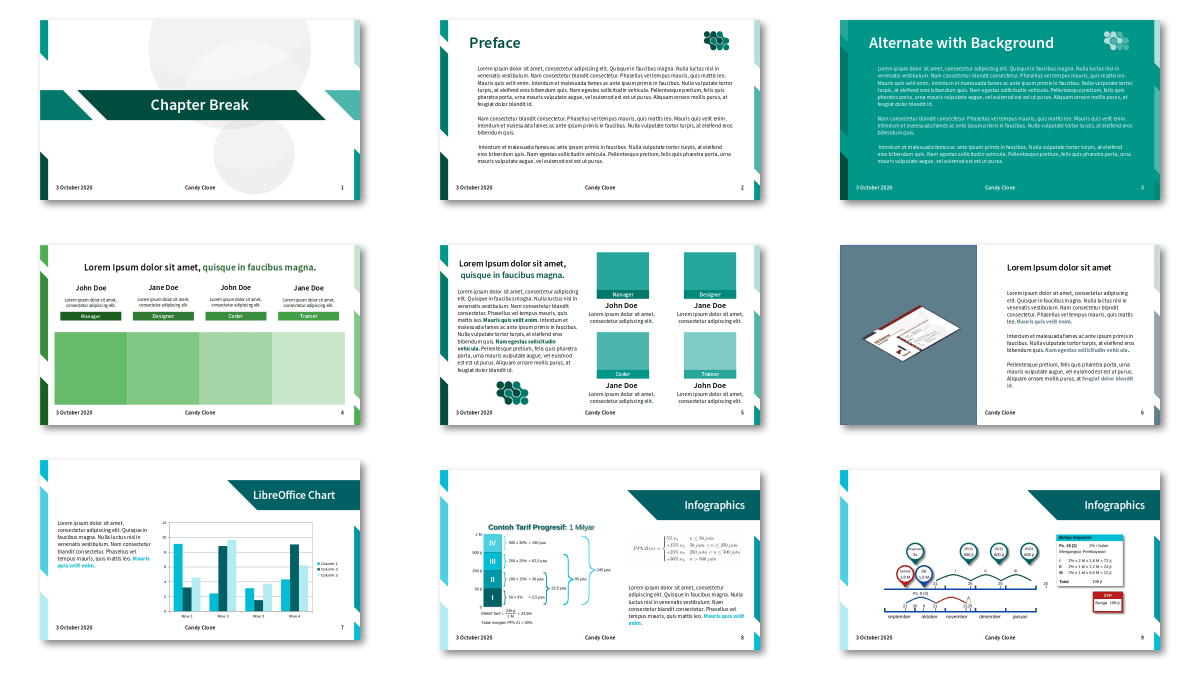
LibreOffice 7.0 branding: Blender 3D model

LibreOffice 7.0, released in August 2020, includes new branding elements for the splash screen and other places, thanks Bayu Rizaldhan Rayes and the Design team. Now Barbara Tostes has made a 3D model for use in Blender, so if you want to make a video or animation about LibreOffice, check it out!

And indeed, if you make any kind of video or tutorial and want us to spread the word, join our marketing mailing list or Telegram channel and say hello. Also take a look at the Design community’s work too. We love having more ideas and feedback!

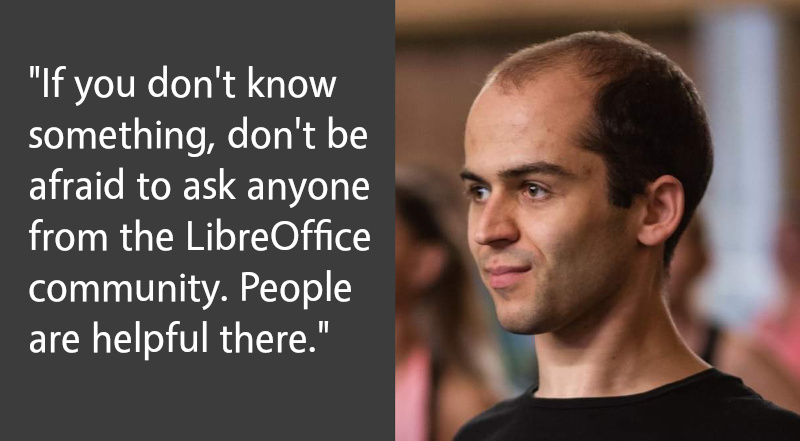
Community Member Monday: Arnaud Mez

LibreOffice is way more than just an office suite – it’s a worldwide project and community where people share ideas, build up their skills, and have fun. Today we’re talking to Arnaud Mez, who’s part of the Francophone community and who’s spreading the word about LibreOffice and helping with design…

To start, tell us a bit about yourself!

I’m from the Republic of Congo (the one with Brazzaville as its capital city 🙂 ). I’m the owner of a small venture called Smarty TC, based in the town of Pointe Noire, the city I live in.

My everyday tasks and duties are exactly similar to my hobbies, as I constantly fight to stay focused on doing only what I love… So I do a lot of reading and listening to music, but beyond that I do a lot of research on the internet in order to keep an average but updated knowledge base. I did sport years ago… 😉 like Taekwondo until I reached the black belt level, and life just swallowed me up into the more exiting side: computers.

My favourite musicians are Joshua Aaron and Paul Wilbur, but I also love Hebraic and Japanese music as they have strong and deep cultural riches. I don’t play games on my PC now and stopped playing on consoles, but my favourite games ever are Need for Speed Carbon, and the Zelda series starting from Ocarina of Time.

What’s the situation like with LibreOffice and free software in Congo? Is it widely used, or are there challenges to adoption?

Well, I’d be modest and say we are still close to zero in terms of spreading the word everywhere in our country. The Republic of Congo is mostly influenced by almost 70% of what happens in France, with fewer real openings to proper technology, support etc. which makes things a bit more difficult.

The main challenges are having local people well-trained in FOSS and LibreOffice. The more people who get trained in a serious way and get accredited, the more FOSS and LibreOffice will spread – people here trust papers such as certificates more than everything, because they constantly think about getting employed, more than building up themselves and providing services.

There are some initiatives here touching on IT and computing, but they’re led by people leading the retail industry, and most of them think about selling what they believe will bring more money – so less about growing people, if you get my point.

I decided to start my business after five years of being jobless, because I believe this: we have to stand up if we want to build up local competences. The more we train people, the more we encourage openness, and the more meetups we arrange, the more we create exposure. (Yes, I do some other types of lucrative work in my ventures, but I don’t teach or train people to use Microsoft Office, or keep my focus on it.)

You’re part of the Francophone LibreOffice community – how is that going? What do you do together?

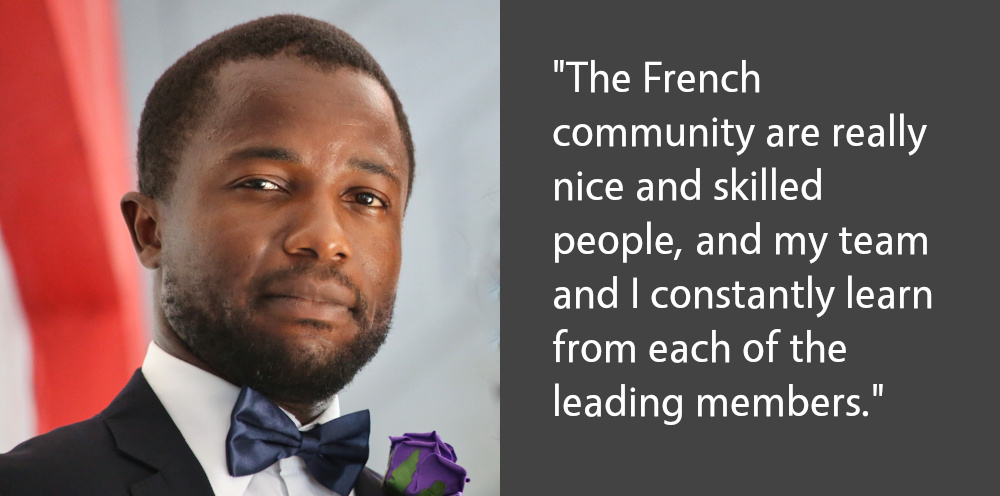
As a French-speaking person, I had no choice but join the French community because it’s the place where I can interact with ease. They’re really nice and skilled people, and my team and I constantly learn from each of the leading members.

We mostly use Linux distros, not so much Windows, and we had a good time working with William Gathoye and Regis Perdreau on a solution to fix some visual imperfections that happen when LibreOffice is used with KDE Plasma. There we learned about the library causing that issue, but weren’t sure if one of us reported it.

Sophie Gautier is really helping us with visuals and some materials, and now that we have more people learning, we are sending stickers around and they are proud and happy – which makes us happy too.

I personally share and talk a lot with Arnaud Versini who is a great source of knowledge. He actually helped me to step into OpenSUSE (I used SUSE back in 2007 until 2008) and start learning about its Open Build Service tool, which is really amazing and helpful.

Philipe Hemmel, Valerie Dagrain and all of the others in the community help us to understand more aspects and implications of the educational, associative and corporate parts of LibreOffice and FOSS culture. It’s a very good place to be.

What else you working on in the LibreOffice project right now? Is there anything else you want to do?

Well, because I do graphic design and not that much deployment, I’d say nothing specific yet if talking about LibreOffice as a project – but locally here in Pointe Noire, I’m the one who organizes the “LibreOffice Sprint”, the “LibreOffice Talks” and some more to come. So I’m more into planing and organizing things, and getting people to join in.

The recent COVID-19 wave led us to stop our activities, but with flexibility and social distancing happening day after day, we too are coming back on track – but still we need more support from the LibreOffice project. My goal is to have people here helping the project in many aspects, and not only using the software.

Many thanks to Arnaud – and indeed everyone in the French-speaking LibreOffice community – for all their great work and support. Check out our native language projects – we’re building communities all around the globe. Is something missing from the list, or needs more work? Let us know, and let’s improve it together!


Linux and LibreOffice Migration at Eyüpsultan Municipality in Turkey

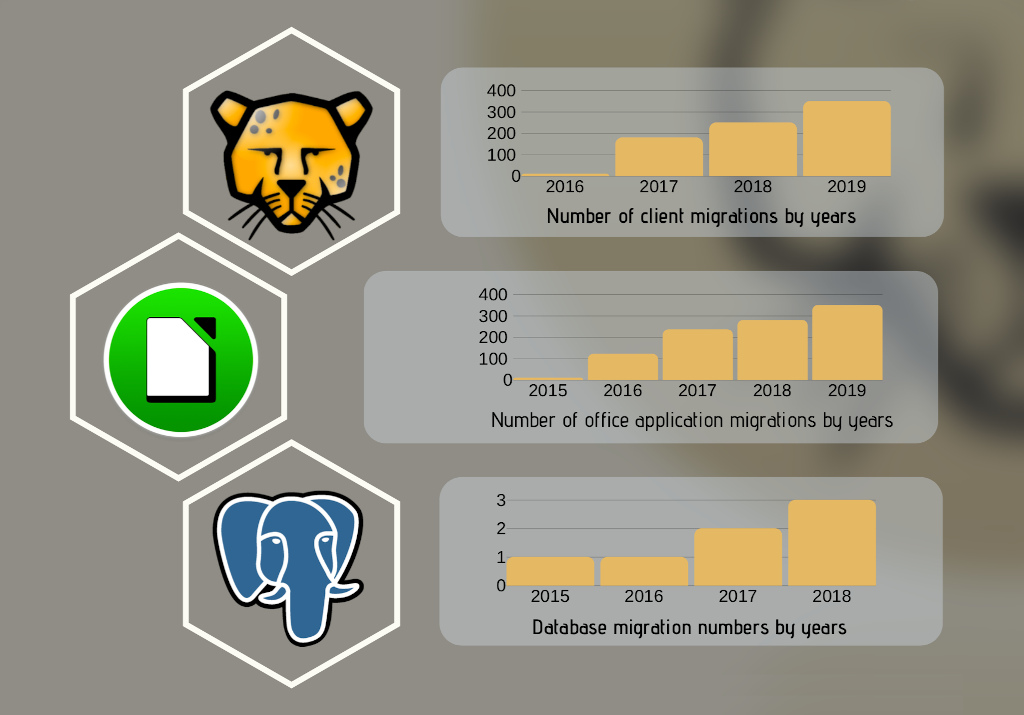
Many companies, non-profits, schools and other organisations around the world have switched to LibreOffice to avoid vendor lock-in and get back full control over their data. The Eyüpsultan Municipality reported from their migration to Linux and LibreOffice in recent years, which started in 2015:

This was a big decision, and it wasn’t made lightly. Open source technologies provide an important opportunity for our country to have an independent and secure information infrastructure. There are uncertainties about future terms and costs of using licensed software that connects users to a particular brand ecosystem. The more connected to these technologies we are, the harder it is to switch to alternative products. The commercial nature of key companies, to say nothing of pricing and licensing policies, poses significant risks.

As Eyüpsultan Municipality, we aimed to reduce service costs as well as external technology dependencies by using open source software, including the Pardus GNU/Linux operating system. Pardus was developed by the Turkish government as a desktop Linux distribution focused on graphical users in office settings. We wanted a solution that gave us an independent developer and increased sustainability, flexibility, and fiscal savings. In this respect, we consider our migration project to be a social responsibility. We are trying to create awareness of this goal by pioneering the use of Pardus in public institutions throughout Turkey.

Initial steps

The migration team knew from the start that it would be a major undertaking. They made sure to communicate with all workers in the municipality about their plans, and began by running training sessions with LibreOffice in the first phase. Then:

After the trainings, administrators installed the open source LibreOffice software to replace the licensed Microsoft Office software on all client computers. This decision to train users before installing the software minimized the problems they experienced when migrating from familiar software (including the operating system).

We didn’t stop there, though. We let people settle in with LibreOffice for a year, and in 2016, we repeated the training on Linux and LibreOffice. Once users passed an exam at the end of the training, we installed Linux on their computers. We provided re-education to those who didn’t pass the exam and then installed Linux upon success. So, the migration of the operating system began!

Even after the training, the migration team didn’t stop communicating with users – they checked in regularly to see what the workers were struggling with, and helped to fix them. In all, the team regards regular training as the most most significant reason for its success.

Introducing open source to your organisation

So, what else did they learn, and what would they say to other organisations or companies considering LibreOffice, Linux and other free and open source software?

Open source software has many advantages, including flexibility, high performance, major savings on licensing fees, independence from any particular company, and compliance with open standards. The benefits of open source software are recognized all over the world, especially in the European Union member countries, and similar action plans and studies are being used all over for transitioning to open source software.

Take what lessons you can from our experience, which is ongoing. Introduce open source as a viable option for your workplace. Take on the responsibility of delivering education on the knowledge required to use open source solutions. With open source, you never know what will become possible.

Thanks to the migration team for their report! Note that The Document Foundation, the non-profit entity behind LibreOffice, offers a comprehensive certification program for migration professionals. Also see the Migration Protocol which provides more information on migrations to LibreOffice.

More videos from the openSUSE + LibreOffice Conference 2020

Note: these videos are also available on PeerTube

Here’s another batch of presentations and workshops from the recent openSUSE + LibreOffice Conference 2020! You can see them in the YouTube playlist, and here are the individual videos:

Improvements to PDF support in Collabora Online (Tomaž Vajngerl):

Please confirm that you want to play a YouTube video. By accepting, you will be accessing content from YouTube, a service provided by an external third party.

YouTube privacy policy

If you accept this notice, your choice will be saved and the page will refresh.


How to debug Writer, forwards and backwards (Michael Stahl):

Please confirm that you want to play a YouTube video. By accepting, you will be accessing content from YouTube, a service provided by an external third party.

YouTube privacy policy

If you accept this notice, your choice will be saved and the page will refresh.


LibreOffice Document Encryption API (Vasily Melenchuk):

Please confirm that you want to play a YouTube video. By accepting, you will be accessing content from YouTube, a service provided by an external third party.

YouTube privacy policy

If you accept this notice, your choice will be saved and the page will refresh.


Overview of LibreOffice 7.0 interoperability fixes (Vasily Melenchuk):

Please confirm that you want to play a YouTube video. By accepting, you will be accessing content from YouTube, a service provided by an external third party.

YouTube privacy policy

If you accept this notice, your choice will be saved and the page will refresh.


Improving visual consistency in Collabora Online (Pedro Pinto Silva):

Please confirm that you want to play a YouTube video. By accepting, you will be accessing content from YouTube, a service provided by an external third party.

YouTube privacy policy

If you accept this notice, your choice will be saved and the page will refresh.


ScriptForge – a library of macro scripting resources (Jean-Pierre Ledure):

Please confirm that you want to play a YouTube video. By accepting, you will be accessing content from YouTube, a service provided by an external third party.

YouTube privacy policy

If you accept this notice, your choice will be saved and the page will refresh.


Re-using the Sidebar on phones (Szymon Kłos):

Please confirm that you want to play a YouTube video. By accepting, you will be accessing content from YouTube, a service provided by an external third party.

YouTube privacy policy

If you accept this notice, your choice will be saved and the page will refresh.

The Month of LibreOffice, November 2020 begins – help out and get awesome merch!

Love LibreOffice? Want to help make it even better? Now’s your chance! The software is developed by a passionate community, spread across the globe, with many volunteers working in their spare time. And you can join them: not only is it a great way to build your skills for a possible future career, but also an opportunity to meet new people, have fun… And get some cool merchandise throughout November! So how does this work

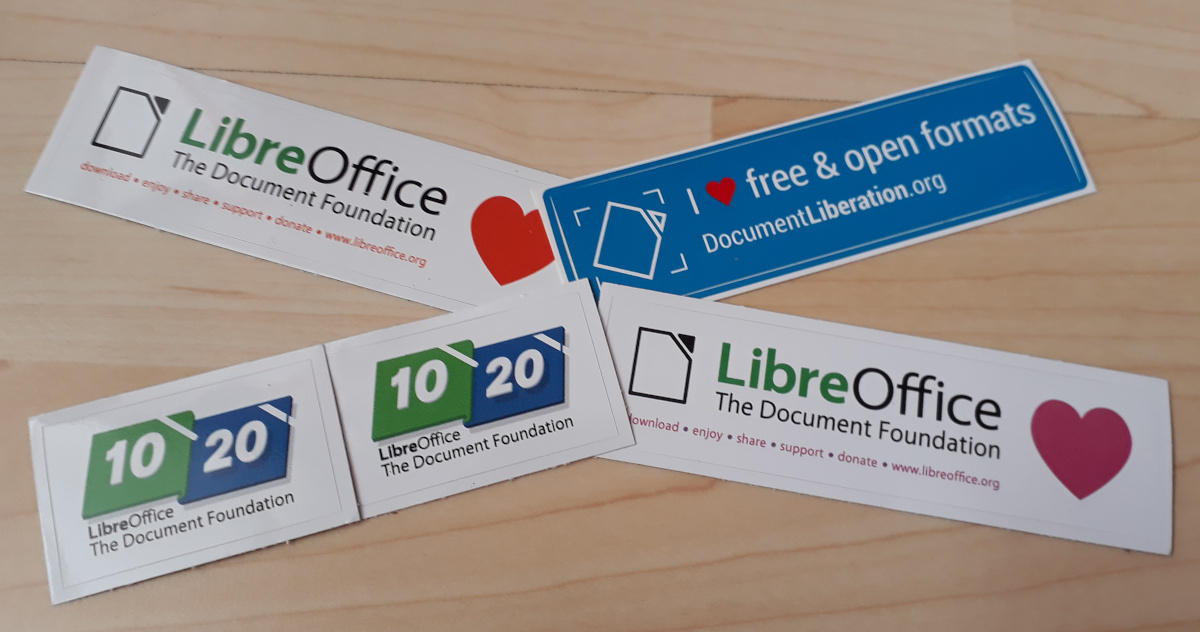
Well, everyone who contributes can claim an awesome sticker pack at the end of the month:

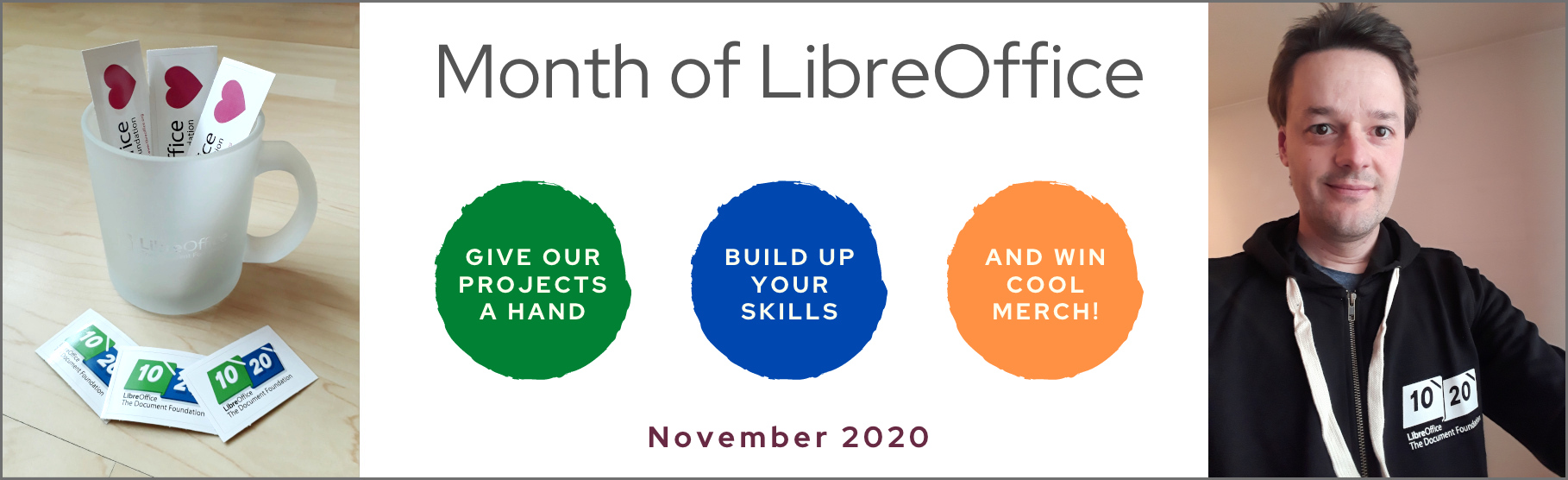
And then, we’ll also choose 20 contributors at random to receive a piece of bonus merchandise – a LibreOffice mug, T-shirt or 10/20 anniversary hoodie (proudly modelled in the photo above).

How to get your stickers

So, let’s get started! There are many ways you can help out – and you don’t need to be a developer. For instance, you can be a…

  • Handy Helper, answering questions from users on Ask LibreOffice. We’re keeping an eye on that site so if you give someone useful advice, you can claim your shiny stickers.
  • First Responder, helping to confirm new bug reports: go to our Bugzilla page and look for new bugs. If you can recreate one, add a comment like “CONFIRMED on Windows 10 and LibreOffice 7.0.3”.
  • Drum Beater, spreading the word: tell everyone about LibreOffice on Twitter or Mastodon! Just say why you love it or what you’re using it for, add the #libreoffice hashtag, and at the end of the month you can claim your stickers.
  • Globetrotter, translating the user interface: LibreOffice is available in a wide range of languages, but its interface translations need to be kept up-to-date. Or maybe you want to translate the suite to a whole new language? Get involved here.
  • Docs Doctor, writing documentation: Whether you want to update the online help or add chapters to the handbooks, here’s where to start.

So there’s plenty to do! As the contributions come in, we’ll be updating this page every day with usernames across our various services. So dive in, get involved and help make LibreOffice better for millions of people around the world – and enjoy your sticker pack at the end as thanks from us. And who knows, maybe you’ll be lucky enough to win a bonus hoodie, T-shirt or mug as well…

Let’s go! We’ll be posting regular updates on this blog and our Mastodon and Twitter accounts over the next four weeks – stay tuned!

LibreOffice monthly recap: October 2020

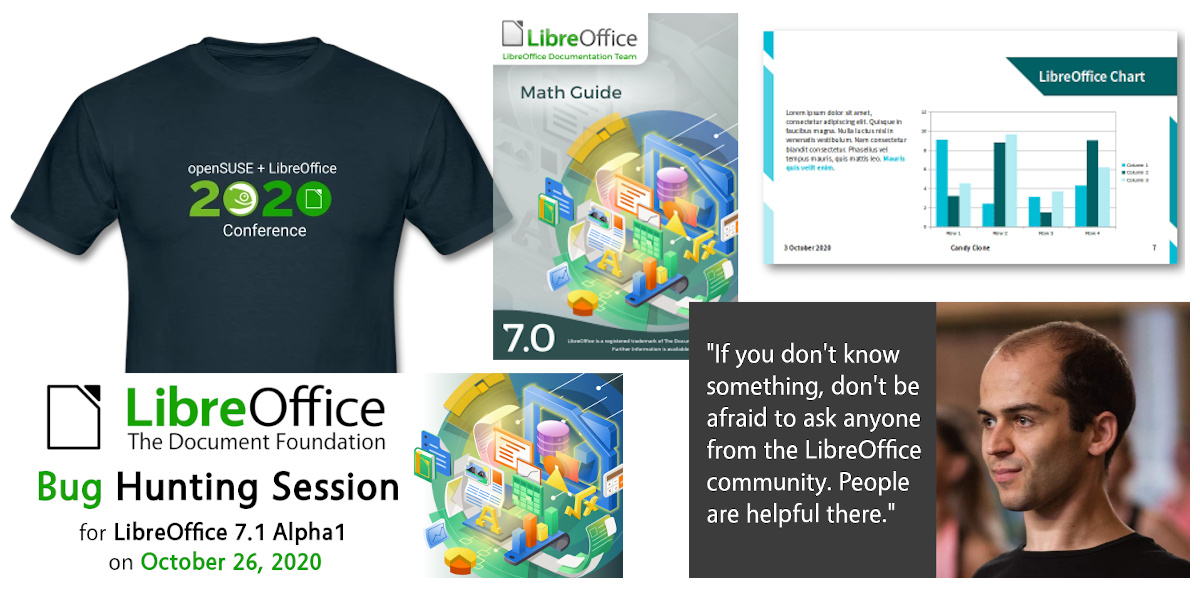
Here’s our summary of updates, events and activities in the LibreOffice project in the last four weeks – click the links to learn more…

  • We started the month by chatting with Adolfo Jayme Barrientos, a long-time member of the LibreOffice community. He told us how he joined the project, what he’s working on, and where he thinks we should go in the future…
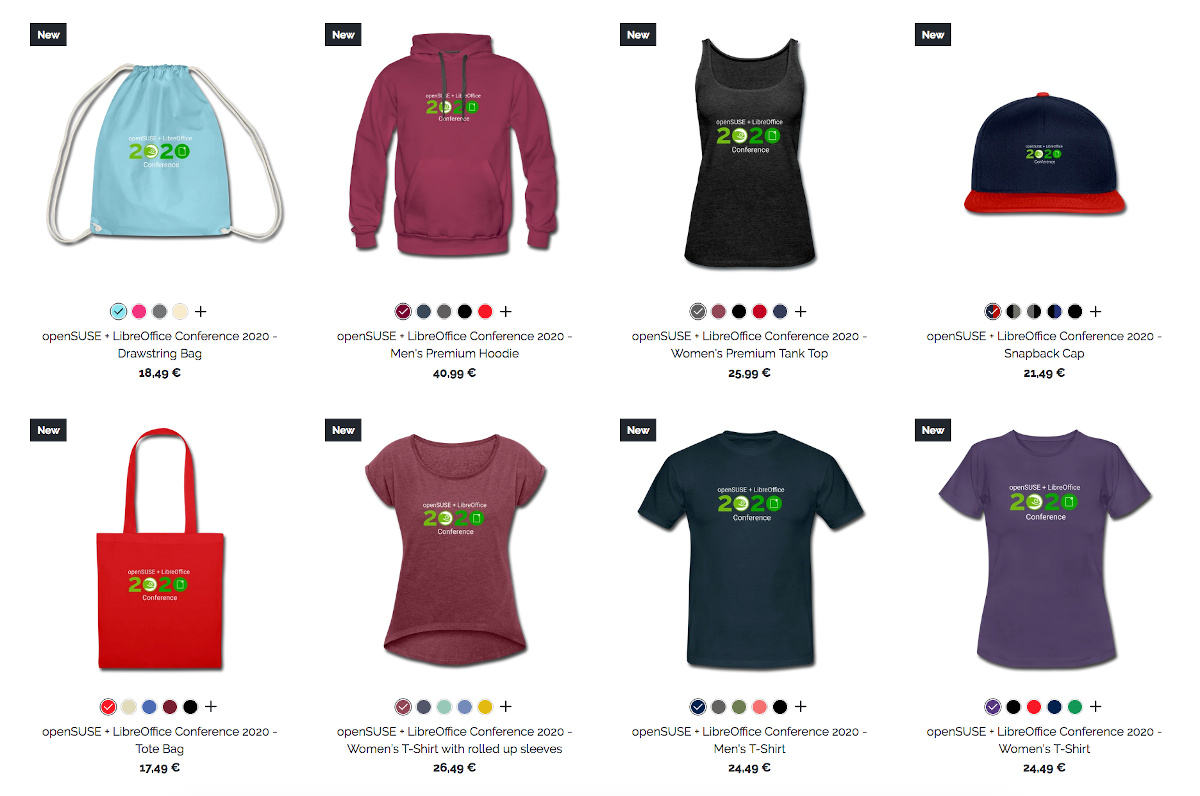
  • Our yearly conference took place this month (more on that later), but before it started, we added merchandise to our online shop. It’s still there, so don’t miss the chance to get a cool 2020 hoodie, T-shirt, bag or baseball cap!

  • There were two bugfix updates to LibreOffice in October: 7.0.2 on the 8th, and 7.0.3 on the 29th. With these releases, LibreOffice 7.0 is becoming a mature branch of the suite, and 6.4 will no longer receive updates after the end of November.

  • On the 19th, we caught up with Marcin Popko, who joined the project recently to help out with social media in Poland. Thanks to Marcin’s efforts, more and more people in his country are learning about LibreOffice – and indeed, everyone around the world is welcome to help us with social media channels in many languages.

  • In technology news, TDF published a tender to finish the transition of LibreOffice to OpenDocument Format 1.3. If you’re a LibreOffice developer with some experience in this field, check out the requirements – it might be something perfect for you…
  • Our documentation community announced the LibreOffice Math Guide 7.0. Many thanks to Rafael Lima, Jean H. Weber, Rizal Muttaqin and Drew Jensen for their work on this!

  • LibreOffice 7.1 is due to be released in early February, and our QA team is already running Bug Hunting Sessions. We’ll have more in the run-up to 7.1 – so to ensure that it’s a rock-solid release, give them a hand!

  • And finally… The joint openSUSE + LibreOffice Conference 2020 took place this month! Hundreds of people attended talks, presentations and workshops, so we’re really grateful to everyone who took part. And now we’ve put some of the videos online – see here for the playlist. There are 21 videos so far, but we plan to add more (and upload to PeerTube as well).

Keep in touch – follow us on Twitter, Facebook and Mastodon. Like what we do? Support our community with a donation – or join us and help to make LibreOffice even better for everyone!