Community Member Monday: Tim Brennan Jr.
Tell us a bit about yourself!

I am a son and grandson of American missionaries who moved to Brazil in 1952. Since my mother was born here (my father was a seven month old baby), I was born automatically a Brazilian citizen – even though I was born in the USA. Being brought up in Brazil, I learned both American English in the home, and learned Brazilian Portuguese in parallel. I am fluent in both languages. Computers came into my life as my dad saw the importance and value of them in the eighties. Watching him hack an Apple IIe and a daisy wheel printer to get the tilde accent over the letter “y” was an adventure in and of itself.

Since I was homeschooled, the value and importance of open source software became very clear to me as soon as I heard about it around 1999. As soon as I heard of Linux, I got hooked. Then, I heard of StarOffice which later became OpenOffice, which forked into LibreOffice and saw the birth of The Document Foundation.

I have been on a learning journey for most of my life. Everything I have learned is self-taught, including LibreOffice. My main activity in life is teaching in general. Teaching software to newbies such as the elderly, the underprivileged and young people is a passion I have. LibreOffice is an excellent starting point as it has virtually all the basic areas: text, images, markup languages, programming logic on a very simple scale with macros, databases etc., and much, much, more.

What are you working on in the LibreOffice project right now?

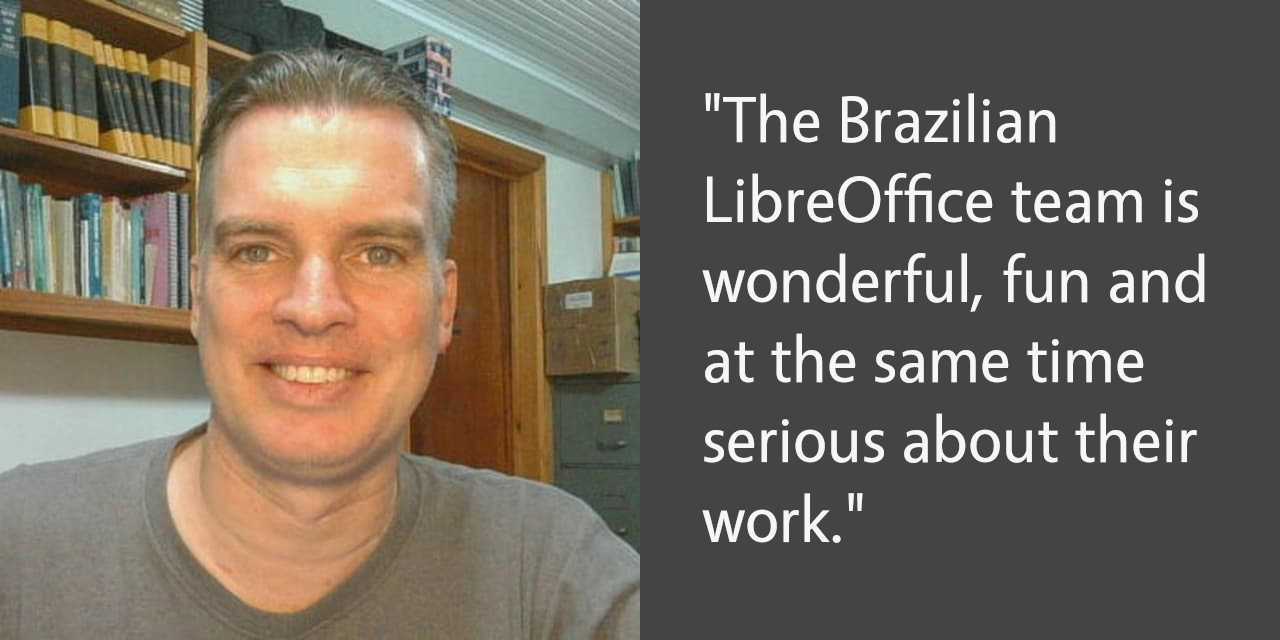
Right now, I am on the Brazilian translation and editing team. I am new, and am still learning how to organize myself better. The Brazilian team lead by Olivier Hallot is wonderful, fun, and at the same time, very serious about their work. Our Wednesday night meetings are in a fun and enjoyable environment – without losing the fine touch necessary for an editing team. I learn a lot from them just by listening to them.
Why did you decide to become a member of The Document Foundation?

Firstly, becoming a member of TDF is a way to begin to know other people, and, secondly, I believe becoming a member adds prestige to a curriculum vitae.

Both contact with people around the globe, and being part of something free, open and serious as TDF will open new doors for me to help “convert” people to LibreOffice, the ideals of TDF and open source software in general.

Anything else you plan to do in the future? What does LibreOffice really need?

There are two main things I would like to do with LibreOffice:

  1. Create a teaching standard for IT.
  2. Convince businesses to adopt more open standards via LibreOffice.

Participating in many different LibreOffice groups, I have noticed a major request for a change in LibreOffice’s appearance. It may seem trivial, but, many non-technical people make a decision of acceptance or rejection based on the look of something. I believe it would be wise to do an overhaul of the visuals.

Personally, I don’t pay too much attention to that since I focus on usability, but I am surrounded by people who reject many things simply because the look isn’t “modern”, “contemporary”, or “cool” enough.

I am 47 years old, so, my age may be a factor that adds into the way I interpret the visual aspects (meaning I don’t care too much about them). On the other hand, as the years go by, I notice that my way of thinking and doing things has somewhat solidified. An older generation can run the risk of not paying attention to the new generation and this generation (my children’s or younger) are a highly visual generation.

Many thanks to Tim for all his contributions! Everyone helping out in the LibreOffice project is welcome to apply for membership of TDF, and help us to steer our projects into the future 👍

Please confirm that you want to play a YouTube video. By accepting, you will be accessing content from YouTube, a service provided by an external third party.

YouTube privacy policy

If you accept this notice, your choice will be saved and the page will refresh.
Announcing the LibreOffice Getting Started Guide 7.1

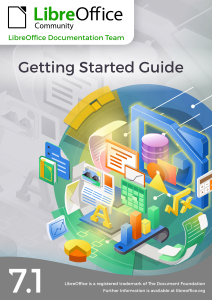
Jean Weber, Kees Kriek, Felipe Viggiano and Peter Schofield from the LibreOffice Documentation Team are happy to announce the immediate availability of the Getting Started Guide 7.1, the introductory guide for all readers that need to start using the LibreOffice suite and quickly get to the proficiency level.

Download Getting Started Guide 7.1

Covering all LibreOffice modules, from the Calc spreadsheet to the Base database and including chapters on the suite settings as well as macro coding, the Getting Started Guide 7.1 is a valuable companion for organizations that must deploy documentation on LibreOffice together with the software suite on their offices and also at user’s home.

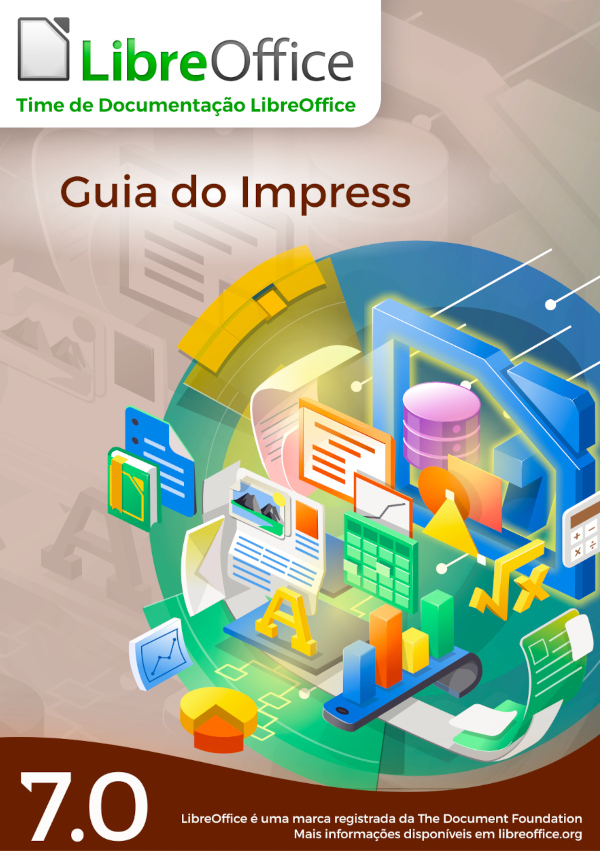
The Guide is available in PDF format and is part of the LibreOffice Library, a set of advanced guides for the LibreOffice productivity suite.

Meet the documentation team page!

Happy documenting!

The Document Foundation welcomes allotropia to its Advisory Board

Berlin, July 1, 2021 – The Document Foundation (TDF) announced today that allotropia – a German company that provides services, consulting and products around LibreOffice and related open source projects – has joined TDF’s Advisory Board.

Founded in late 2020 with five long-time LibreOffice developers, allotropia’s stated mission is to bring LibreOffice to shine – in as many different shapes and forms as necessary, to serve the modern needs of office productivity software. allotropia was spun off from CIB, another long-time provider of LibreOffice-based products and services (and also a member of the Advisory Board).

Lothar Becker, Chairman of the Board of Directors at TDF, says:

allotropia joining the Advisory Board, as a new and valuable ecosystem partner for LibreOffice, is a great achievement and help for TDF. The mix of “innovation style” of a start up, as well as the staff and management – who are well known in our community for years – will bring synergy effects for both sides. We warmly welcome allotropia as a new ecosystem partner, and wish them all the best and good luck in their business activities.

Thorsten Behrens, CEO and owner of allotropia software GmbH, adds:

We are super excited to be working with the LibreOffice community in this new setup. There are many areas where innovation is needed and we are investing, for example in running LibreOffice client-side in a browser. On the other hand, with the experienced team we have here, it is a privilege to serve our existing customers and help them to run LibreOffice securely and conveniently.

About the Advisory Board

TDF’s Advisory Board’s primary function is to represent supporters of the project, and to provide the Board of Directors (BoD) with advice, guidance and proposals. In addition, the AB is at the kernel of the LibreOffice ecosystem, and as such is key to the further development of the project.

Links

EXTENDED LibreOffice Conference Call for Papers

LibreOffice Conference Call for Papers has been extended until July 18, 2021. This is the final deadline, and no further extension will be offered. To facilitate the development of the conference schedule, proposals can only be submitted using TDF event management platform at https://events.documentfoundation.org/libocon2021/cfp.

LibreOffice Conference 2021 will take place online from September 23 to 25, Thursday to Saturday. The Document Foundation invites all members and contributors to submit talks, lectures and workshops. Whether you are a seasoned presenter or have never spoken in public before, if you have something interesting to share about LibreOffice, ODF, the Document Liberation Project or the ODF Toolkit, we want to hear from you!

The conference program will be based on the following tracks:

  • a) Development, APIs, Extensions, Future Technology
  • b) Quality Assurance
  • c) Localization, Documentation and Native Language Projects
  • d) Appealing Libreoffice: Ease of Use, Design and Accessibility
  • e) Open Document Format, Document Liberation and Interoperability
  • f) Advocating, Promoting, Marketing LibreOffice
  • g) Diversity and Inclusion, New Generation Project for Students’ Inclusion

Presentations, case studies and technical talks will discuss a subject in depth and will last 30 minutes (including Q&A), while Workshops will last 90 minutes (including Q&A). Lightning talks will cover a specific topic and will last 5 minutes (including Q&A). Sessions will be streamed live and recorded for download.

If you do not agree to provide the data for the talk under the “Creative Commons Attribution-Share Alike 4.0 License”, please explicitly state your terms. In order to make your presentation available on TDF YouTube and PeerTube channels, please do not submit talks containing copyrighted material (music, pictures, etc.).

If you want to give multiple talks, please submit a separate proposal for each one, using the submission form at the following address (is always the same): https://events.documentfoundation.org/libocon2021/cfp.

Thanks a lot for your participation!

Interview with Hossein Nourikhah

Which is your perception of the project, as seen from the outside world?
I see LibreOffice project as an alternative path. The road to office productivity suites doesn’t have to end up in proprietary office applications and file formats. LibreOffice project is a way out, trying to provide freedom to the users, alongside providing user friendly, cost efficient products that are also accessible for the disabled people.
On the other hand, LibreOffice is a complex piece of software, consisting of ~10 millions of lines of code [1], which is somehow difficult for an average programmer to get involved in its development. This is something that can be improved through various means, including better tools and documentation, and of course, more helping hands.

How do you see office suites – desktop, mobile and cloud – evolving in the next 10 years?
As software/hardware platforms change, so does the application software, and office suite is not an exception. Being able to run on the mobile devices and cloud is one thing that we see today, but for the next decade, pervasive computing and internet of things seem to be the next platforms. So, being able to communicate with the user through new and challenging input and output channels like TTS, voice recognition and haptic technologies would be something feasible, and perhaps plausible. AI is something essential in this road-map.
I think it is very important for the LibreOffice community to accept these new platforms, and embrace the new ways of communicating with the users, providing the users the freedom and privacy they need in the new era.

Are you a LibreOffice user? Which is your opinion of LibreOffice as a user of desktop software?
Yes, of course! I use the latest Ubuntu LTS, and I am a LibreOffice user on a daily basis. In fact, I was an enthusiastic user of an early version of OpenOffice.org from Red Hat 9.0 in 2003 [2], and I have switched to LibreOffice when it was released.
I am a happy user, although there are glitches in text rendering for my own language (Persian/Farsi). I hope we can fix them sooner with the help of kind LibreOffice developers.

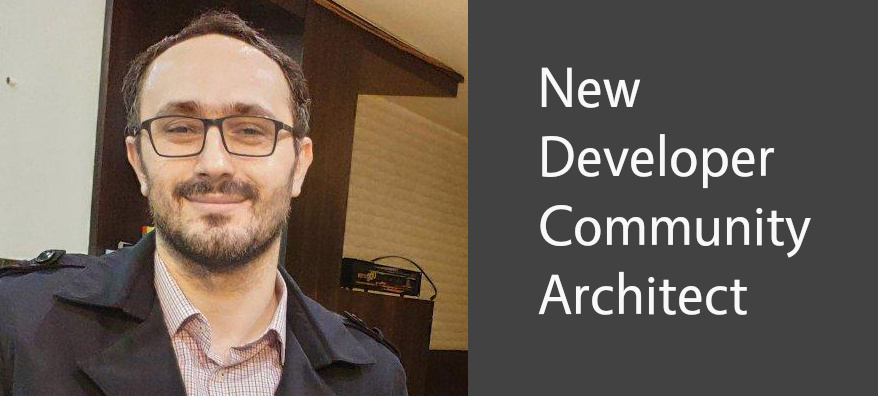
Why did you decide to apply for the position of Developer Community Architect?
For at least two reasons:
Firstly, I wanted to spend my time on a free software that will benefit the people, no matter their skin color, nationality, race and wealth.
And secondly, I wanted to get involved in an international community of developers, and try to attract more and more people, convincing them to use LibreOffice, and encourage them to contribute in the way they can.

Although you have just started working as Developer Community Architect, which is your opinion about LibreOffice source code?
Looking at the history of the code, it is more than 30 years now since the start, and I think there are hidden gems out there! You design a GUI with glade, and at runtime, you can get X, Qt, gtk, etc user interface out of it with visual class library (VCL). This is very interesting.
On the other hand, I think there are a lot of places for improvement, and the most important part of it is from the architectural point of view. Instead of a monolithic application, a multi-process architecture would provide advantages that are available today in some web browsers.

You are from Iran, a country with a huge historical heritage. Can you provide a short description?
Yes. Iran (previously called Persia), is a country from the west of Asia. Currently It spans from Caspian Sea in the north to Persian Gulf in the south. I am originally from Mazandaran, a lovely flourishing area in the southern coast of Caspian Sea with the well known Hyrcanian Forests.
Iran (Persia) has a long history of civilization. Alongside Italy (Ancient Rome), Persia was one the great civilizations of the ancient world. Now, the heritage of the ancient Persia, from the old landmarks to the distinguished scientists and figures spans over several countries. 24 UNESCO World Heritage Sites are currently inside today’s Iran [3], in which most of them are cultural sites, except 2 natural sites of Lut Desert and Hyrcanian Forests.
But besides the long history, it has kind people that want to have a good relation with all the nations worldwide. We also have nice looking Persian kitties that many people around the world love them. 🙂

Which is your operating system of choice, and your preferred development tools?
I use Ubuntu LTS. Debian-based distros are neat, and in case Ubuntu is a platform that I can describe as both user-friendly and developer-friendly. Advanced Package Tool (APT) and Debian Package Manager (dpkg) are great tools that were far ahead of their time, even compared to the commercial software tools from expensive proprietary operation systems. It is very interesting from a user’s viewpoint that you can install any package you like with a single click or a single command:
sudo apt-get install some-pacakge
And it is very helpful from a developer’s viewpoint that you can build a package with just 3 simple commands: Installing dependencies, getting the source code, and building the package is straightforward:
sudo apt-get build-dep some-package (install dependencies)
apt-get source some-package (install the sources)
cd some-package-dir; dpkg-buildpackage -b (build it!)
Let’s remember Ian Murdock (rip), the founder of Debian project and the original creator of these great tools.
I usually use Qt Creator IDE for most of my development work, but I occasionally use Visual Studio Code.

Your personal message to the LibreOffice community, in your native language (and of course in English).
In Farsi/Persian:
پیام من به جامعه لیبره‌آفیس این است: لیبره افیس یک فرصت برای دسترسی به نرم‌افزاری آزاد، دوست داشتنی و بسیار مفید برای کارهای روزمره است. اگر می‌خواهید بهتر شود، باید خودتان کمک کنید؛ چون لیبره آفیس نرم‌افزار خودتان است!
In English:
LibreOffice is an opportunity to have access to a free, lovely and useful software for the daily tasks. If you want it to become better, you should help; because LibreOffice is your own software!

References
[1] LibreOffice at OpenHub: “507,456 commits made by 2,118 contributors representing 9,706,279 lines of code”, https://www.openhub.net/p/libreoffice
[2] Red Hat Linux 9 Features Latest Open Source Technologies, https://www.redhat.com/en/about/press-releases/press-redhatlinux9
[3] Properties inscribed on the World Heritage List (24), Iran (Islamic Republic of), https://whc.unesco.org/en/statesparties/ir

To get in touch with Hossein:

E-Mail: hossein@libreoffice.org
IRC: hossein at libreoffice-dev room in LiberaChat Network irc://irc.libera.chat/#libreoffice-dev

LibreOffice Kaigi 2021 – Online event in Japan

Shinji Enoki reports from an event in Japan (original text here)…


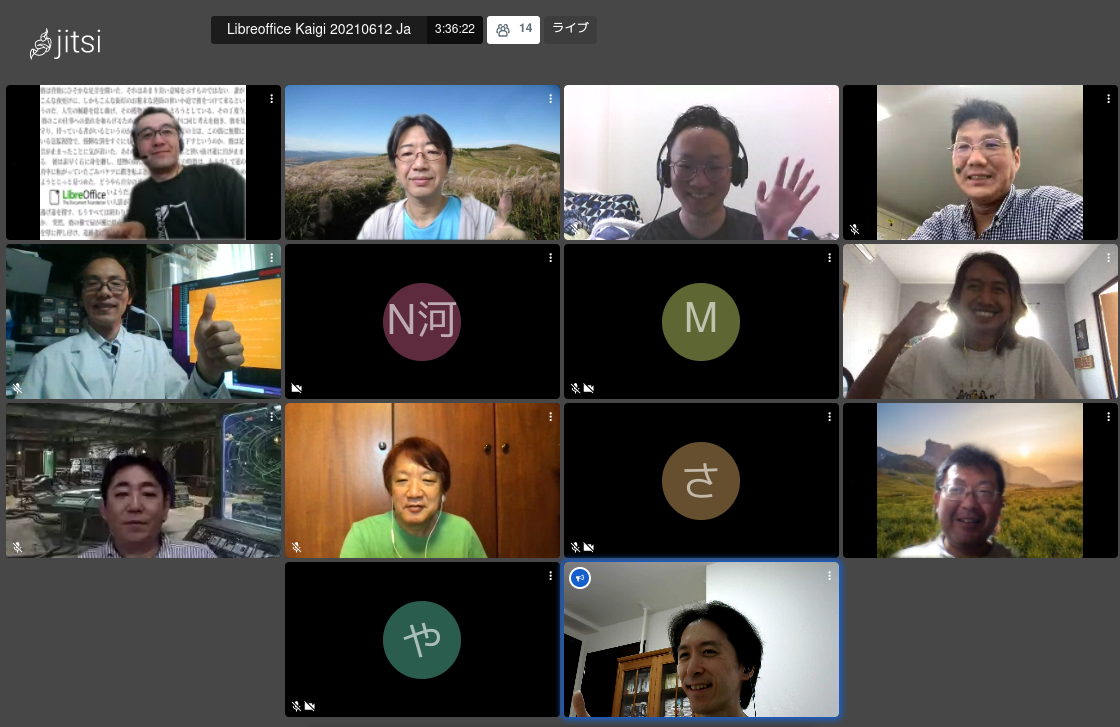
LibreOffice Kaigi 2021 Online was held on Saturday, June 12, 2021. This is normally an annual gathering in Japan, originally scheduled for March 2020 in Osaka – but due to COVID-19 we were unable to hold it. This year, for the first time, the meeting was held online, with speakers and participants joining the Jitsi meet, which was also broadcast live on YouTube. The maximum number of connections was around 27 people for both. We are grateful to The Document Foundation and iCraft for sponsoring the event. Thank you very much!

The day’s events can be viewed on the YouTube archive. The slides are available on the TDF wiki.

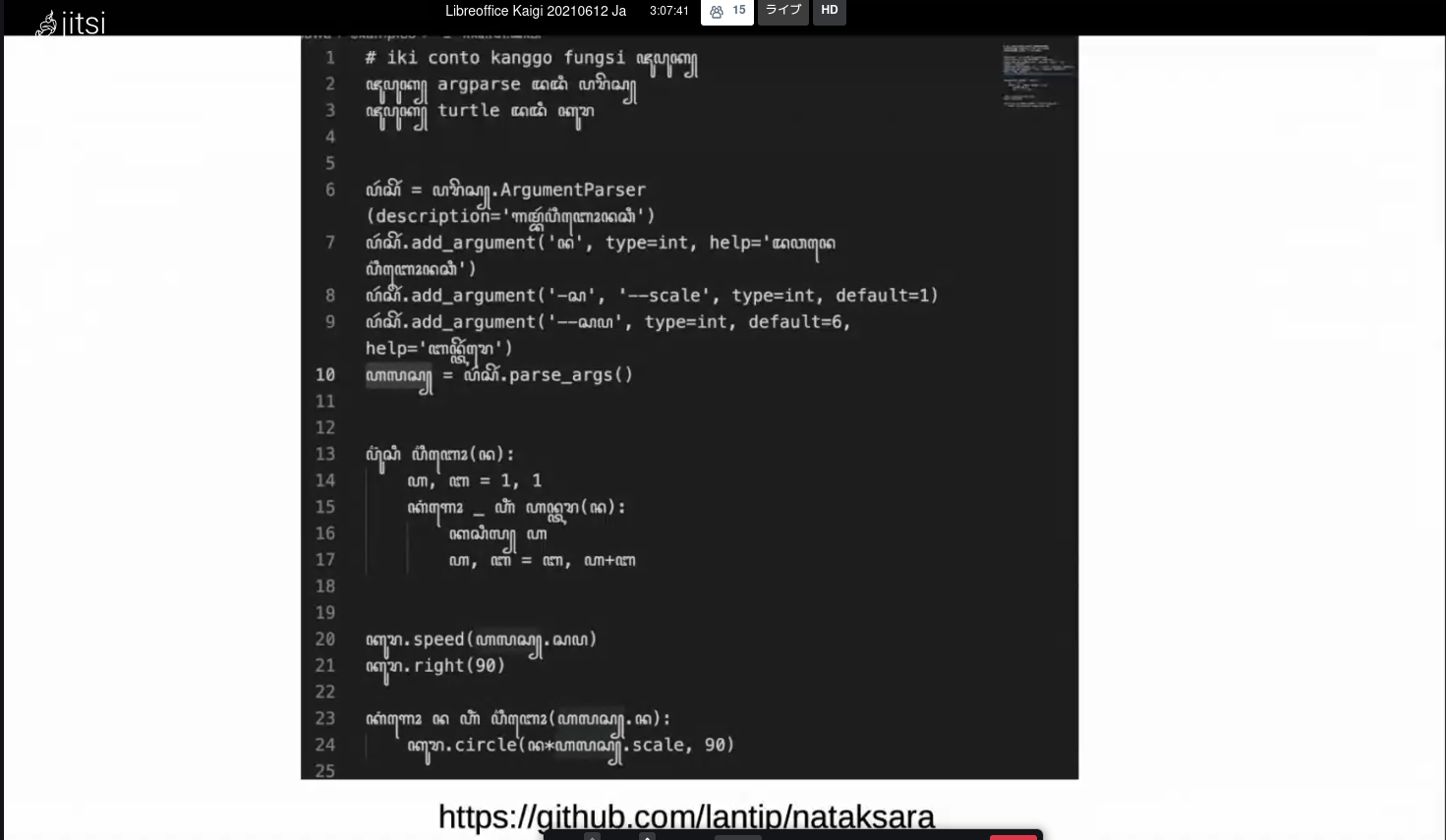
The keynote speaker, Ahmad Haris, who leads the Indonesian community for LibreOffice, gave an introduction to our work in Indonesia. Indonesia is made up of many islands scattered over a wide area, and is the equivalent in distance of London to Baghdad.

The local LibreOffice Conference in Indonesia in 2018 was a success and the community is very active. Currently there are 795 participants in the LibreOffice Indonesia Telegram group. Translation is focused on UI, then Help, while QA events have been held with the help of Ilmari, and workshops have been held at universities. The Indonesian community has also contributed to the splash screen. Recently, they have contributed many templates, some of which are included in LibreOffice.

The well-received LibreOffice 7.0 introduction video was also made by the Indonesian community with music composed by Haris. The screenshot of the slide was retweeted more than 2,600 times, with the story that Indonesia has an island called Java and that Java and JavaScript are not just programming languages, but Javanese words.

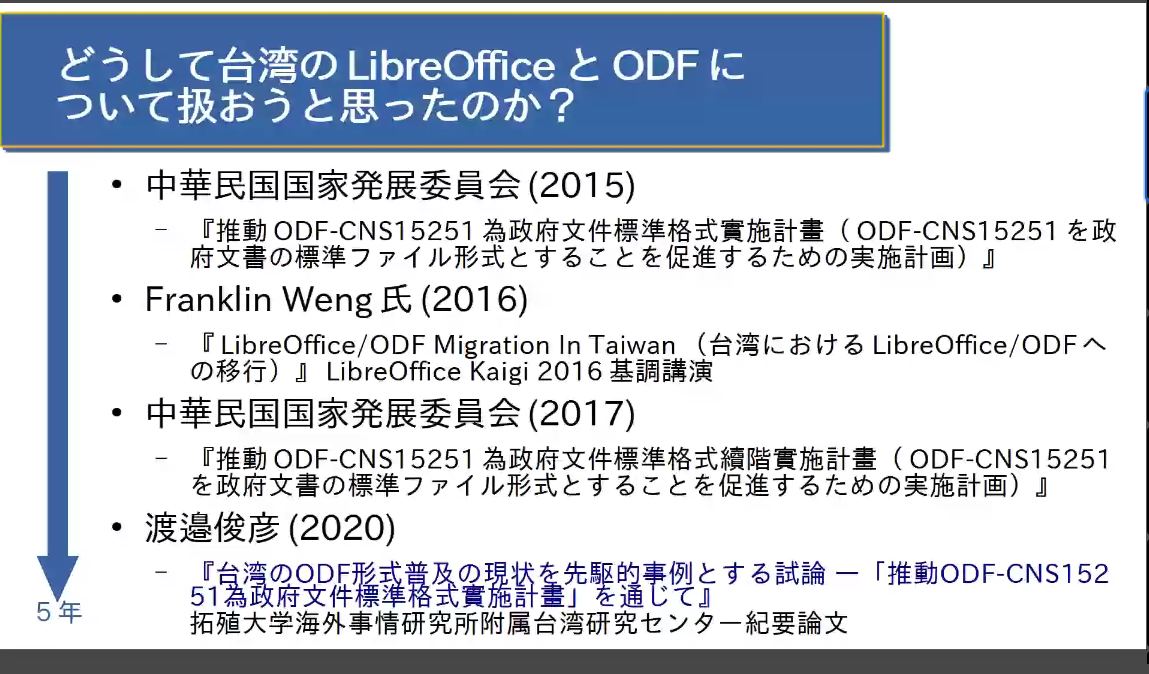
Shinj Enoki reviewed the last year’s LibreOffice community with the Annual Report. In the public presentations, Kawano-san talked about “User-customizable web form issuing system using LibreOffice”, Annoura-san talked about “Making Neo4j native driver for LibreOffice”, Watanabe-san talked about “Taiwan’s LibreOffice from light user perspective and Around ODF”, and “Fast translation of LibreOffice Guide” from Meguro-san.

The status of LibreOffice/ODF adoption in Taiwan had been introduced by Franklin Weng, from the Taiwanese community, at LibreOffice Kaigi 2016.12. Mr. Watanabe has researched and written a paper from a different perspective. It was interesting to see how the Taiwanese government is really working on it, and how it actually works in universities, from a different perspective than the Taiwanese community.

There were three lightning talks including jumping in and out, and the general Q&A afterwards was filled with discussions about why and what opportunities are available in Japan to promote open source software and LibreOffice.

The Japanese community holds “LibreOffice Hackfest Online” sessions every Wednesday night, to work on LibreOffice and exchange information, and “Online Study Sessions” (the next one will be on September 4) to exchange know-how among users every three to four months. Check out Connpass and join the events that interest you.


Many thanks to everyone in the Japanese community for all their great work! And to everyone reading this who wants to spread the word about LibreOffice in other areas/languages, drop us a line and let’s work together 👍