Community Member Monday: Jean-Baptiste Faure

Today we’re talking to Jean-Baptiste Faure from the LibreOffice localisation community

Tell us a bit about yourself!

I am Jean-Baptiste, living in a small town near Lyon in France.

I retired in 2021, and until then I was working as a researcher in hydroinformatics in a public research institute. I was developing numerical simulation software for the study of river flows and their dynamics: mainly floods and pollutant transport.

What are you working on in the LibreOffice project right now?

Currently my main contribution to LibreOffice is the French localization of the UI. So I am less active in Quality Assurance than previously, but I continue to build several versions of LibreOffice for my own use and QA needs.

Note: it is very easy to build LibreOffice on Linux – do not hesitate to try.

Why did you choose to join the project, and how was the experience?

Well, from my point of view, LibreOffice is the natural continuation of the OpenOffice.org project. I started with StarOffice 5.1 in 1998 because I needed a word processor able to write mathematical equations under Microsoft Windows, and I never liked Latex. 😉

In 2008, I was elected to succeed to Sophie as lead of the French speaking community. I managed the QA tests for the French localized versions of OpenOffice.org.

When LibreOffice was launched, it was clear for me that it was the future. Joining the project was proof.

Let’s not lie to ourselves, the experience is not a smooth one. Current debates about LibreOffice Online are an example, but certainly that will not be the last crisis. But LibreOffice is too central and important to be stopped by such crises. I want to believe that the community is strong enough to overcome theses problems.

Anything else you plan to do in the future? What does LibreOffice really need?

The Document Foundation, through LibreOffice and its other projects, has the mission to empower the user. Free software should make the user less dependent on software and service providers, and give him back the power over the computers he uses, more or less without realizing it.

More concretely, I think that the development effort of LibreOffice should focus in particular on the elimination of regressions, and on the frugality of the software to reduce its ecological impact.

Many thanks to Jean-Baptiste for all his contributions. All LibreOffice users are welcome to get involved, learn new skills – and make LibreOffice even better for millions of users!

Community Member Monday: Mauricio Baeza

Today we’re talking to Mauricio Baeza (aka “El Mau”) from the Mexican LibreOffice community…

Tell us a bit about yourself!

I live in Mexico City. My hobbies are reading, watching movies and helping other people, and my cats.

What are you working on right now?

I am developing a library in Python to help develop macros more easy. I also update my book in Spanish, which covers developing macros in Basic.

When did you join the LibreOffice community, and how was the experience?

3. Although I have been a member of The Document Foundation for only a few years, I saw the birth of LibreOffice, and have always participated in the community. So joining the LibreOffice project was very natural and satisfying.

What else are you planning to work on, and what does LibreOffice really need?

The future, for me, is only tomorrow, so just keep doing what I do every day. I think LibreOffice should be consolidated as a truly community project, not to depend on the whims of some companies.

Many thanks to Mauricio for all his contributions! All LibreOffice users are welcome to get involved, learn new skills – and make LibreOffice even better for millions of users!

Community Member Monday: Juan C. Sanz

Today we’re chatting with Juan C. Sanz, who helps out in many LibreOffice projects: documentation, translations, user help and more…

Tell us a bit about yourself!

I live in the city of Logroño, in the autonomous community of La Rioja (famous for its wines), in the north of Spain. Although I like reading a lot, my main passion is computers in general.

Almost all the time I have been working as a helicopter engineer, but due to my passion, while I was working, I studied to get a degree in Computer Science (Programming) and I was working as a programmer for a while without leaving my main job with helicopters.

When did you join the LibreOffice community, and how was the experience?

I like to say that I have been collaborating with LibreOffice since before LibreOffice existed and it is really true, how is that possible?

Well, my history with LibreOffice started, like many of us, in OpenOffice.

When I discovered the existence of OpenOffice I loved both the program and the possibility of getting it for free (then I didn’t know about FLOSS – I thought only about “gratis”). But at the same time, I realized that there was no documentation available in Spanish. While searching, I came across that phrase, which I don’t remember exactly, but it says something like “if you can’t find what you want, collaborate to make it”, so I joined the OpenOffice documentation team at ODFAuthors and there, together with a mini-team (I don’t think there were more than a couple of active collaborators at that time) I started translating the Getting Started Guide into Spanish.

I don’t know if it was by chance or because there was movement, but soon some more contributors joined and we managed to translate and publish the complete guide.

Shortly after finishing the Getting Started Guide, convulsive times came and ended with the fork that gave birth to LibreOffice.

The few of us who were in the Spanish documentation team at that time, decided that, for the time, we would collaborate with both branches and our first work for LibreOffice was to rebrand the OpenOffice guide to adapt it to LibreOffice, that is, we took advantage of all the previous work in OpenOffice for the first LibreOffice guide in Spanish. That’s why I say that I worked (we worked) on LibreOffice before it existed.

Since those times I haven’t stopped collaborating in the documentation team, but, like almost everyone, I have collaborated in other places, like helping to translate the user interface, the help for users in Ask or Telegram, the wiki, I have even submitted a patch! (Although my skills as a programmer are already quite outdated.)

And here I am, collaborating, hopefully for a long time!

Anything else you plan to do in the future? What does LibreOffice really need?

In all this time that I have been collaborating with LibreOffice, I have missed more collaboration with the project. Although there are many contributors in all fields, I think they are not enough. In my opinion, all of us who use free software should collaborate in its development by contributing our skills (or also economically), but personal collaboration seems to me essential for the improvement and dissemination of the project.

Many thanks to Juan for all his contributions! All LibreOffice users are welcome to get involved, learn new skills – and make LibreOffice even better for millions of users!

Community Member Monday: Peter Schofield

Today we’re talking to Peter Schofield from LibreOffice’s documentation community

Tell us a bit about yourself!

I am Yorkshire bred and born, which was a very long time ago. Left home at 16 to join the Royal Air Force. Served for almost 19 years as an Aircraft Technician, which is where my engineering knowledge started.

Became interested in Technical Writing in the early 80s and became qualified as a Technical Writer in 1985. This has enabled me to work in aviation, defence, mining, plant machinery, construction, electronics, telecommunications, computer peripherals and software. This did involve working in several countries, which has given me a very broad outlook on life.

Now official retired from paid work and have settled down in Poland with my lovely Polish wife.

How did you get involved in LibreOffice?

First came across an early version of LibreOffice in the 90s when I started using Star Office, which then became OpenOffice. I have always been interested in open software being freely available to users to help them save money, not having having to pay the big corporations.

I took to LibreOffice when I retired and realised how good it is, so I decided to help the project. This gave me the chance to create user guides that LibreOffice users could easily understand (I hope). I am now in charge of the Impress and Draw user guides and starting to upgrade both of them to LibreOffice 7.4.

What else are you planning to work on?

My plans for the future is continue being a willing volunteer on the LibreOffice Documentation Team with the hope that I can improve usability of the user guides for the majority of users. I do believe that some parts of the LibreOffice user guides do need improvement because of the poor language used. With this in mind, I am now updating the template to help improve the quality of the user guides. This means that there are hints and ideas in the template on how to improve ones writing.

Eventually I would like to see all the user guides using an easy to understand English. This means it would make the text easier to translate into the languages LibreOffice is available in, and make the English easier to understand for users where English is not their first language. This idea is already in practice with several companies throughout the world. These companies use one of the versions of Simplified English that are available.

Many thanks to Peter for all his help! Everyone is welcome to join the Documentation Team and build up skills for a potential career in technical writing…

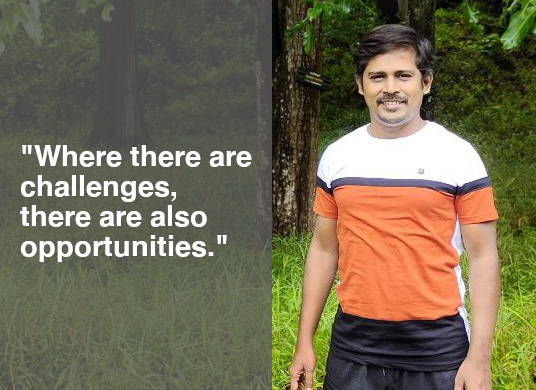
Community Member Monday: রিং/ring (S R Joardar)

Today we’re talking to রিং/ring (S R Joardar) from Bangladesh, who’s helping to spread the word about Free Software (as in freedom) – including LibreOffice – in his country…

Tell us a bit about yourself!

I am a GNU/Linux user, lover, translator and supporter since 2000, and a sysadmin since 2003 using Red Hat 5.0, later Fedora and RHEL. I am using Ubuntu in personal computers since December 2006. Canonical sent me a zero-priced gift pack of 10 CDs with Ubuntu 6.10 back then. I have started deployment of Ubuntu servers with Ubuntu 8.04 manual installations in 2009, and just provisioned a few instances with 22.04 on Linode and Digital Ocean. In the years 2009-2017, I personally made over 6,000 new desktop or laptop installations with Ubuntu and LinuxMint.

I am from Dhaka, Bangladesh. In 2011, I along with 21 more Free software enthusiasts formed an organization titled “FOSS Bangladesh (Foundation for Open Source Solutions Bangladesh)” and started with official tour to the Universities here in Bangladesh. Up to December 2019, FOSS Bangladesh had organized 75 events in various universities and colleges and schools to spread out the digital freedom knowledge among the pupils, the future leaders. I have invited Mr. Richard M. Stallman came in Dhaka, Bangladesh at Daffodil International University for a session in 2014 and he agreed to my request and visited. I am also a Mozillian (Mozilla Firefox and Thunderbird Fan, User and Supporter and end user support volunteer). At present I am working as the General Secretary of FOSS Bangladesh.

I am an IT Freelancer, working on PPH and Freelancer. I love to cook food and play cricket besides my computing and voluntary support to spread Free Software knowledge. 🙂

How well is FOSS, LibreOffice, GNU/Linux etc. known and used in Bangladesh? What are the obstacles to adoption?

In 2011, FOSS Bangladesh ran an online survey to gather approximate user data about GNU/Linux users, with the help of various online local language forums sites here in Bangladesh. Back then, it was around 9,000 people. As per my statistical knowledge nowadays, the pupils I had served with installations and had met by 2017 became professionals, and GNU/Linux users is now more than 100 times of that 15,000 count.

The obstacles to adoption of GNU/Linux and LibreOffice in here in Bangladesh is the lack of law bindings regarding software piracy. So far, can obtain a pirated copy of Windows 10 with Microsoft Office, and many more and get used to that closed, bind and blinded ecosystem. So when it comes to the professional workplace, most people got bound into that closed software ecosystem. They do not think that they are stealing – and on the piracy index globally, they make Bangladesh ashamed. Government offices here also go alike with the closed software ecosystem.

But the scenario is changing day to day. Those who once got the chance to get out of that closed system embracing the GNU/Linux ecosystem or the Free Software getting hold for his/her lifetime. They also spreads the enjoyment of Freedom to their surroundings.

Spreading the knowledge of Free Software and Digital Freedom is a must. Only sharing and caring, and contributing to the Freedom Ecosystem, can make that happen in the future. But the COVID-19 pandemic affected local events ing FOSS Bangladesh since 2020. We hope to start with a new run soon, by November 2022.

You’d like to grow the LibreOffice community in Bangladesh. How can others help out and get involved?

Translation and helping others to use LibreOffice can help grow the community in Bangladesh more quickly. Since 2010, I have transformed three industries in Bangladesh from Microsoft Windows to Ubuntu, and then LibreOffice came along. To this date, date they are using Ubuntu 20.04 or Linux Mint 20.3 with LibreOffice 7.3.2. I have to install, train end users to get into the ecosystem, and provide day-to-day user support. Around 500 users are migrated and get evolved in this Free Software ecosystem, and using it in the professional arena. I can recall 15,000 valid contacts, but the real count is many more than that.

In Bangladesh, I know that there are there are more private companies running only on Free software.

Finally, how can people get involved and help to grow the LibreOffice and Free Software community in Bangladesh?

We have already have setup a Telegram group – join it here.

Many thanks to Ring and all members of the Bangladesh community for their work and support!

Interview with German Scholarship student Julian Hübenthal

In 2019, the German LibreOffice community unfortunately lost one of its most active members, Klaus-Jürgen Weghorn. In his memory, The Document Foundation decided to support a student through the Deutschlandstipendium initiative.

Let’s get to know him…


Tell us a bit about yourself!

I come from near Lüneburg. I graduated from the Wilhelm-Raabe-Schule Gymnasium in Lüneburg last year.

I have quite a wide range of interests, which certainly contributed to my Abitur [qualification at the end of secondary education] average of 1.0 and did not make my decision to study any easier. However, my main focus is certainly in the mathematical/scientific/technical subjects.

I like to ride my road bike and go cycling in general, and I like to travel, gladly combining both interests together.

What are you currently studying, and how is it going?

I am currently studying computer science in my second semester. The course is interesting and I like the challenge. However, I have found out that the course is not quite right for me. Therefore, I would like to change to business informatics for the coming winter semester, for which I am currently already taking the appropriate modules. I am impressed by what I have already learned in a comparatively short time during my studies. Apart from that, I have been able to maintain my Abitur during my studies.

Are you familiar with free and open source software?

I have already used free and open source software, for example the Linux distribution Ubuntu as part of my studies, or Eclipse even before my studies. However, I have not yet participated in such a project myself.

Apart from the questions, I would also like to thank you again for the support and recognition of my achievements.


You’re welcome, Julian! We wish you every success in your studies.