LibreOffice contributor video interviews

Our “join the LibreOffice community” video includes snippets from interviews with LibreOffice contributors. Want to see the three interviews in full? Here’s the playlist – click the icon in the top-left to switch between the videos…

Please confirm that you want to play a YouTube video. By accepting, you will be accessing content from YouTube, a service provided by an external third party.

YouTube privacy policy

If you accept this notice, your choice will be saved and the page will refresh.

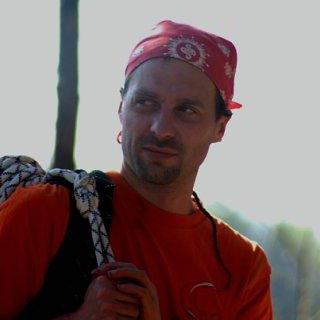
LibreOffice contributor interview: Leif Lodahl

With the Month of LibreOffice nearly over (stay tuned for a wrap-up!) we now return to our regular interviews with contributors to the project. This week it’s the turn of Leif Lodahl, who helps out with localization


What do you do in the LibreOffice project?

I am the lead of the Danish localization team, and I live and work in the Copenhagen Area in Denmark. You can find my LibreOffice contributions and social media accounts here:

I live with my wife Marianne (with whom I have just celebrated our 25th wedding anniversary) in the suburbs to Copenhagen. My two sons are both adults and have left our home.


Do you work for a LibreOffice-related company or just contribute in your spare time?

Until September 1st I was working as project manager and business developer in the company Magenta. From September 1st I’m working as IT architect at City of Ballerup (Ballerup Municipality). My work for (and with) LibreOffice has, until recently, been both professional and in my spare time.


How did you get involved with LibreOffice?

Many years ago, when OpenOffice.org was at version 1.1.0, I accidentally found the project and complained about the machine-translated graphical user interface (GUI). I then started improving the GUI and when Sun Microsystems was preparing OpenOffice.org 2.0 we managed to translate both the GUI and the Help content.


What areas of the project do you normally work on?

I’m primarily working as the country and language lead, but have also been involved in LibreOffice as member of the Membership Committee. As one of the founding members I have been with The Document Foundation from the beginning.

Over the years I have been involved in implementation projects in various public organizations in Denmark, and back in 2006 I was engaged in the public and political discussions in Denmark about open standards.

In 2015 I was in charge of organizing the LibreOffice Conference in Aarhus, Denmark.


What was your initial experience of contributing to LibreOffice like?

Back in the OpenOffice.org days I found that contributing to the project by translating was pretty easy and I could see my own contributions in later releases, which was very encouraging.


What do you do in your spare time?

“Run, Forrest, Run.” I usually run at least twice a week. Not because of the completion – just for the health benefits. Also, once a week I have the pleasure of taking care of a six year-old child with both physical and mental disabilities.


Thanks Leif! And to all blog readers: if you want to improve the localization of LibreOffice in your language or location, you can get involved here. Thanks in advance for your contributions!

Document Liberation Project interview: Alex Pantechovskis

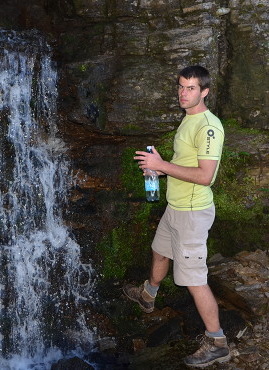
Alexis Pantechovskis LibreOffice developer

While most of our recent interviews have been focused on LibreOffice, this week we’re talking to someone involved in our sister project, the Document Liberation Project (DLP). If you’ve never heard of DLP before, watch our short video for an overview.

Alex Pantechovskis is a new contributor to the DLP, and has been working on libzmf, a library for importing Zoner Callisto/Draw documents.

Where are you based, what’s your IRC nickname, and GitHub profile?

I live in Lithuania, Vilnius. My IRC nick is AlexP11223, and my GitHub profile is at https://github.com/AlexP11223.

What prompted you to start work on libzmf?

It was a Google Summer of Code (GSoC) project. I thought that this project is interesting for me and the most suitable for my skills, so I contacted the mentor (David Tardon) via IRC and started working on it.

What was the biggest challenge working on the library?

ZMF4 is not the most complex file format (ZMF2 for example is much more complex, and this is one of the reasons why only ZMF4 is supported in libzmf so far), so working with it was not very difficult. But still there were some challenges, mostly related to reverse engineering: in binary formats it is often difficult to understand the exact structure of each element. Some small pieces such as vertical text align in tables are still not covered. Sometimes first attempts are found to be wrong as more details are uncovered, requiring rewrites of related code in the library.

Another challenge is: in some cases, when a feature doesn’t work as expected, it may be difficult or time-consuming to determine what causes this: wrong format understanding, wrong implementation, incorrect usage of librevenge and other libraries, bugs in libodfgen, bugs in LibreOffice…

What do you want to do next? (Either with libzmf or another library)

I don’t know – currently I am busy with studying at university, and some other things. It is possible that I will continue working on libzmf later, to add some of the missing features, or one of the other libraries.

What does the Document Liberation Project mean to you?

A great community doing important work.

How can others help to contribute to the DLP and open up proprietary files?

There are many ways to help. The most obvious is of course development: creating a new import library for some file format or improving one of the existing libraries or tools.

Also, most proprietary file formats do not have published specifications, so in order to work with them the structure needs to be reverse engineered and documented (preferably by contributing to OLE Toy project).

Another way, that does not require any programming skills, is creating and contributing sample documents for regression testing. It is an important but time-consuming task, because the documents should cover all format features (such as all parameters that can be set for a shape in a drawing application, or all text formatting options) and also many formats have more than one versions, so a separate set of documents is needed for each version.

What’s your favourite text editor and why?

For simple text, config files etc. I usually use whatever is available such as gEdit and Vim – on Windows I usually use Notepad++.

For coding I prefer IDEs like Visual Studio (C/C++, .NET) or JetBrains products (web development, Python, Java). I like the features offered by IDEs such as powerful refactoring, code completion, error/warning highlighting, convenient integrated debugging etc., and I have a powerful PC with SSD and a lot of RAM, so performance is usually not an issue. But I understand why many developers prefer editors like Vim (better text editing productivity, consistency, available everywhere), and it is especially relevant for big projects with complex build systems like LibreOffice, where it is hard/impossible to fully integrate (and maintain) an IDE.

During libzmf development I worked on Linux because it would be much more difficult to set up the needed environment on Windows (acquiring/building dependencies like Boost, librevenge, libtool, Autotools), so I used Qt Creator IDE. It allows developers to easily create a non-Qt C++ project from source files – and it worked fine most of the time.

Thanks Alex! And to anyone reading this who wants to get involved, join us and help to free the world from closed, proprietary file formats.

LibreOffice contributor interview: Regina Henschel

Regina Henschel LibreOffice developer

Now that the LibreOffice Conference has finished, we’re back to our regular contributor interviews. This week it’s the turn of Regina Henschel who helps LibreOffice users by answering questions, testing new features and working on bug reports.

What is your IRC nickname / location / social media page?

I live in Dortmund (Germany). You can best contact me via the mailing lists. I don’t have any account on Twitter or Facebook or similar, and I seldom use IRC (nickname pppregin).

Do you work for a LibreOffice-related company or just contribute in
your spare time?

I do all of my work for LibreOffice in my spare time. In my daily job I’m teacher of mathematics.

How did you get involved with LibreOffice?

That is a wide range: I’m member of the Open Document Format Technical Committee (ODF TC), I answer questions on ask.libreoffice.org and on the mailing lists, I discuss and test new features and work on Bugzilla issues, and sometimes I contribute code.

What areas of the project do you normally work on? Anything else you want to tackle?

Currently I watch the development of some new features coming in from the Google Summer of Code, including testing, and I need a lot of my time for to prepare me for ODF TC meetings.

I would like to do much more coding. But especially in Draw, which I like most, the code is complicated and I don’t have enough spare time to learn it quickly. My special interest is in the 3D features of Draw.

What was your initial experience of contributing to LibreOffice like?

I started with user support for StarOffice in Usenet newsgroups more than sixteen years ago, and have got a lot of product experience with OpenOffice.org. A really surprising aspect of LibreOffice was how much easier it has become to build on Windows. Using Gerrit was unfamiliar for me, but help on IRC or mailing list was always there.

What areas of LibreOffice do you think need to be improved?

We need more volunteers to look after the increasing amount of users, and manage the growth of questions and bug reports. Also, we need more testers for new features and people to document user interface changes and new features.

Which is your preferred text editor? And why?

A lot of my work is creating test files and examining file formats. For that I use XML Notepad 2007, where I can work directly on the nodes, without need for all the quotes and angle brackets, which are needed in a simple editor. And I use Notepad++. It has syntax highlighting for XML and C++ (among lot of other languages), folding, it reformats XML, and makes diffs. Sometimes I use PSPad, mostly as a notepad, because of its quick starting, or I use its HexViewer. That is all on Windows, as you might have noticed.

What do you do when you’re not working on LibreOffice?

Besides my daily job, all the other time goes to my family.

Thanks Regina! And thanks indeed to our whole community – if you’re reading this and want to get involved, join us today and help to make LibreOffice even better.

LibreOffice contributor interview: Susobhan Ghosh

Susobhan Ghosh LibreOffice developer

In this week’s interview, we talk to Susobhan Ghosh, who got involved in the project earlier this year and has been working on tasks for the Google Summer of Code (GSoC).

First off, what’s your IRC nickname, nationality and blog URL?

Where are you currently based, and do you work for a LibreOffice-related company or just code in your spare time?

​I’m currently living in Hyderabad, India. I’m a third year Computer Science and Engineering student at IIIT Hyderabad. I’ve been coding full time throughout the summer for LibreOffice as a GSoC student – otherwise I code in my spare time.

How did you get involved with LibreOffice?

I started in January 2016, with bug tdf#95845 – I had to replace methods for labels/tooltips with CommandInfoProvider. I ended up causing a regression, which I later on fixed with help from samuel_m. I started contributing more frequently in March, and learnt a lot while fixing the Firefox persona search (tdf#88502).

What was your initial experience of contributing to LibreOffice like?

Initially I had trouble building the suite, and also pushing patches due to network restrictions, but I received good support from the developers like JanIV and chris_wot on IRC, and also samuel_m for submitting my first patch. Overall, the initial experience was pretty nice.

What areas of the project do you normally work on? Anything else you want to tackle?

I’m currently working on the sidebar for GSoC, and I’m familiar with the Firefox personas search. I’d personally like to work on adding theming support for LibreOffice (similar to other office suites) apart from the Firefox themes and color changing options, to provide better customization options.

What is your vision for the future of LibreOffice?

I’m very much looking forward to quite a few things: LibreOffice Online, LibreOffice for Android, the NotebookBar, and added customization and themes for LibreOffice – all of which are under development right now.

What was the very first program you wrote?

My first program was in C++, similar to a Hello World program, except I printed my own name instead of “Hello, World”.

Which is your preferred text editor, and why?

I’m not really a fan of the command line when it comes to editing. My favorite editor would be Sublime Text 3. I won’t bring up the debate as to whether it’s better than Vim or Atom or Emacs – I choose this just because I’m familiar with it have mastered it.

What do you do when you’re not working on LibreOffice?

I’m generally busy with studies and research throughout the year. Otherwise during my holidays, I like to play games – FIFA, Assassin’s Creed, Pokemon etc. Other than that, I watch football (FC Barcelona fan), go out for movies and hang out with my friends.

Thanks Susobhan! And thanks indeed to our whole community – if you’re reading this and want to get involved, join us today and help to make LibreOffice even better.

LibreOffice contributor interview: Franklin Weng

It’s been over a month since our last contributor interview, as we’ve been busy with the release of LibreOffice 5.2, but now we’re back – and this time we’re talking to Franklin Weng, who is active within the marketing and migration teams.

Franklin Weng, LibreOffice contributor

What is your IRC nickname / nationality / location / family status?

  • Nickname (not only on IRC): Franklin / Goodhorse
  • Nationality: Taiwan (ROC)
  • Location: Taiwan
  • Family details: Married and have have two sons

Do you work for a LibreOffice-related company or just contribute in your spare time?

Two years ago I contributed in my spare time. Now I own a company providing consultancy, training and solutions with free and open source software (FOSS).

How did you get involved with LibreOffice?

Daily use of the software, and I had contributed some translations for the application and wiki as well. Then get I got more deeply involved when the government of Yi-Lan county and our National Development Council decided to migrate to the Open Document Format and LibreOffice starting in 2015.

What areas of the project do you normally work on?

Promotion, migration and training. I also cooperate with the localization (L10N) community in Taiwan.

What was your initial experience of contributing to LibreOffice like?

Well, I’ve been involved in free and open source software for more than 20 years, so it’s quite normal to me 🙂 Still, I’m quite happy to see the migration to LibreOffice in Yi-Lan succeed, and some departments in our central government and several county or city governments starting to go with us too.

Which is your preferred text editor? And why?

I edit plain text and write code with Vim (no, I don’t use an IDE). The reason? It should be because I’ve been been in love with Vim for more than 20 years. For office text files, LibreOffice Writer is my first choice of course. Sometimes I use LyX or LaTeX too.

What do you do when you’re not working on LibreOffice? Any other hobbies you have?

I work on other open source projects. Okay, and I also spend quite some time with my family and my boys. And I like baseball too.

Thanks Franklin! Your efforts are very much appreciated. And to other potential contributors reading this: there are many ways to get involved with LibreOffice, from documentation and programming to translations and marketing. Join our community, gain valuable experience, and help to spread FOSS and open standards!