We use our social media channels to raise awareness about our work, share information and encourage new contributors to join us
(This is part of The Document Foundation’s Annual Report for 2022 – we’ll post the full version here soon.)
Social media
In January 2022, our English-language Twitter account @LibreOffice had 45,802 followers; by the end of the year, we had grown this to 52,808. Our most popular tweets were for major releases, but we also tweeted customised images for “Community Member Monday” interviews with short quotes, encouraging more users to get involved with LibreOffice projects.
In addition, we focused not only on our own tweets, but also retweeting announcements from the LibreOffice ecosystem and community members. We liked and retweeted messages of support from end users – many of whom were surprised and thankful that a large project would show them support. To keep the content flowing, we retweeted popular older tweets, and responded to individual messages.
On other social media platforms, we focused on growing our account on Mastodon, a Twitter-like open source, federated and self-hosted microblogging service. In 2019 we set up @libreoffice and started posting content, often more focused on technical users, compared to our tweets and Facebook posts. In 2022 we worked more on expanding our activities here, and from January to December, we grew our follower base from 6,844 to 16,500.
Our Facebook page growth was smaller, from 59,241 page likes to 60,209. We’ve noticed a gradual reduction in activity on Facebook over the last few years, which reflects its changing audience, and the move towards newer mobile applications. Nonetheless, Facebook still provides a good opportunity to interact with end users of LibreOffice, and every day we checked in to answer questions, get feedback, and post announcements/tips about the software.
YouTube channel
Our YouTube channel grew from 15,015 subscribers and 2,420,699 video views in January 2022 to 17,964 subscribers and 2,858,092 video views by the end of the year. The “LibreOffice 7.3: New Features” video (a fantastic production by the Indonesian community) had over 196,000 views – while the video for LibreOffice 7.4 had over 47,000. We also added videos from FOSDEM and the LibreOffice Conference 2022.
Please confirm that you want to play a YouTube video. By accepting, you will be accessing content from YouTube, a service provided by an external third party.
If you accept this notice, your choice will be saved and the page will refresh.
Meanwhile, our community helped out with tutorial videos – in particular Harald Berger of the German community, who continued to produce a series of professional-looking step-by-step guides to installing and using LibreOffice.
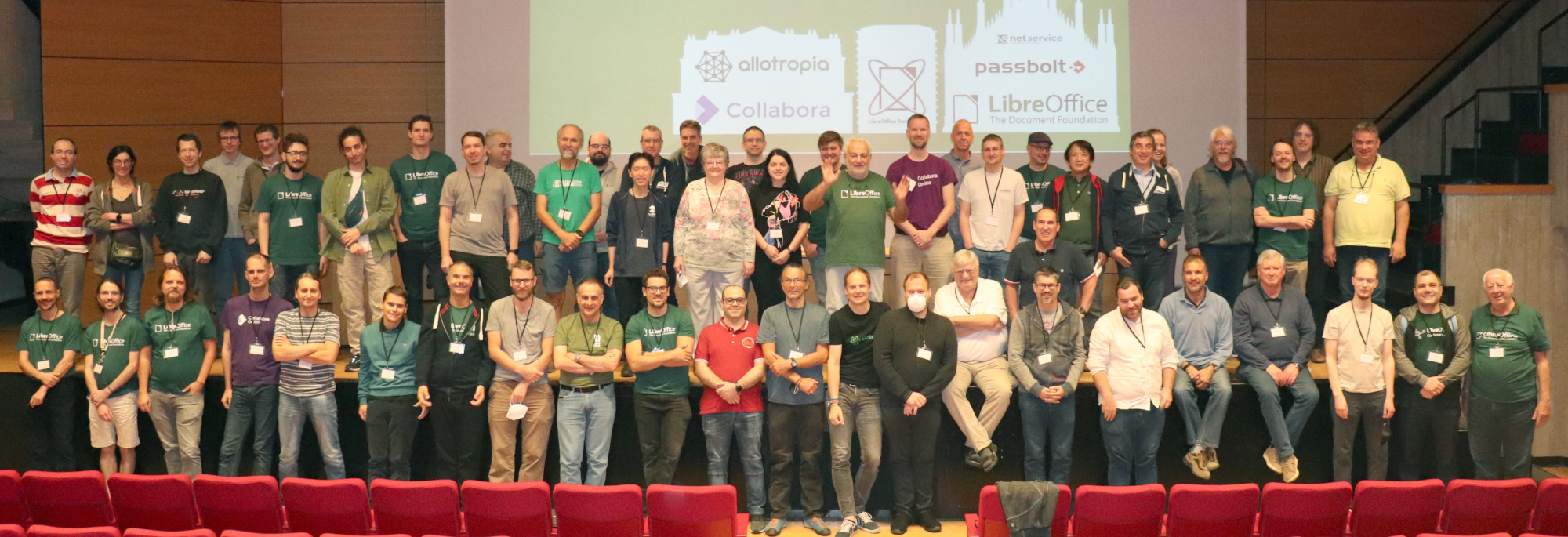
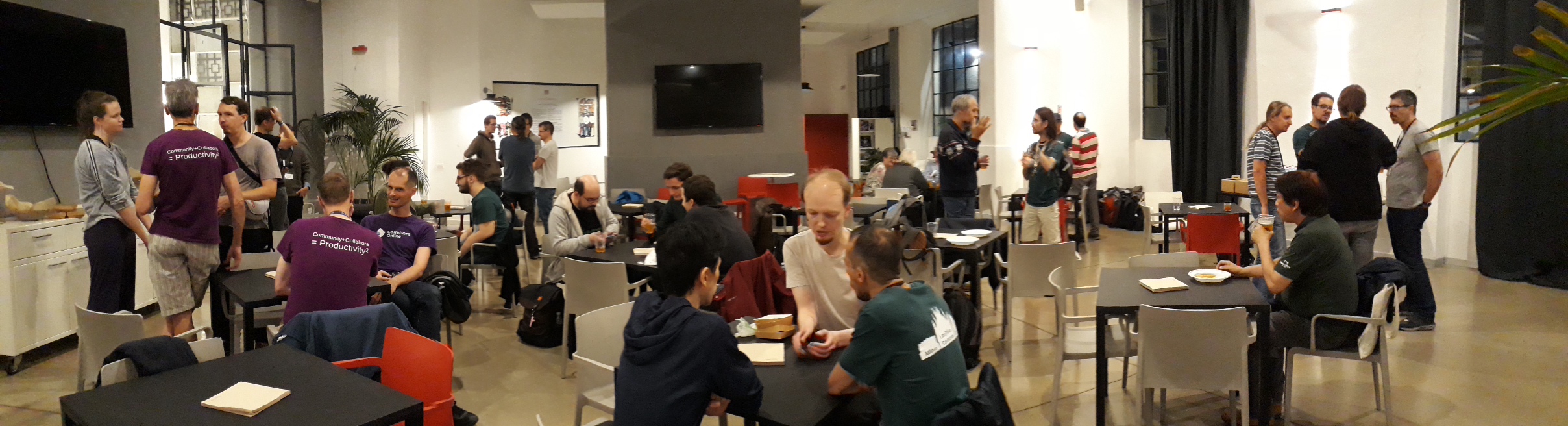
The LibreOffice Conference is the annual gathering of the community, our end-users, developers, and everyone interested in free office software. In 2022, it took place in Milan, Italy
(This is part of The Document Foundation’s Annual Report for 2022 – we’ll post the full version here soon.)
Due to the COVID pandemic and travel restrictions our conferences for 2020 and 2021 had to take place online. For 2022, however, we could finally meet in-person again – although we live-streamed sessions, for participants to watch remotely (and they could ask questions in our chat channels too).
The conference took place from September 28 – October 1, in the Fondazione Culturale San Fedele, in downtown Milan. Four rooms were made available for the event: the auditorium, along with Ricci, Loyola and Saverio.
Conference Tracks and extra sessions
Following the opening session, presentations and talks were given across various “tracks”, or categories: Development, Advocacy, Marketing, Design, OpenDocument Format, Quality Assurance, Documentation and more. There were highly technical talks focused on specific areas of the software and source code, along with more open discussions about community building and recent updates from The Document Foundation.
In addition to the talks, where was also a community dinner evening, in which various kinds of pasta were served, along with a walking tour of interesting parts of the city. On the final day, the conference wrapped up with a closing session, headed by Italo Vignoli who helped to organise the event.
Sponsoring and merchandise
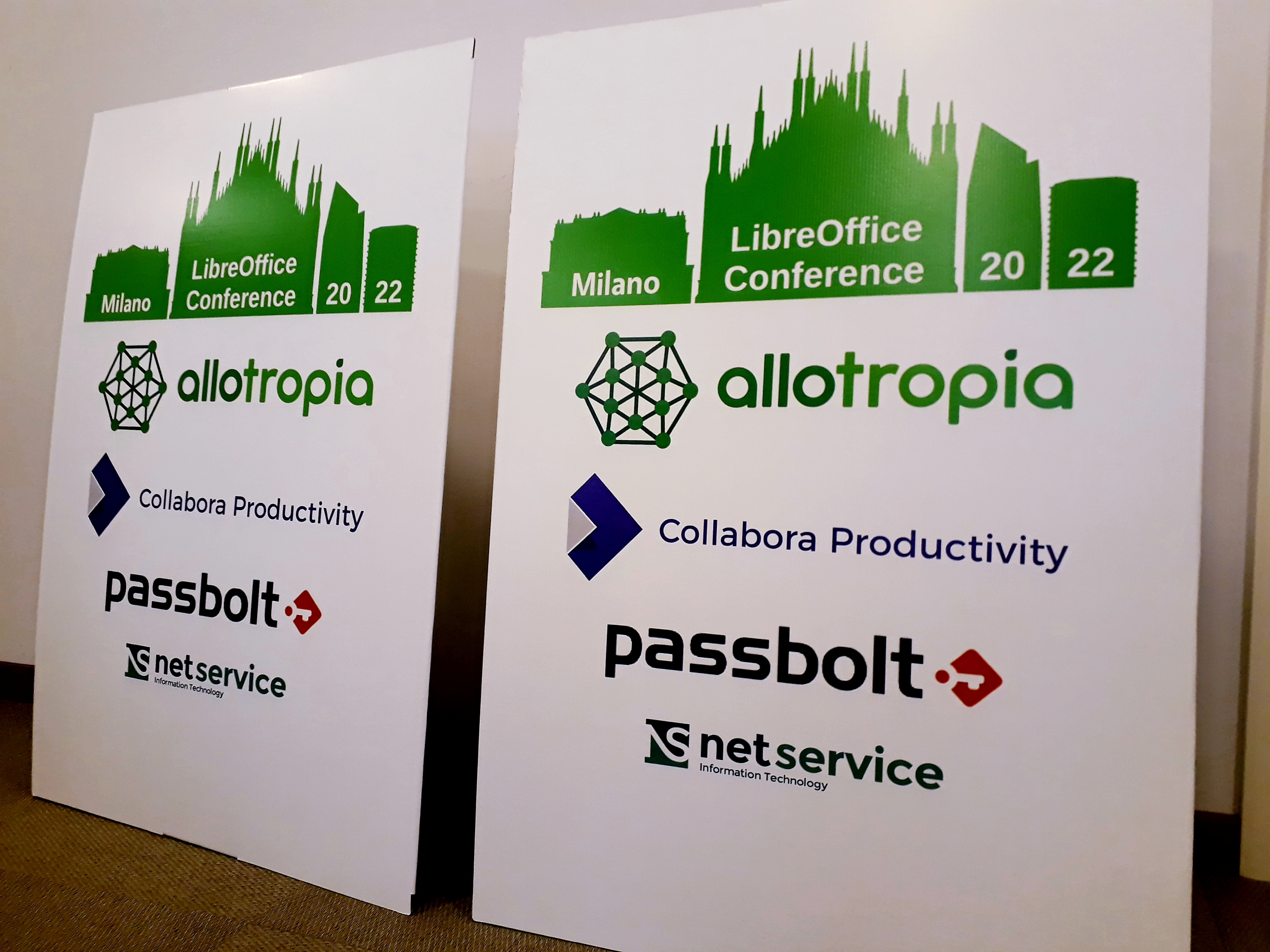
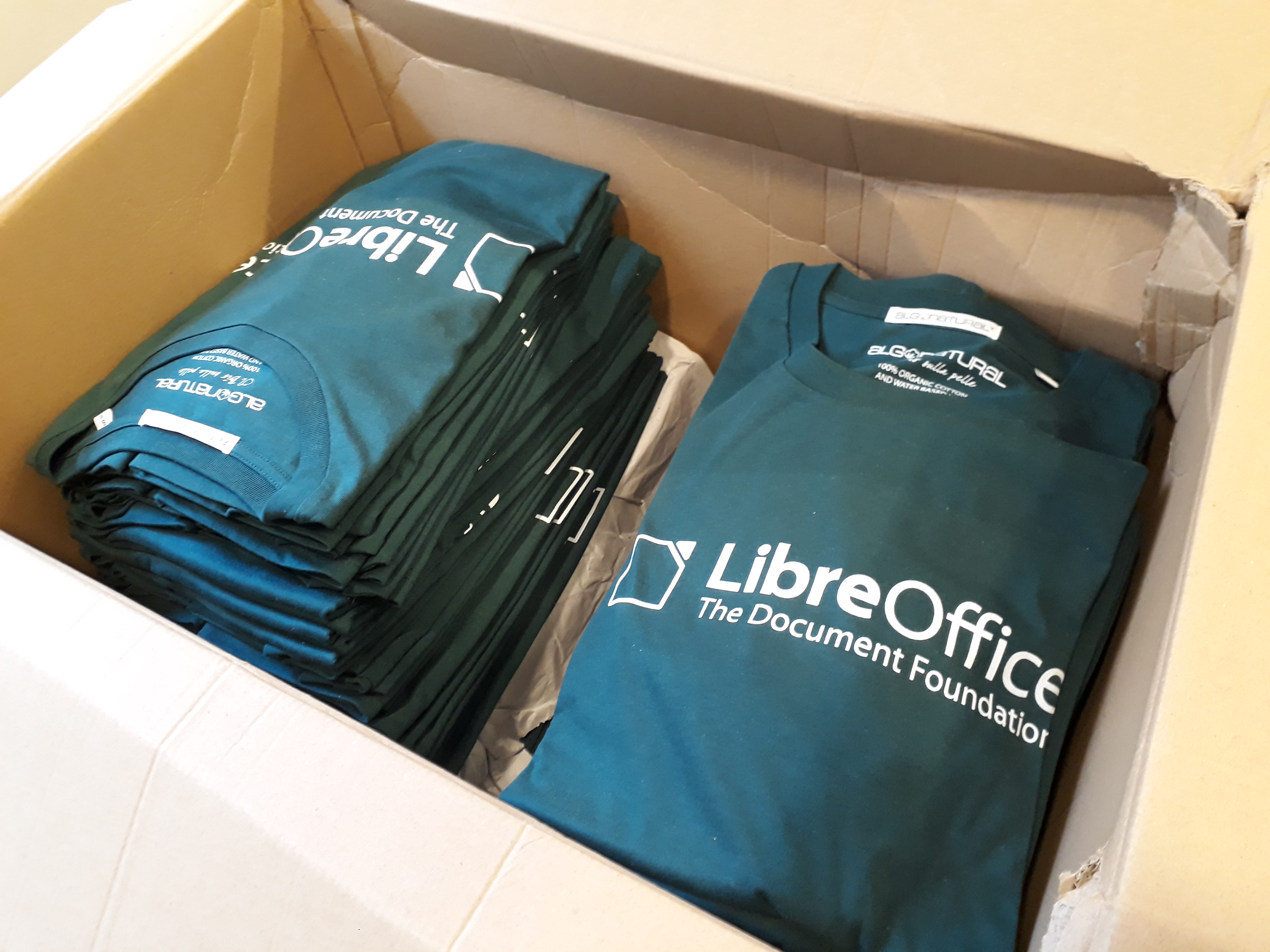
The event was sponsored by Collabora, allotropia, Net Service S.p.A and Passbolt. Thanks to this sponsoring, attendees could get merchandise at the conference, including T-shirts with the conference logo.
Full Programme
Full details about the event are available on our main conference website. For a quick overview of all the talks, including links to PDF versions of the presentations, see the schedule.
Videos from most of the talks are available in this playlist:
Please confirm that you want to play a YouTube video. By accepting, you will be accessing content from YouTube, a service provided by an external third party.
If you accept this notice, your choice will be saved and the page will refresh.
Conference in 2023
Planning is already underway for the LibreOffice Conference 2023, which is due to take place in Bucharest, Romania in September. The local organisation team has already found a suitable location, and is now working on other preparations for the event, including visas for attendees, catering and merchandise. We at TDF are helping them to get things ready, and are very grateful for their work.
In 2022 we had with elections for the foundation’s Membership Committee, along with regular Advisory Board calls, and support for other projects and activities
(This is part of The Document Foundation’s Annual Report for 2022 – we’ll post the full version here soon.)
Election of new Membership Committee
The mission of the Membership Committee (MC) is to administer membership applications and renewals following the criteria defined in The Document Foundation’s Foundation’s Statutes. It initiates and supervises the election of the Board of Directors, and The Board of Trustees elects from among its members the Membership Committee for a period of two years.
In August, we had live town-hall meetings with the Membership Committee candidates, in multiple timezones, to ensure that as many people as possible (both candidates and TDF members) could take part and ask their questions. We made video recordings of these meetings, and posted them on our video channels and blog, for those who couldn’t take part live:
Please confirm that you want to play a YouTube video. By accepting, you will be accessing content from YouTube, a service provided by an external third party.
If you accept this notice, your choice will be saved and the page will refresh.
Voting tokens were sent out to TDF members at the end of August, and then the voting process began, running until September 7. Then, on September 9, TDF’s Board announced the preliminary results, along with a confirmation period.
On September 17, we announced the final results, with the following confirmed as Full MC Members: Miklos Vajna, Marina Latini (tied for first), Gustavo Buzzatti Pacheco, Gabriele Ponzo, Uwe Altmann. Deputies: Shinji Enoki, Balázs Varga, Ahmad Haris.
TDF would like to say thank you to all past and new members of the MC for their service to the community, and to all candidates for running.
Advisory Board members and meetings
The Document Foundation relies on its Advisory Board Members in order to receive advice and support. The Advisory Board’s primary function is to represent The Document Foundation’s supporters and to provide the Board of Directors with advice, guidance and proposals. Current members are Adfinis SyGroup, allotropia software GmbH, Red Hat, Hypra, Collabora, GNOME, Google, Kopano b.v., City of Munich (Landeshaupstadt München), CIB Software, IHC Invest Inc., Software in the Public Interest (SPI), KDE e.V., UK Government Digital Services, and the Free Software Foundation Europe (FSFE).
Throughout the year, TDF had regular calls with representatives of the Advisory Board. Staff and Board members at TDF provided updates on the foundation, software and community, and described plans and activities for the future. Advisory Board members were invited to provide valuable feedback on TDF’s work, and various ideas and proposals were discussed during the calls. TDF would like to express its thanks to all of the members for their help and support.
Highlights of activities
Throughout the year, TDF supported – and provided information about – various campaigns and events, via this blog and our social media channels. For instance, in January, we supported a “bug bounty programme” for finding and fixing security holes with European Commission funds. With help and coordination from their recently formed Open Source Programme Office (OSPO), the European Commission started a series of hackathon and “bug bounty” programmes to help selected projects find (and potentially fix) security issues.
The Commission’s OSPO set aside €200,000 to reward developers and researchers who find critical security vulnerabilities in free software projects (such as LibreOffice and Mastodon). TDF got involved, and as Paolo Vecchi from the foundation’s Board of Directors said:
We at TDF and our community are grateful for the opportunity that has been provided with to make LibreOffice even more secure and ready to potentially become the preferred open source office suite also within European institutions.
In April and November 2022, we supported an open letter about the universal right to install any software on any device. Earlier in the year, together with more than 100 European organisations and companies, The Document Foundation signed this letter, and encouraged others to do the same. The signees of this open letter recognised that free access to hardware and software determines how long or how often a device can be used or reused, and declared that the increased longevity and reusability of their devices are inevitable for a more sustainable digital society.
In September and October, TDF announced that it was directly providing LibreOffice on the Mac App Store (Apple) and Microsoft Store. The announcement reflected the project’s new marketing strategy: The Document Foundation is focused on the release of the Community version, while ecosystem companies are focused on value-added long-term supported versions targeted at enterprises. The distinction has the objective of educating organizations to support the FOSS project by choosing the LibreOffice version best suited for their needs, instead of the Community version generously supported by volunteers. Of course, TDF will continue to provide LibreOffice free of charge from the LibreOffice website for all users.
Finally, throughout the year we celebrated our community of translators, which provide LibreOffice in over 110 different languages (with more hopefully becoming available in the future), more than any other software. This helps us to fulfil one of the most important objectives of The Document Foundation: “to support the preservation of mother tongues by encouraging all people to translate, document, support, and promote our office productivity tools in their native language”. Today, there are over four billion people in the world who can use LibreOffice in their native languages. We are very thankful to our hard-working community, which makes all of this possible.
In 2022, LibreOffice celebrated its twelfth birthday. Two new major versions of the suite introduced a variety of new features, while minor releases helped to improve stability as well
(This is part of The Document Foundation’s Annual Report for 2022 – we’ll post the full version here soon.)
LibreOffice 7.3
On February 2, LibreOffice 7.3 was officially released after six months of work. Developers at Collabora, allotropia, CIB, Red Hat, NISZ, The Document Foundation and other companies and organisations – along with volunteers – worked on many new features.
For instance, large improvements were made to change tracking, with especially when tables are altered and paragraphs are moved (László Németh, NISZ). Colour Filter support was added to the “Standard Filter” dialog in Calc (Samuel Mehrbrodt, allotropia), while PowerPoint-compatible screen sizes were added to Impress (Jun Nogata). On top of the new features, there were many other general improvements to performance, compatibility and stability.
With the help of the Indonesian community, TDF produced a video to explain and demonstrate many of the new features in LibreOffice 7.3. This was linked to in the announcement, and embedded into various web news websites that covered the release. The video is also available on PeerTube.
Please confirm that you want to play a YouTube video. By accepting, you will be accessing content from YouTube, a service provided by an external third party.
If you accept this notice, your choice will be saved and the page will refresh.
LibreOffice 7.4
Later in the year, on August 18, TDF released LibreOffice 7.4. Based on the LibreOffice Technology platform for personal productivity on desktop, mobile and cloud, it provided a large number of interoperability improvements with Microsoft’s proprietary file formats.
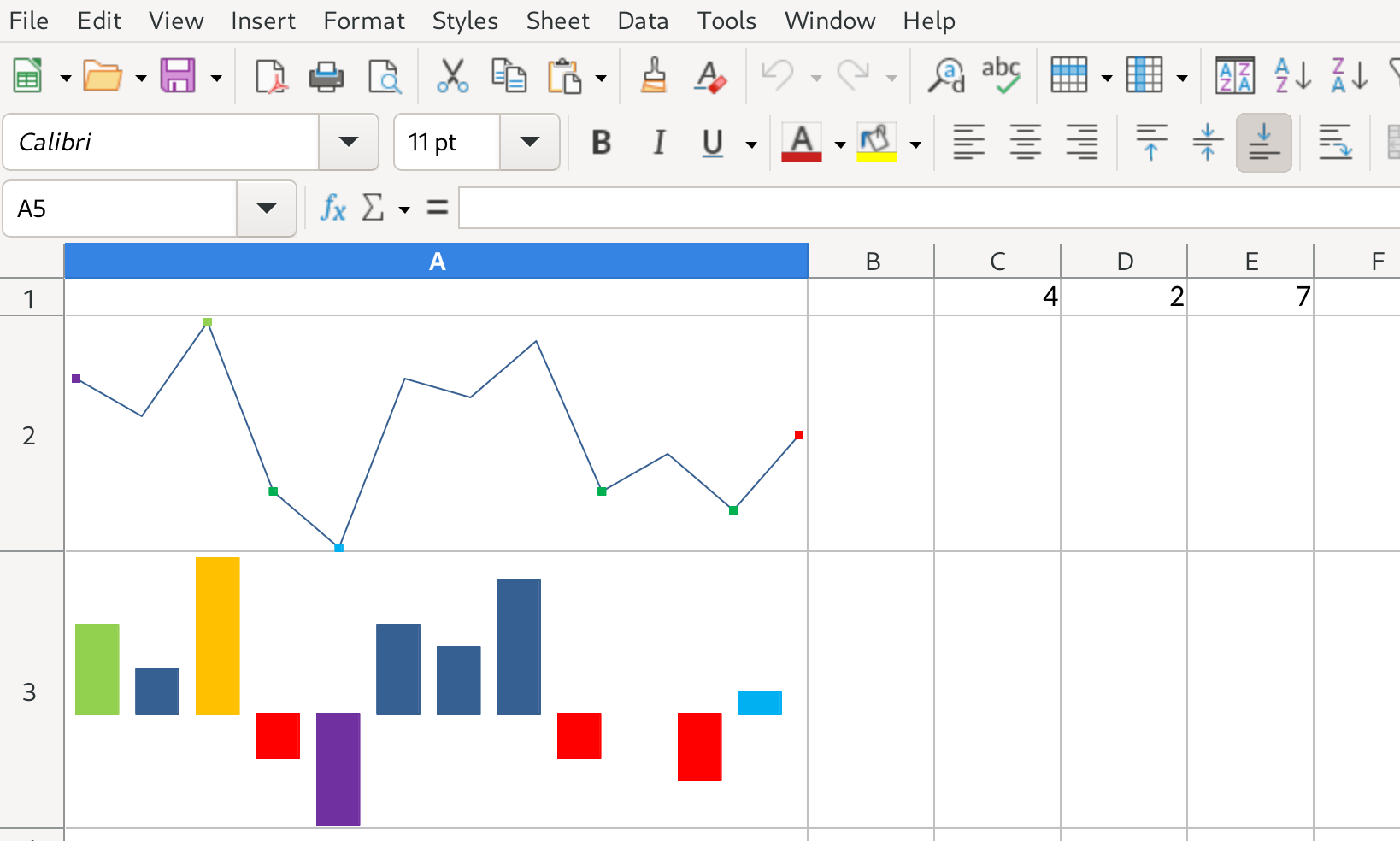
In terms of features, this release added support for “sparklines” in Calc (Tomaž Vajngerl, Collabora). These are very small line charts, without axes or coordinates, to provide a quick overview of trends – as opposed to a full chart with details. Then, support for WebP images (Luboš Luňák, Collabora) and EMZ/WMZ files (Paris Oplopoios) was added, along with integration of the remote grammar checker LanguageTool (Mert Tümer; Collabora).
Many other features were added as well, and there were a large number of compatibility improvements. As with the previous release, TDF staff worked with the Indonesian LibreOffice community to make a video (PeerTube version) to demonstrate the new features:
Please confirm that you want to play a YouTube video. By accepting, you will be accessing content from YouTube, a service provided by an external third party.
The Document Foundation, thanks to the widespread popularity of LibreOffice, is recognized as one of the largest FOSS organizations worldwide, and especially in Europe (where the project was born over 20 years ago). Because of this, during the last couple of years TDF has been involved in several discussions about policies which can affect or are affecting the adoption of FOSS, or the freedom of users’ choice for hardware, operating systems and software. A freedom of choice which should be protected by laws, especially when involving public administrations (with a strong focus on schools and universities, where future citizens grow up).
In December 2022, TDF’s Board of Directors has decided to increase public policy related activities in the EU by sponsoring travels to events organized by Open Forum Europe (OFE) – an umbrella organization supporting FOSS at the EU in Brussels – and by the European Commission – including DIGIT, the department in charge of IT related policies – on this specific topic, and I have been assigned this task within the team.
In term of meetings, apart from regular meetings with representatives of other FOSS projects organized by OFE, just before FOSDEM I have attended OFE’s meeting in Brussels, and during FOSDEM a specific round table organized by FOSS organizations. In March, I have discussed the potentially negative impact of the CRA with representatives of DIGIT. In April, I will be at the meeting organized by the Swedish Government – temporary president of the European Commission – in Stockholm, where the Cyber Resilence Act will be a key topic. Hopefully, the joint efforts put in place during these months by FOSS foundations, communities and organizations will contribute to a better Cyber Resilience Act.
Donations to The Document Foundation help us to grow our community, run our infrastructure, organise events and share knowledge. And as a result, LibreOffice keeps on improving for all users! Many thanks to all of our supporters. Here’s a quick infographic showing how we used your donations in 2022: