Interview with Guilhem Moulin, TDF Infrastructure

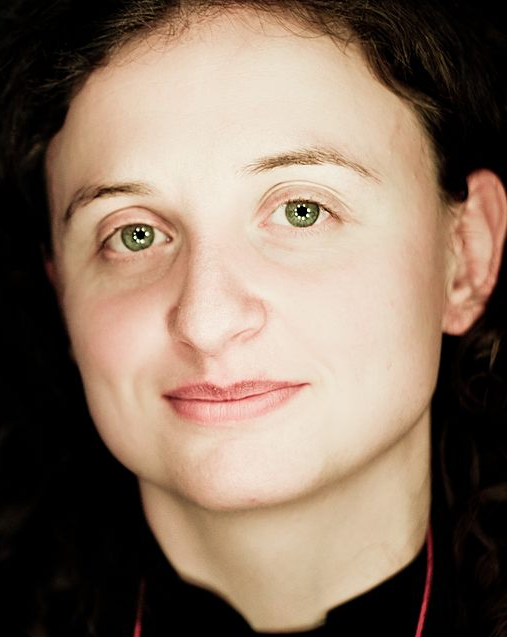
Photo by Kévin Perrot, CC BY

A short interview to introduce Guilhem Moulin, the team member in charge of the development and the maintenance of The Document Foundation (TDF) infrastructure since October.

Q1. You have just started to take care of TDF infrastructure. Why did you apply for the role?

I finished my studies last spring and wanted to take a few months off to travel a bit and try to tie some loose ends on the many side projects I started earlier and never had time to finish. In particular, with the Debian 9 freeze approaching, I wanted to do some triaging on the BTS to help uploading some new upstream releases to the next Debian Stable. All in all, I was not really in a hurry to start with a new day job.

Of course, although I live rather cheaply, I had limited savings and I knew at some point I would have to find a job to pay the bills. I was looking for that day with apprehension, because I didn’t want to take a usual “9 to 5” job in an office, and was also afraid to have to make compromises and use proprietary software or closed formats to comply to an employer’s internal policy.

Although I never was a member, I knew TDF as a major actor of the Free Software ecosystem and as a strong supporter of open formats. So when one of my friends tipped me about the opening at TDF, I jumped on my keyboard to prepare an application. The mere fact of managing the infrastructure of one of the most popular Free Software projects out there was a unique enough opportunity to combine the practical and the enjoyable without renouncing my convictions. Furthermore, working from home with flexible working hours was particularly appealing to me.

Q2. Can you provide a short personal background, including both your education and work experiences?

I’ve been at school until very recently, actually I grew up in France and moved to Gothenburg (Sweden) in 2010 for my doctoral studies. I have graduated earlier this year with a PhD in theoretical Computer Science from Chalmers University of Technology [0].

In parallel to my studies, I did some volunteering work for various organizations. In particular, I’ve been a volunteer system administrator at Fripost [1], a Sweden-based association (ideell
förening) providing an email infrastructure for its members.

Q3. Which is your perception of the project, as seen from outside and then as a team member (even for a short time)?

As a mere user, I was aware that LibreOffice was one of the biggest Free Software project out there, and although I wasn’t familiar with TDF internals, I was very pleased it was managed by a non-profit organization.

My first contact with the community was in Brno earlier this year (at the LibreOffice Conference), and I was impressed by its cohesion. I also immediately felt very welcome! Moreover, I’m used to go to conferences where the audience is a lot less diverse, and I was pleased to see a better gender / ethnic / background balance at LibreOCon. Even if I know there is still a long, long way to go…

As a very fresh team member, I’m still trying to get up to speed on the infrastructure. But I’d say staff & team members reflect the atmosphere of the general community and so far have been very helpful and very welcoming.

Q4. Which are the objectives of your role within TDF, in the short and long term?

Aside from regular internal infrastructure maintenance, which is probably irrelevant for most members and contributors, my short term goal is to implement Single Sign On (starting with the most popular services, namely Gerrit, the wiki, and Bugzilla) so people don’t have to remember one set of credentials per service. I’m also eager to try out Jabber/XMPP [2] as a modern (and free!) alternative to our weekly phone calls.

A long term goal would be to lower the threshold to get oneself accustomed to the infrastructure. Getting fresh blood in the infra team is crucial for sustainability, especially in a non-profit where most of the contributors are volunteers.

Q5. How would you describe yourself?

I guess I’m an idealist, and rather binary: I’m absolutely passionate about the things I care about — and find it really hard to make compromises about these (so I guess it’s good I ended up in infra and not in marketing :-D) — and I tend to neglect the rest. As such, I live a relatively simple life and value principles over comfort or convenience.

Q6. Are you contributing to other open source projects? If yes, which is your role, and which are your expectations?

I’ve been a Debian GNU/Linux [3] user for over a decade, but only became a maintainer around 2 years ago, after a couple of months contributing to various packages. Debian is aiming at being the “the universal operating system”, and of course I expect its releases to become better and better.

Beside package maintenance and some minor contributions to my packages’ upstream I enjoy email-related protocols, and one of my long-term project is to write an email client to replace the venerable mutt [4] I’ve been using for around 10 years.

I also feel close to the GnuPG [5] and Tor [6] communities, although for the latter, I mostly contribute by only running relays these days.

Q7. Last, but not least, which is your personal hardware/software configuration? Do you have any preferred tool?

I still use the old Thinkpad X60s I bought second hand in 2010 (although I believe I changed every single part by now: screen, motherboard, case,…) the BIOS of which I replaced by a free one (libreboot [7]). By today’s standard a Core™2 Duo isn’t that fast anymore, but it doesn’t bother me much as I tend to use my laptop merely as a terminal: for builds or heavy computation I remotely access a workstation. I also recently bought an USB armory from Inverse Path [8] which I would like to use as an air gap for my GnuPG secret keyring.

Of course, I run Debian GNU/Linux [3] on all my machines (sid on my laptop & workstations, and the latest stable on servers) I don’t use a desktop environment like GNOME or KDE, but a minimalist tiling window manager (dwm [9]) instead. My editor of choice is Vim, and the current email client is mutt [4]. For web browsing I pretty much exclusively use the Tor Browser. In fact, I’d say Tor is my favorite tool.

[0] https://www.chalmers.se/en/, [1] https://fripost.org/, [2] https://en.wikipedia.org/wiki/XMPP, [3] https://www.debian.org/, [4] http://www.mutt.org/, [5] https://gnupg.org/, [6] https://www.torproject.org/, [7] https://libreboot.org/, [8] http://inversepath.com/usbarmory, [9] http://dwm.suckless.org/.

Annual Report 2015

Annual_Report_2016-08-07-page001The Document Foundation (TDF) is proud to announce its 2015 Annual Report, which can be downloaded from the following link: http://tdf.io/report2015 (3.6 MB PDF). The version with HD images can be downloaded from http://tdf.io/report2015hq (22.1 MB PDF).

TDF Annual Report starts with a Review of 2015, with highlights about TDF and LibreOffice, and a summary of financials and budget.

Community, Projects & Events covers the LibreOffice Conference 2015 in Aahrus, Certification, Website and QA, Hackfests in Brussels, Gran Canaria, Cambridge, Hamburg, Terni and Madrid, Native-Language Projects, Infrastructure, Documentation, Marketing and Design.

Software, Development & Code reports about the activities of the Engineering Steering Committee, LibreOffice Development, Google Summer of Code, and the Document Liberation Project.

The last section focuses on People, starting with Top Contributors, followed by TDF Staff, the Board of Directors and the Membership Committee, the Board of Trustees, or the body of TDF Members, and the Advisory Board.

To allow the widest distribution of the document, this is released with a CC BY 3.0 DE License, unless otherwise noted, to TDF Members and free software advocates worldwide.

Elections of the next Membership Committee

Dear Community,

we hereby officially announce the upcoming elections for the next Membership Committee of The Document Foundation.

As per § 12 II of our statutes, [1] the Membership Committee’s term lasts two years. The current Membership Committee started its duty on September 19, 2014. Therefore, the old Membership Committee remains in charge until the end of September 18, 2016, so the new MC will be in charge the day after that, which is September 19, 2016.

As per § 6 III, only members of the Board of Trustees of The Document Foundation, as well as current members of any of its bodies, are eligible to be elected into the Membership Committee, and the election is overseen by the Board of Directors (§ 12 II).

The active electoral right is reserved to those who have been members of the Board of Trustees before this announcement (§ 12 II).

There is one more notable limitation: Per § 8 IV of the statutes, a maximum of 1/3 members of the Membership Committee is allowed to work on an employment basis for the same company, organization, entities, affiliates or subdivisions.

Nomination of candidates fulfilling the above requirements, as well as self nomination is welcome. In total, at least five members of the Membership Committee members are required, and given there are enough candidates, up to four deputies can be elected based on the board decision from June 6.

Re-election of current members of the Membership Committee is explicitly permitted (§ 12 II).

Please send nominations and self-nominations via e-mail to elections@documentfoundation.org (which reaches the Board of Directors in private) and also (!) to board-discuss@documentfoundation.org (which is a public mailing list). We kindly ask nominees who would like to stand for elections to provide a statement of up to 75 words on their candidacy as continuous text (so no bullet lists or multiple paragraphs). In addition, please also provide your full name, e-mail address and your corporate affiliation, if any, and please announce that you will provide information on all future changes as soon as possible.

Discussions with the candidates and questions to them as well as questions about the elections should take place on the public board-discuss@documentfoundation.org mailing list. For details on how to use the mailing list, see http://www.libreoffice.org/get-help/mailing-lists/.

Eligible voters will receive further details via e-mail prior to the start of elections, including a summary of the candidates, details on how to access the voting system, and instructions on how to independently verify the vote count. Please ensure we have your recent and correct e-mail address on file. For questions, you can reach the Board of Directors in private at elections@documentfoundation.org.

Following the time line set forth in § 12 II, requiring a 45 day advance notice, we hereby announce the following time line for the elections:

  1. 2016-07-25: announcement of the elections (this e-mail); and start of the nomination phase
  2. 2016-08-31, 24:00 CET/UTC+2: end of the nomination phase (one week before the election starts, as per § 12 II)
  3. 2016-09-08, 00:00 CET/UTC+2: official start of the elections (at least 45 days after #1, as per § 12 II)
  4. 2016-09-14, 24:00 CET/UTC+2: end of the elections
  5. 2016-09-15: announcement of the preliminary results; and start of the challenging phase
  6. 2016-09-17, 24:00 CET/UTC+2: end of the challenging phase
  7. 2016-09-18: official announcement of the final results
  8. 2016-09-19: new Membership Committee officially in charge

Be advised that the newly elected Membership Committee will only be in charge beginning from September 19, 2016.

Challenges to this election announcement with respect to the deadlines outlined have to happen no later than seven (7) days after this announcement, via e-mail to elections@documentfoundation.org (which reaches the Board of Directors in private).

Challenges to the preliminary results of the election have to happen until the deadline set forth above, via e-mail to elections@documentfoundation.org (which reaches the Board of Directors in private).

On behalf of the Board of Directors,
Marina Latini, Chairwoman of The Document Foundation

[1] http://www.documentfoundation.org/satzung.pdf (binding version) and http://www.documentfoundation.org/statutes.pdf (non-binding translation)

The Document Foundation and GNOME Foundation to tighten their relationship, by exchanging seats in their Advisory Boards

gnome-logosBerlin, June 16, 2016 – The Document Foundation and GNOME Foundation have decided to tighten their relationship, in a move intended to create stronger ties between the two communities, and to foster the integration between LibreOffice and one of the most popular desktop environments for Linux.

The GNOME Foundation is a non-profit organization that furthers the goals of the GNOME Project, which is composed of both volunteers and paid contributors, helping it to create a free software computing platform for the general public that is designed to be elegant, efficient, and easy to use.

GNOME is a desktop environment that is composed entirely of free and open source software, targeting Linux but also supported on most derivatives of BSD. Since the release of GNOME 3.0, the GNOME Project has focused on the development of a set of programs known as the GNOME Core Applications, for the adherence to the current GNOME HUD guidelines and the tight integration with underlying GNOME layers.

“The GNOME Foundation oversees one of the cornerstones of the FLOSS desktop, and we are extremely happy to work with them on an organizational level to improve the desktop software experience and user interface. We can also learn from each other, as we are both based on volunteer-driven governance,” says Michael Meeks, Director, The Document Foundation.

“GNOME and LibreOffice both aim to bring competitive Free Software products to as many people as possible. Our growing partnership will help us to further this mission, by increasing cooperation and sharing information, expertise and best practices. We’re excited about this new chapter in the relationship between the two projects!”, says Shaun McCance, President of the Board of GNOME Foundation.

About GNOME Foundation

The nonprofit GNOME Foundation is an independent organization committed to supporting the advancement of the GNOME Project and software freedom. It provides financial, organizational and legal support to the GNOME Project and helps determine its vision and roadmap. GNOME software is used by millions of people around the world. More information about GNOME and the GNOME Foundation can be found at www.gnome.org.

KDE e.V. joins advisory board of The Document Foundation

ev_largeBerlin, June 16, 2016 – The Document Foundation announces that KDE e.V. is joining the organization’s Advisory Board, and at the same time The Document Foundation joins KDE’s group of advising community partners as an affiliate.

KDE is creating Free Software since 1996 and shares a lot of values around Free Software and open document formats with The Document Foundation, and brings the experience of running a Free Software organization for almost two decades to their advisory board.

Both organizations are working in the OASIS technical committee for the OpenDocument format, and also collaborate on common aspects of development of office software, such as usability and visual design. The affiliation of KDE and The Document Foundation at an organizational level will help to move forward with the shared goal of giving end users control of their computing needs through Free Software.

“The KDE project is one of the essential pieces of the FLOSS desktop initiative, and we are most happy to liaise with them now also on an organizational level. Beyond the shared goal of liberating people’s software experience, there is also lots of synergies to explore in areas ranging from document filter technologies to volunteer-driven governance,” says Thorsten Behrens, member of the board at The Document Foundation.

Lydia Pintscher, President of KDE e.V., says: “KDE has been one of the first Free Software non-profit organizations incorporated according to German law. We are happy to share some of the things we learnt over the many years we are running KDE now. Free software and open formats are two of the cornerstones which unite us with many other organizations, such as The Document Foundation, working on establishing freedom for users of digital devices everywhere. In order to achieve our vision of a world in which everyone has control over their digital life and enjoys freedom and privacy, we need strong partnerships with like-minded organizations like The Document Foundation.”

About KDE e.V.

KDE e.V. is a registered non-profit organization that represents the KDE Community: an international technology team dedicated to creating a free and user-friendly computing experience, offering an advanced graphical desktop, a variety of applications for communication, work, education and entertainment, and a platform to easily build new applications upon. More information about KDE and KDE e.V. can be found at www.kde.org.