LibreOffice developer interview: Laurent Balland-Poirier

Following our previous interviews with Xisco Fauli and Muhammet Kara, we now speak to Laurent Balland-Poirier, who works in his spare time on Calc.

Where are you based, and do you work for a LibreOffice-related company or just code in your spare time?

I’m teaching chemical engineering at Rouen University (Normandy, France), and doing some research in industrial process safety. So I can only hack on LibreOffice code during my spare time.

How did you get involved with LibreOffice?

I started using StarOffice 5.2 in the late 1990s. My first contributions were bug reports, then I helped to improve the French documentation (the OpenOffice.org wiki with its great FAQ, and translations of official guides).

As I have some basic C++ coding skills, I was always interested in hacking on LibreOffice, but I was afraid of code complexity. So I started really simple. One of my first patches was correcting a typo in an obscure hyperbolic function in Math. Encouragements from other experienced coders make me feel proud about this little contribution, so I then continued with more audacious patches.

What areas of the code do you normally work on? Anything else you want to tackle?

As I am using LibreOffice in my daily life, I feel concerned about annoying small bugs. The patch that I’m the most proud of was fixing bug 54686: preventing entering percentage value in Calc with the French locale.

I extended my knowledge of the LibreOffice code with how numbers are displayed in Calc. The most visible contribution (for those who care with engineering calculation in Calc) was introducing engineering notation. I also made some light improvements to trend lines (regression curves) in Chart.

I would really like to able to modify text elements in Chart (axis labels or trend line equations), to have superscript/subscript, and so on.

What is your vision for the future, or what would you most like to see improved in LibreOffice?

I think it is necessary to improve how help is built, because it is quite complex for contributors to make corrections/improvements to the help text. However, I have no idea where to start 🙂

What do you do when you’re not working on LibreOffice?

When I return to real life, during holidays, I like traveling and hiking in the desert. I am fan of board games and like playing with friends: Ticket to Ride, Stone Age, Splendor…

Thanks Laurent! And to any other interested developers reading this: join our community and help to make LibreOffice even better.

LibreOffice developer interview: Xisco Fauli

Xisco Fauli LibreOffice developer

A few weeks ago we talked to Muhammet Kara about his work on LibreOffice, and today we hear from Xisco FaulĂ­, a Spanish developer who started with Easy Hacks to get familiar with the code…

Where are you based, and do you work for a LibreOffice-related company or just code in your spare time?

I live and work in Madrid, Spain, but originally I’m from Valencia, on the east coast of the Iberian Peninsula. Currently, I work for a private company as a QA engineer, so I write code for LibreOffice in my spare time, normally late at night.

How did you get involved with LibreOffice?

Before LibreOffice existed, I knew OpenOffice.org as the open source alternative to Microsoft Office, but I never thought of contributing to the project because from my point of view, it looked really difficult for someone like me with little knowledge in C++ and no previous experience in an open source project, to contribute to such a big project.

However, when LibreOffice was forked, I came across the LibreOffice Easy Hacks page and I realized that some of the easy hacks didn’t require much knowledge in C++ – so I decided to give it a try. In fact, my first contribution to the project was as simple as deleting some commented lines, but it was really encouraging to see how welcoming the community was to me and how fast my patch was merged into master, so I got hooked right away.

What areas of the code do you normally work on? Anything else you want to tackle?

In 2011, I was accepted as a student in the Google Summer of Code to work on porting Java wizards to Python in order to reduce the Java dependency. During the program, I ported the Letter, Fax and Agenda wizards. Later on, the Web wizard was ported by Javier Fernandez (Igalia). However, there are still some database wizards that need to be ported: tdf#83814. So I take the opportunity to encourage anyone interested to work on this task.

More recently, I’ve done some work in the SVG filter (which I hope it will be deprecated soon) and in the SVGIO filter, especially adding unit tests in order to avoid regressions. More info: http://x1sc0.blogspot.com. Besides, I’m also working on tdf#89329 with the help of Noel Grandin, and tdf#62525 with the help of Thorsten Behrens (thanks to them both!) and I must say it’s helping me a lot to improve my knowledge in the code base and in C++.

What is your vision for the future, or what would you most like to see improved in LibreOffice?

I’d love to see more Spanish contributors in the project and a more active Spanish community. It would be nice to have something like in Germany, Japan, Brasil or Italy and celebrate local meetings from time to time. This could also help to have more widespread use of LibreOffice in the Spanish public administrator, which would be another thing I’d love to see in the near future.

What do you do when you’re not working on LibreOffice?

I like sports, specially those done in the mountains like climbing, skiing and trail running. I also like traveling – recently I’ve discovered the pleasure of travelling by bicycle and I must say I love it. When I have evenings free, I like to go to the cinema, the theater or go out with friends.

Thanks Xisco! And to any other interested developers reading this: join our community and help to make LibreOffice even better.

LibreOffice developer interview: Muhammet Kara

Every new LibreOffice release is built on the work of developers around the world, who collaborate to add new features and fix bugs. But who are these developers? How did they get involved in LibreOffice, what is their vision for the future of the software, and how do they enjoy their free time?

We asked some contributors these questions, and will be posting their answers here on the blog in the coming weeks. Let’s start with Muhammet Kara

Where are you based, and do you work for a LibreOffice-related company or just code in your spare time?

I live in Ankara, Turkey. I am still a student, studying computer engineering, and I also work for TUBITAK-ULAKBIM in their Pardus Linux Group. They endorse the usage of Free and Open Source Software (FOSS) nationwide. They also encourage me to work on LibreOffice when I am not given other tasks. I am glad I am able to contribute to such a great project as LibreOffice in the workplace. I also code in my spare time.

How did you get involved with LibreOffice?

I have been using and advocating OpenOffice.org and LibreOffice for years, but my involvement as a code contributor started with encouragement of Abdullah Erol, manager of the Pardus Linux Project.

What areas of the code do you normally work on? Anything else you want to tackle?

I don’t have a particular preference, and I work on various areas usually related to C++ and the user interface. After gaining some more experience, first I would like to spend some time on Base because I felt like it needs some love. I am also interested in getting involved with writing tests because they guard us against the introduction of new bugs and reintroduction of old ones. But there is no reason not to work on Calc or Writer 🙂

What is your vision for the future, and what would you most like to see improved in LibreOffice?

A well-known and widely-used LibreOffice suite worldwide, and particularly in Turkey. I think integration of LibreOffice with the cloud is also crucial for the future.

What do you do when you’re not working on LibreOffice?

I like going to the movies, reading books, mountain driving, and localizing free software. Nowadays I am trying to get GNOME 3.22 development branch’s Turkish translation to 100% completion. Wish me luck with that 🙂

Thanks Muhammet! And to any other interested developers reading this: join our community and help to make LibreOffice even better.

LibreOffice: the numbers

The LibreOffice project keeps growing, and 2015 numbers have just confirmed this positive trend.

downloadsuniqueipsDownloads since September 2010 are close to 120 million, with a rather steady increase of weekly numbers. In 2013 there have been visible spikes after the launch of LibreOffice 4.0 and 4.1, as these versions were representing a significant growth in term of features over previous releases. Unique IPs pinging for updates are around 150 million since 2012 (when we have started counting them). Combined, the two charts provide a flavour of the growth of the installed base. Of course, all the usual caveats apply to the numbers, based on The Document Foundation own data.

monthlygrowthserialgrowthWhen LibreOffice has launched, one of the most important challenges was the growth of developers working on the source code (because it was considered extremely hard to approach, based on the OOo experience). The numbers after 60+ months show that the issue was represented by the approach and not by the complexity of the source code. In fact, Libreoffice has attracted at least 3 new developers per month since September 2010: a result which can be considered rather extraordinary in the free software environment. At the end of October 2015, this combined serial growth has reached the figure of 1,000 developers. Charts are based on OpenHub data, crunched – of course – with LibreOffice Calc.

committerscommitsOf course, reaching 1,000 developers would be a meaningless achievement if the number of hackers contributing on a monthly basis were not enough to guarantee a continuity. These two charts show that over the last 24 months the number of developers contributing on a monthly basis has been around 80 (with a few small ups and downs), and the number of commits has always been higher than 1,250 per month (with peaks up to 3,000 in early 2014 and up to 2,000 on a regular basis). On a yearly basis, the number of active committers has slowly decreased from 350 to 275 (red line on the left chart, showing the yearly running average), but this is probably a consequence of the lower number of easy hacks which make the first step more challenging (an issue tackled with the hiring of a development mentor). Also these two charts are based on OpenHub data, crunched – of course – with LibreOffice Calc.

donationsxmonthdonationsxquarterAnother measurement of the LibreOffice success is based on donations. Most donations happen just after the download. Looking at the charts, it is rather clear that there has been a rather sharp increase in donations during the last two quarters (after the launch of LibreOffice 5.0 in early August 2015). Of course, these numbers do not represent the user attitude about LibreOffice (as we do not know anything about the demographics of the people who have donated), but the trend is encouraging.

blogThe last chart shows Pageviews and Unique IPs from The Document Foundation blog, over the same timeframe (from August 1st to December 31, 2015). It is rather clear that there has been a spike for the launch of LibreOffice 5.0, and then – after almost three months of flat numbers – there has been a sharp increase in Pageviews starting from November (the same timeframe of the increase in donations of the last two months). Another encouraging trend.

[high resolution charts can be opened by double clicking on the thumbnail]


LibreOffice getting ready for the next 1,000 hackers

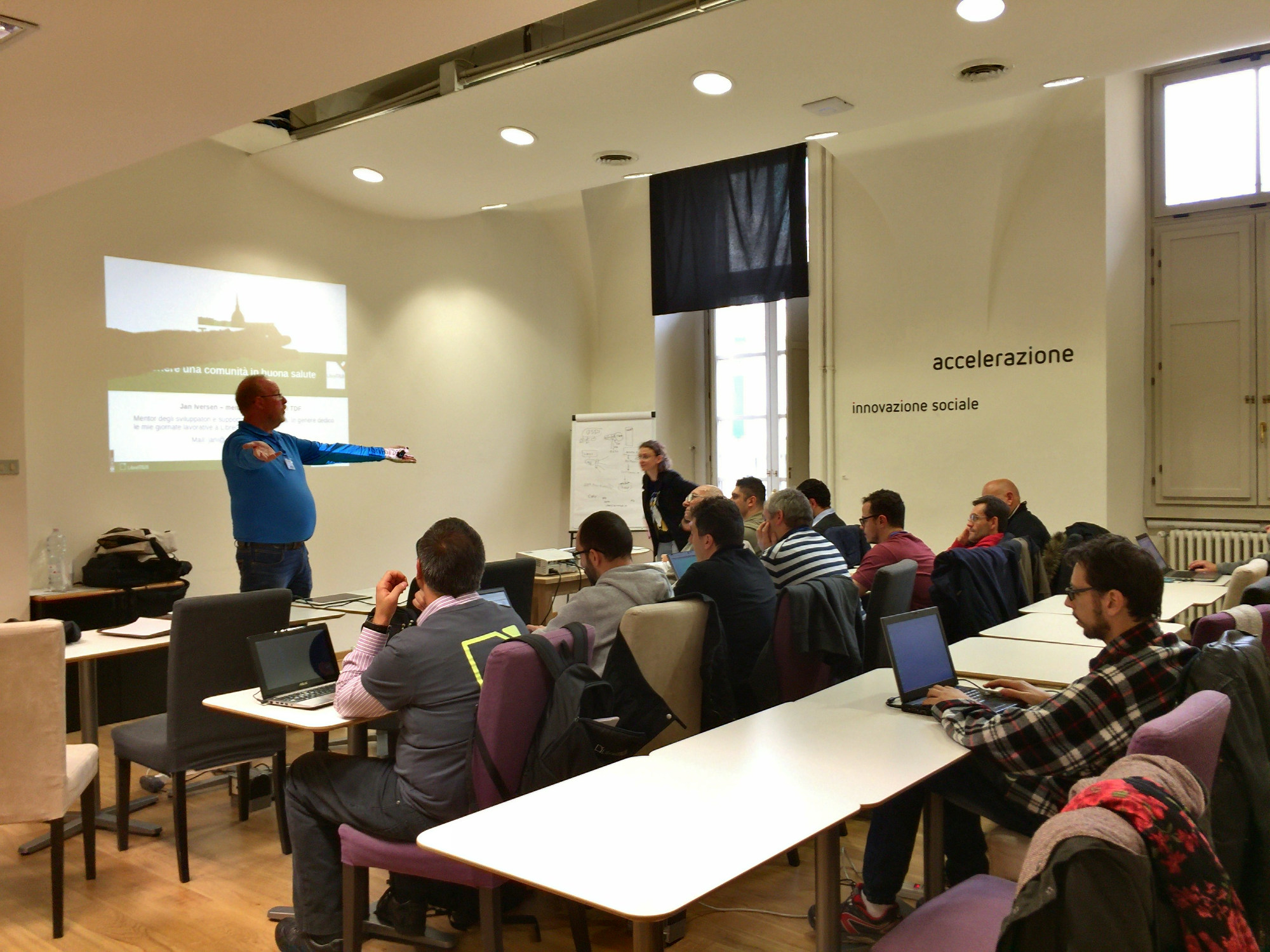
janiversensmallBerlin, November 23, 2015 – The Document Foundation announces a renewed effort to grow the developers community beyond the threshold of 1,000 hackers reached in October 2015 (source: OpenHub), with the addition of Jan Iversen – a senior developer with a passion for mentoring, and a long experience at Apache Software Foundation – to the team.

The extraordinary growth of LibreOffice developer’s community, with a monthly average of over 16 new hackers contributing to the code since September 2010, is the result of a global mentoring effort by some of the project founders. After five years and 1,000 new developers, though, the complexity has changed, and the project needs to invest on mentoring a new generation of coders.

LibreOffice has always been available on multiple operating systems – Windows, MacOS and Linux – and is on the verge of being available on multiple platforms: desktop, mobile and cloud. Because of this evolution, the project needs a wider range of developing skills, which can be achieved only with a renewed effort targeted to attract new code contributors.

“When LibreOffice started, the code-base we inherited was known for being extremely hard to contribute to, for both technical reasons and a lack of mentors reaching out to new hackers,” says Bjoern Michaelsen, a member of LibreOffice engineering steering committee and a director of the Document Foundation. “Today, the LibreOffice project is known for its welcoming atmosphere, and for the fun. We strive to continue on this path for the next 1,000 code contributors.”

Jan Iversen has added: “I am excited and proud to be part of the LibreOffice project. Helping to grow a project of this size, with an extremely high activity in term of development for the last five years, and at least three new contributors per month since September 2010, is a challenge I look forward to being part of.”

1000devssmall


First LibreOffice 5.0 Bug Hunting Session starts Tomorrow

Berlin, May 21, 2015 – The first LibreOffice 5.0 Bug Hunting Session starts tomorrow at 08AM UTC, to catch bugs and regressions on the first beta of the software, available from this link: http://dev-builds.libreoffice.org/pre-releases/. The session will last until May 24, 2015.

On those dates, mentors will be available from 08AM UTC to 10PM UTC to help less experienced volunteers to triage bugs, on the QA IRC channel and via email on the QA mailing list.

Those who cannot join during the bug hunting session are always welcome to help chasing bugs and regressions when they have time. There will be a second bug hunting session in June, to test LibreOffice 5.0 Release Candidate 1.

More detailed information on the bug hunting session are available here: https://wiki.documentfoundation.org/BugHunting_Session_5.0.0.0.

LibreOffice 5.0 will be released at the end of July 2015.